

Puerto Madryn – a Natural World Heritage Site
Thursday 5 March
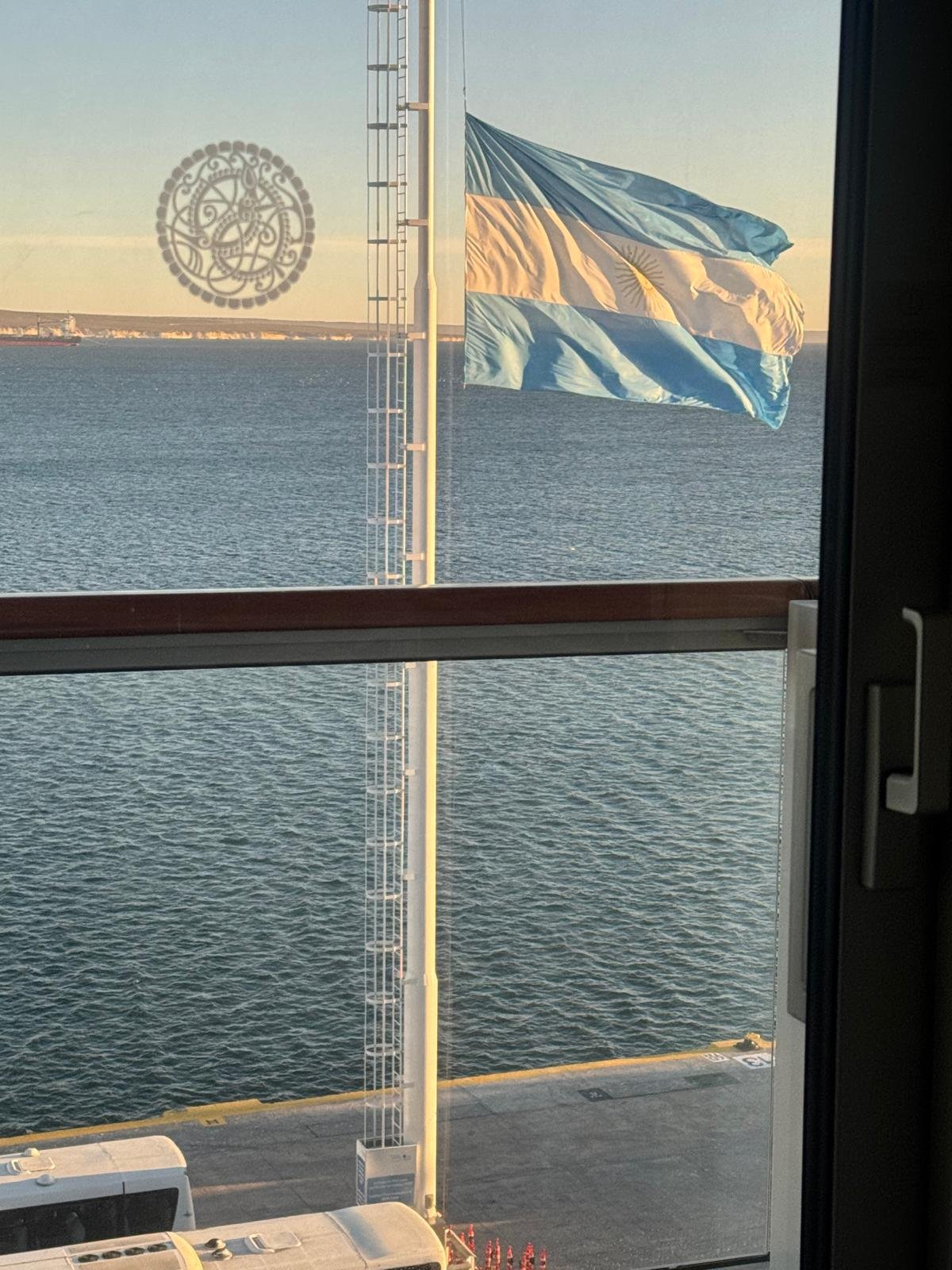
Well, here we are, after three “at sea” days, we have finally arrived in Puerto Madryn, one day early due to the cancellation of our Falkland Islands stopover. As I walked out of our shower, I was greeted by the Argentinian flag slowly passing by our port side window as we docked. A lovely sunny day today which bodes well as it’s a busy one for us with two tours booked so we can make the most of all it has to offer.
Puerto Madryn is a city in the Chubut province and in Welsh is Porth Madryn. You may wonder why I have mentioned this, well it’s because the City’s name commemorates Love Jones Parry, the Baron of Madryn in Wales and one of the promoters of Welsh colonization in Patagonia. In 1862 he and Lewis Jones were nominated to travel to Argentina on behalf of the Emigration Society to negotiate with the Argentine Minister of the Interior. By using his diplomatic experience, he inspected potential sites for a Welsh Settlement. The two began an exploratory voyage of Patagonia on board the ship Candelaria which was driven by a storm to a bay later known as the Golfo Nuevo and set foot on the present-day city of Puerto Madryn on 7 February 1863. The city was named in his honour. The first contingent of 153 Welsh settlers, men, women and children, left Liverpool in May and arrived on 28 July 1865 aboard the sailing ship Mimosa, there was a lack of potable water then so they left in search of better conditions towards the Chubut River and the settlement only began to grow in the 1880’s as a result of the arrival of the railway. The Welsh heritage remains alive in the region through tea houses, architecture, chapels and the Welsh language – they even have an Eisteddfod here, the traditional Welsh literature and music festival!
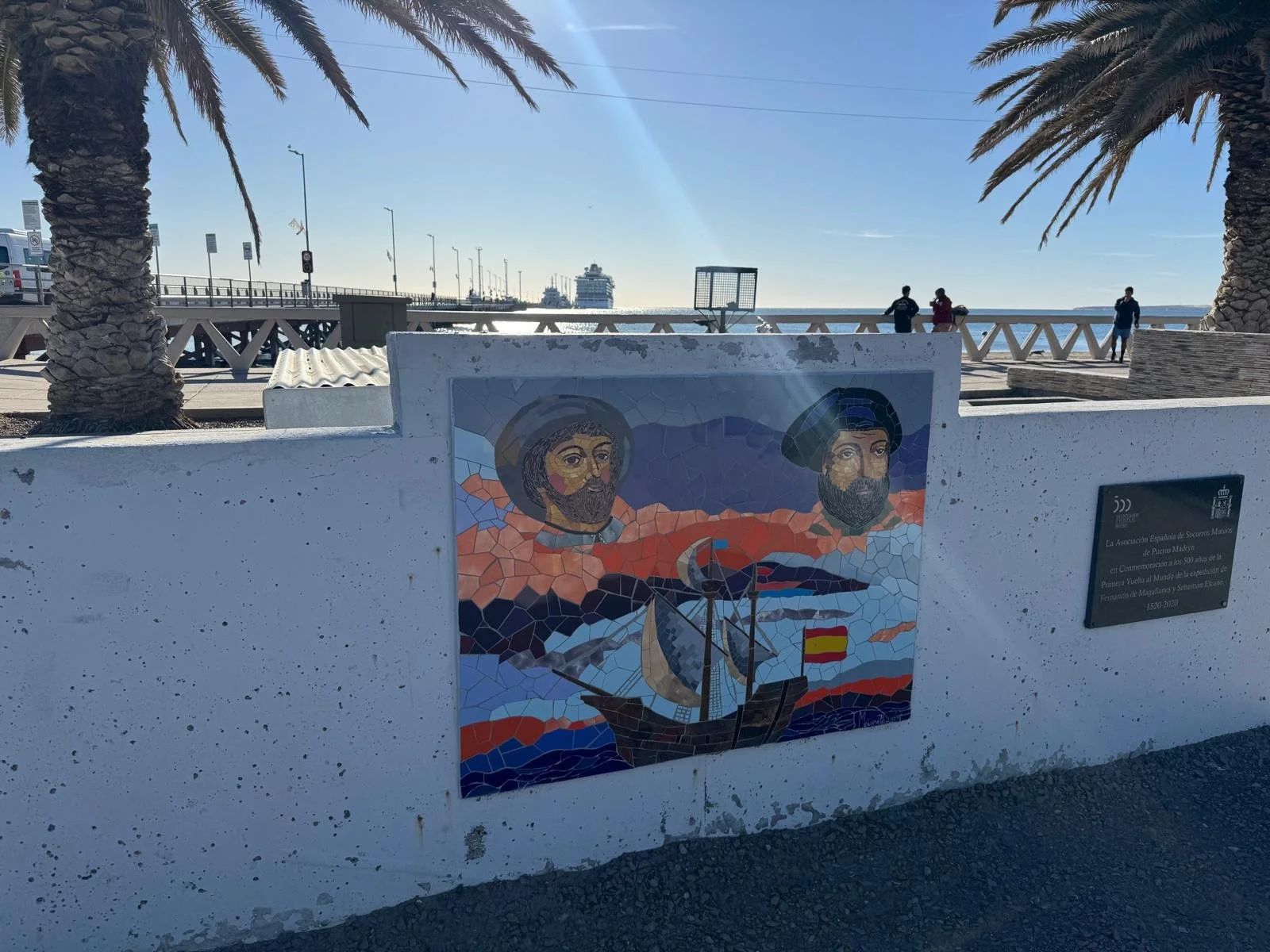
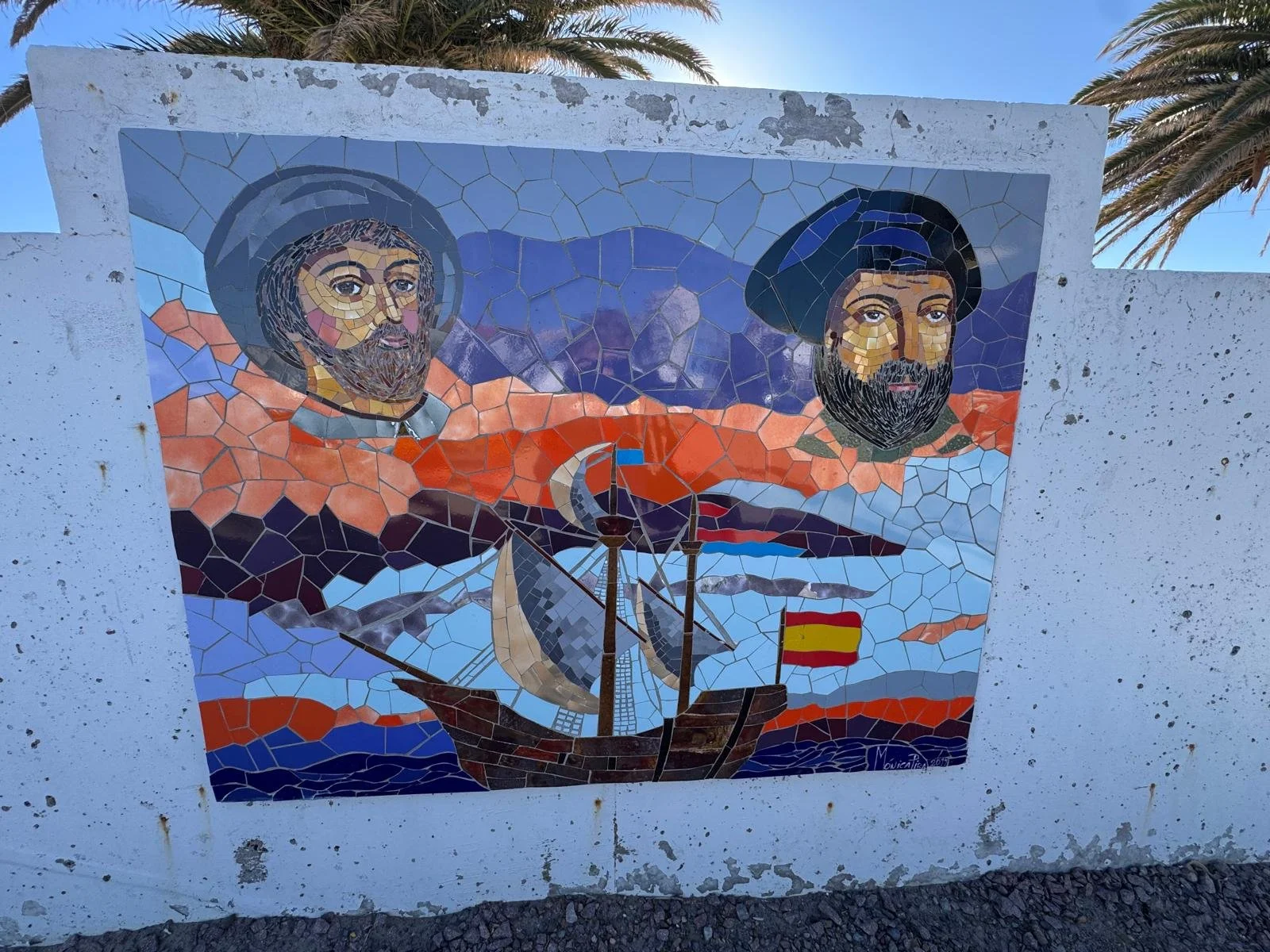
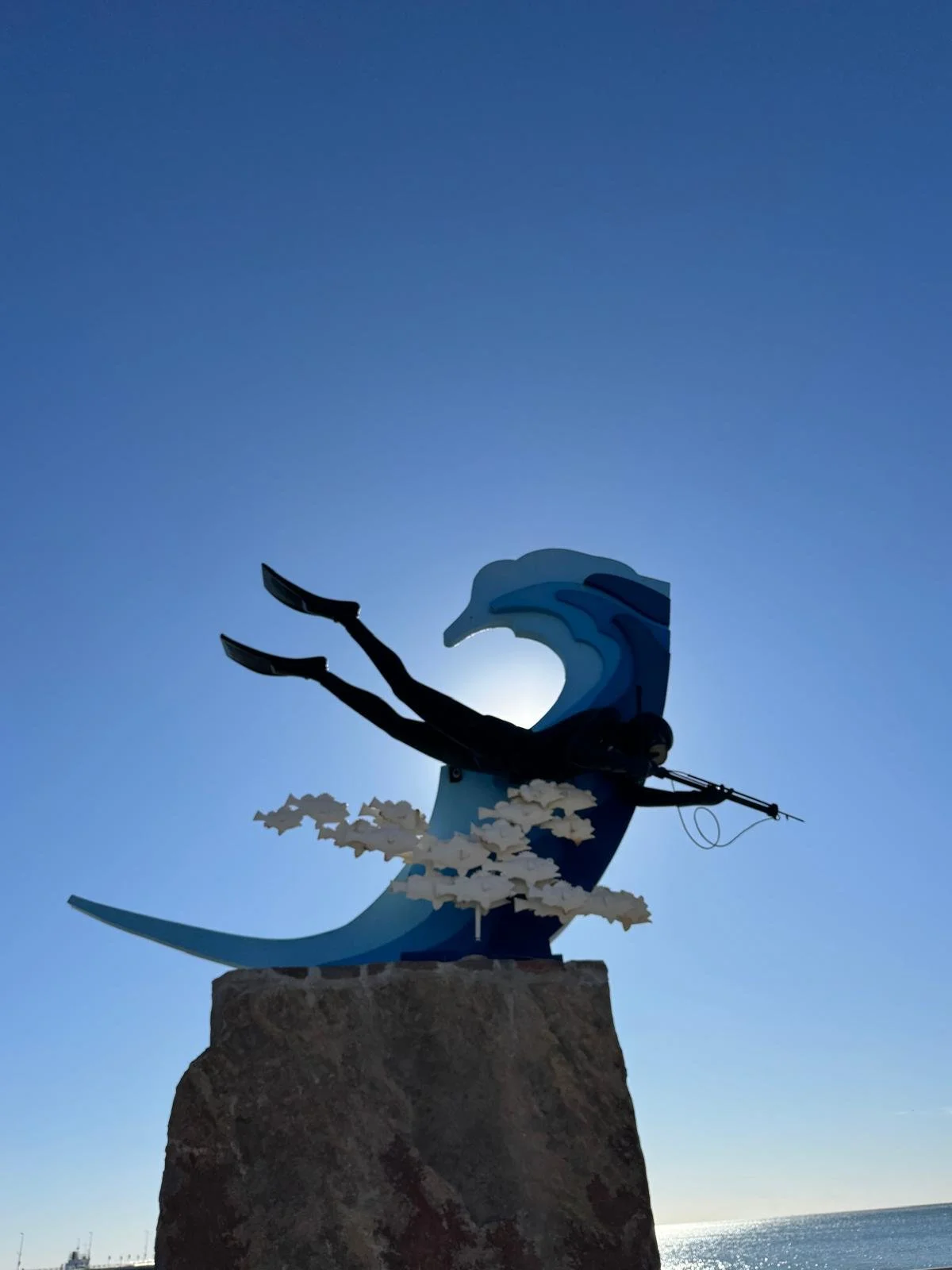
Our ship docked around 700 metres from the end of the Pier due to the 6.5 metre tide and the reasonably flat seabed, which meant the pier had to extend further out to find deep water to dock, so we were ferried to the end of the pier by a shuttle bus. Our first tour was city highlights and we walked along the rambla (boardwalk), firstly past the mosaic tribute to our friends Ferdinand Magellen and Sebastian Elcano and passed a number of other sculptures along the walk. Did you know that Puerto Madryn is the national capital of scuba diving – and has its very own sculpture to commemorate it!
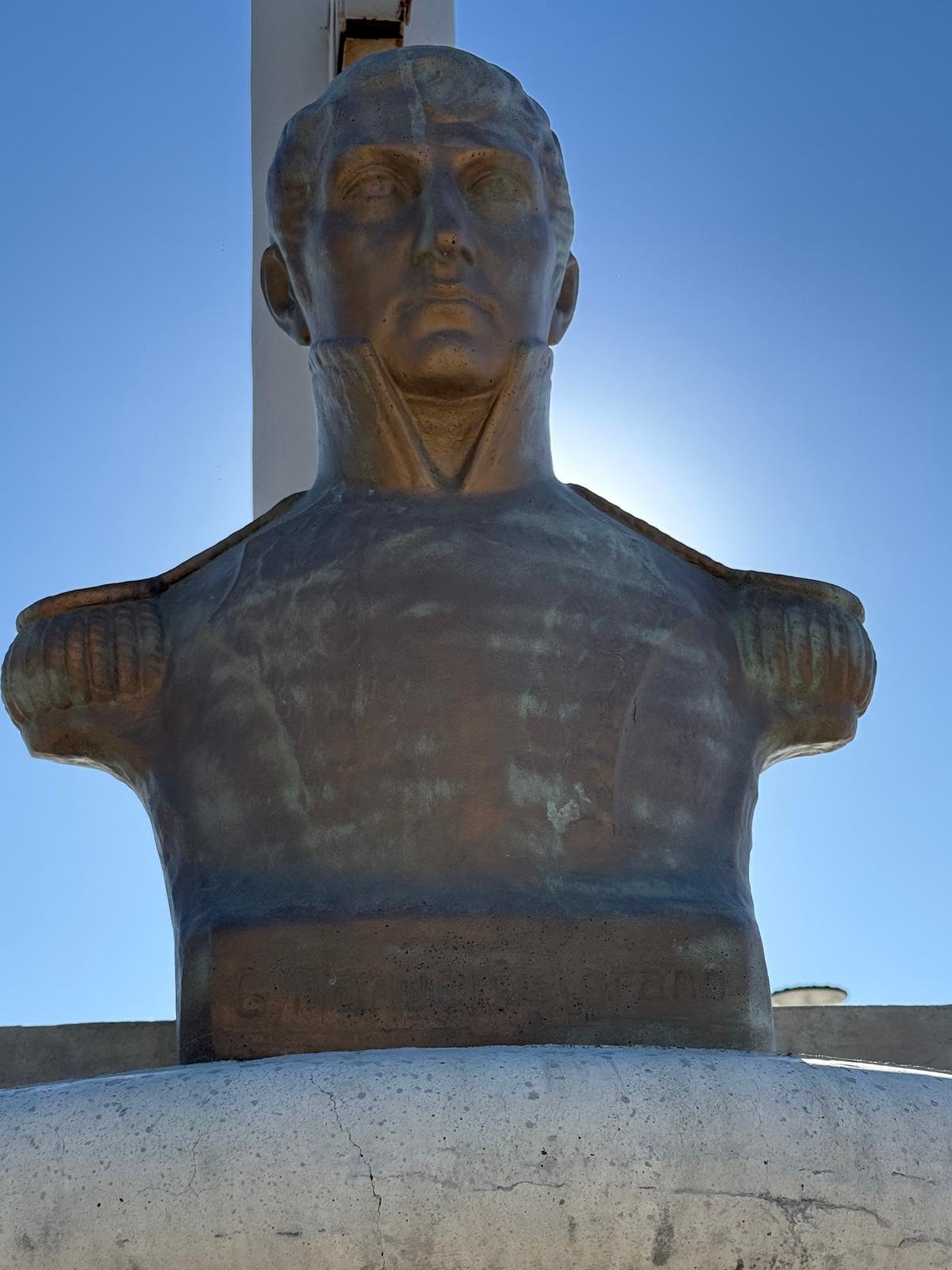
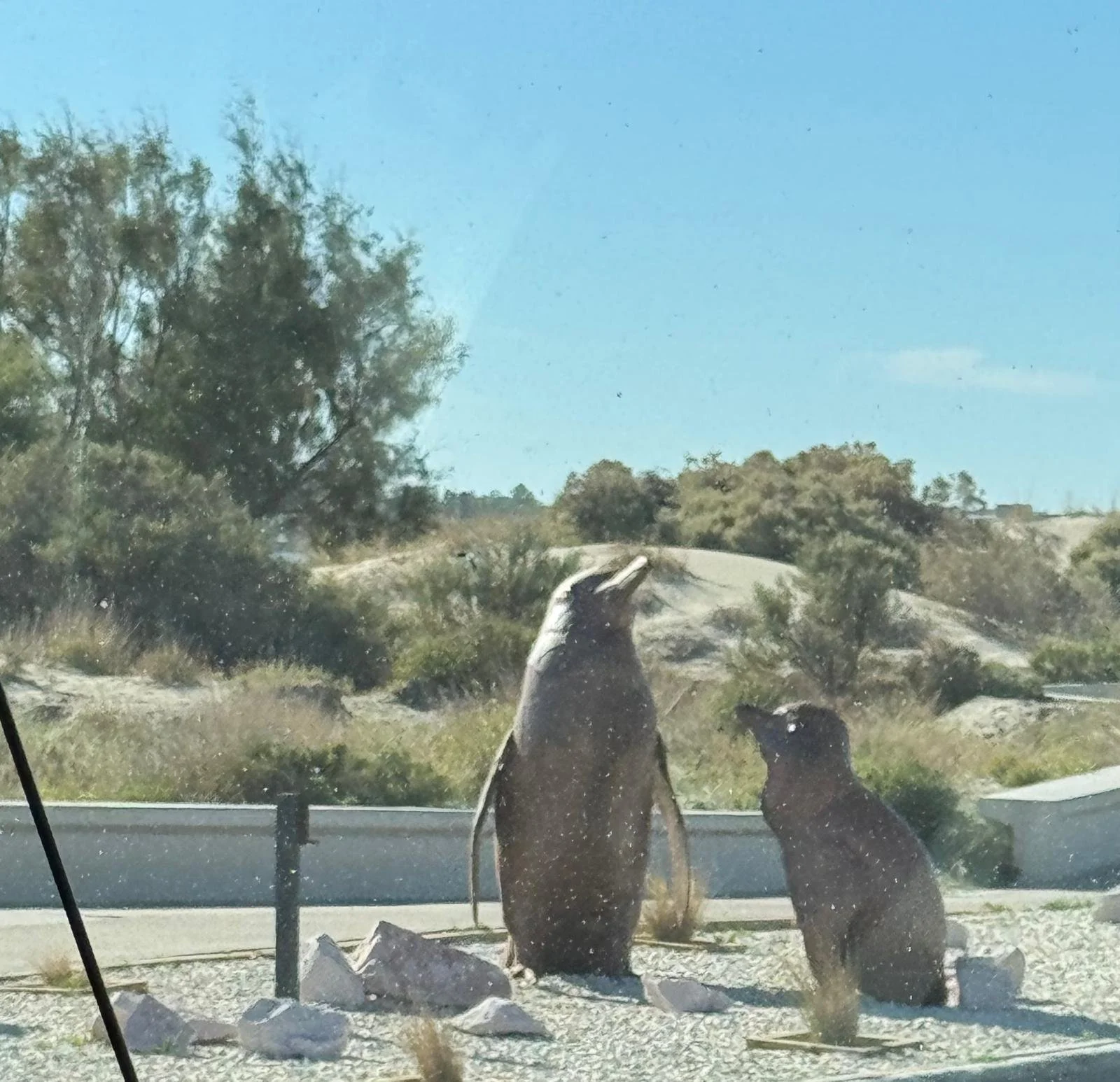
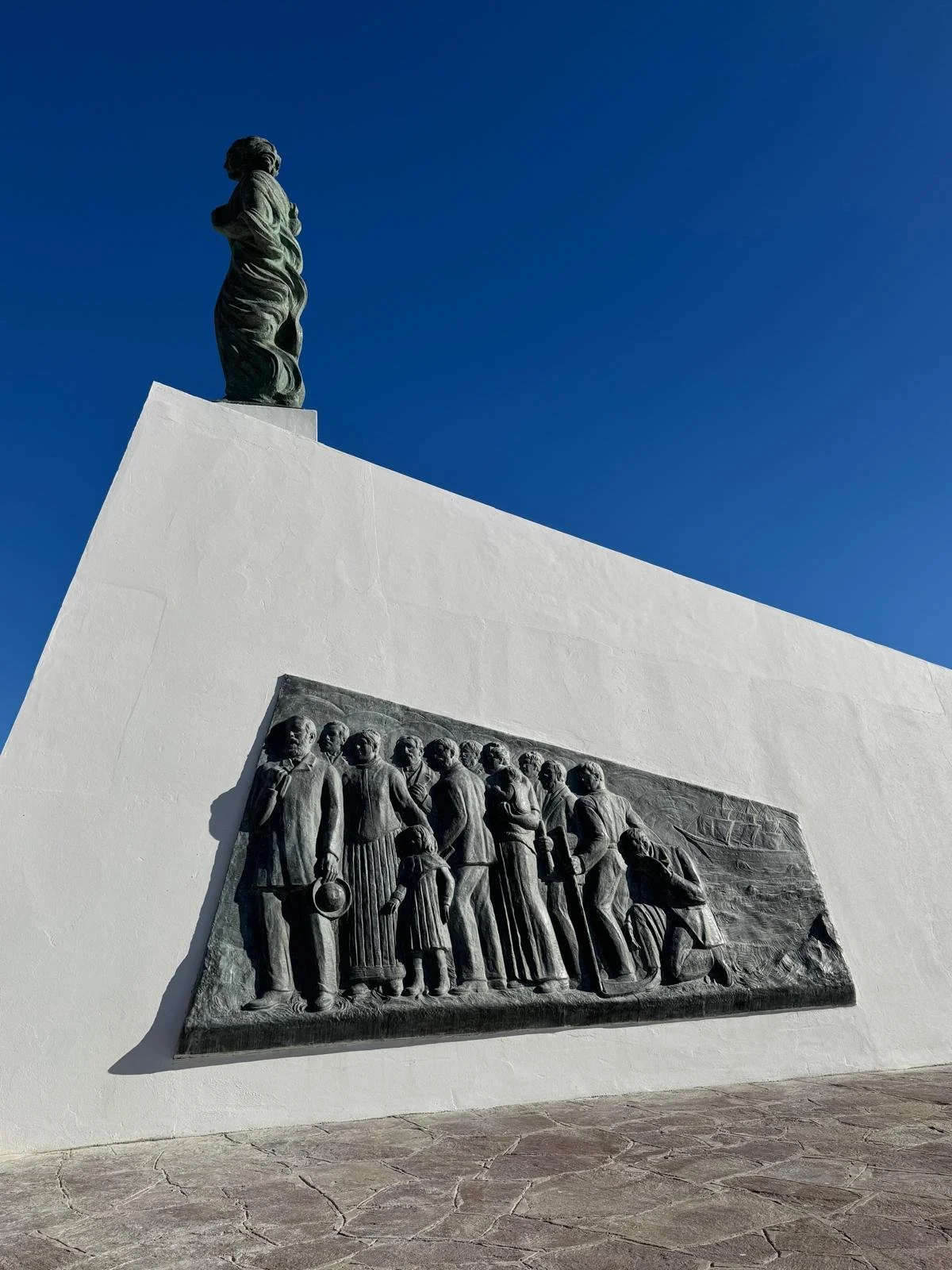
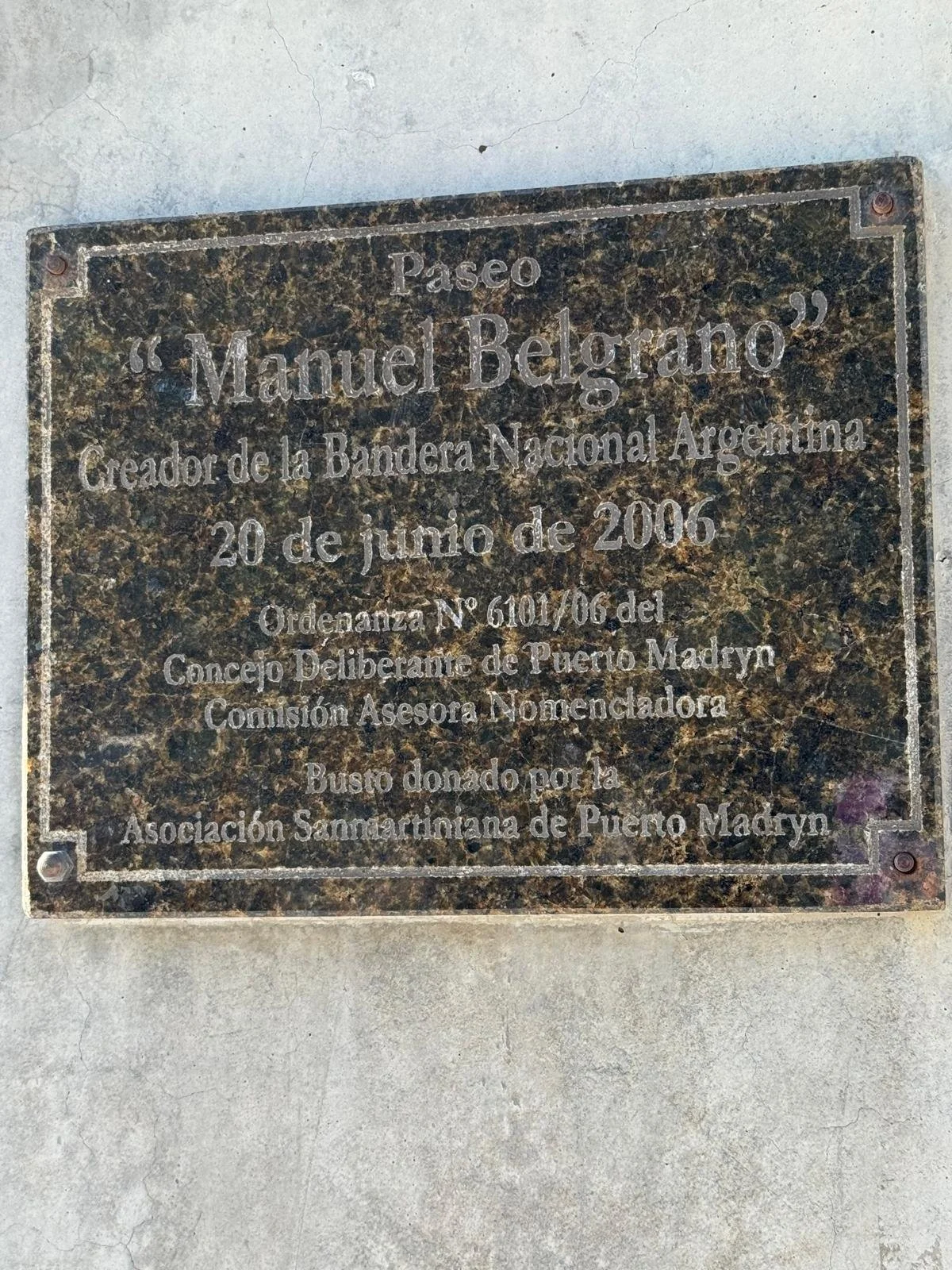
I think I want to christen this city the City of Sculptures and Monuments - there are so many. The next sculpture was of General Manuel Belgrano, a prominent intellectual, lawyer, economist, journalist and military leader of the Río de la Plata region, who was fundamental to Argentine independence (the name more commonly associated for Brits as the name of the cruiser belonging to the Argentine Navy which was sunk in May 1982 by the British nuclear submarine HMS Conqueror during the Falklands War). To commemorate the centenary of the landing of the first Welsh immigrants a beautiful monument, locally known here as the Welsh Monument, is of a Welsh woman and stunning tribute to the brave pioneers. Up next, the statue of Don Quixote and his loyal squire Sancho Panza, a tribute to Miguel de Cervantes’ timeless novel, followed by an iron sculpture of two penguins, representing an adult and a chick by Chubut-born sculptor Tomás Schinelli to represent the fragility and resilience of the species, and to raise awareness about marine conservation. Puerto Madryn is a UNESCO World Heritage site for its marine life and is a key base for Magellanic penguins and the most famous site is Punta Tombo; a reserve three hours drive away and one of the largest continental colonies in the world. There was a tour here today which we opted not to take as we have seen many penguins in various locations before, plus it is out of season and we did speak to some of the other passengers who had taken the long tour on the bus and I don’t think they saw very many, so a good decision for us.

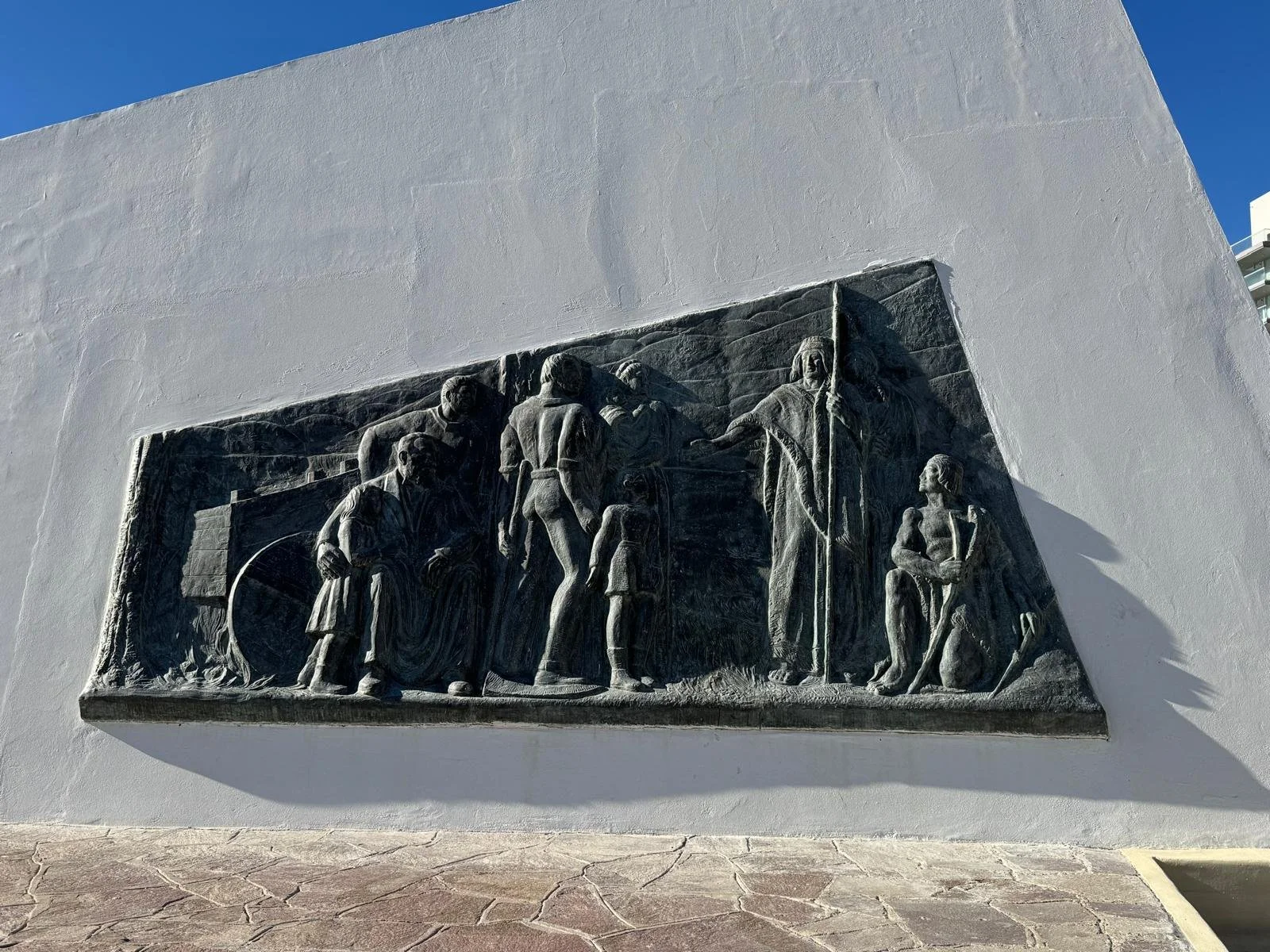
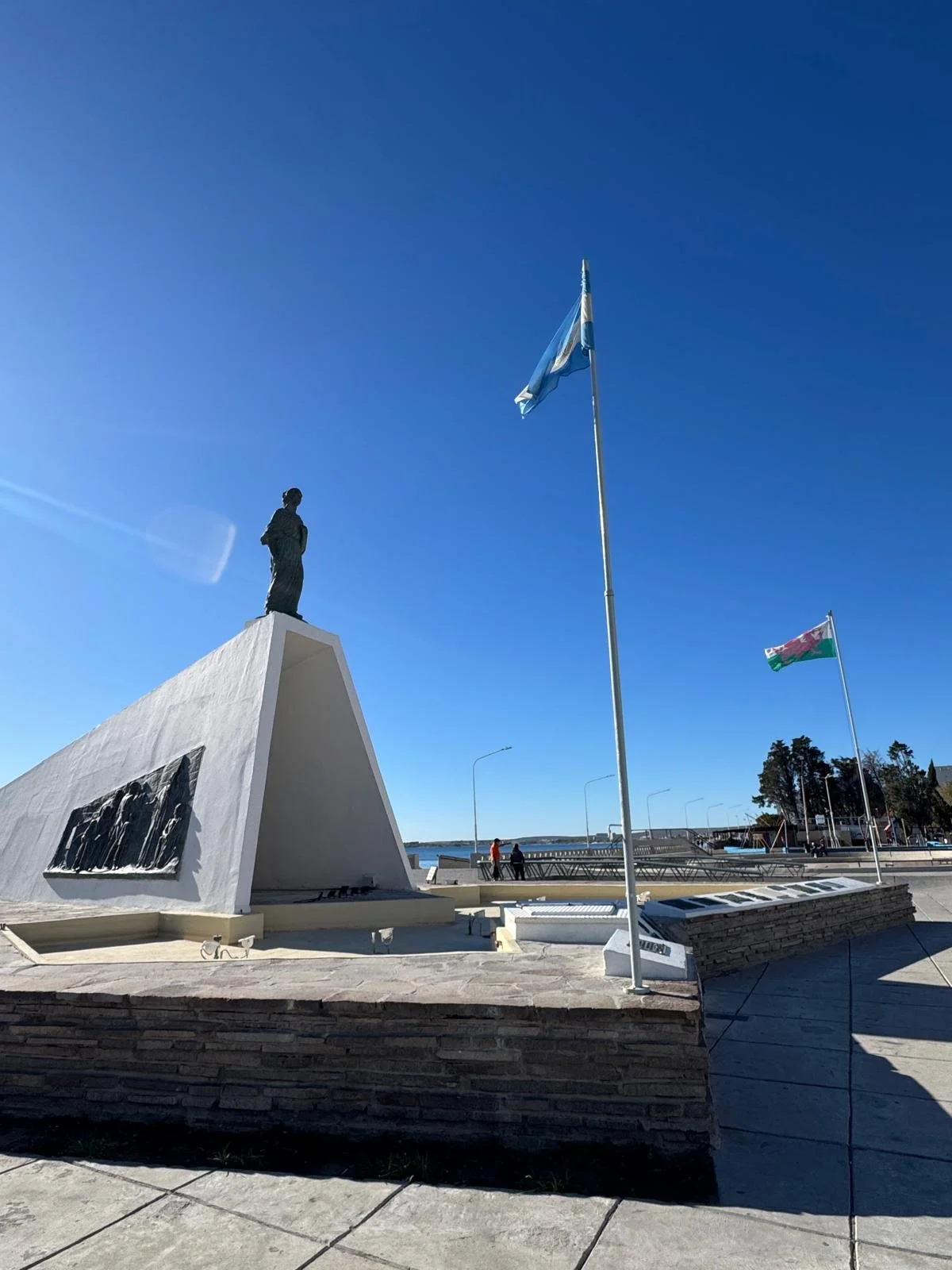
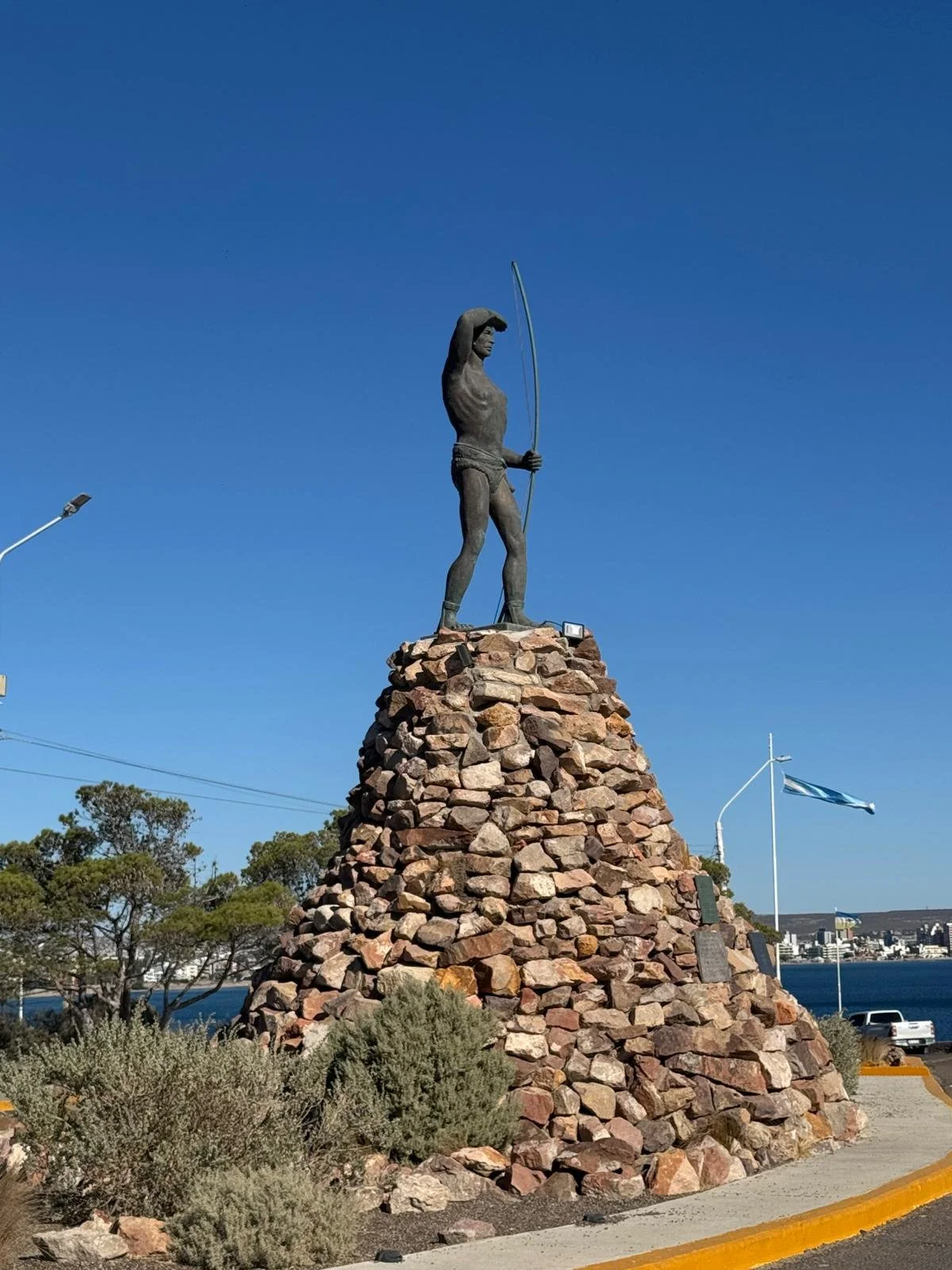
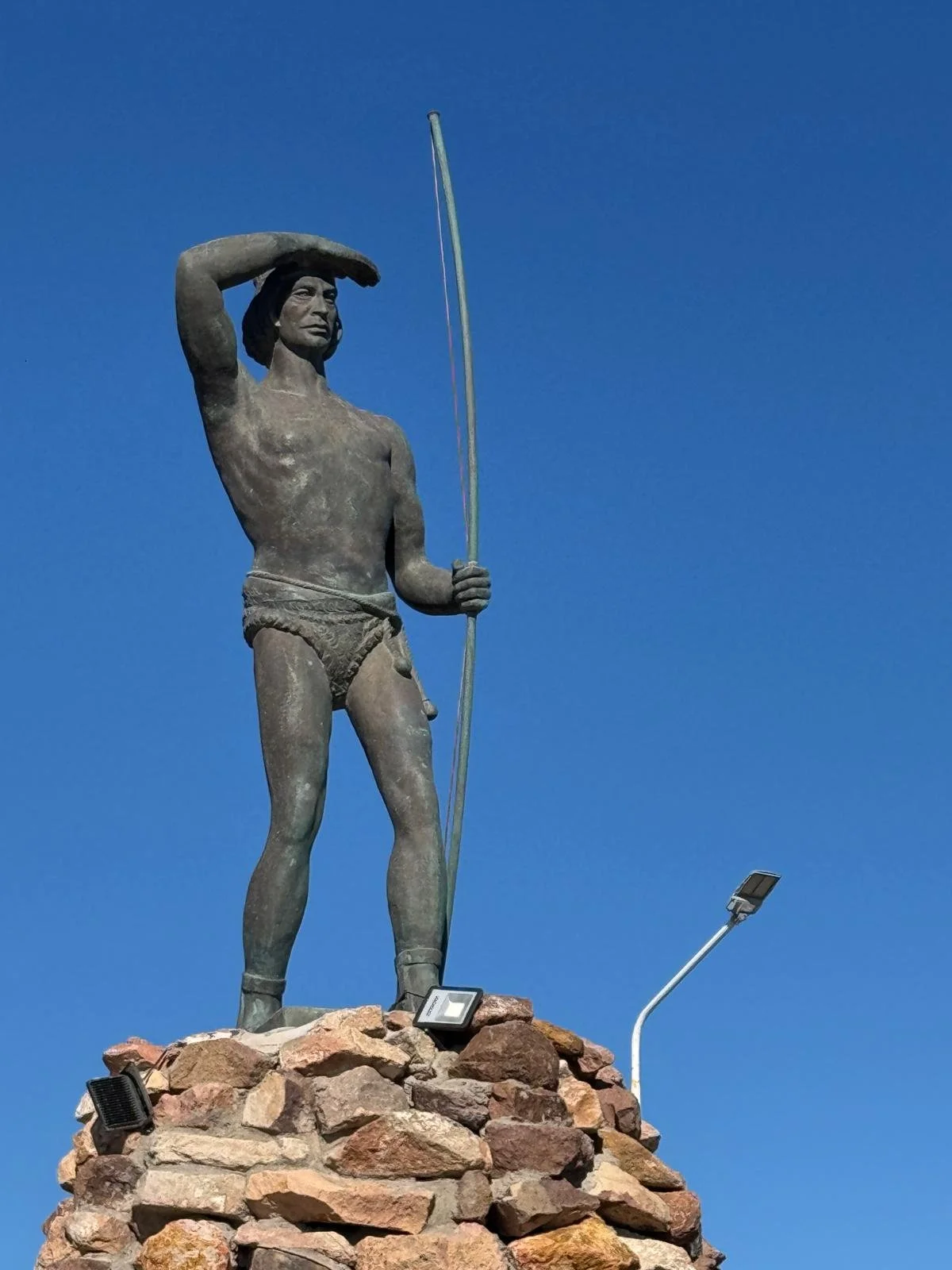
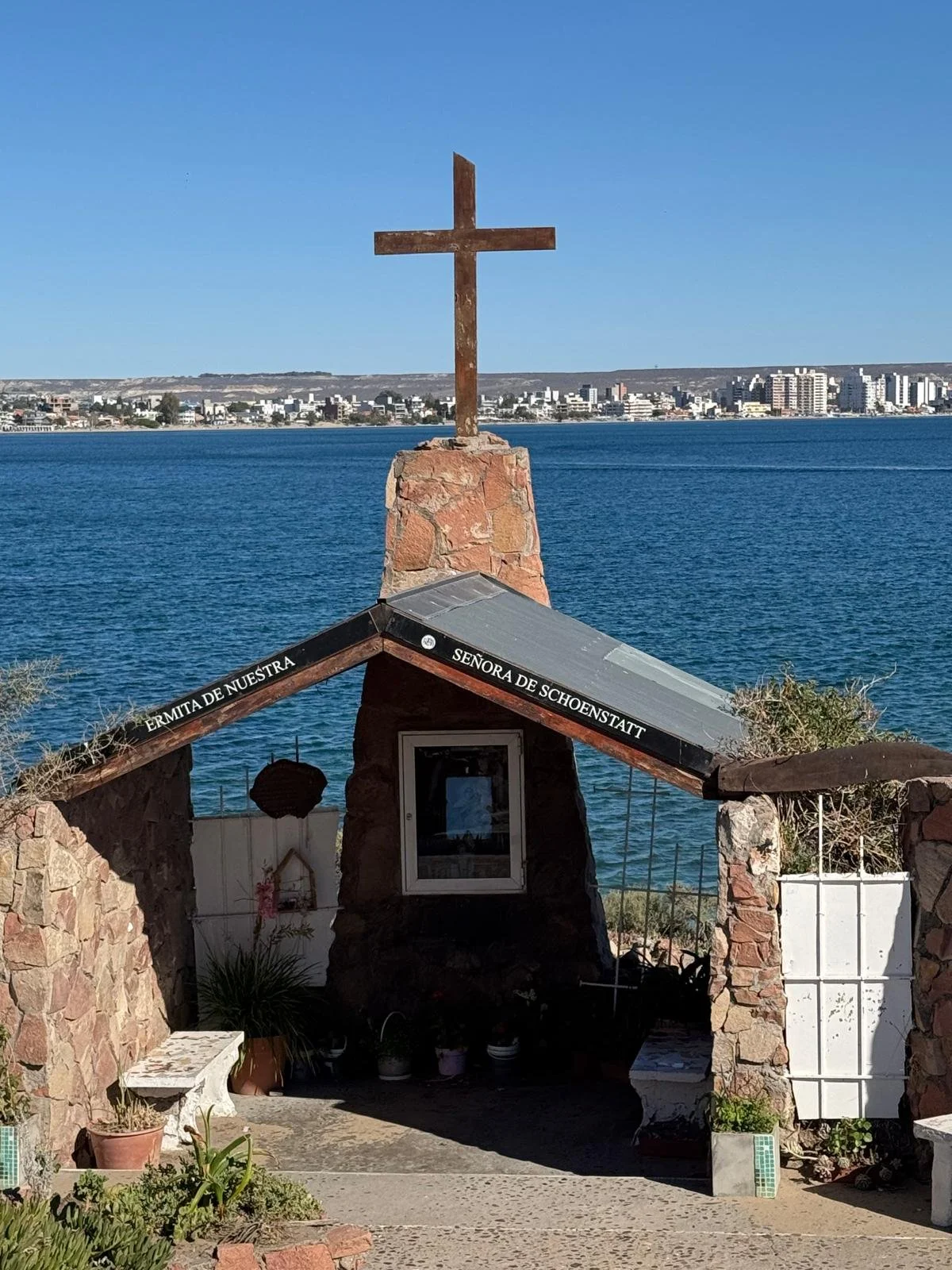
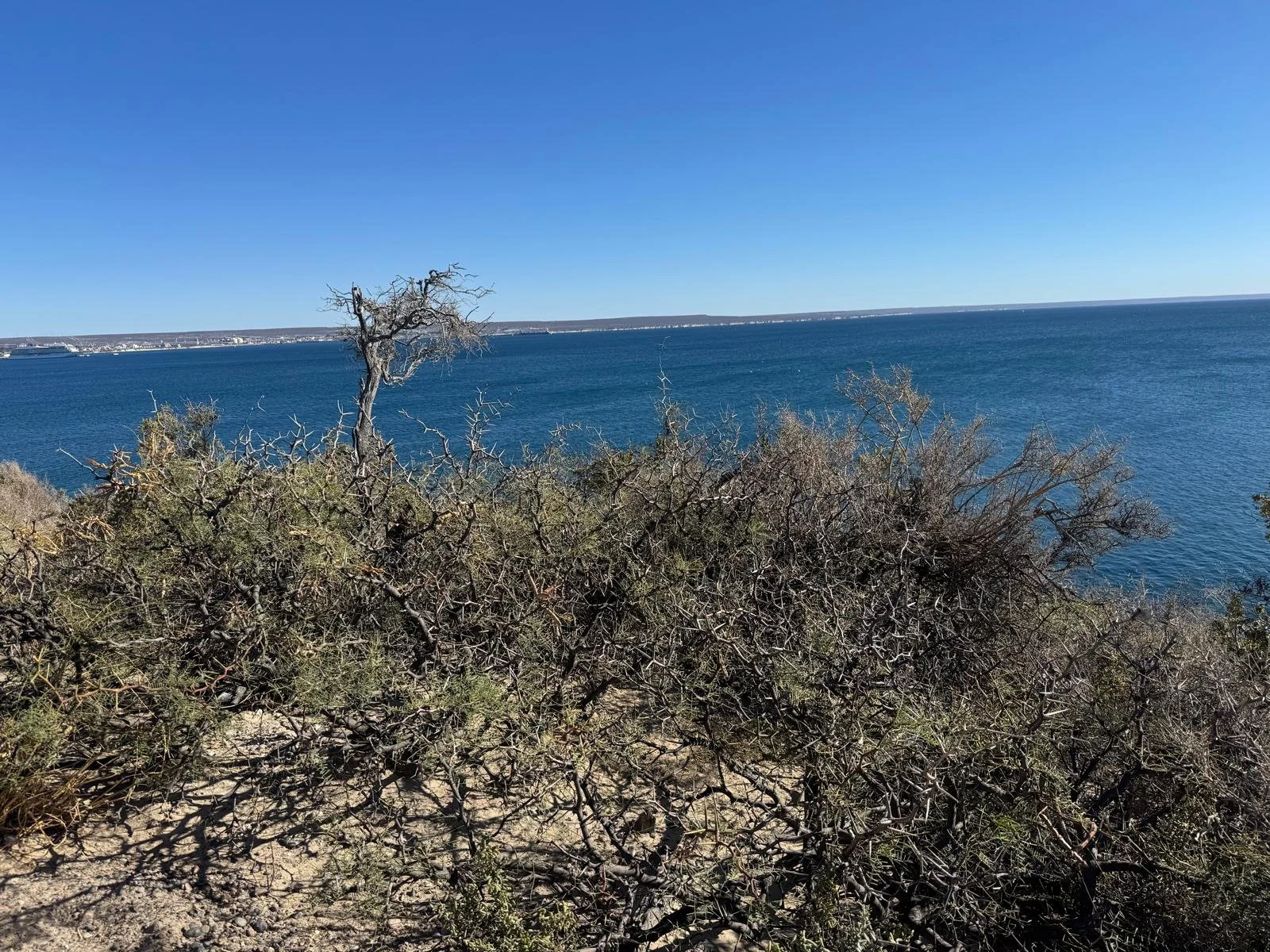
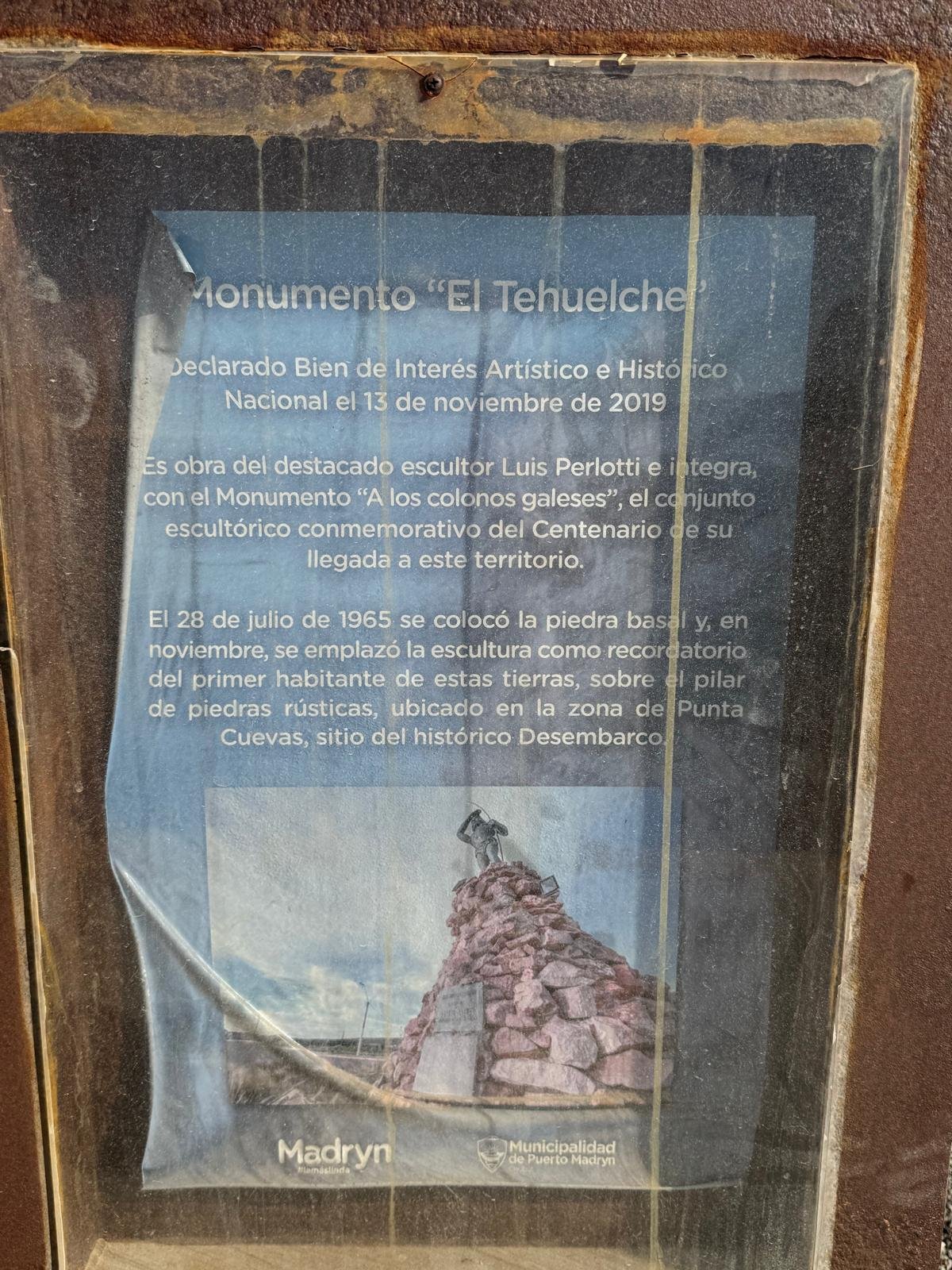
The imposing statue of the Tehuelche Indian was next – this symbolizes the memory, resistance and identity of the indigenous peoples of Patagonia and recognises the Tehuelche people as the first inhabitants of the land. It gazes towards the ocean, symbolising his vigil of the land and his connection to the Patagonian landscape, and was erected on the centenary of the arrival of the Welsh to symbolise the union between the Tehuelche people and the immigrants. Nearby is the Our Lady of Schoenstatt Shrine which is not only a religious landmark but also has a wonderful view of the bay - you can see how arid it is here; due to its geographical location they only get about 200mm of rain per year.
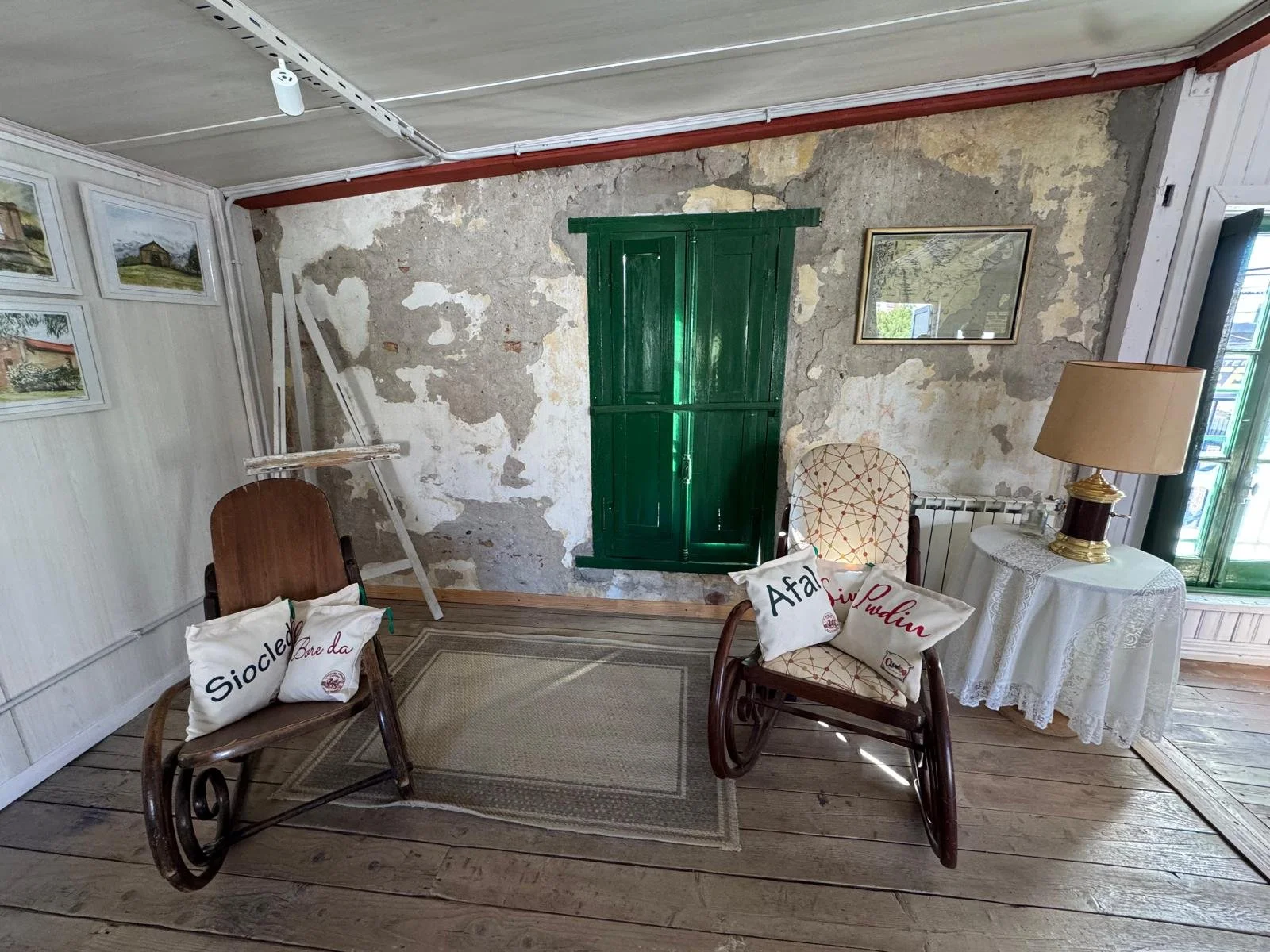
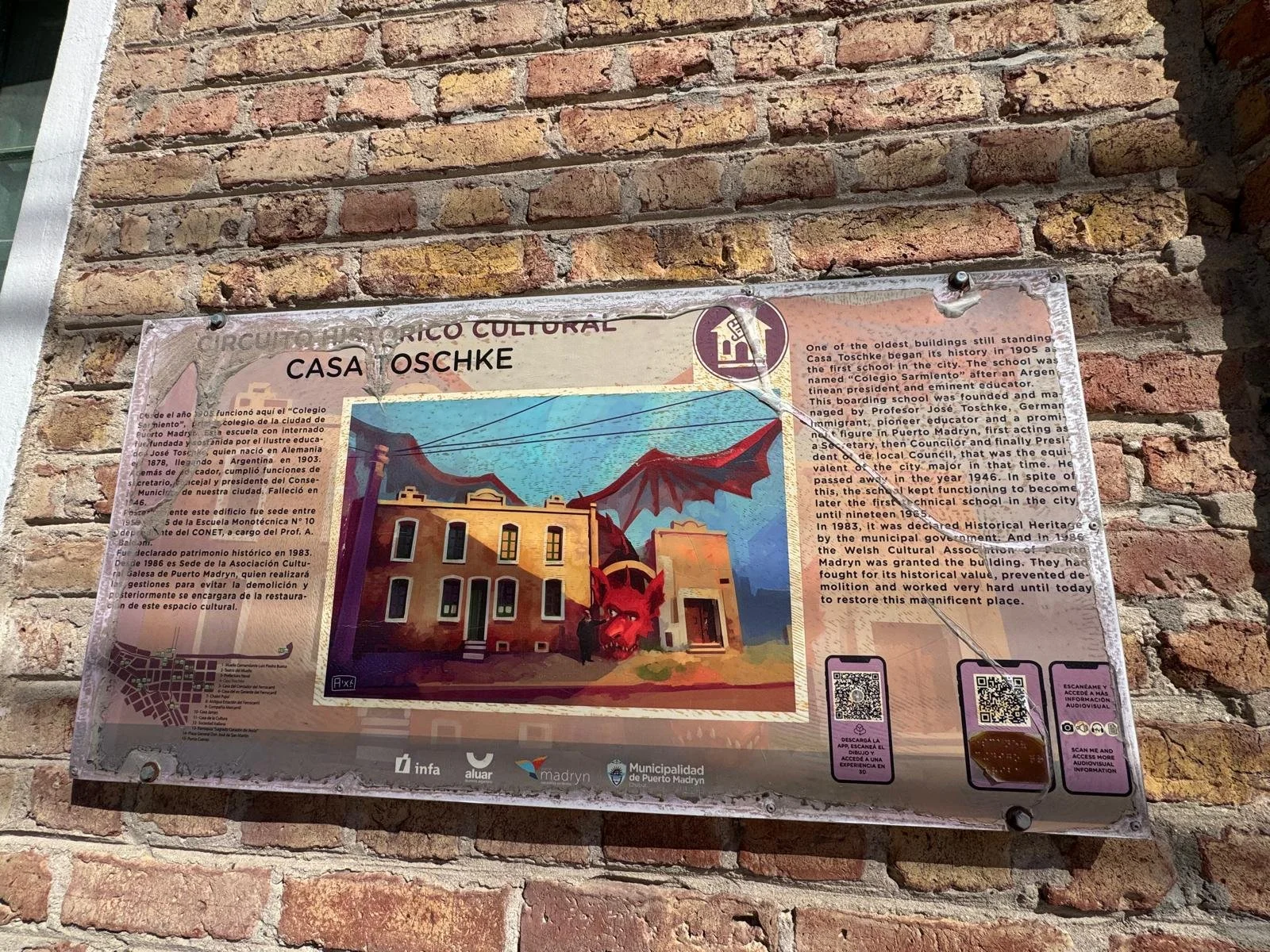
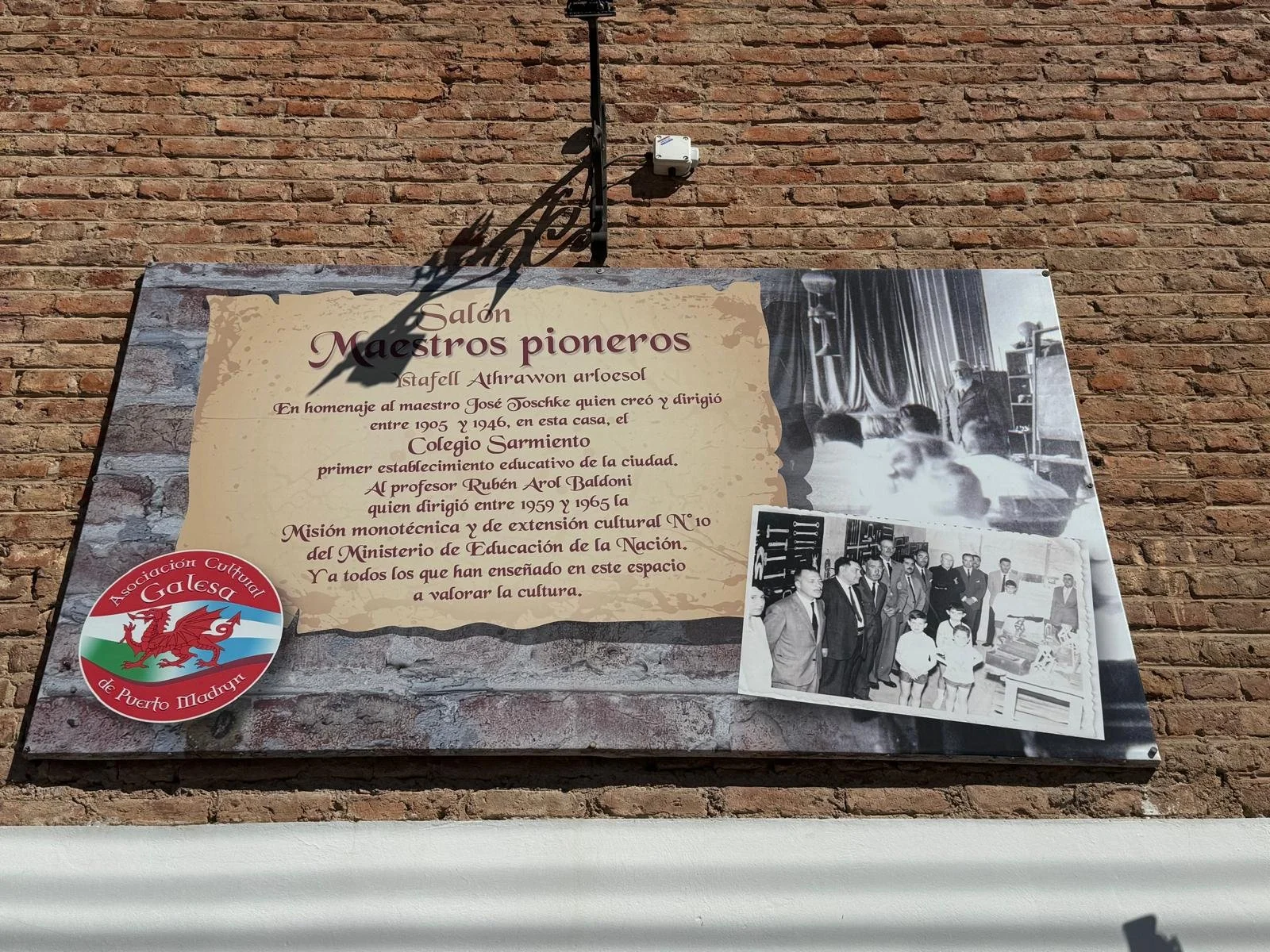
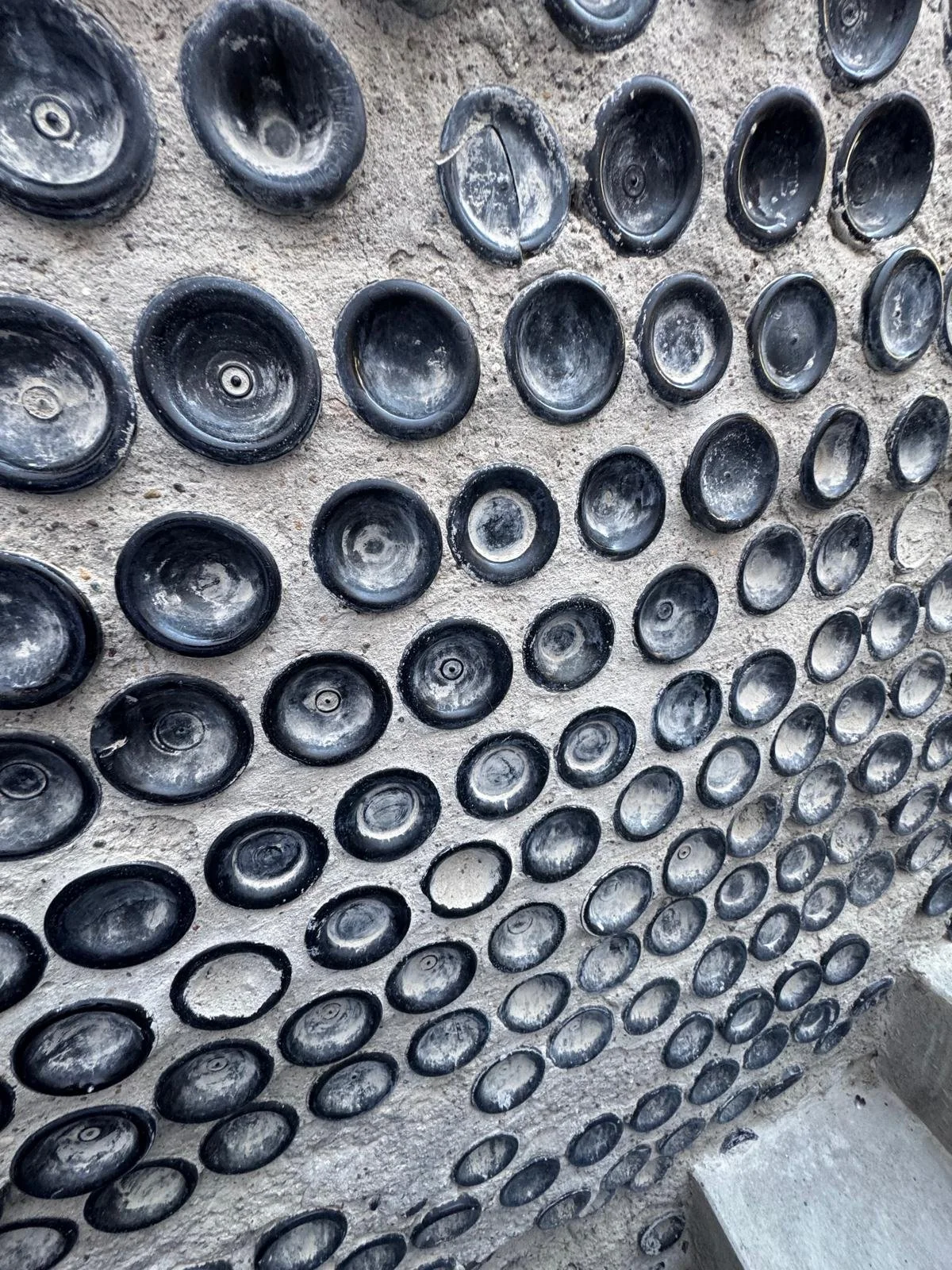
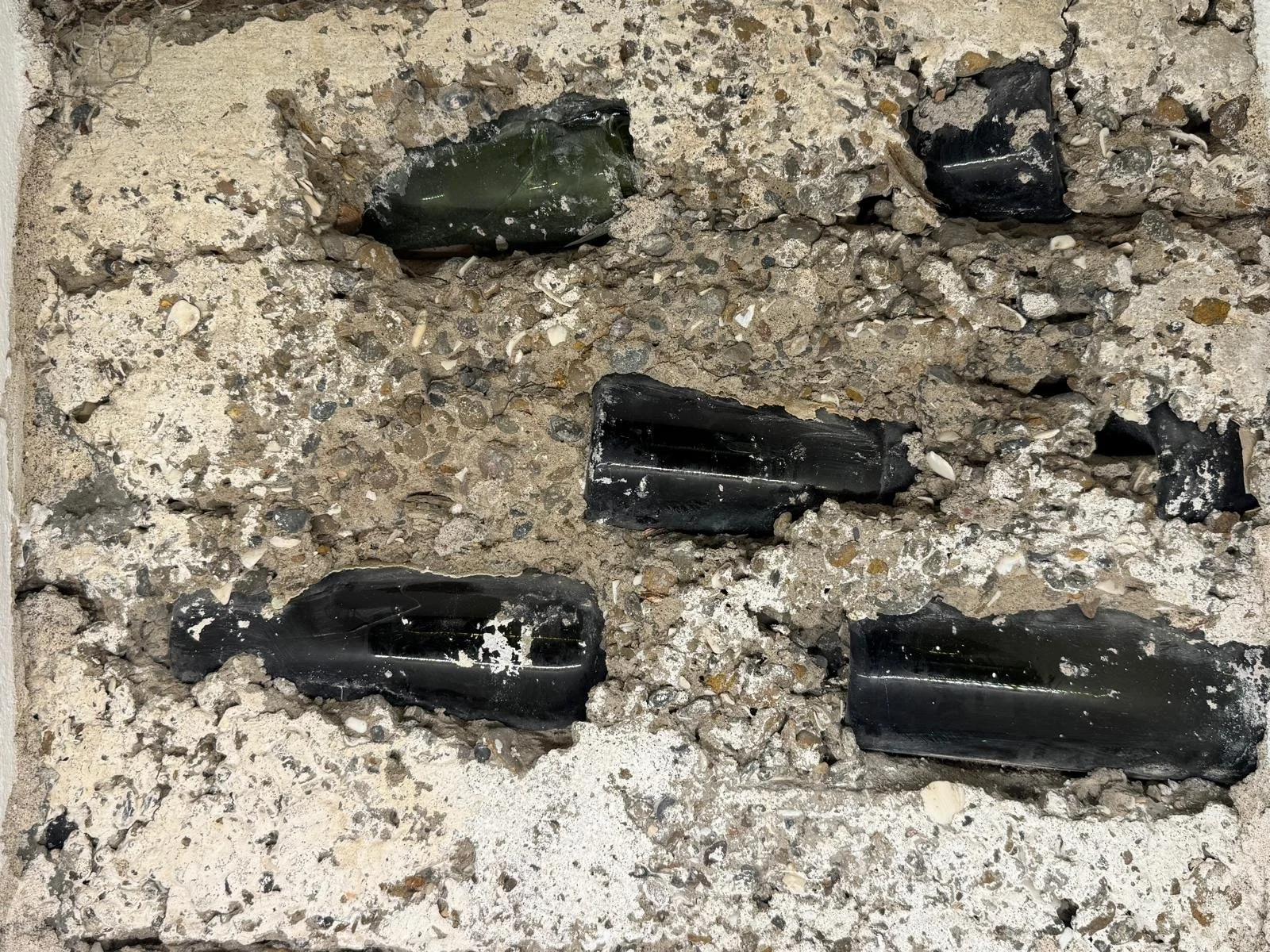
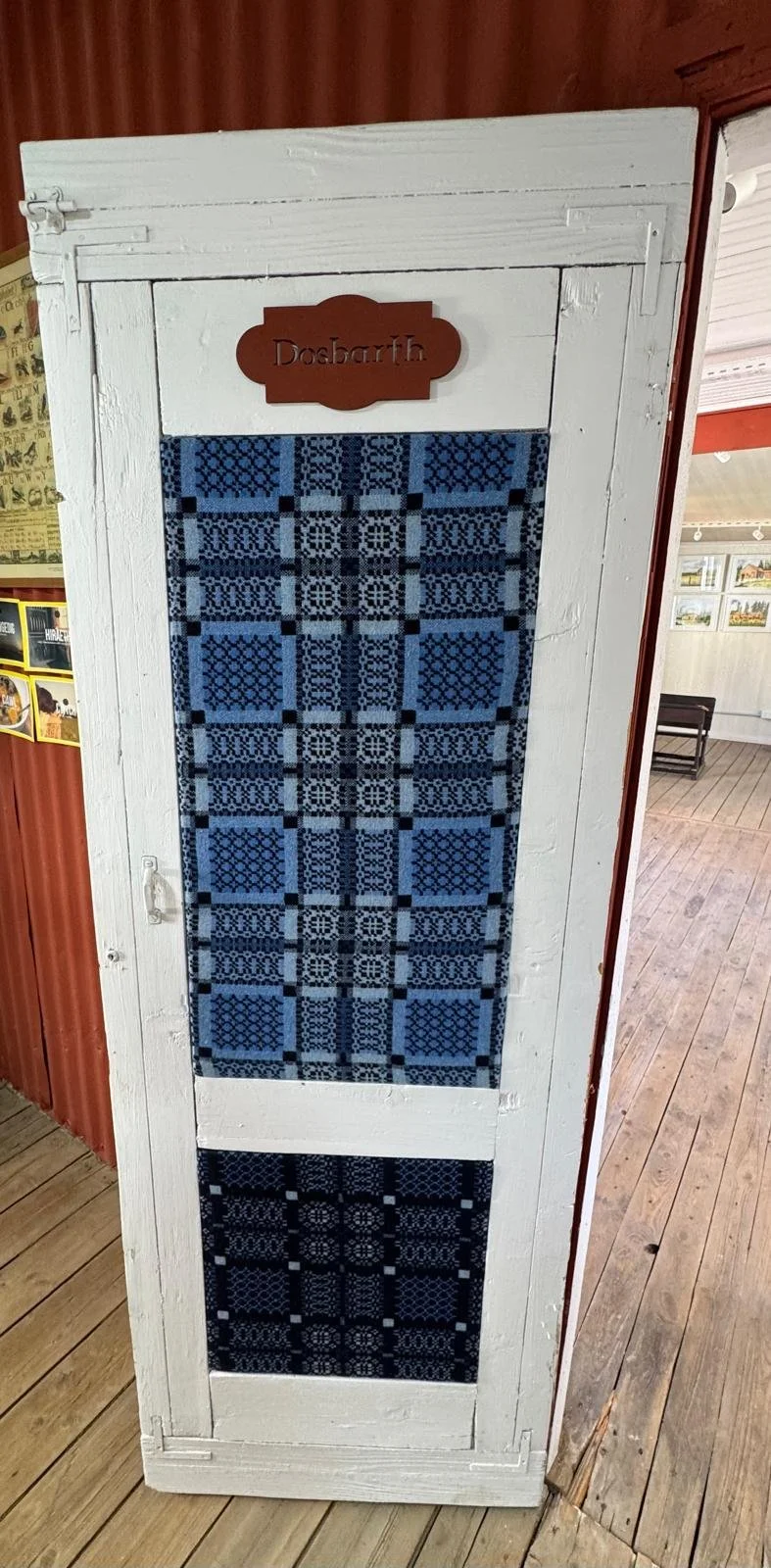
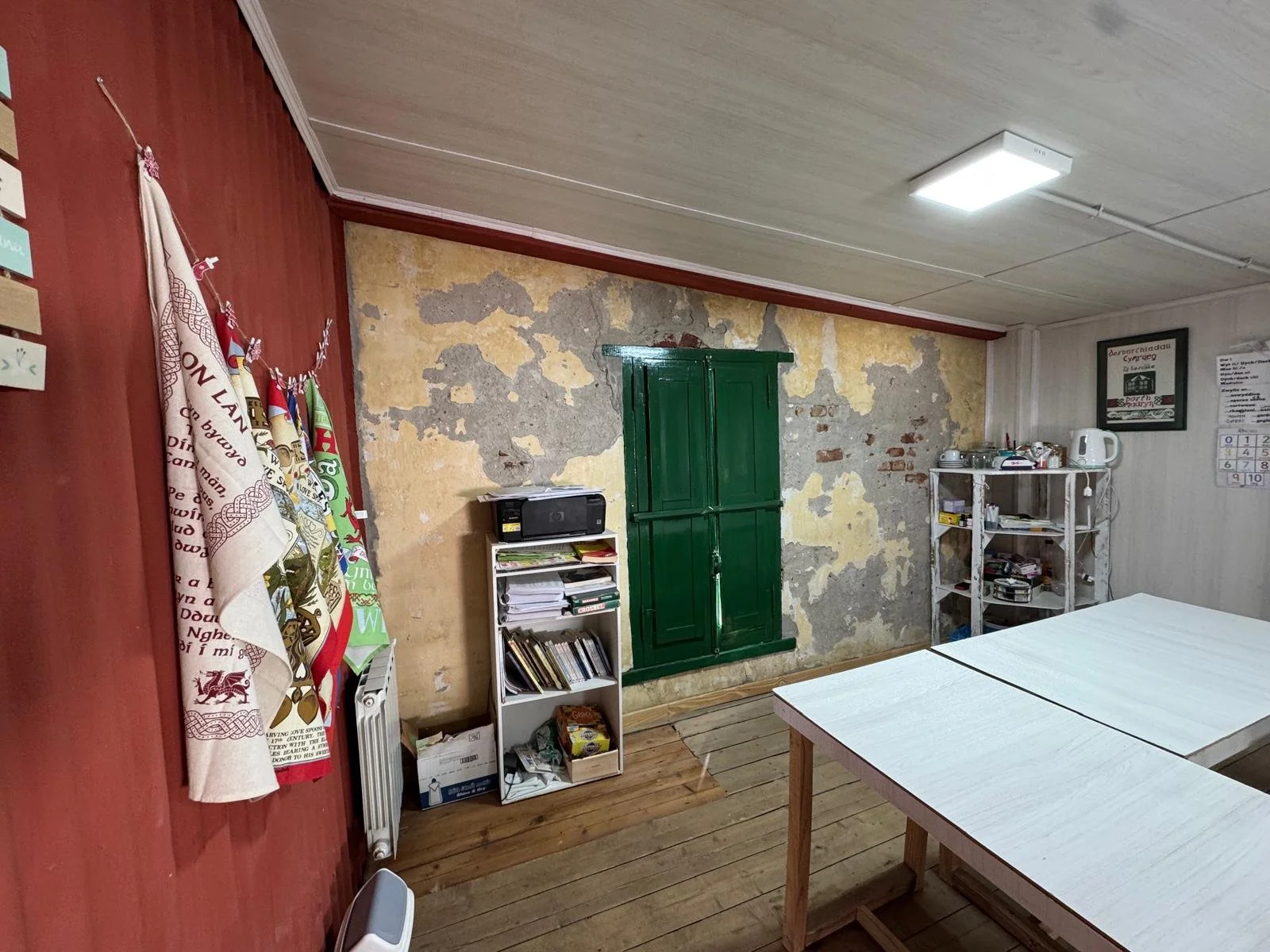
Our next stop was to Toschke House, an historical landmark here. This house served as Puerto Madryn’s first school, the Colegio Sarmiento, directed by the German teacher José Toschke. Since 1986 it has been the headquarters of the Welsh Cultural Association, originally with three buildings, only the house and classroom remain standing today. We were welcomed in by two lovely part-Welsh ladies in traditional costume and given a tour around which included a timeline of their ancestors and the history of the restoration of the main house (note the walls with glass bottles, these are used for mortar for structural stability and to allow light through!). The tour ended with an afternoon tea which included a delicious piece of Welsh cake, also known as black cake, and is a traditional cake from this area with its origins dating back to the immigrants who settled here.
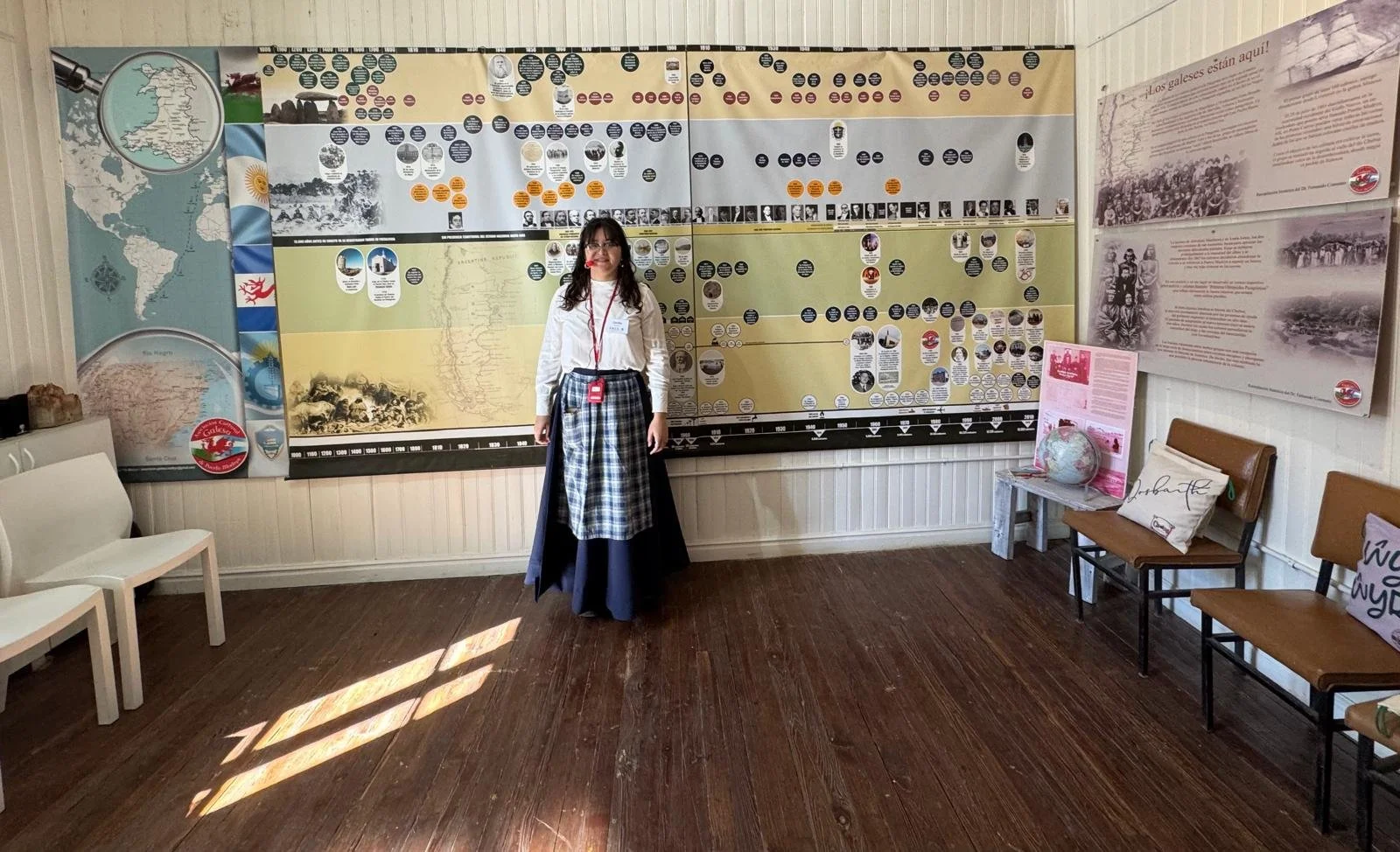
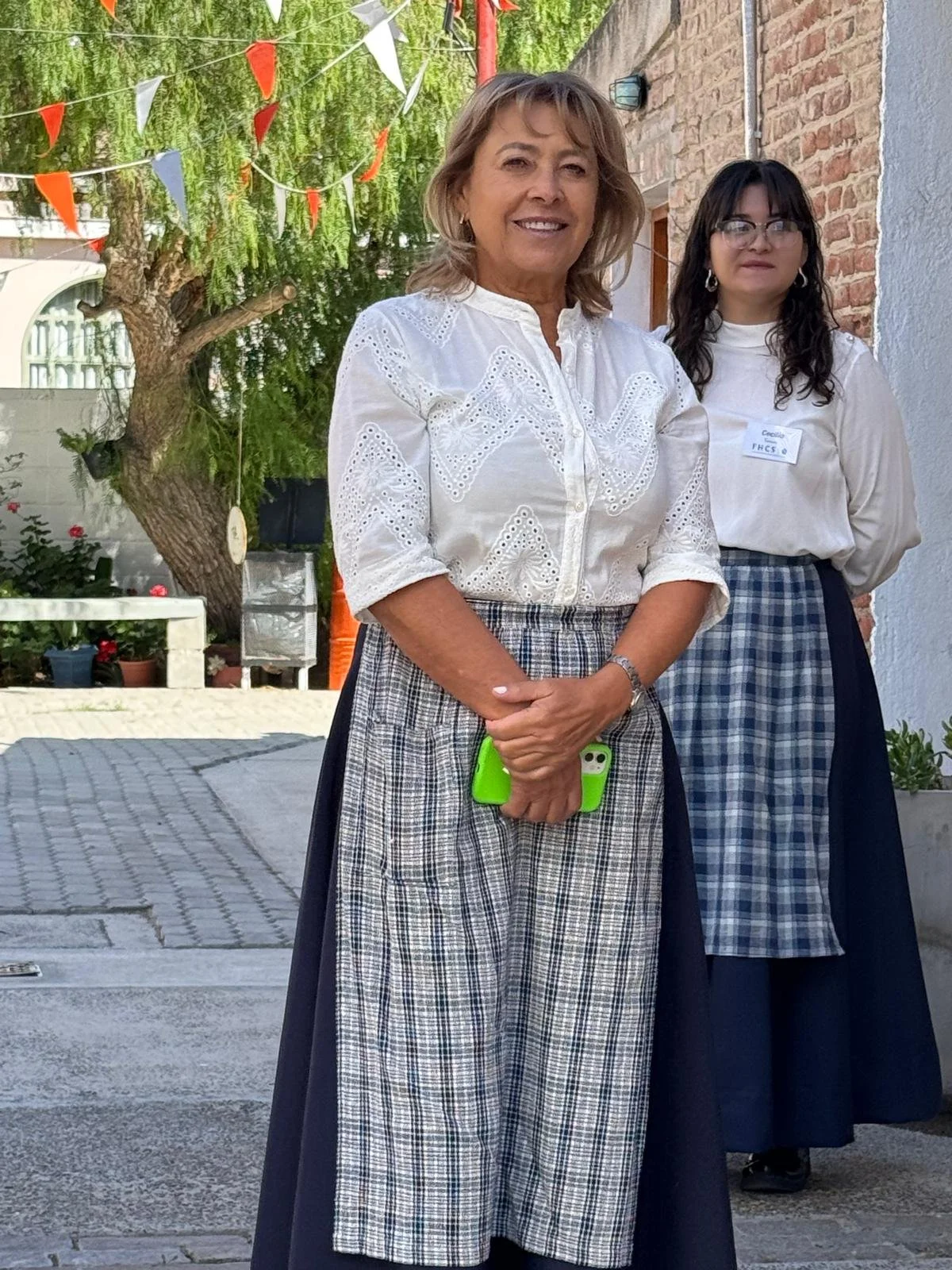
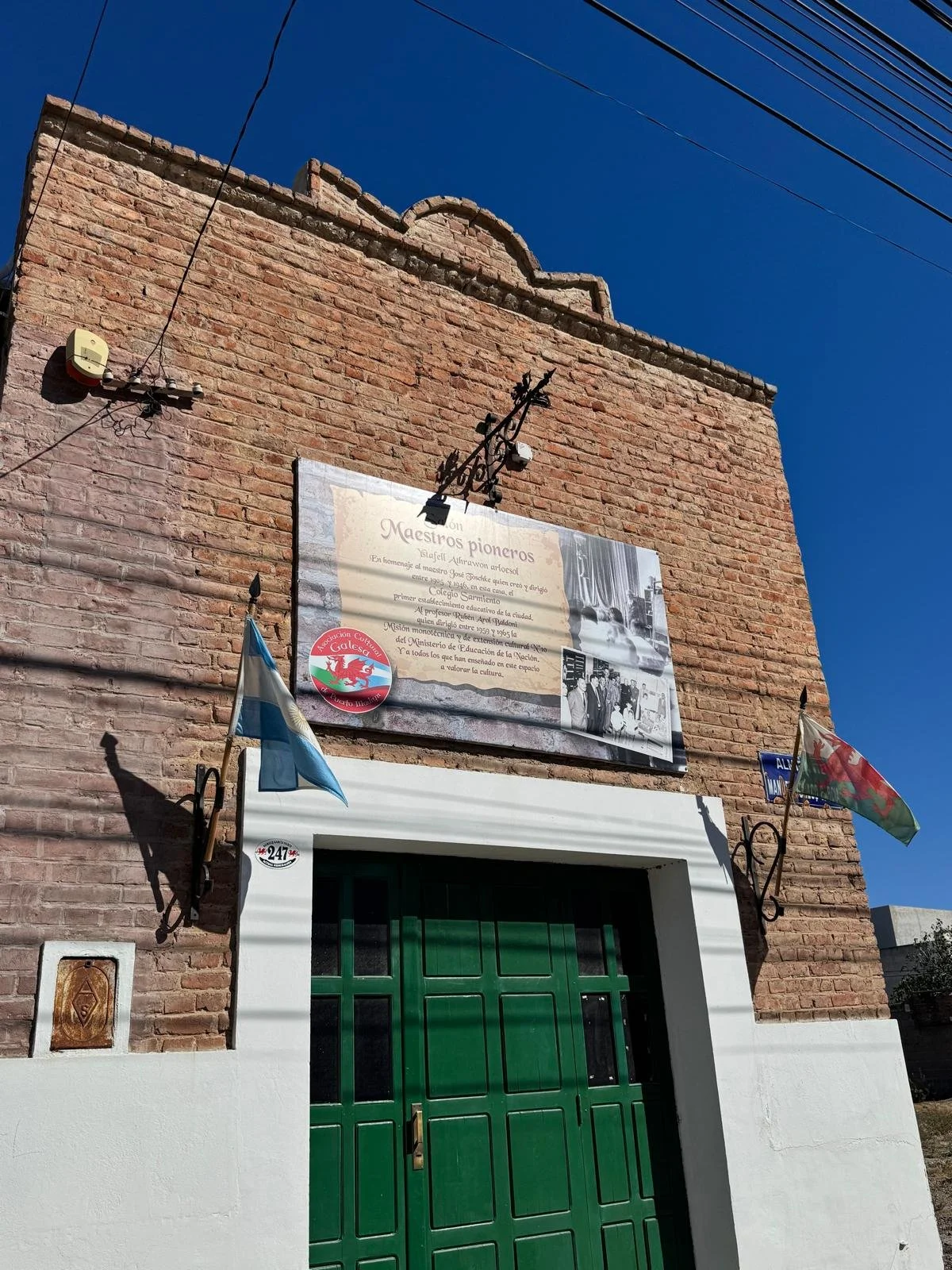
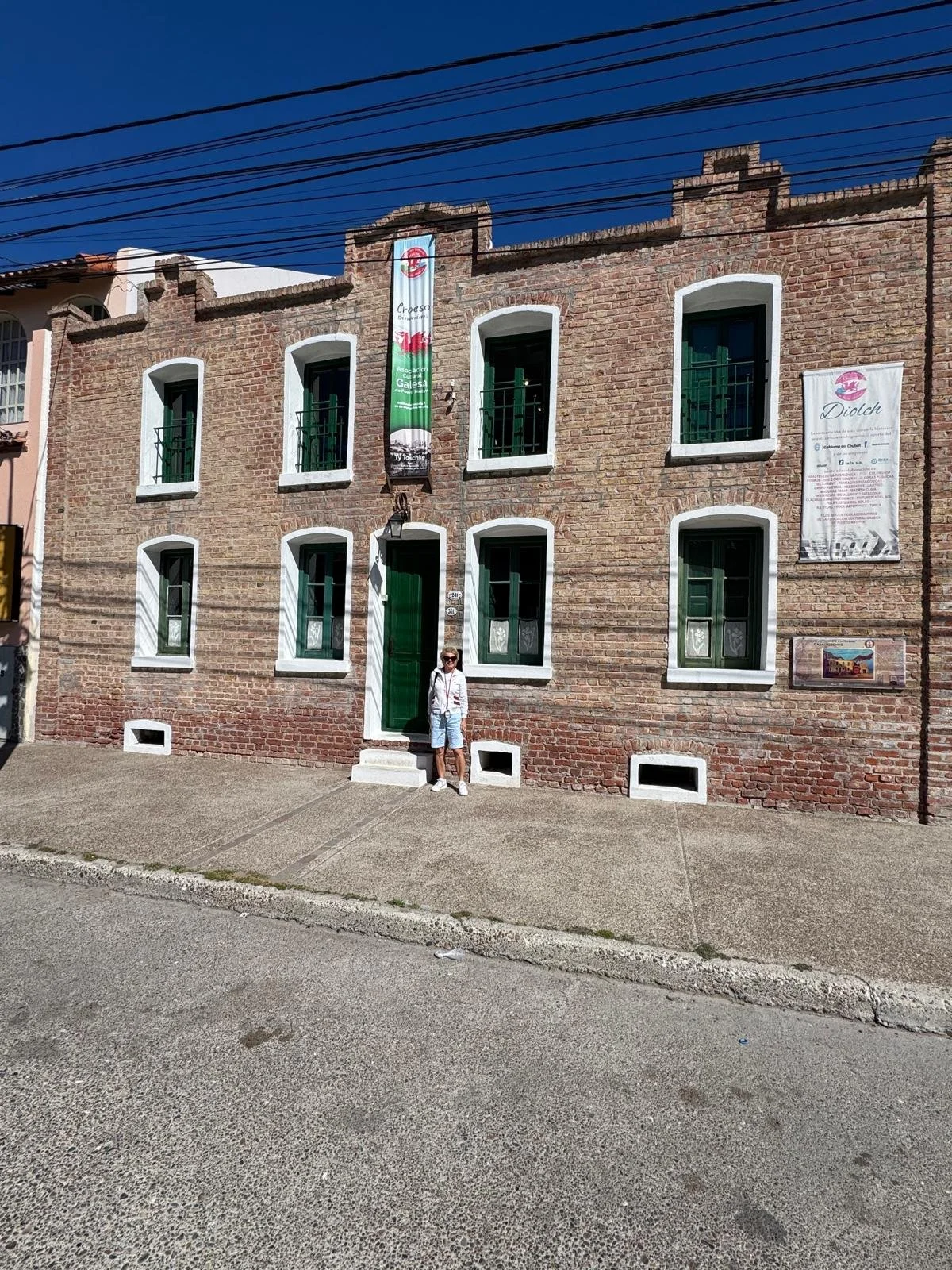
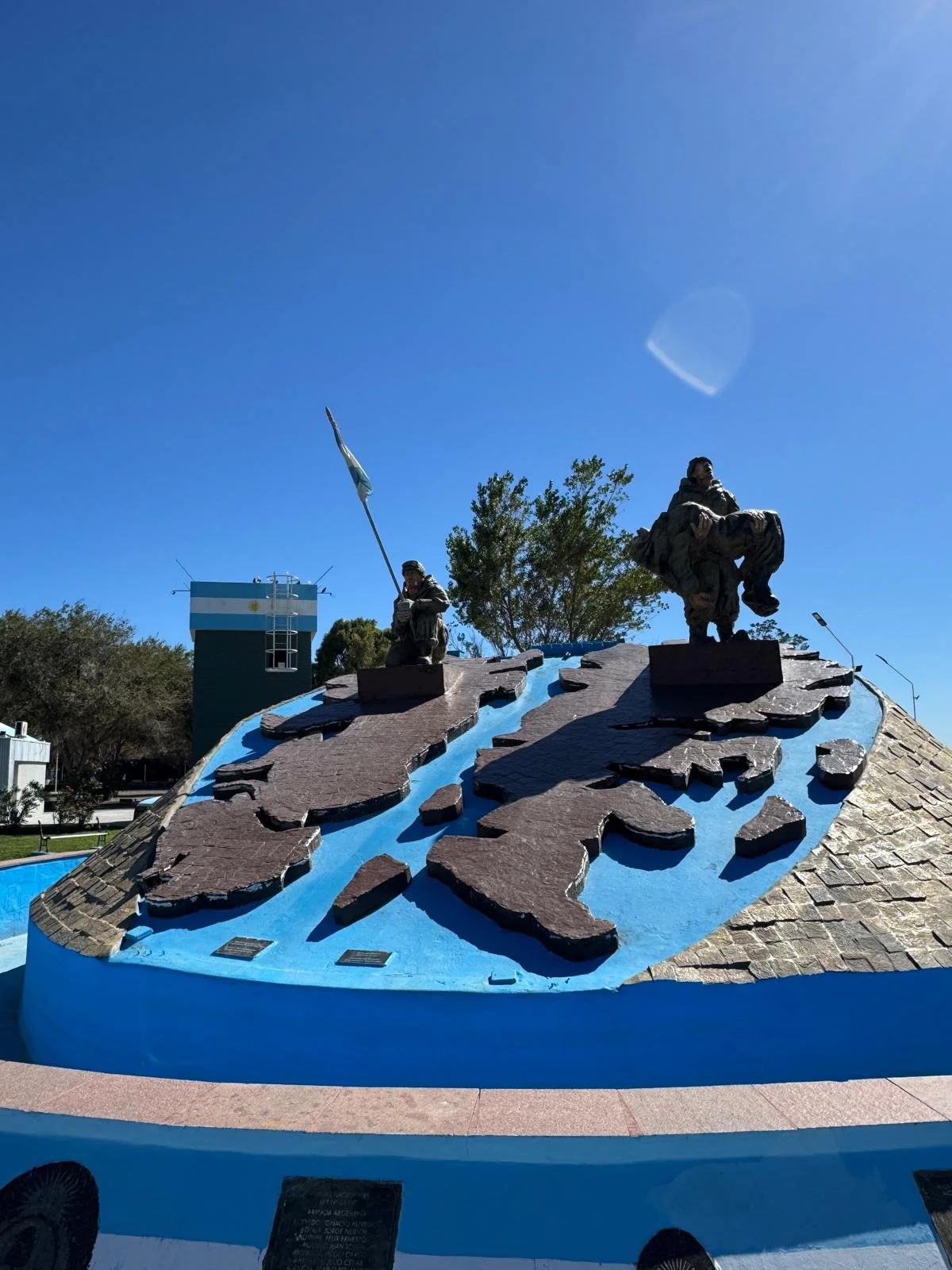
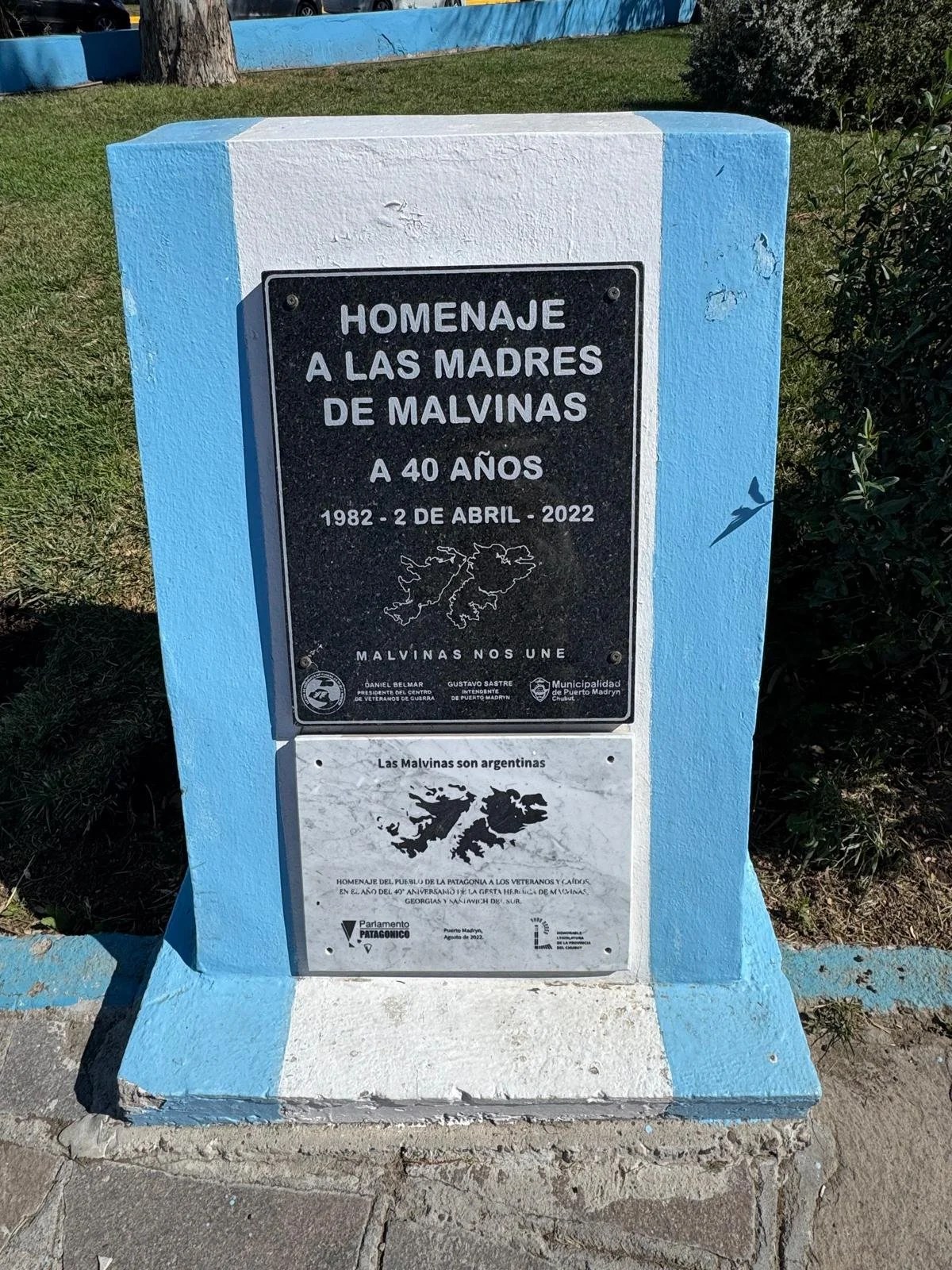
Back to the sculptures and statues….our walk back to the Pier took us past a very beautiful monument to veterans and the fallen in the Falklands War – Las Malvinas. Made of cement and glass it shows a soldier on the islands with a flag holding another comrade and represents pain, resilience and camaraderie, rather than victimization. It really was quite something to look at.

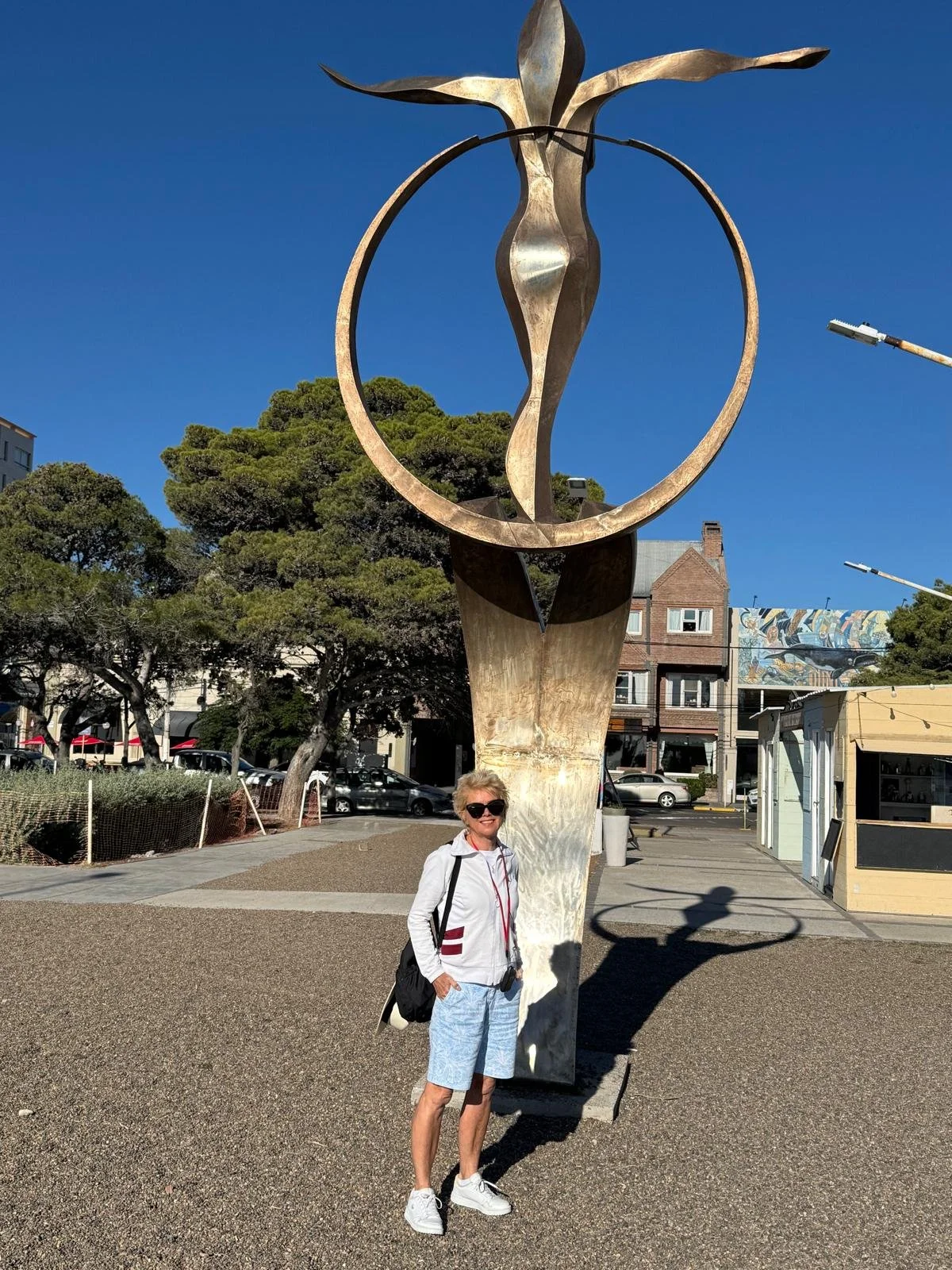
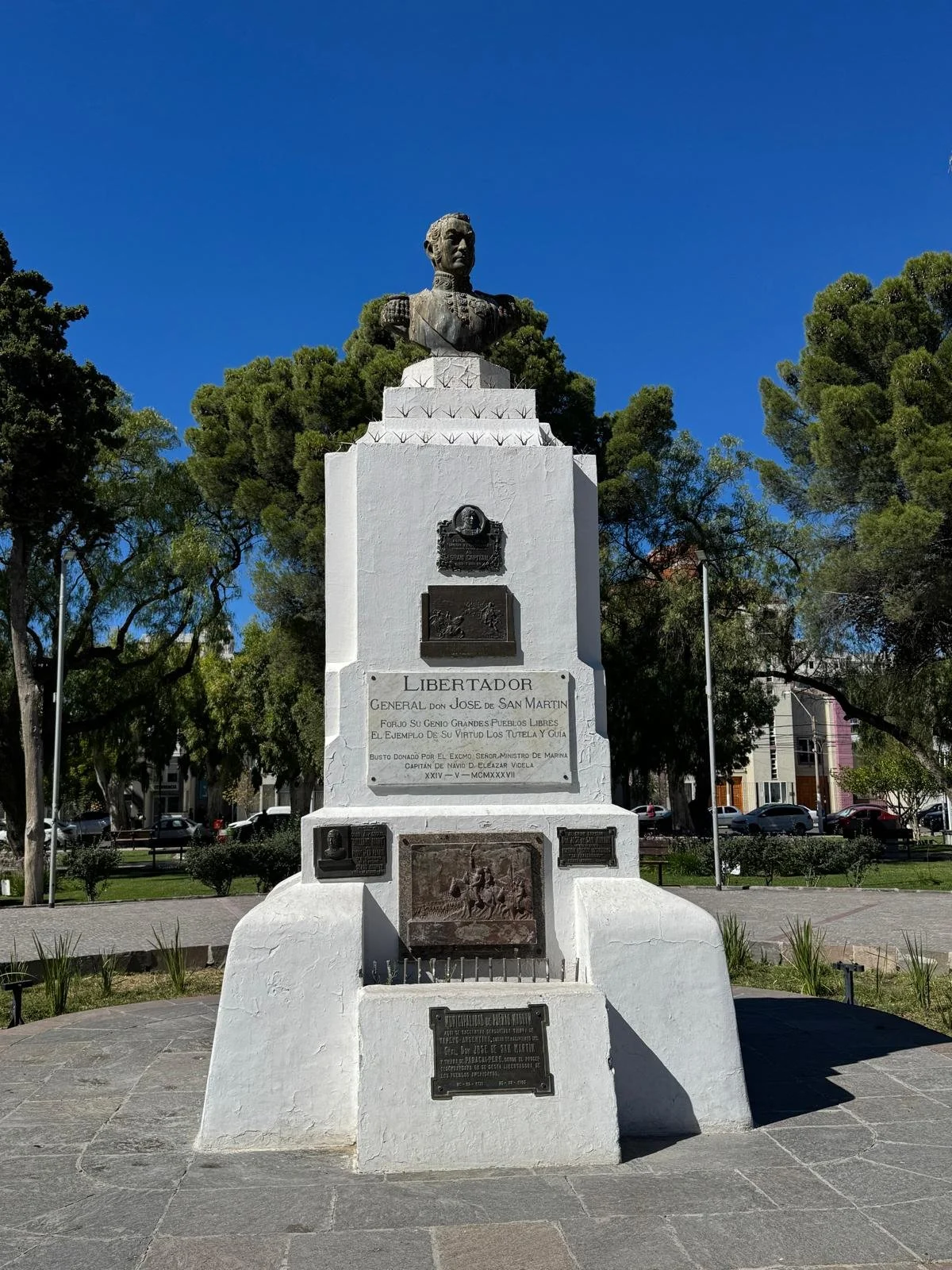
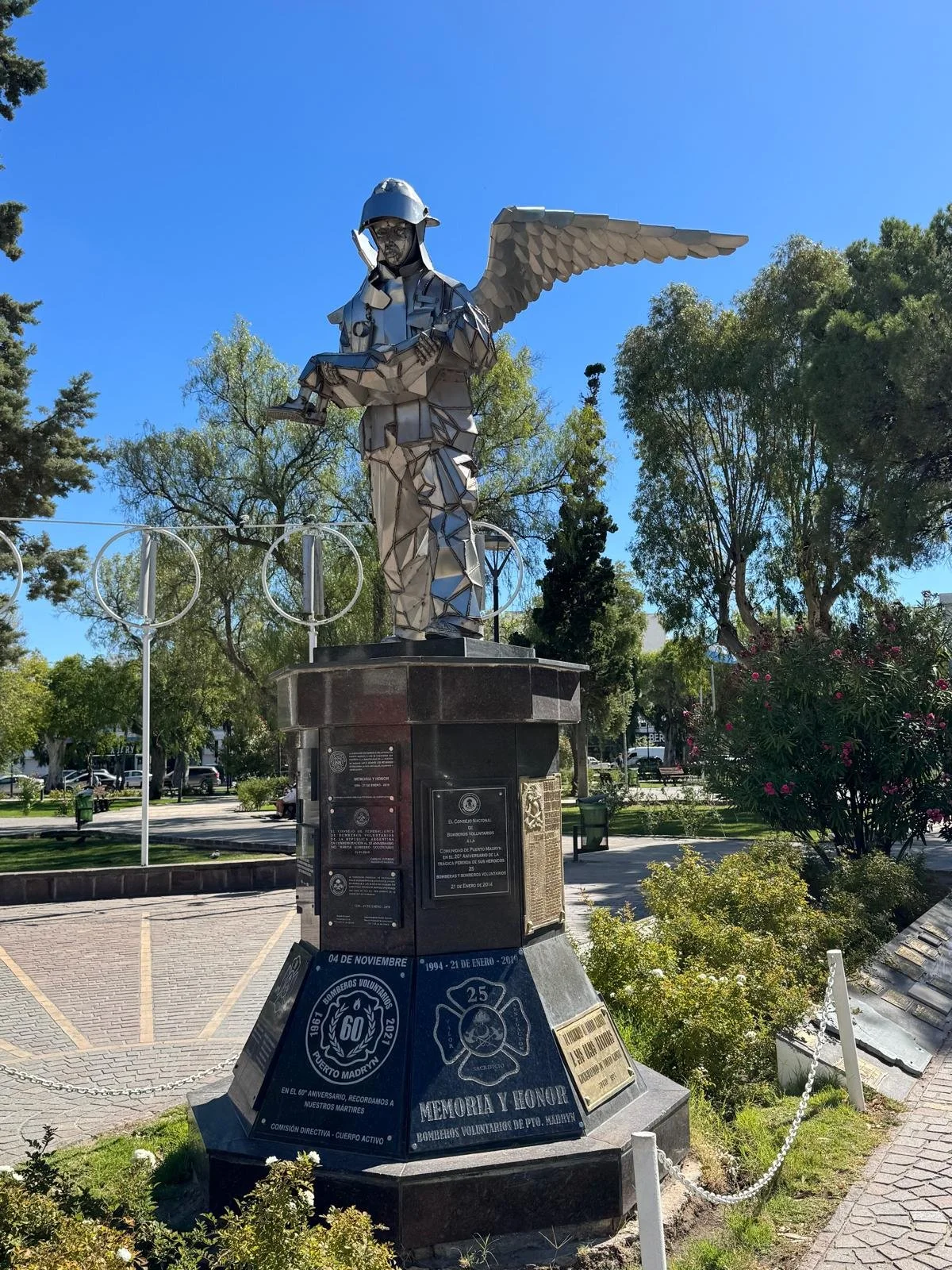
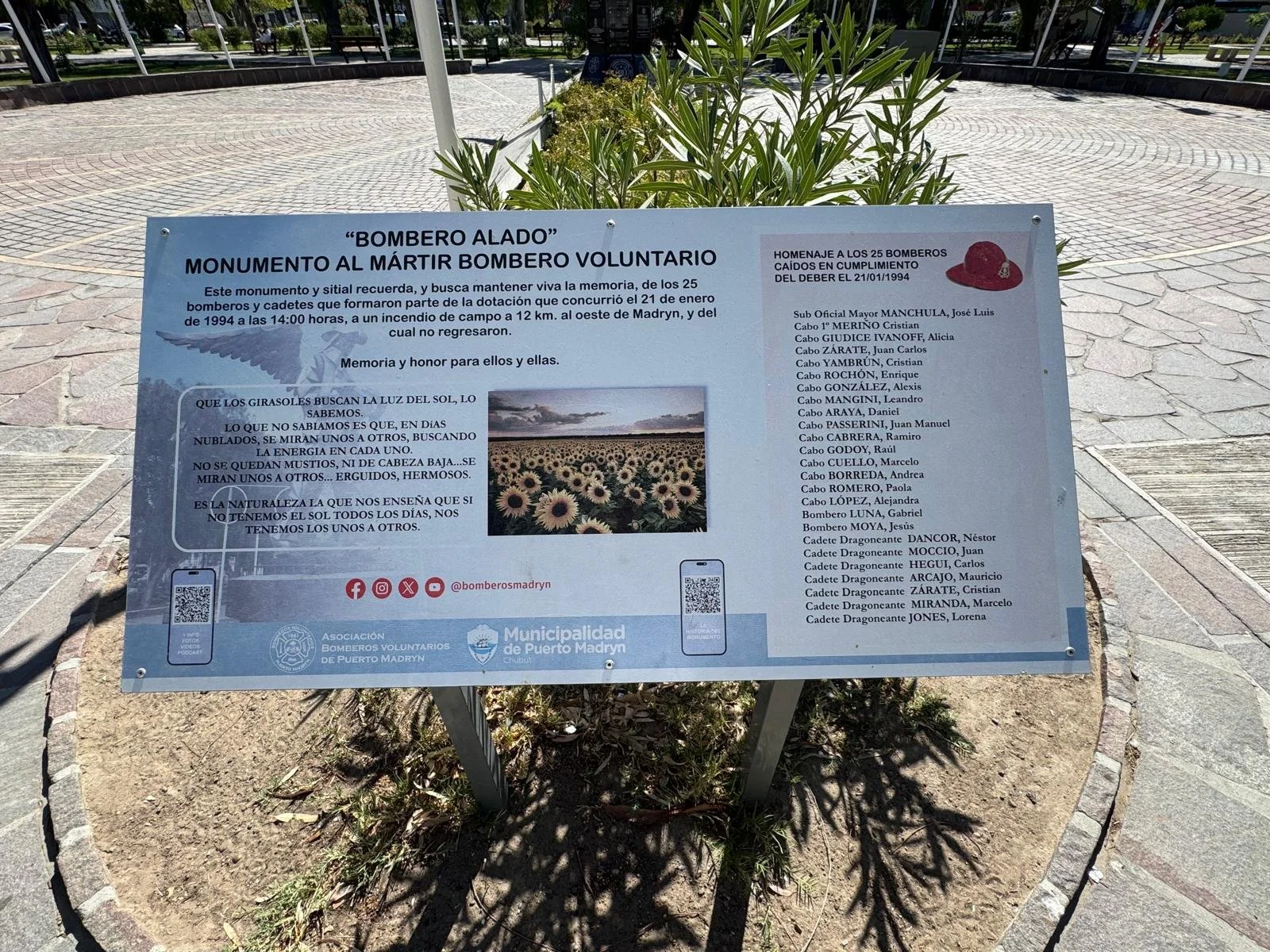
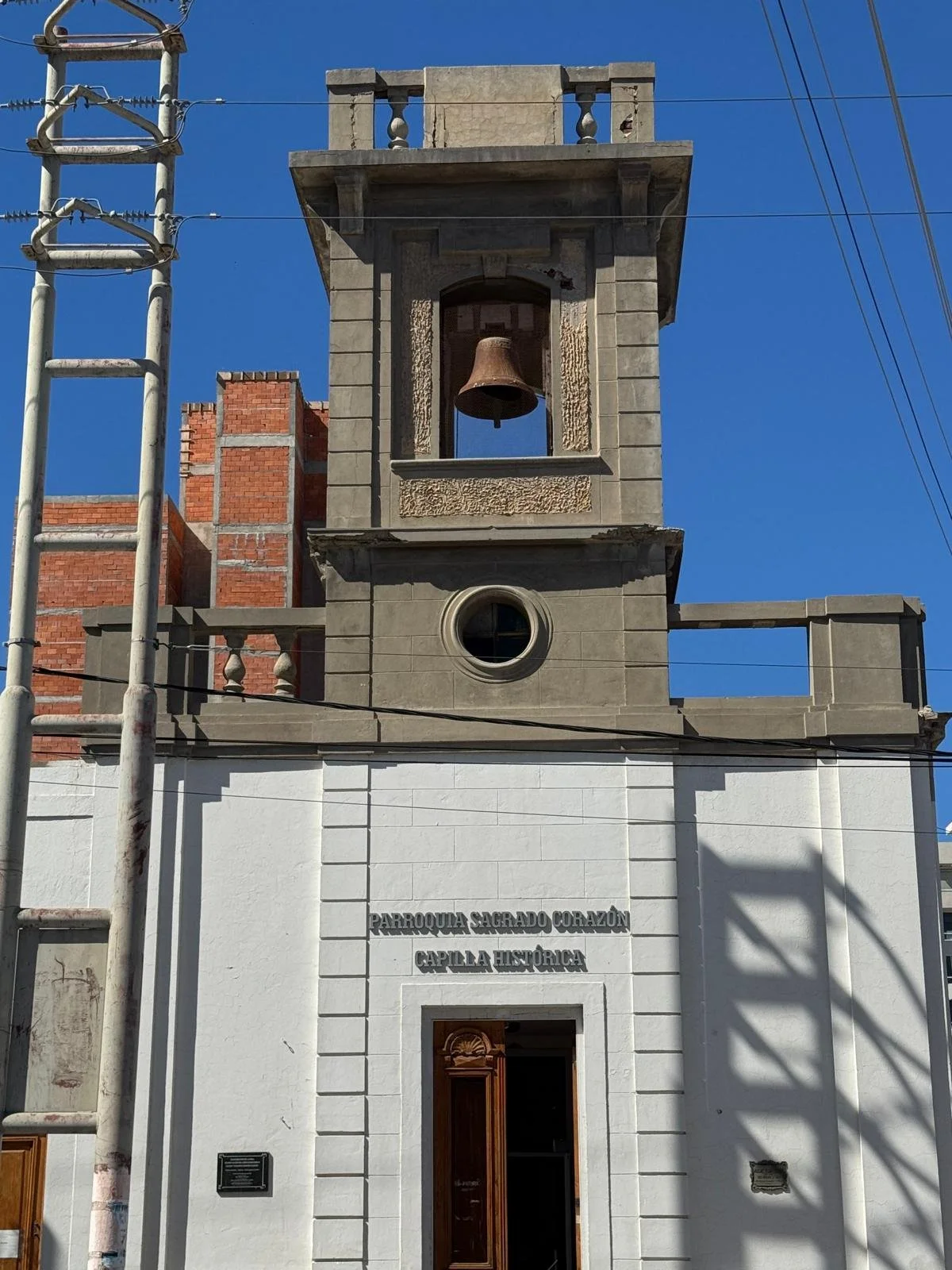
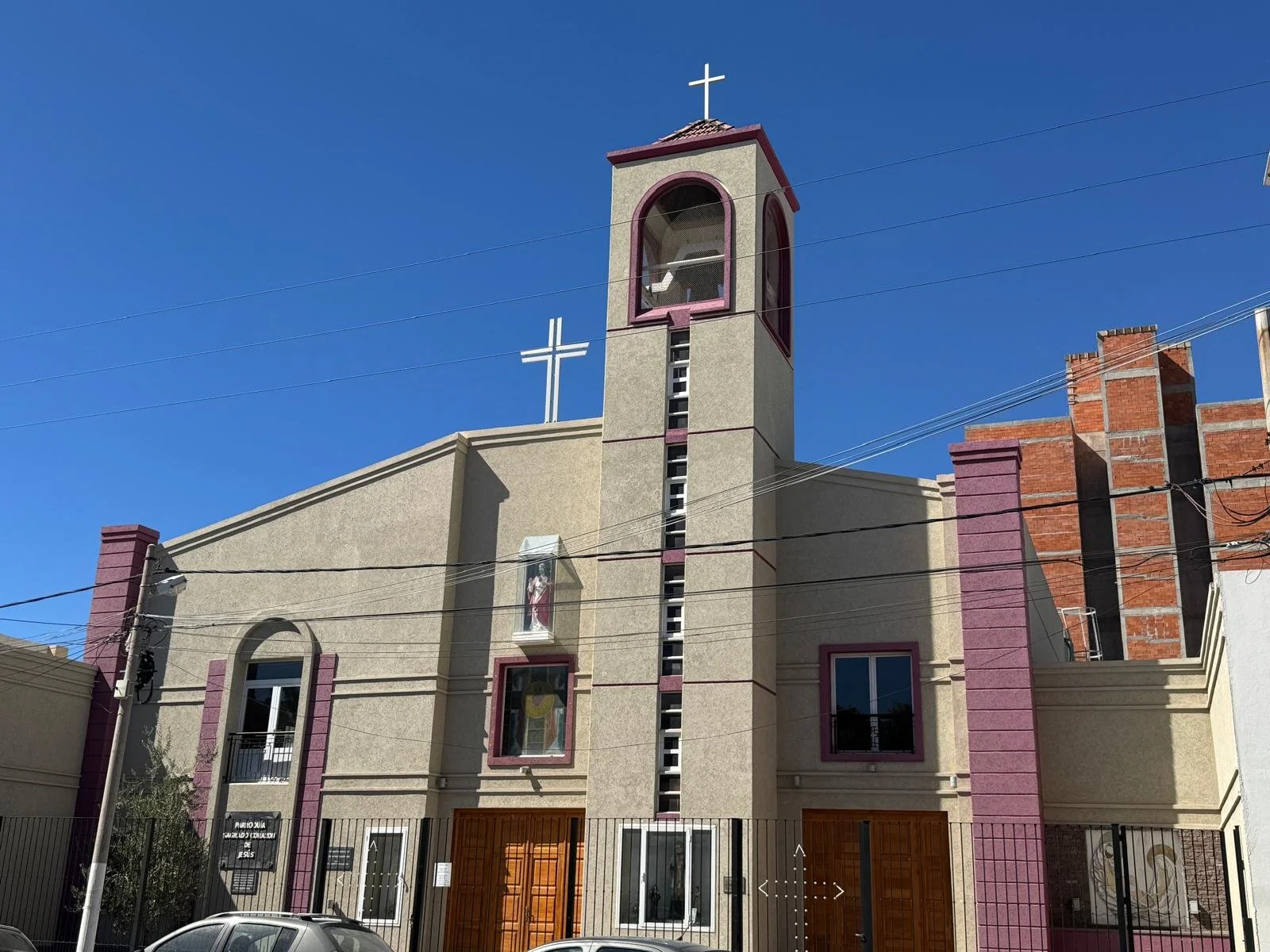
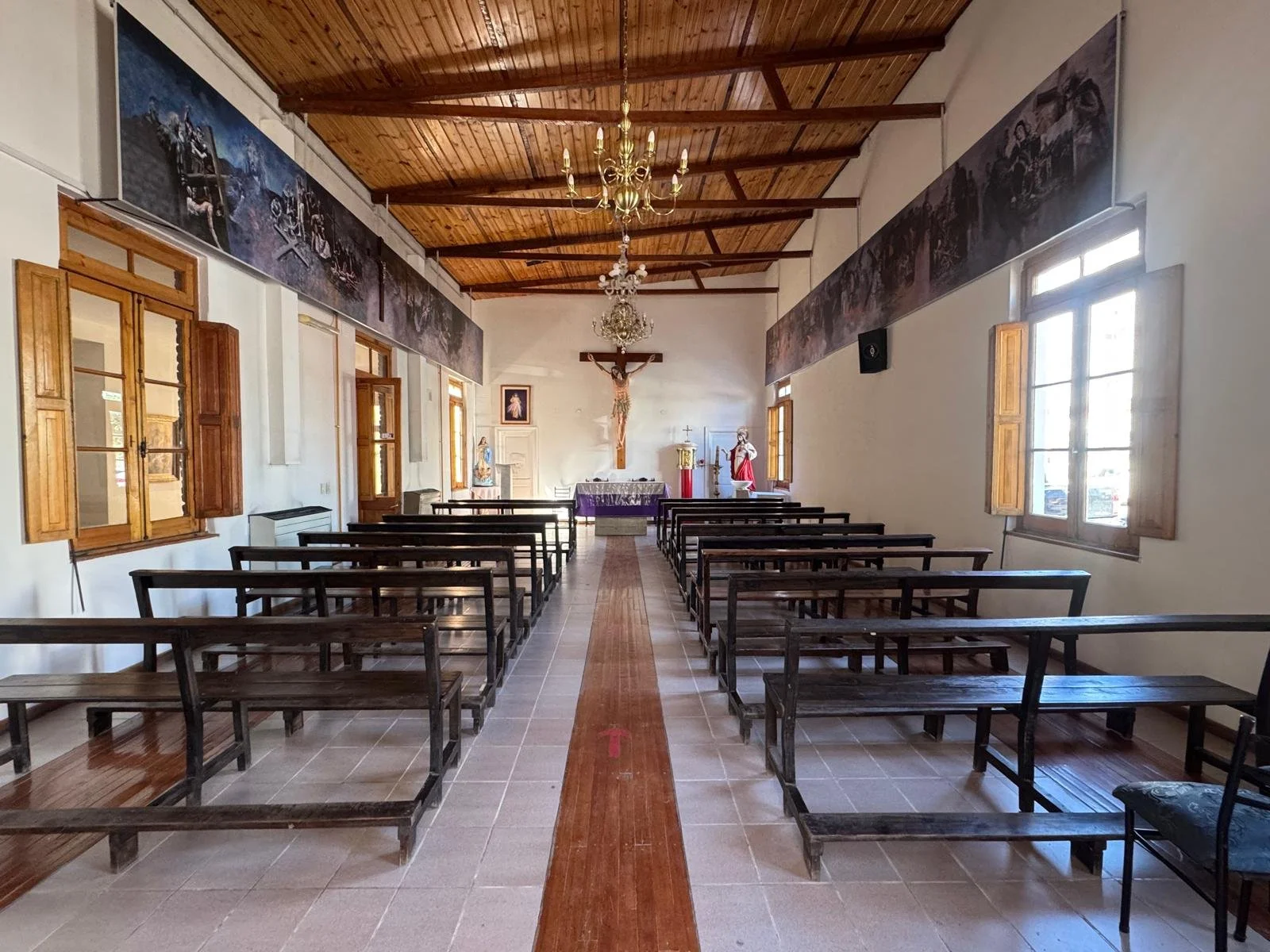
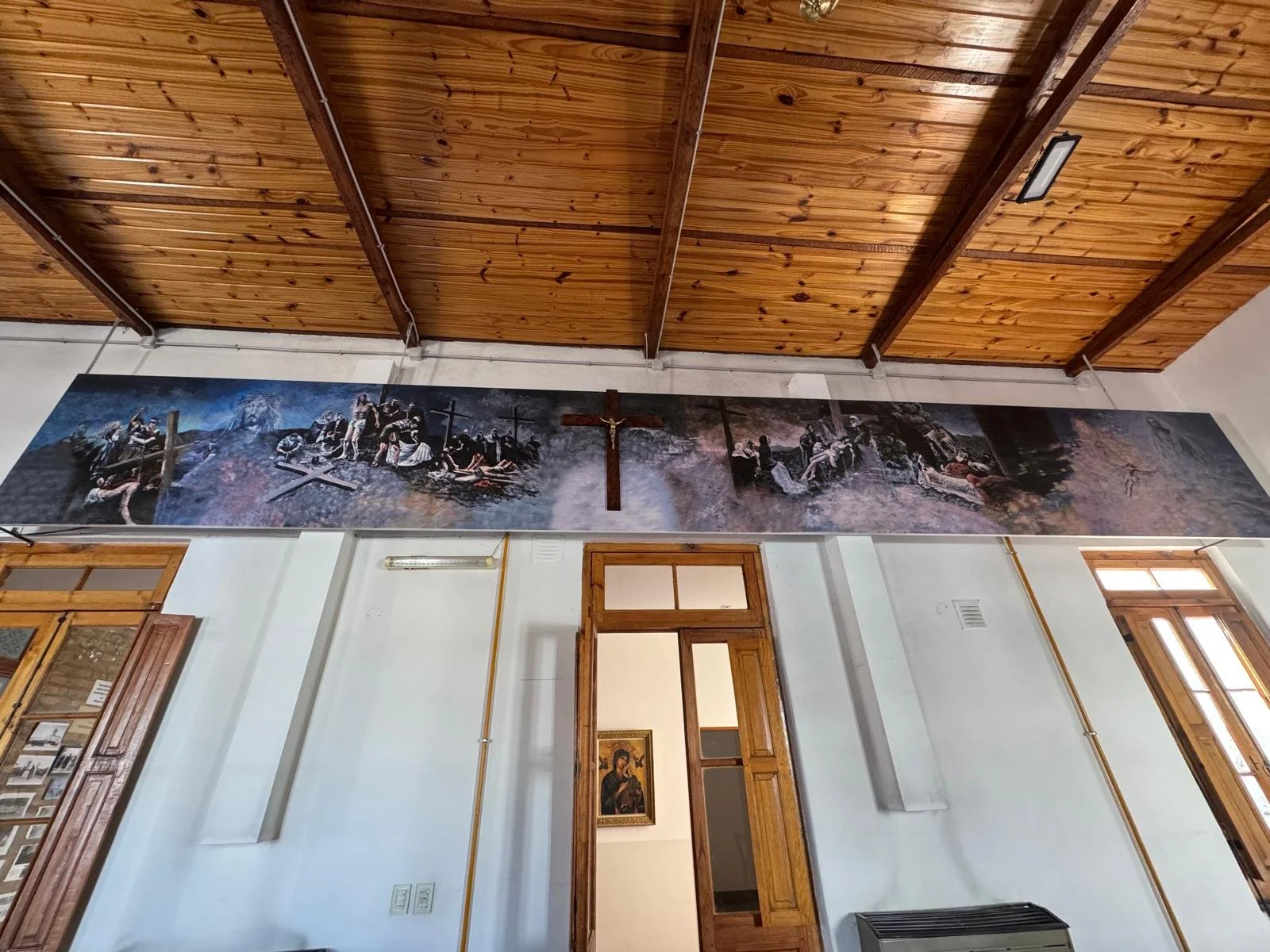
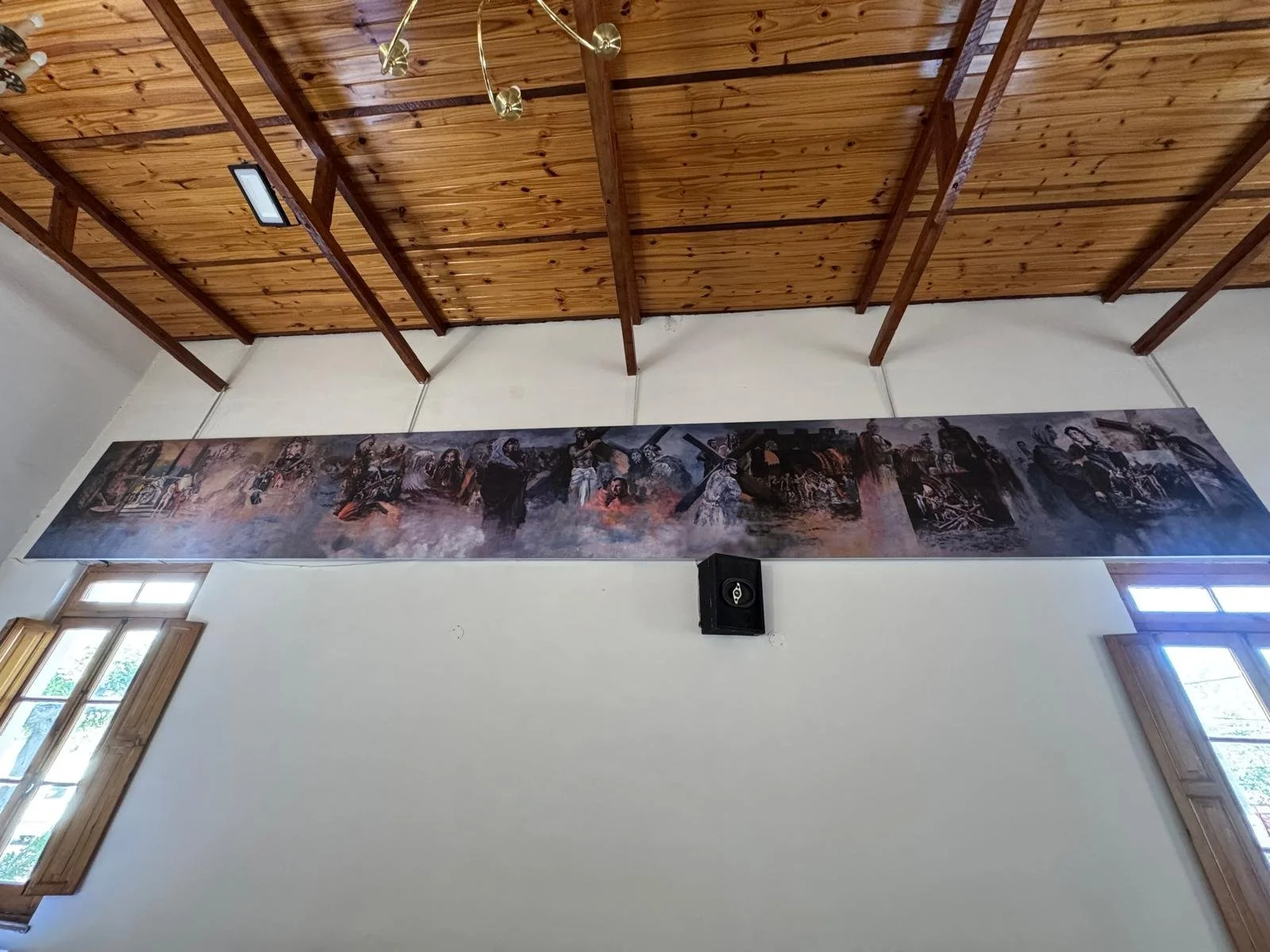
And that marked the end of the morning’s tour….except that whilst we were on the bus, we drove slowly past the town square, another one named after José de San Martín, (like the one we saw in Mendoza). Geoff and I had an hour up our sleeve so walked back to the centre of town to take a closer look at it and also the Memorial named El Bombero Alado - “Winged Fireman” in honour of the 25 volunteer fire fighters who died after being trapped in a field fire. Every 21 January, family members, firefighters, and authorities gather at this location to commemorate them. A quick look at the Sacred Heart of Jesus Paris Church – Parroquia Sagrado Corazón de Jesús – followed, this was inaugurated in March 1916 and is a spiritual and community landmark here. The original chapel is preserved and is a more intimate space evoking contemplation and tradition – have a look at the beautiful renditions of the Stations of the Cross. Next to it stands the main church, a modern, larger construction which now reflects the needs of a growing community.
And that concluded our morning’s visit to the city of Puerto Madryn – it was certainly a busy one, and like I said, included plenty of interesting monuments and sculptures! Back to the Pier and the shuttle bus, onto the ship for a quick bite at the buffet, and back down the gangway and onto the next bus for our second tour of the day….more to follow!