Santiago – the Metropolis at the foot of the Andes
Tuesday 17 February
Welcome back! Geoff and I are off on another awesome adventure around South America and once again, I am looking forward to sharing my blog with you.
First stop, Santiago, Chile. We flew in directly from Auckland and arrived around 3pm, no self-check in counters at Arturo Merino Benitez airport and a very laborious snaking line to Passport control, so not a great start but we finally got into the city centre and checked into our hotel. Within the hour we were out and eager to make the most of our first night in Chile, before leaving tomorrow – yep, you read that correctly, Argentina is on the agenda for tomorrow!!!!
Our hotel is in Barrio Lastarria (Lastarria Neighbourhood) which is the historical centre of Santiago and the centre for cultural activity with plenty of action in the streets, and a real buzzy atmosphere with outdoor dining and cafés and market stalls selling all sorts of trinkets etc. Following the Conquest of Chile by Pedro de Valdivia, this area was under the control of Bartolomé Blumenthal, a German migrant to Chile who built a mill on the site. As with many neighbourhoods in Santiago’s centre, the Barrio Lastarria was built around a church – the Iglesia de la Veracruz - and houses were built between the winding streets. During the 1990’s the neighbourhood began a process of restoration with a lot of care not to alter its bohemian and intellectual flavour and it’s certainly a very lively, fun place to be.
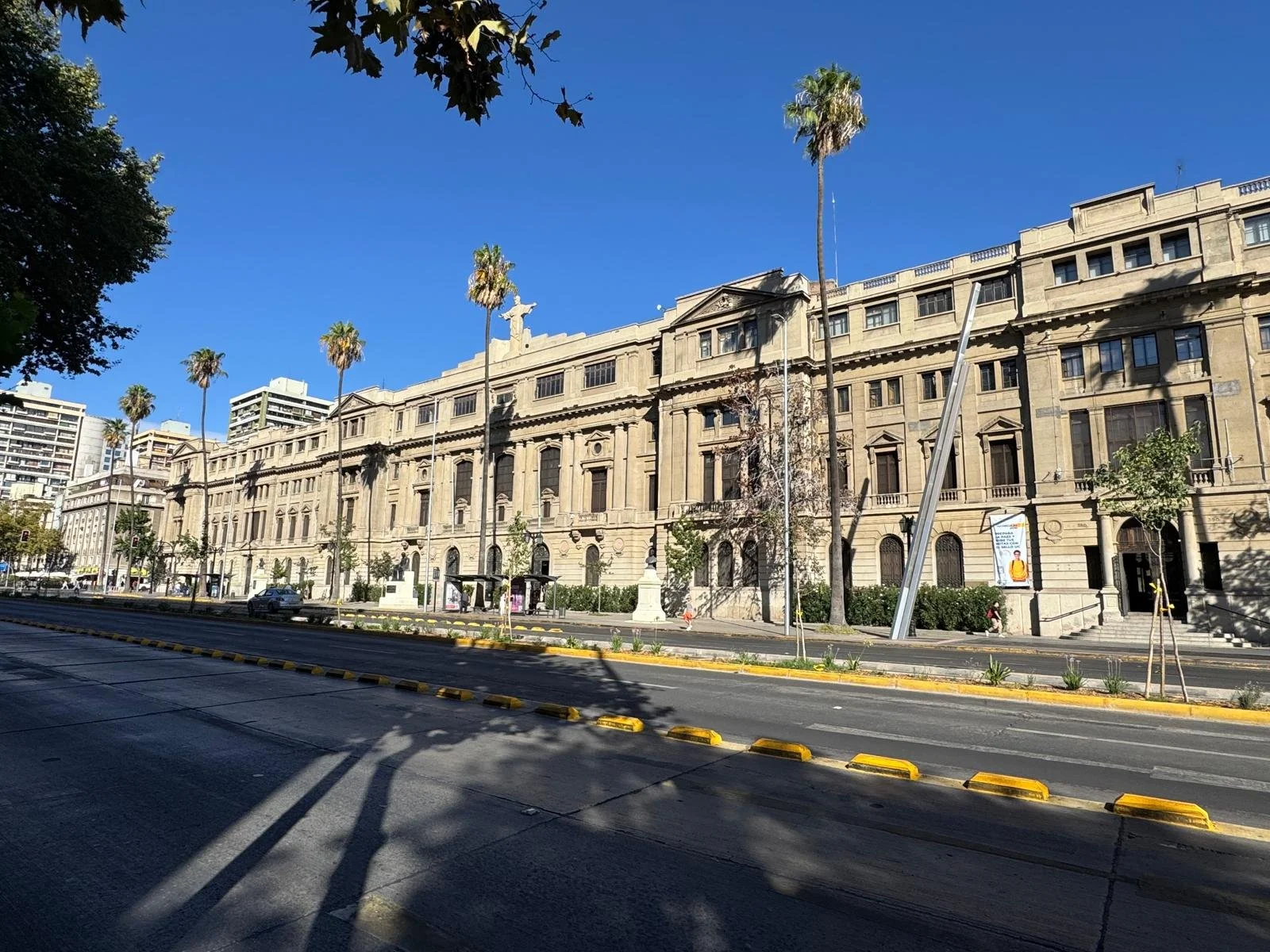
We only have a few hours here this afternoon and tonight, as we leave early tomorrow so we were keen to see as many sights as we could, especially the beautiful San Francisco Church which is near our hotel along the Avenida Libertador General Bernardo O’Higgins. So off we trotted past all the lovely cafés along José Victorino Lastarria and onto Bernardo’s very, very busy avenue towards the Church. I couldn’t believe the size and beauty of the first building we came across at the end of our street – the Pontifical Catholic University of Chile, what a magnificent piece of architecture it is!
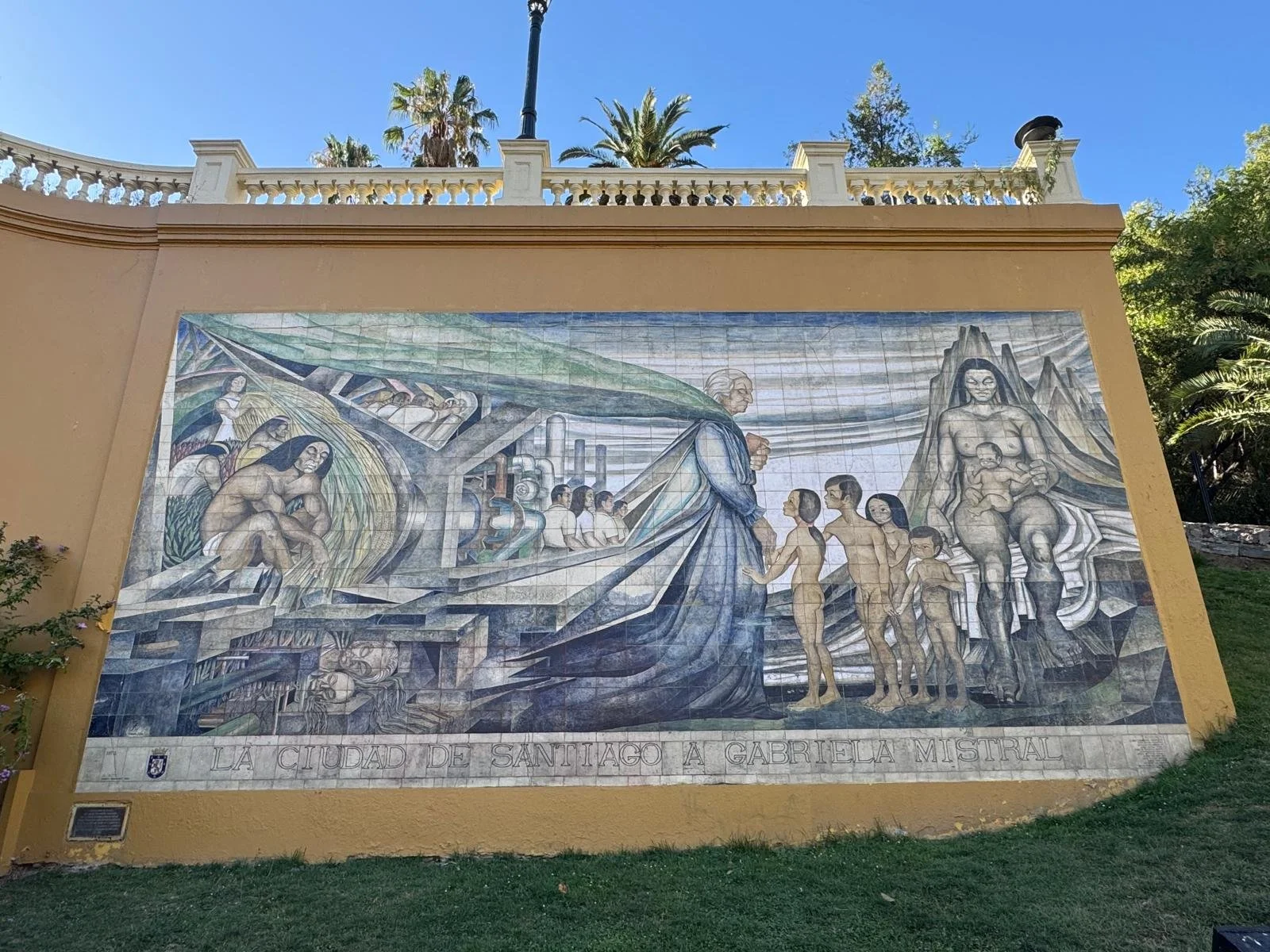
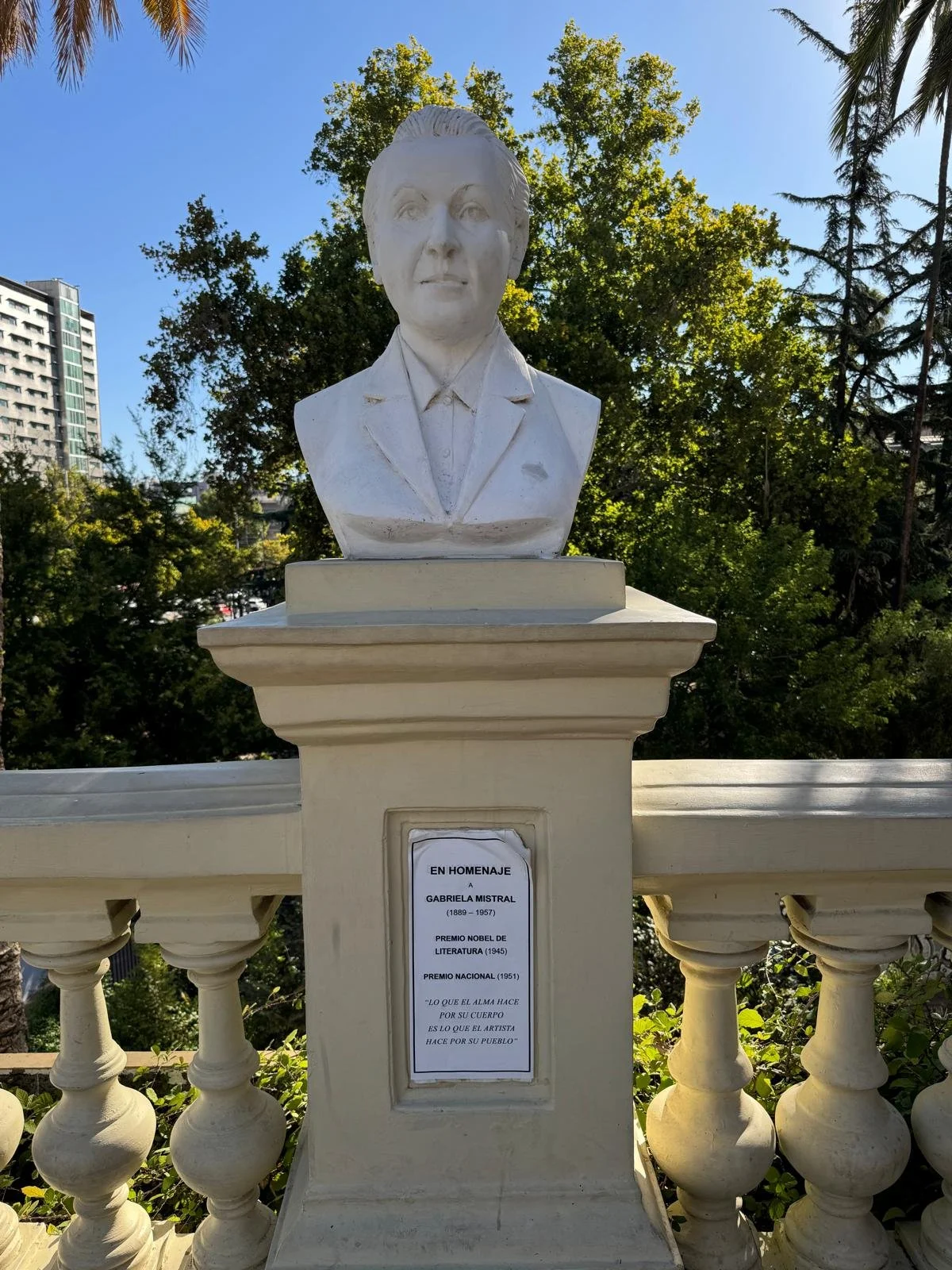
Next up, and a lovely surprise to happen upon, was the Neptuno Terrace, known for it’s Neptune Fountain which is dedicated to the Roman God of the Sea and was built at the turn of the 20th Century, with its stunning stone staircases surrounding Neptune - it really is a pretty place in the centre of a capital city.
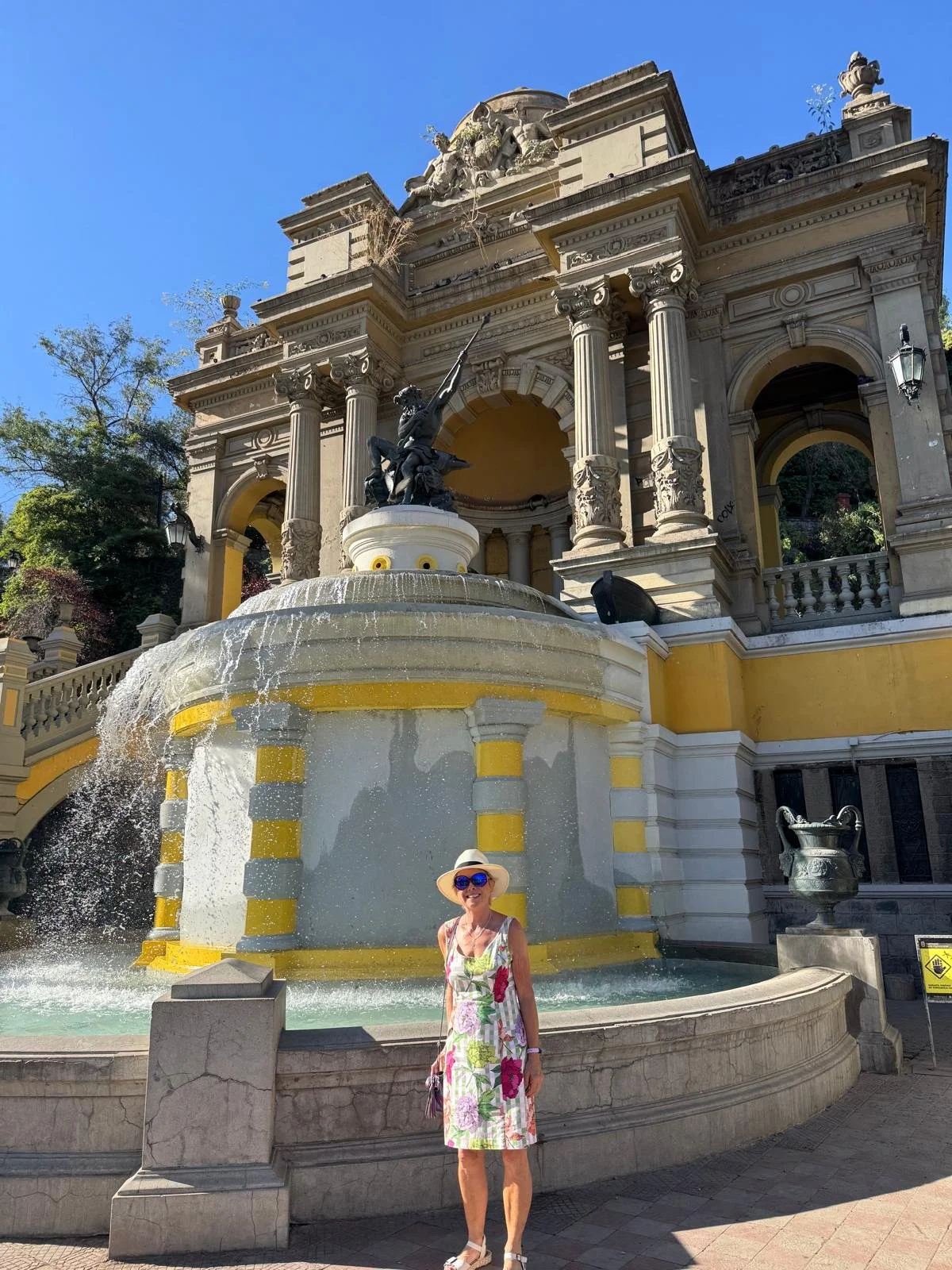
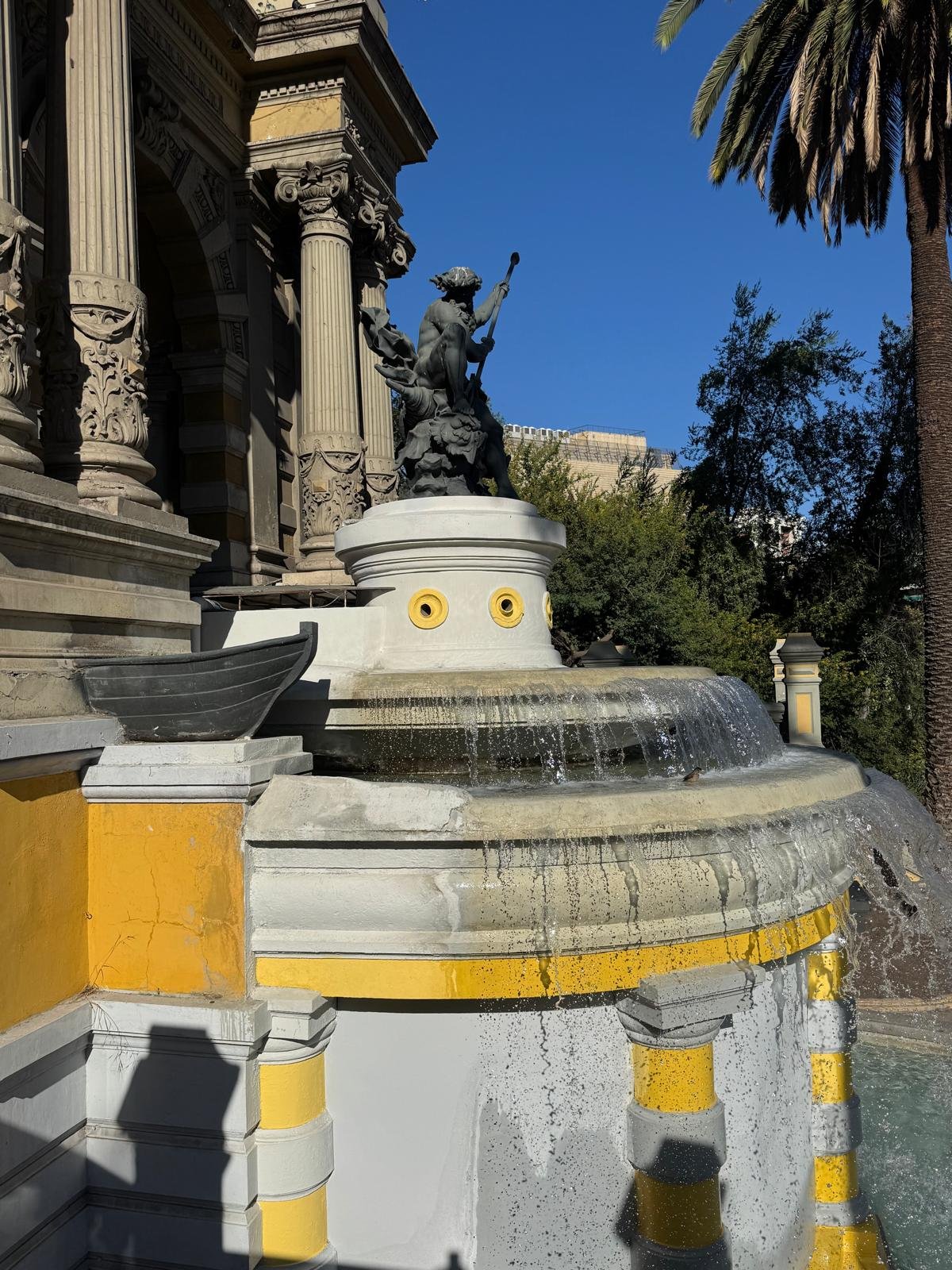
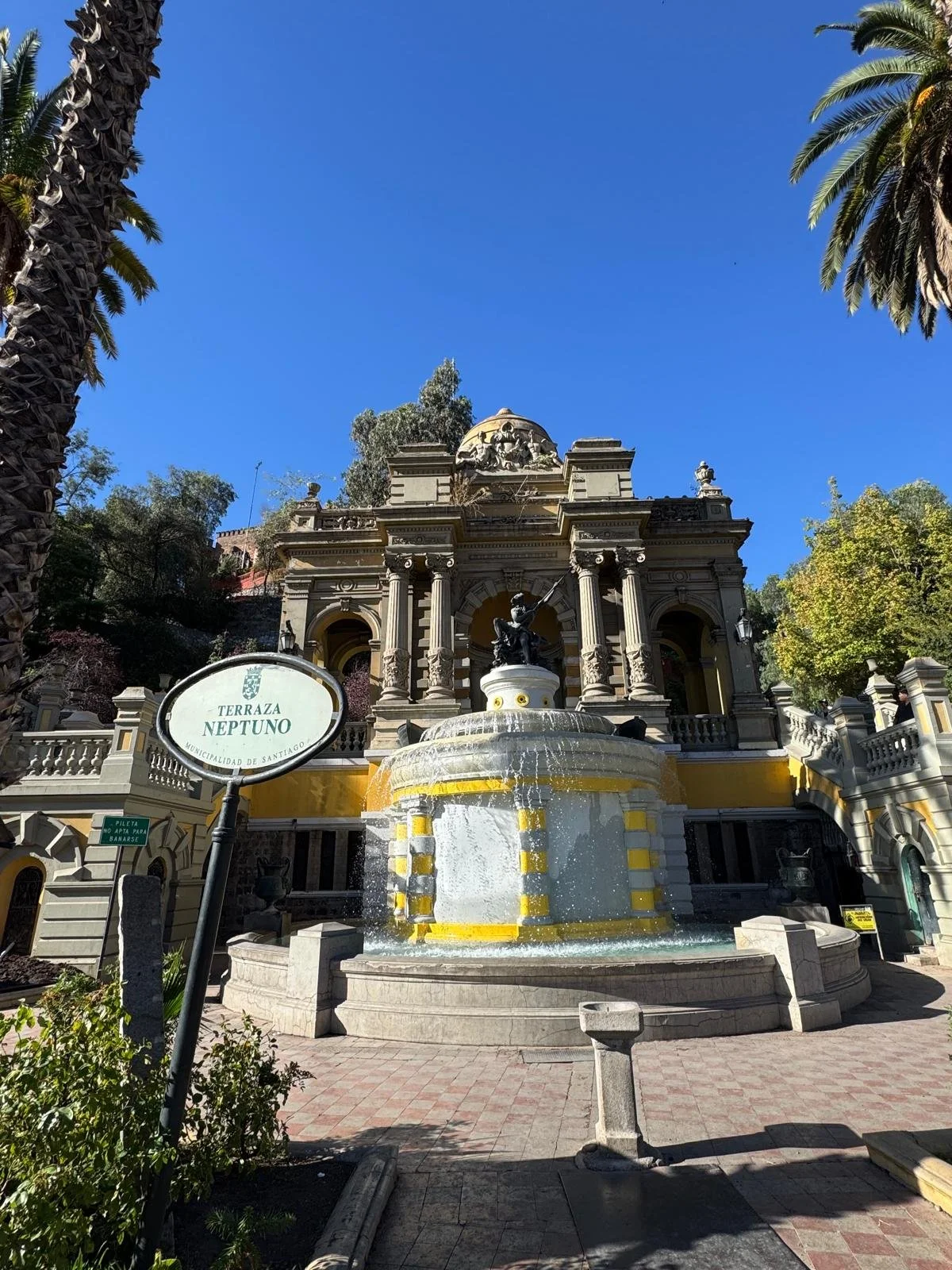
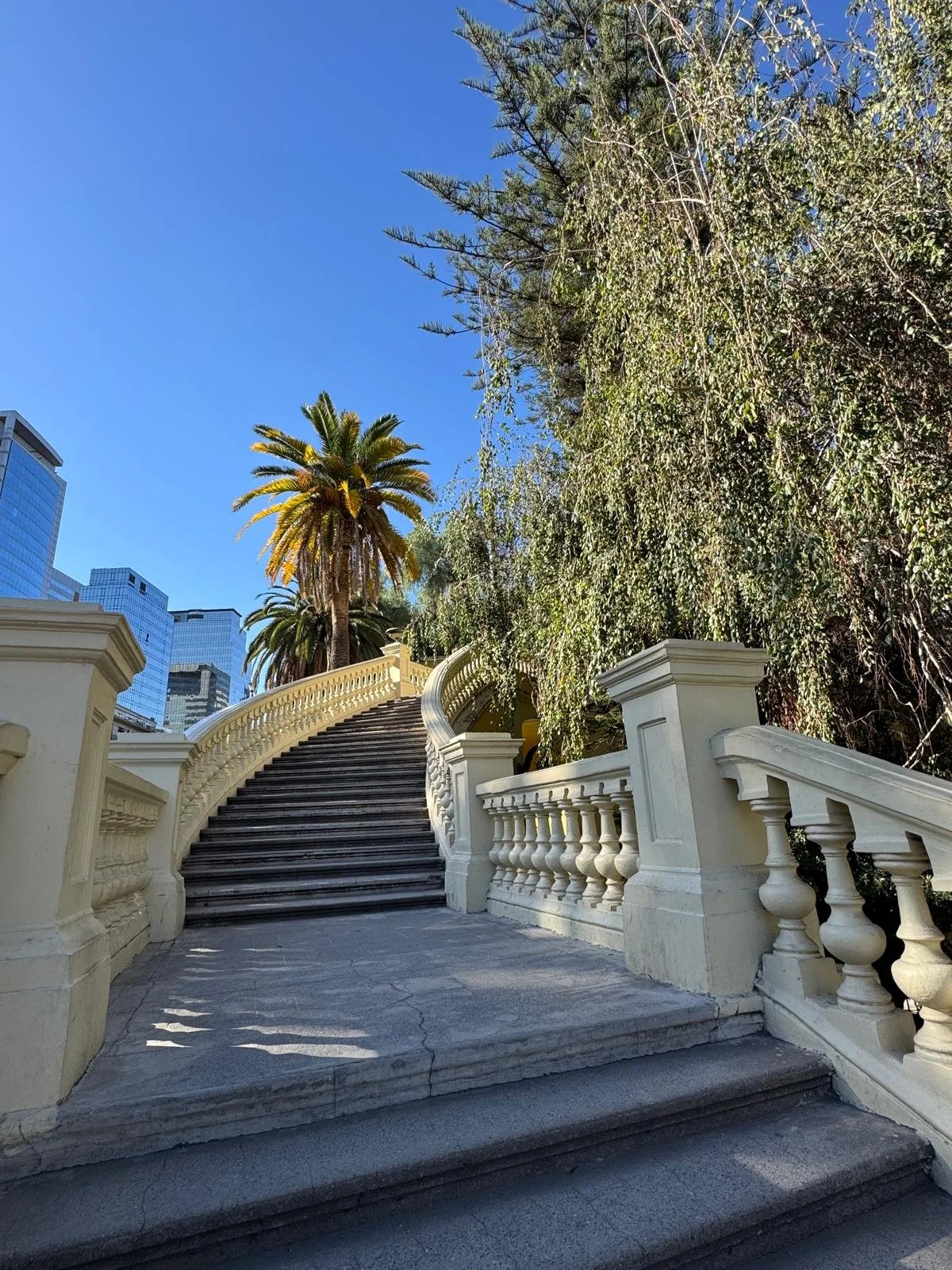
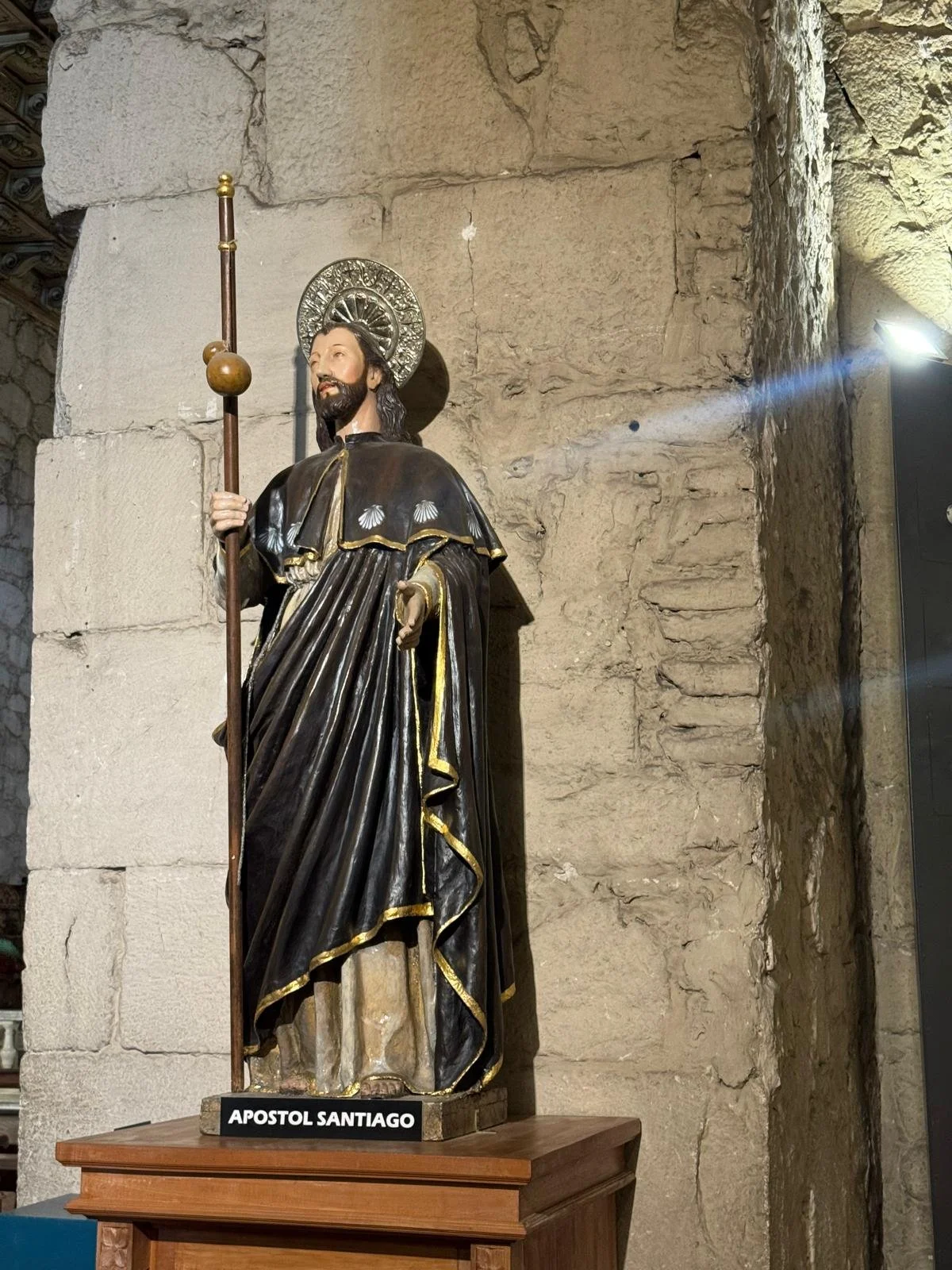
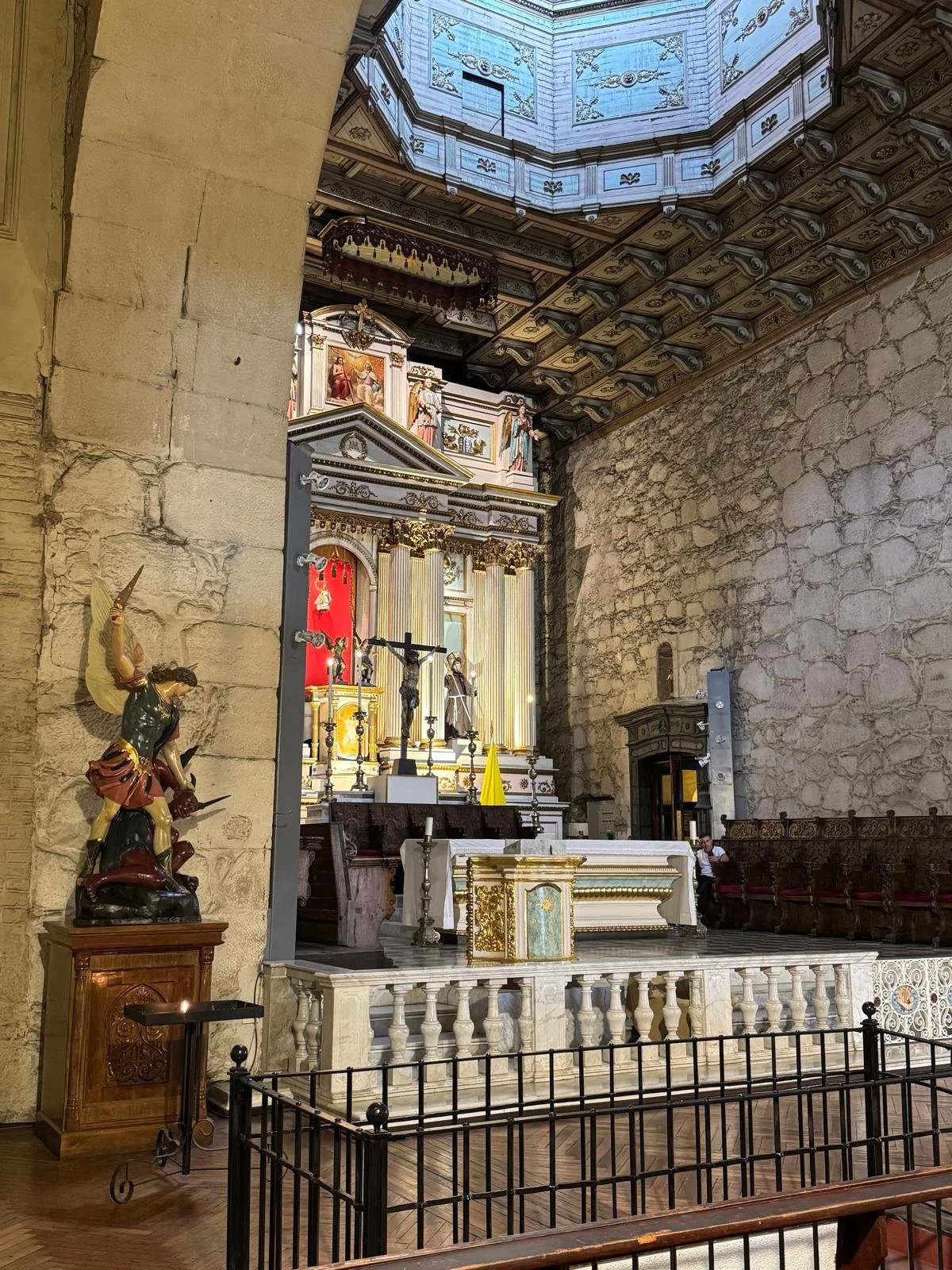
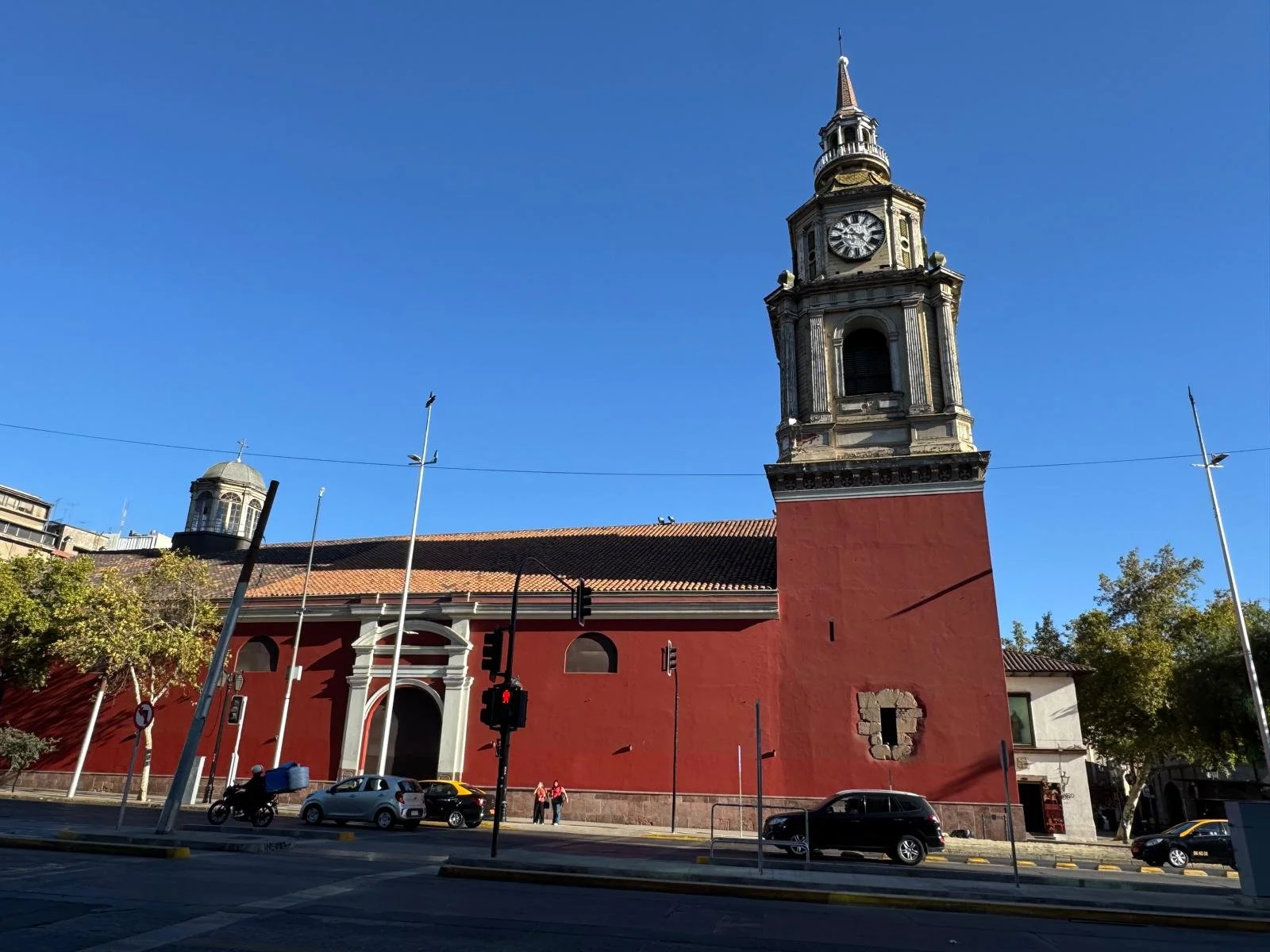
And then the Iglesia de San Francisco – this Church with its adjacent convent is one of the oldest colonel-era buildings in the country and has been resistant to about 15 earthquakes with a magnitude of over 7! It was consecrated in 1622. The first bell tower was destroyed by an earthquake in 1647. In 1730 another earthquake damaged the rebuilt tower which was demolished in 1751. The current bell tower is of Victorian architecture and was constructed in the mid 1800’s – isn’t it beautiful with its distinctive clock? Perfectly peaceful inside, with many altars, it was a lovely respite from the heat and all the hustle and bustle along the main street outside.
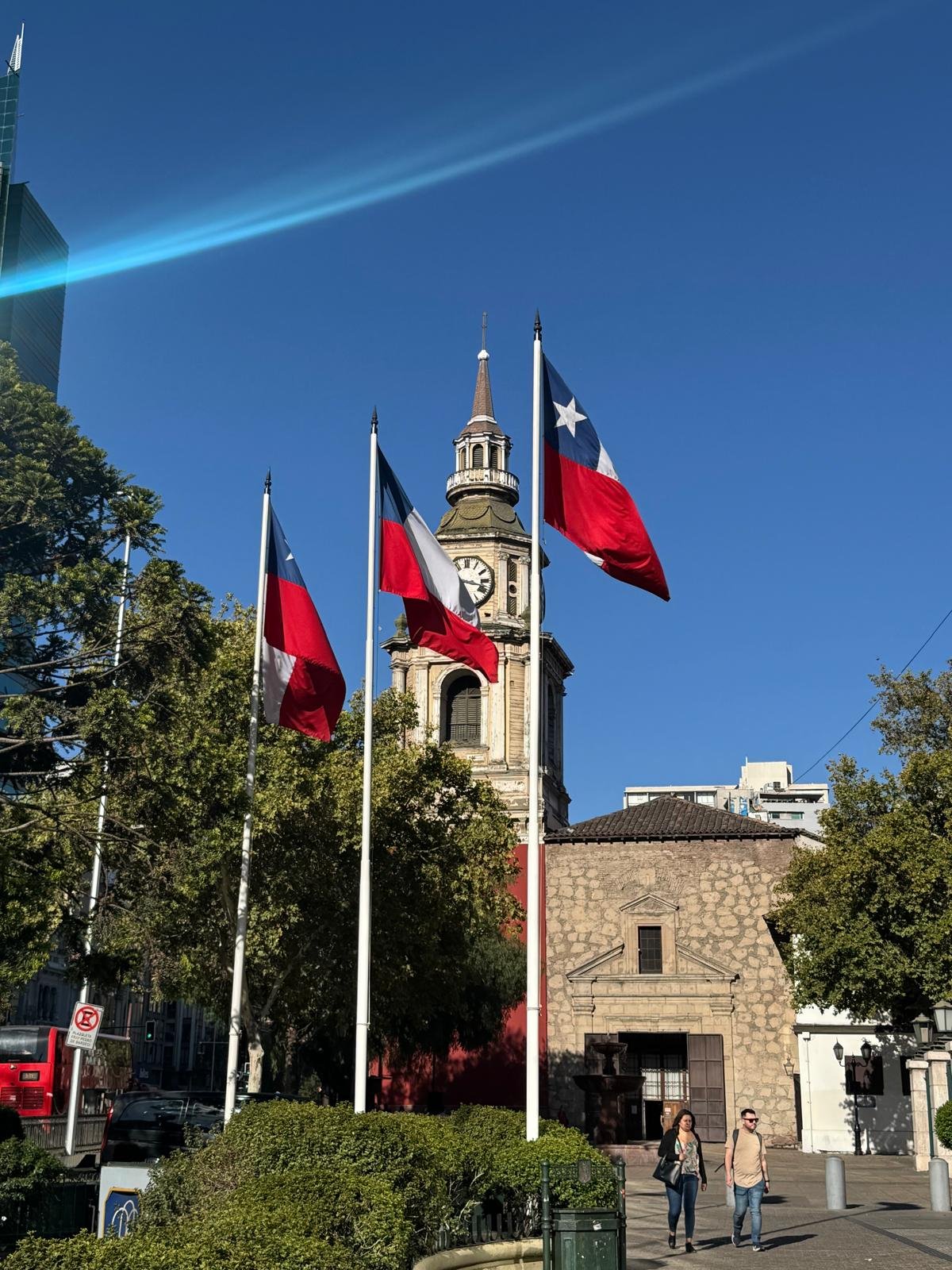
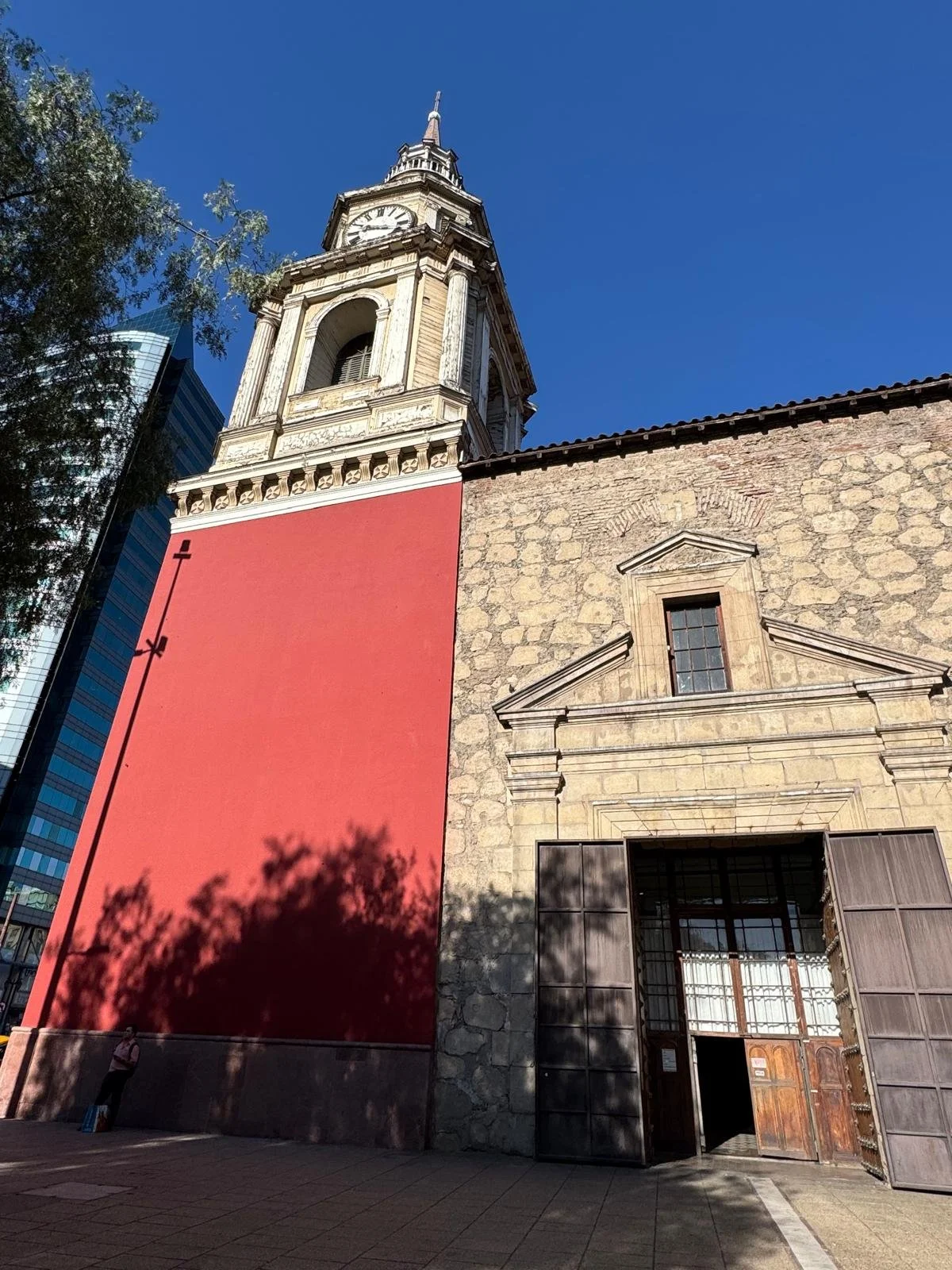
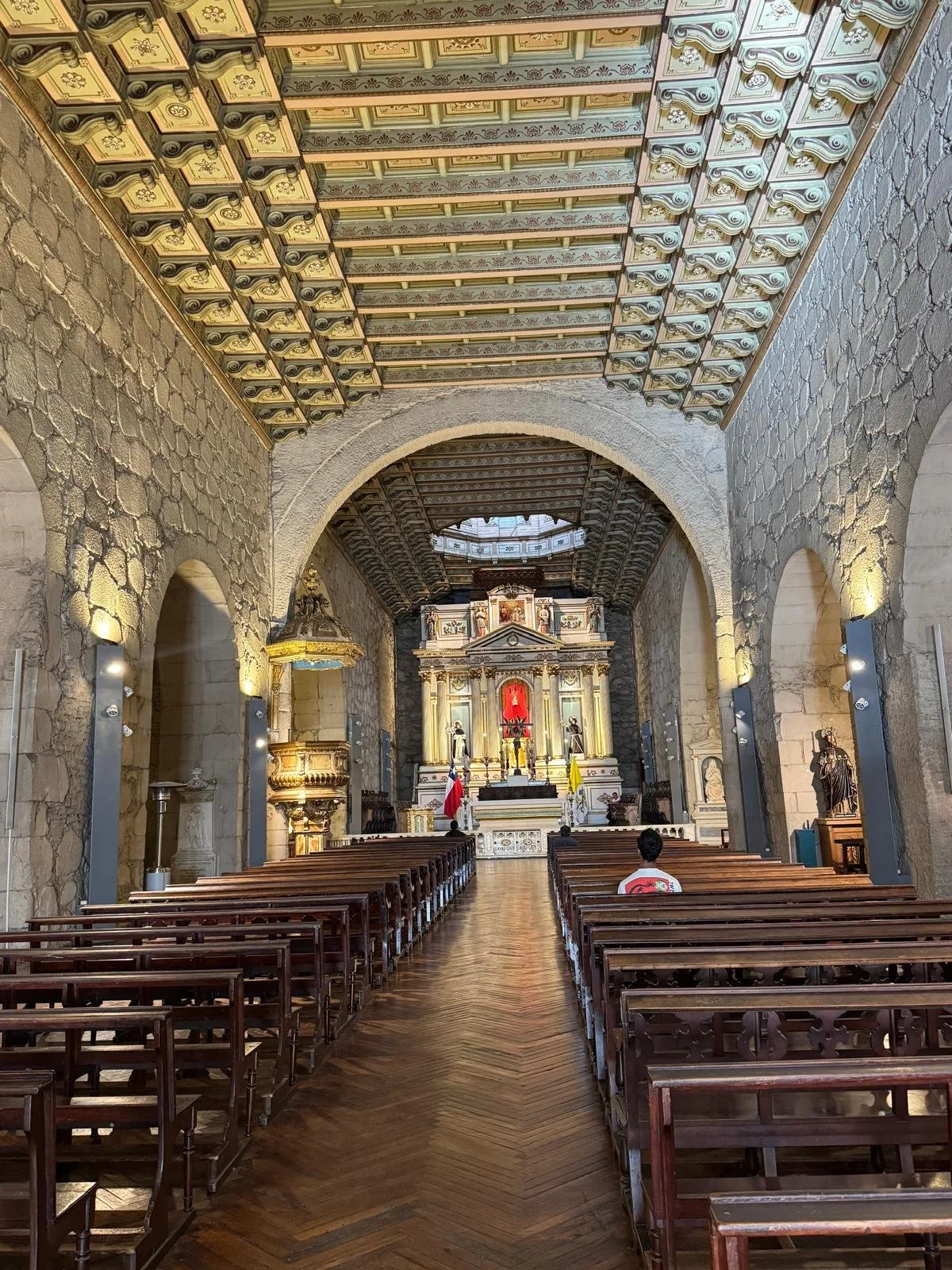
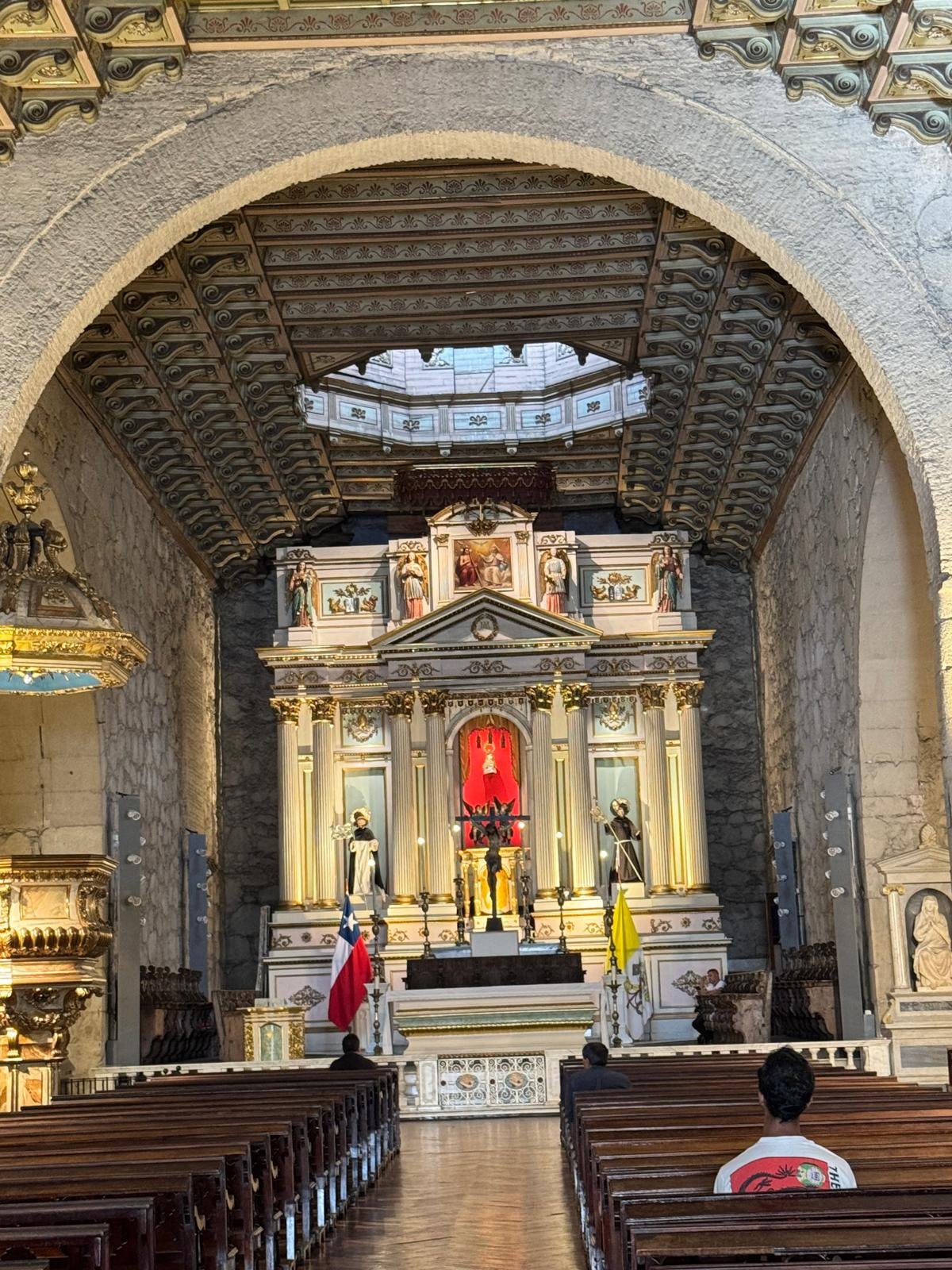
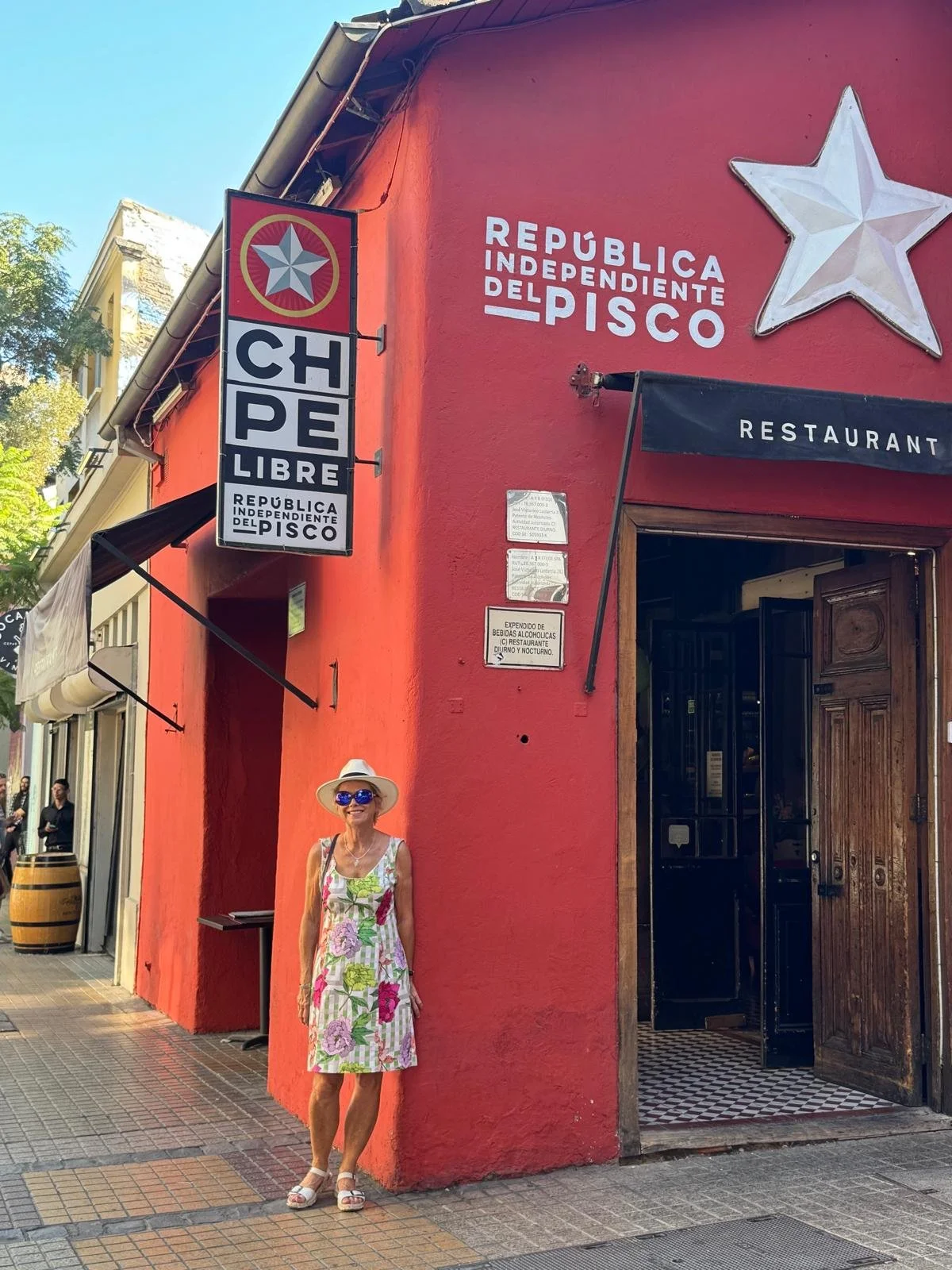
Back to José Victorino Lastarria with a certain destination in mind….the Chipe Libre Pisco Bar!
Let’s firstly talk about Pisco! This is a very detailed explanation, so skip if you aren’t interested and get to the photos of us drinking it underneath!!!! Pisco is a spirit made from wine, which is concentrated through a process of distillation. The very first Denomination of Origin in the Americas was set up for pisco. It is legally protected to safeguard its origin in a defined area of land, its history entwined with national heritage, its commercial and collective brand, as well as its quality. Since colonial times, vineyards have developed beautiful landscapes in the semi-desert regions of Atacama and Coquimbo, while forging a small-scale rural economy. Thanks to the eternal blue skies in Chile in the words of Pablo Neruda “The grapes are fed by the light, and the wine is born from the feet of the people” This wine, after being distilled, becomes the quintessence of Chile – Pisco. However,……there is a huge rivalry between Peru and Chile and the feud is never-ending. In one corner Peru claims to have the exclusive right to produce and market Pisco, in the other corner Chile believes their wine brandy should also be called Pisco. Both countries produce the grape brandy, and each believe it’s their national beverage. Both countries distil the grape-based spirit but have slightly different methods which offer different flavour profiles and a variety to a spirit many of us have only had as a Pisco Sour. The rivalry is so bad that Peruvian piscos exported to Chile must remove pisco from its label. Chile wins the battle for producing more pisco than its Peruvian counterparts, but Peruvians would say their strict production regulations provide for a consistently higher quality product. Most of the grapes used in the two countries are torontel or moscate. Distillers in Peru can create pisco from low alcohol-content wine using one or more of eight different grape varietals. These grapes are typically grown in a higher humidity climate on the coast. Peruvian producers distil low alcohol, young wine where it then must be bottled straight out of the still. The laws require only one distillation so flavours and aromas will be more prominent. Some compare Peruvian piscos to a grappa because of its distinct fruit flavours and aromas. After distillation, piscos go straight into glass, copper, or stainless-steel containers where it sits for three months. These vessels do not change the flavour but serve to let the flavours blend and marinate naturally. Peruvian piscos tend to be clear or have a yellowish hue. Finally, when producers bottle, they are prohibited from adding any water to reduce the alcohol content. Regulations in Peru are incredibly strict and believe in what many refer to as purity laws: the regulations pisco producers must follow limits creativity but also emphasizes high-quality, consistency, and being as natural as possible. Chilean Pisco - the first key difference here is that Chilean producers grow grapes in desert conditions with extremely low humidity. Unlike Peru that requires producers to use only eight grape varietals, Chilean producers have13 varietals to choose from. Chilean producers can use semi-fermented, young wine like their Peruvian counterparts…but they typically use fully fermented wine. Sometimes even infused with additional fruits.
The next difference is distillation. In Chile, producers can distil the spirit as many times as their heart desires. Like any distillation process, multiple distillations remove more impurities as well as flavour and aroma. Multiple distillations also raise the alcohol content. In fact, some Chilean pisco brands are marketed for vodka drinkers because they are colourless and flavourless compared to less distilled versions. Chilean producers can age piscos in wooden barrels. The result is a pisco with a golden or amber colour and with the characters that come from the wood such as vanilla and maple syrup. For people who like Cognac, aged piscos from Chile would be your preference. On the other end of the ABV spectrum, Chilean producers can add water at the finishing stage to bring down the alcohol content. You can find bottled Chilean varieties with higher and lower proofs, unlike in Peru where they can only distil once and no water can be added. So there you have it!
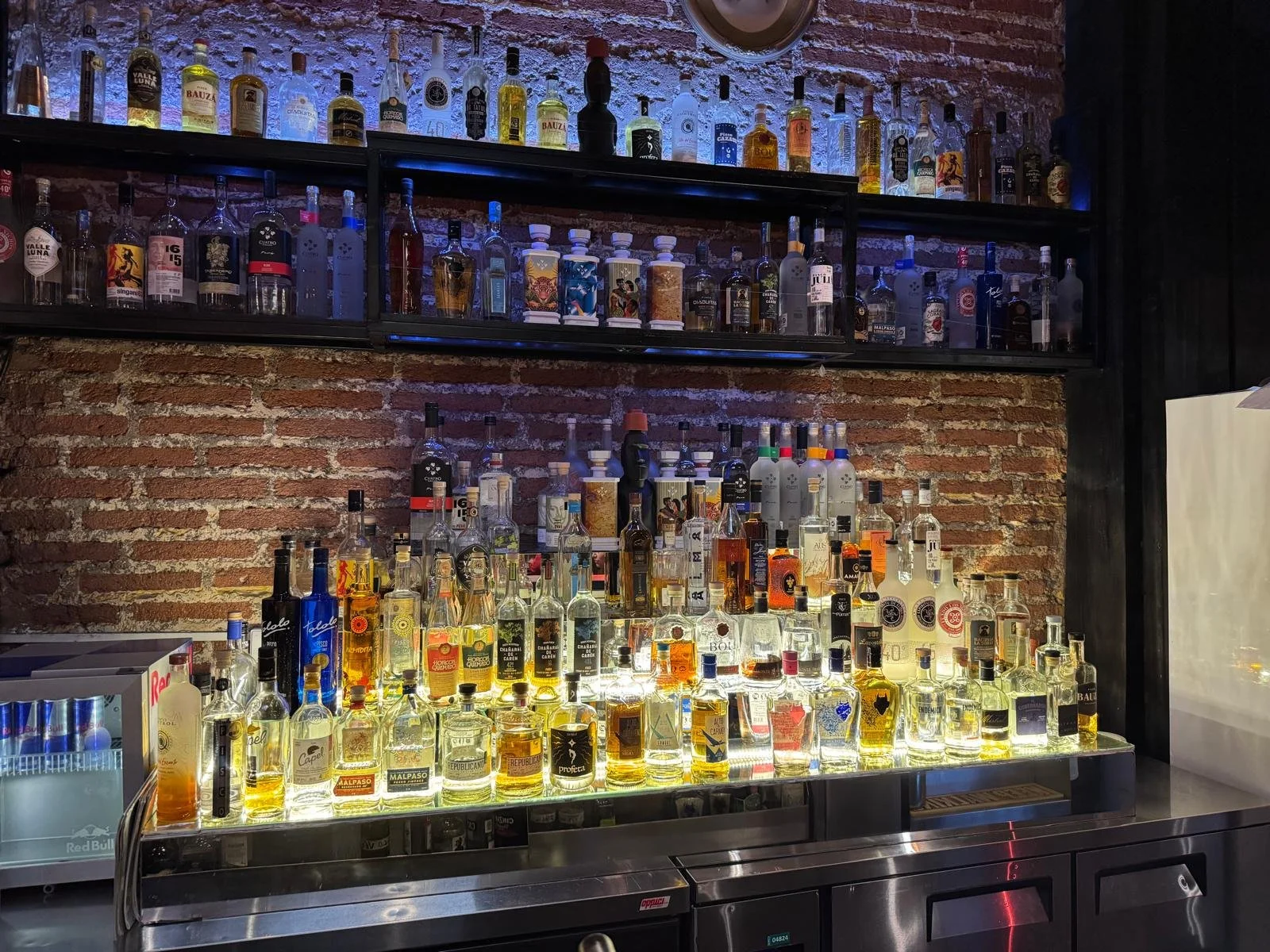
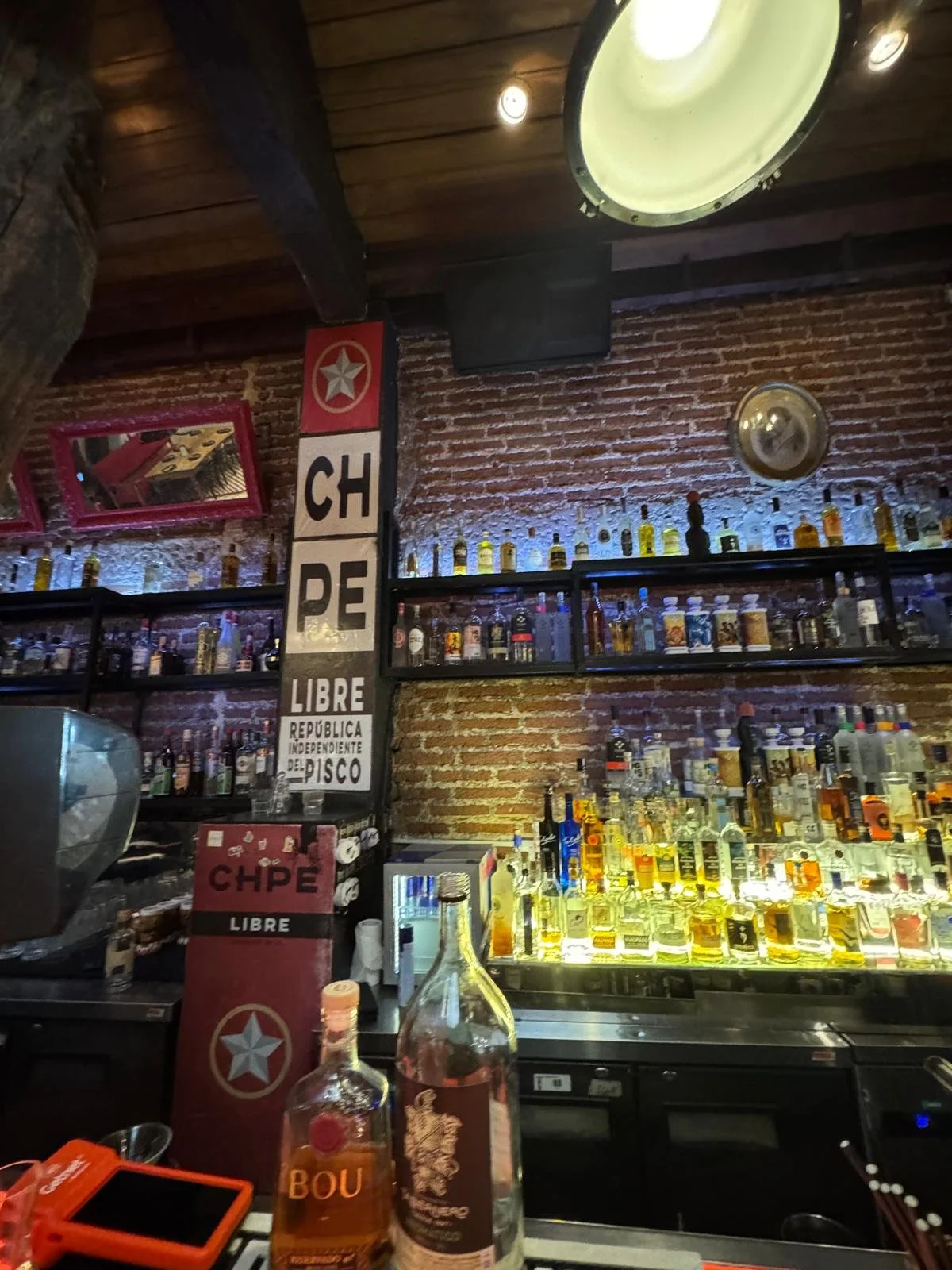
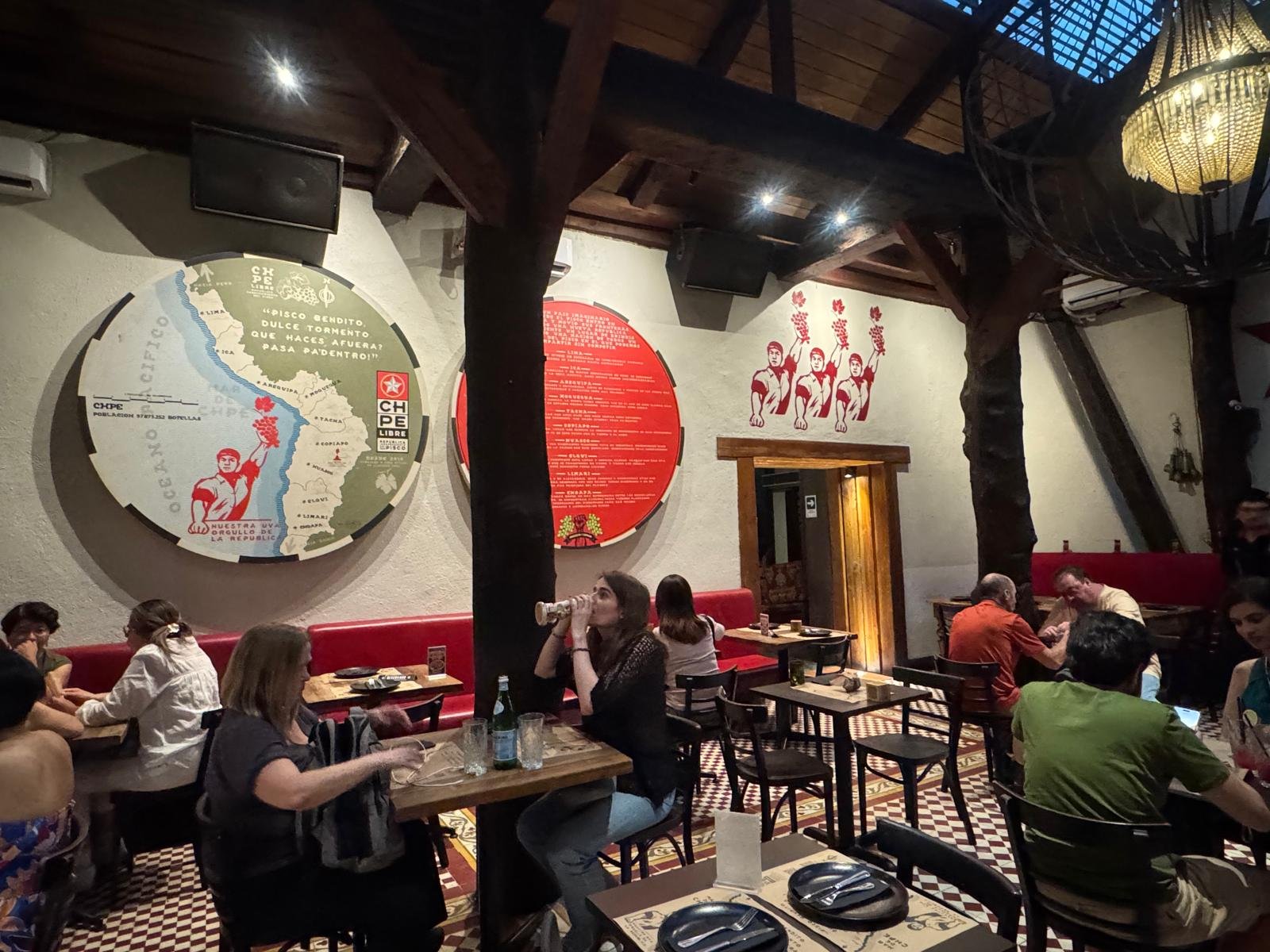
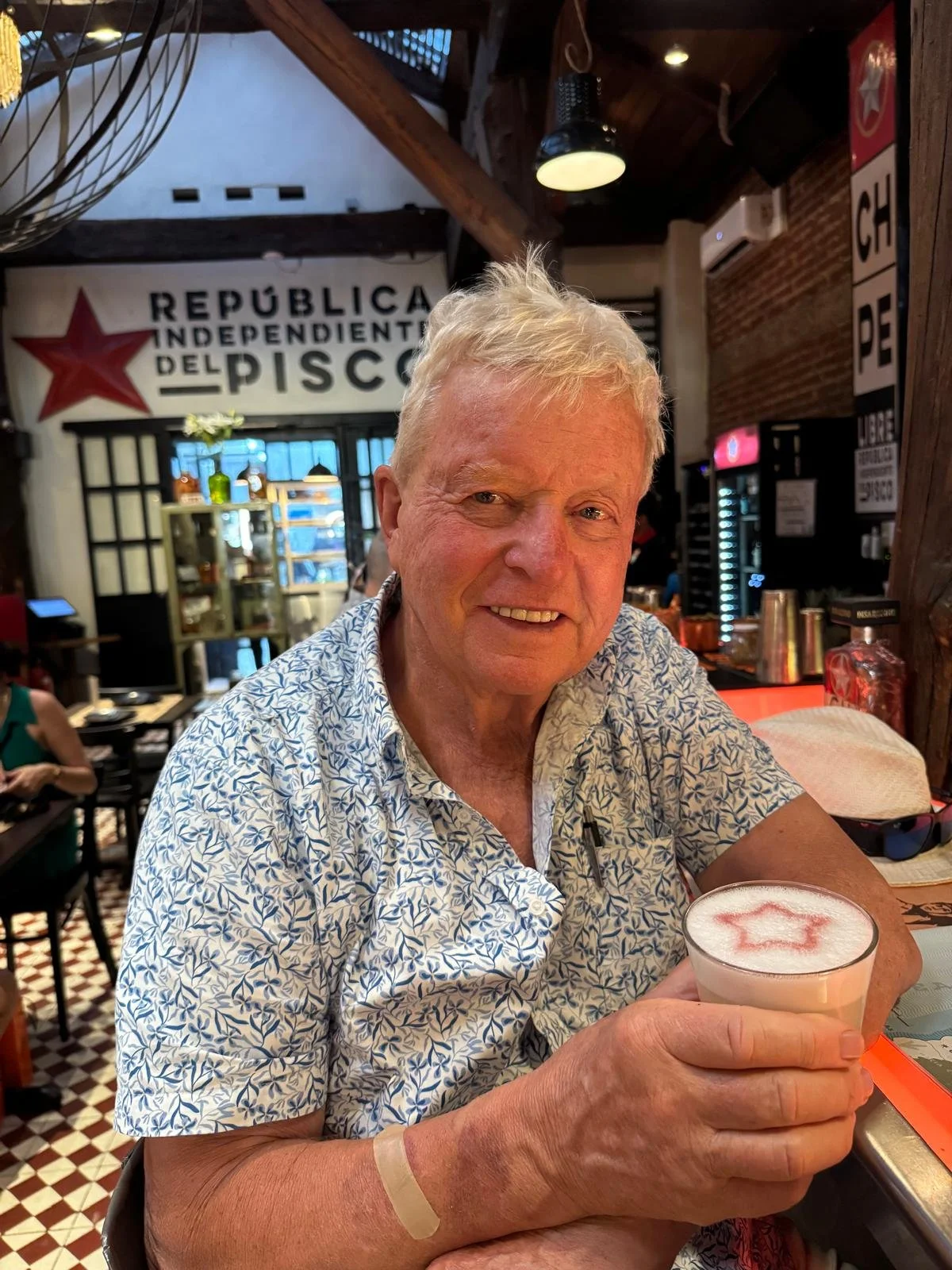
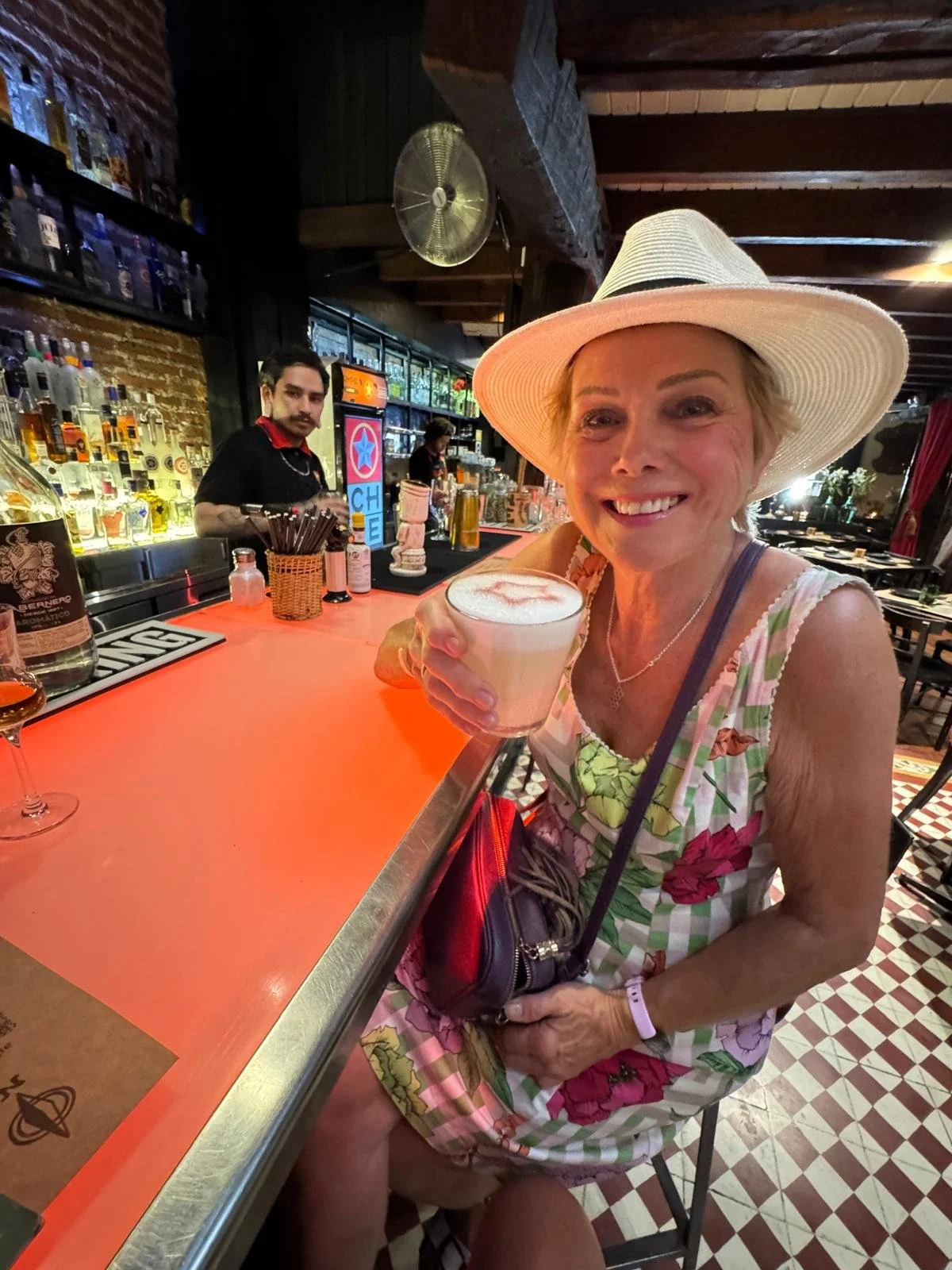
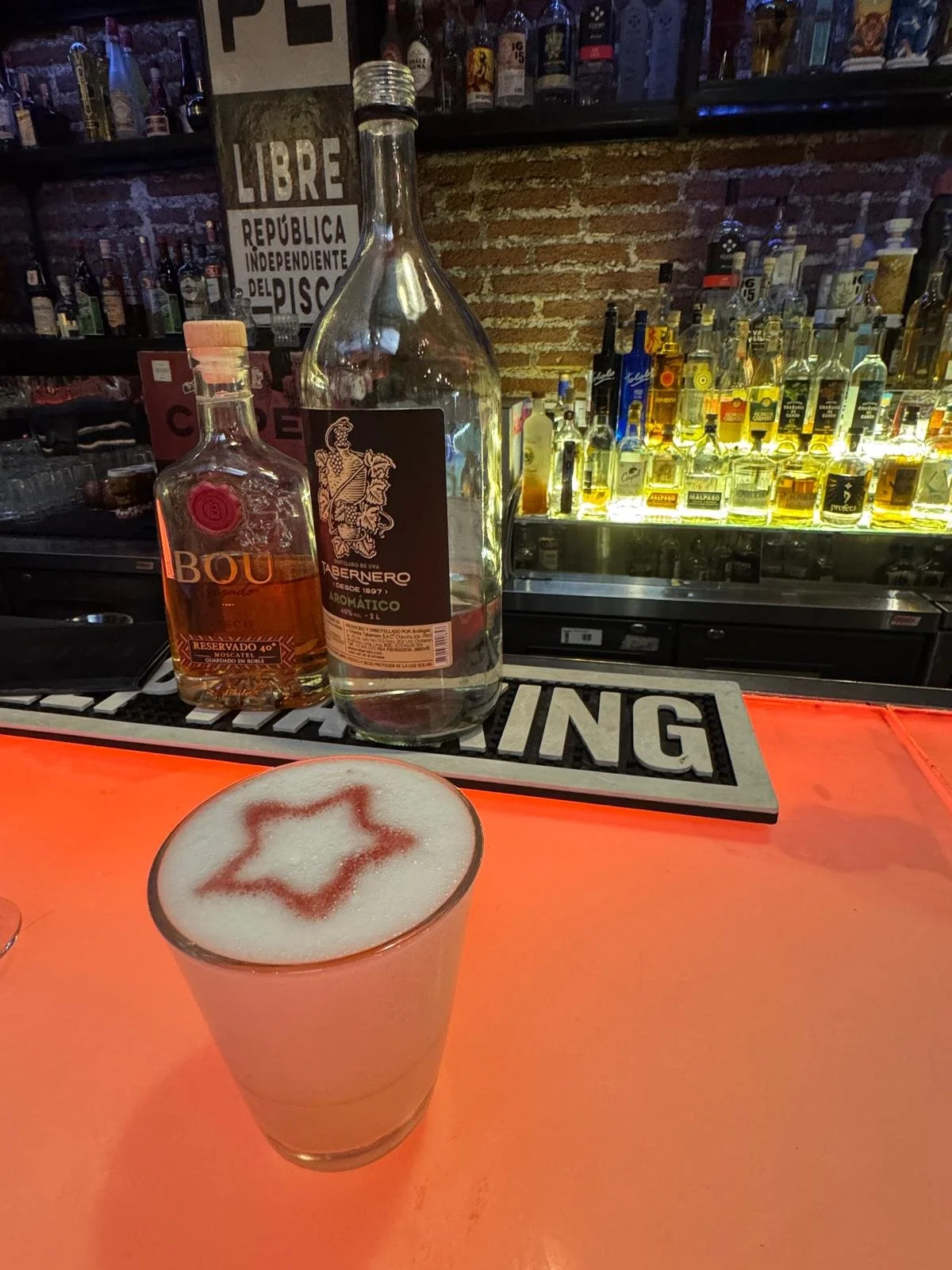
Only one way to find out which one we preferred…..do a tasting of course! What a great place Chipe Libre is, opened in 2014 to become Pisco’s showcase to the world, it is self-styled as The Independent Republic of Pisco (note the CH for Chile and PE for Peru in the name!). We sat at a great long, dark wooden bar with an enormous choice of both Chilean and Peruvian Piscos lining the walls –and our waiter lined up the glasses for the tasting. Personally, I preferred my (very strong) Peruvian Pisco Sour with a pretty Angostura star on the froth – the neat Chilean Pisco tasted too strong, like Schnapps, and I didn’t think I could cope with any more alcohol given I already felt three sheets to the wind (maybe not all caused by the alcohol, but also the lack of sleep from the overnight flight from Auckland!). Given we are in Chile for some time and also Peru I am sure this is only the start of us comparing the various brands and tastes!
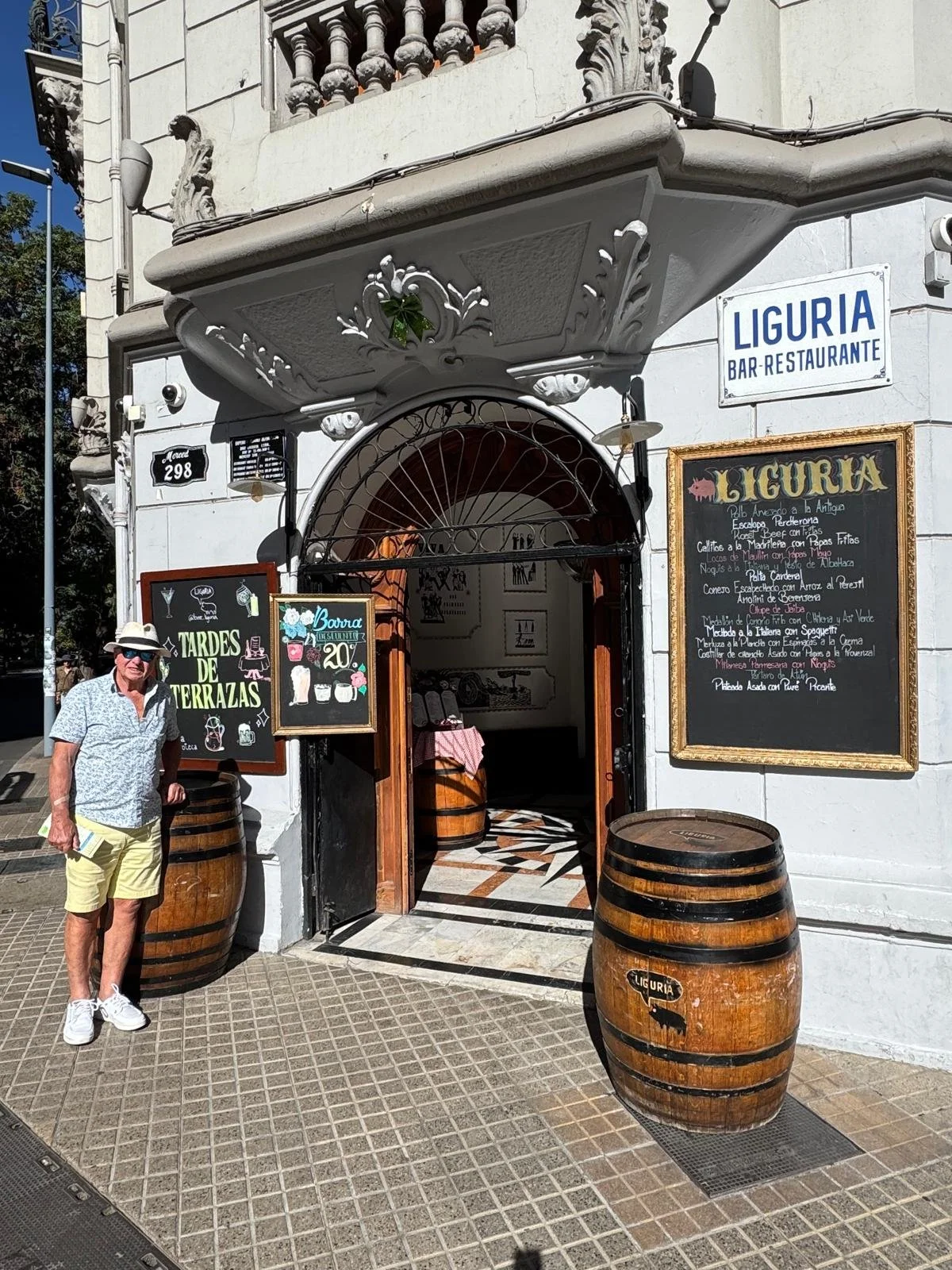
We weaved our way up to the top of the street for dinner at the Liguria Restaurant and then back to the hotel to flop into bed after a very long night/day knowing we had a very early start the next morning. So that is Santiago for now, but back to it in a few days!