

Football in Argentina – the National Passion!
Tuesday 10 March
A quick lunch and then back out for this afternoon’s sightseeing. Our ship is docked right in the middle of the port and we are surrounded by hundreds of containers, there is even a railway through it to transport them. It handles 60% of the country’s containerised cargo and is over 220 acres in size with 51 berths! Makes Auckland’s port look tiny. We had to get a shuttle bus to the terminal to get out!
Argentina has been characterised as the country most fanatical about football and because of this, they have gone on to win a record six U-20 World Cups and three World Cups in 1978, 1986 and 2022. Football has been intertwined with national identity, and the sport serves as a reflection of national pride. The success or failure of the national team often mirrors the socio-political climate of the time. So, I think it deserves its own blog, don’t you? Certainly, my two sons Ben and Dan and my two grandsons, Bart and Rupert, would agree with me! Fortunately, the first stop on our afternoon tour today was at the heart of football - La Boca!
La Boca means the mouth, as this neighbourhood is situated on the mouth of the Riachuelo River where it meets the Río de la Plata. It is also home to two very famous Football Clubs, River Plate, known as River, and Club Atlético Boca Juniors. and the iconic stadium, La Bombonera, the Spanish name for chocolate box, due to its unique, compact and steep design with the tiers of the stands arranged to achieve the greatest capacity in a small space – thus resembling a box of chocolates!
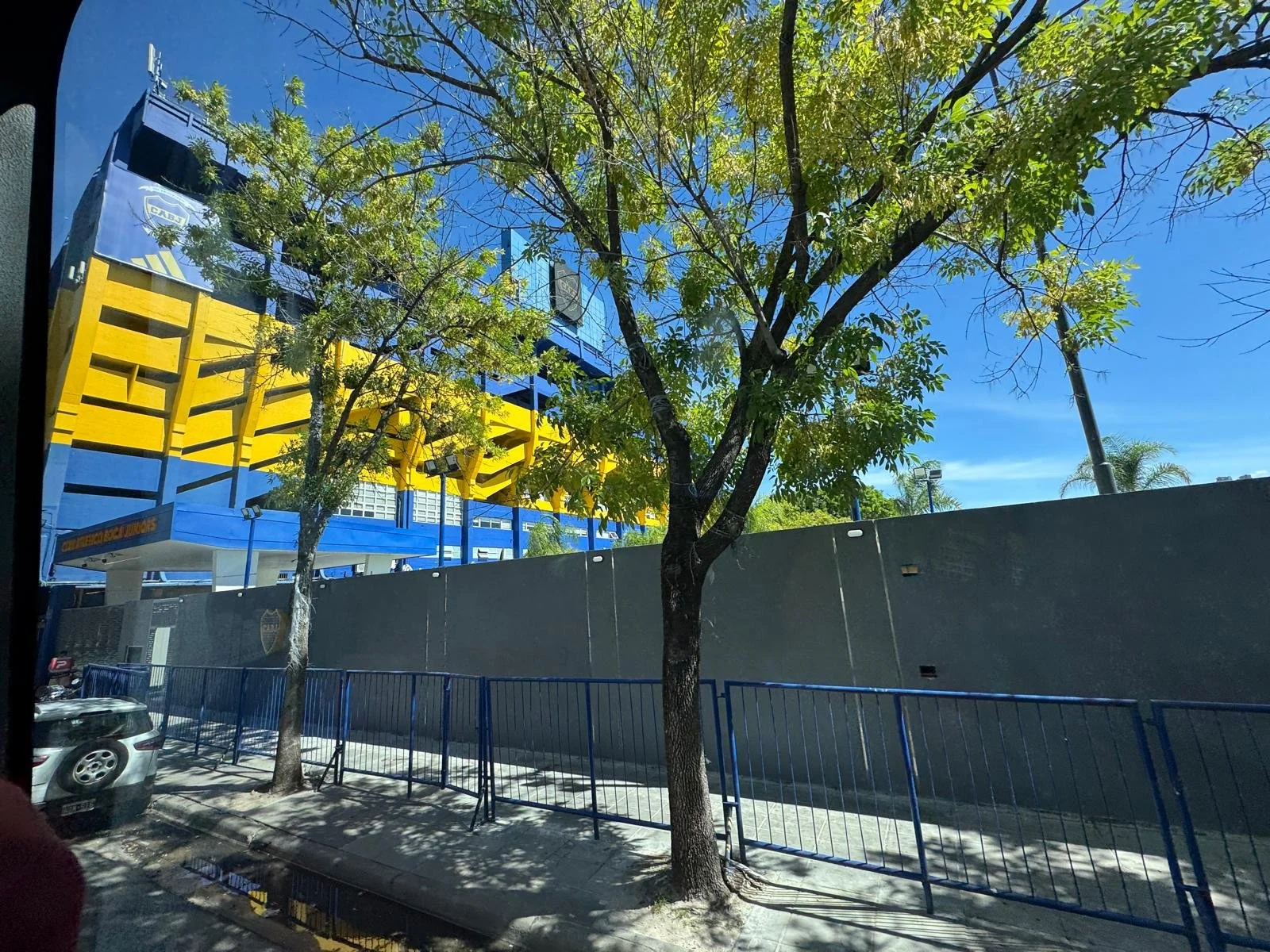
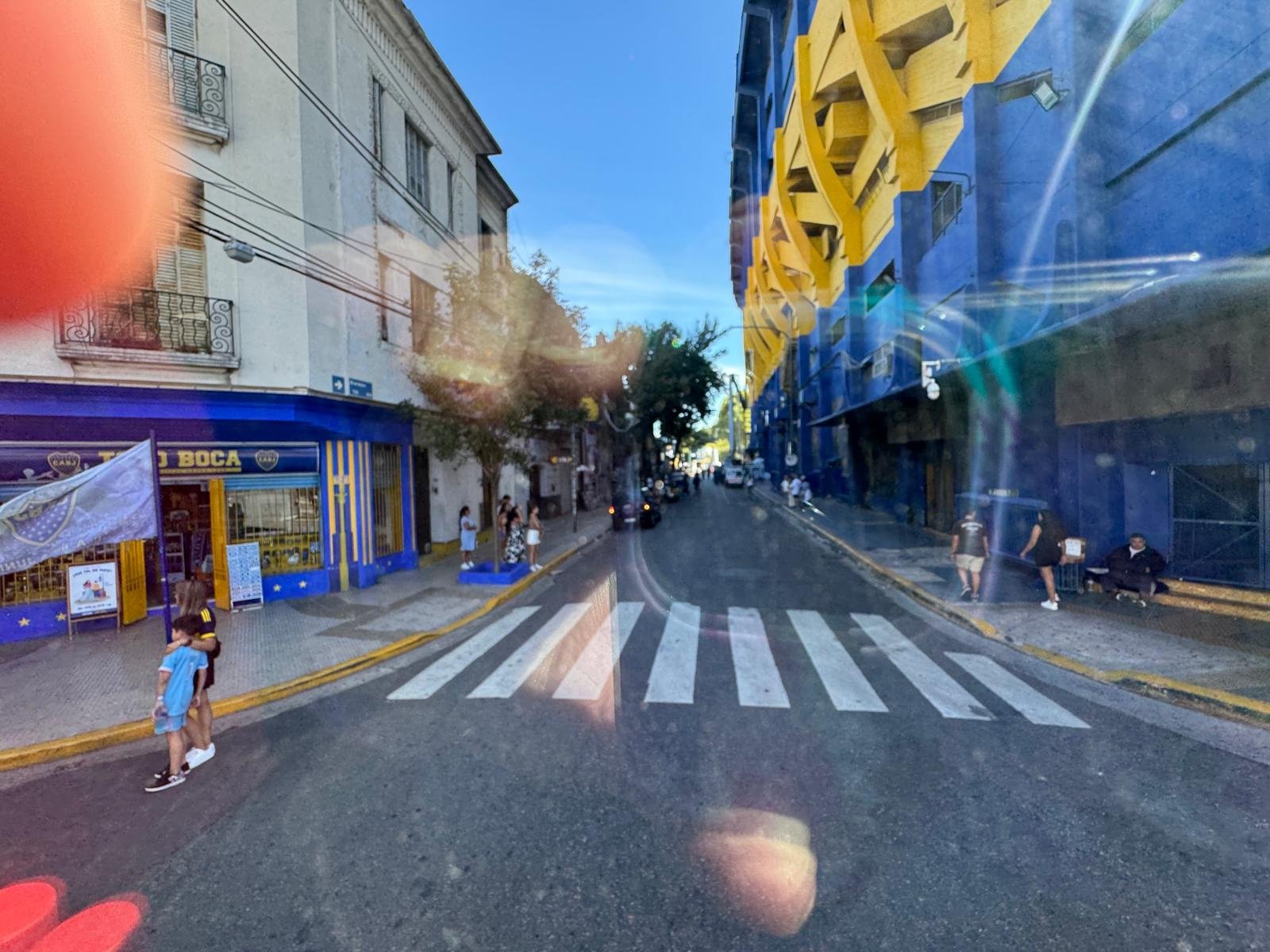
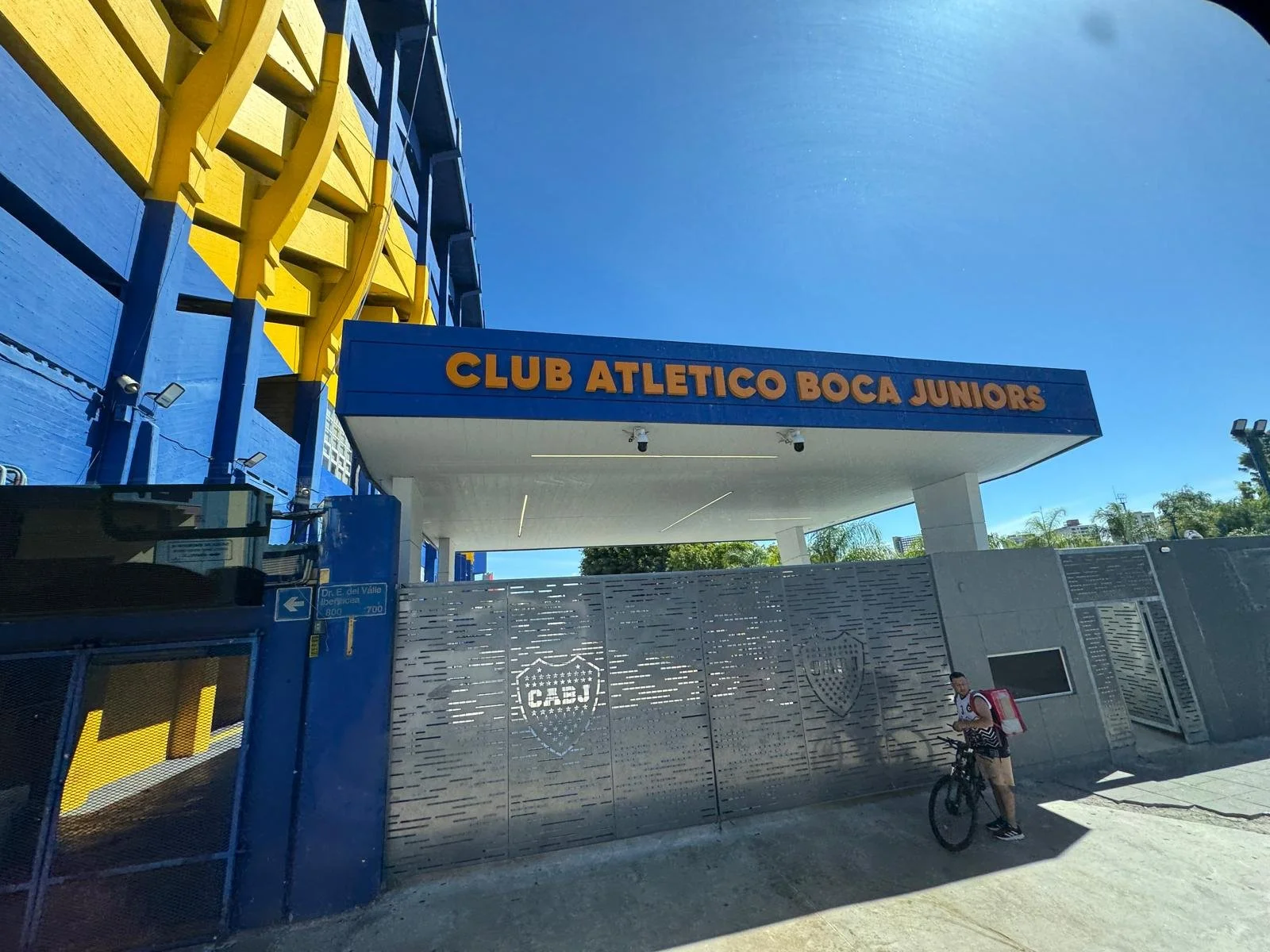
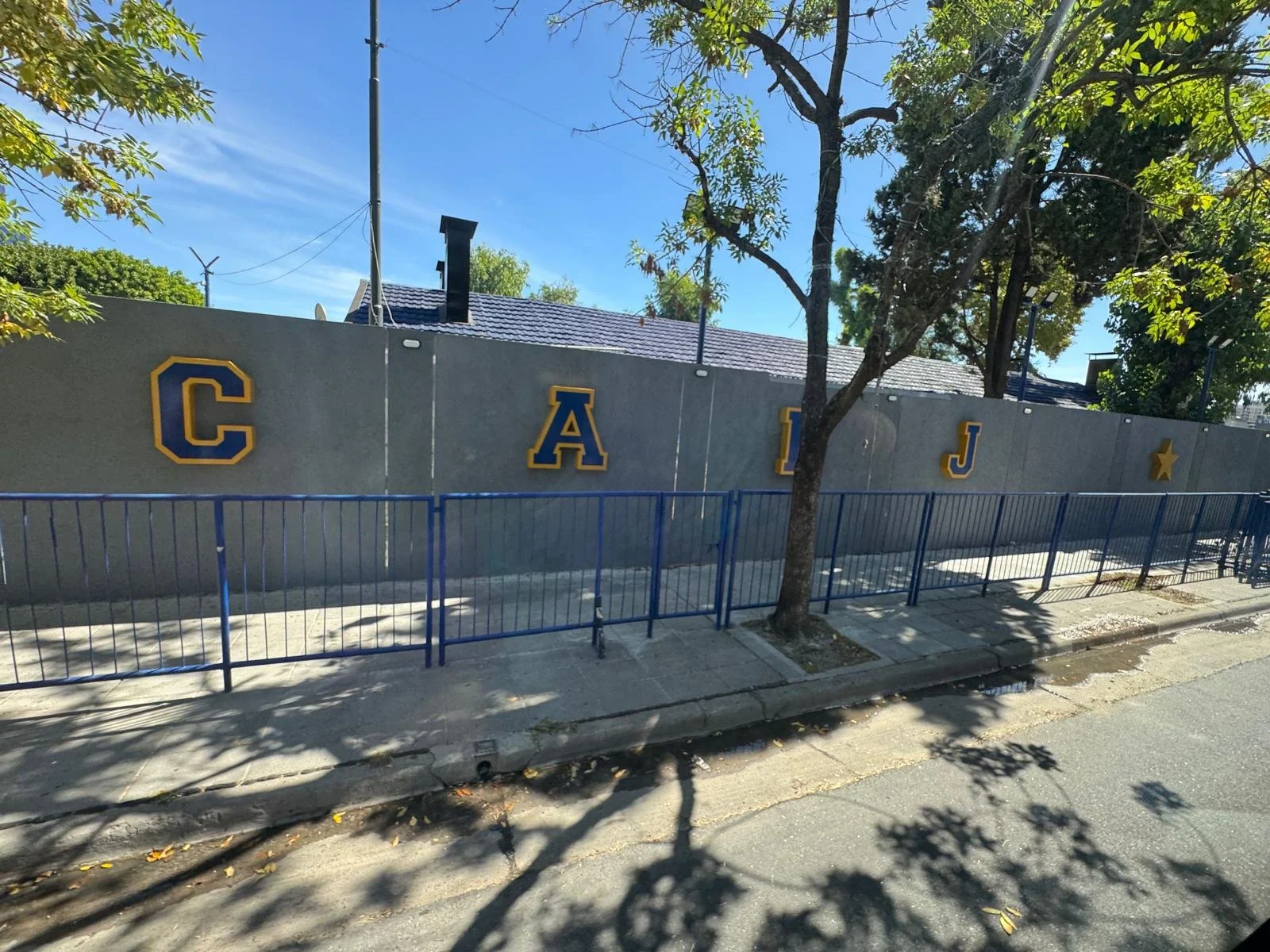
The Football Team River Plate was born from the merger of two existing clubs, Santa Rosa and La Rosales, the founders of which were of Italian descent and according to legend, the name River Plate originated when club members saw it printed on some giant crates during the construcion of Puerto Madero! Boca Juniors was found in the same neighbourhood and they developed distinct identities – River as “the Millionaires” and Boca as “the people’s club” historically rooted in the working-class immigrant community. Both originated in La Boca, but River Plate moved to the wealthier Núñez district in 1925. River wear a white strip with a red sash and Boca Juniors wear blue and yellow. An interesting fact - the blue and yellow strip was adopted in 1906 from a Swedish ship named Drottning Sophia. After losing a jersey colour dispute with another team, the founders of Boca Juniors decided to adopt the colours of the first ship that passed by – which happened to be Swedish!
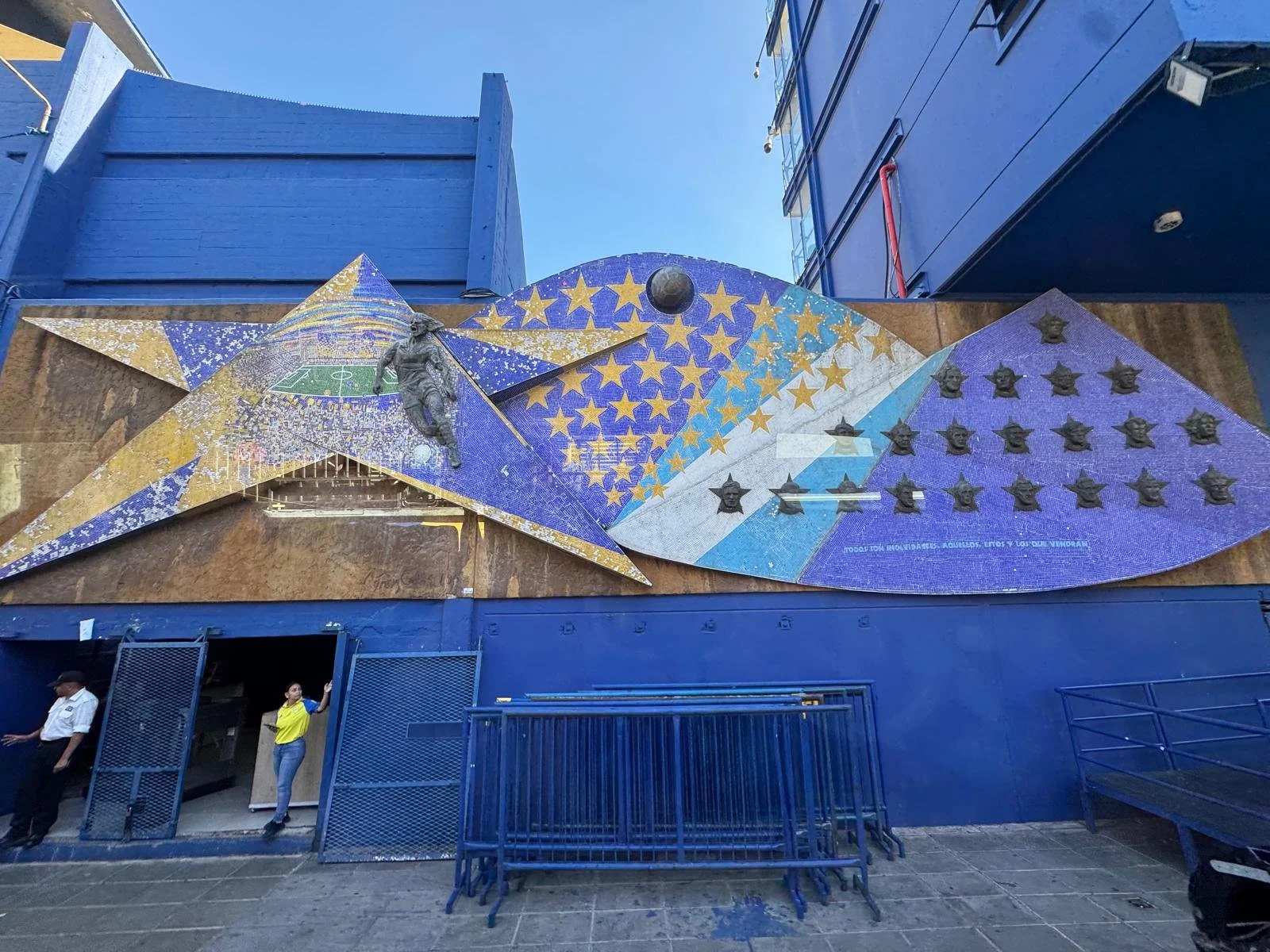
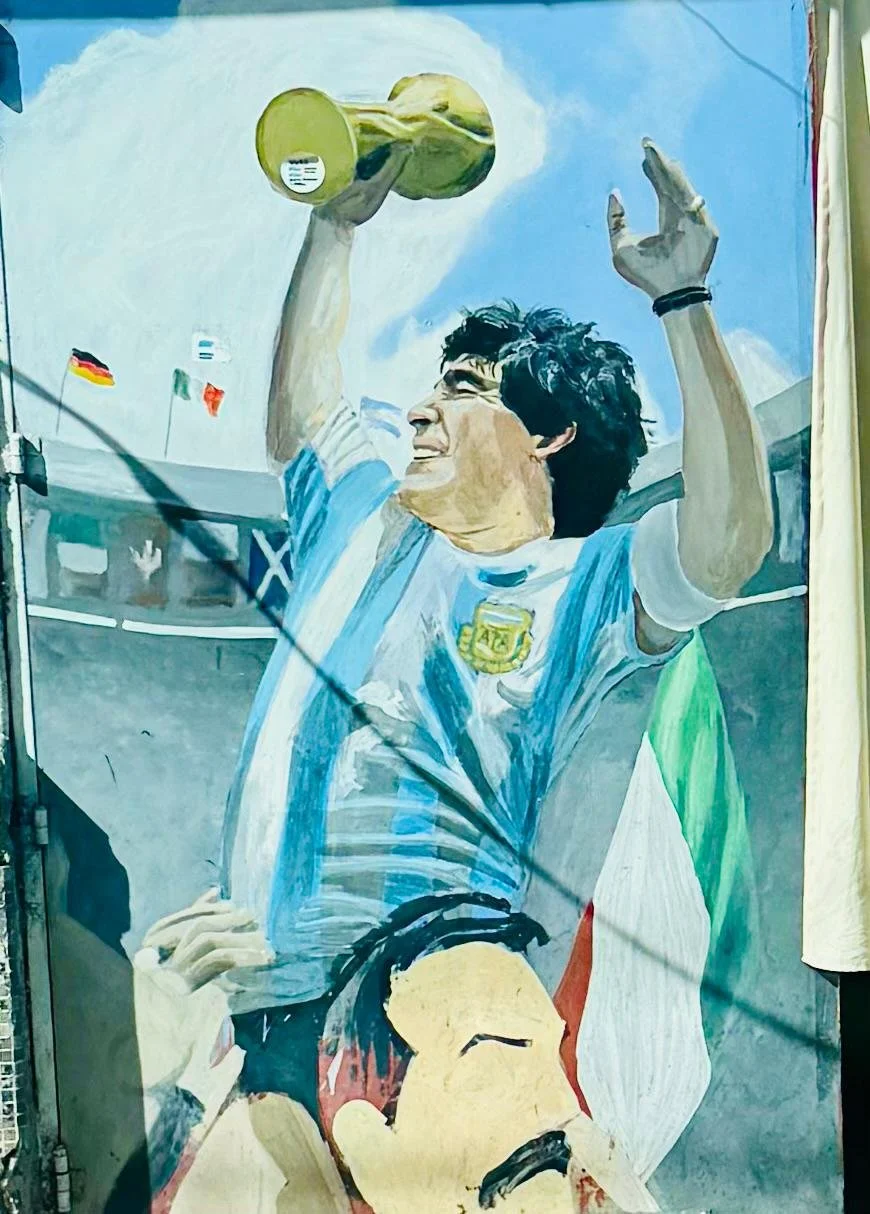
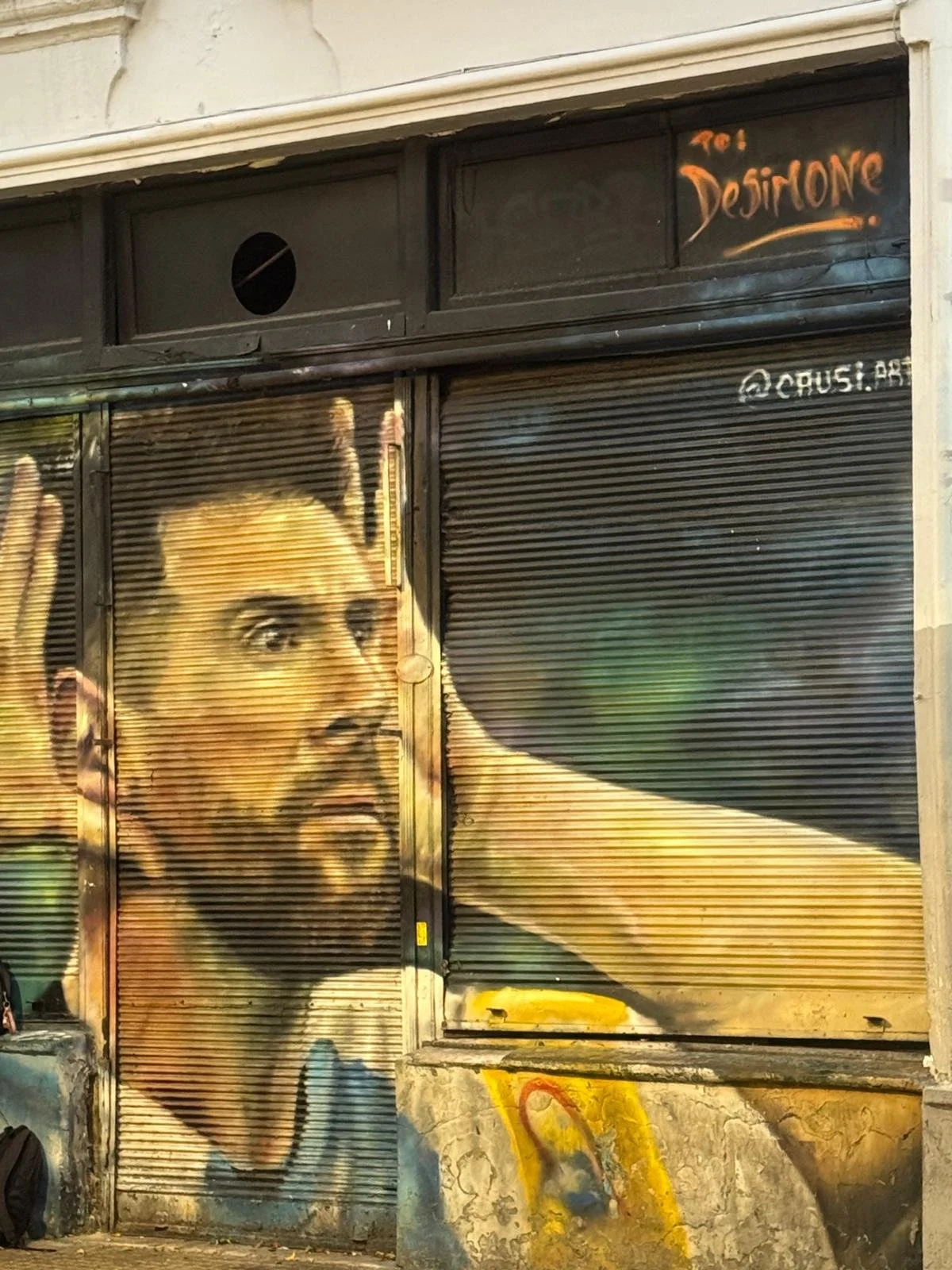
We drove into the neighbourhood, past awesome street art reflecting the area and it was awash in a sea of blue and yellow – football shops everywhere, past the Boca Complejo (Complex) Pedro Pompilio – also known as the yellow house, a set of sports facilities owned by Boca Juniors and named after Pedro Pompilio, the 31st President of the Club, and the Vice President of the Football Association. The walls of La Bombonera are lined with football murals – I tried to photograph as many of them as I could whilst we drove past (I think my fellow passengers, mostly American, thought I was nuts and it was hard to capture them all properly from a moving bus!).
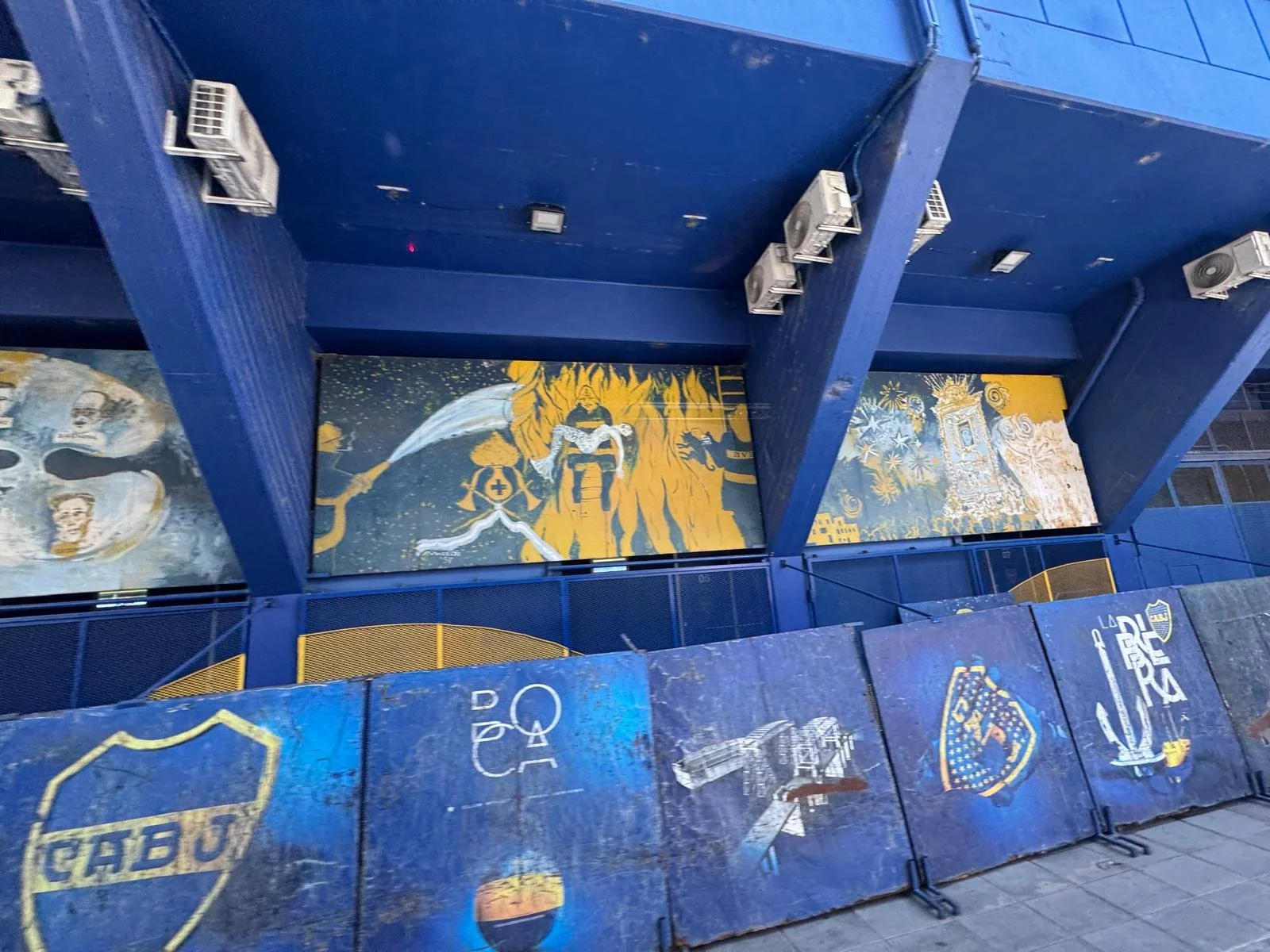
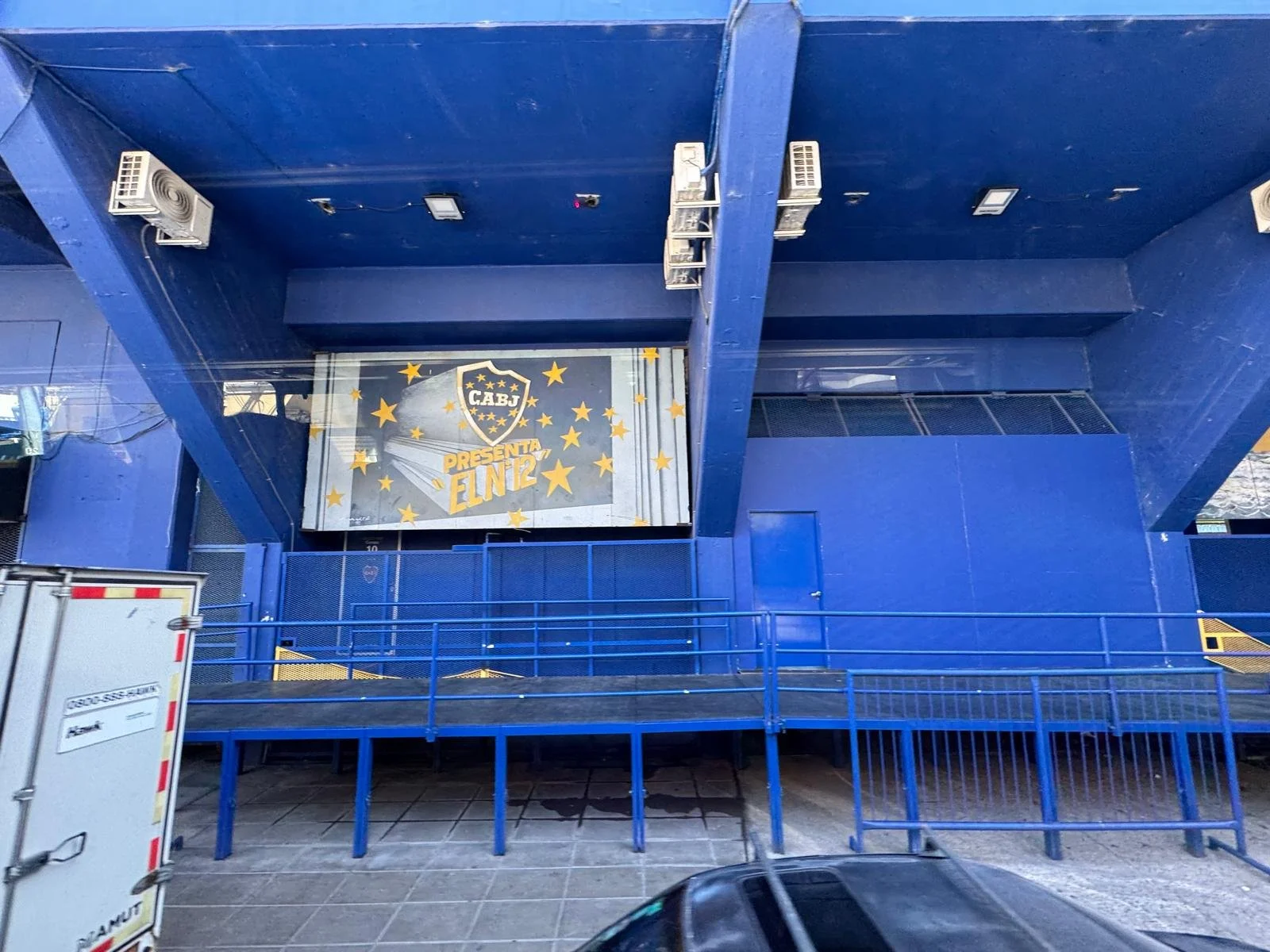
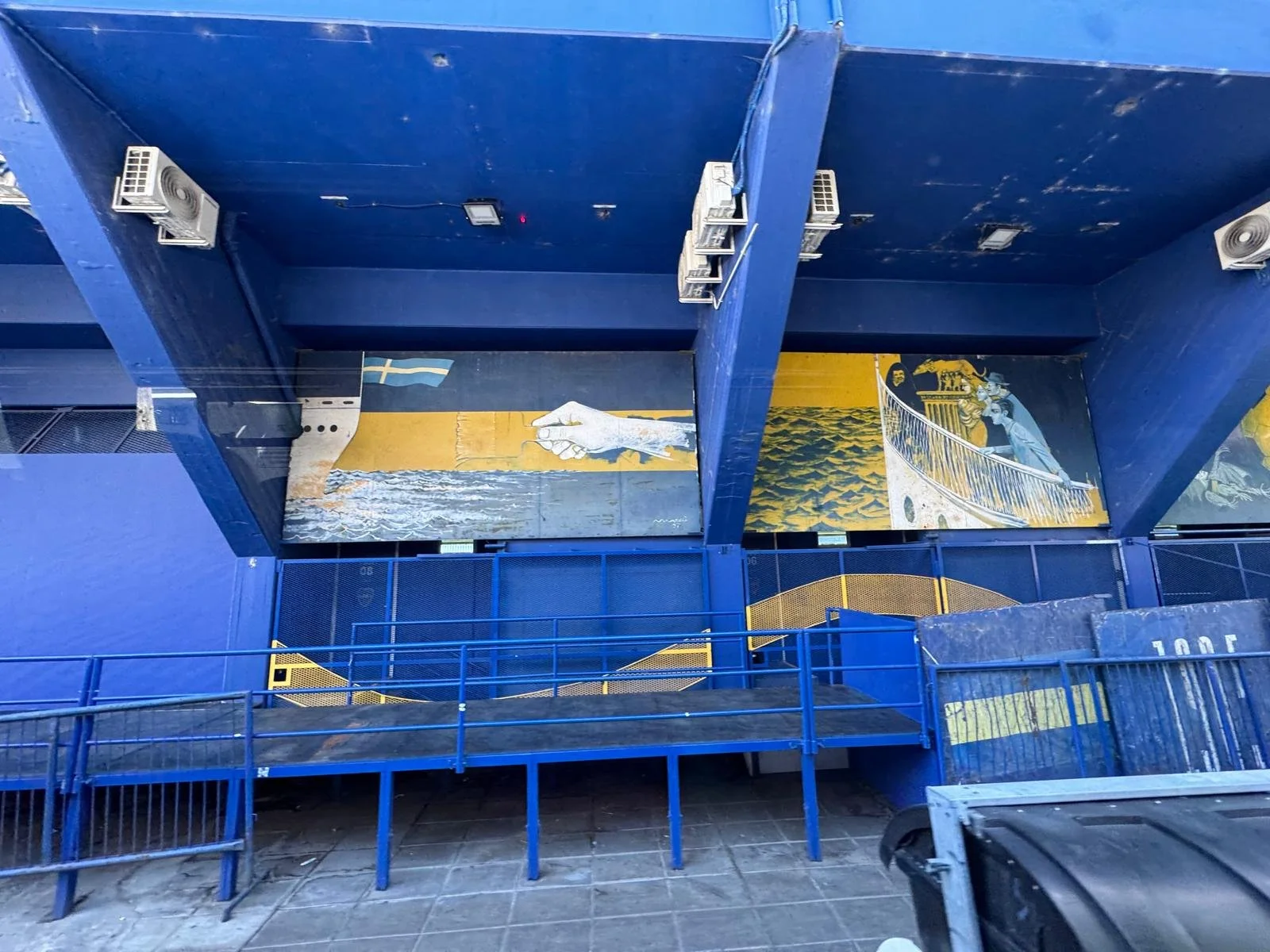
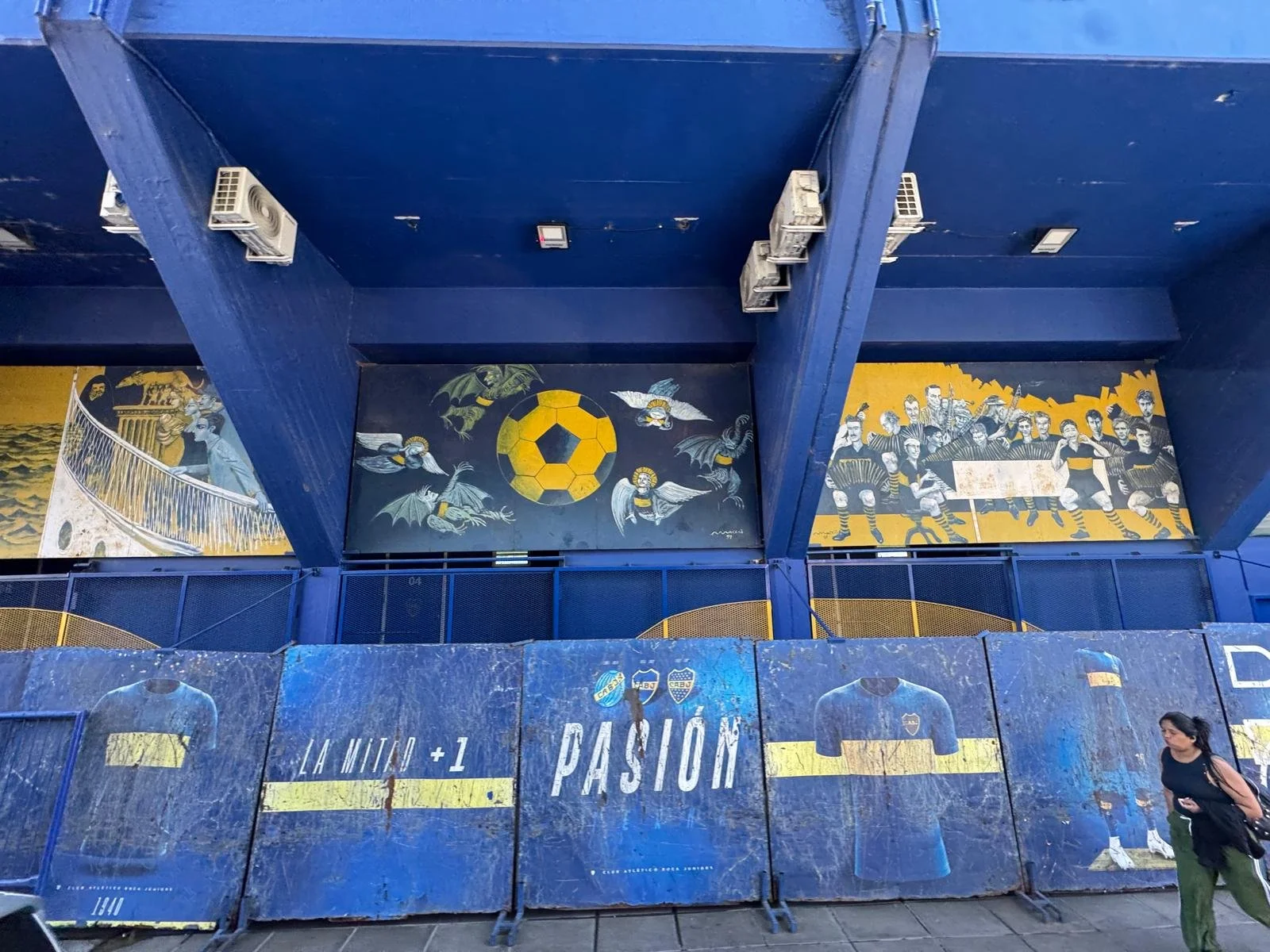
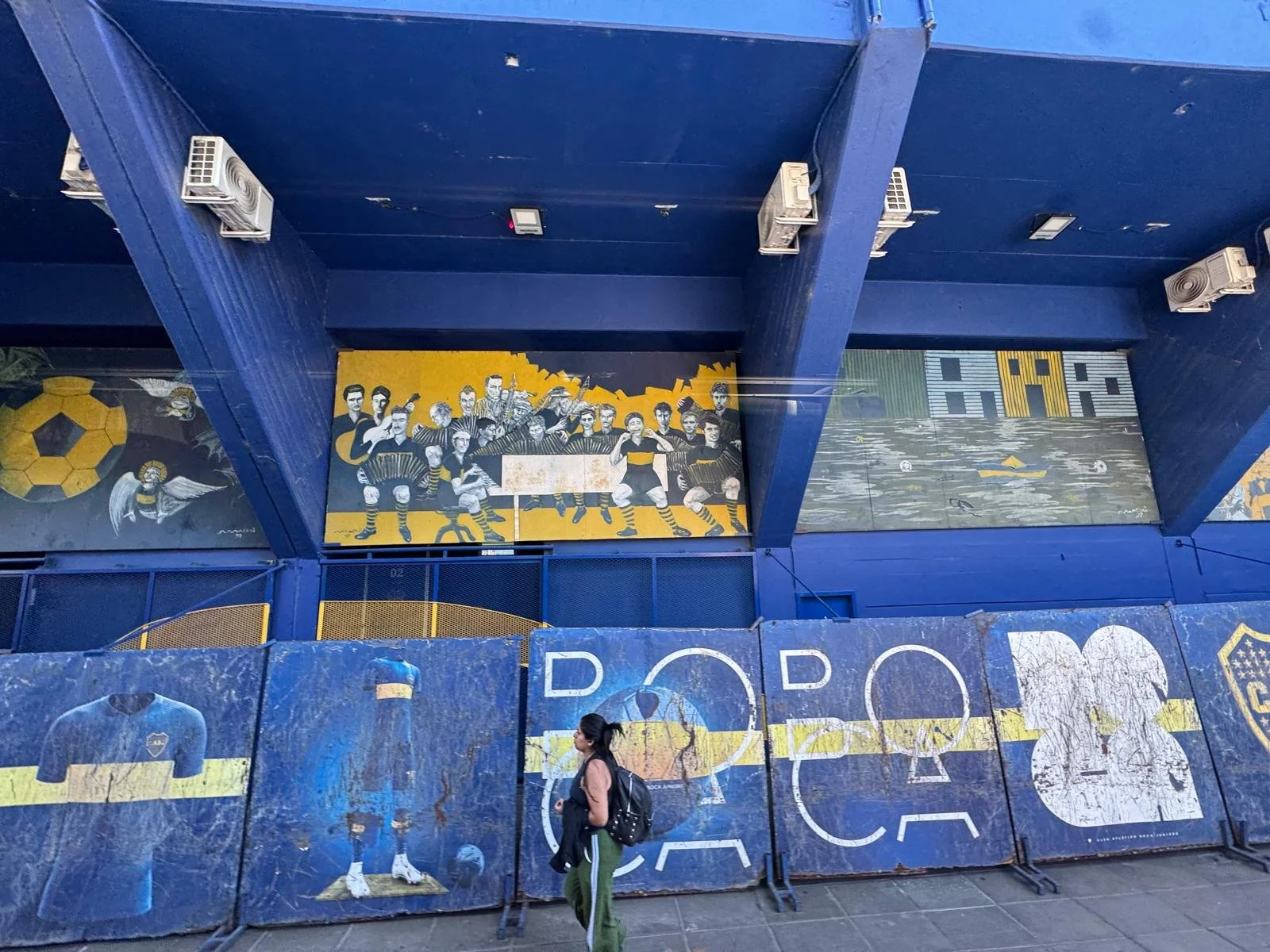
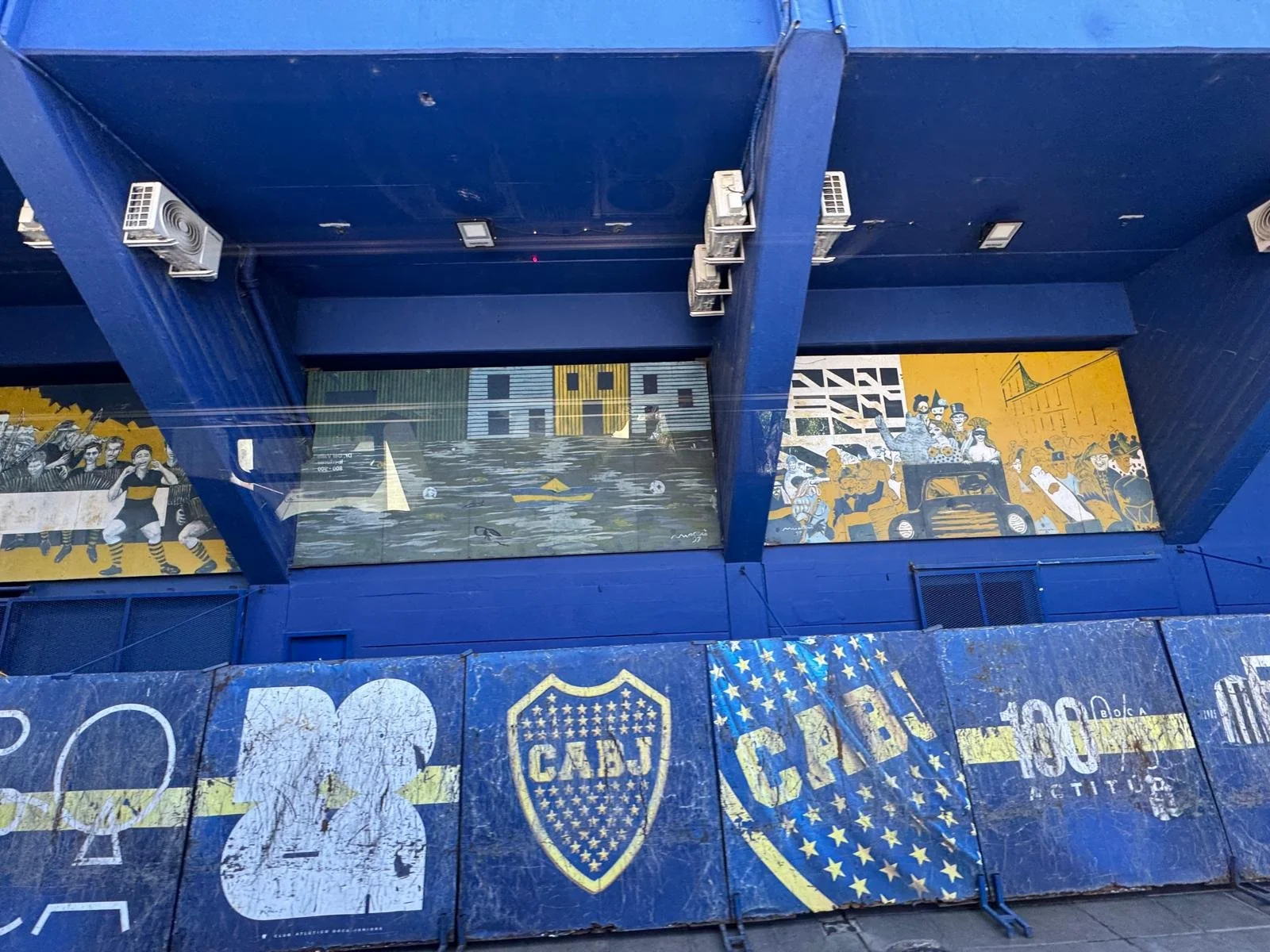
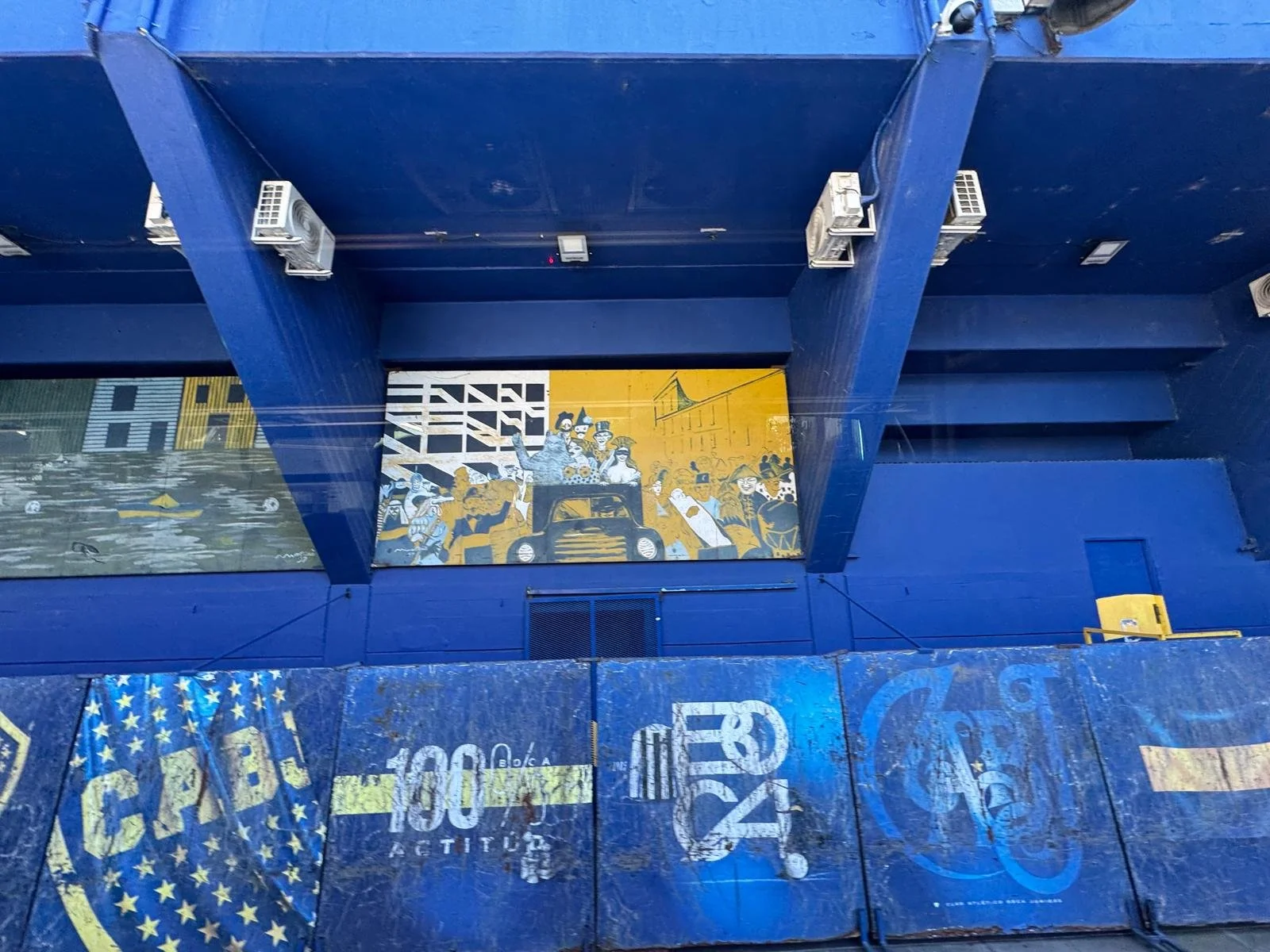
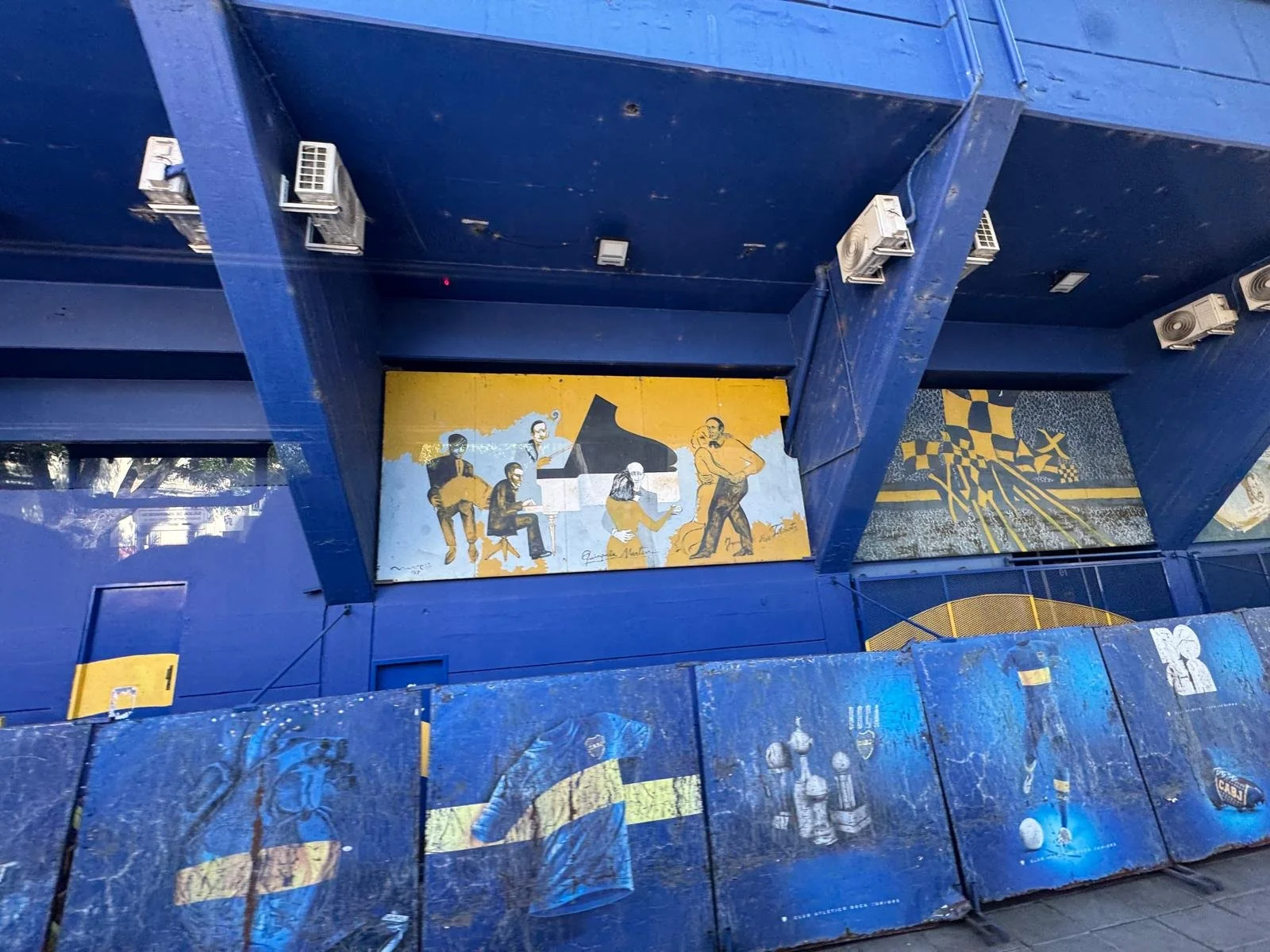
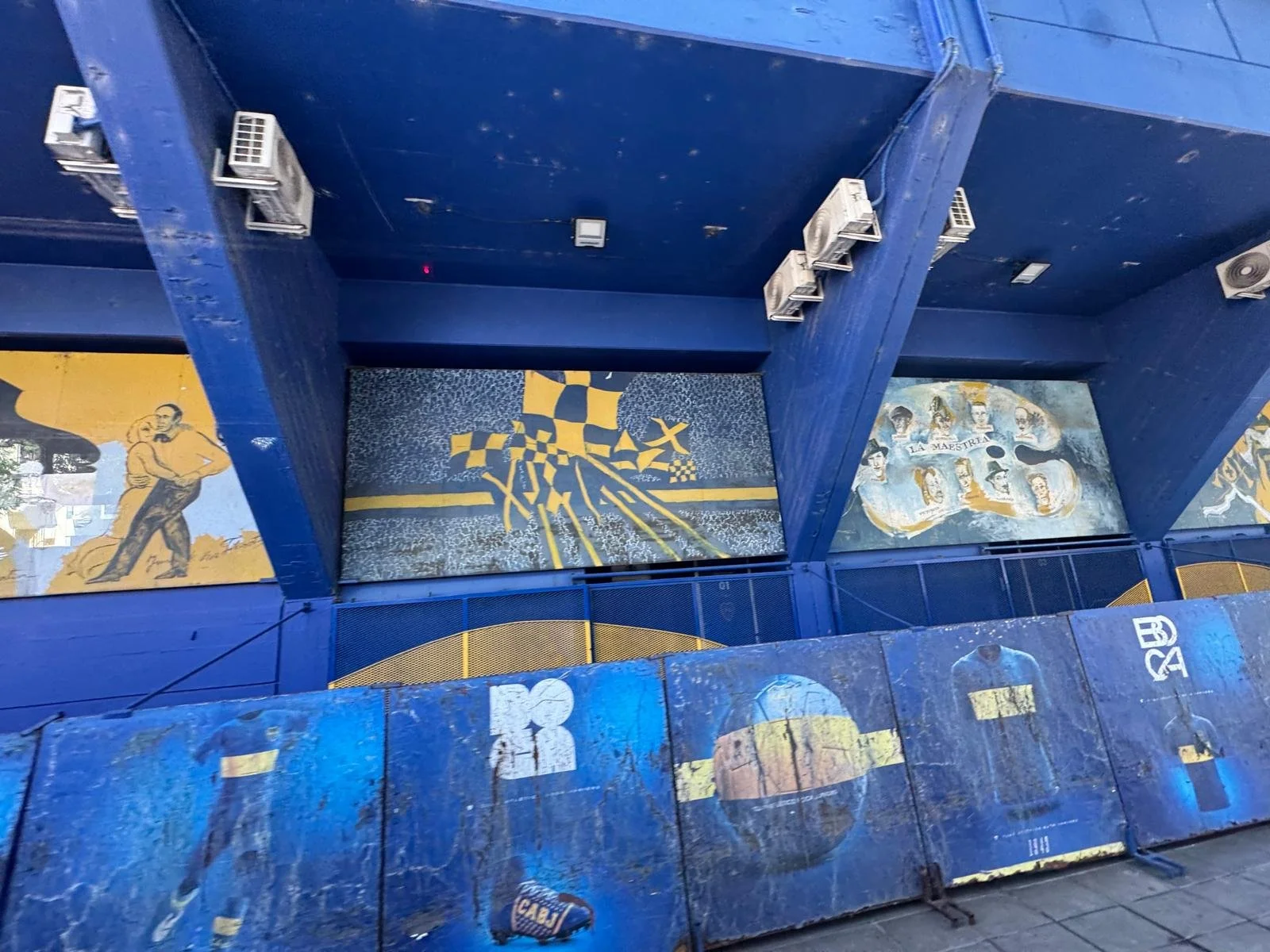
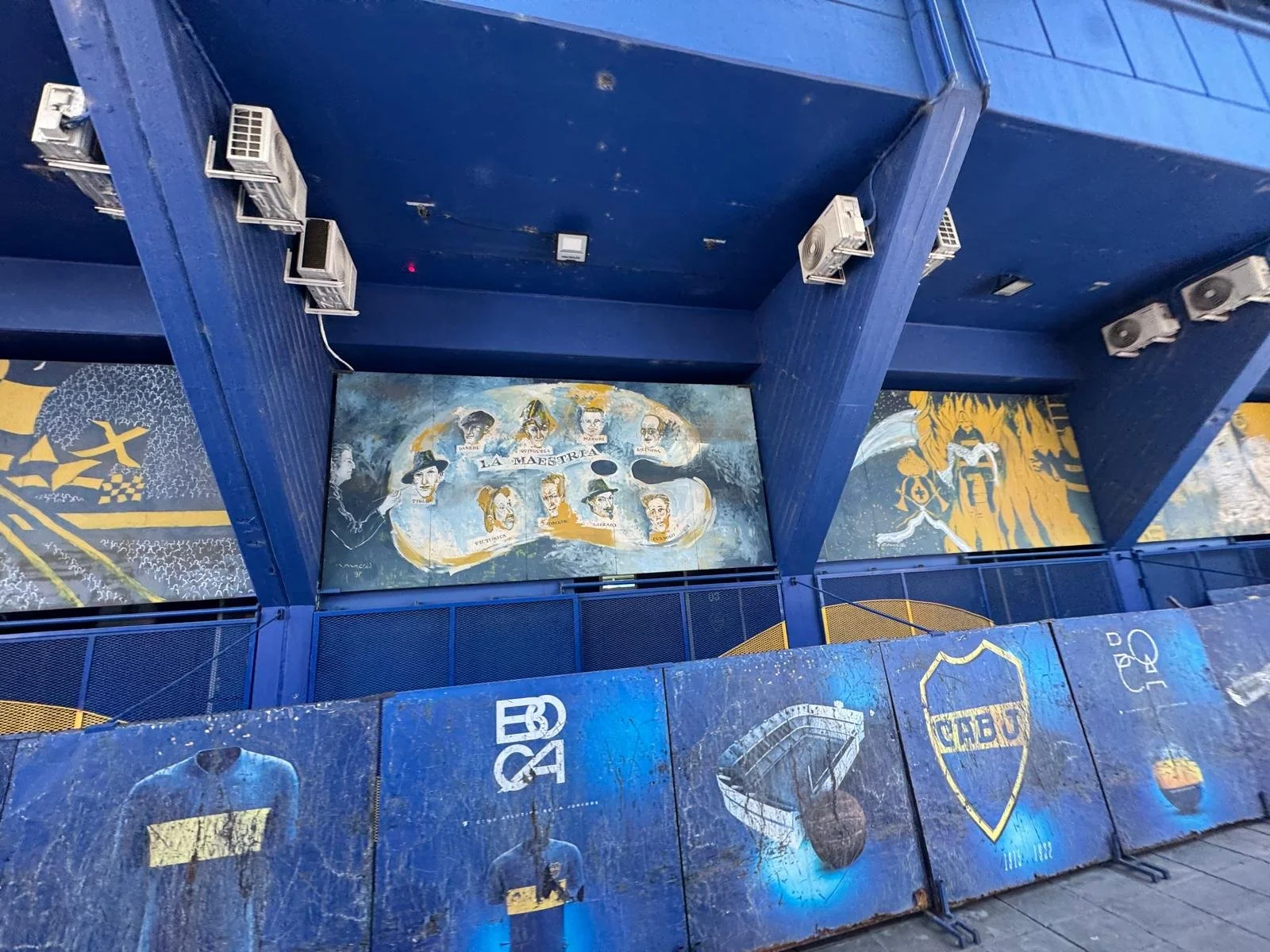
Many famous footballers have played for Boca, the most famous of course was Diego Maradona, who apparently sported a bizarre haircut in the team’s colours during his second spell at the club. More recently Juan Roman Riquelme, Claudio Caniggia, Gabriel Batistuta, Sebastián Battaglia and Carlos Tévez – all of whom have had a tribute to them painted on the walls!
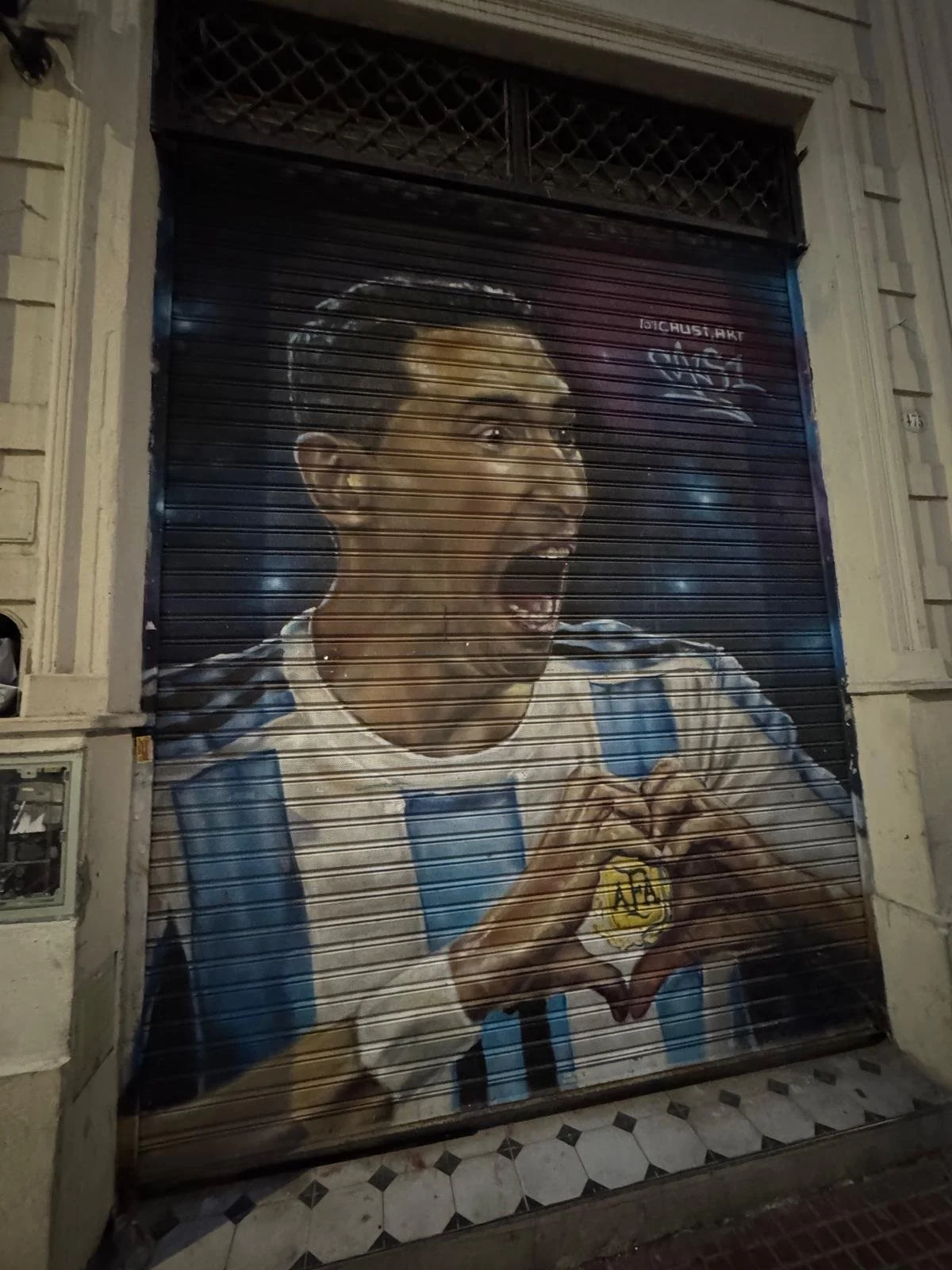
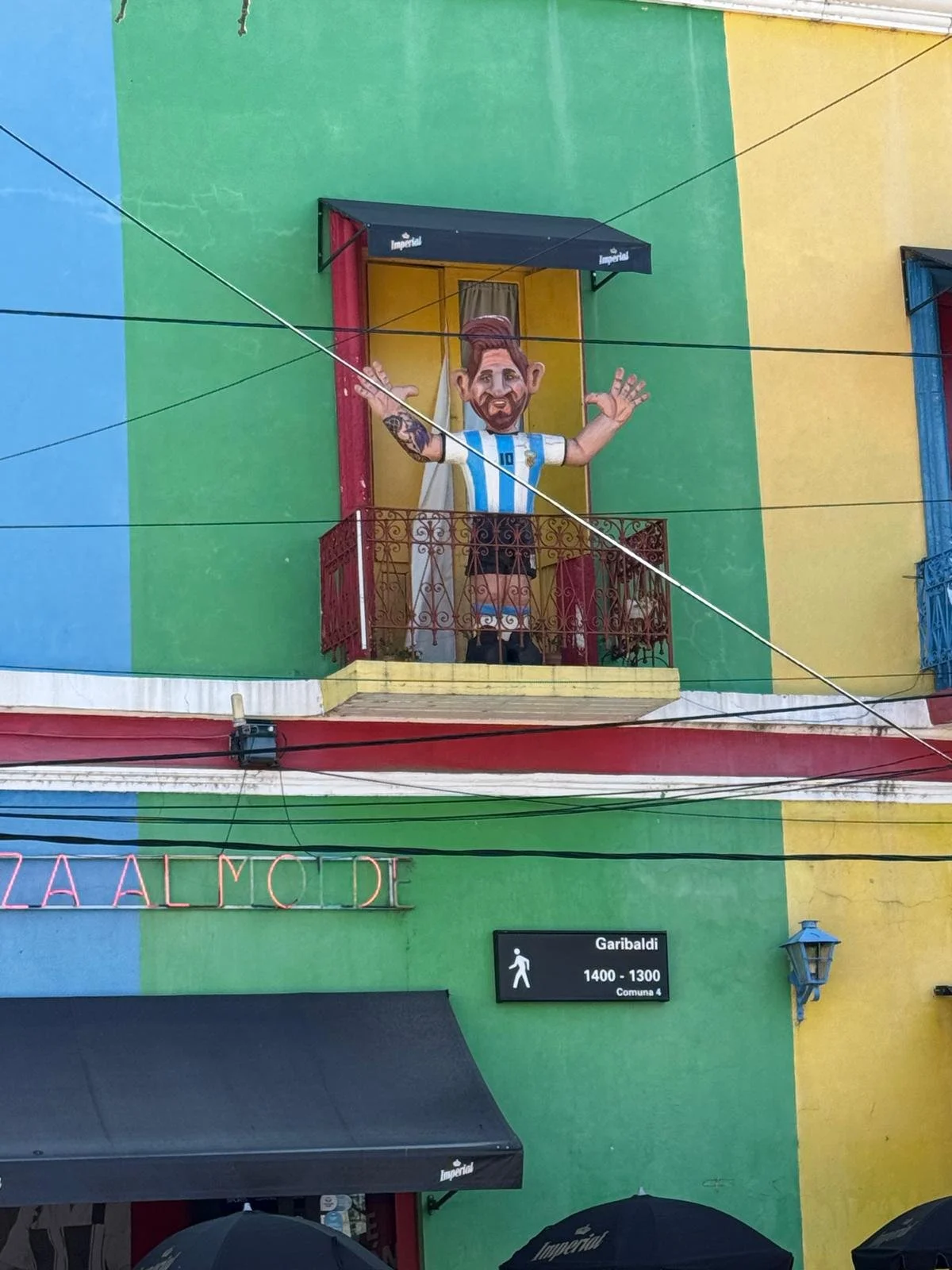
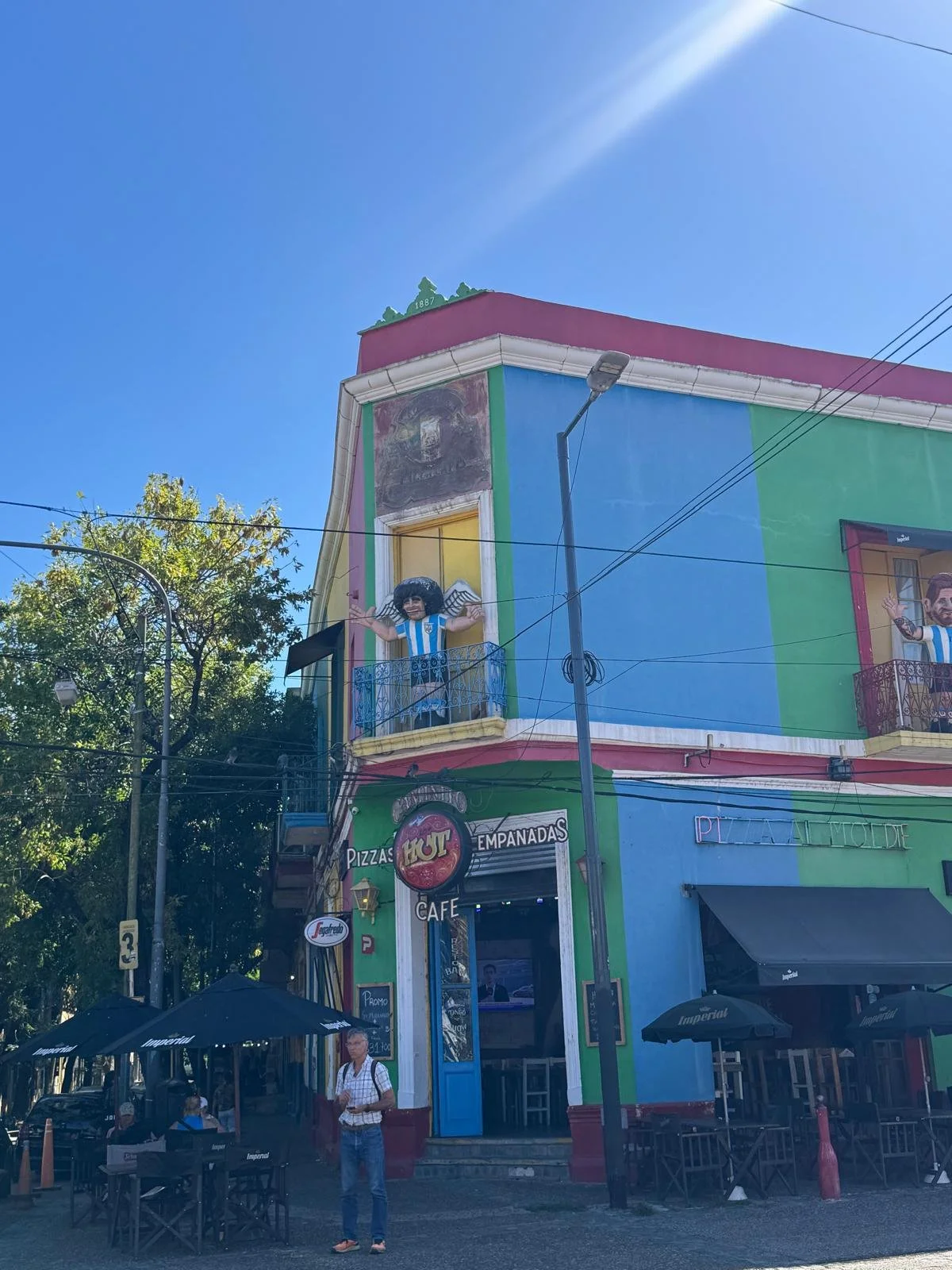
Walking around the area of La Boca (more on this to come on another blog) I also noticed a couple of balconies with figures representing Maradona – with angel wings symbolizing him as a “patron of artists, the dispossessed, and sportsmen” (dare I mention “The Hand of God” his controversial first goal against England in the quarter-finals of the 1986 World Cup in Mexico which Argentina won 2-1? Maradona punched the ball over goalkeeper Peter Shilton, although illegal, the referee allowed the goal which Maradona later described as “a little with the head of Maradona, and a little with the Hand of God”. The second figure is of Lionel Messi, Captain of Argentina since 2011, considered one of the best footballers in history, recognised for his exceptional skill, vision, dribbling skills, speed, ball control and free-kick accuracy. Winner of eight Ballon d’Or awards, multiple Champions League titles, league titles, the 2021 Copa América and the 2022 FIFA World Cup – not a bad haul!
It goes without saying that I couldn’t resist popping into one of the football shops to make a few purchases for my grandsons!