

Mendoza – “the Land of Sun and Good Wine”
Wednesday 18 February
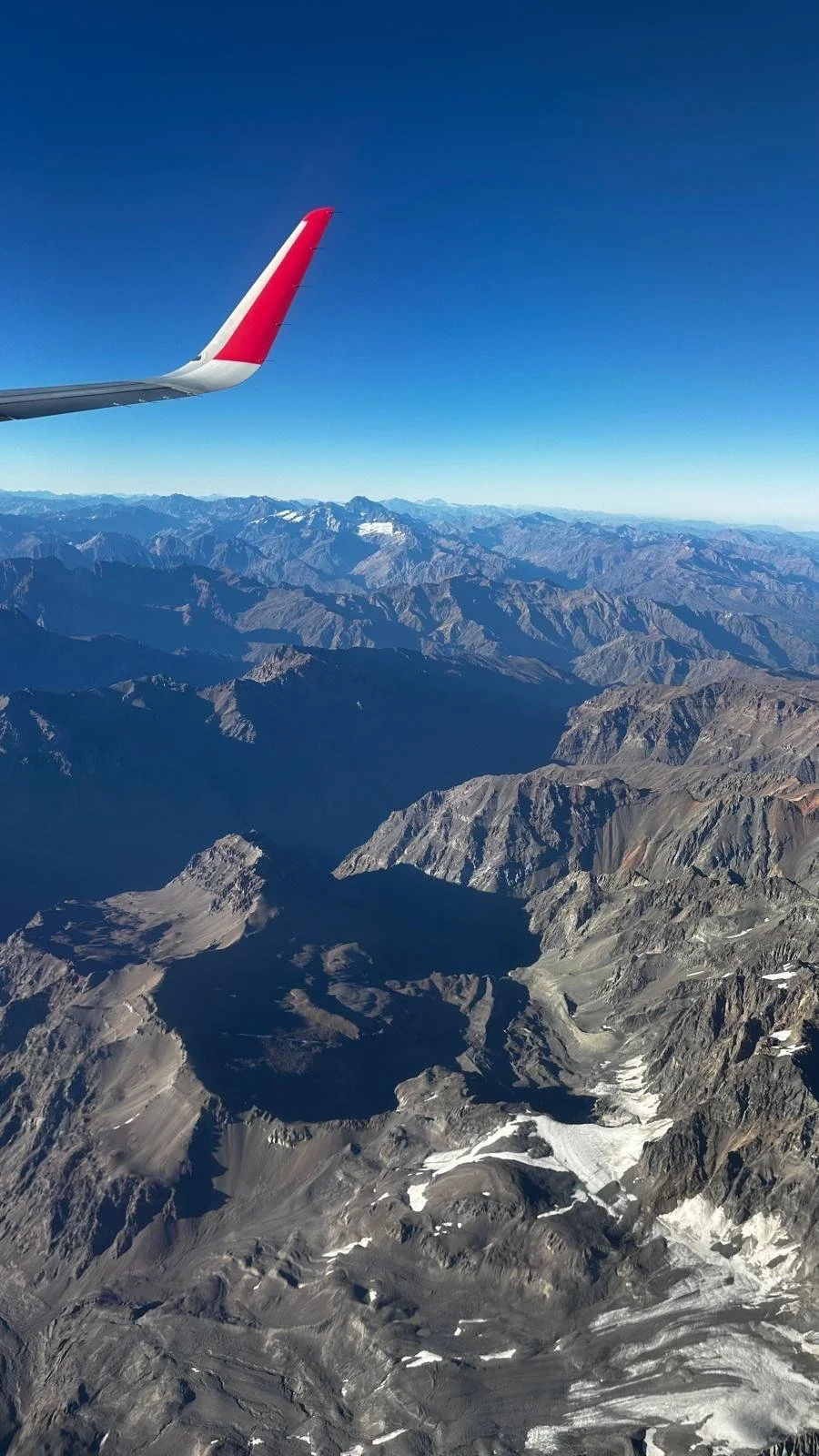
Well after only a few hours sleep, we were up at 4.45am to get back to the airport again for our flight to Mendoza. Located in the Cuyo region it is the heart of Argentina’s wine country, famed for its Malbecs and other red wines. Mendoza is in the western part of Argentina at the eastern base of the Andes Mountains near the Chilean border, it was with some trepidation that I boarded our Latam flight having happened on an article with the title “the most turbulent flight in the world” and yes, it was Mendoza as you fly over the Andes mountain range with the stewardess instructing you to keep your seatbelt on because you are flying over the Andes!!! I’m happy to report it wasn’t too bumpy. Mendoza is one of Argentina’s major cities, and its metropolitan area, known as Greater Mendoza , has a total population exceeding one million. Most residents of Mendoza are descendants of immigrants, as the city was very cosmopolitan in its origins due to the large number of immigrants, primarily Italians and Spaniards, who arrived between the last quarter of the 19th century and the first quarter of the 20th century. Smaller immigrant groups of other origins, such as Arabs and French, also settled here at that time. These immigrant groups established themselves in a region of Cuyo whose population base was of Chilean and indigenous origin. Currently, there is a considerable number of immigrants from countries in the region such as Bolivia, Paraguay, and Peru, and immigration from Chile has never ceased.
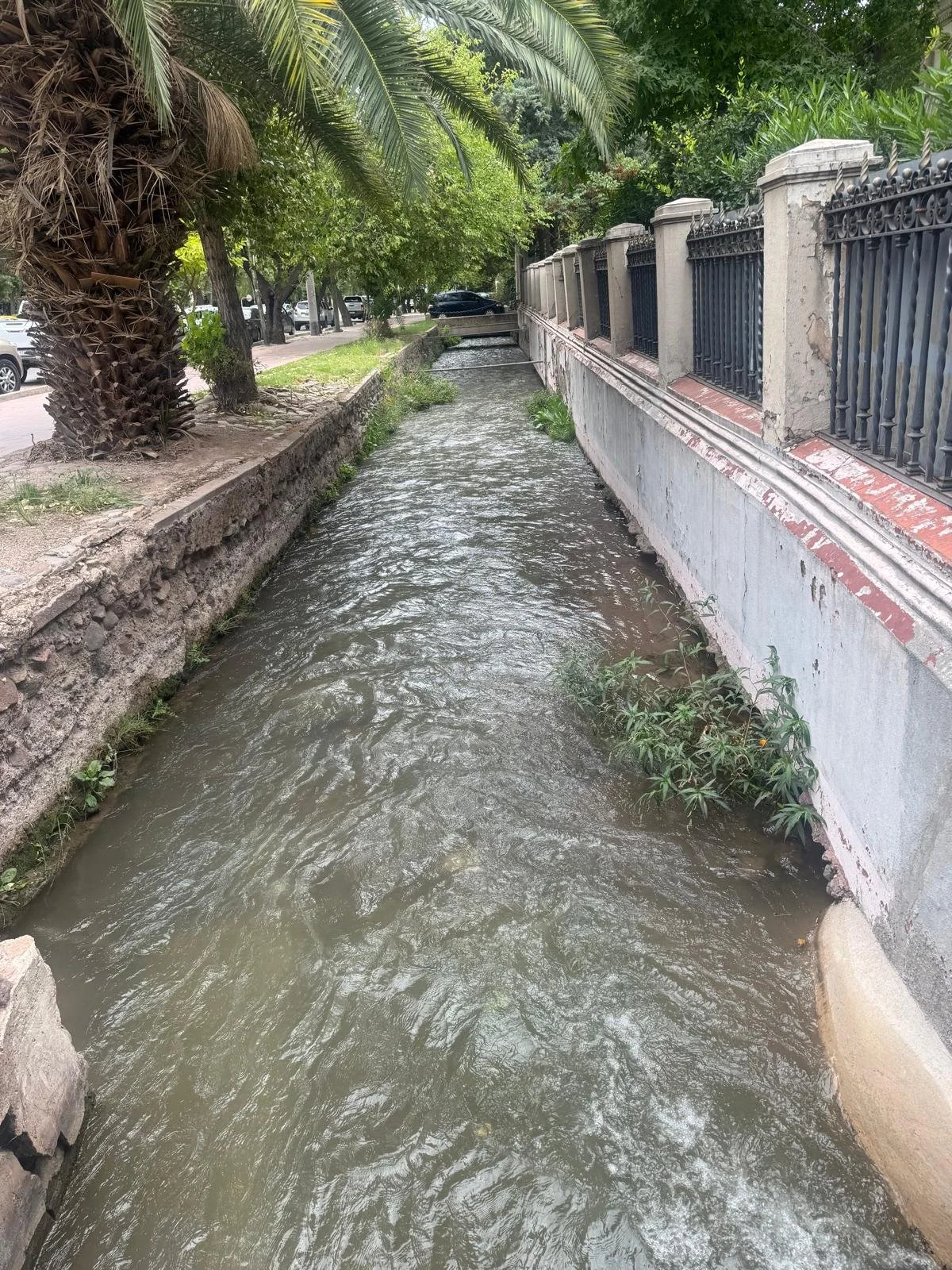
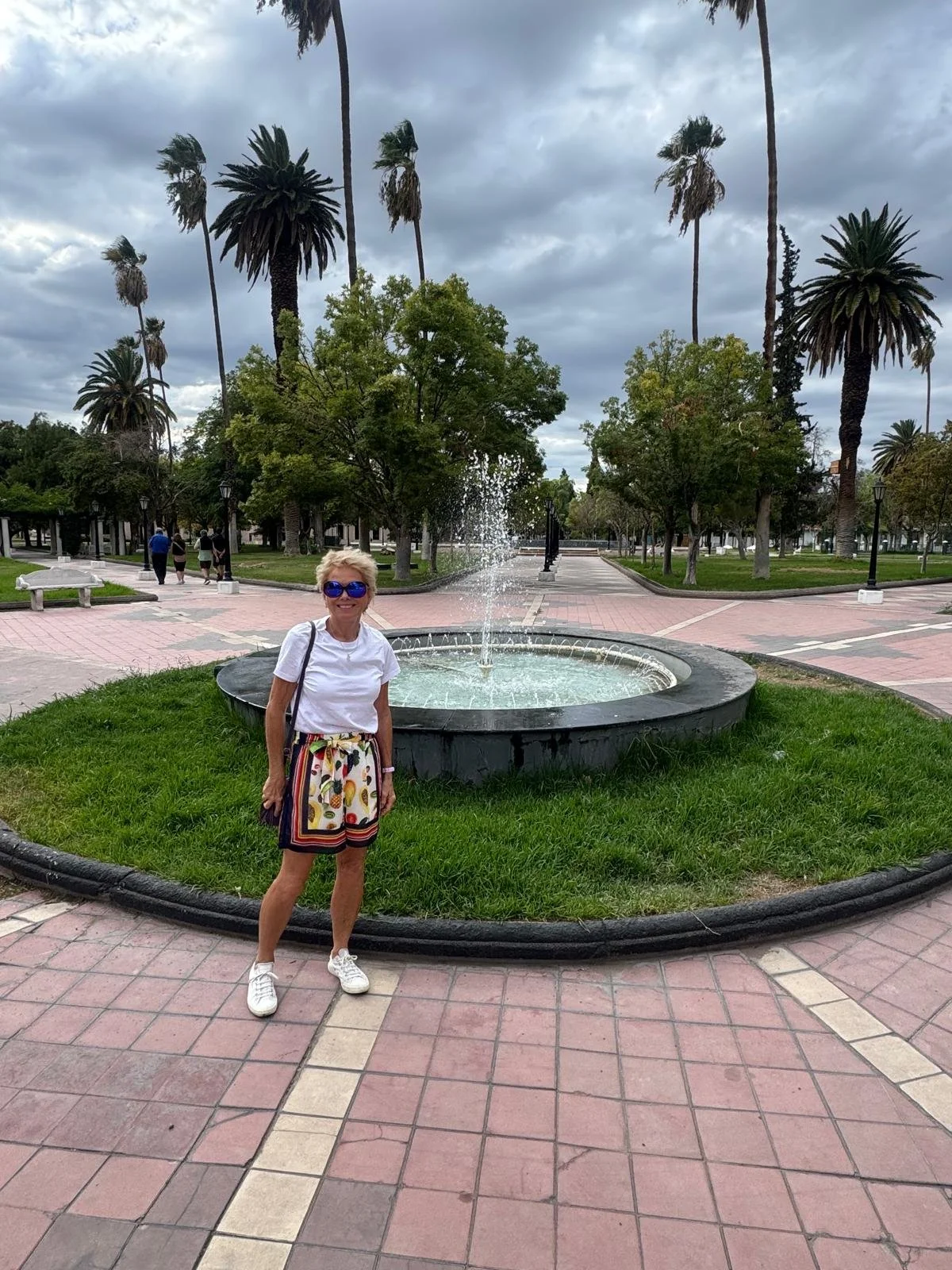
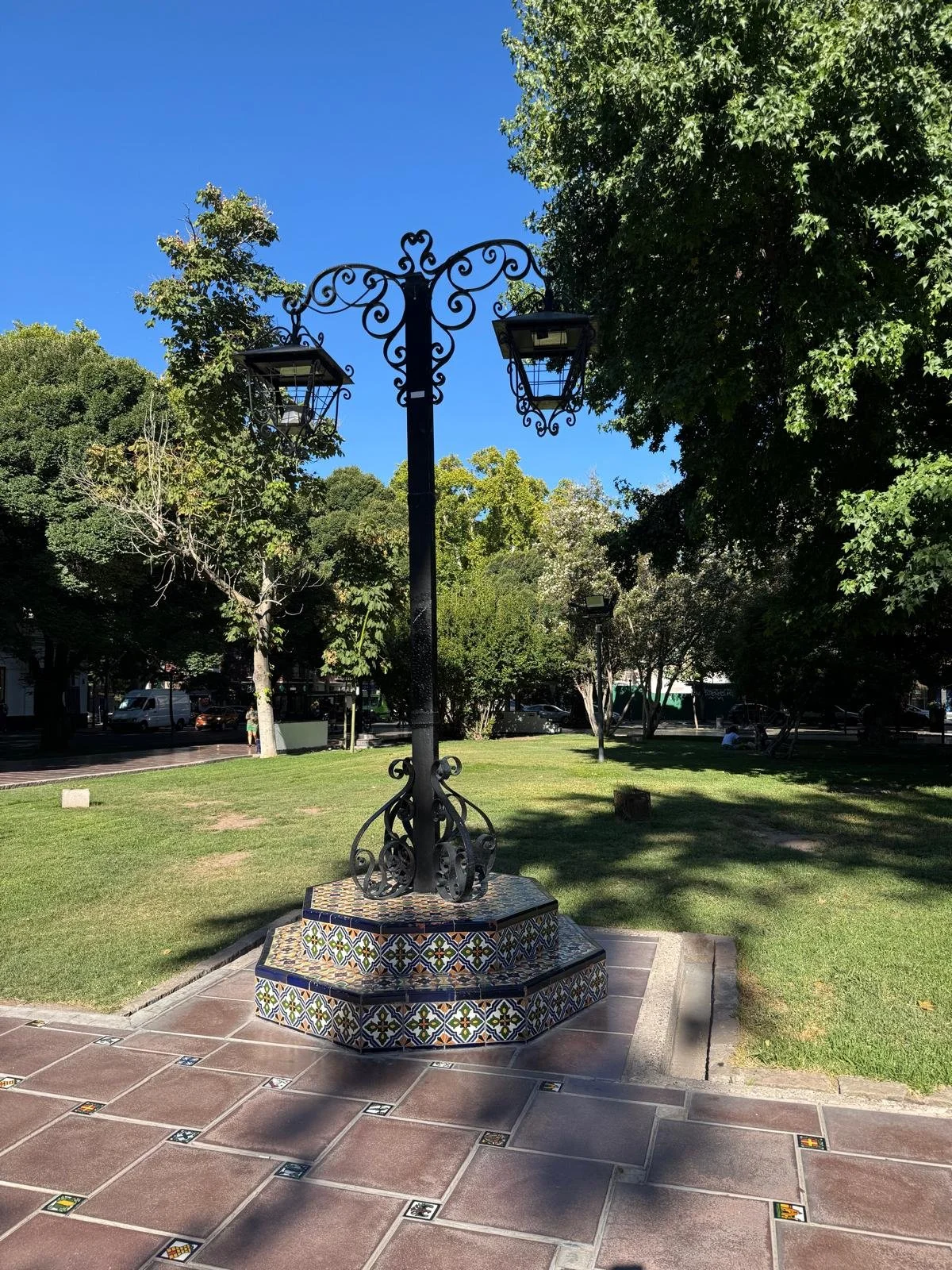
As soon as we arrived at our accommodation, we dumped our bags and went out for a walk. We’re staying right in the centre of the city and it’s all action packed right outside our door! We’re on a pedestrian street lined with cafés, restaurants and shops, with music pouring out from everywhere, and what seems like a park every few blocks. And beautiful they are too – so verdant with splashing fountains in all of them. The water flows down from the Andes and there is a historic network of irrigation canals known as acequias, which channel water from the mountain’s glacier and snowmelt which in turn transforms this arid region into a lush agricultural and urban landscape – and importantly, supports 95% of the country’s grapes! These parks are amazing – so beautifully maintained, with lovely, very pretty (I want one) wrought iron benches and old-fashioned lighting (I want one of these too). The nearest one to us is Plaza Independencia, literally at the end of the boulevard where we are staying, and it is a delight – beautiful fountains, an iconic I love Mendoza sculpture and it was so lovely to sit and people watch – families with kids and locals just relaxing and enjoying the peace and sunshine.
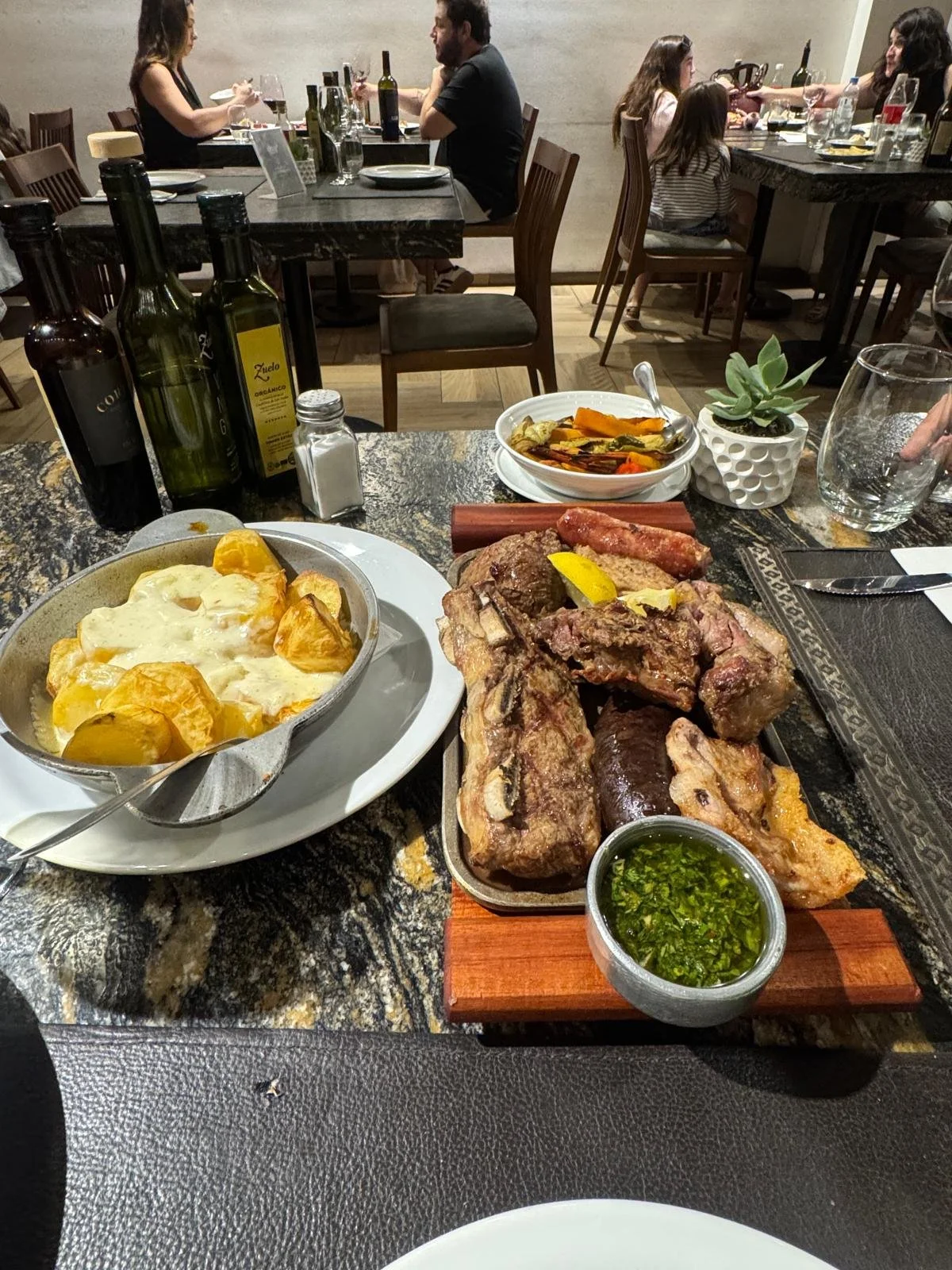
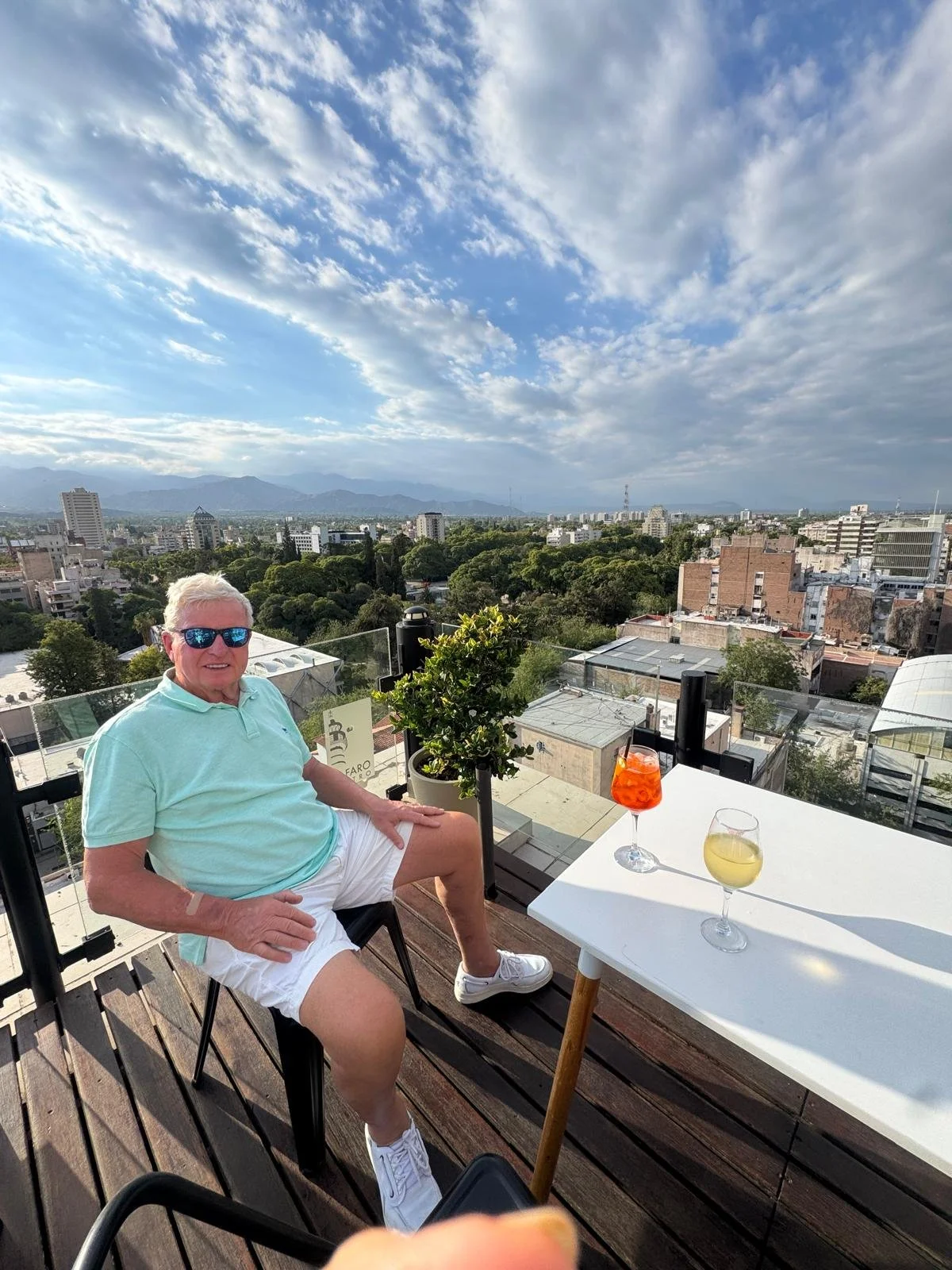
Once again, we need to make the most of our short visit here, so after a lovely outdoor lunch on the boulevard, Geoff booked us on a city tour for tomorrow and a must-do vineyard tour for Friday! We enjoyed another stroll to a rooftop bar for a pre-dinner drink and to get our bearings as the sun began to set, and then visited Estancia de La Pasion restaurant which had been recommended to us at the Viajes Cepa tour office. What a great choice – an absolutely delicious, typically Argentinian dinner of barbecued steak, pork, lamb, sweetbreads and sausages, all presented beautifully on a tray accompanied by a Malbec (of course) for Geoff and a local sauvignon blanc for me.
Thursday 19 February
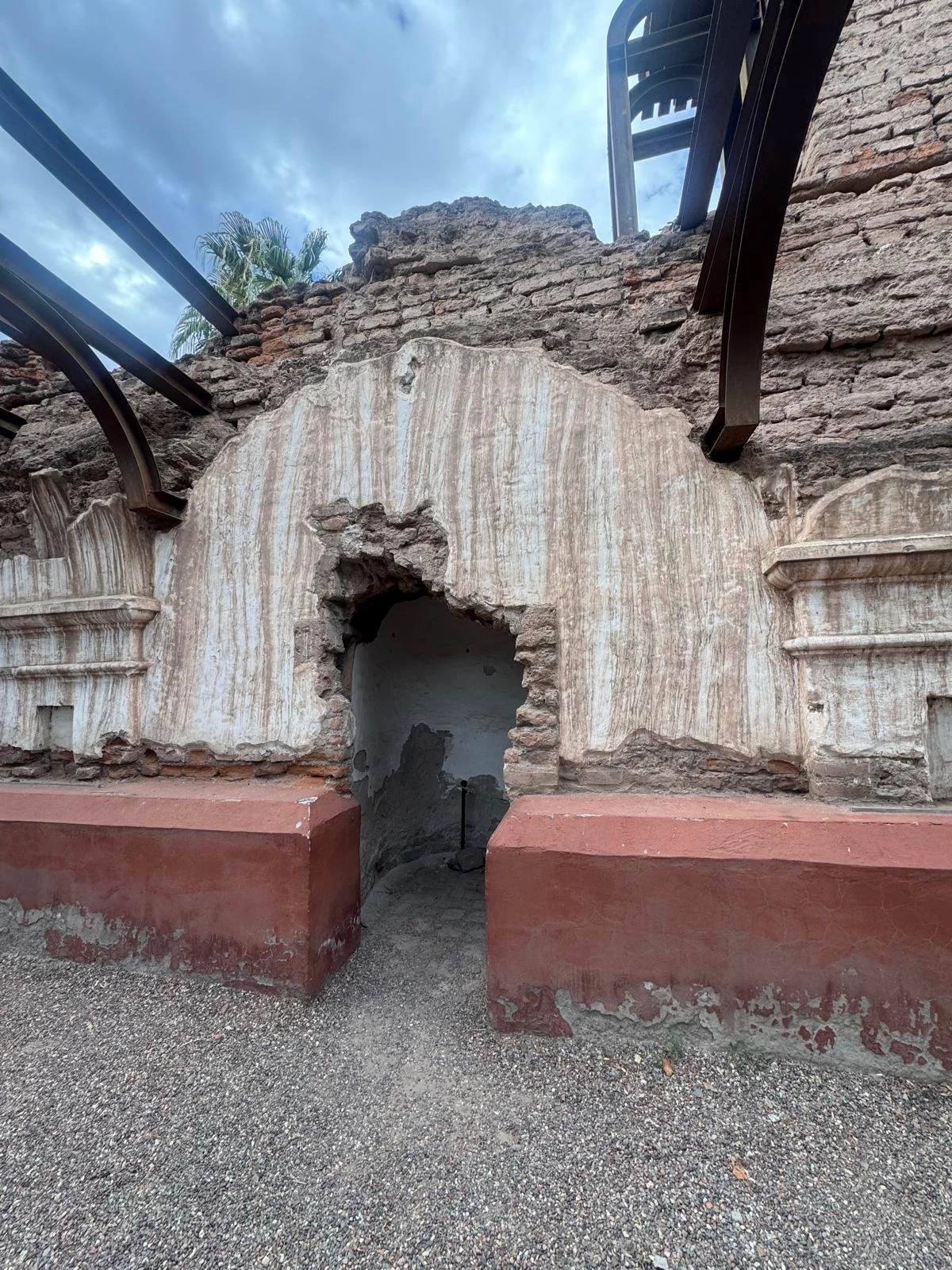
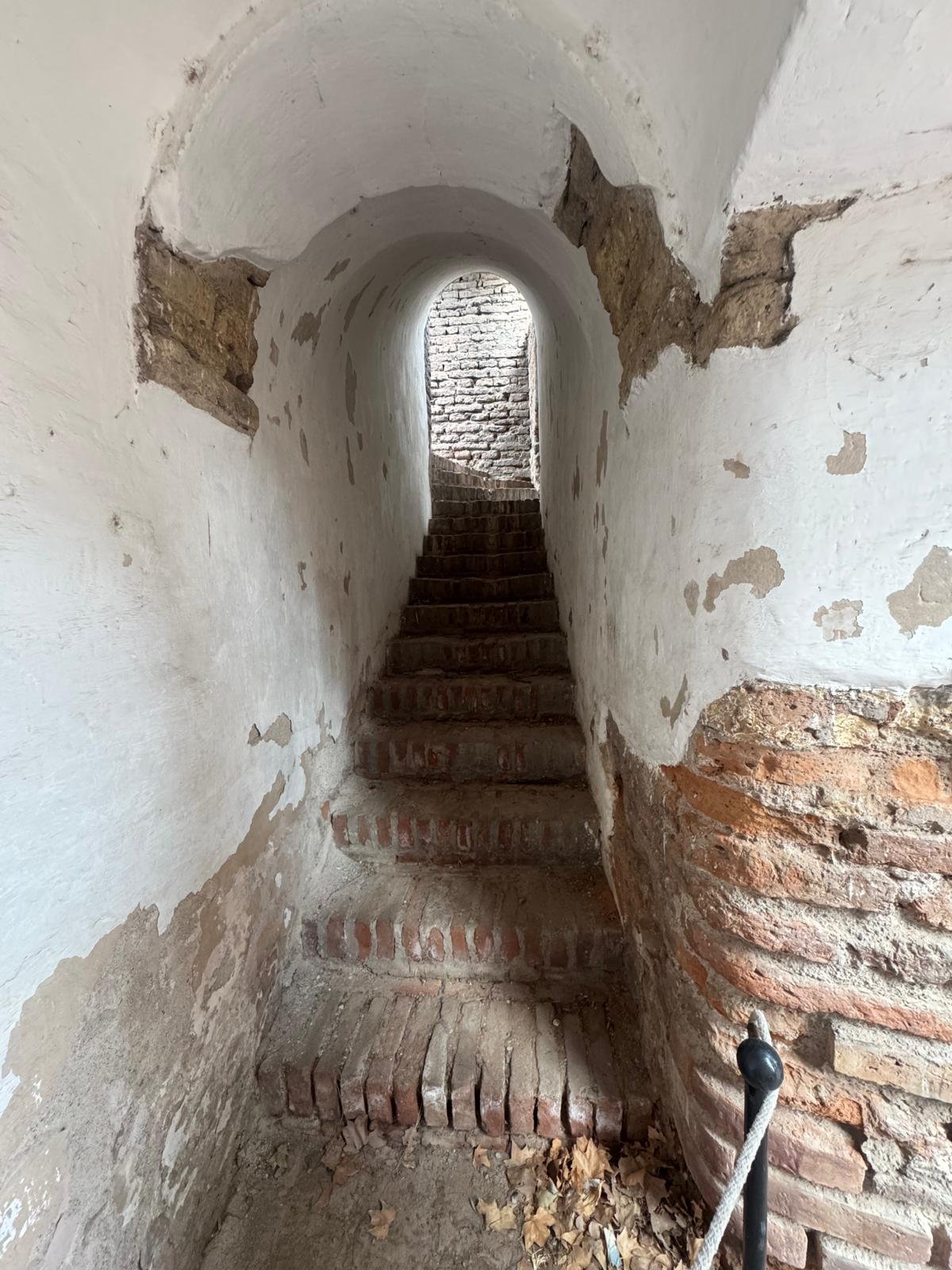
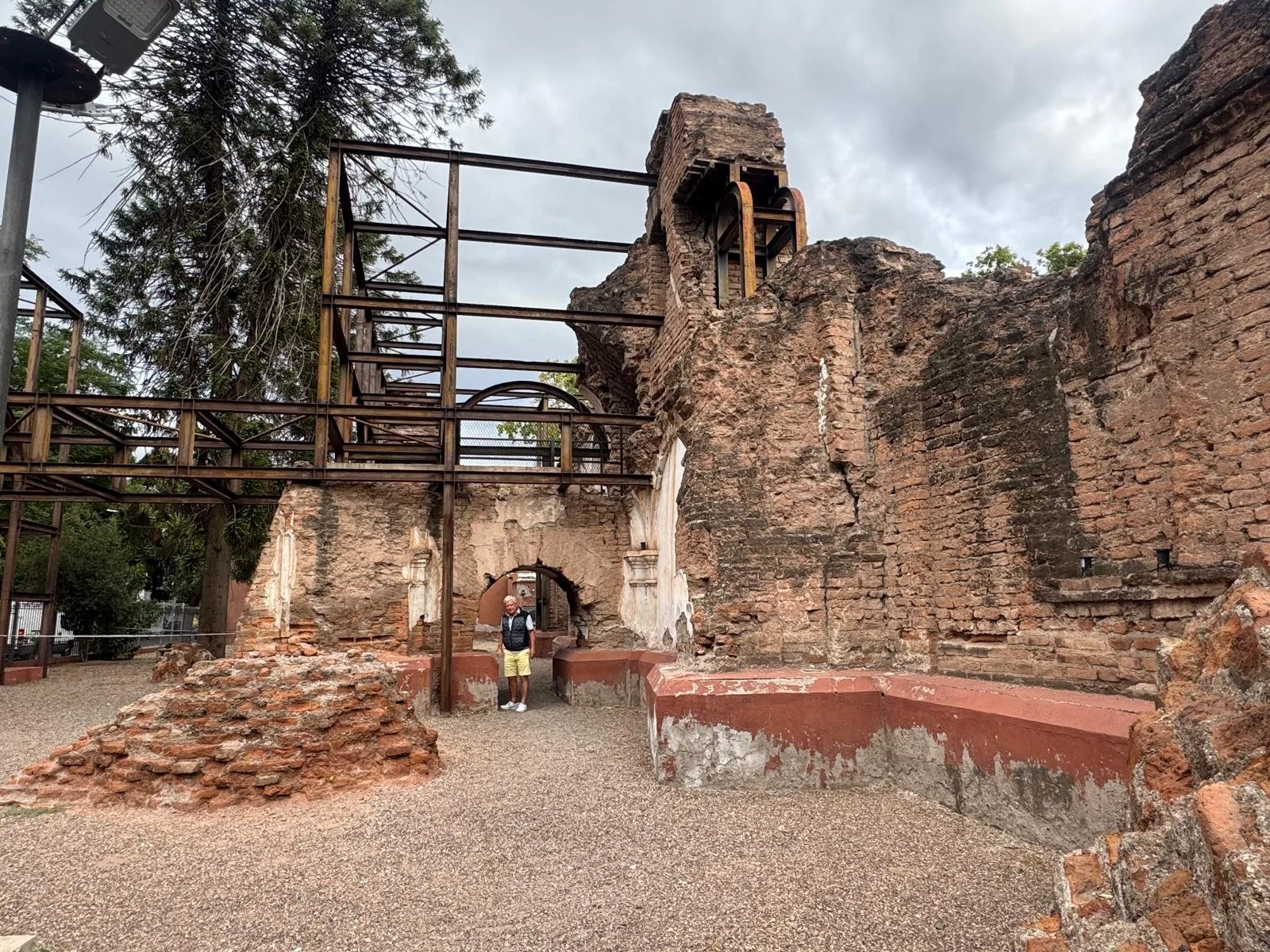
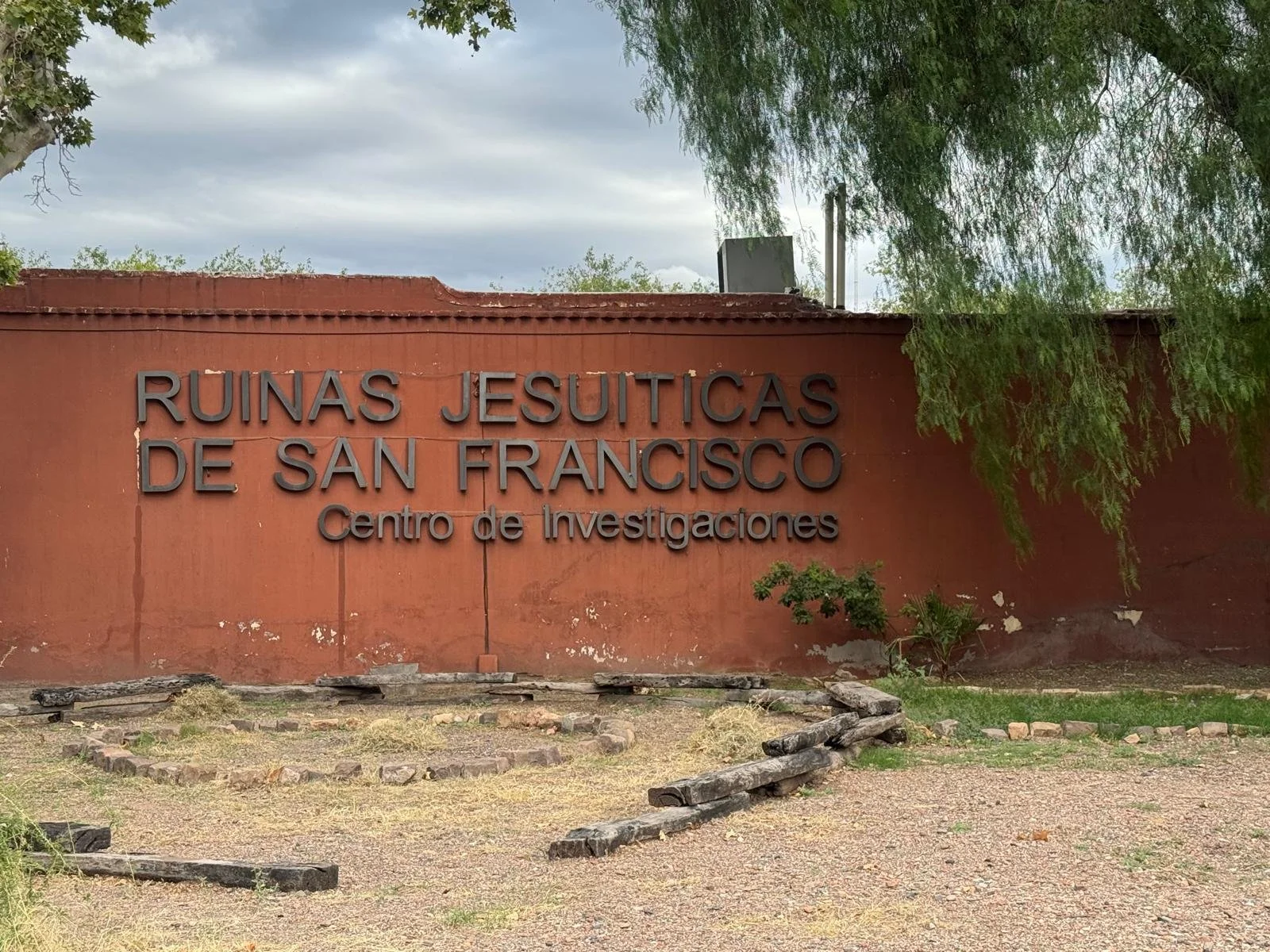
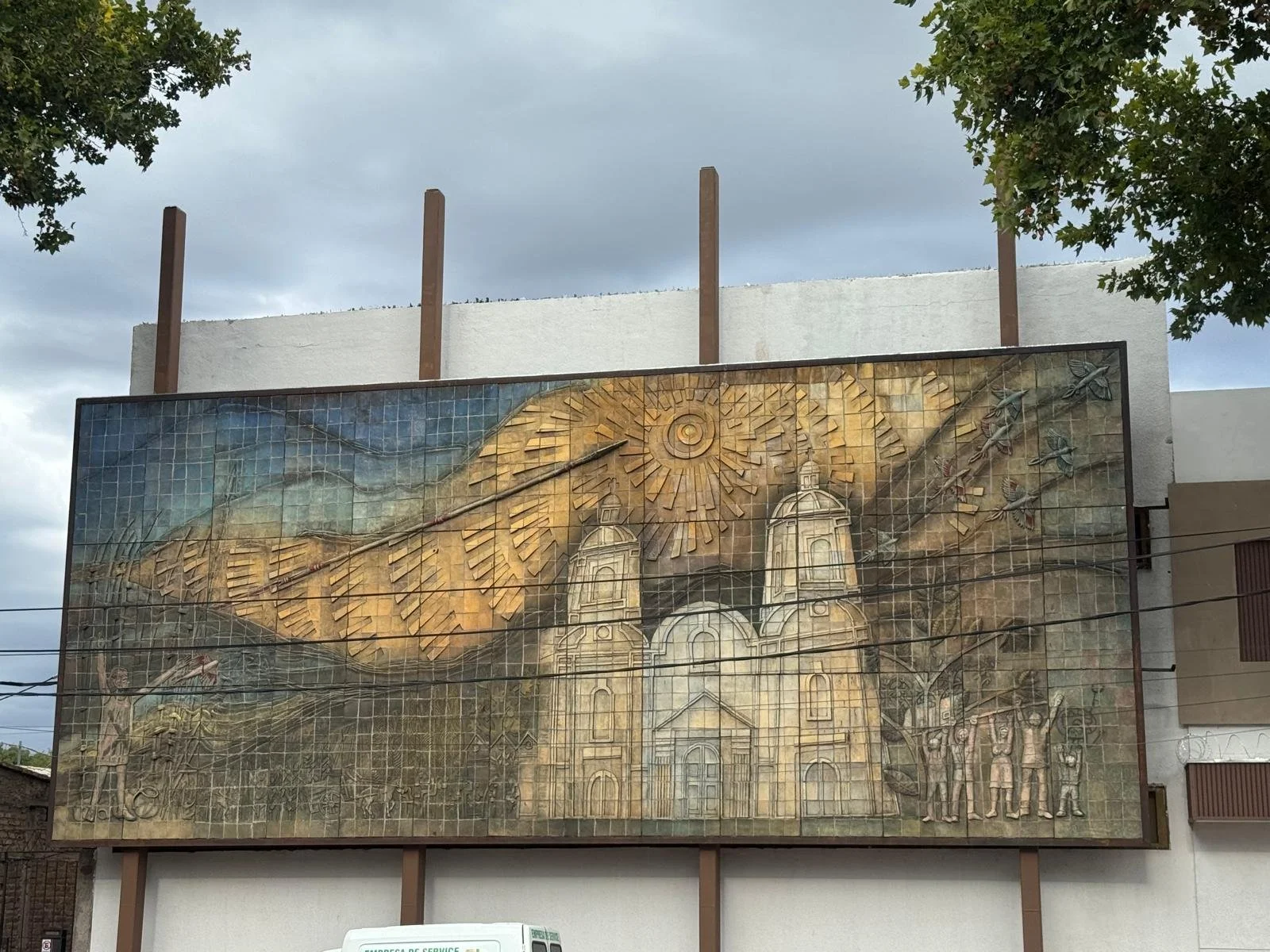
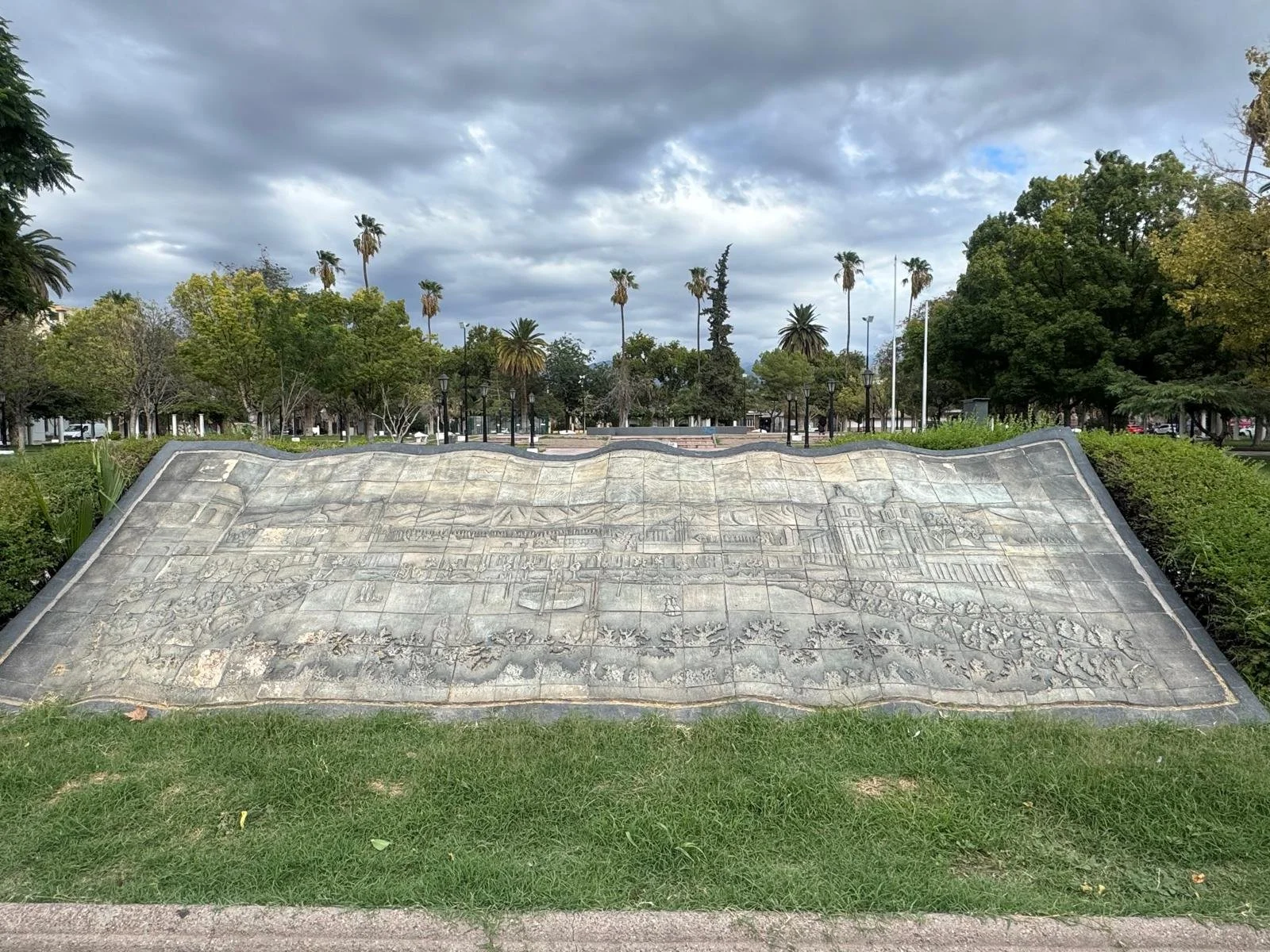
A quick breakfast and then it was off to meet our City Tour sightseeing bus – just a small group and us two the only English-speaking guests, but fortunately Caro our lovely guide was fluent in English and incredibly knowledgeable with all the information, a good part of it historical (with a lot of dates involved) which thrilled Geoff, being a bit of a history buff! First stop was the remains of an 18th century Jesuit church which was destroyed by a massive 1861 earthquake, these stony walls are a National Historic landmark. The church was constructed by the Jesuits between 1716 and 1731 and after the Jesuits were expelled in 1767 the complex passed to the Franciscan order. Opposite another green space, Plaza Pedro del Castillo, an important historic square marking the original site of the city’s founding in 1561 and named after the city’s founder, Don Pedro del Castillo, it was the epicenter of religious and social life until March 20, 1861, when the earthquake destroyed much of the colonial buildings surrounding the plaza. There are some beautiful murals here representing the old city of Mendoza pre-1861 and once again, another splendid fountain.
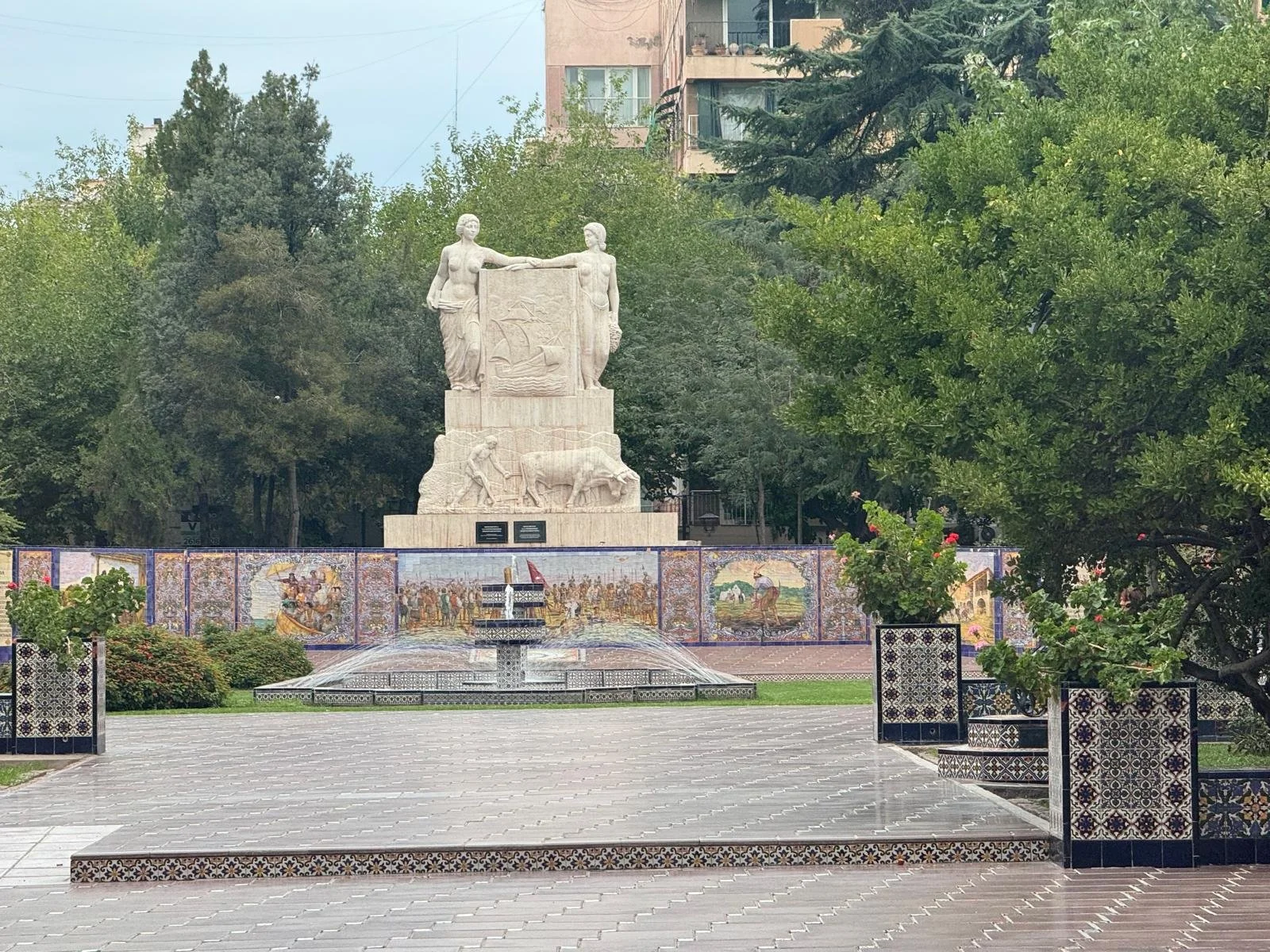
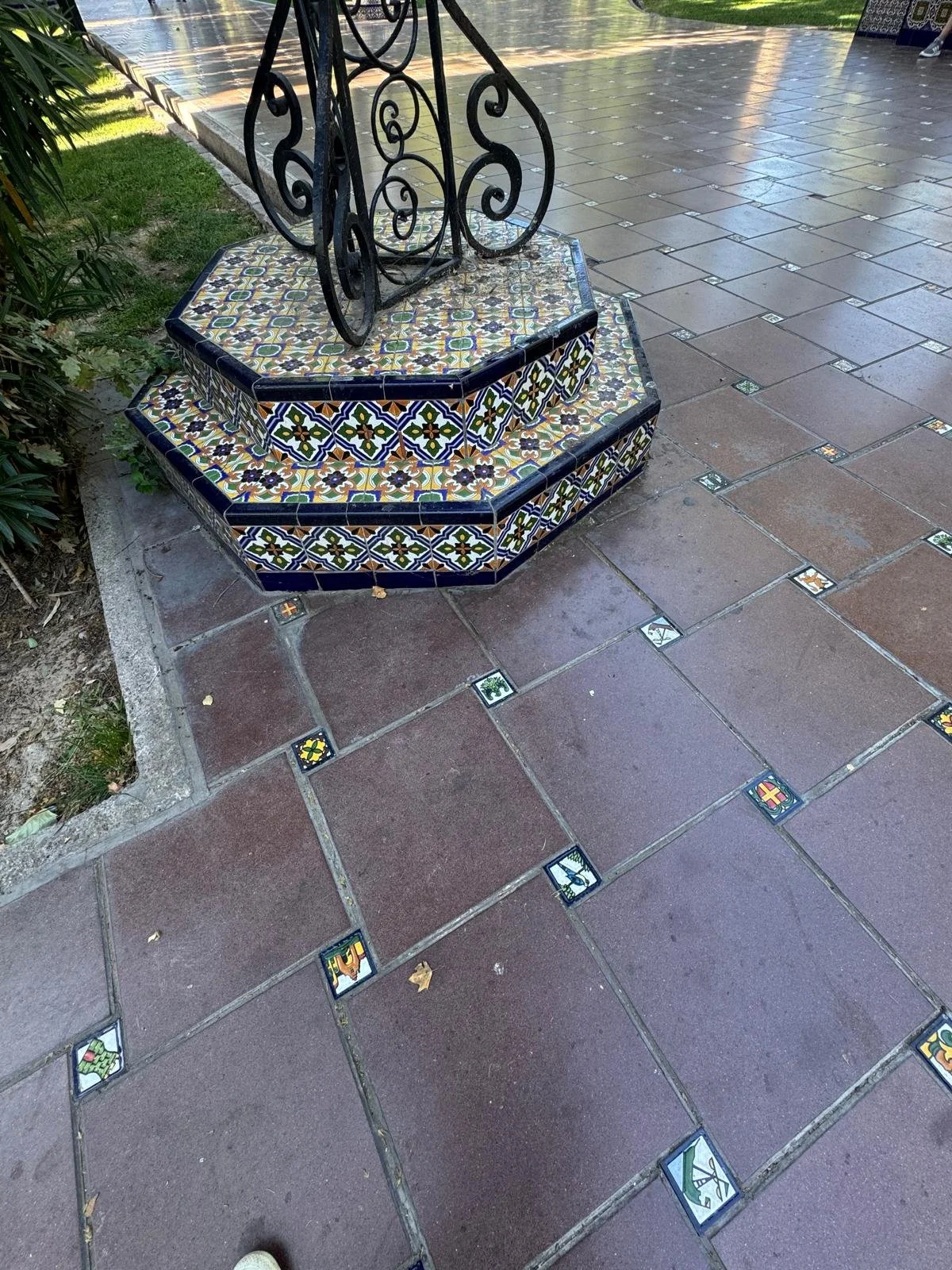
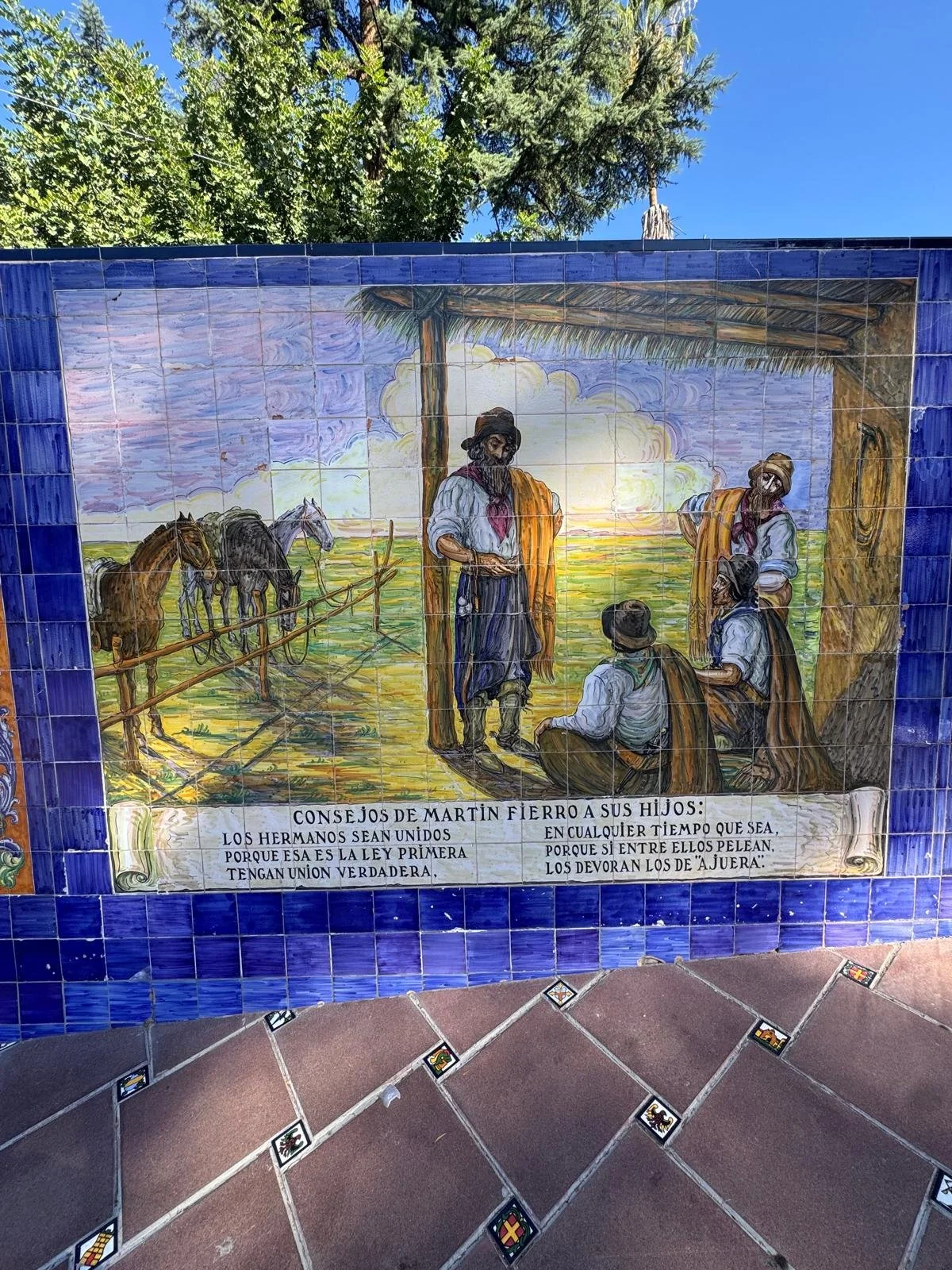
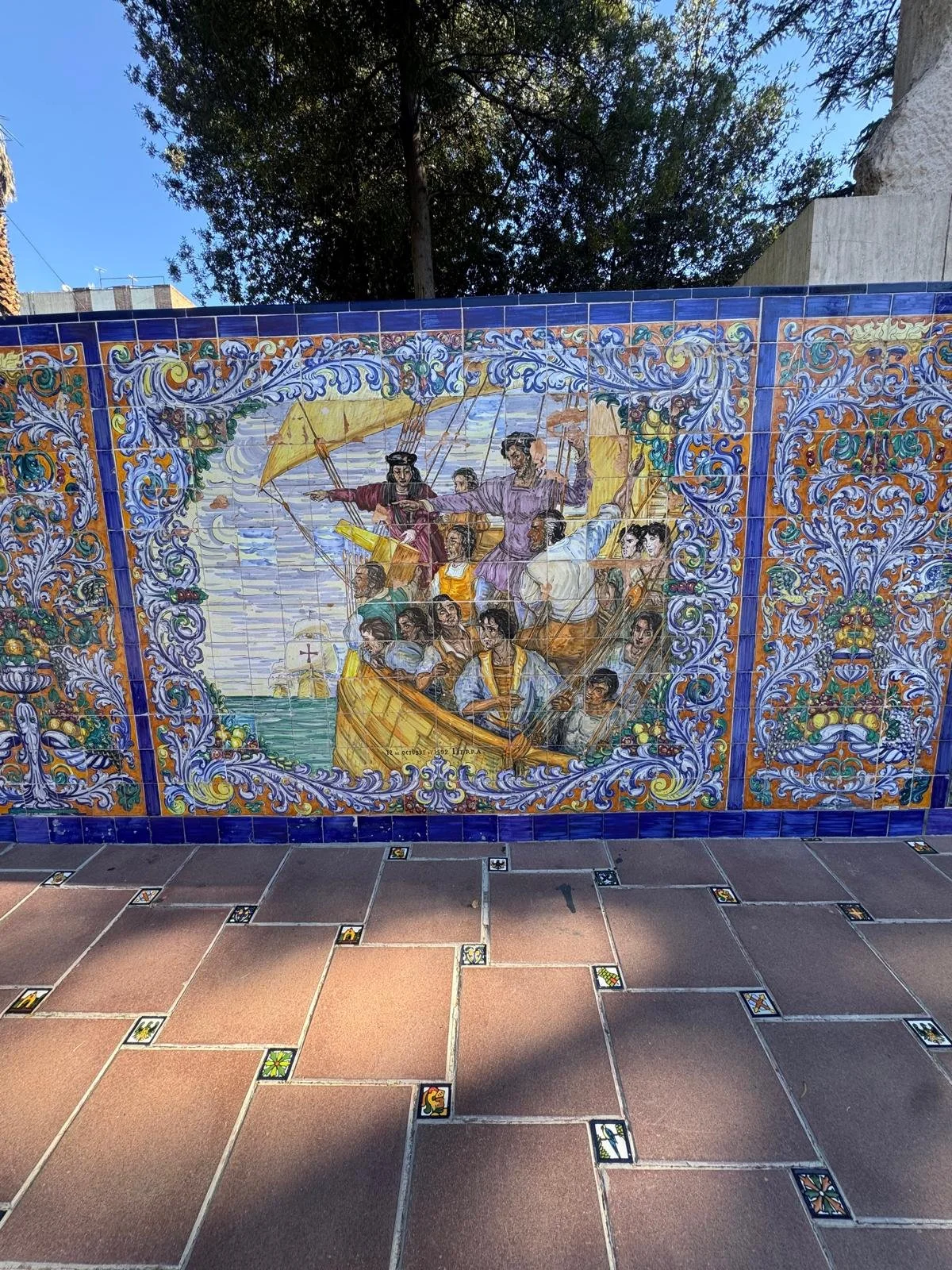
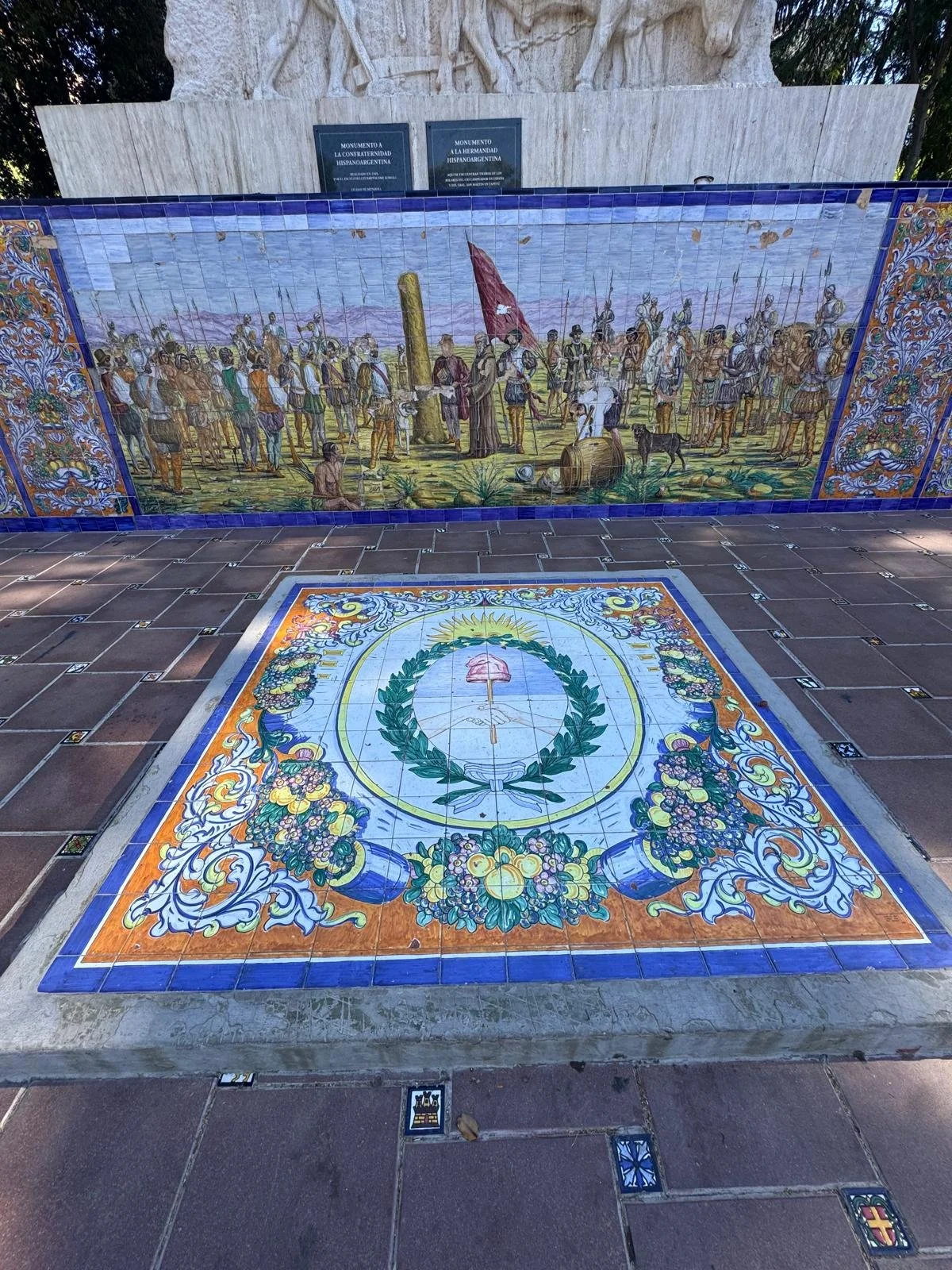
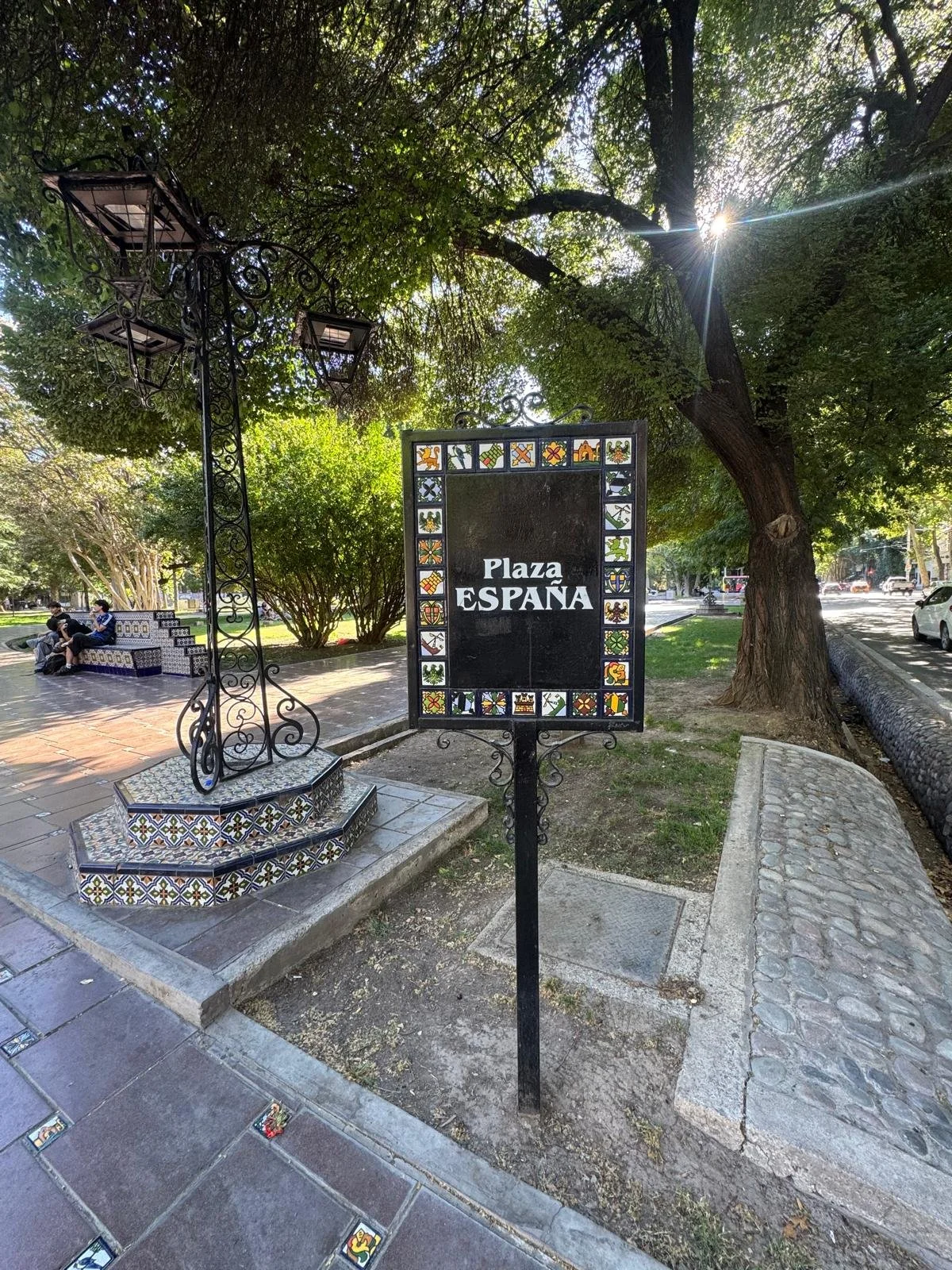
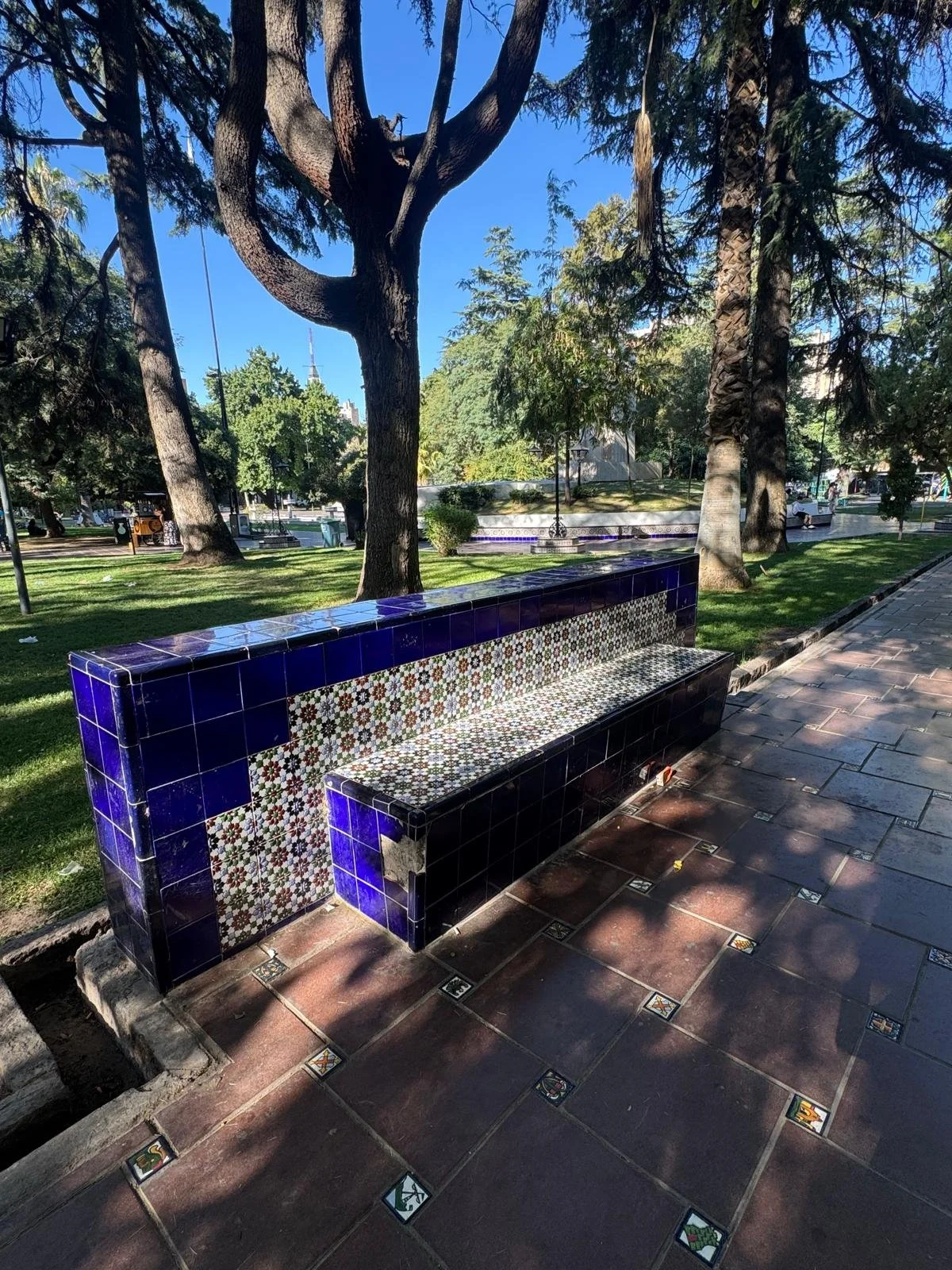
As well as all the smaller lush plazas which seem to be every few blocks, Mendoza also features the massive Parque General San Martín, and also plazas representing and honouring international ties, friendship and history, such as Italy, Spain and Chile, and along with the Independence Square, it is known as the "City of 5 Seats". It has been heart-warming to see how well maintained all these Plazas are, they all boast sculptures that link their countries to Mendoza - the Plaza Espana is laid out in a space typical of Spanish courtyards and sculpted in travertine marble from San Juan, and has a monument depicting parts of parts of Don Quixote of La Mancha, by Miguel de Cervantes and El Gaucho Martín Fierro , a poem by José Hernández as well as symbolic figures from Spain, and was created by the Spanish sculptor Luis Bartolomé.
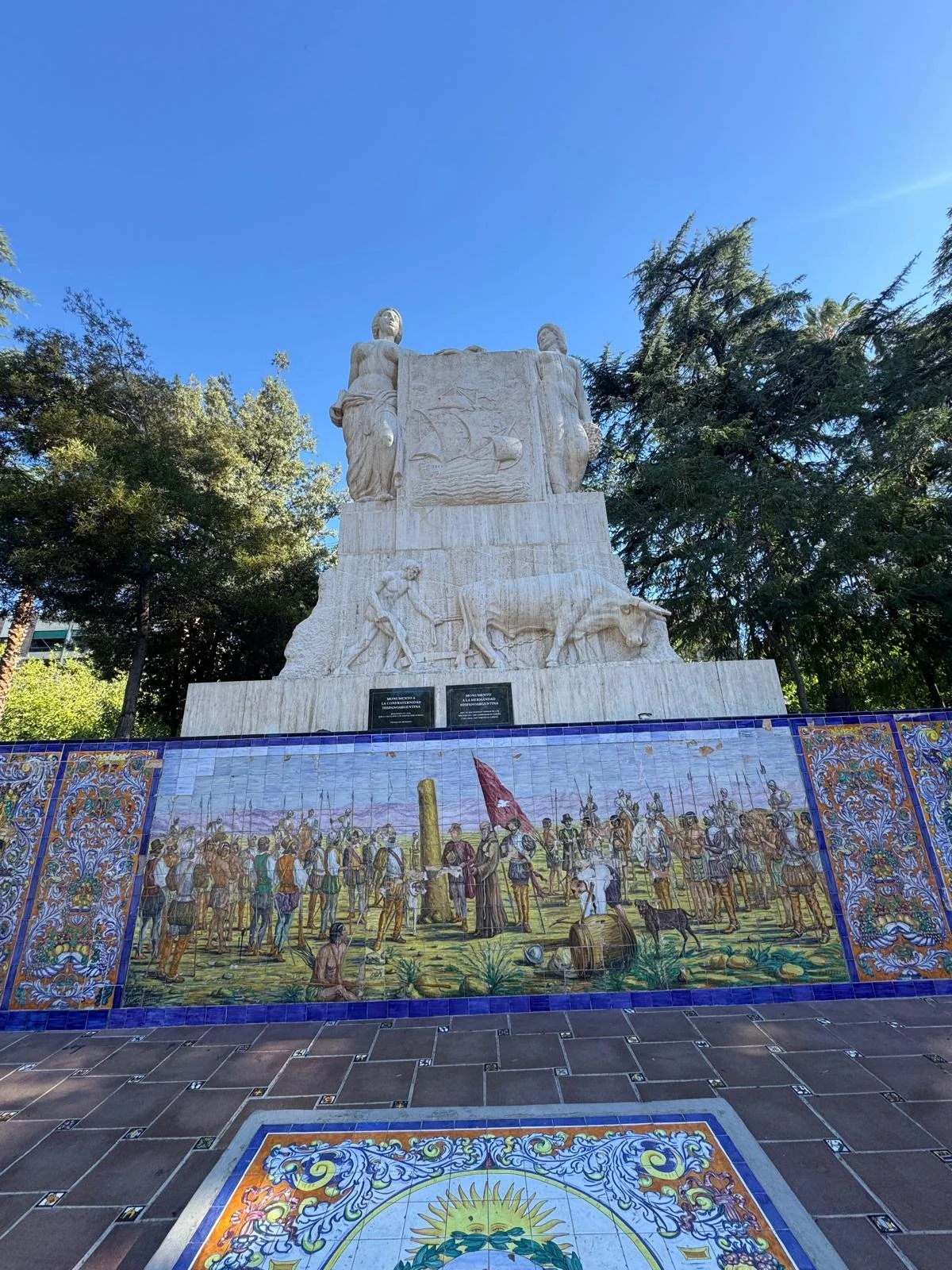
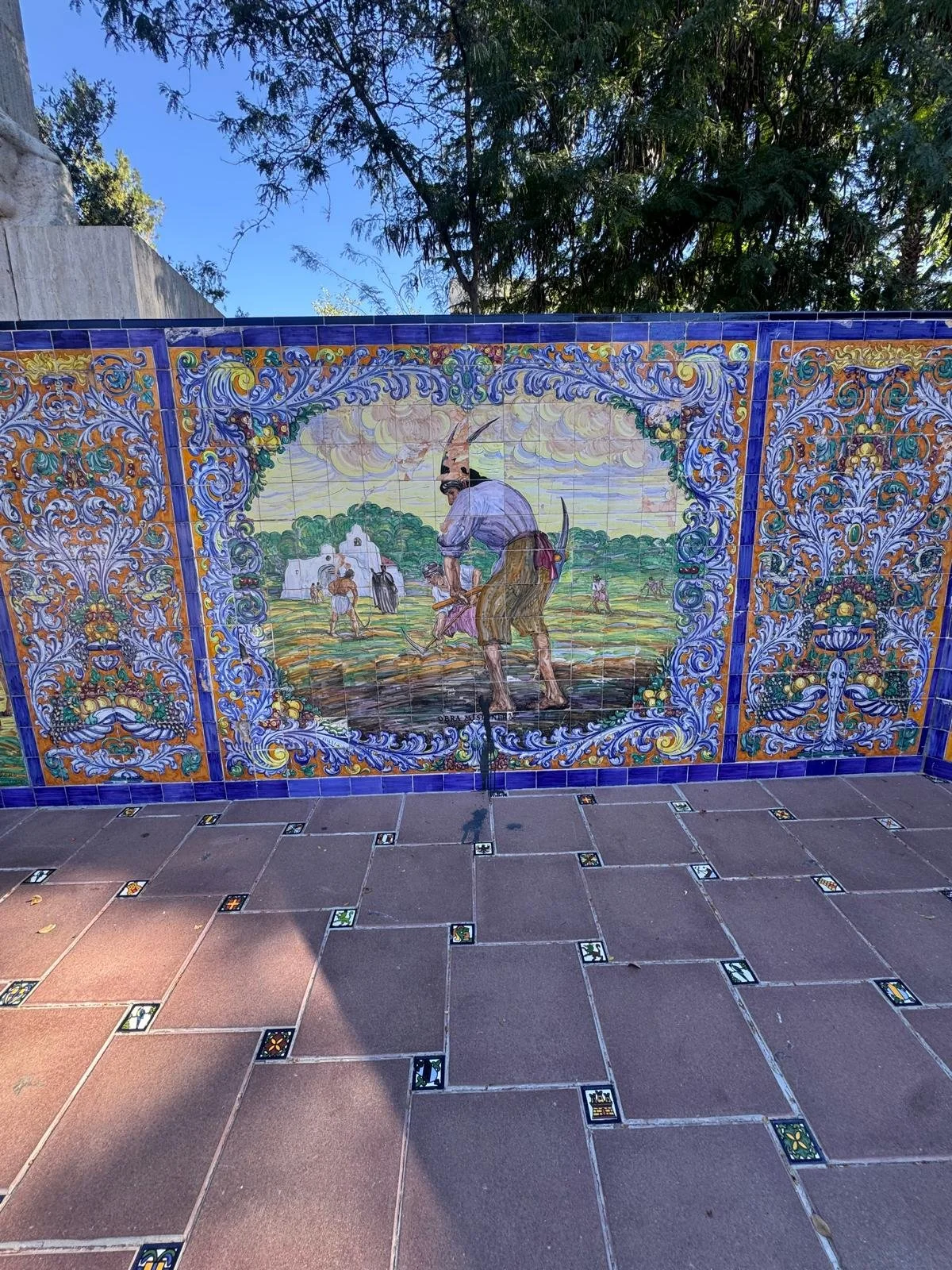
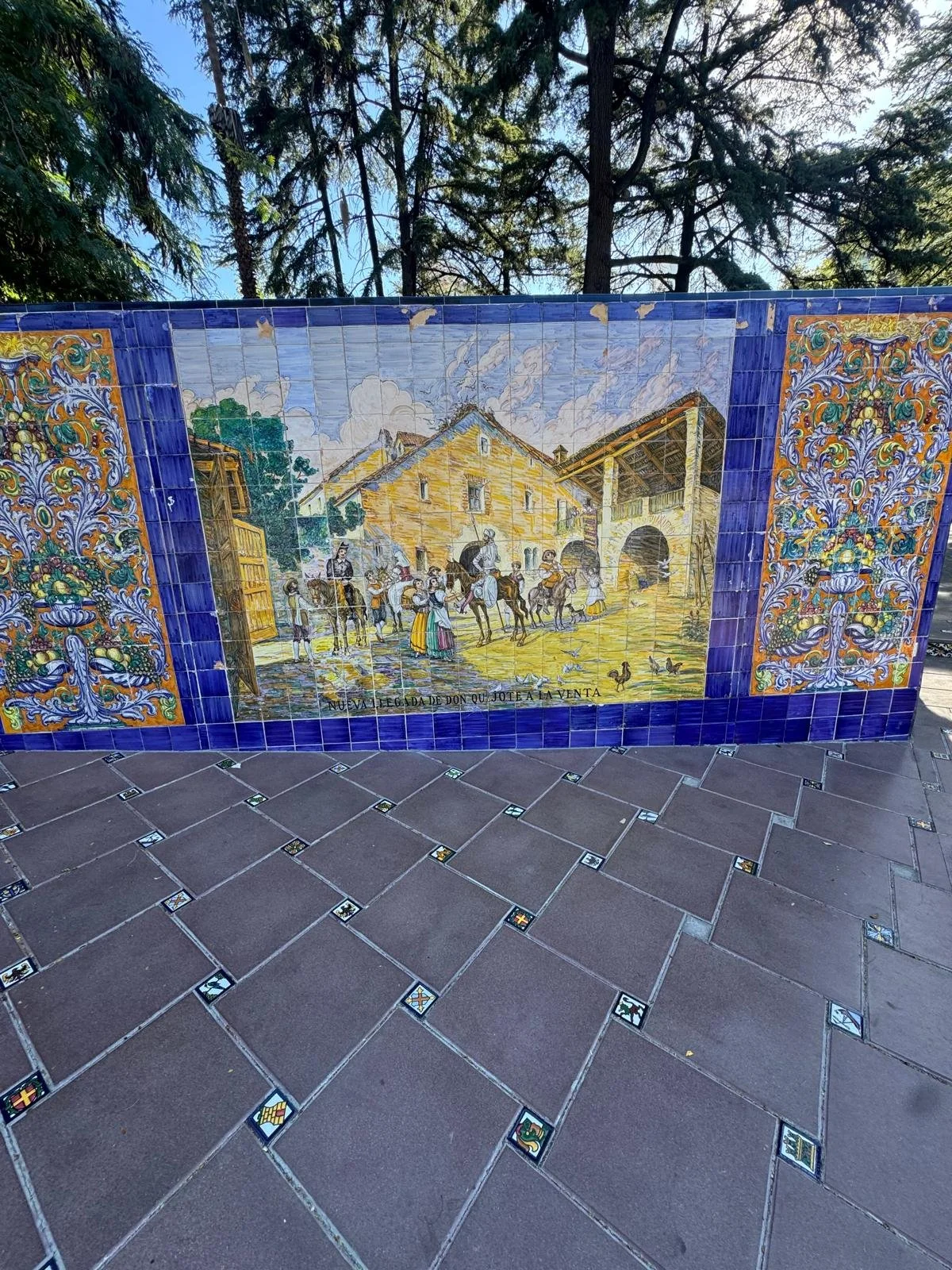
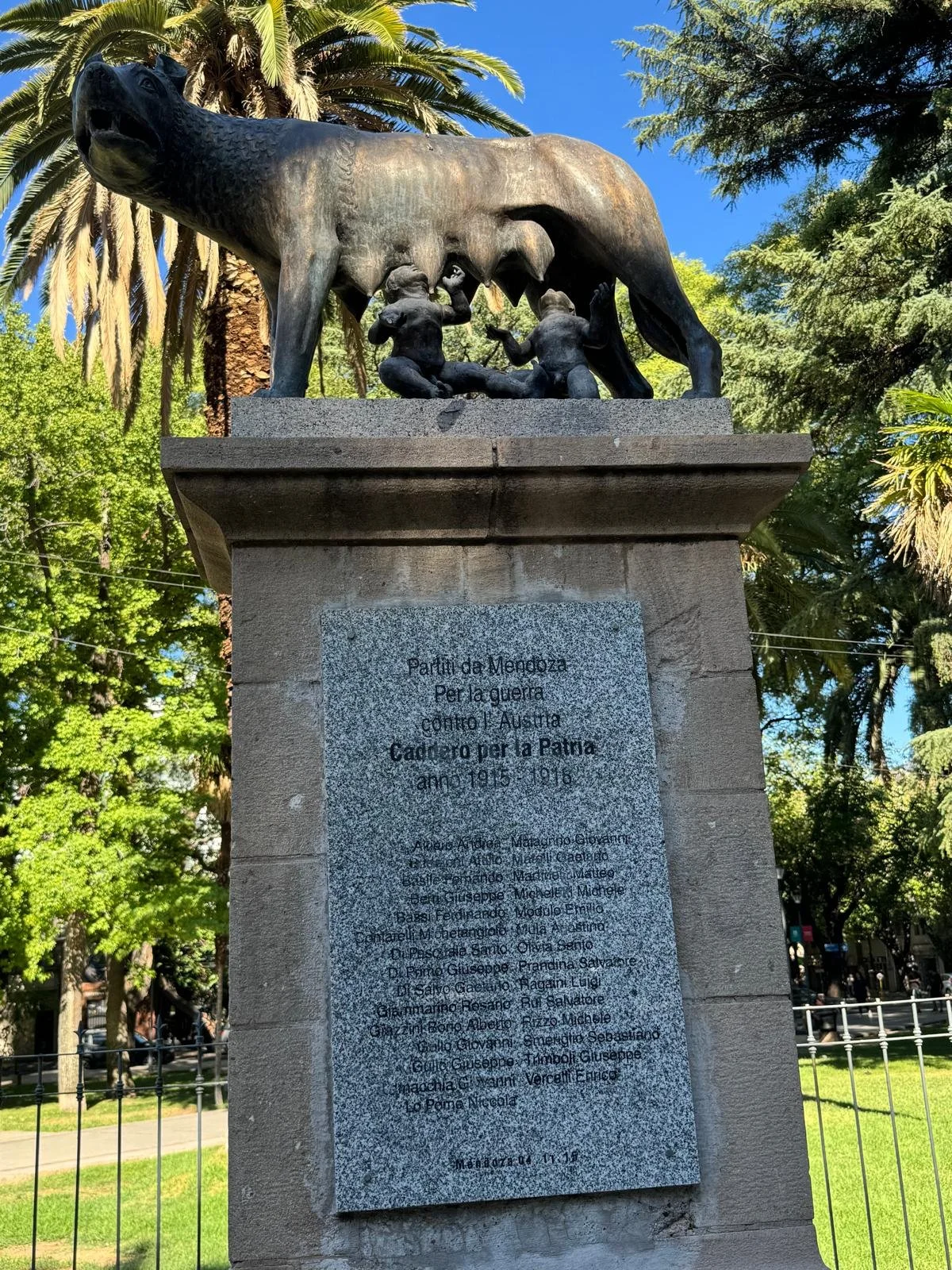
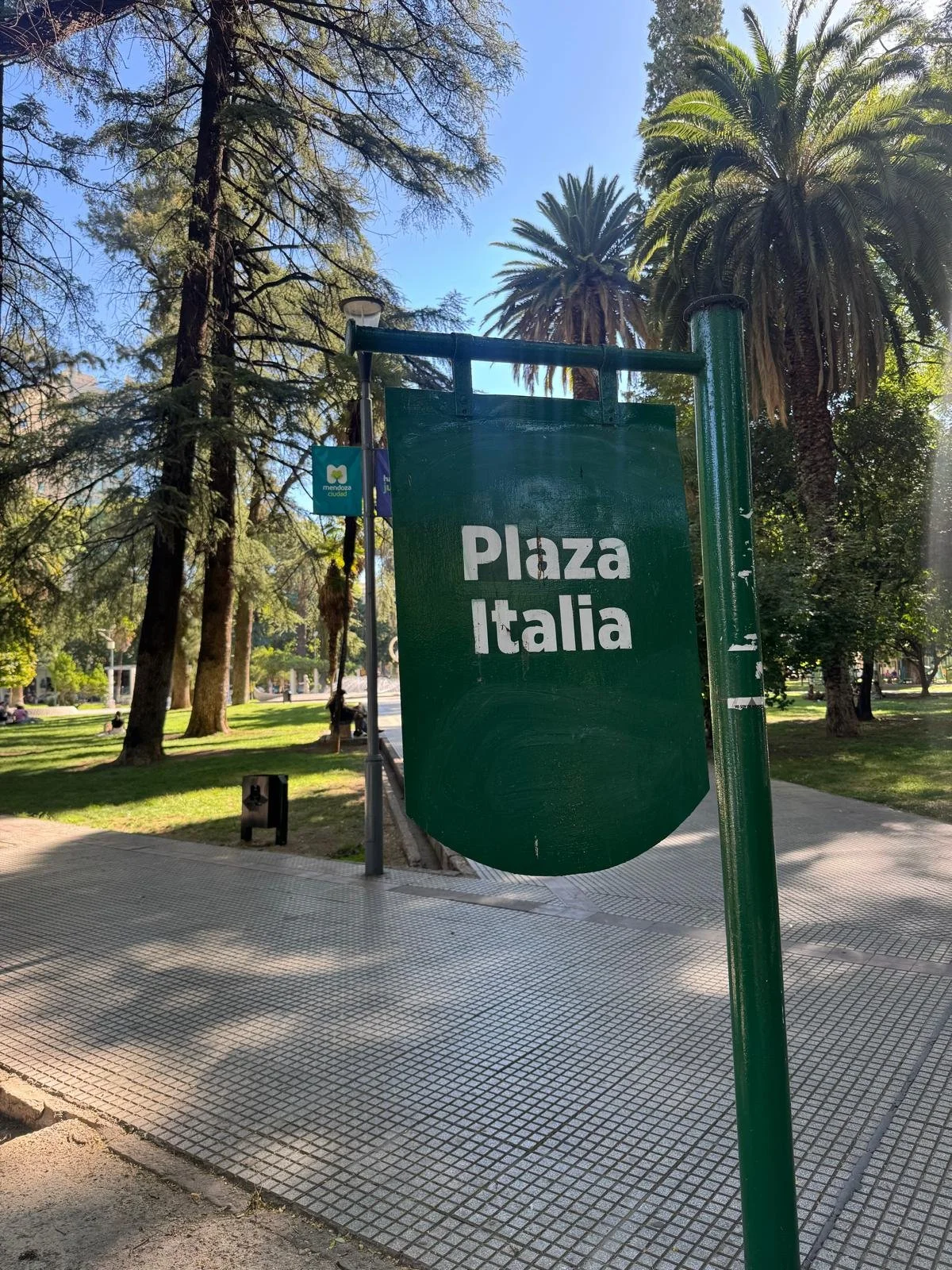
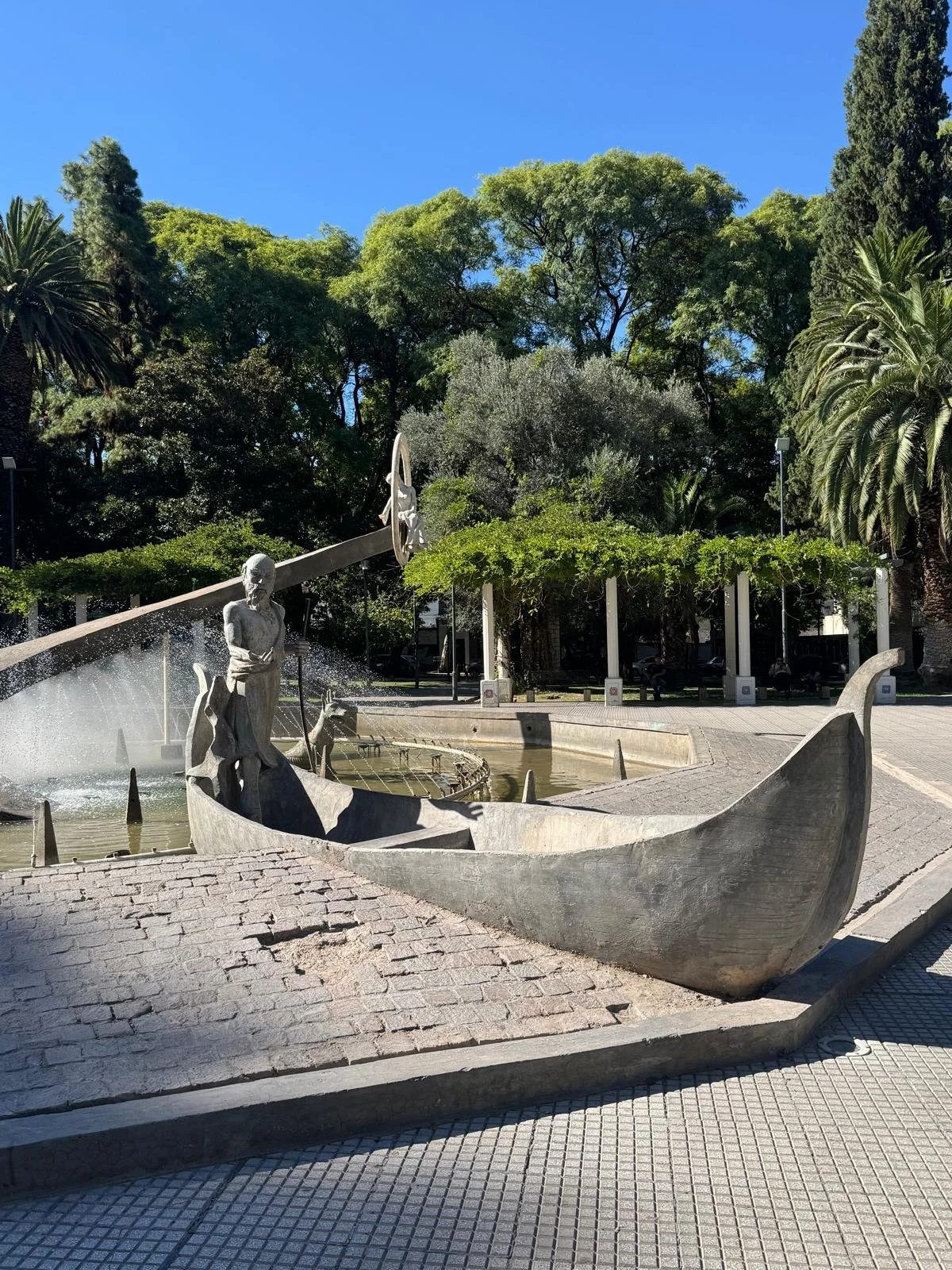
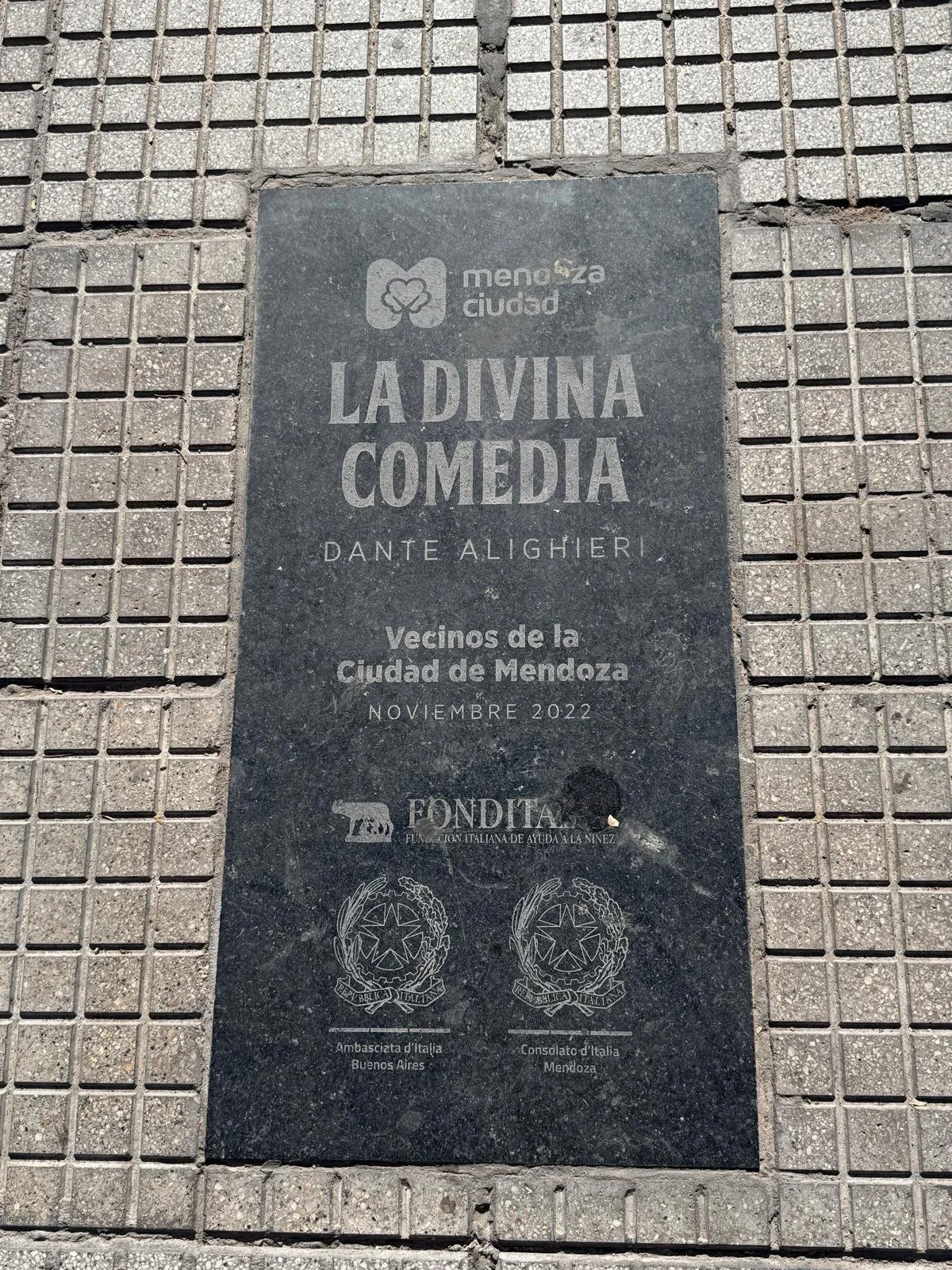
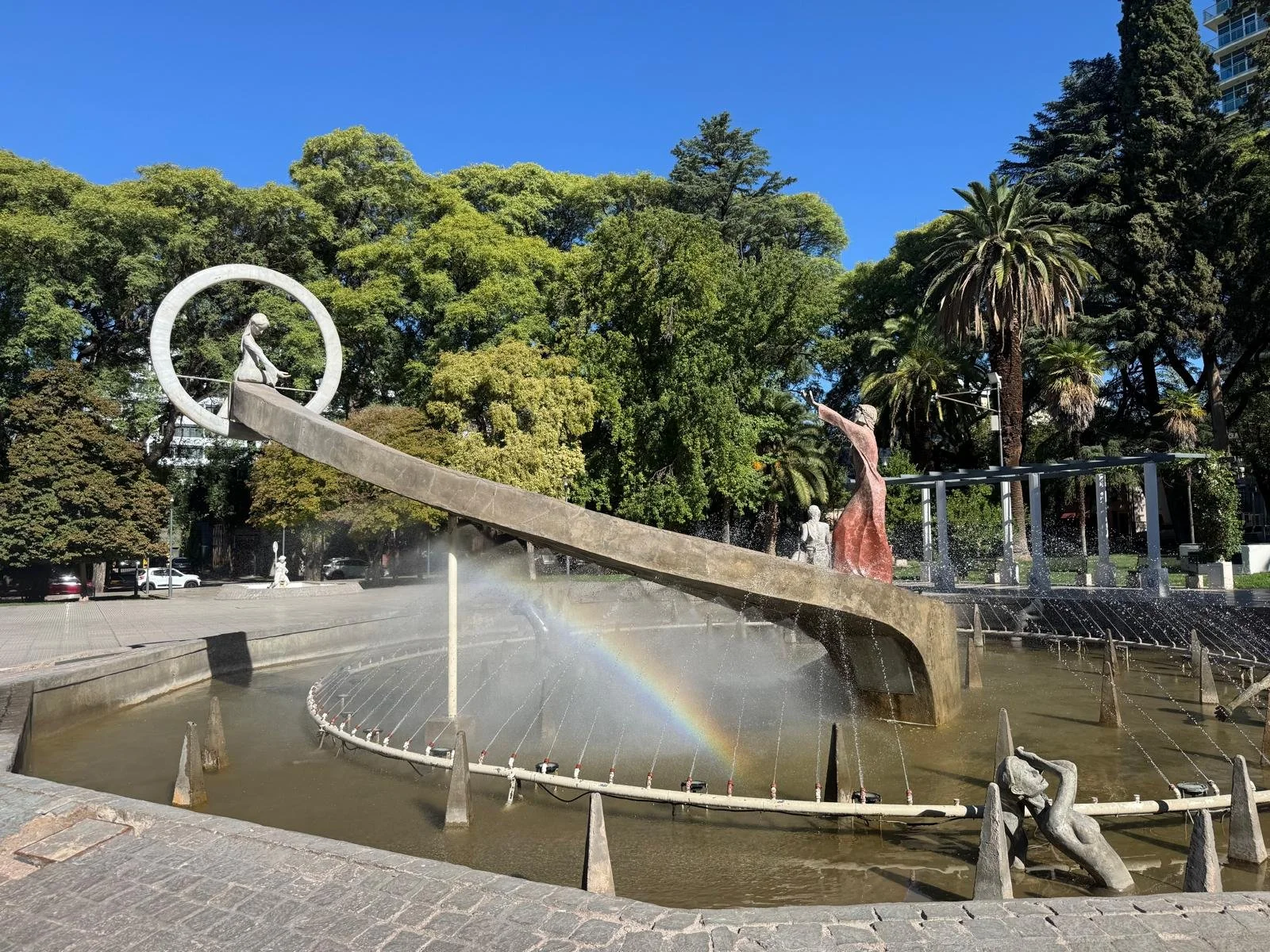
The Plaza Italia has a set of sculptural works placed on the central fountain, called "All for love", a title inspired by the final phrase of the "Divine Comedy" in homage to Dante Alighieri, a sculpture of "The She-Wolf" (symbol of the founding of Rome) suckling twins Romulus and Remus and at the base of the composition are placed Italian and Argentinian shields, on the sides – two stone figures, 3.3 meters each, representing Argentina with a harvest, and Italy with a book.
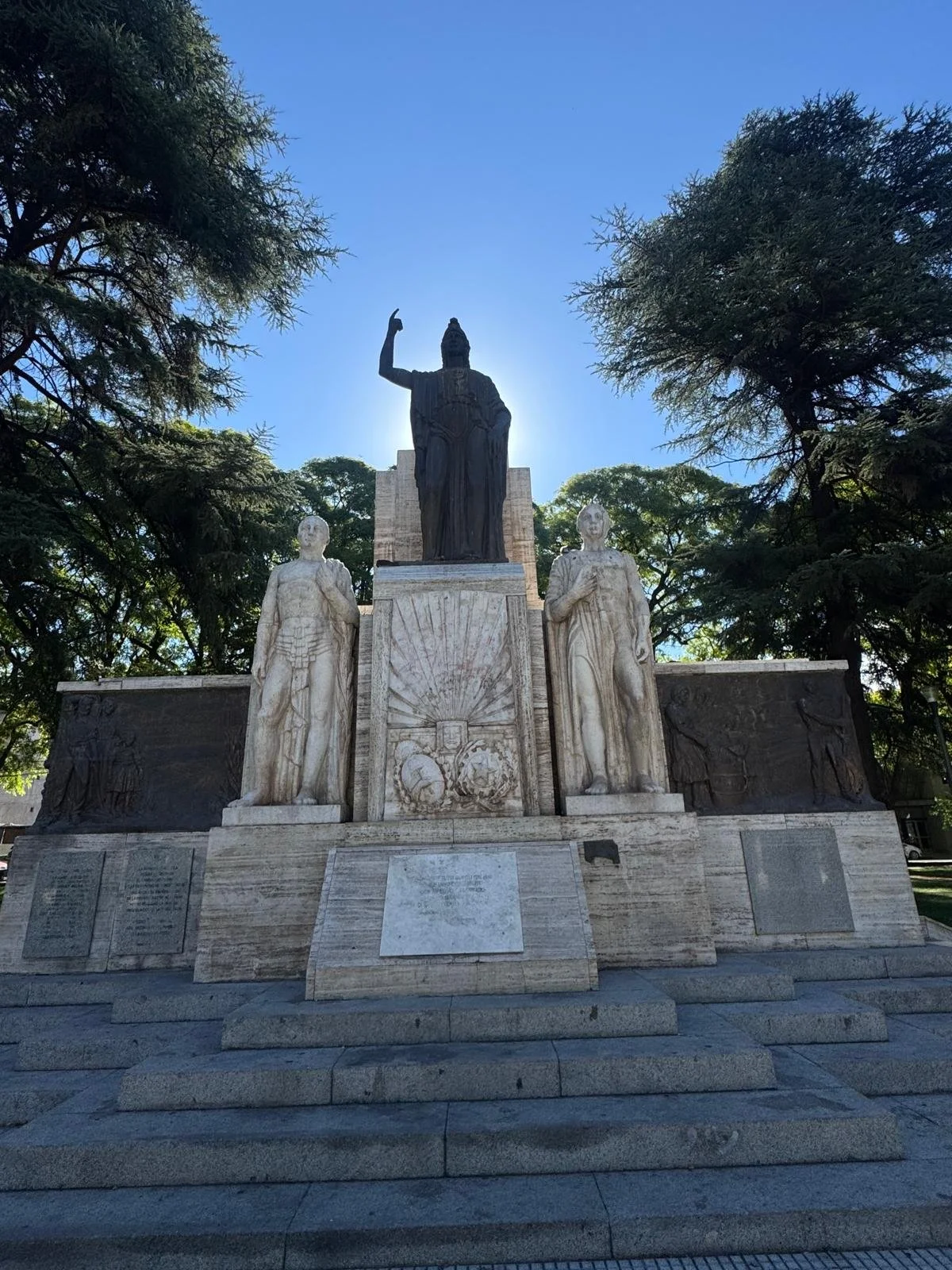
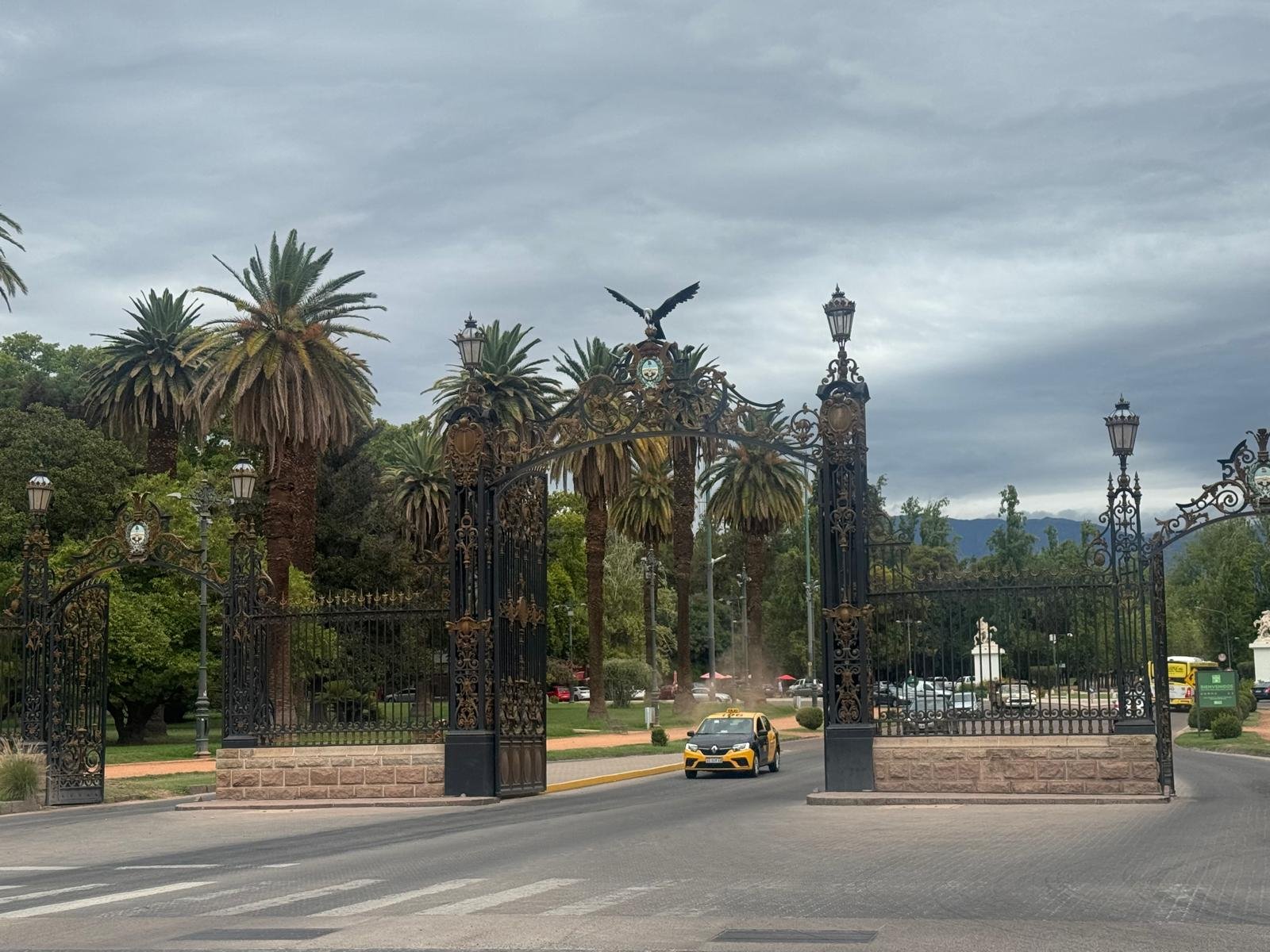
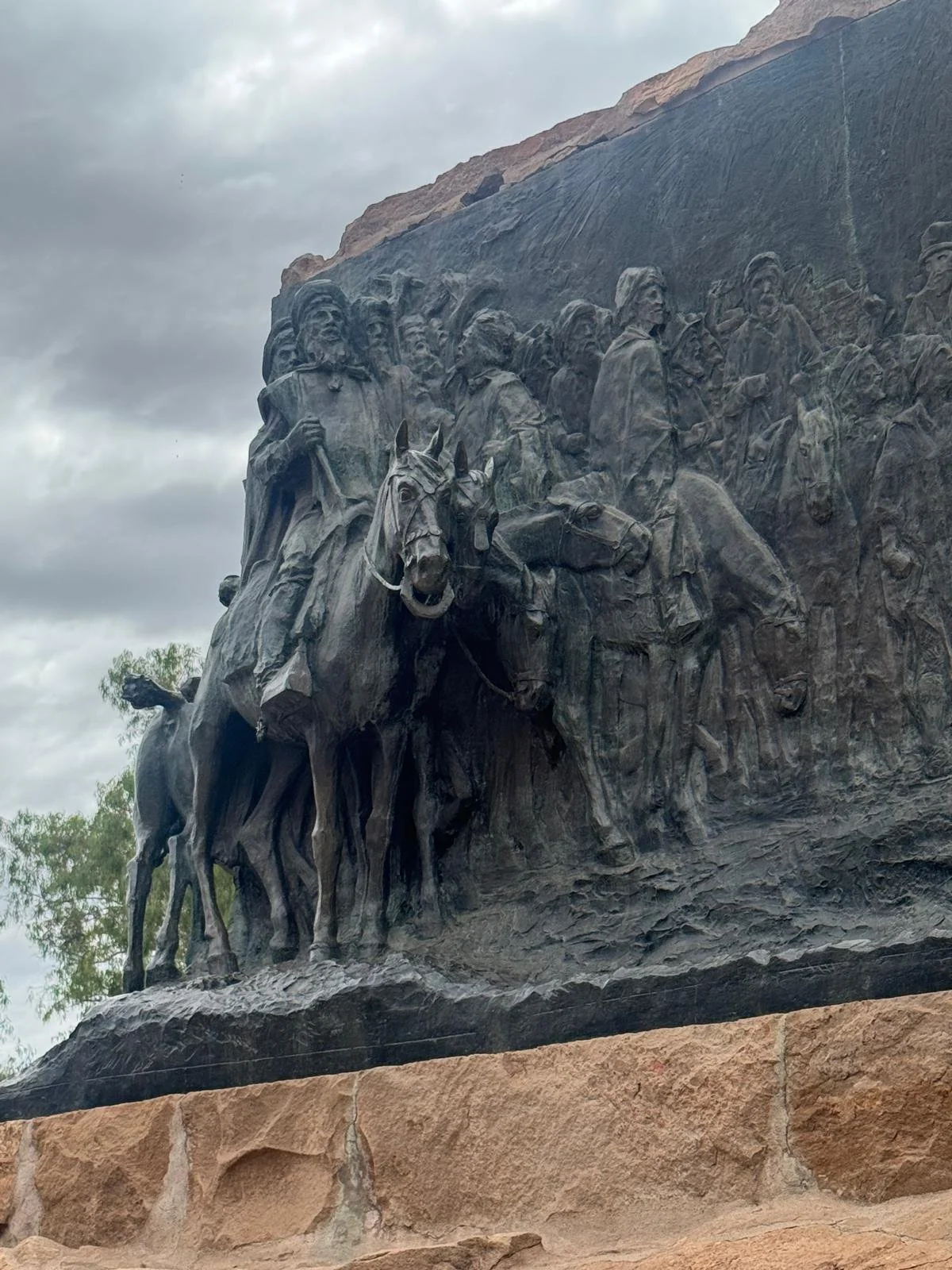
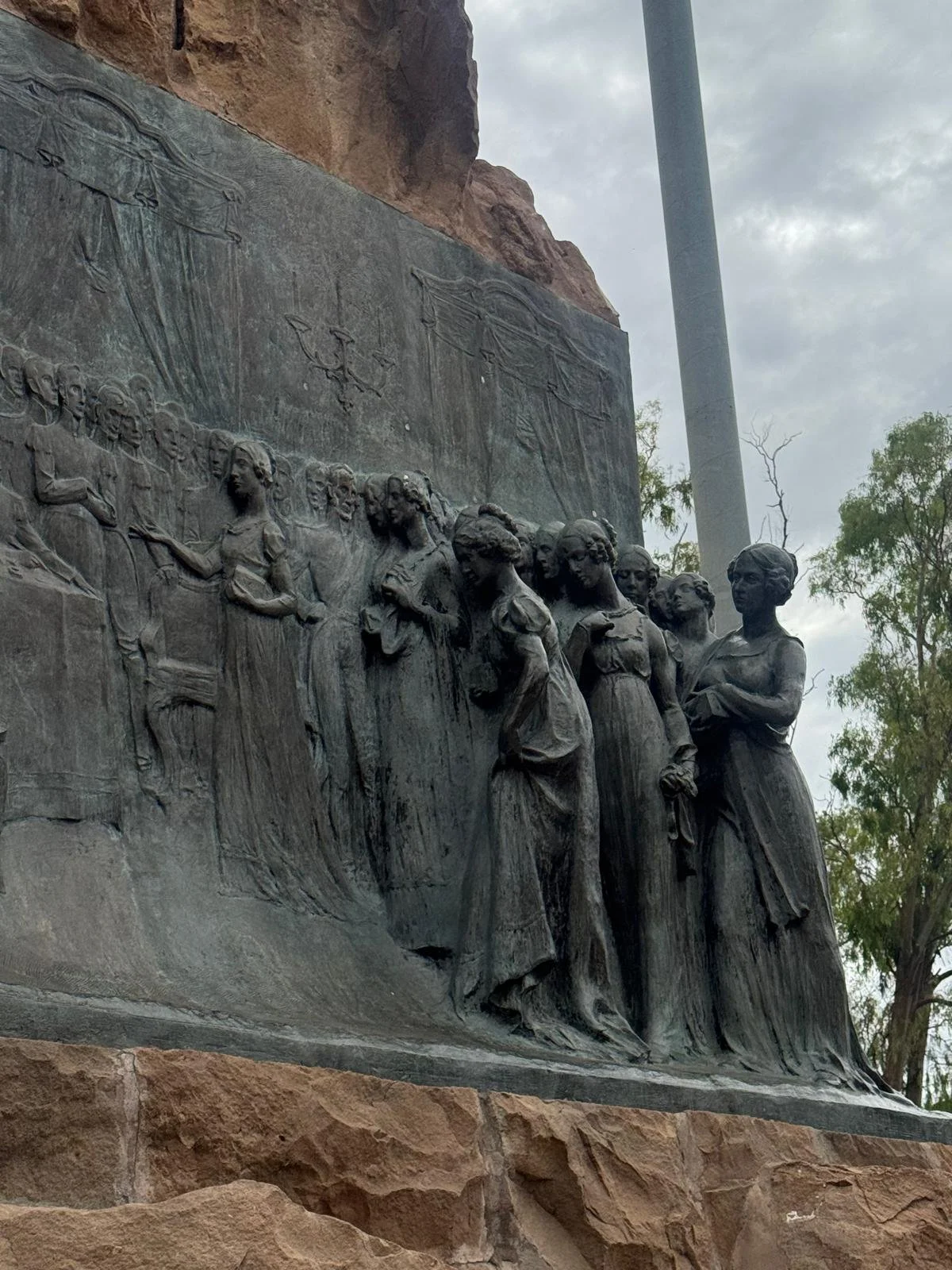
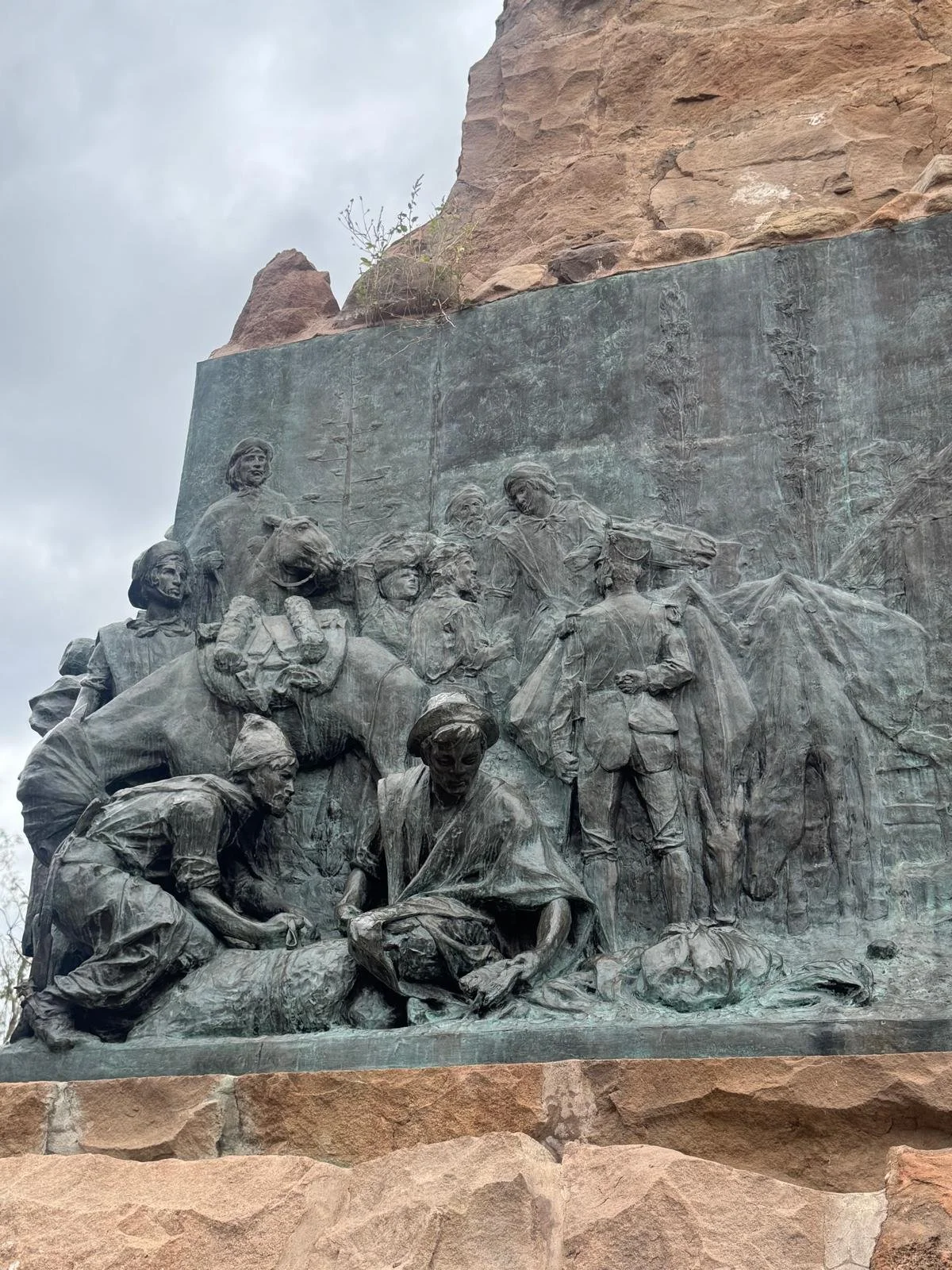
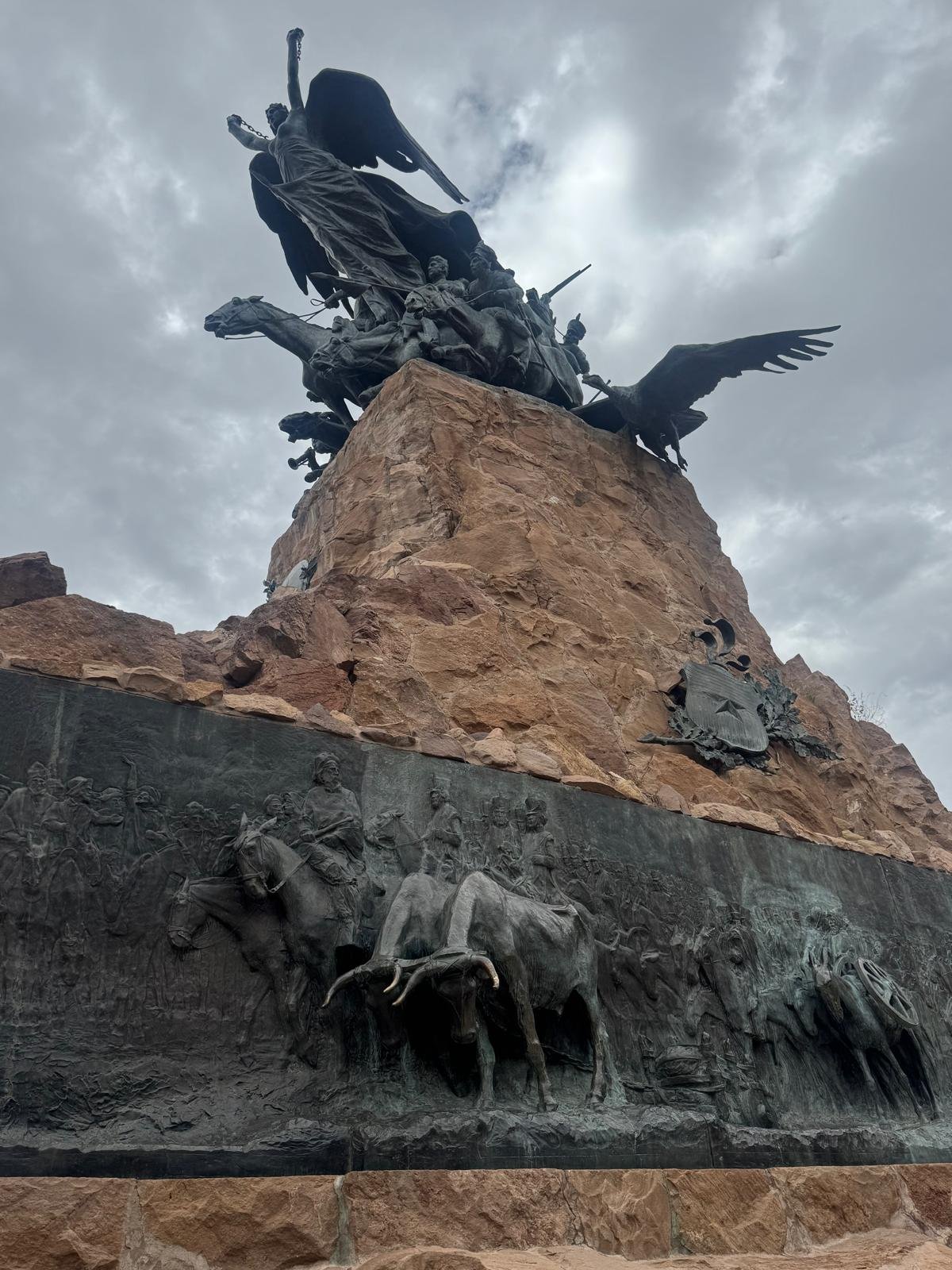
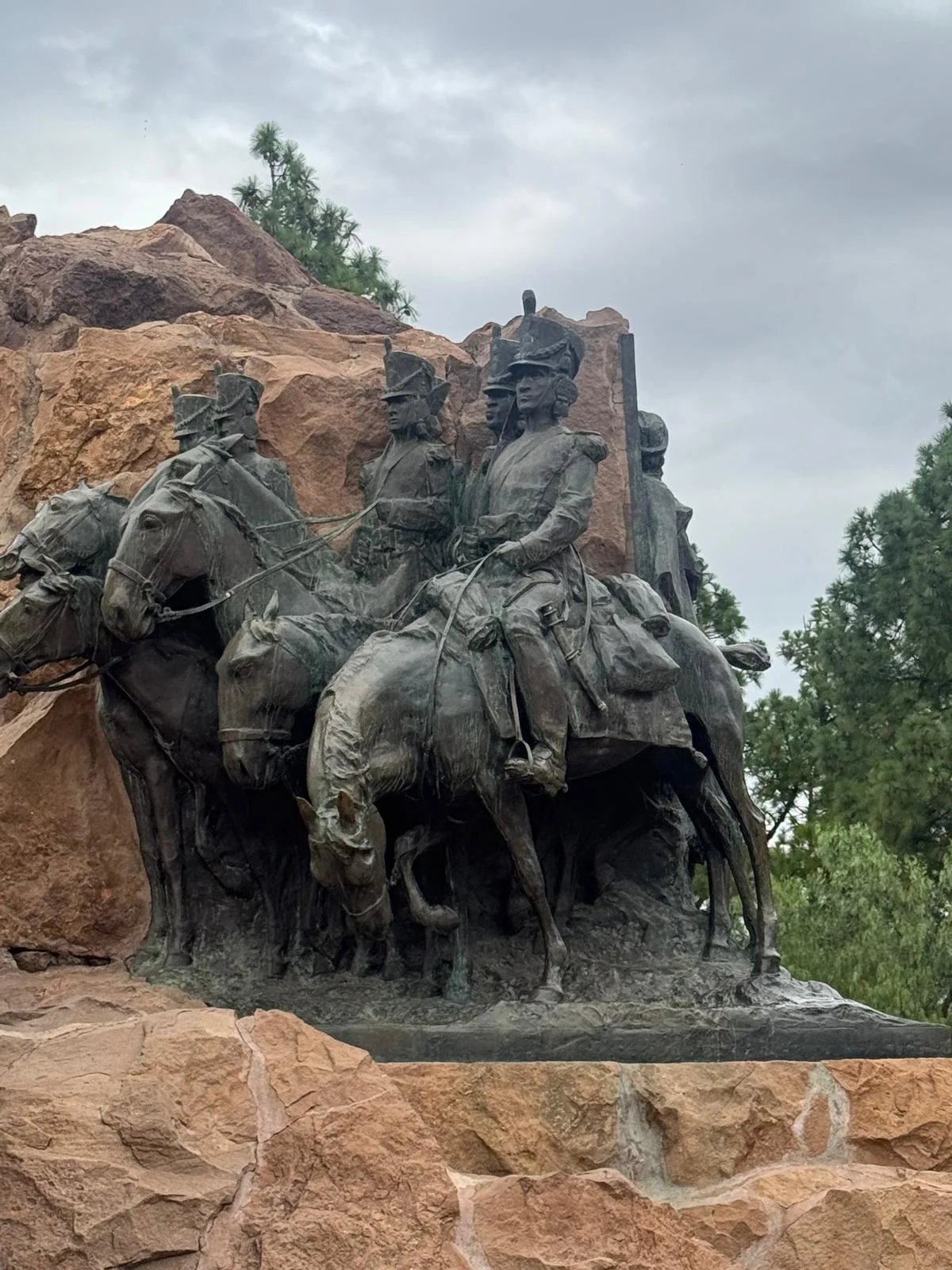
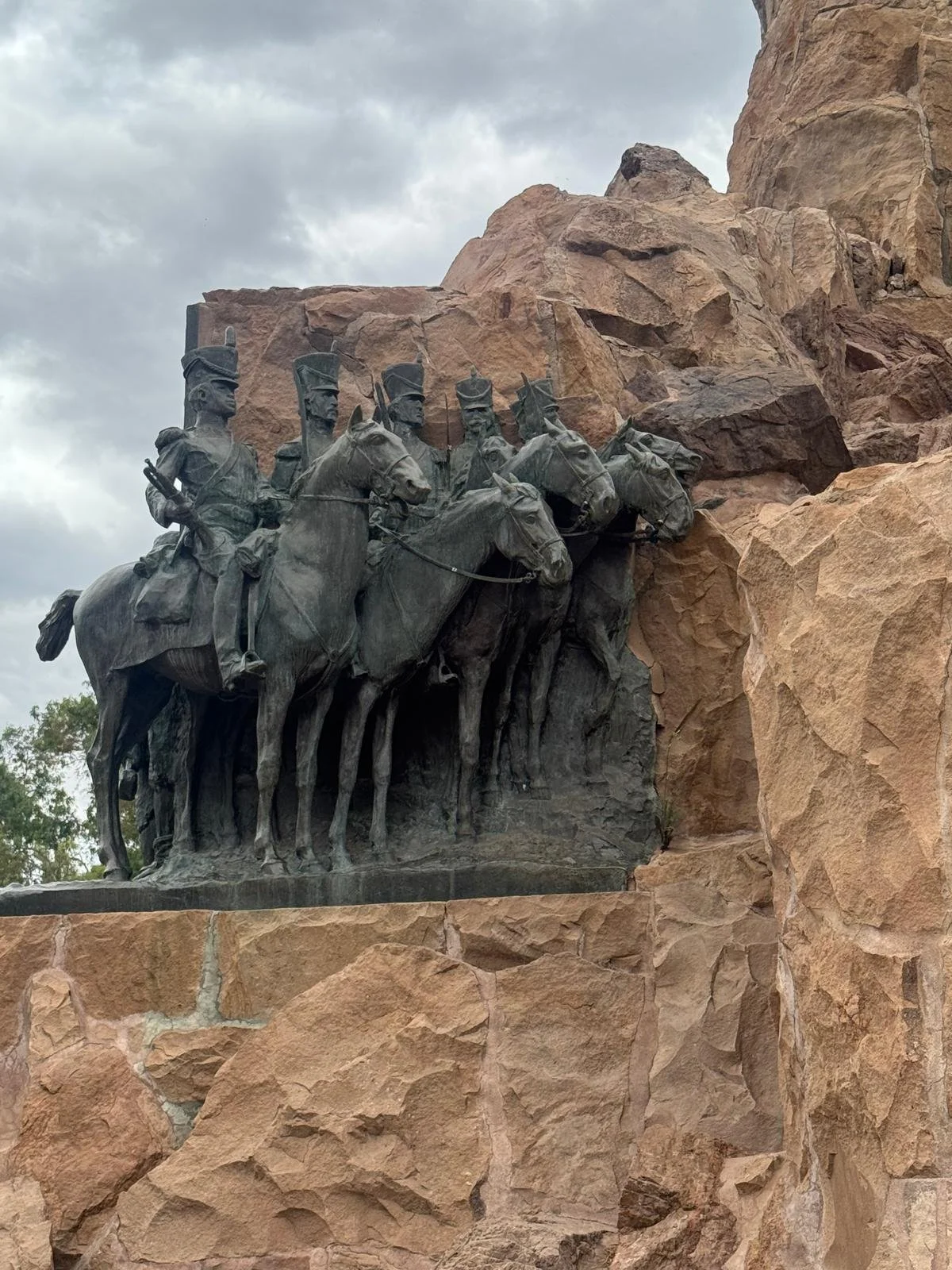
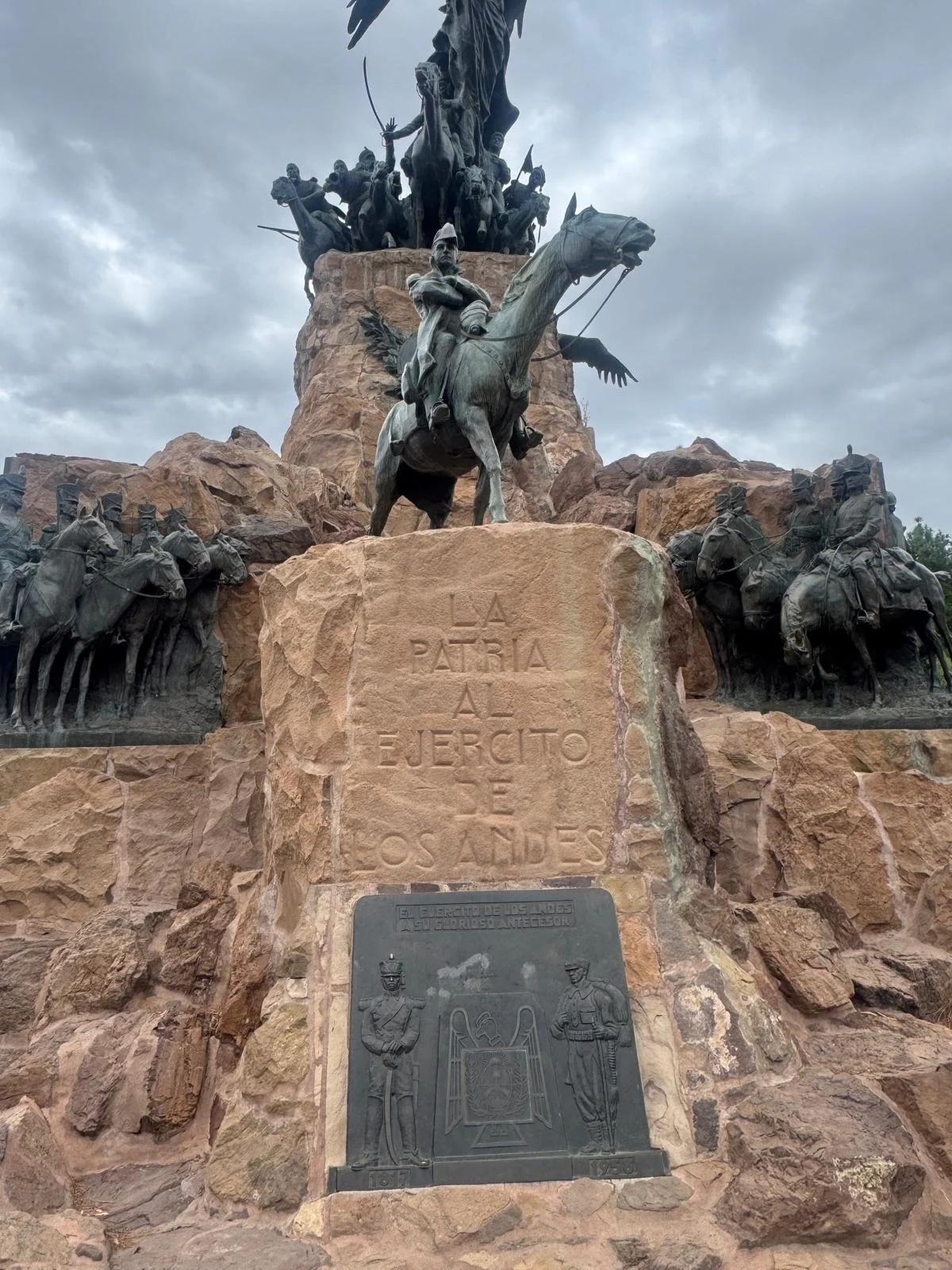
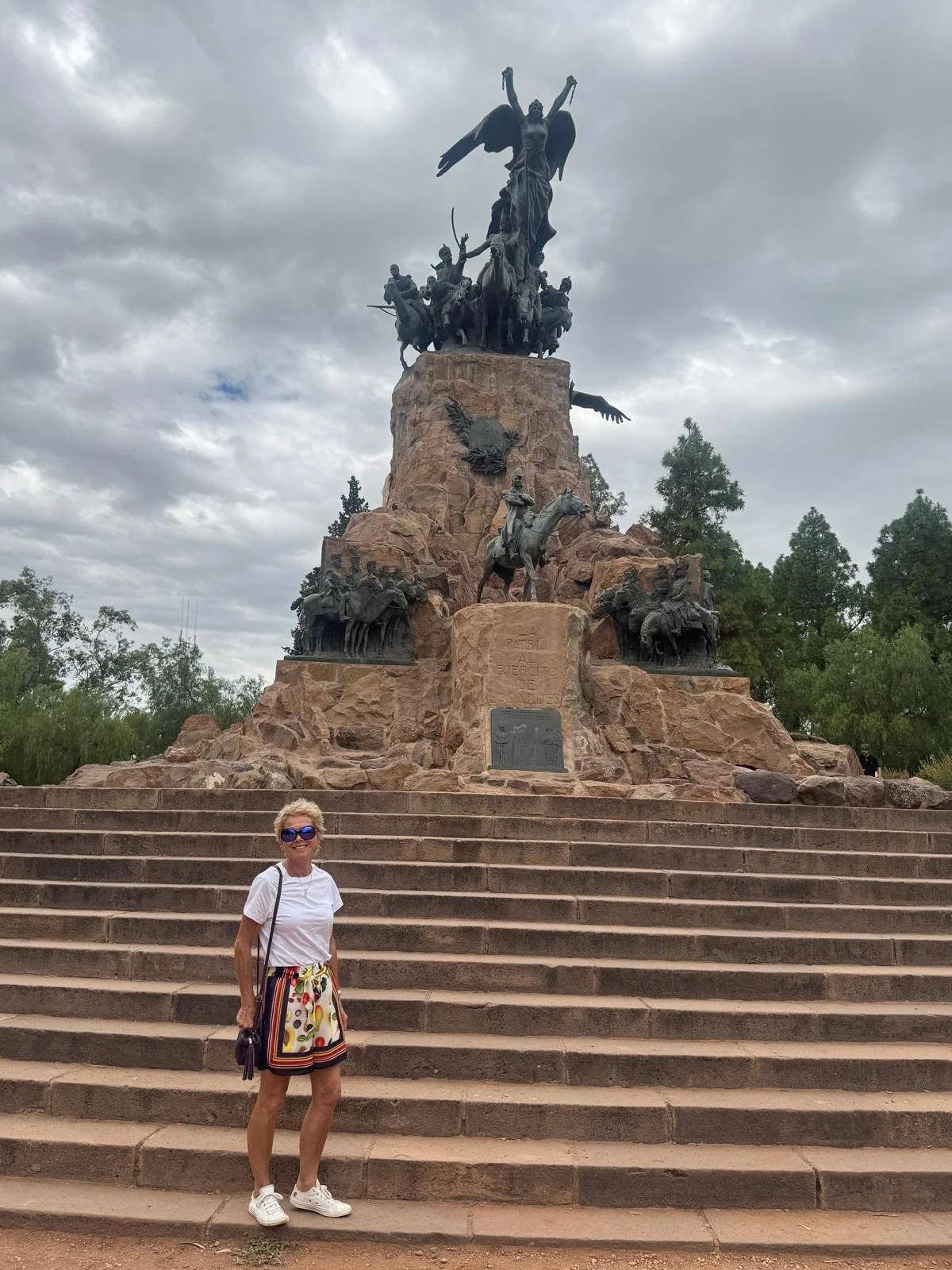
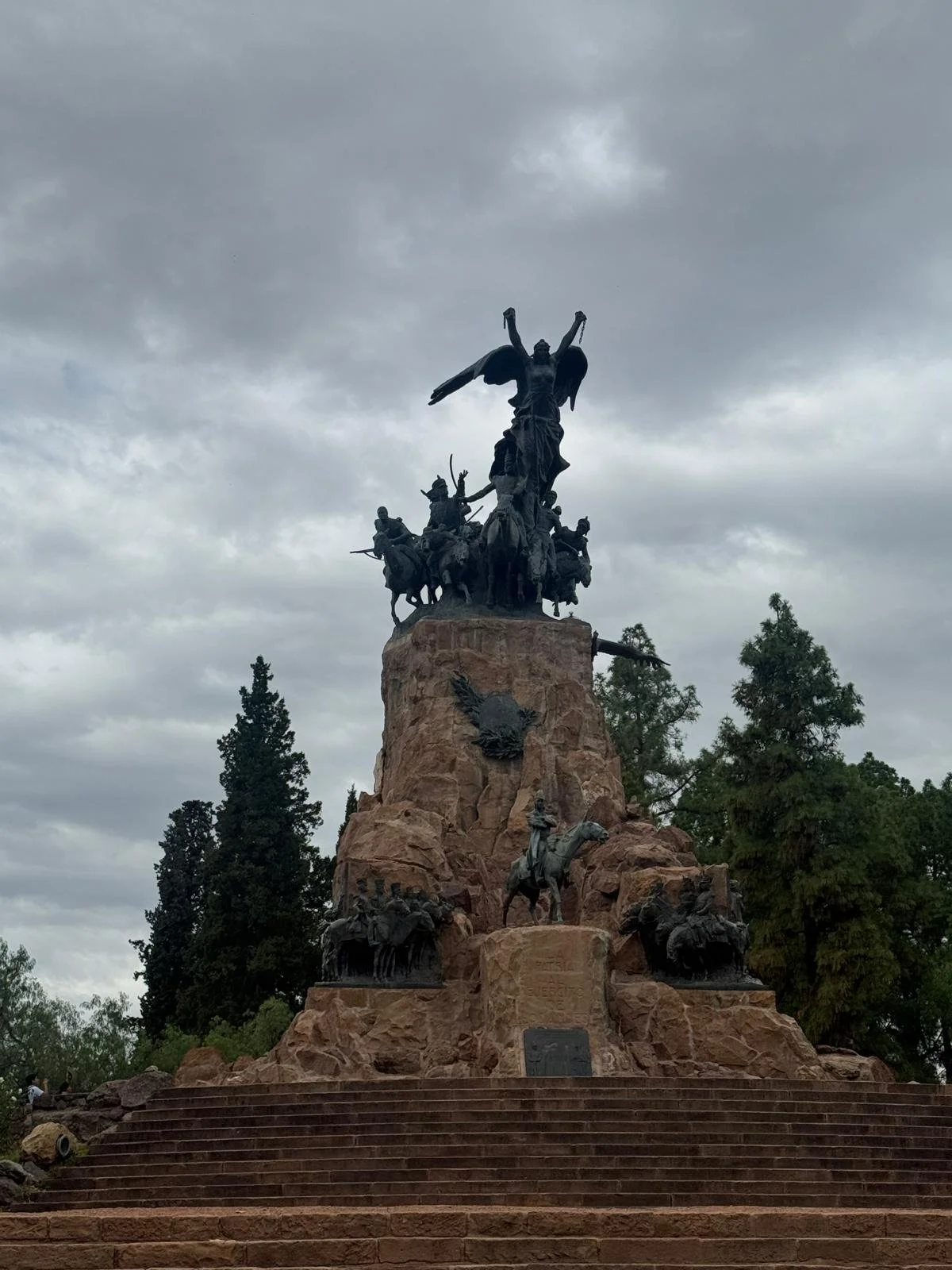
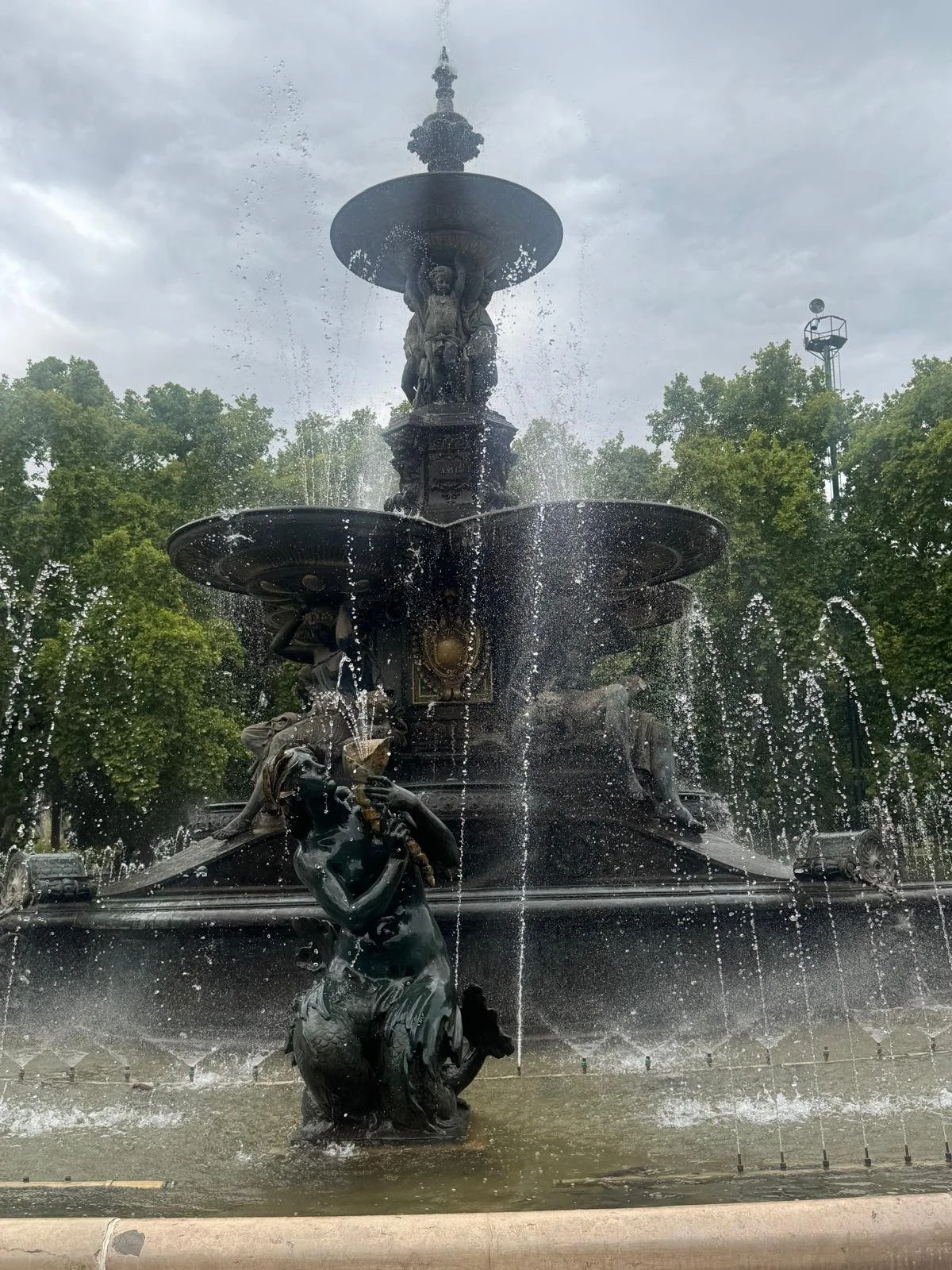
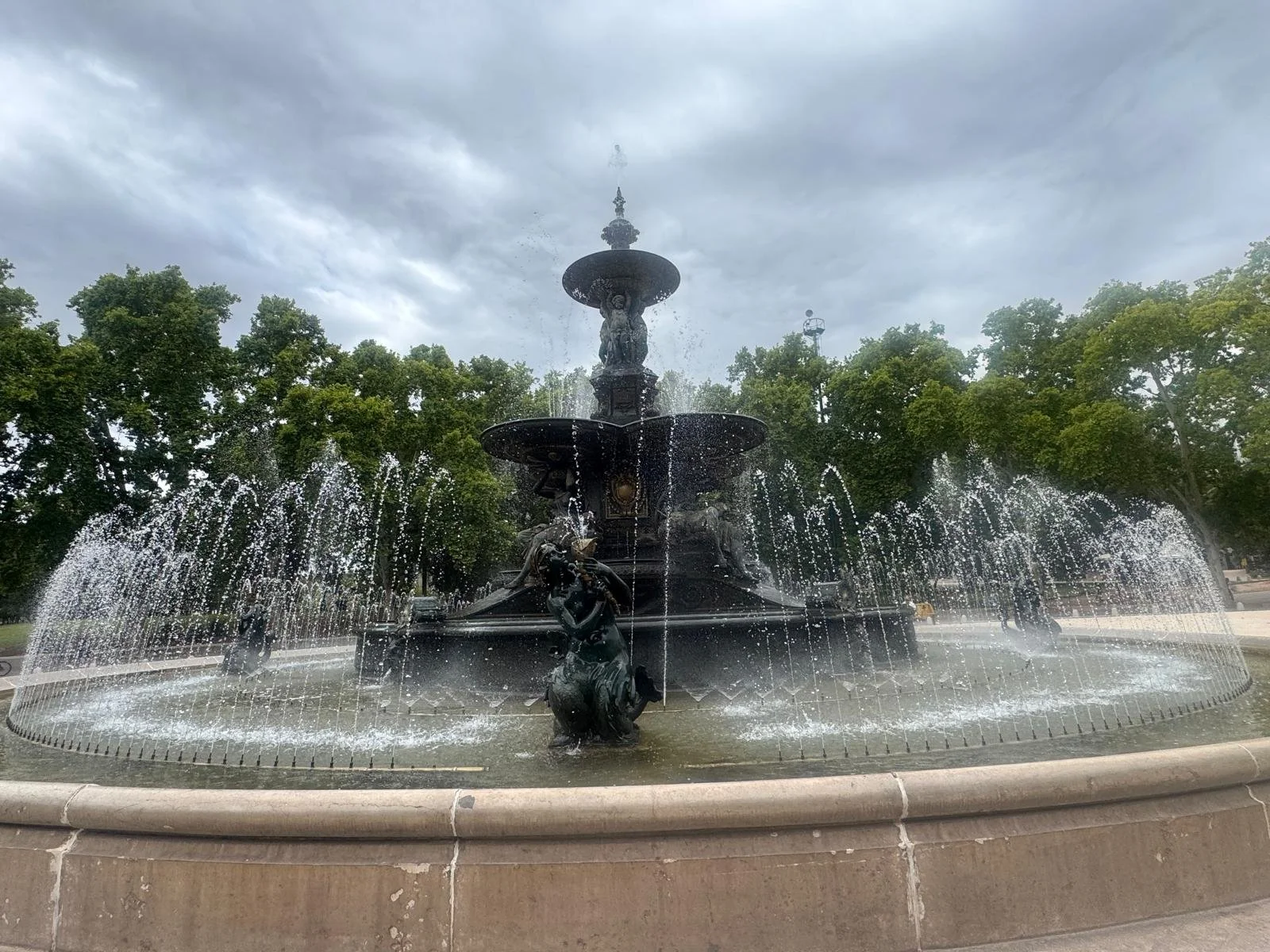
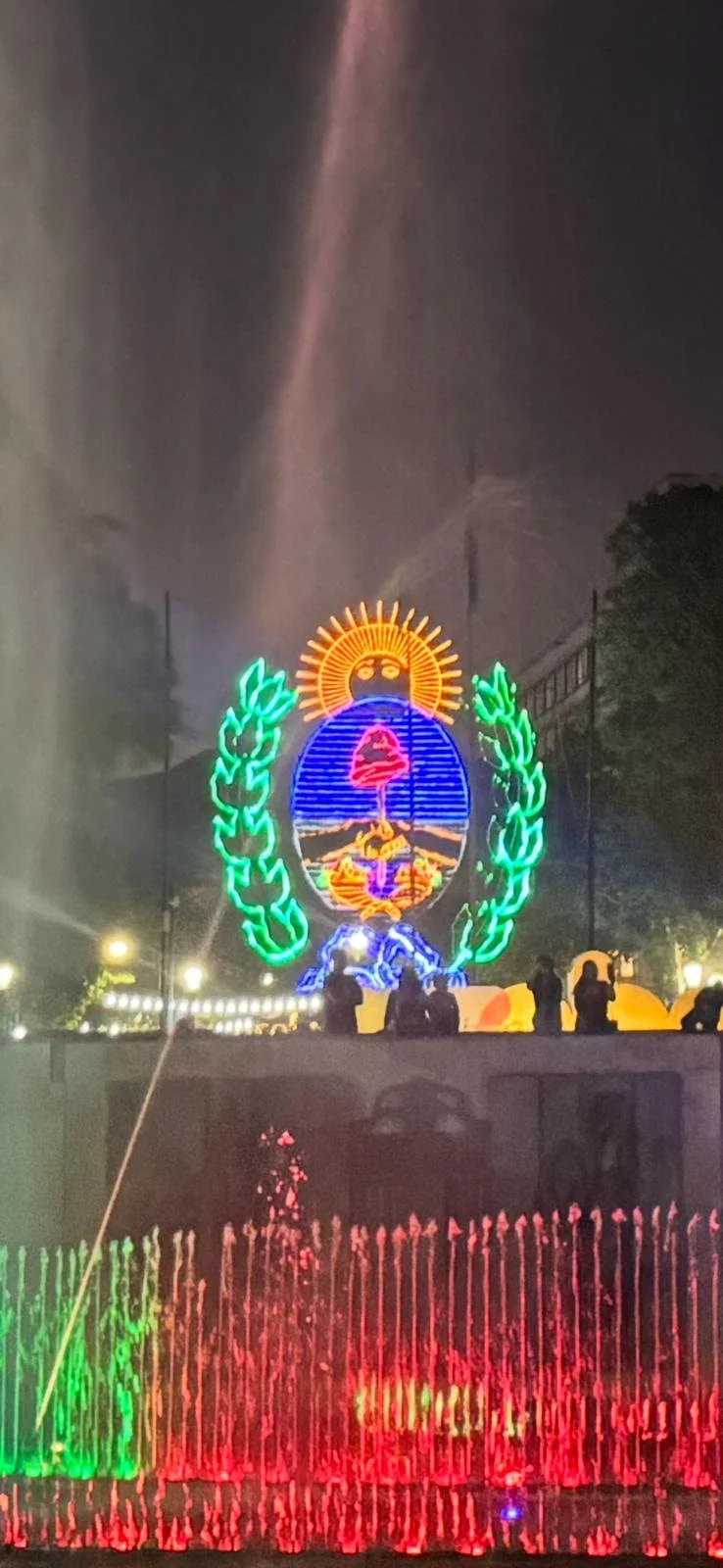
There is so much history around Mendoza and its connection to other countries such as Chile, Peru and Spain, I couldn’t possibly go there on this blog (so google it if you are interested), but I want to touch on one certain gentleman who featured heavily in our tour today - José de San Martín. He was one of the most important leaders in South America's struggle for independence. Born in 1778 in what is now Yapeyú, he was raised in Spain and served as an officer in the Spanish army. In 1812, he returned to the United Provinces of the Río de la Plata (modern Argentina) to join the independence movement. In 1814, he became Governor of the province of Mendoza. There, he organized and trained the famous Army of the Andes. In 1817, he led this army across the Andes Mountains in a daring campaign that helped liberate Chile after the victory at the Battle of Chacabuco. He later continued north to help free Peru, declaring its independence in 1821. After meeting with Simón Bolívar in 1822, San Martín stepped aside and eventually went into exile in Europe. He died in 1850 in Boulogne-sur-Mer, and today he is remembered as a national hero in Argentina, Chile, and Peru. There are many, many monuments to General San Martín in Mendoza, but the highlight was one we visited today – General San Martín Park. With its magnificent entry gates decorated with a condor and the coat of arms of the city, the park has 34 sculptures decorating its paths and roads, and of course, another stunning fountain -The Fountain of the Continents created by the French Val d'Osne foundry, and featuring intricate sculptures representing Africa, America, Asia, and Europe. A short coach ride high up to the top of the mount led us to the Monument to the Army of the Andes (Cerro de la Gloria) perched high up, this massive bronze monument was inaugurated in 1914 to commemorate the centenary of the Army of the Andes. It features San Martín on horseback, flanked by his granaderos, and topped by a figure of Liberty with broken chains. The base includes reliefs depicting the preparation of the army, the support of the people of Mendoza, and the coats of arms of Argentina and Peru, and has the inscription "La Patria al Ejército de los Andes" ("The Fatherland to the Army of the Andes"). It really is one of the most magnificent sculptures I have ever seen, the bronze sculptures protruded out from the main part of the sculpture sort of like 3-D. What a great finale to our City Tour!
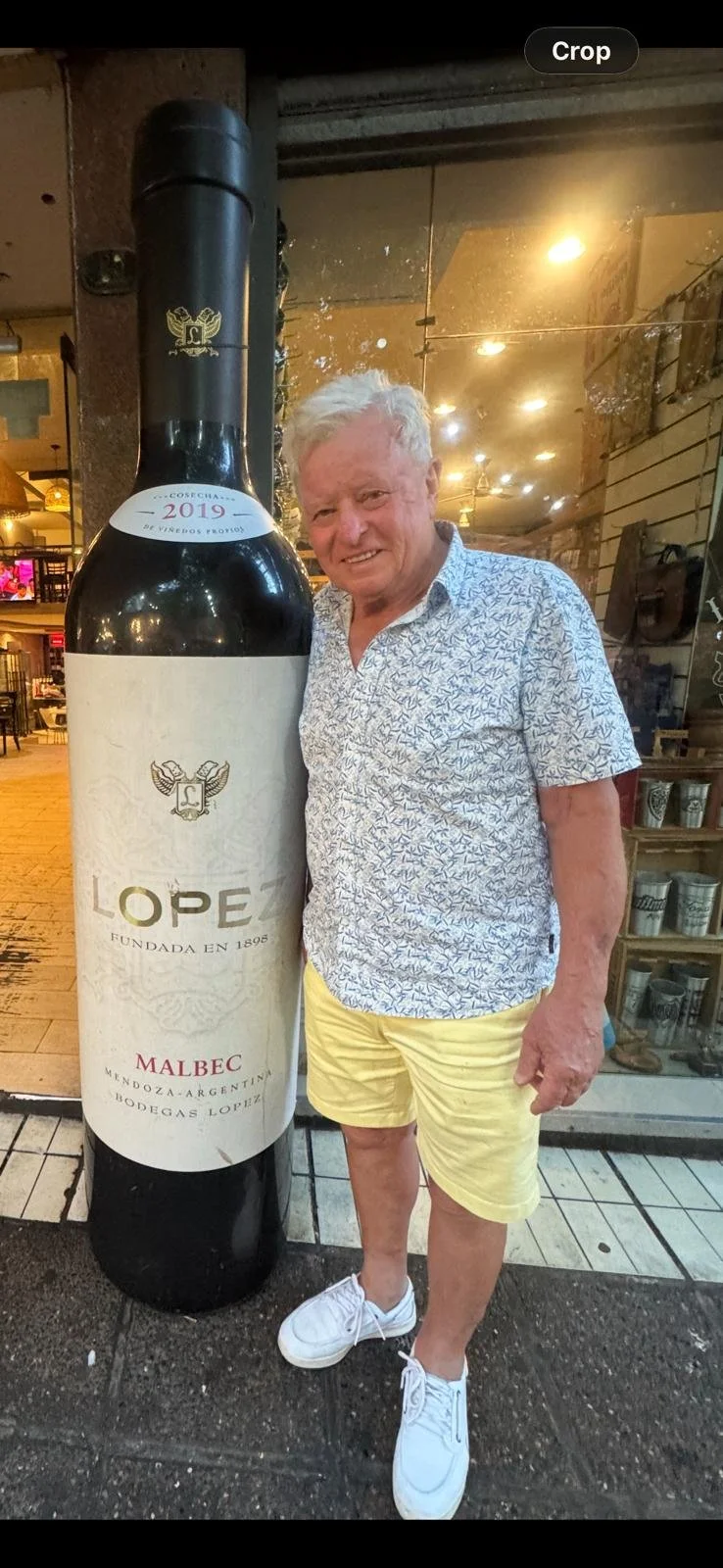
Now let’s talk about Malbec, several factors make Mendoza ideal for Malbec wines….high altitude vineyards, intense sunlight – over 300 sunny days per year, large day/night temperature swings which preserve acidity, dry climate which reduces disease and irrigation from the Andean snowmelt. All these conditions create wines that are ripe and concentrated, yet balanced and fresh. Mendoza Malbecs are typically deep purple in colour (right up my alley, the colour that is!), have aromas of blackberry, plum and black cherry, notes of violet, cocoa, vanilla and sweet spice, are medium to full-bodied and have smooth tannins with moderate acidity. Areas within Mendoza produce slightly different styles:
Luján de Cuyp - often called the “birthplace of Argentine Malbec” has a lower altitude, produces riper, richer wines with a velvety texture
Valle de Uco, has a higher altitude and cooler climate, more structure and acidity, floral and mineral notes and an elegant and refined style
Maipú – an historic wine area, with fruity and balanced wines.
Malbec originated in Cahors, France but flourished in Mendoza after being introduced in the 19th Century. Today, Argentina is the world’s leading producer of Malbec and Mendoza accounts for the majority of it.
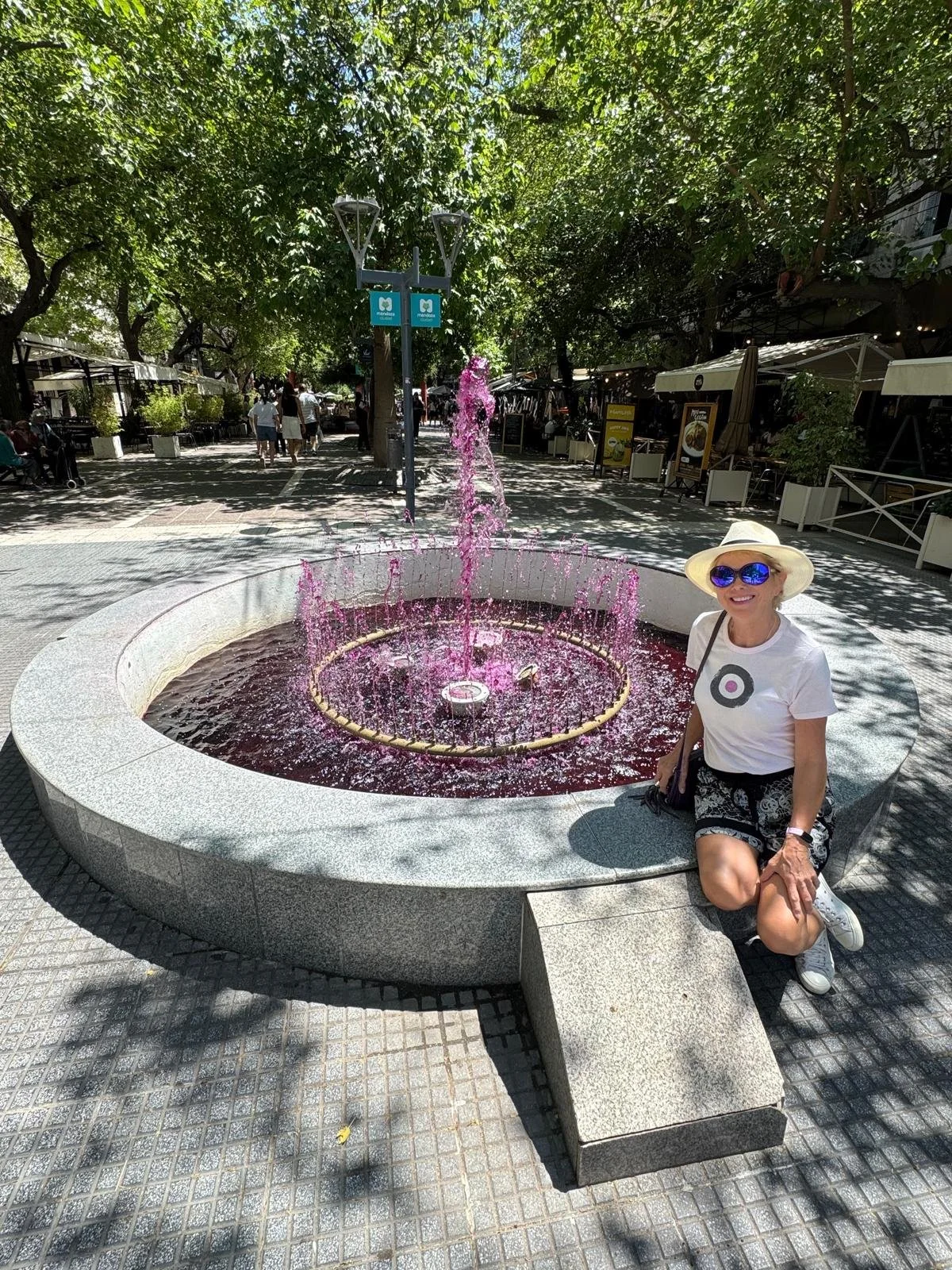
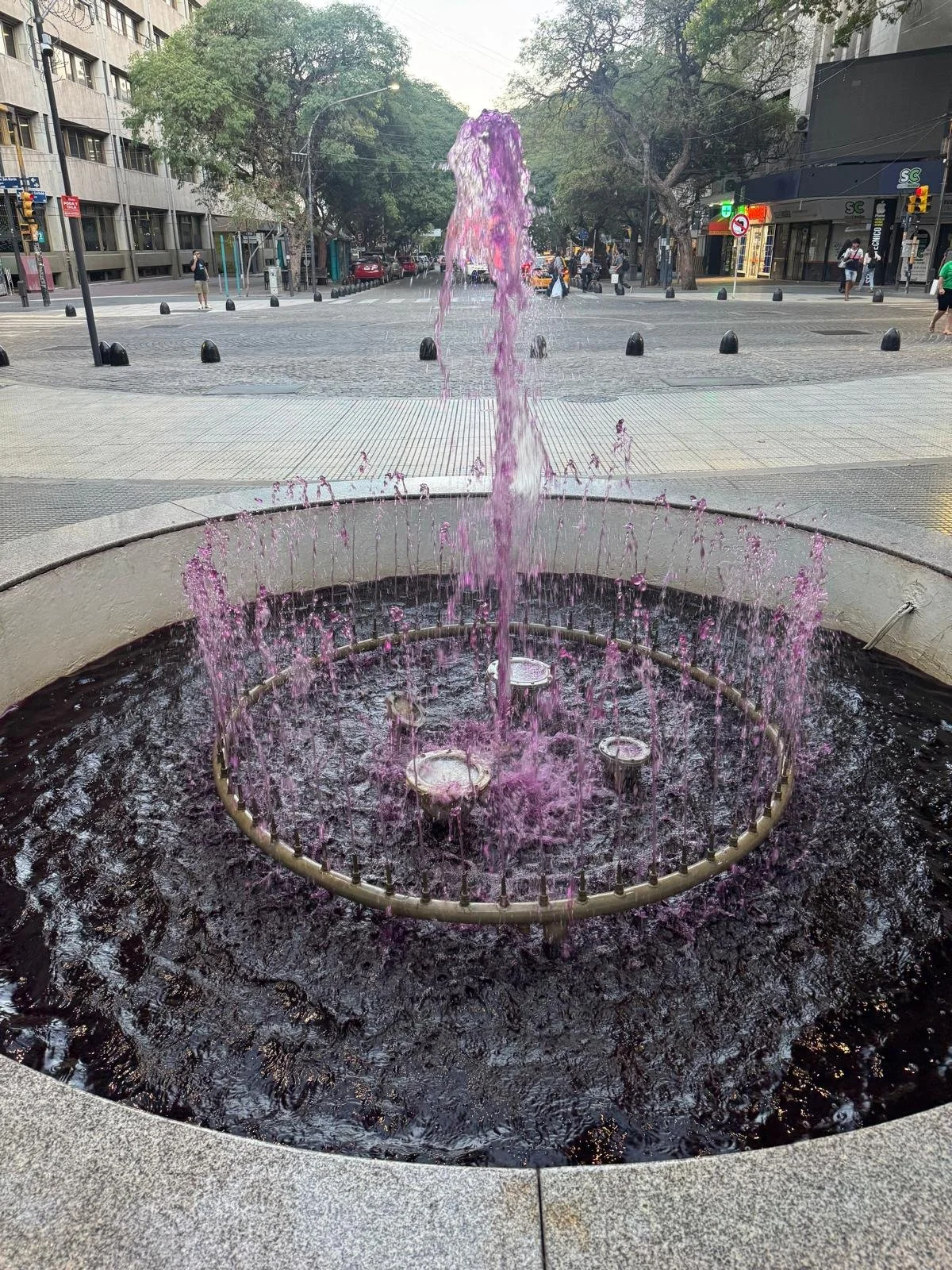
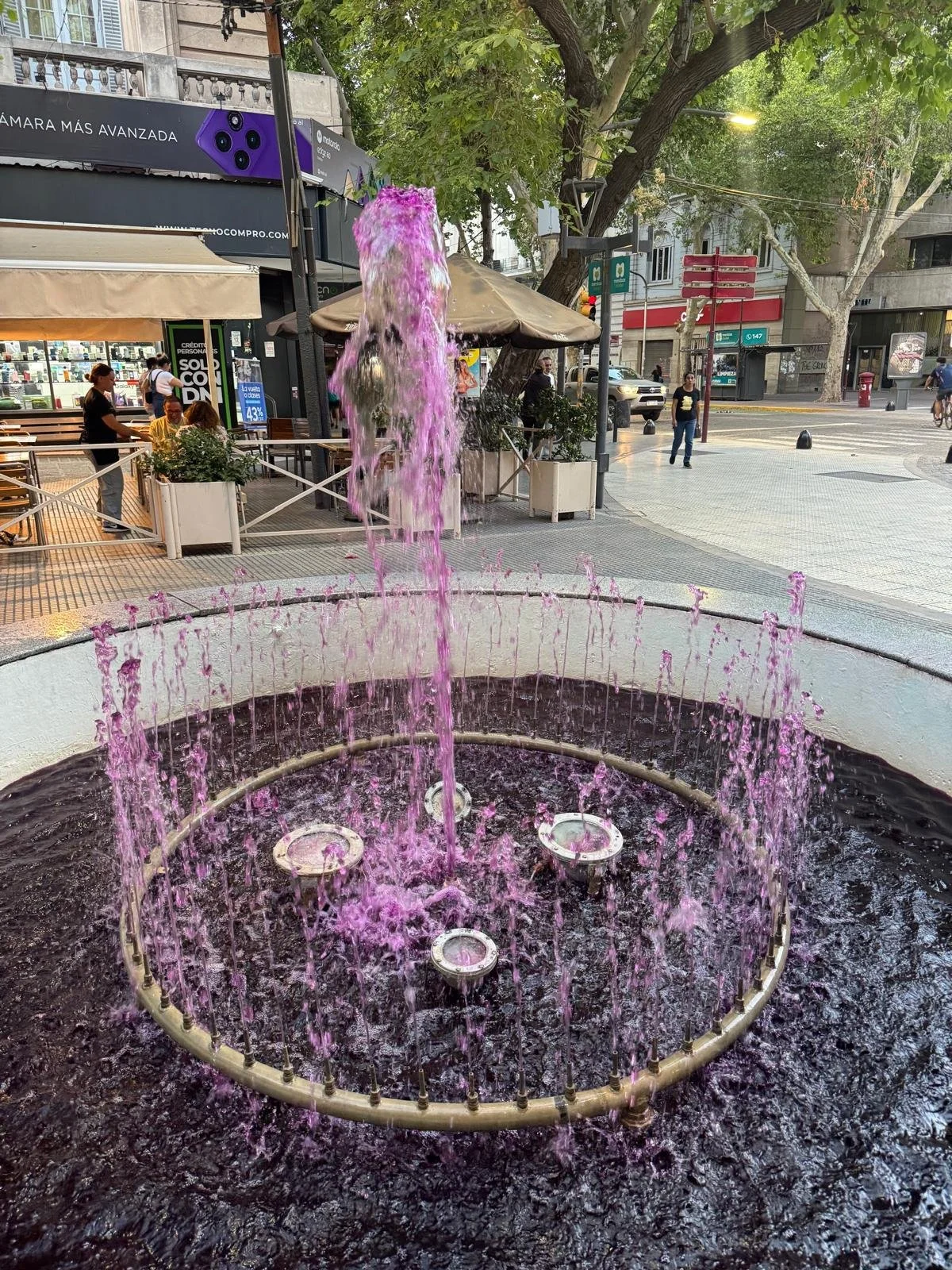
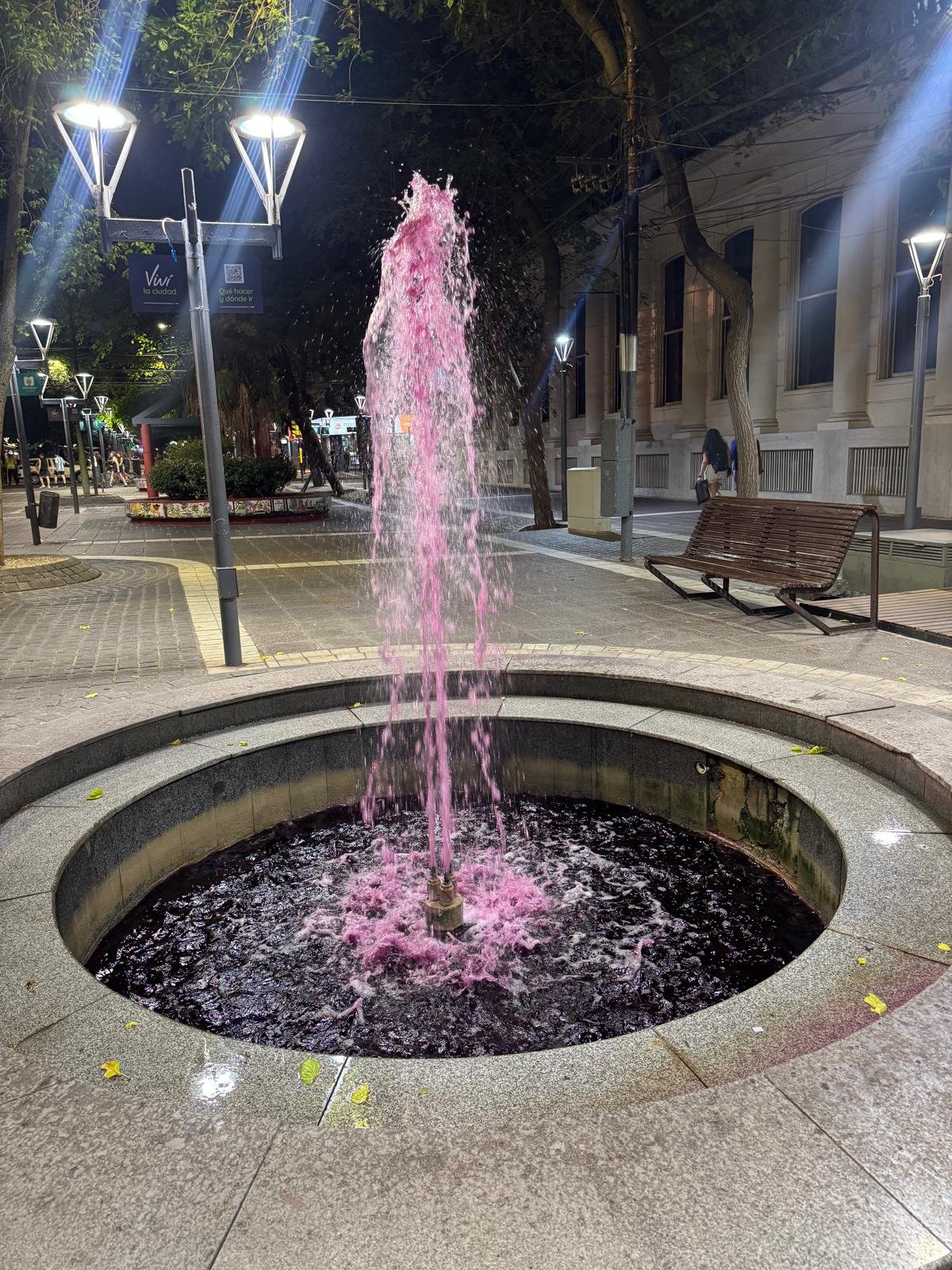
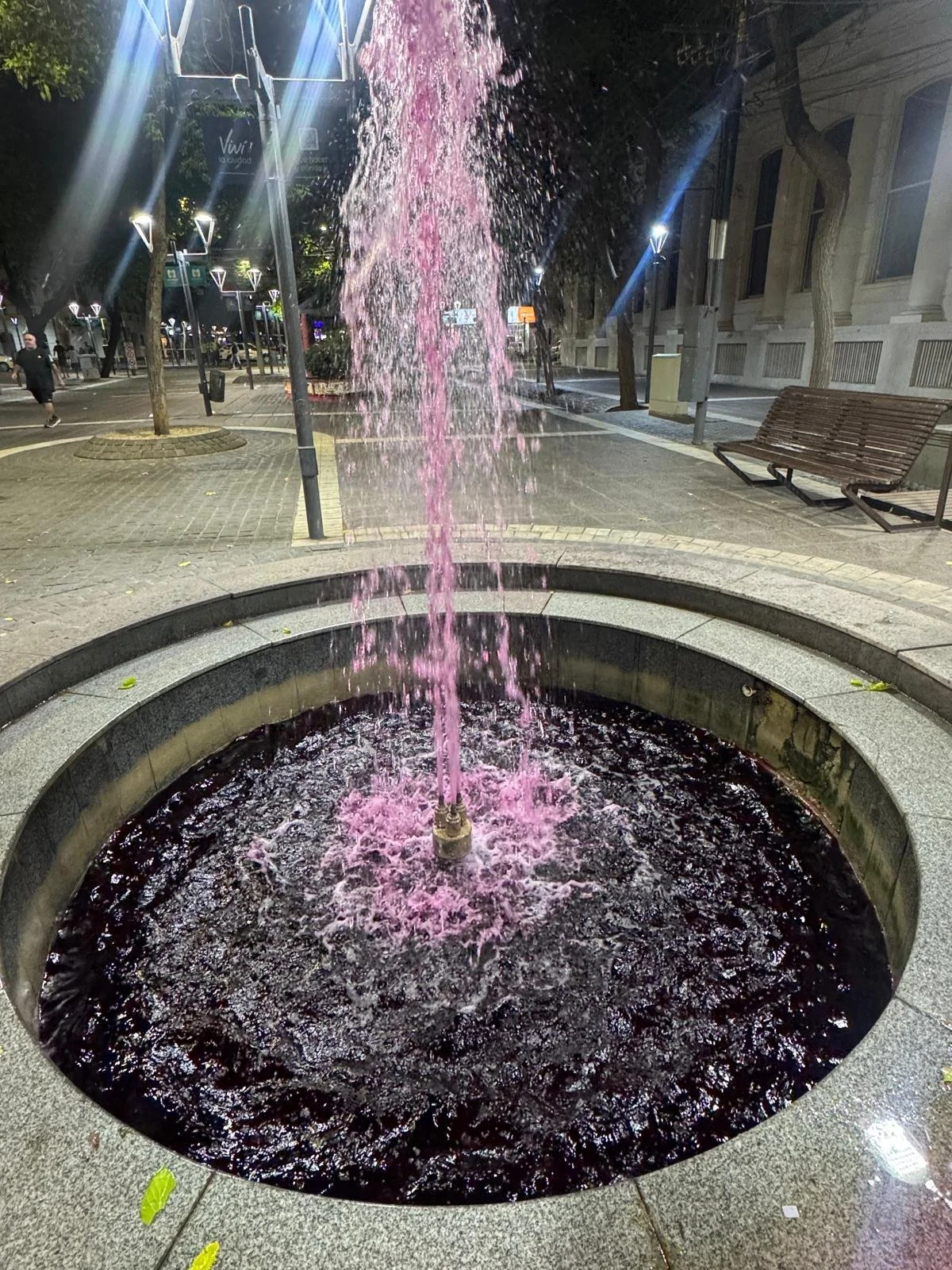
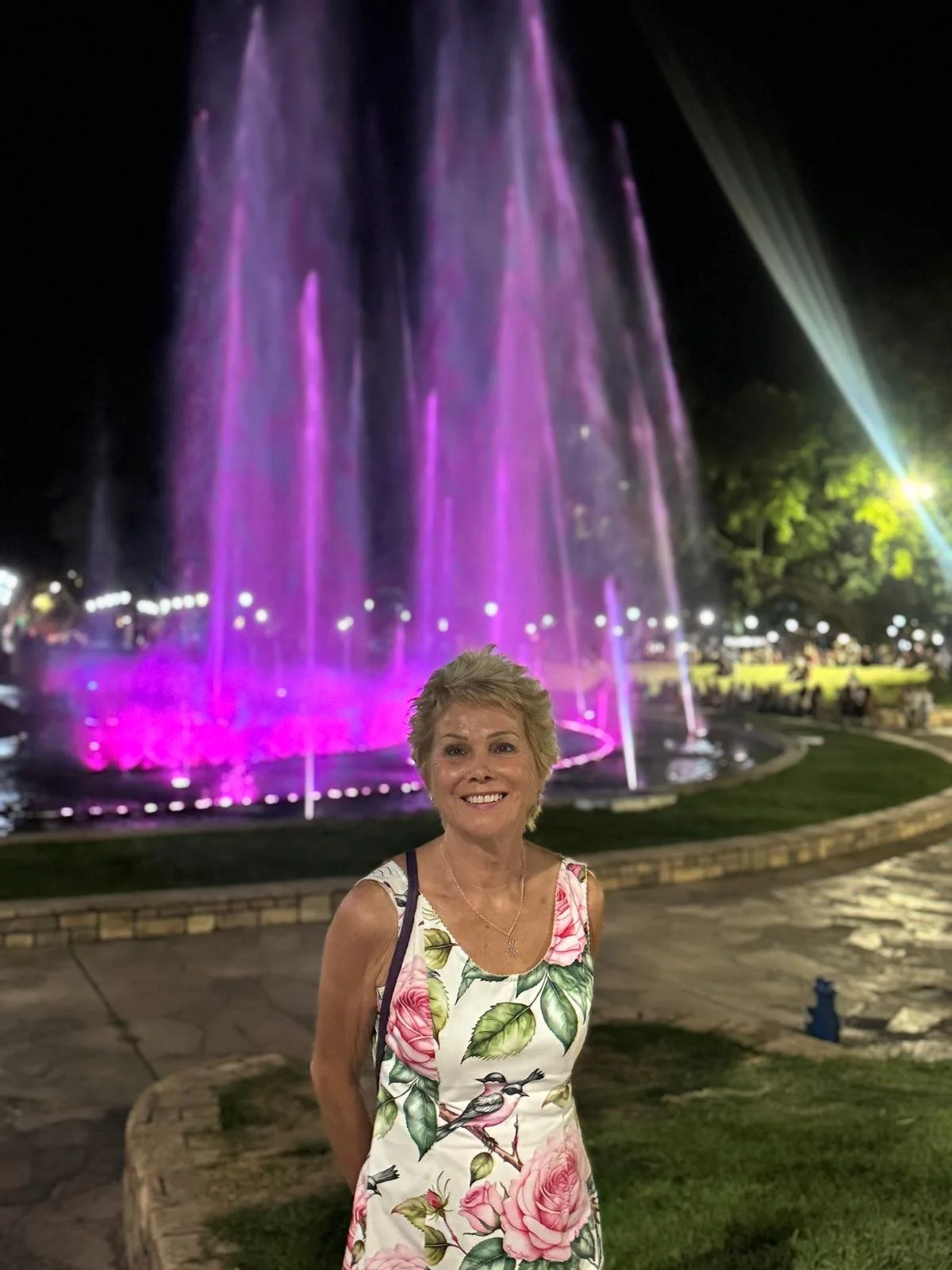
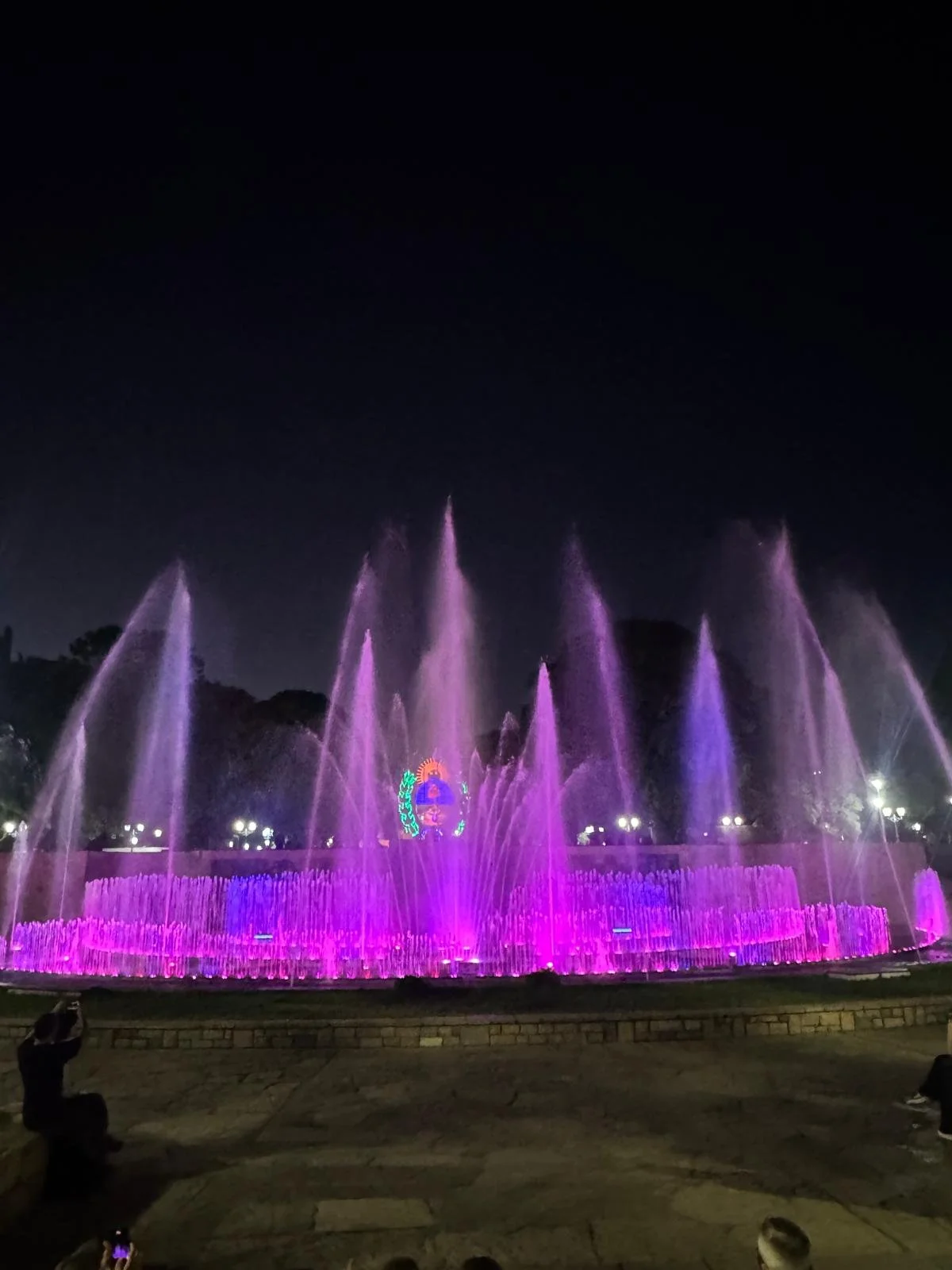
So, there you have it…..and if that isn’t enough information, how about this little snippet – since we have been here we have noticed a large number of the lovely fountains I keep telling you about have pinkish/purple water. Well do you know why this is…..during the annual wine harvest festival – Festival Nacional de la Vendimia – in late summer, the fountains are dyed pink to simulate red wine. This spectacle celebrates Mendoza’s status as the heart of Argentina’s wine country and the start of the Malbec grape. How awesome is that!!!
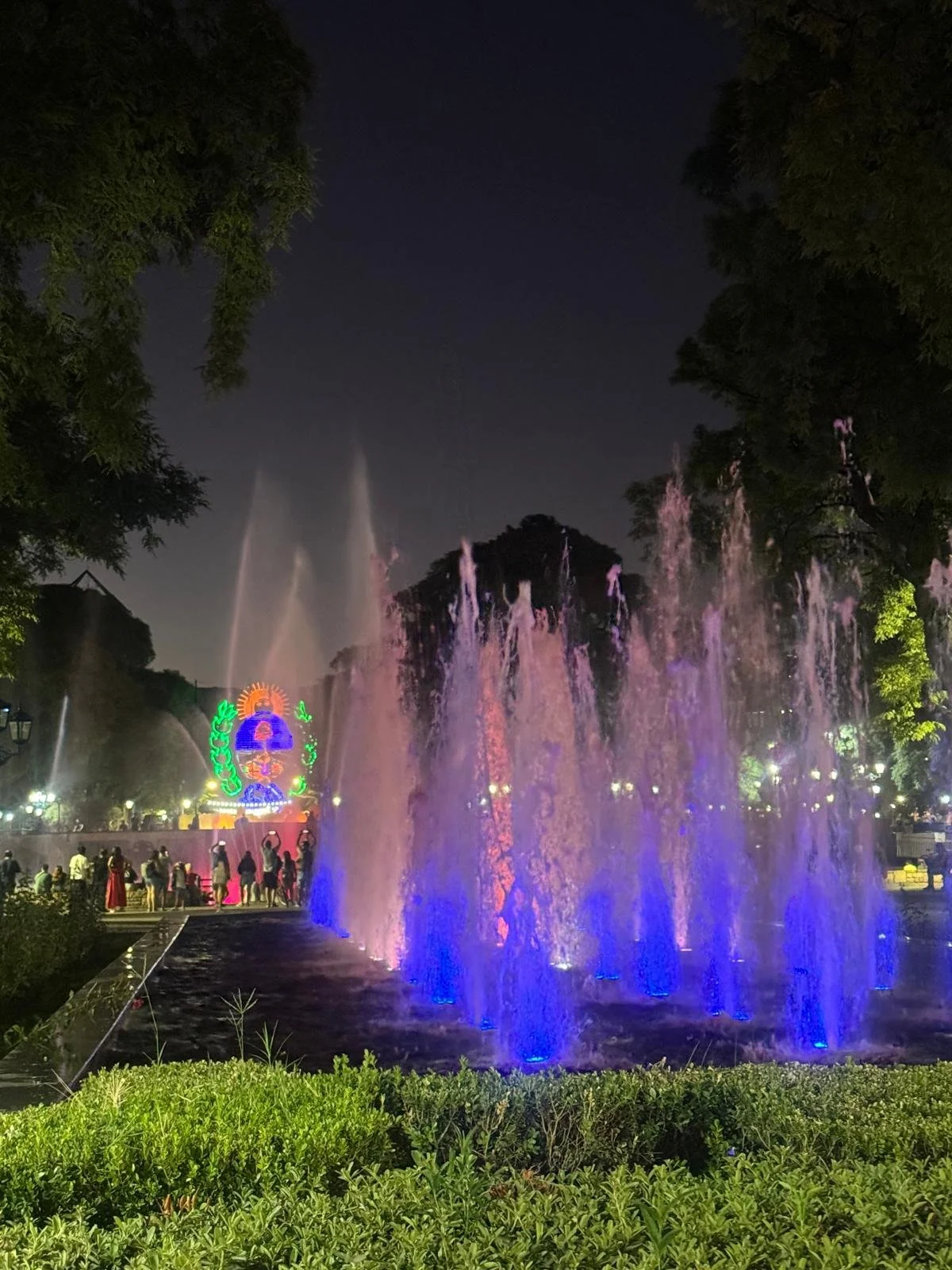
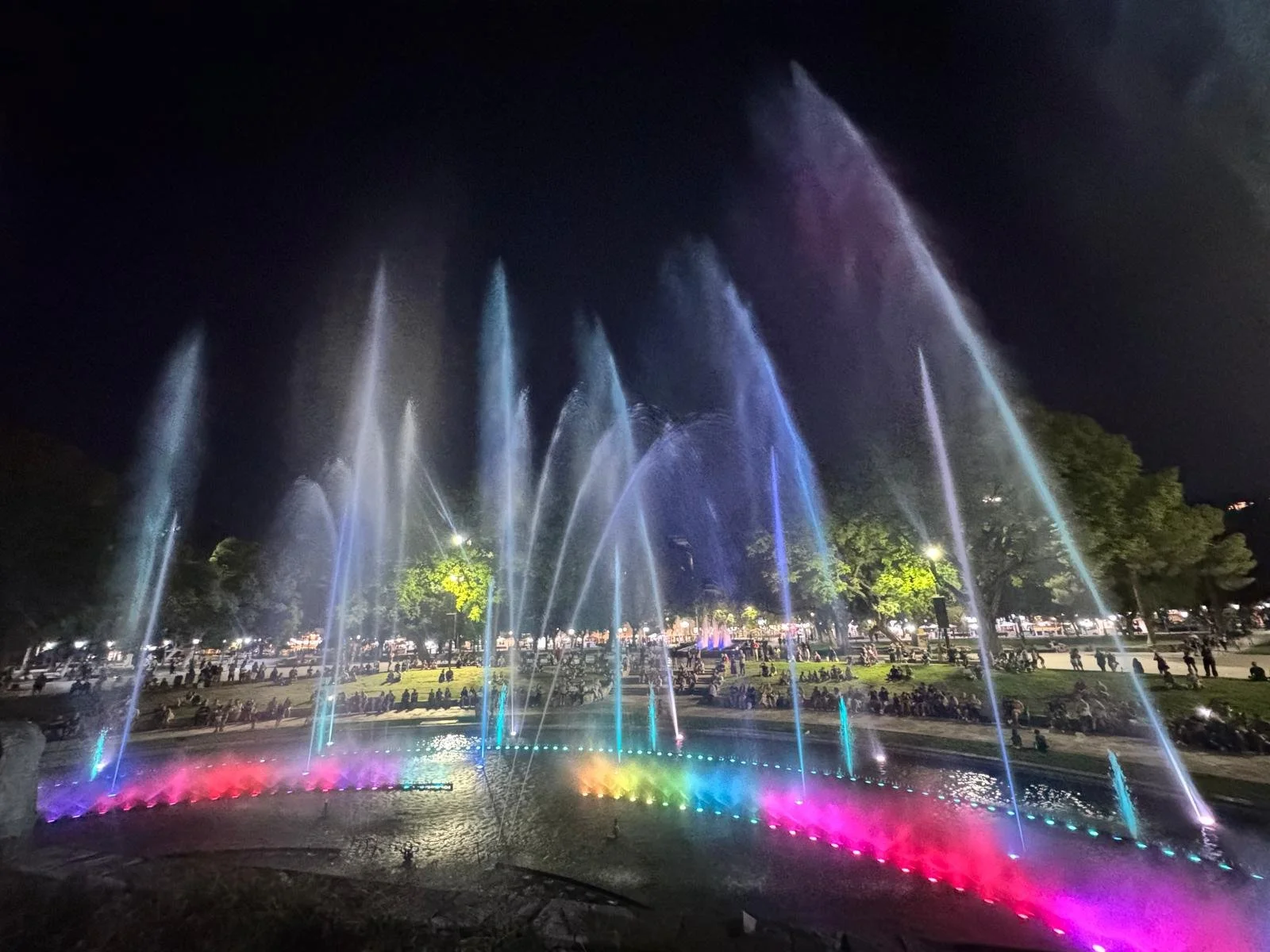
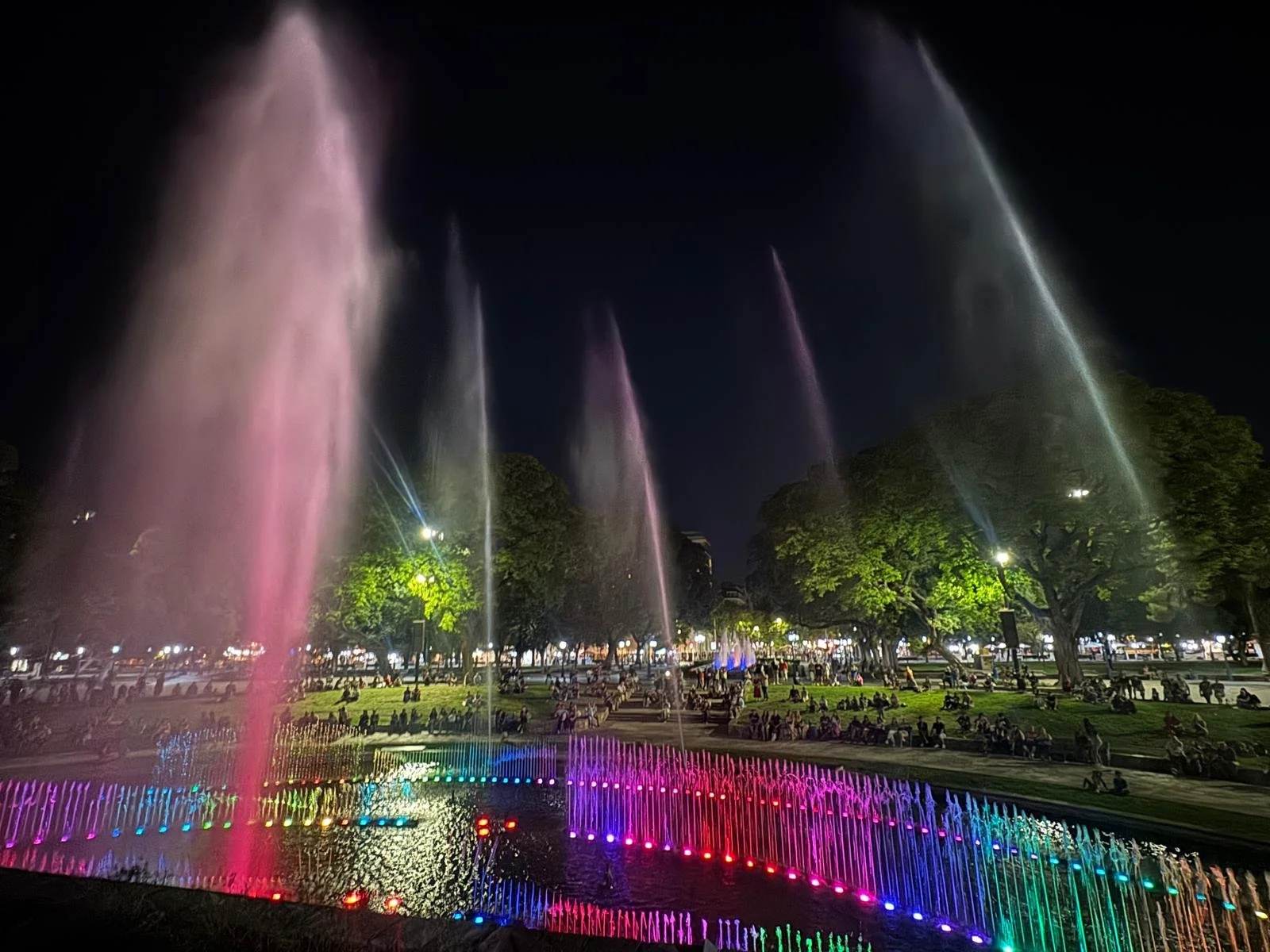
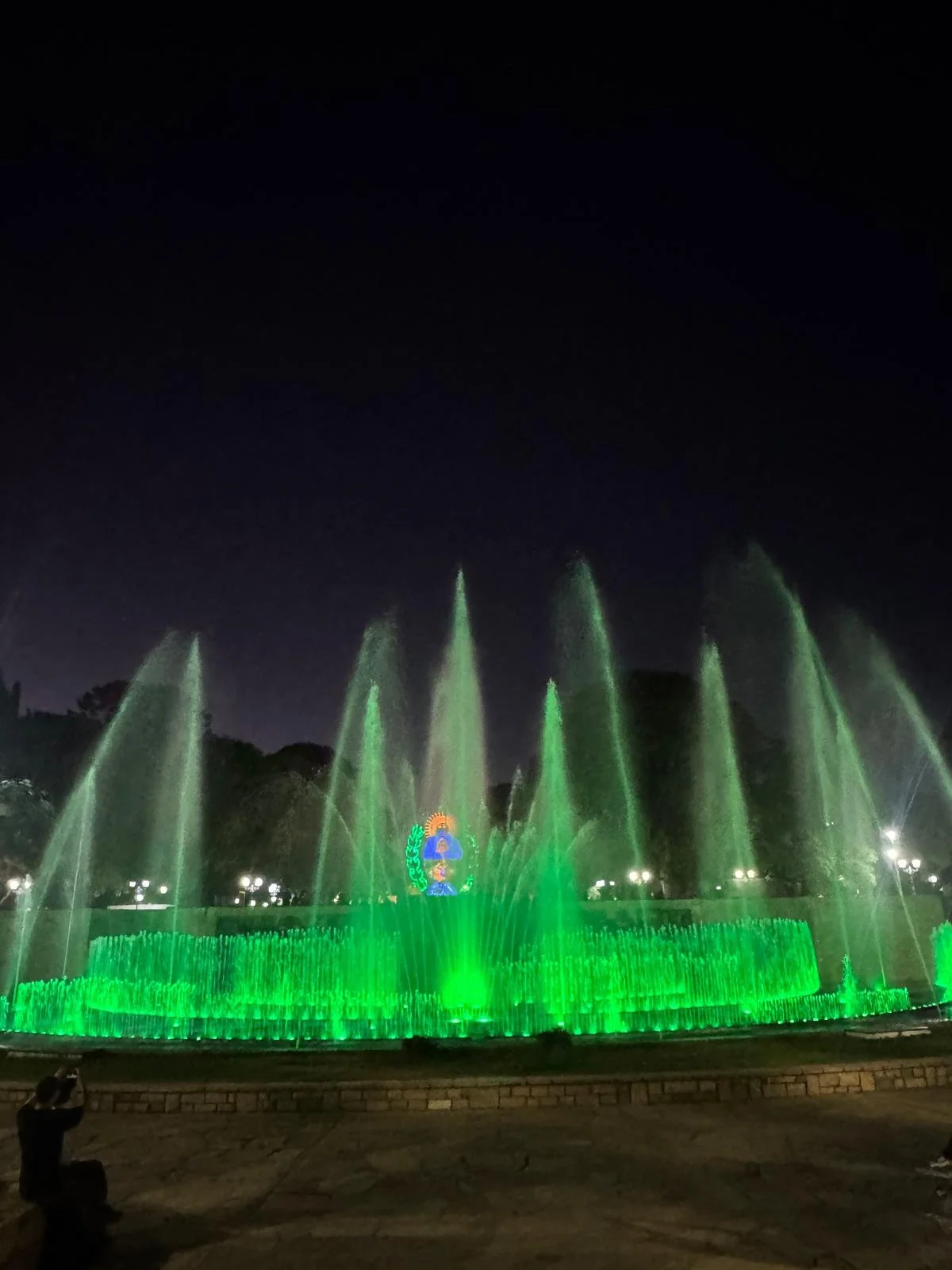
We rounded off our evening with a walk back to Independence Square to watch the nightly Fuente De Aguas Danzantes – the dancing water fountains all lit up in gorgeous colours and accompanied by music. Another perfect day.
Friday 20 February
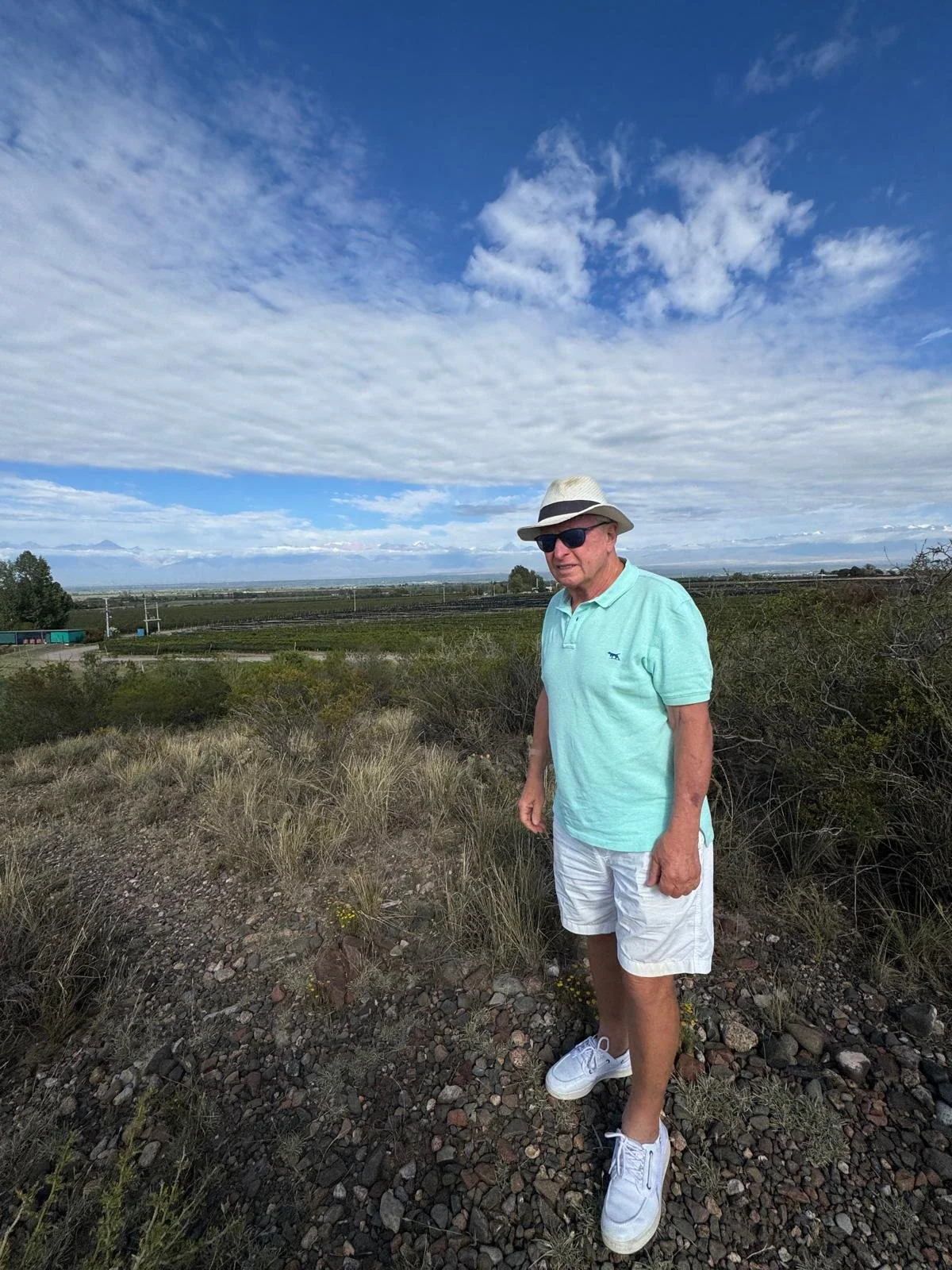
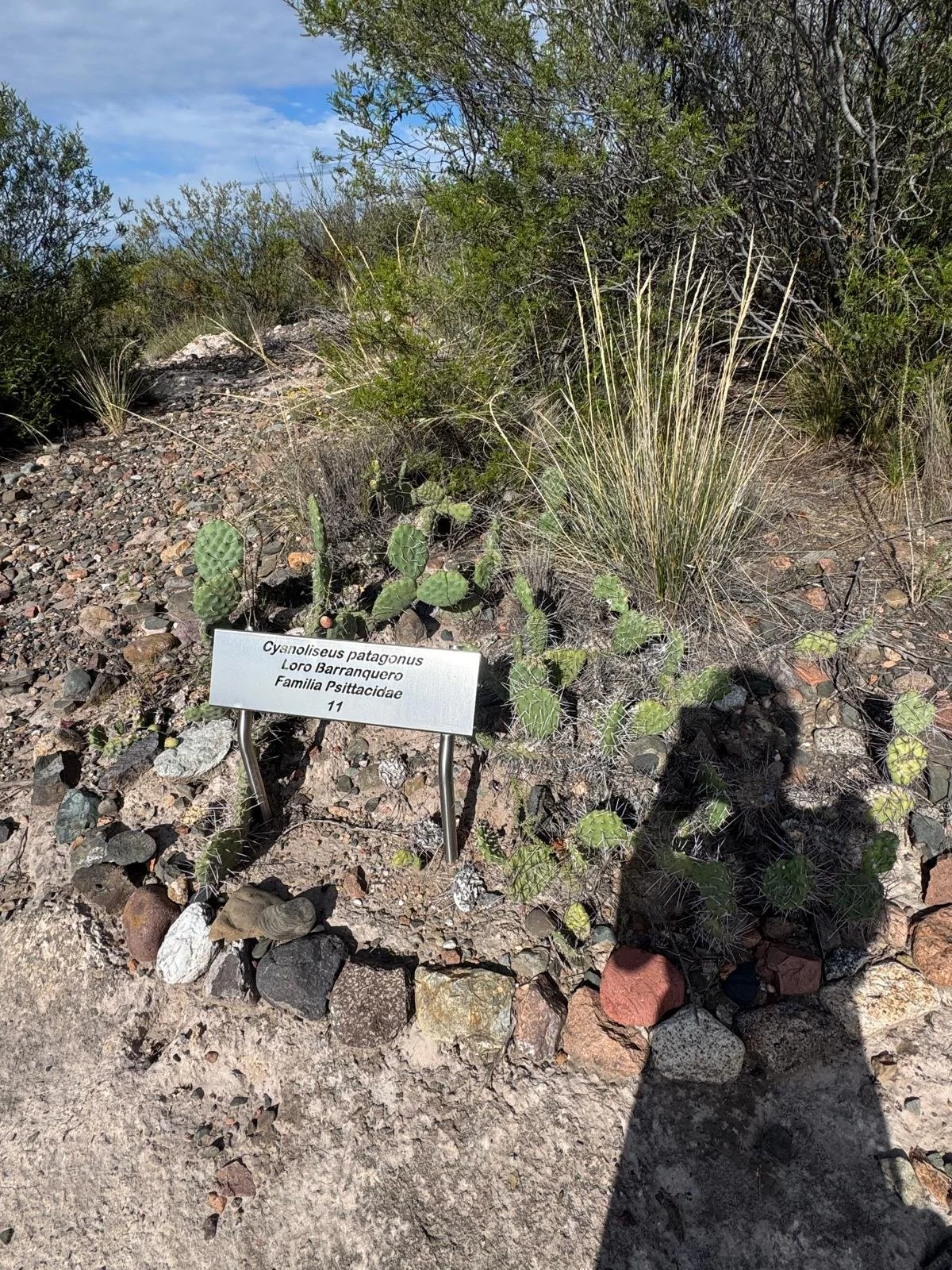
With all this talk of wine, it seems only appropriate that we spend a day in a couple of vineyards here. So we booked ourselves on a tour to the Uco Valley and joined an Italian couple being picked up at 8.00am this morning. A 90-minute drive well into the countryside, with the snow-capped Andes as a backdrop, and we arrived at our first stop – the Masi Vineyard in Tupungato. Masi Tupungato is a winemaking project developed in Argentina by Masi, an Italian company with origins in Valpolicella in 1772, producing quality wines from the Venetian regions and a leader in the Amarone sector. Somewhat ironic for our Italian friends who were both wine connoisseurs and hadn’t expected to be visiting a winery in Mendoza producing wines from just down the road from their home in Parma! Oh well, such is life! The vineyard also contains a conservation area of 11 “cerros” or small hills which extends to 20 hectares of uncultivated land, part of which is set up as a nature trail with plenty of local flora and fauna to discover. We walked a tiny party of this, quite near to the vineyard, and were able to taste the grapes, two Argentinian varieties, Malbec and Torrontés, and Pinot Grigio, the Italian white grape.
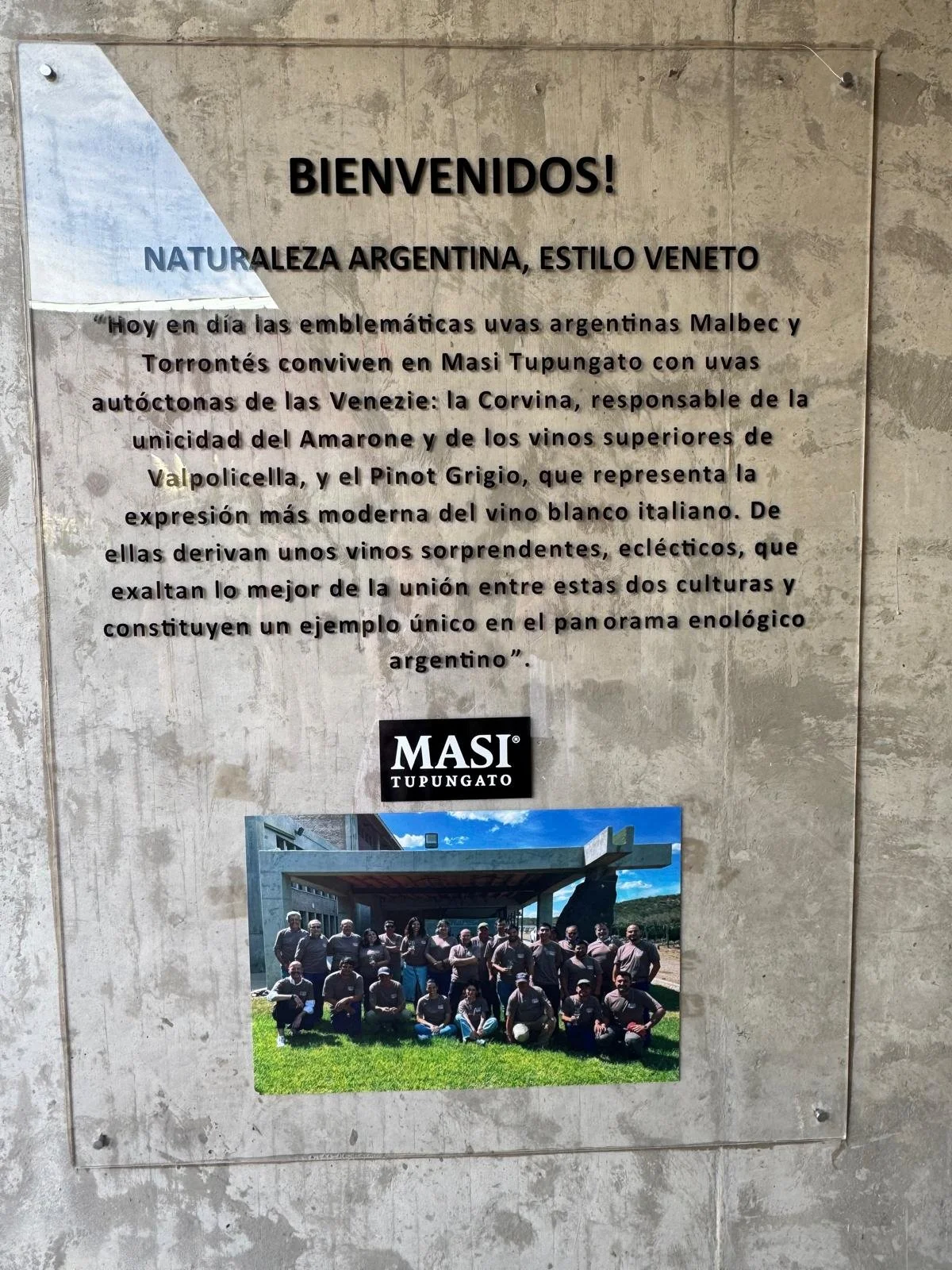
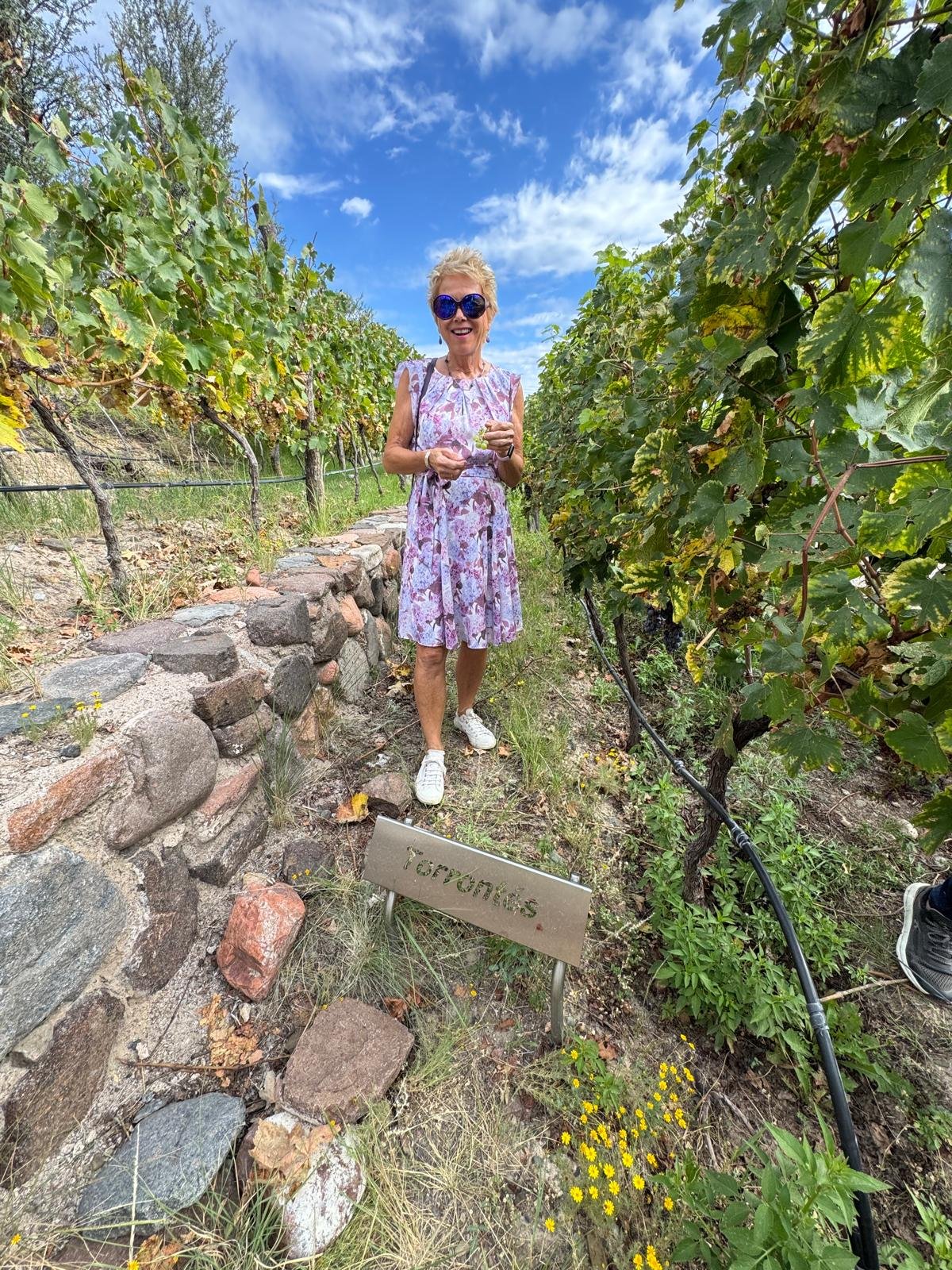
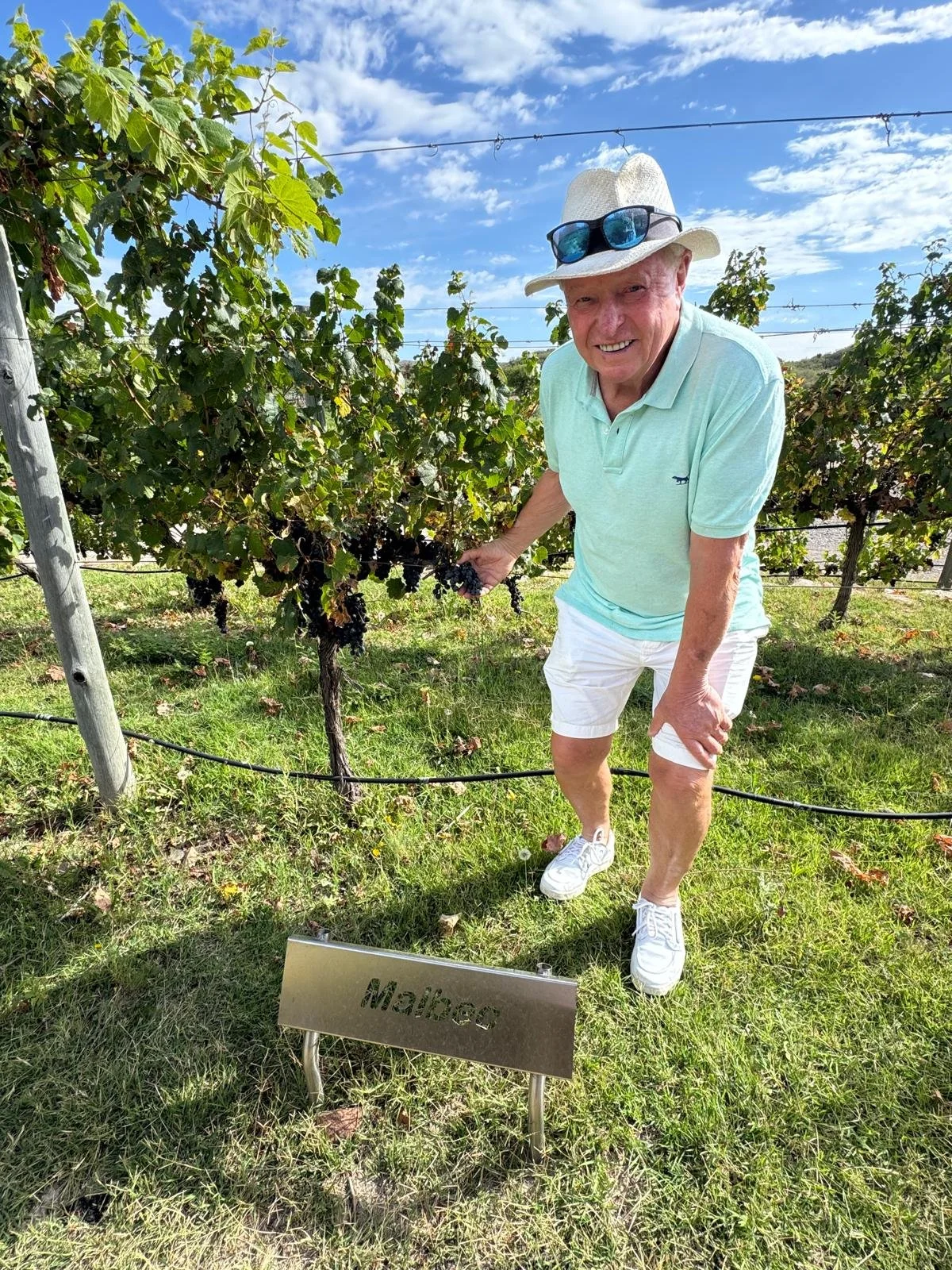
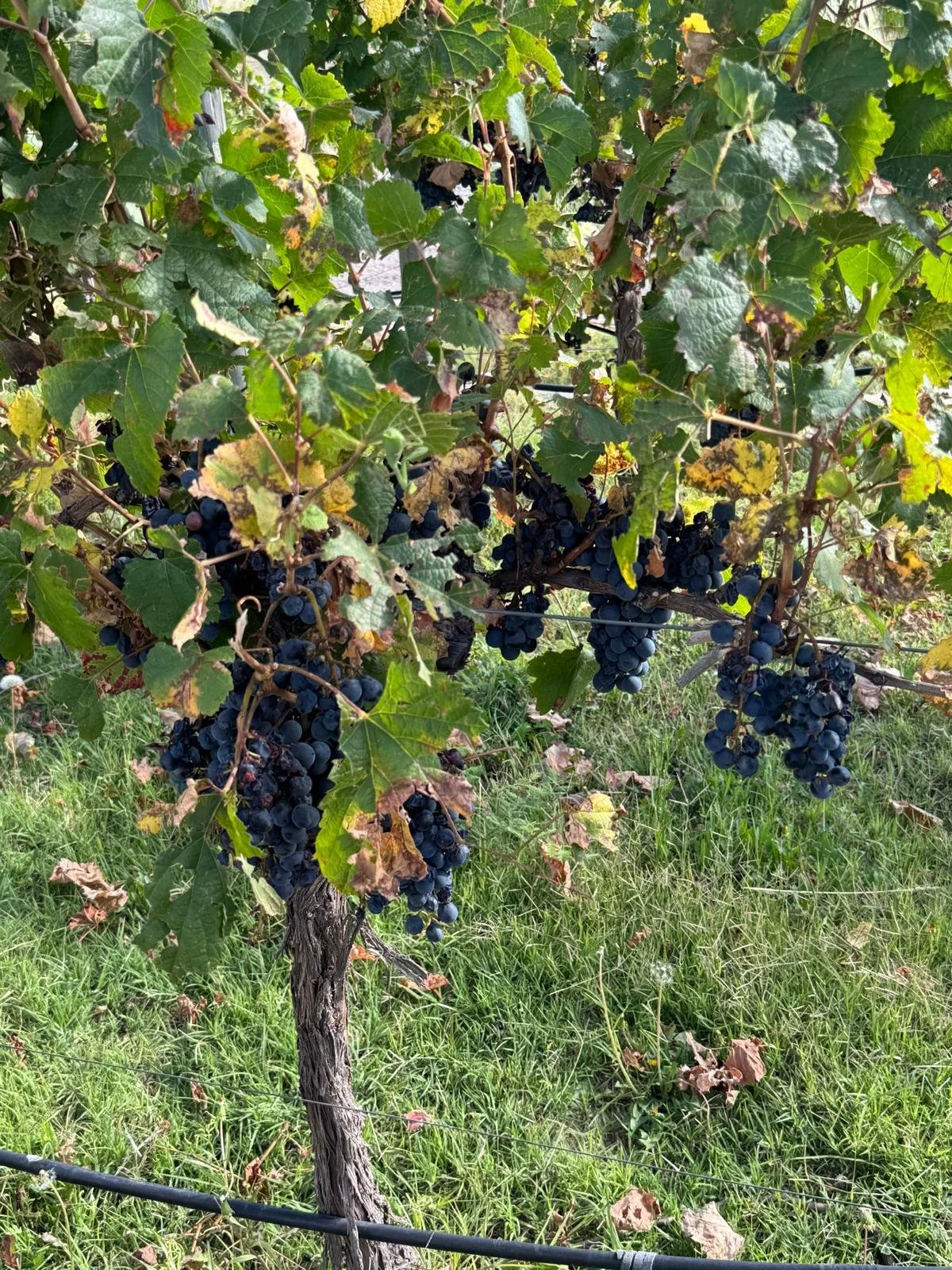
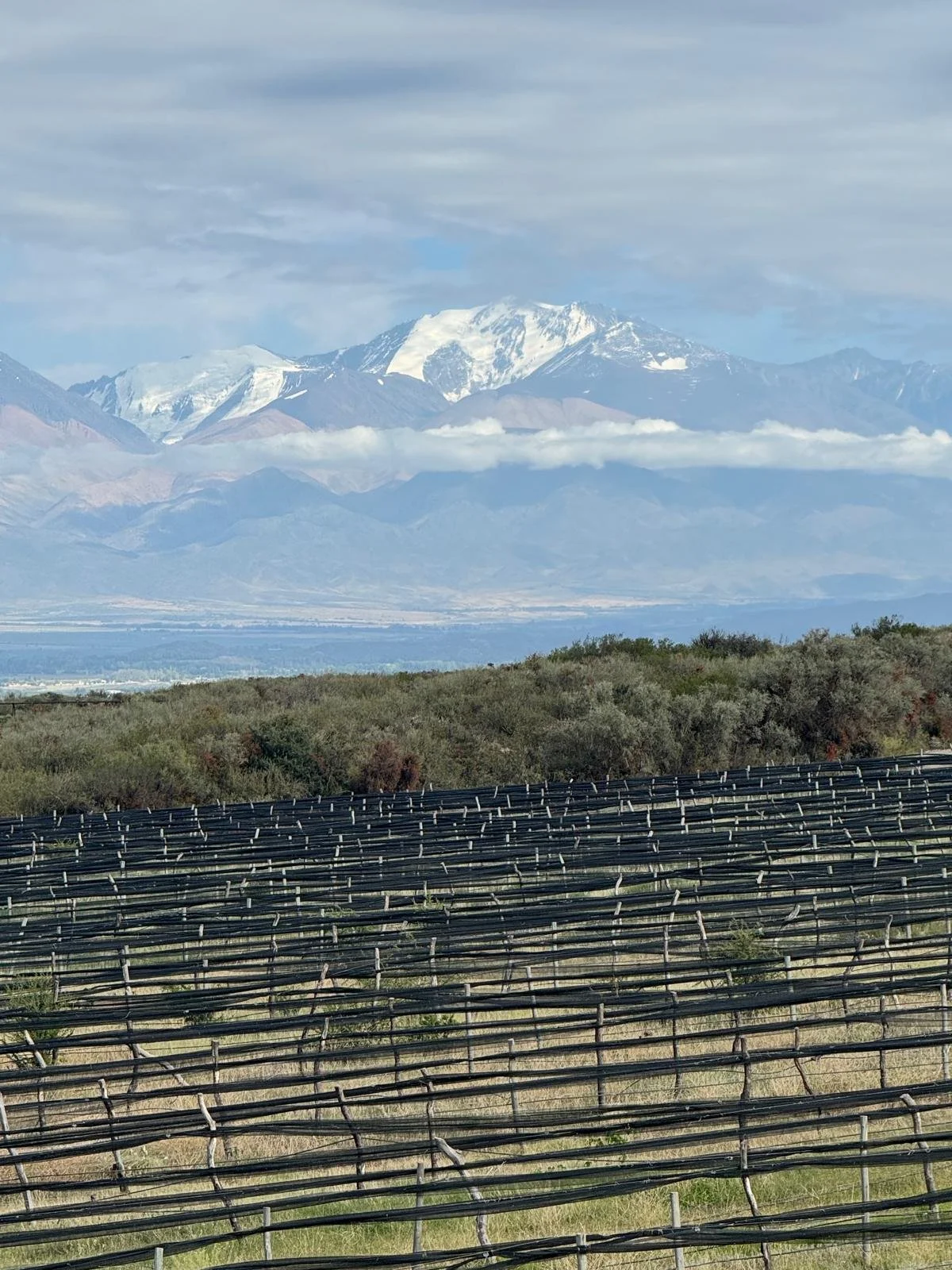
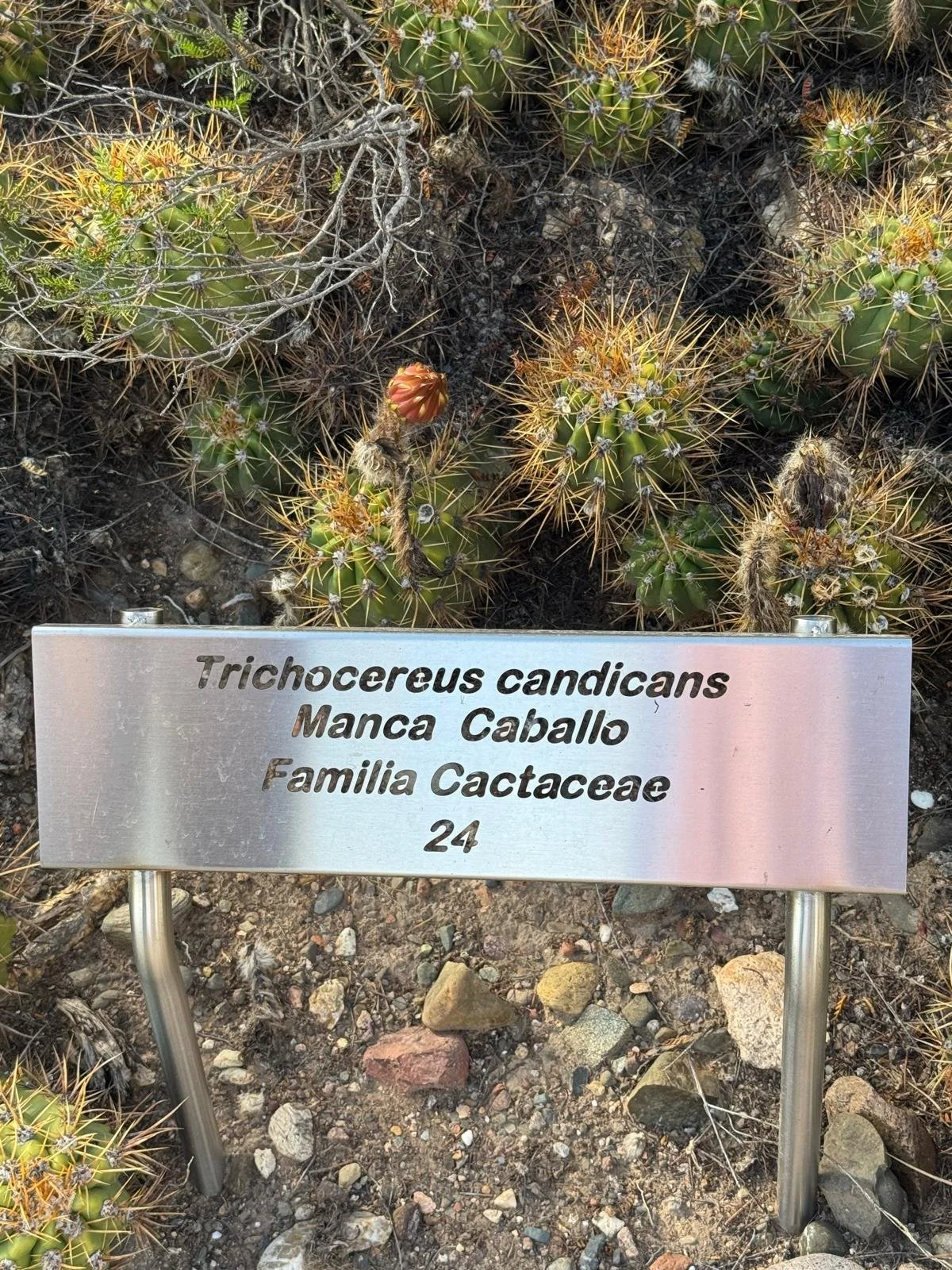
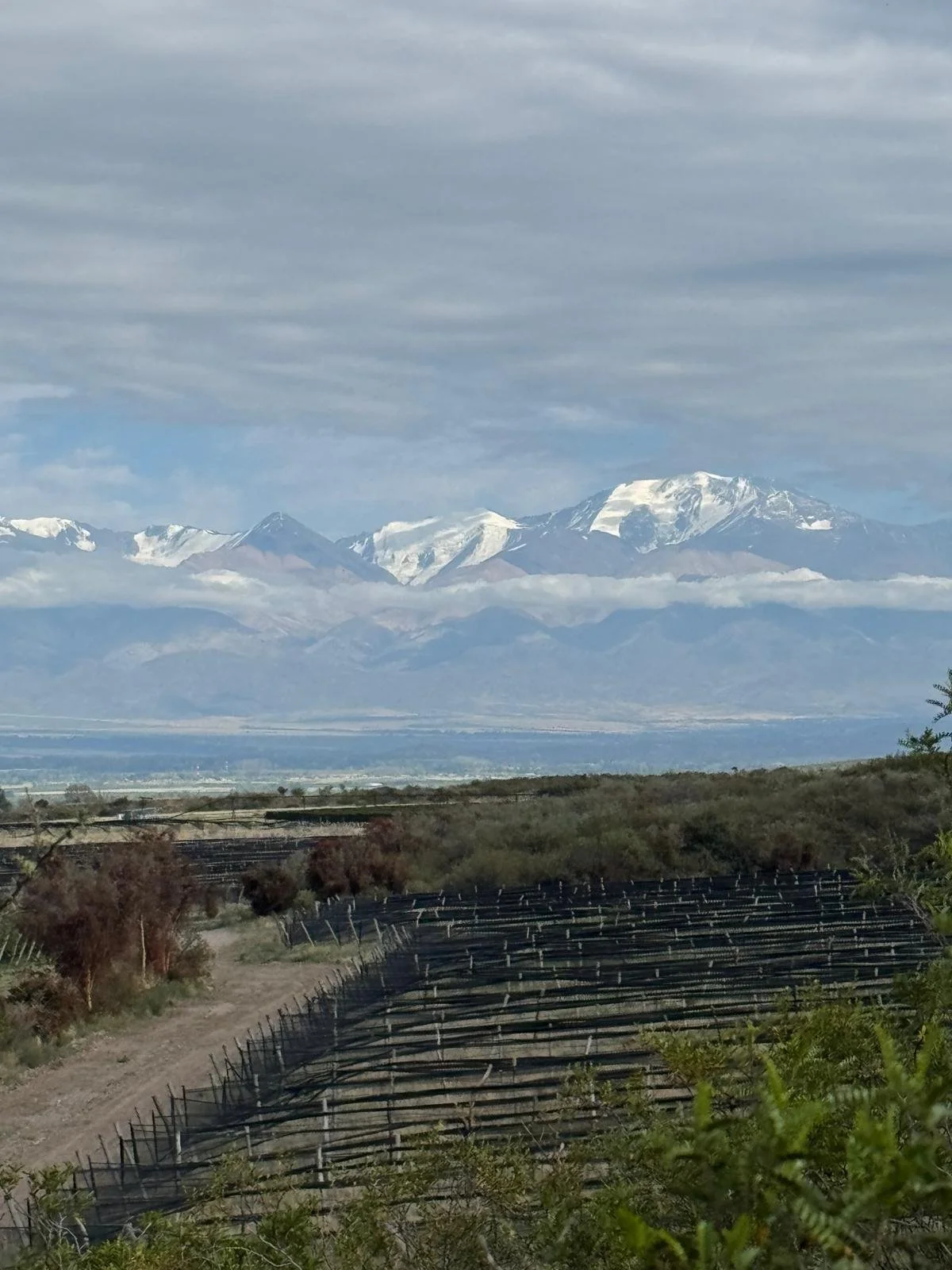
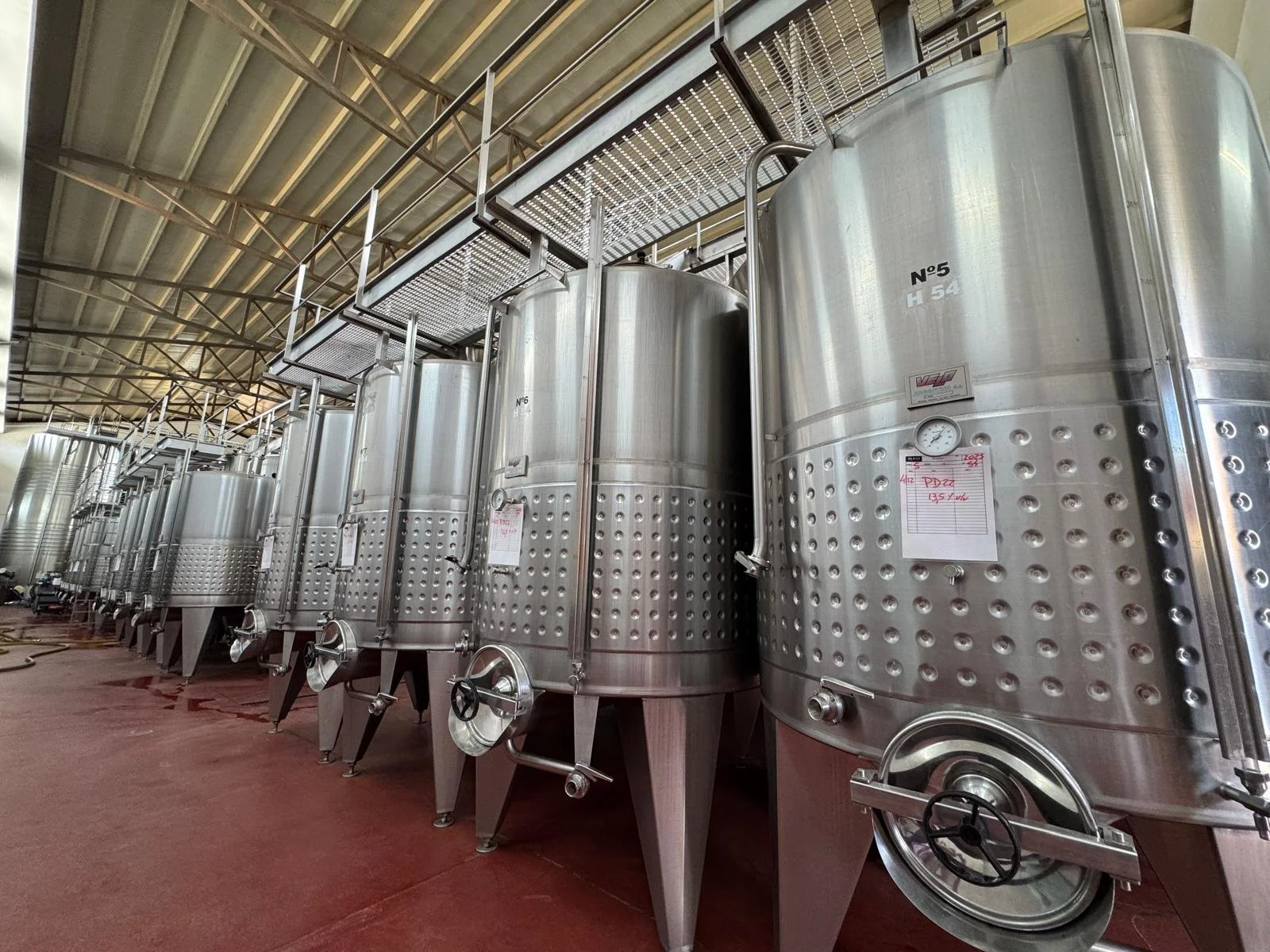
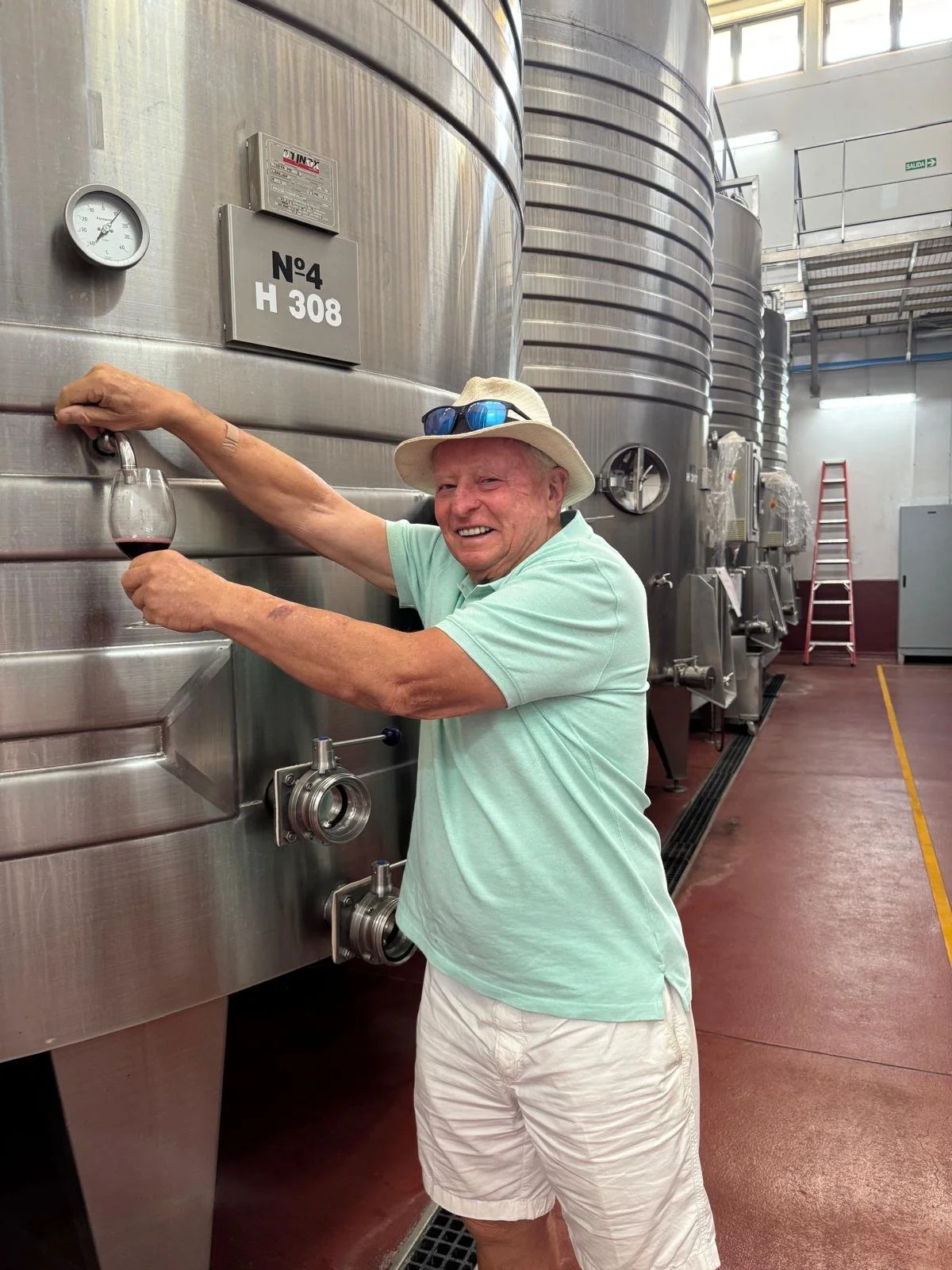
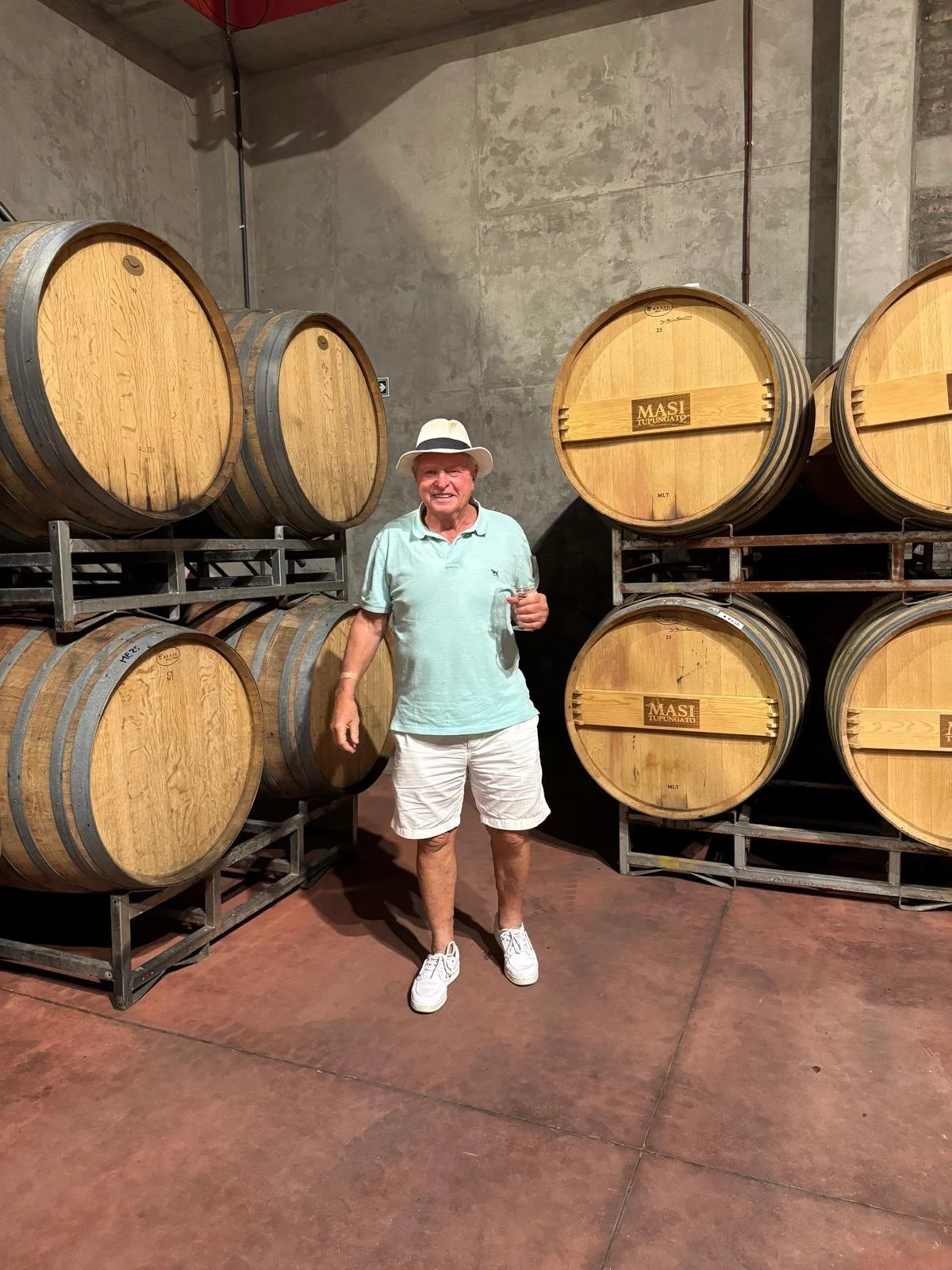
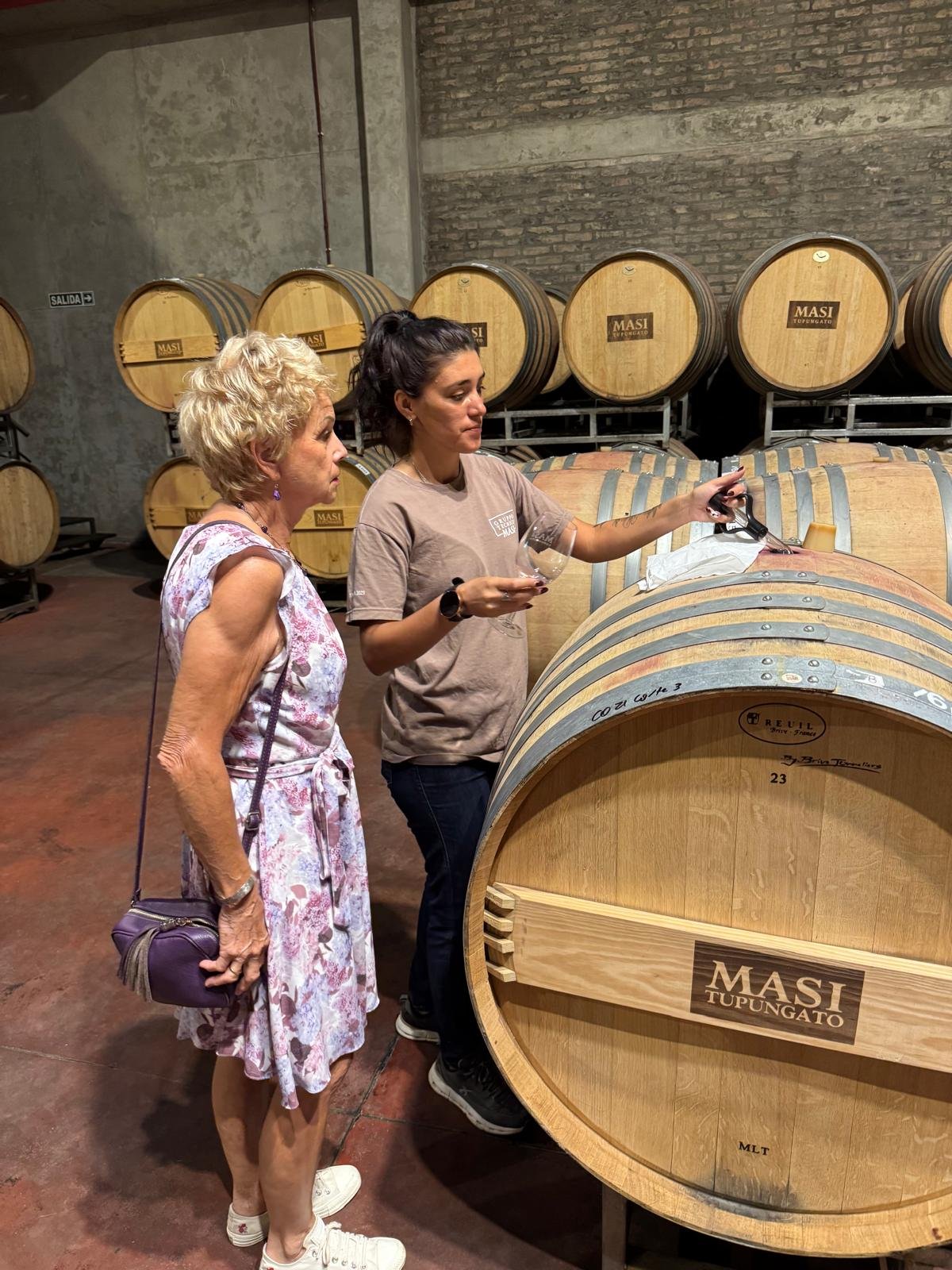
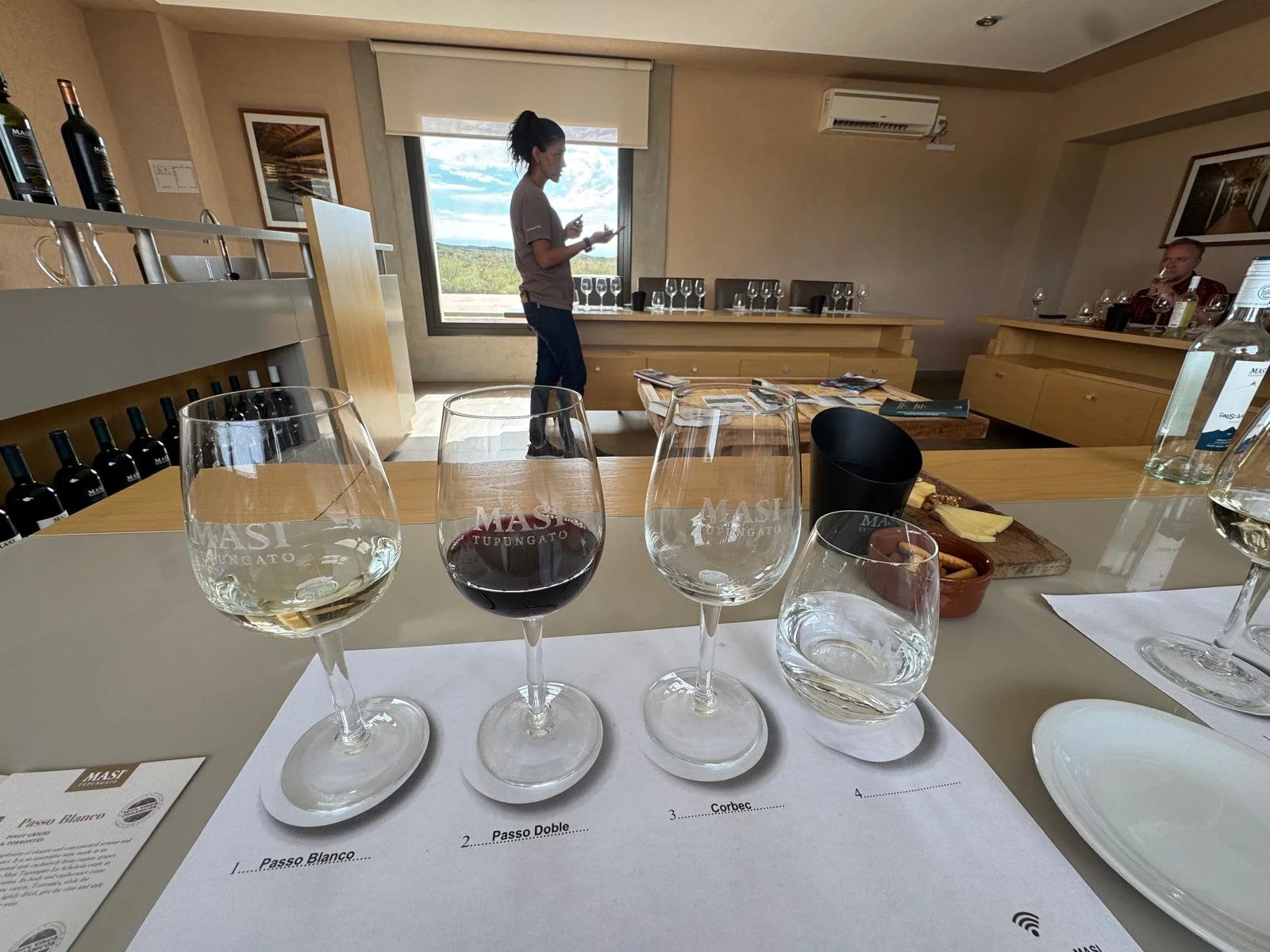
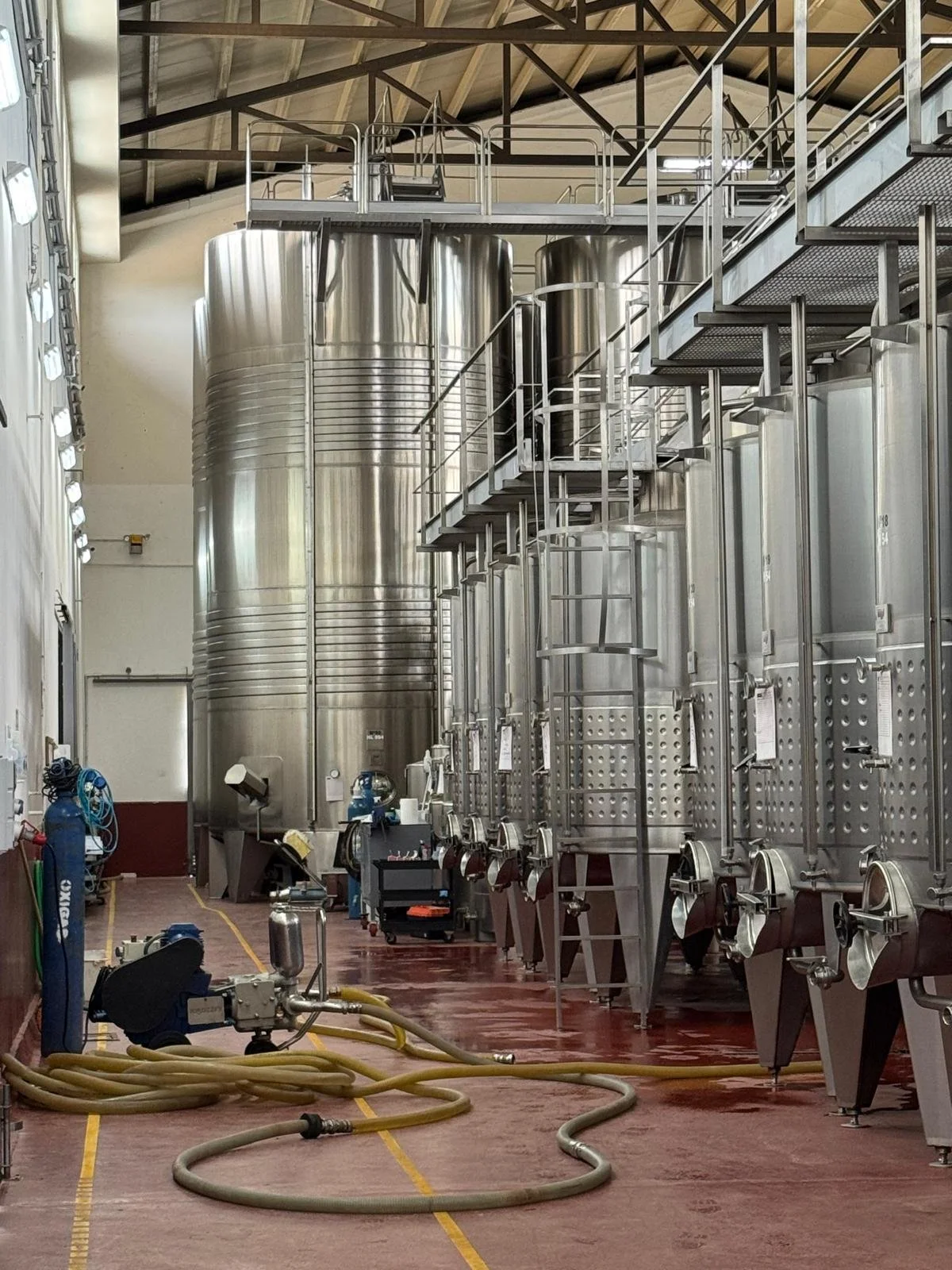
We had a bit of fun inside the winery looking at all the vats and turning on the taps to pour our own glasses to sample, followed by a visit downstairs to see the oak barrels and then a sit down and delicious wine tasting of their three wines - Passo Doble, Passo Blanco and Corbec, the Passo Blanco being my favourite – to be fair, it was still only about 11.15am so a bit early in the day to be getting right into it!
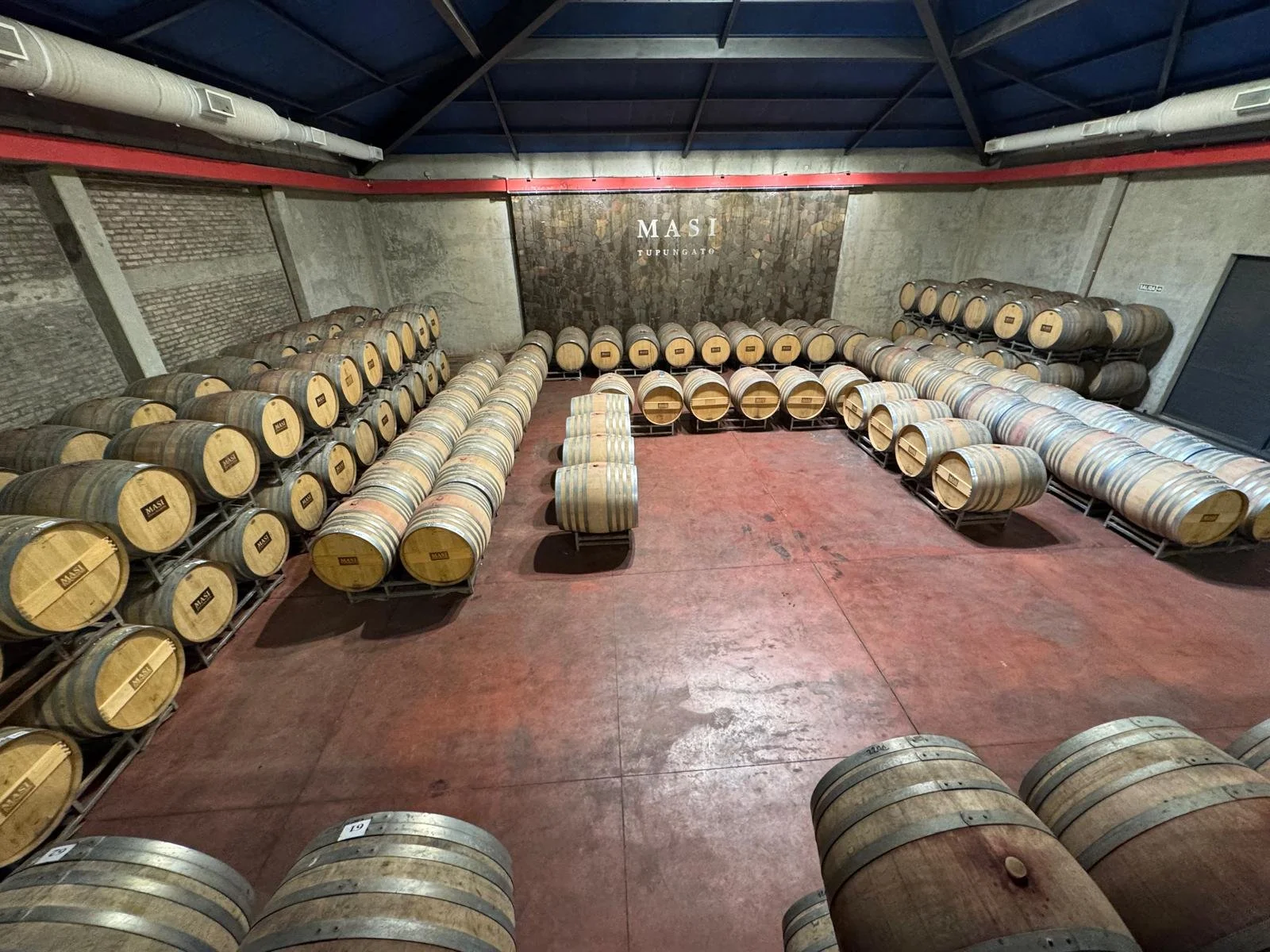
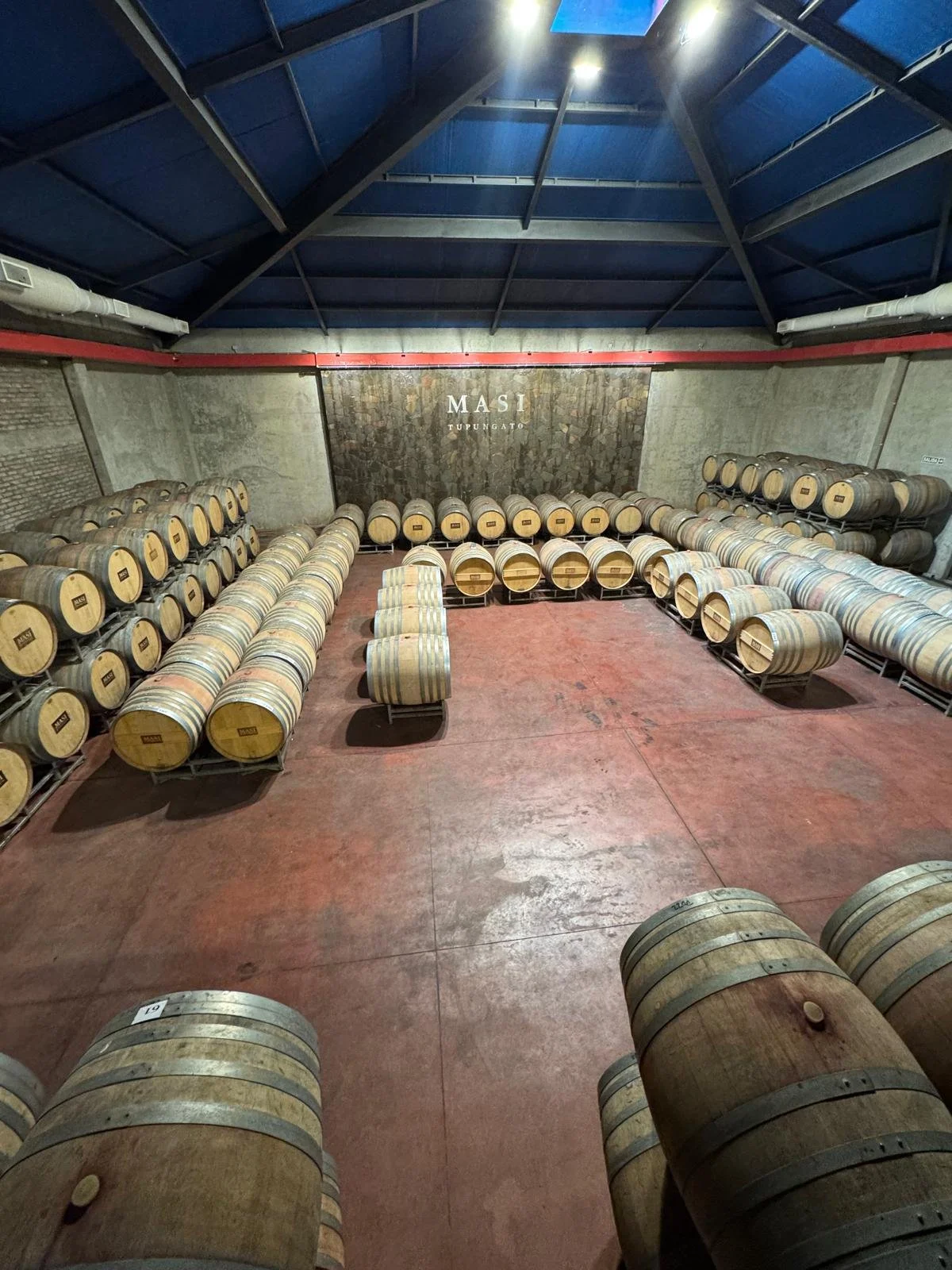
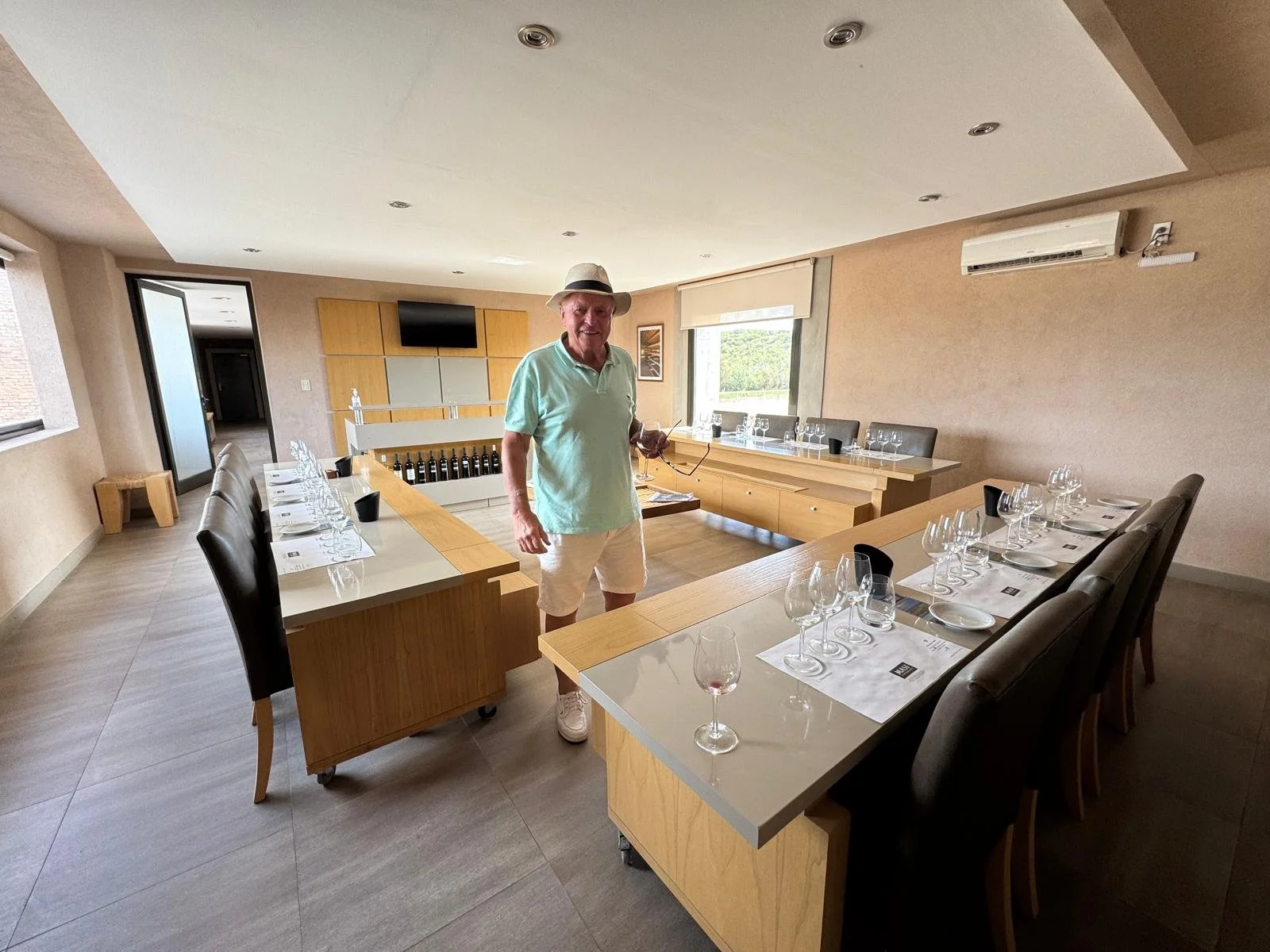
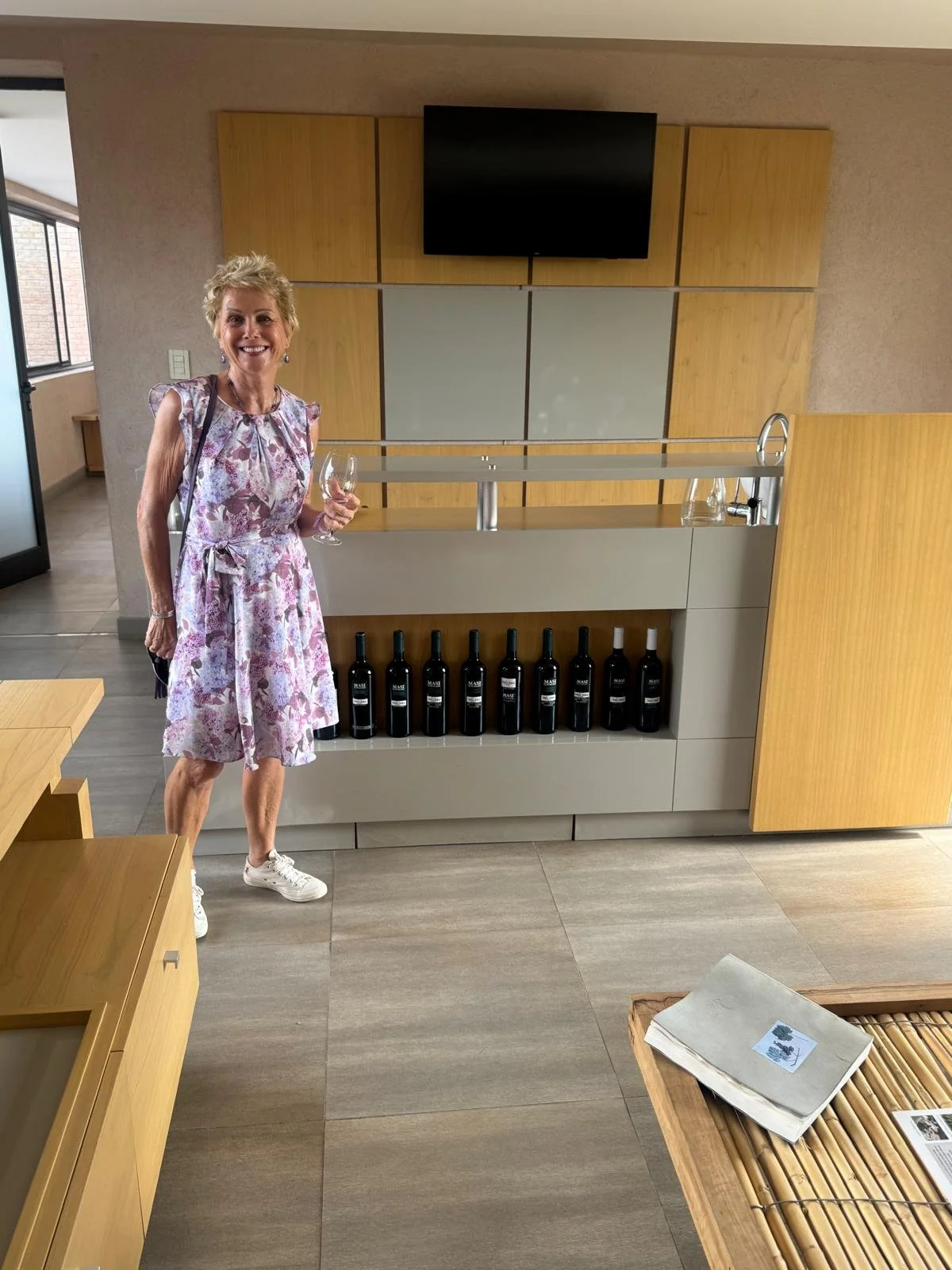
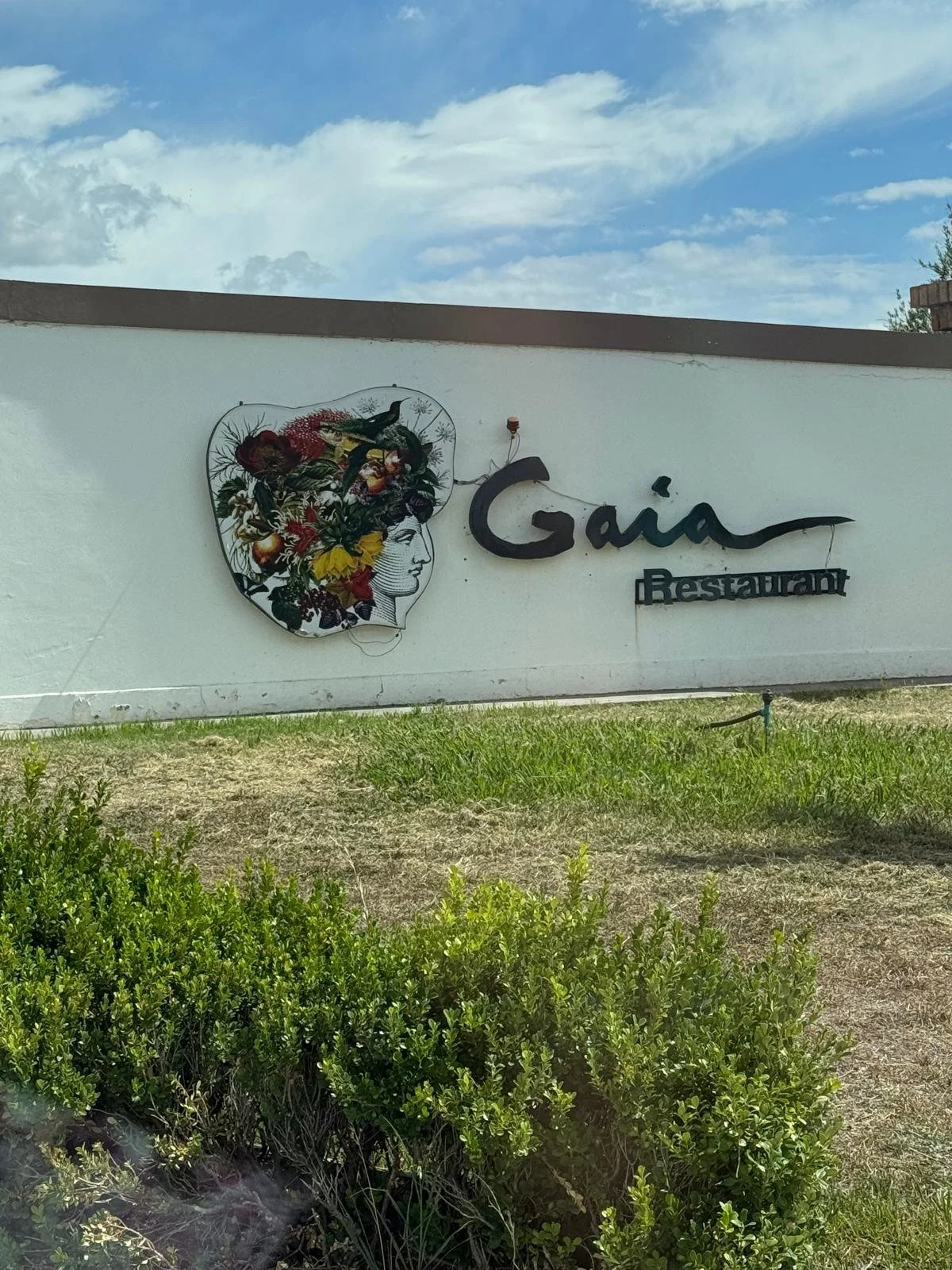
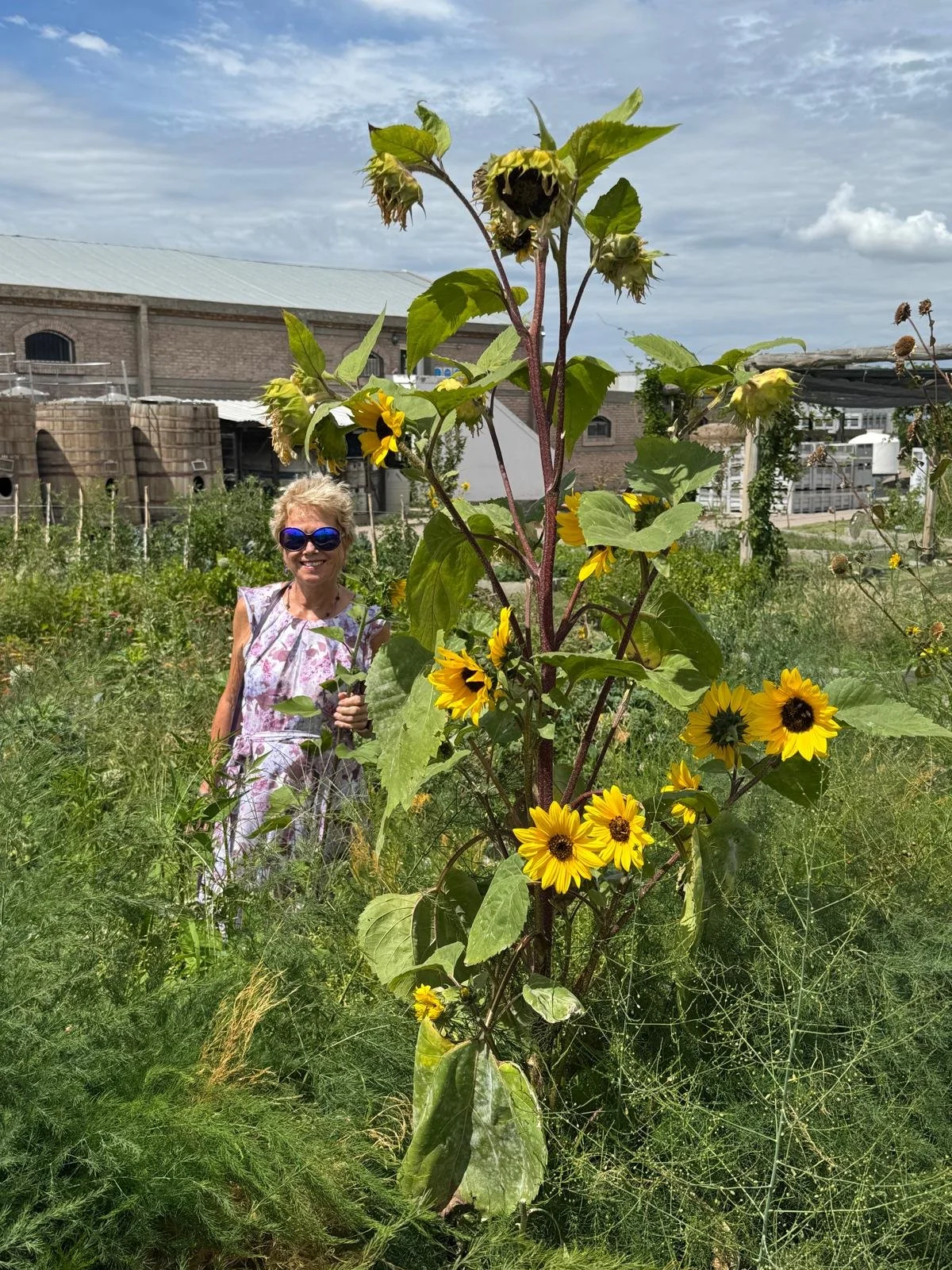
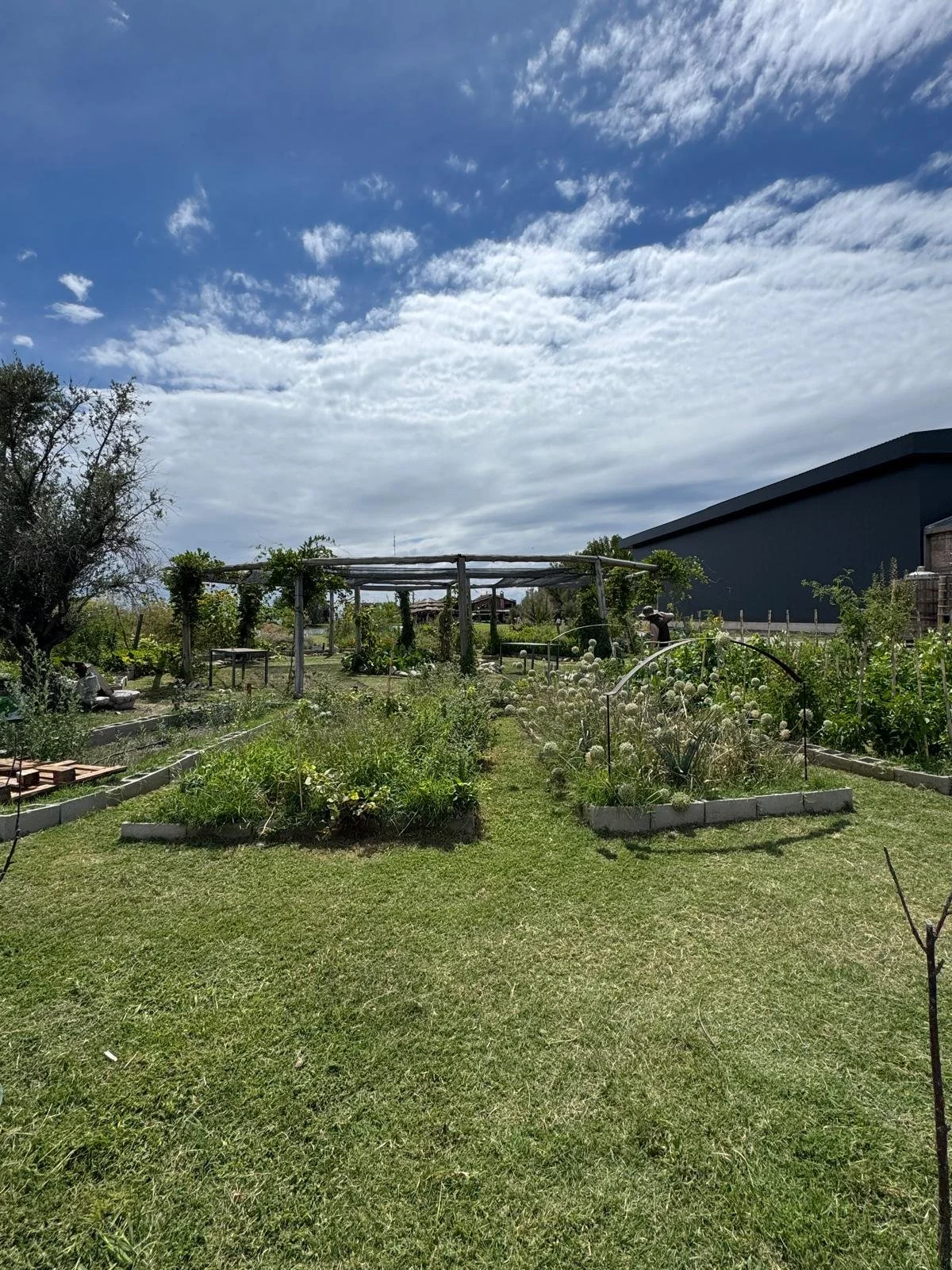
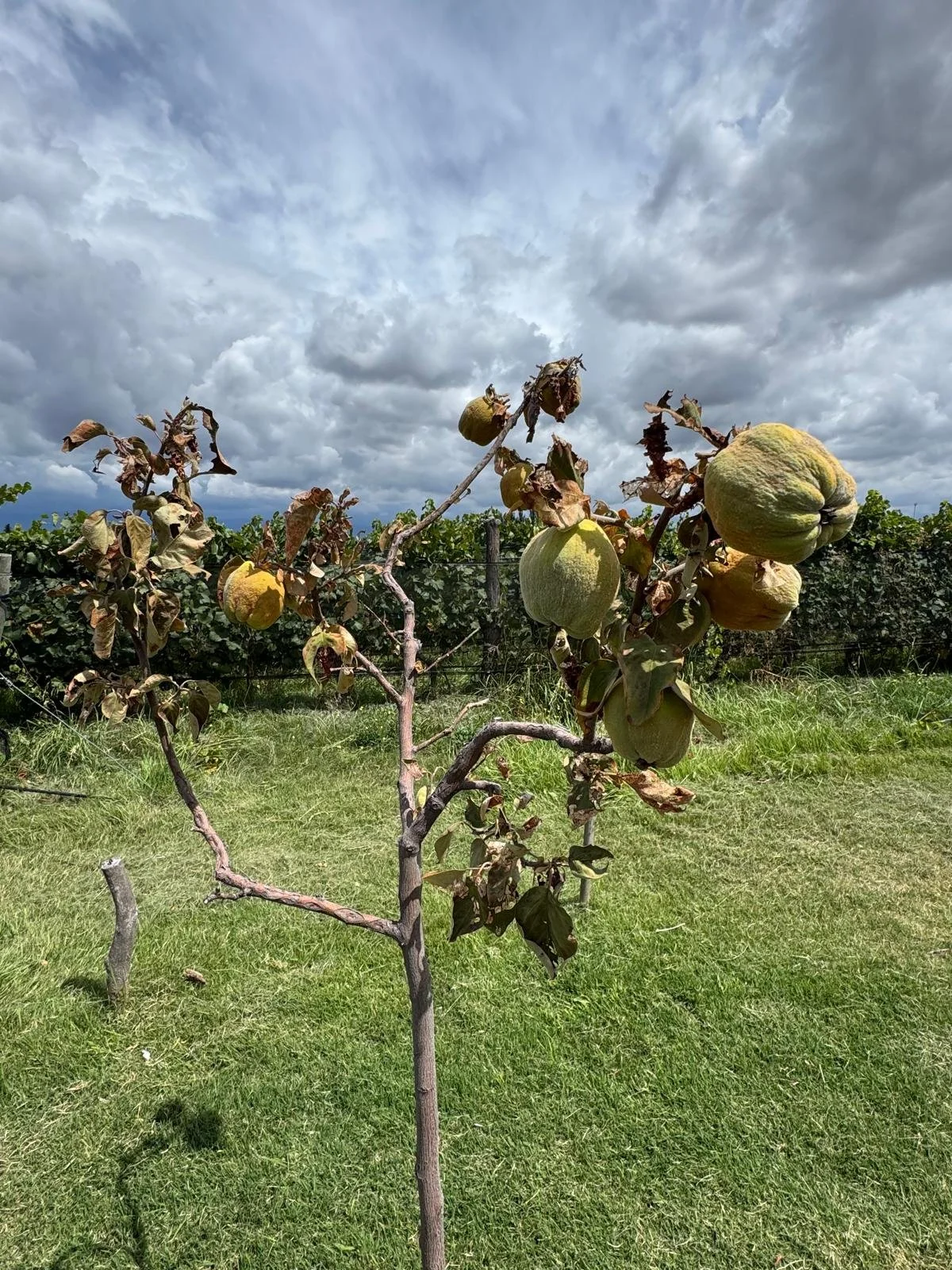
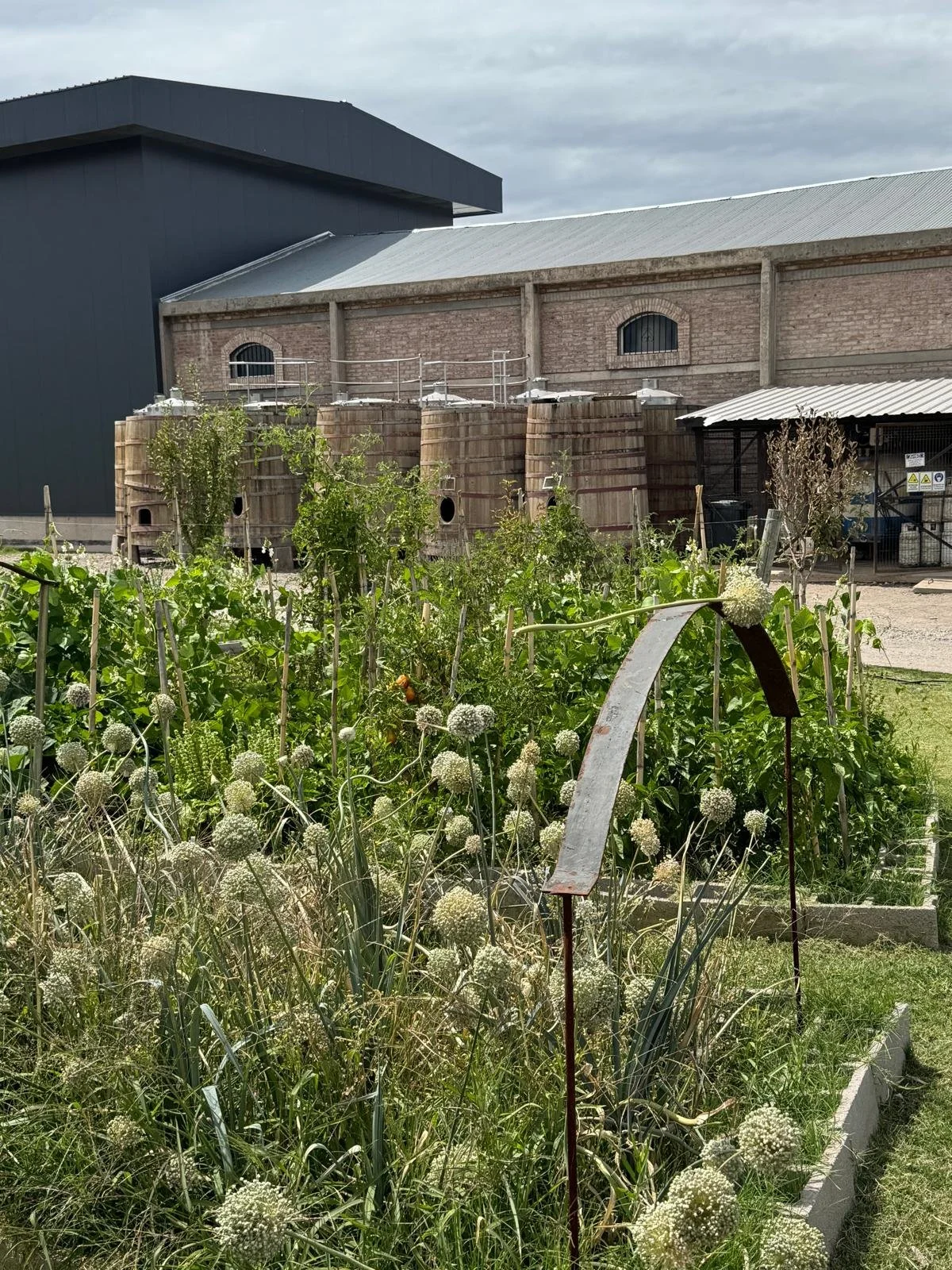
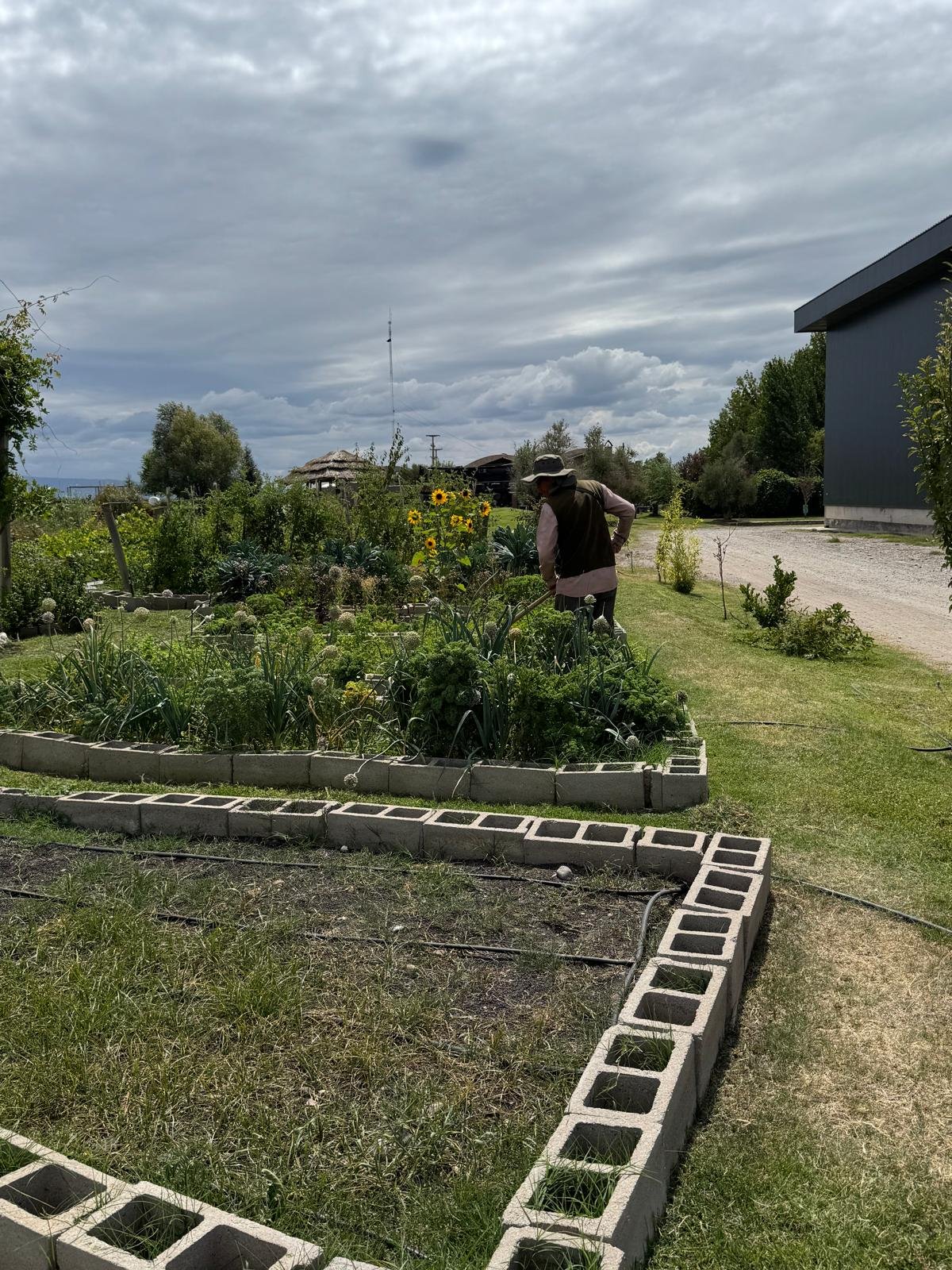
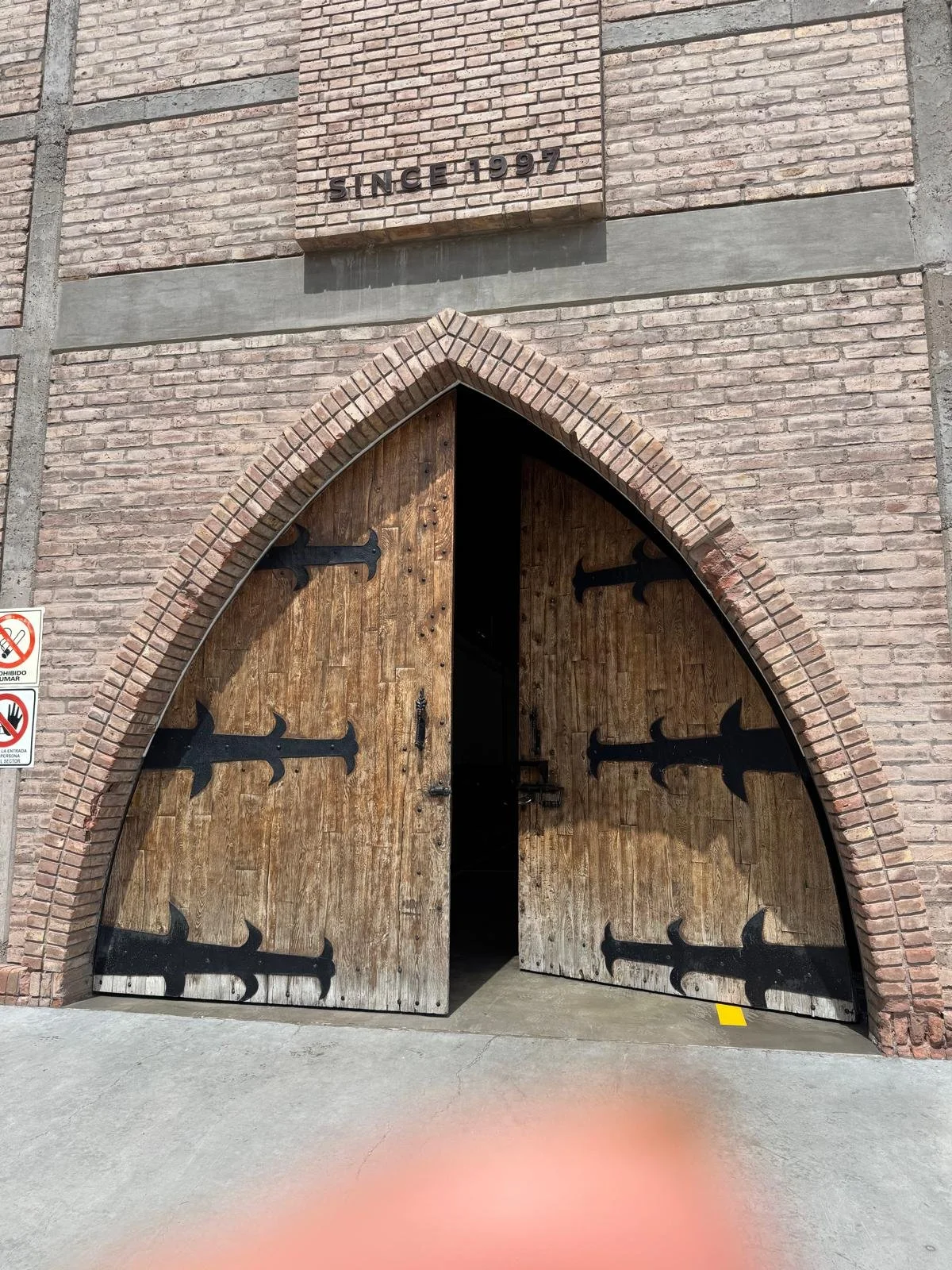
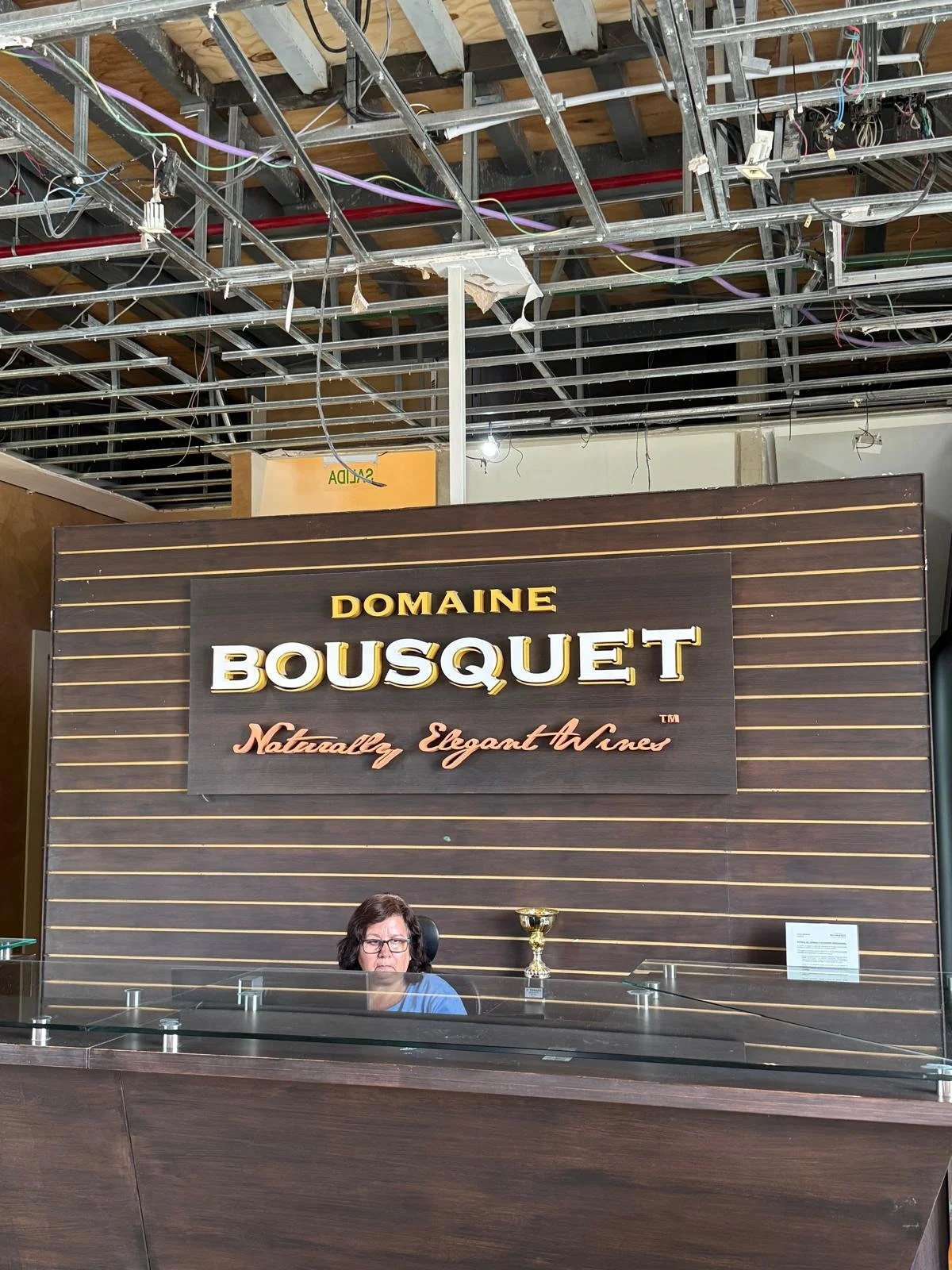
Next stop was the Domaine Bousquet, one of the leading organic wine producers in Argentina. The Bousquet family, originally from Carcassonne in the south of France came to Argentina in 1997 as the fourth generation of winemakers with a long-standing tradition of farming organically. They started planting their vineyard and state-of-the art winery overlooking the vines and the Andes mountains in the distance. We walked through their beautiful vegetable gardens with ripe tomatoes, courgettes, cabbage, leeks and fruits, including a very funny shaped one which turned out to be quince, whilst the guide gave us the history of the wines….I’ll be honest with you, after one tour and tasting already I was kind of switched off and more interested in looking at the gorgeous sunflowers! A three-course lunch in their Gaia Restaurant with fresh vegetables and fruits from their garden followed accompanied with matching wines - Domaine Bousquet Reserve, Gaia, and Gran Bousquet and then it was back into the car, dropping off the Italians in the centre of town and off to the airport for us where I am now doing this blog, before we board our flight back to Santiago!
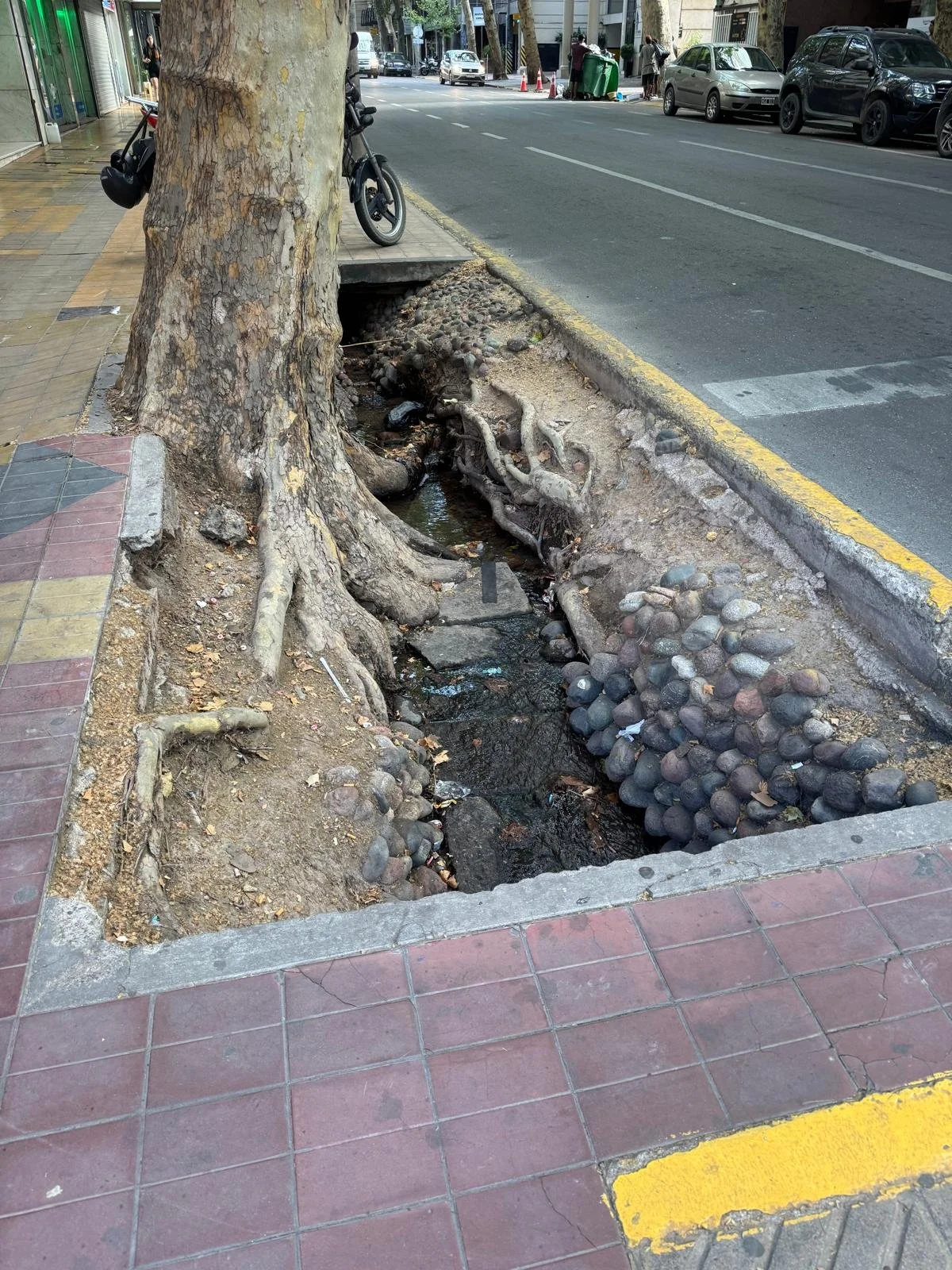
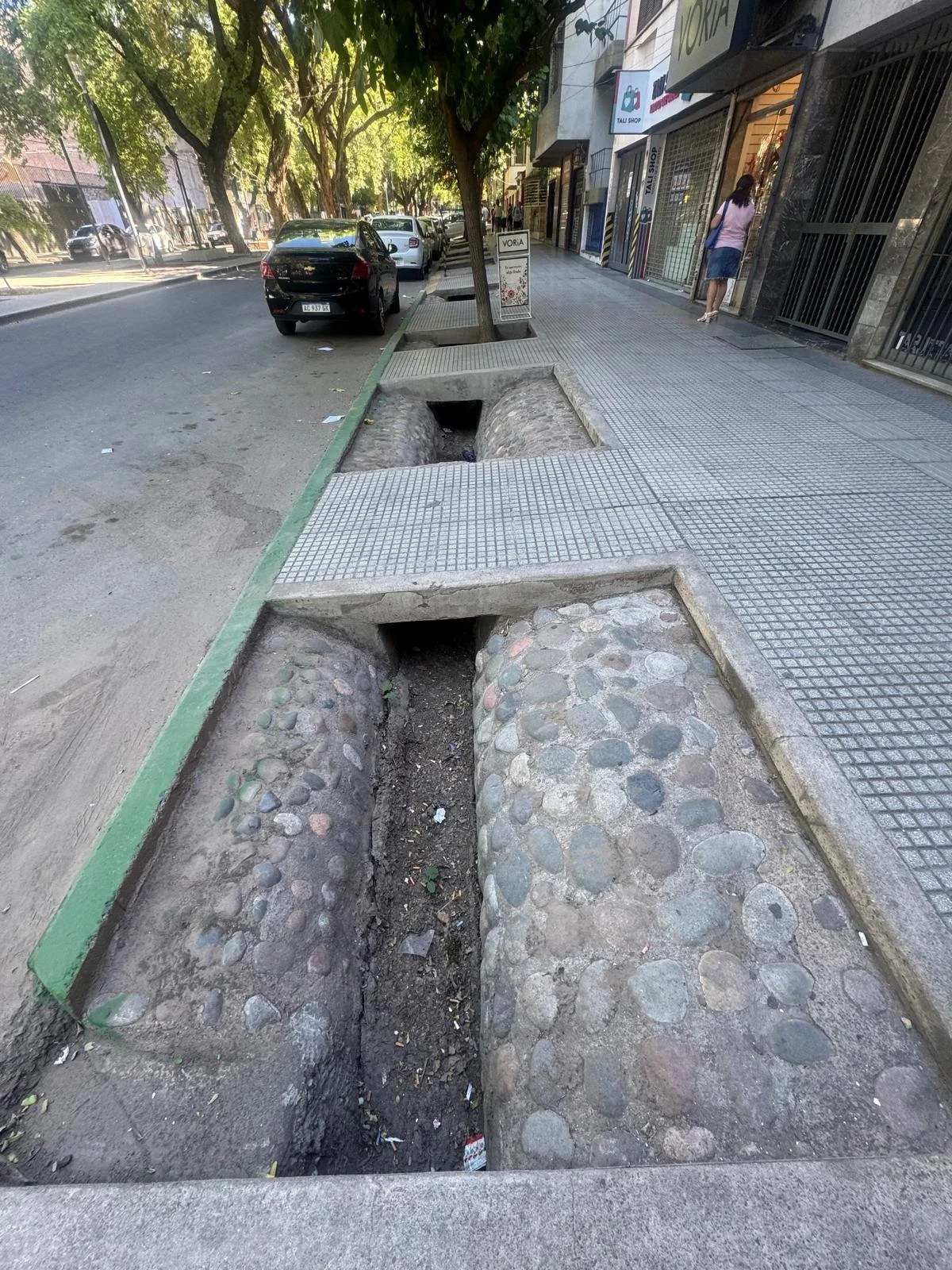
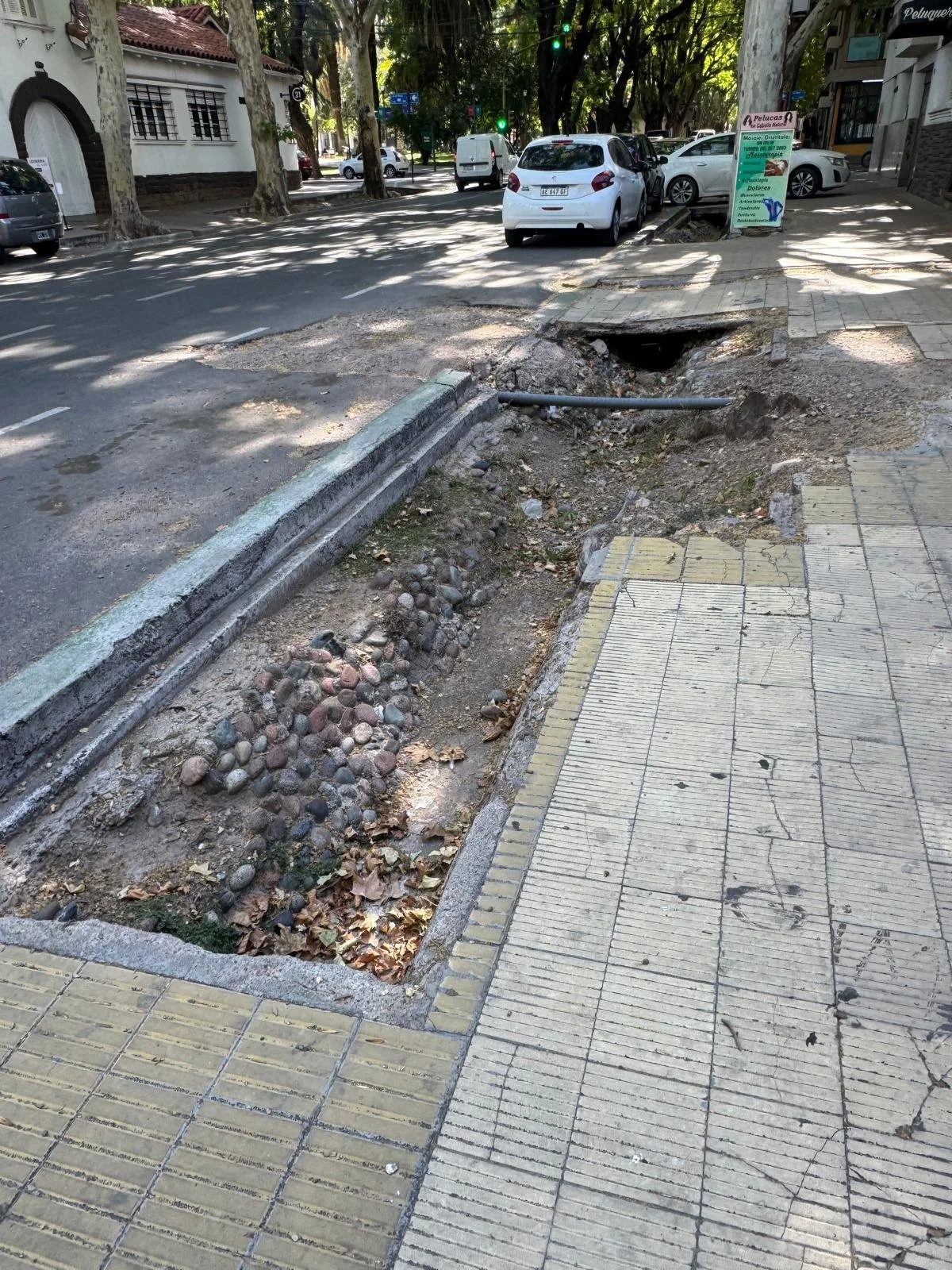
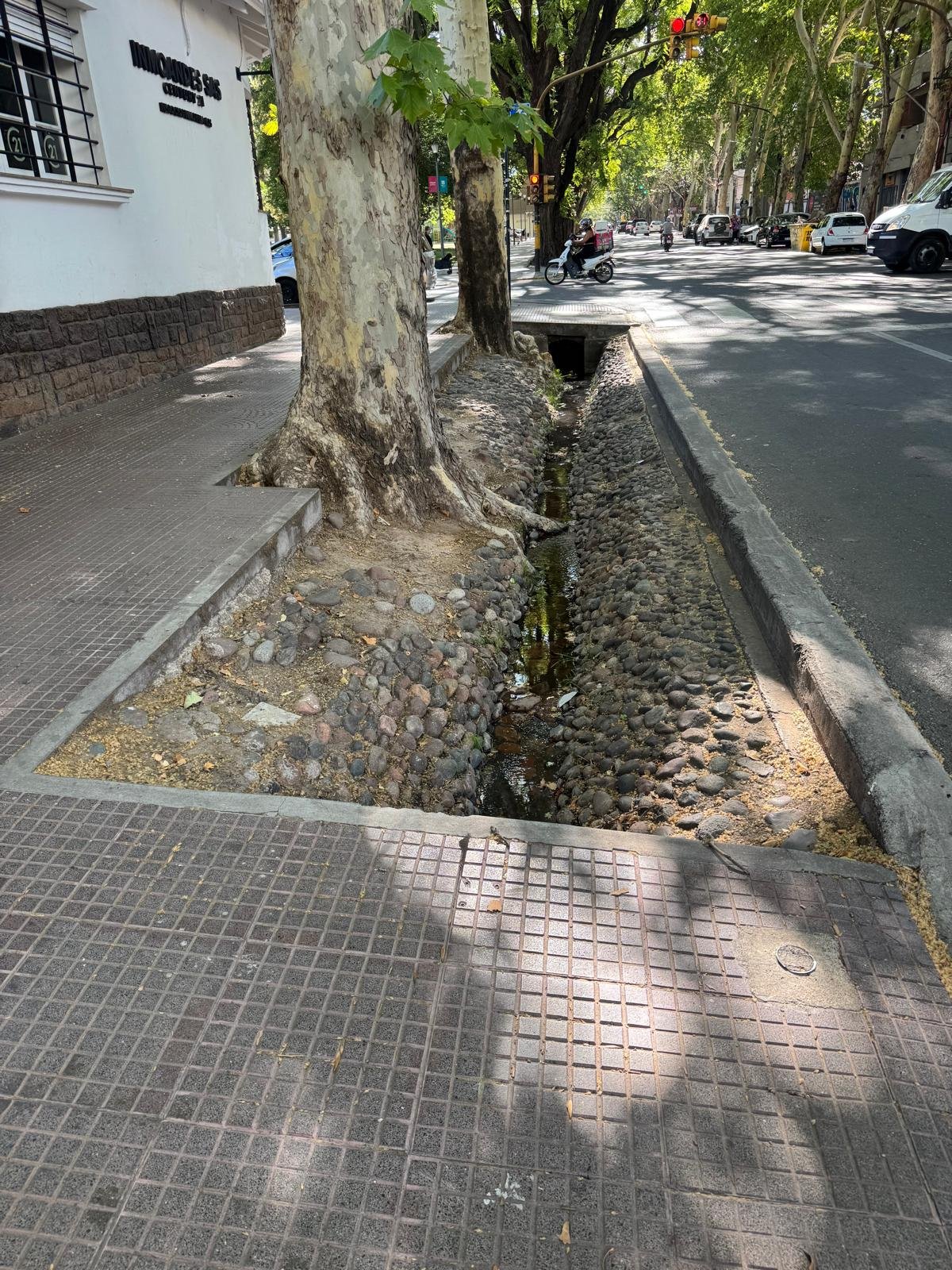
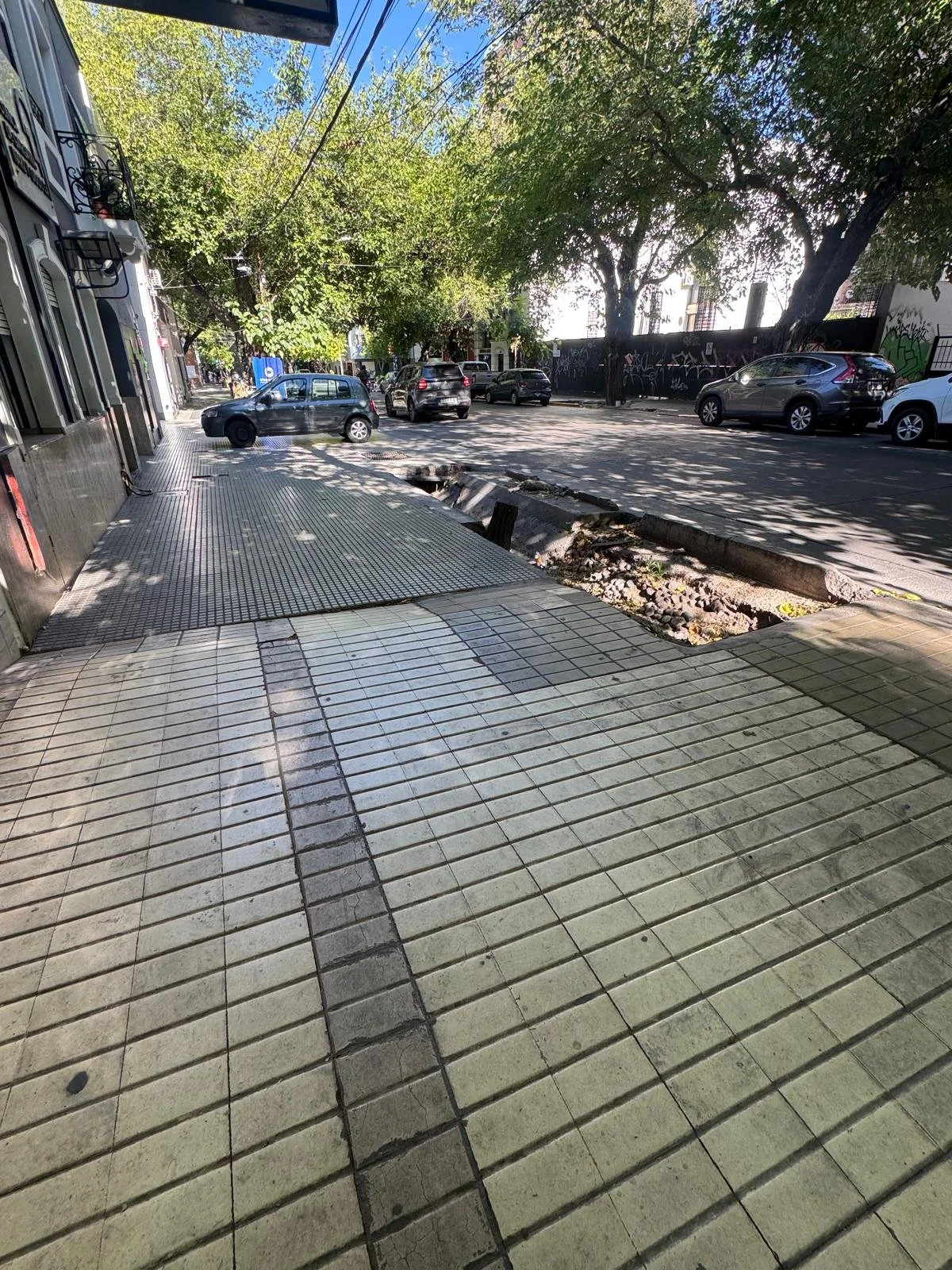
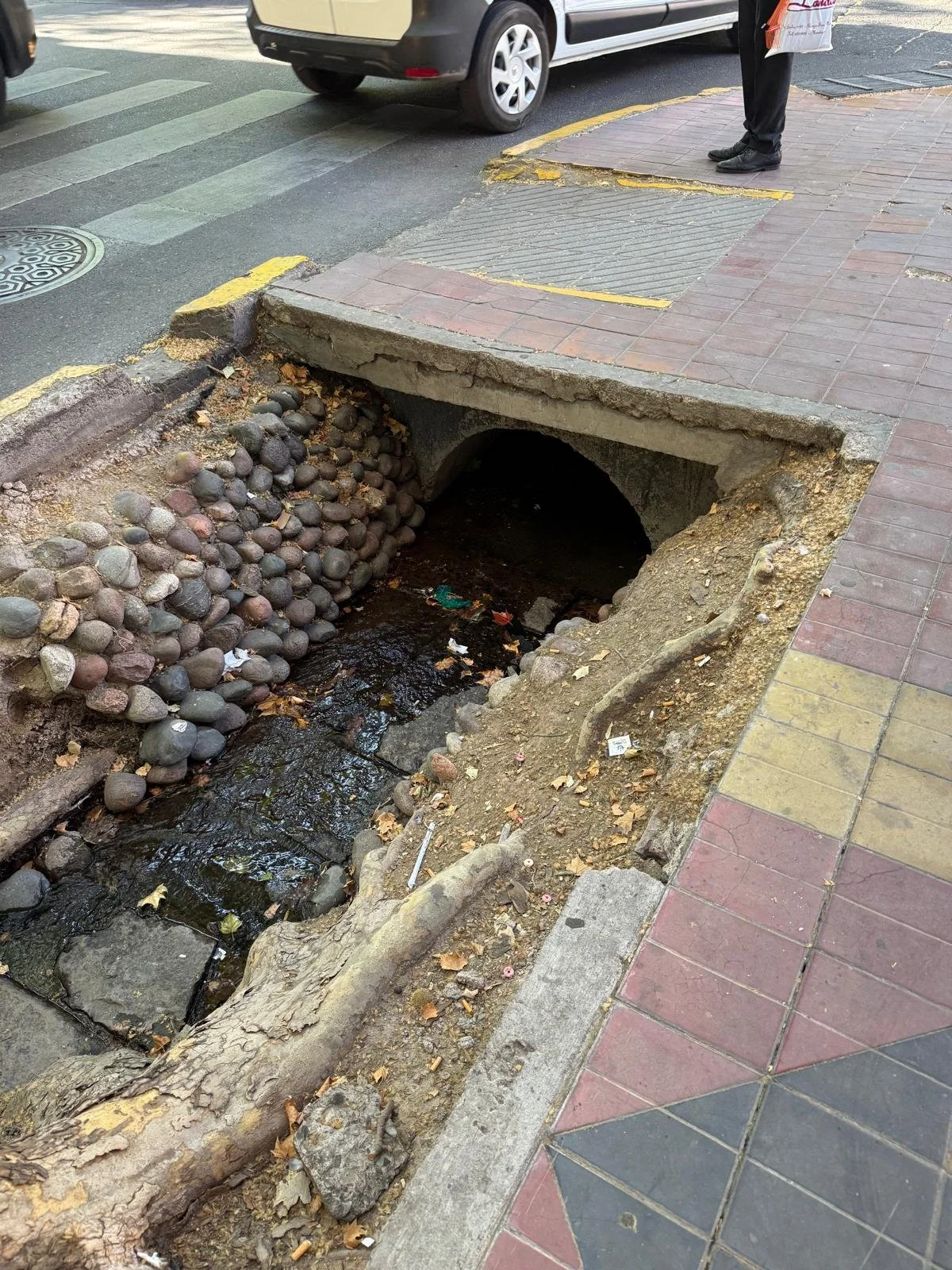
I can’t leave this blog without making mention of the enormous open culverts on the pavements in all of the streets in Mendoza – honestly, Geoff and I were terrified of stepping into one and breaking an ankle, they are huge obstacles – NZ Health and Safety would be all over this at home! We got to the stage we were walking really close to the left-hand side of all the pavements to avoid them. They serve a great purpose in draining all the water that comes down the Andes mountains and irrigating all the greenery, but by golly they were dangerous!
We’re back the Hotel Cumbres Lastarria tonight and will retrieve our suitcases – this is the first time I have been on holiday and intentionally left my luggage in another country!