Puerto Varas – The City of Roses
Tuesday 24 February
We had a lovely, much needed, easy day today. The last week has been really full on, we’ve stayed in three different cities and it’s all been awesome, but it’s also nice to now be able to unpack our suitcases and relax – and I don’t mind admitting that it’s also lovely to be waited on hand and foot with someone else doing all the organising for us!!! A highlight of today was the Trivia Quiz. Viking always put these on during “at sea” days, and we have always enjoyed them, being on the winning teams for both a Trivia Quiz and Music Quiz in the past. And what do you know – our first quiz up we teamed up with 4 fellow passengers, and the quiz theme was sailing! Needless to say, with Geoff at the helm (excuse the pun) we sailed through it (excuse the pun again!) and won. Mind you it wouldn’t have been a good look if we hadn’t done – Geoff being the only person in the room having sailed around the world in a 14m catamaran! Mimosas all round and we high-fived ourselves off to lunch feeling very pleased with our efforts!
Wednesday 25 February
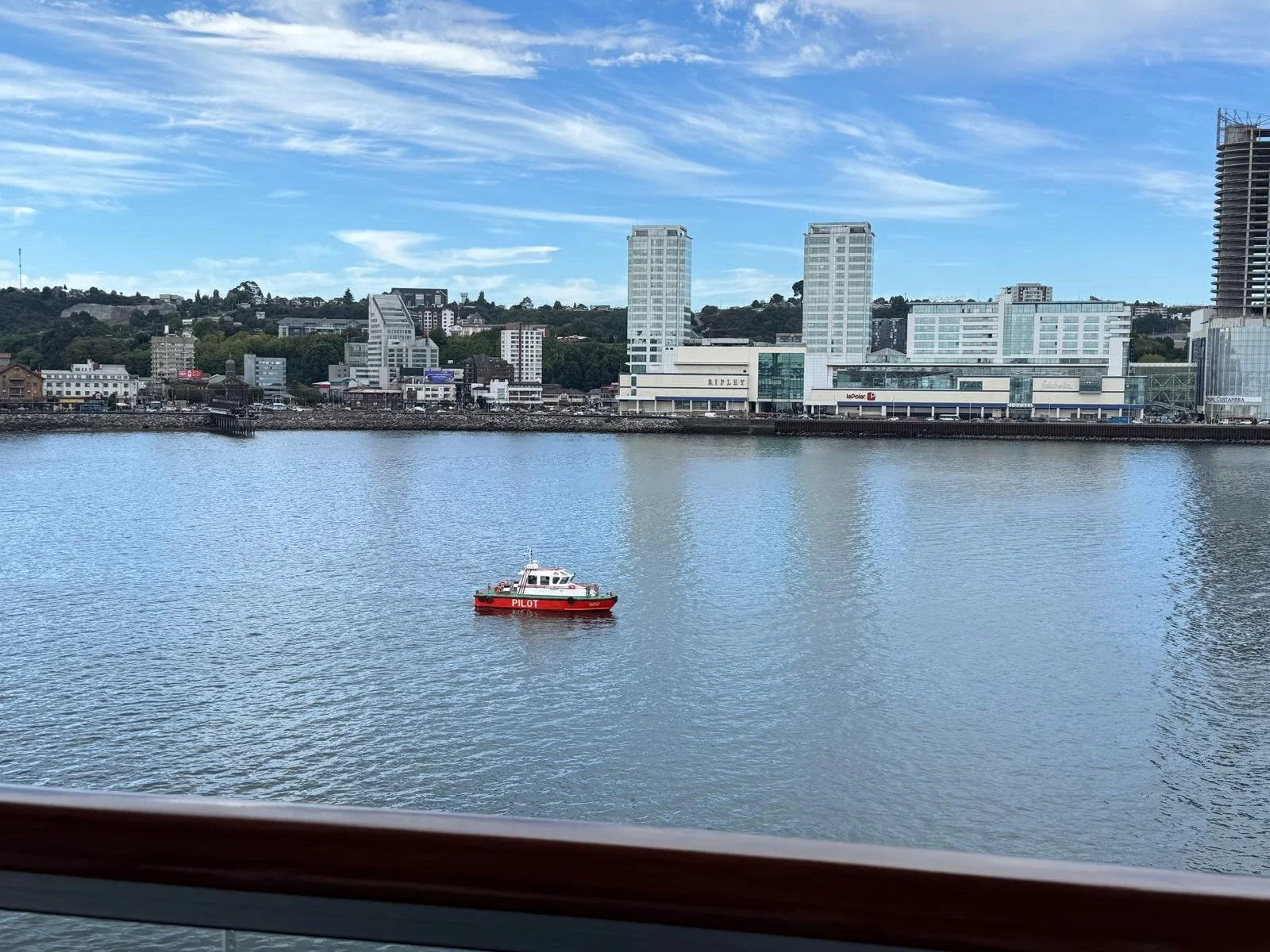
Bang on schedule at 8.30am we anchored in Puerto Montt, considered the capital of the nation’s Northern Patagonia province. The city was founded, and named after the President of Chile, Manuel Montt, in 1853 after government-sponsored immigration brought Germans here to populate and develop the remote region. By 1912 a train linked Puerto Montt to Santiago, opening up trade and transport with larger cities which bolstered the economy.
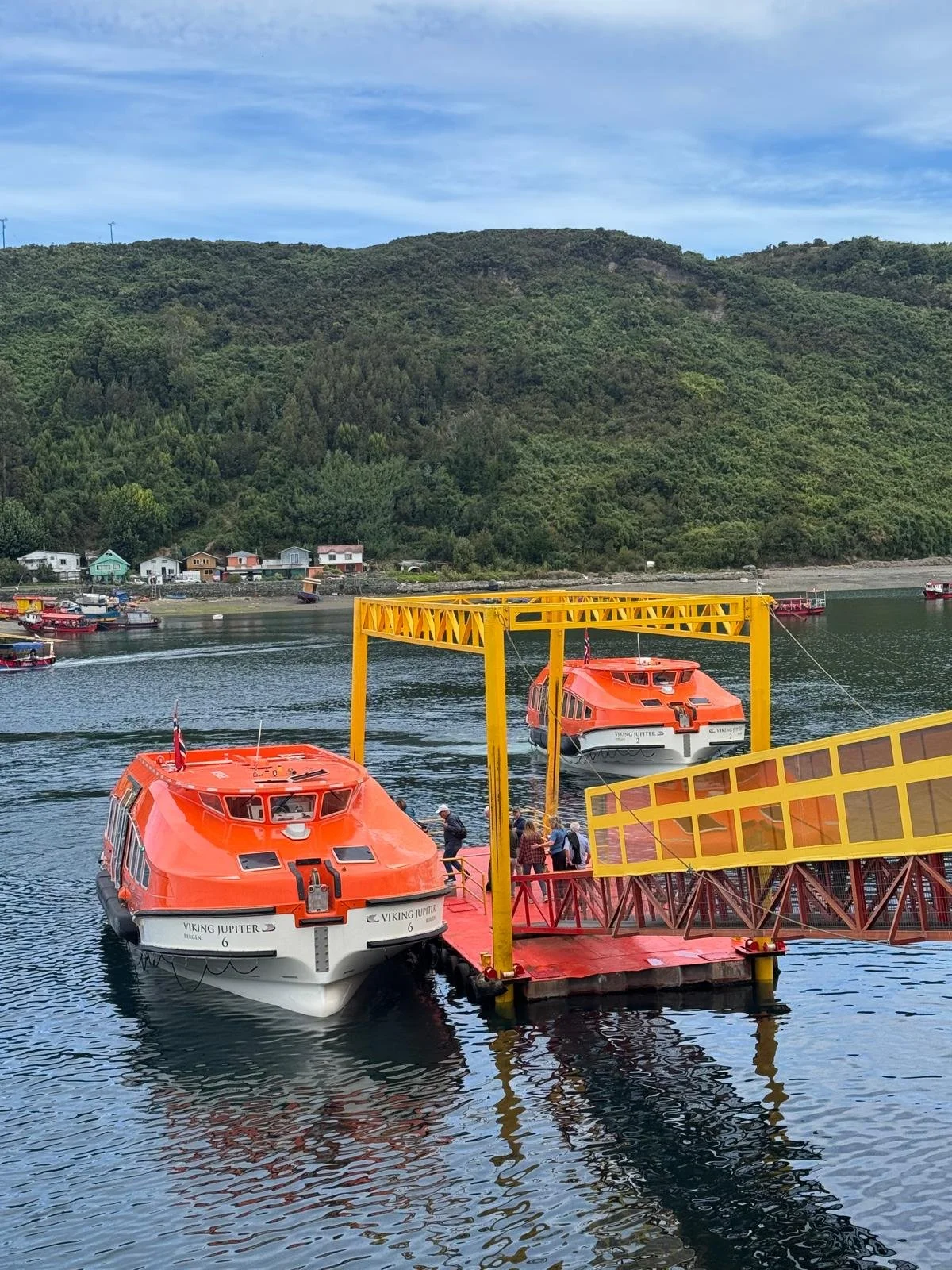
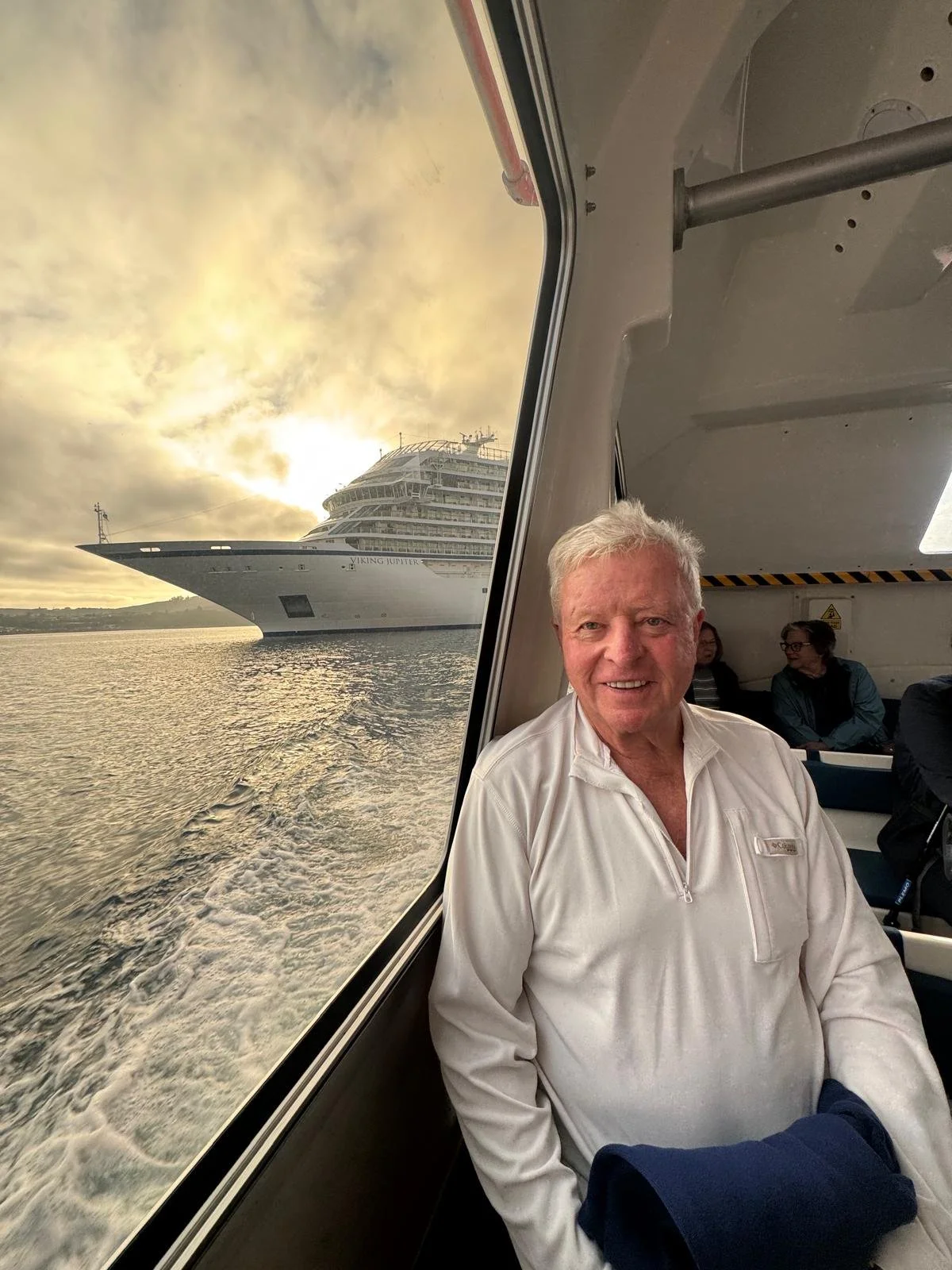
We anchored in Seno de Reloncaví (Reloncaví Sound) and were taken by tender to a dock in the Puerto Angelmo fishing cove for our tour today, which by-passed Puerto Montt and took us to Puerto Varas instead. 22kms north of Puerto Montt it was created from the German colonisation of the beautiful Llanquihue Lake basin and is also known as the City of Roses. The location of Puerto Varas is very close to mountains, lakes, forests and national parks, and serves as the gateway to the Chilean Patagonia. Our guide, Gabriel, was quick to tell us how lucky we were to be blessed with such a stunningly, beautiful, sunny day. Apparently, it rains 200 days a year in Puerto Varas and with so much cloud, he said the people get quite depressed!
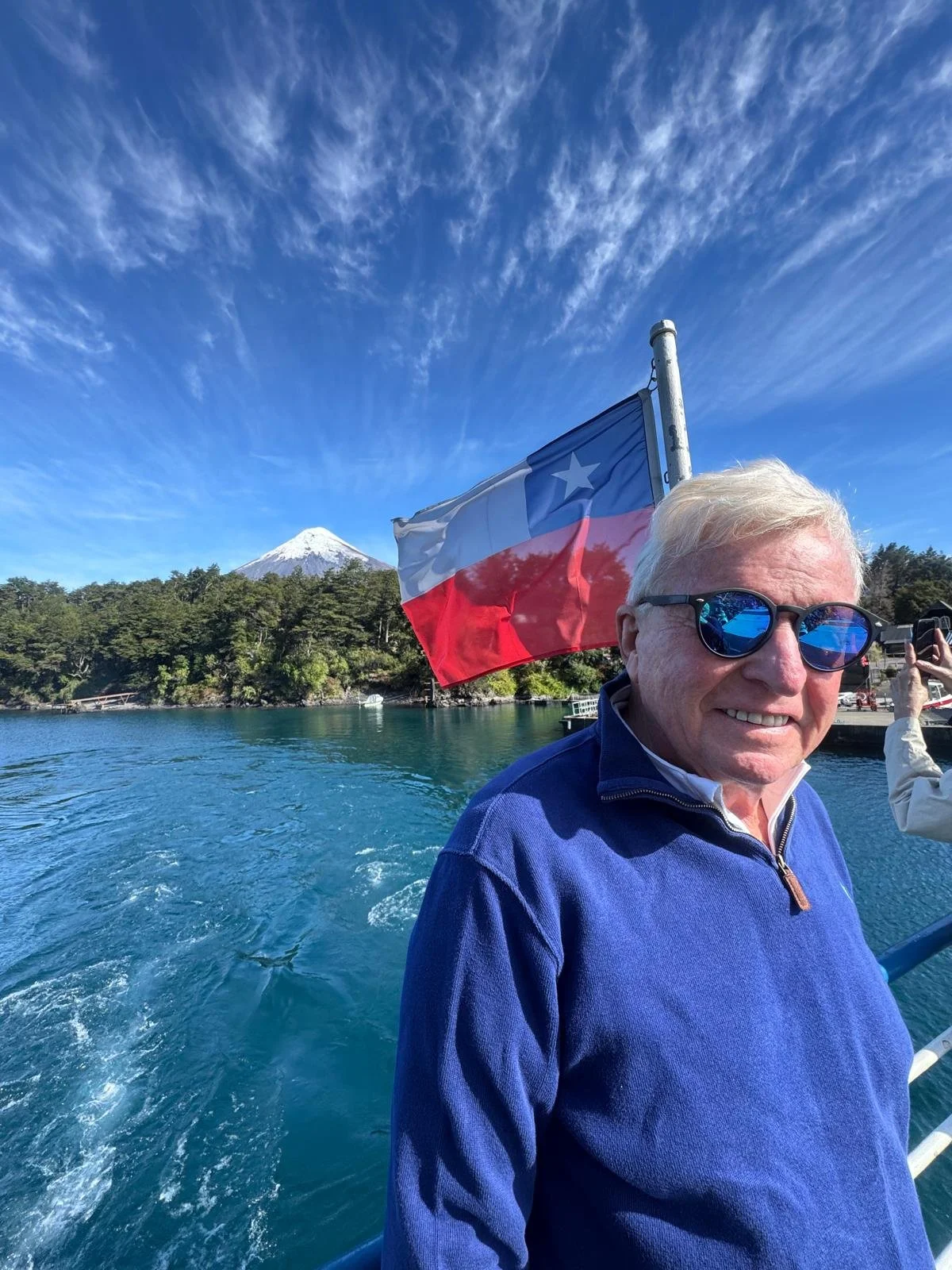
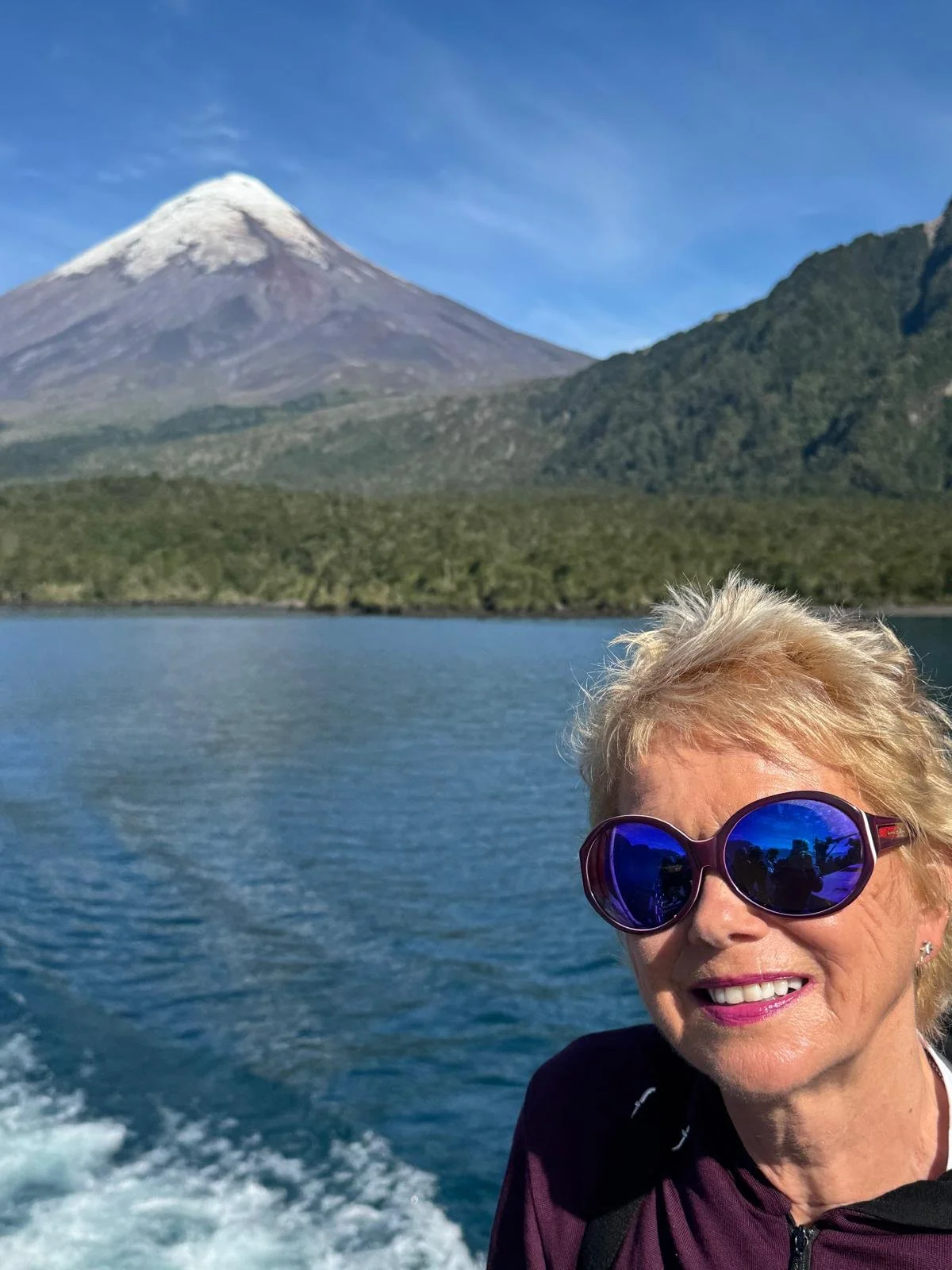
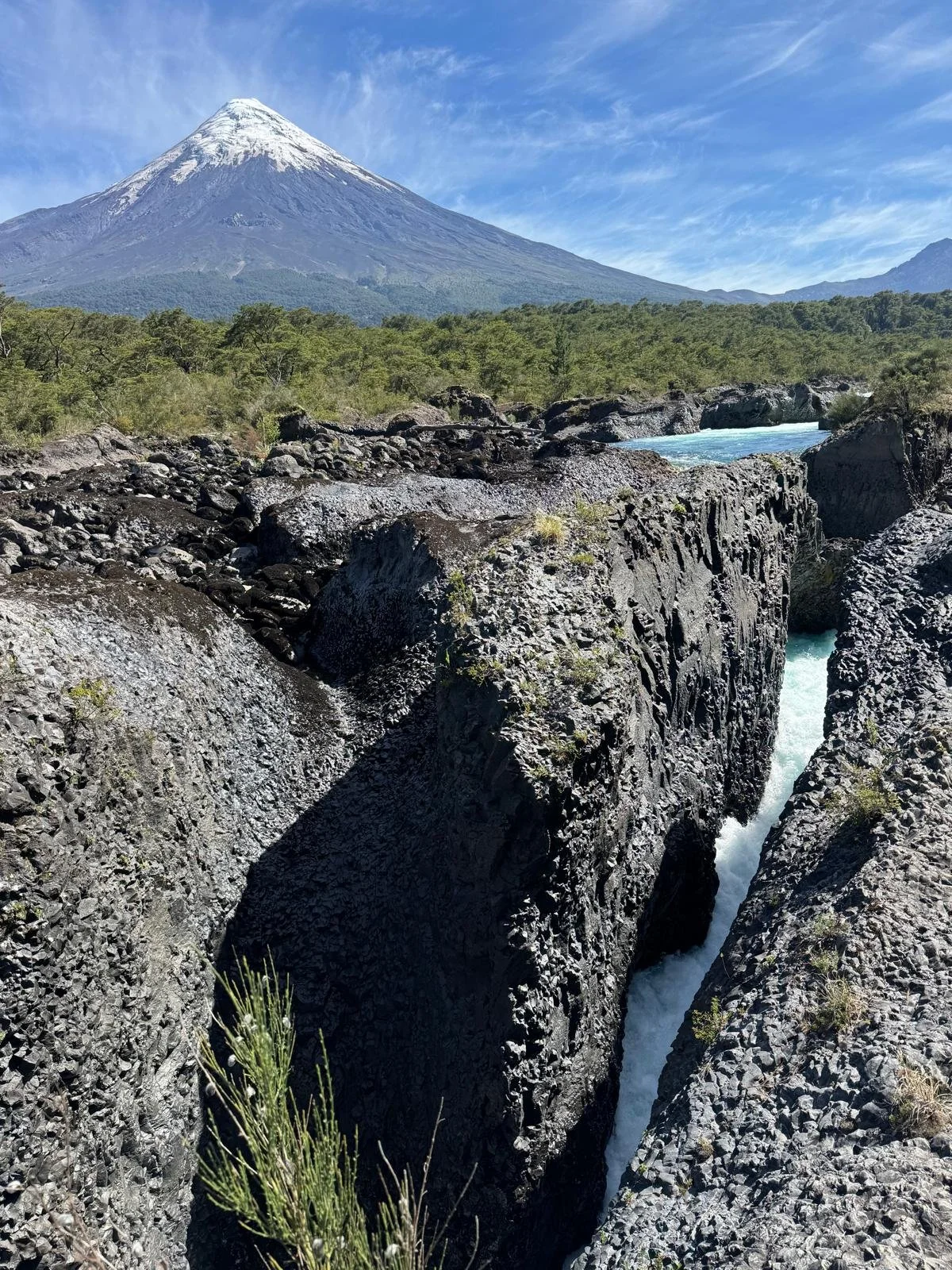
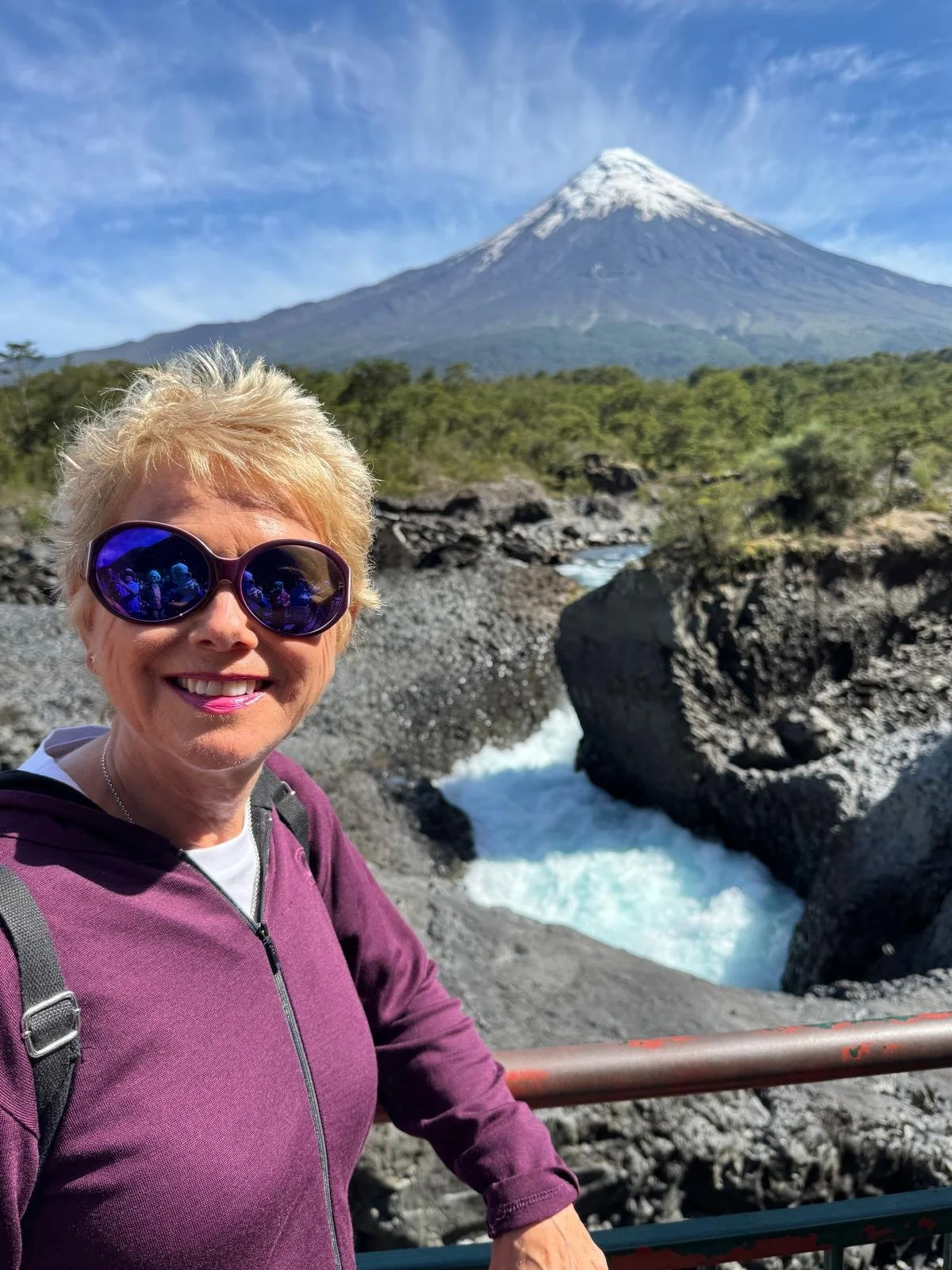
We drove through the Vicente Pérez Rosales National Park which is the oldest national park in Chile and is famous for the Petrohué Falls, and Todos los Santos Lake, with the stunning backdrop of the Osorno volcano looming over us from the other side of Llanquihue Lake. With its towering snow-capped peak, it stands at 2,652 metres tall and although it is considered an active volcano, it last erupted in 1869 , so nothing to be too worried about then! It was quite a sight, and we were able to get some great photos of it from different viewpoints
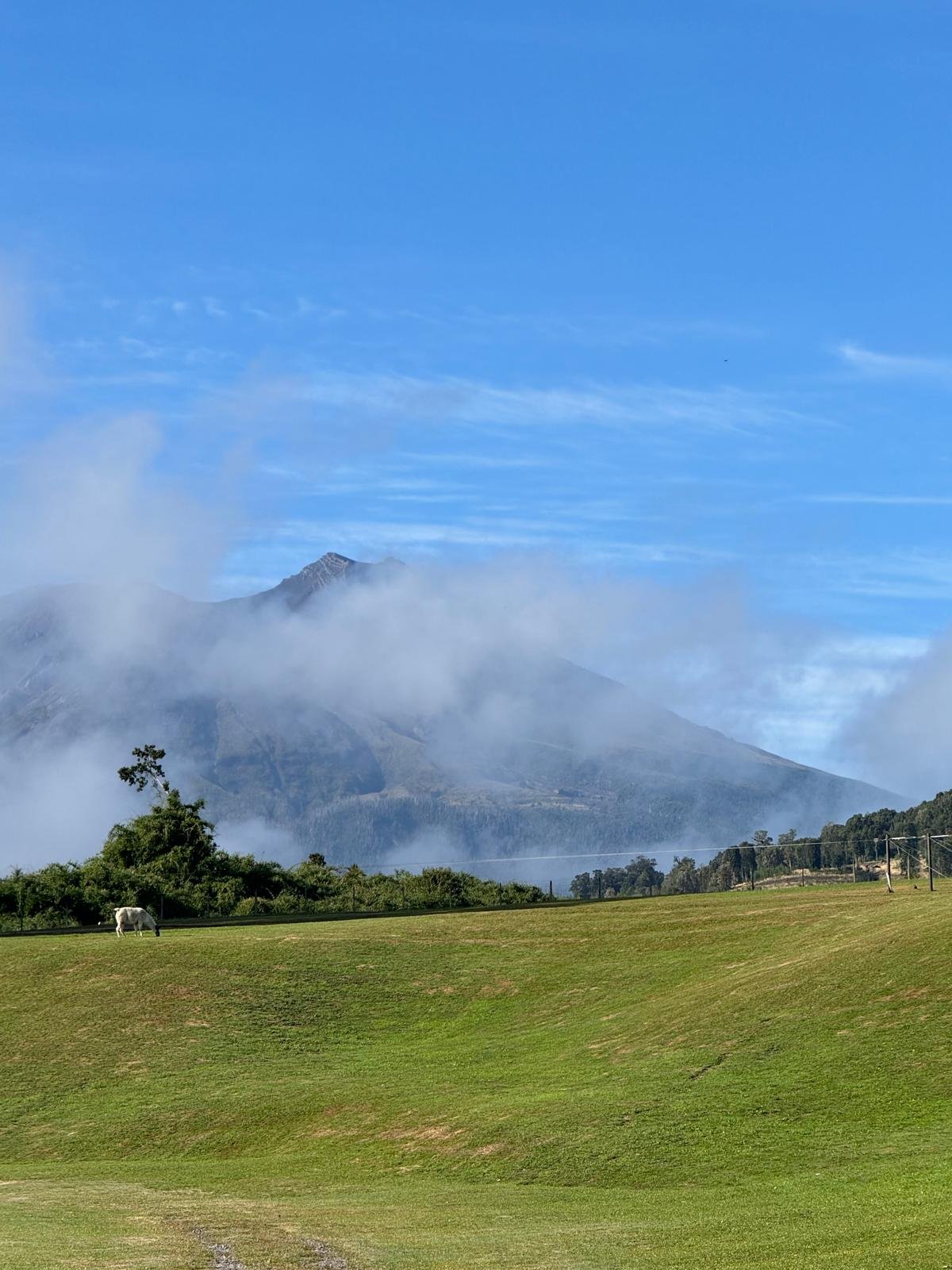
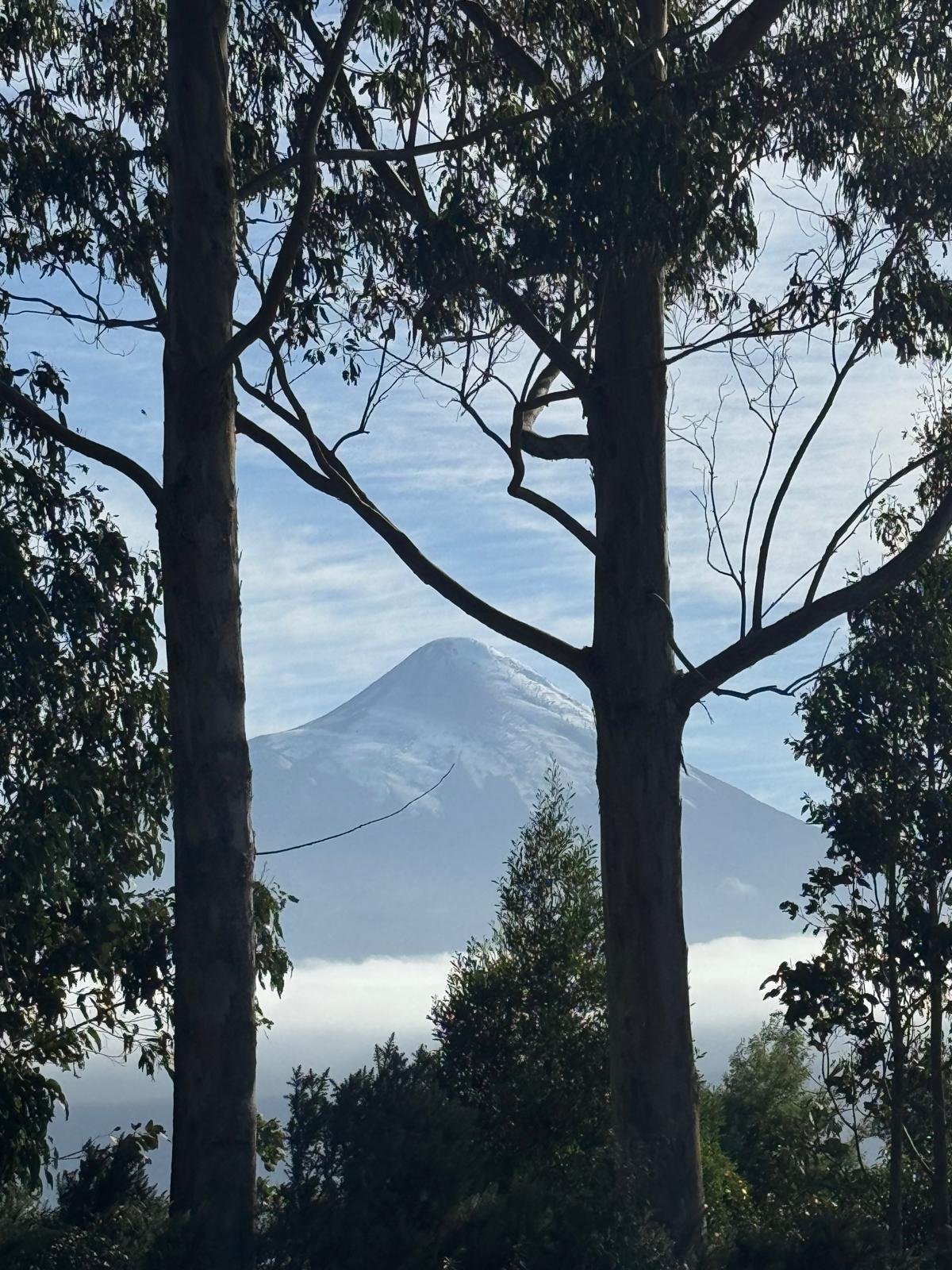
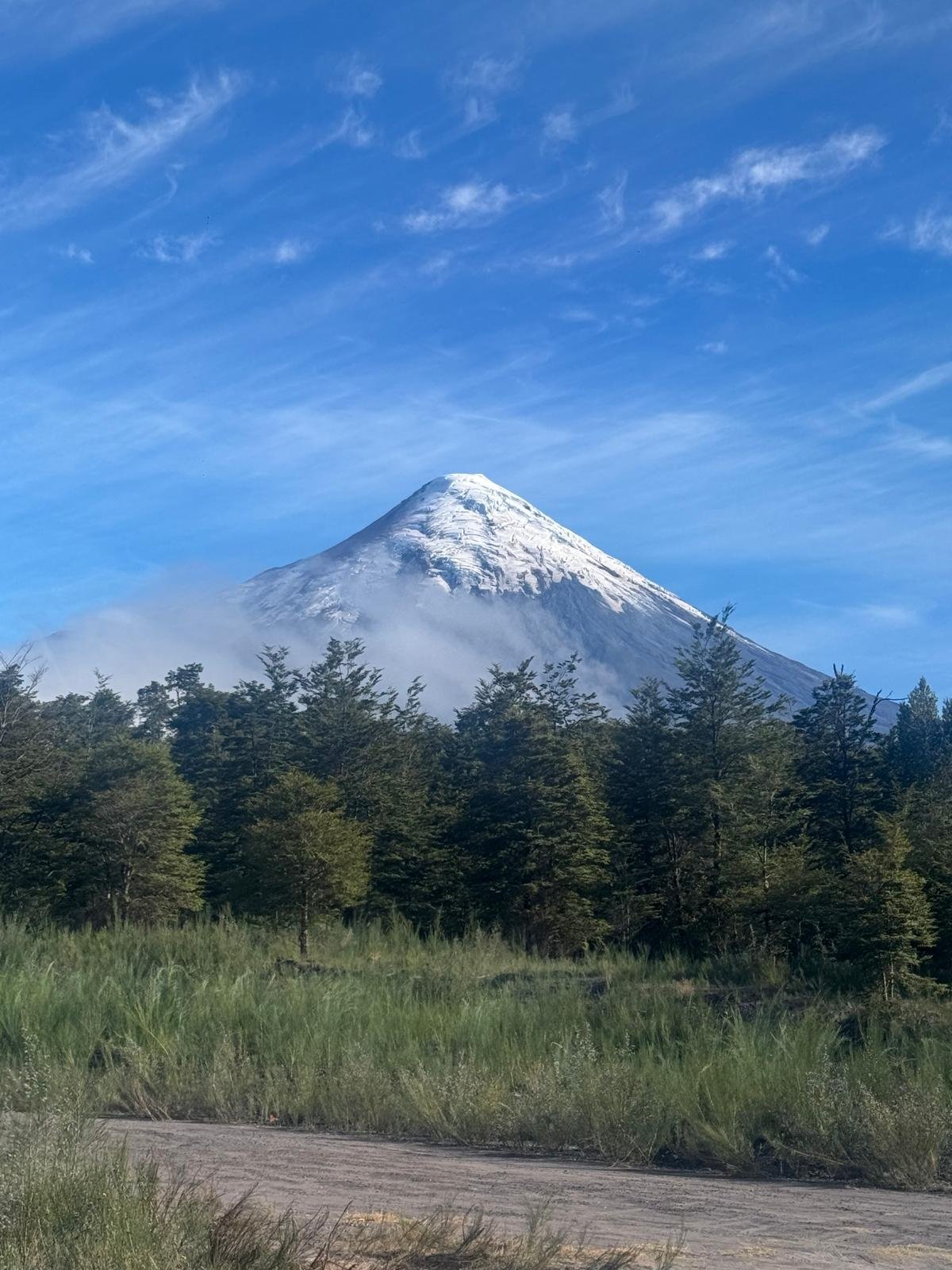
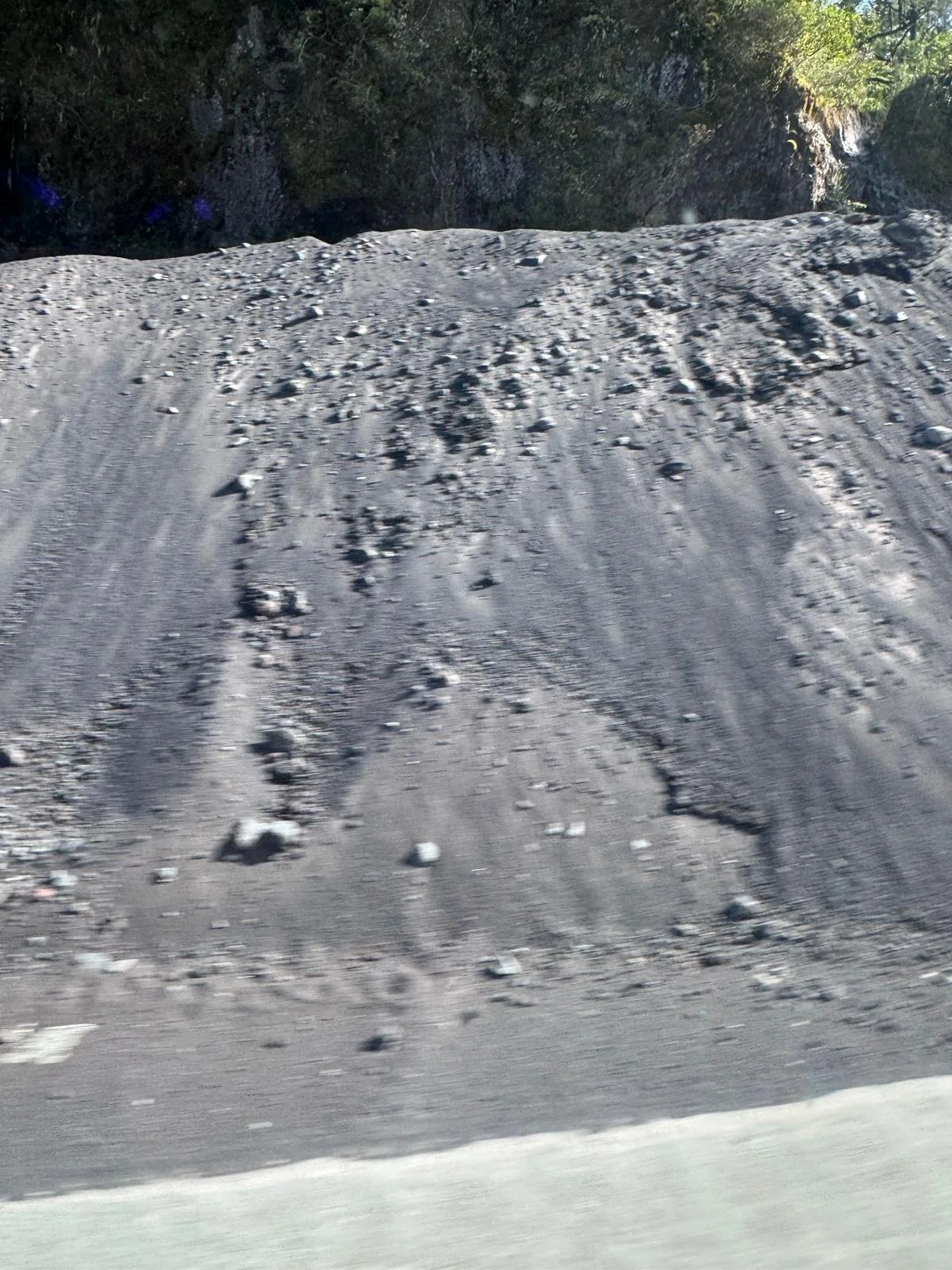
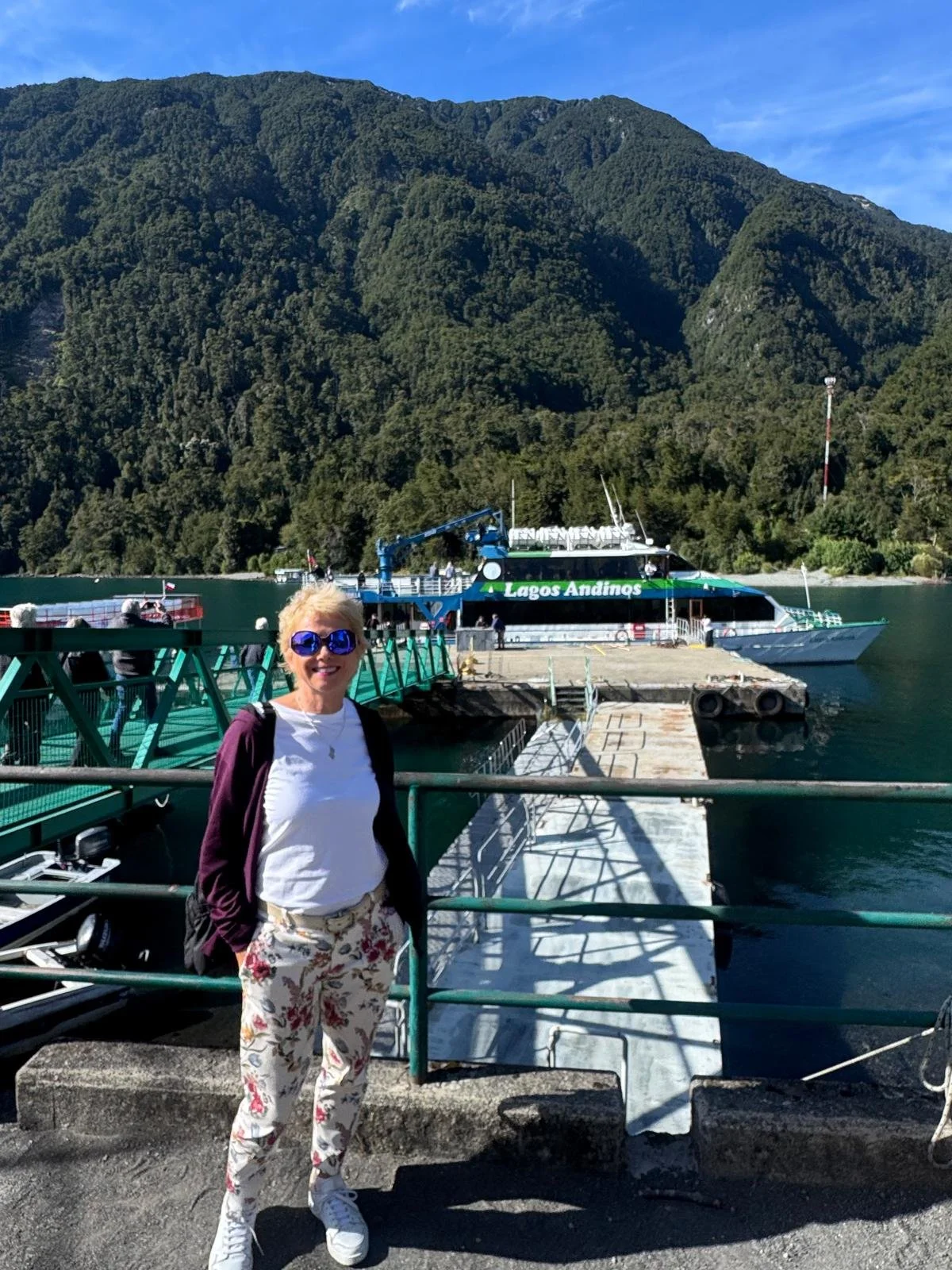
First stop was Todos Los Santos Lake (All Saints Lake), also known as the Emerald Lake (no guesses as to why!), it’s a glacial lake whose intense emerald colour is created by sunlight reflecting off glacial silt suspended in the water. Off the bus and down the ramp and onto another boat, this time a little smaller than the ship, we were treated to a lovely motor sail around the lake in the sunshine with its beautiful native greenery and mountains. Our fellow passengers were blown away by the scenery. Geoff and I not so much. It made us thankful that we are fortunate enough to have similar stunning scenery in New Zealand. For us it was like cruising across Lake Wakatipu in Queenstown, and our sail down to Milford and Doubtful Sounds during our circumnavigation of New Zealand last year. Nevertheless, it still made for a delightful, peaceful start to our morning.
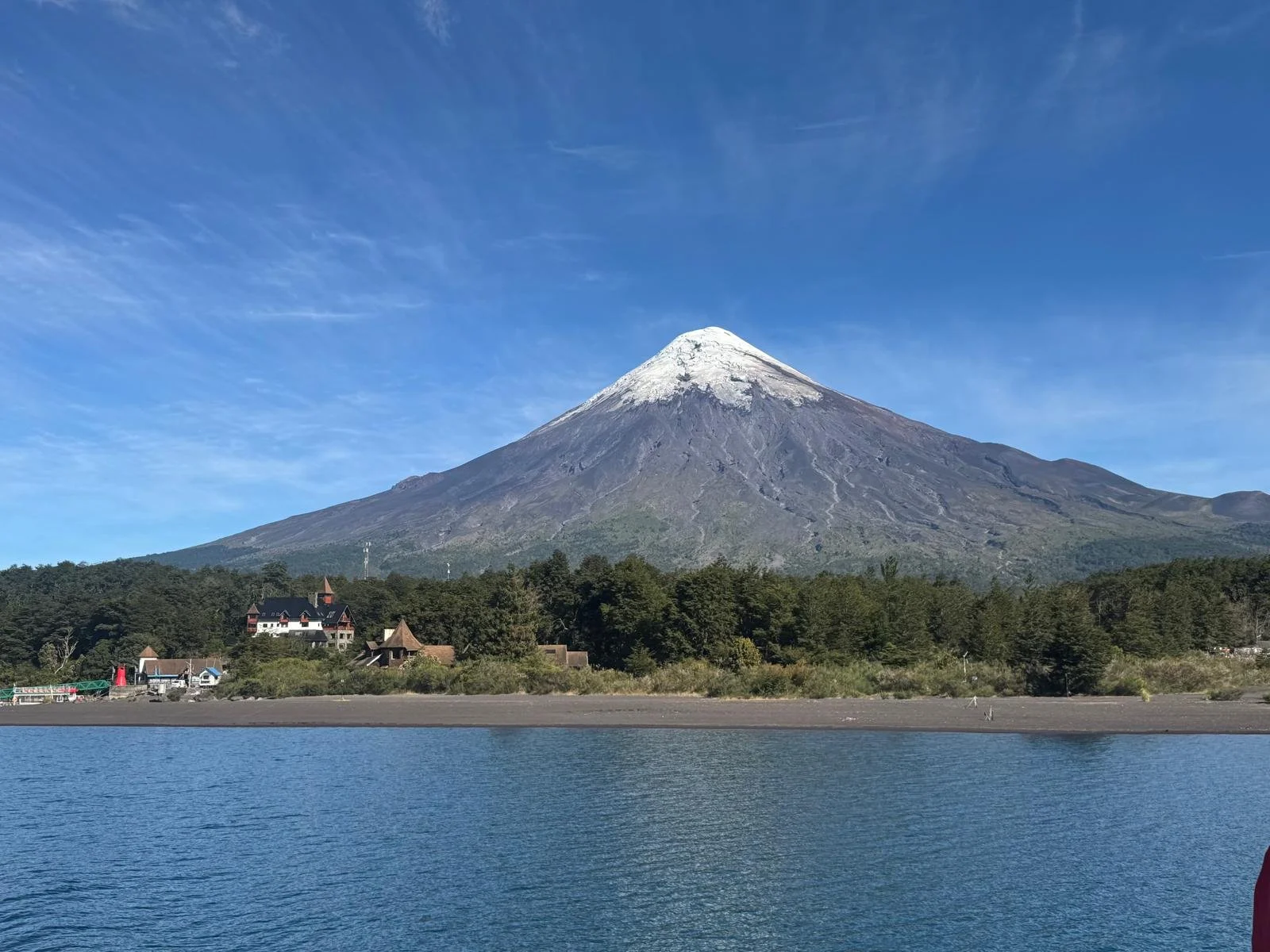
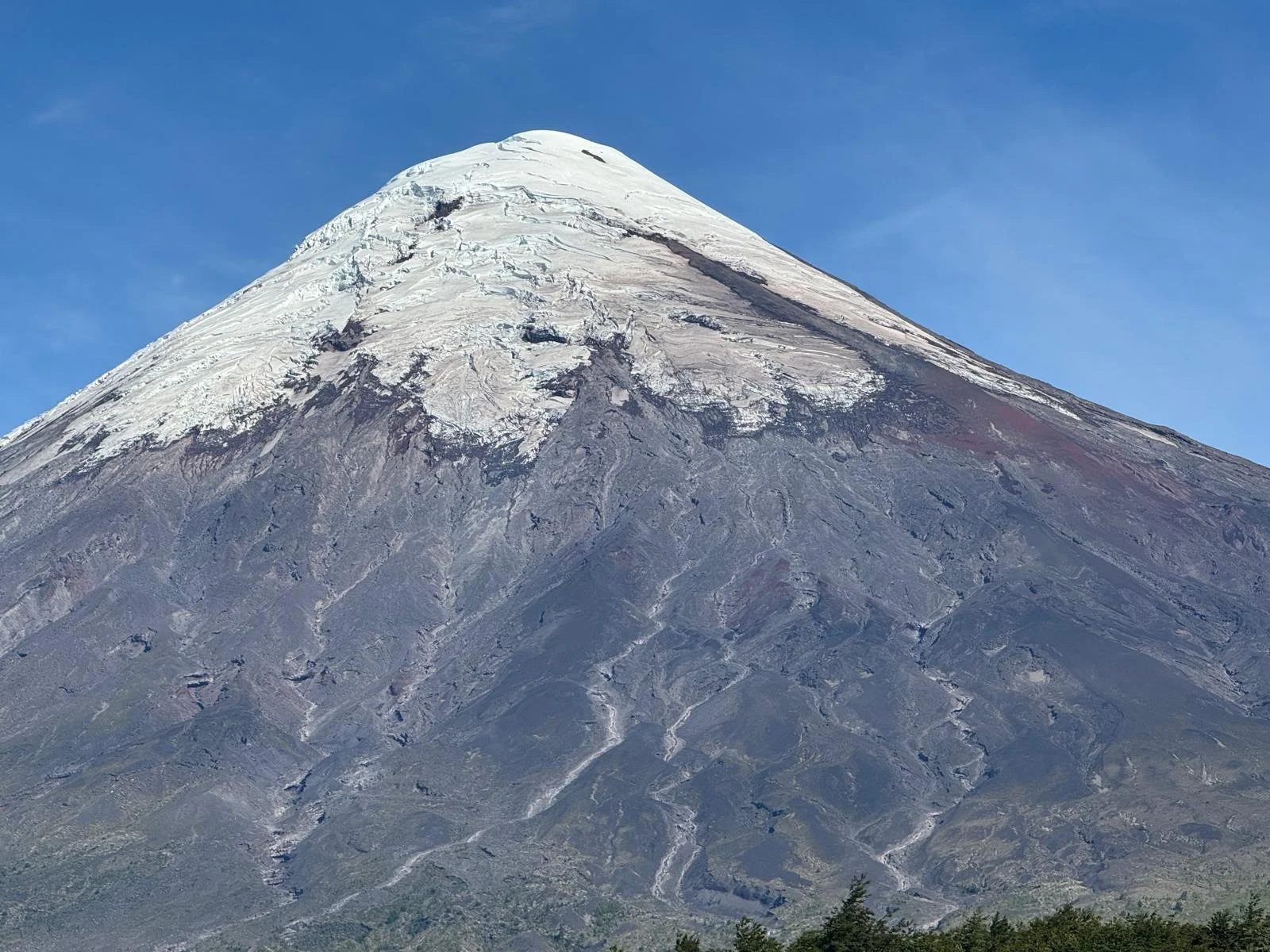
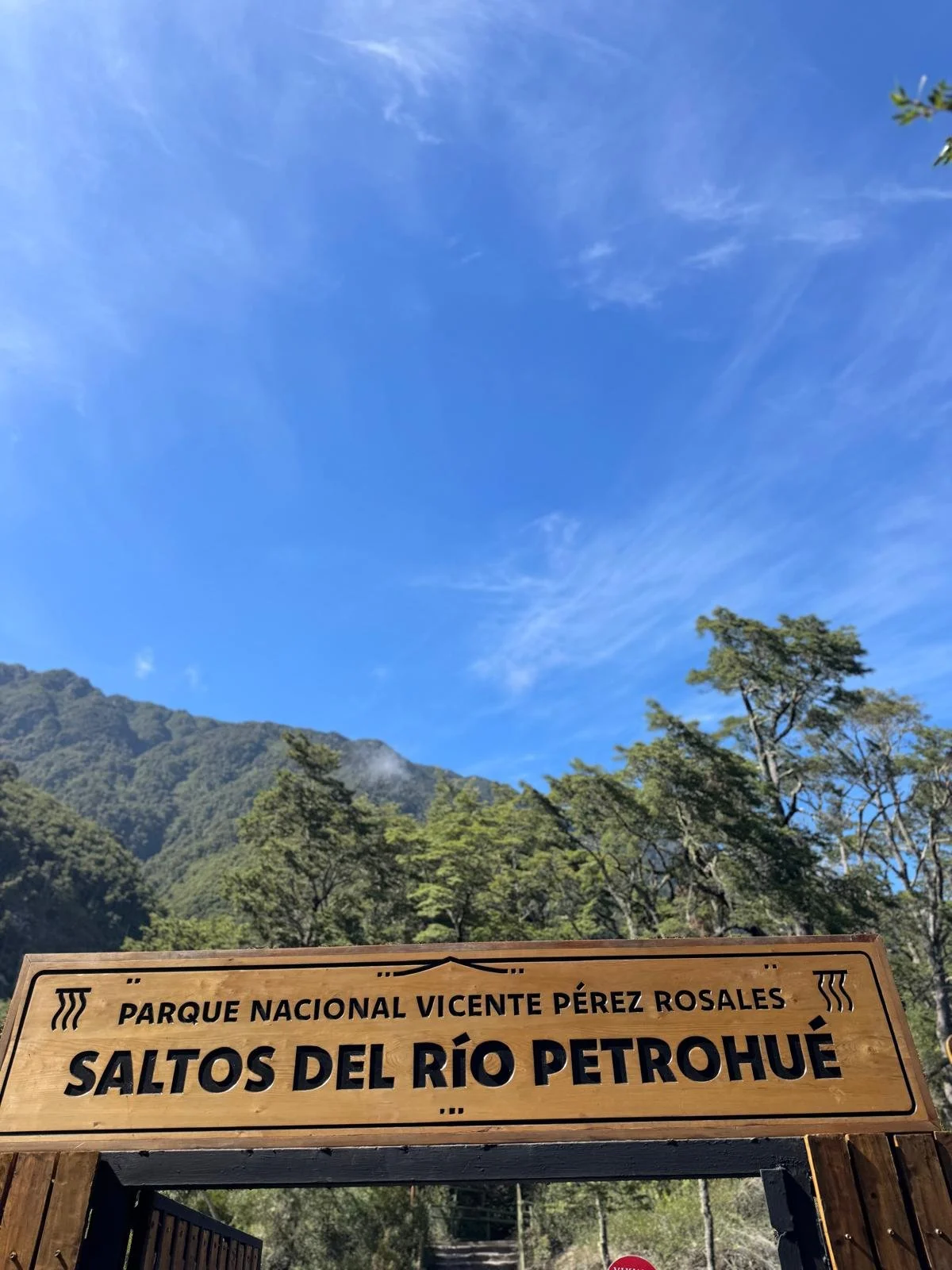
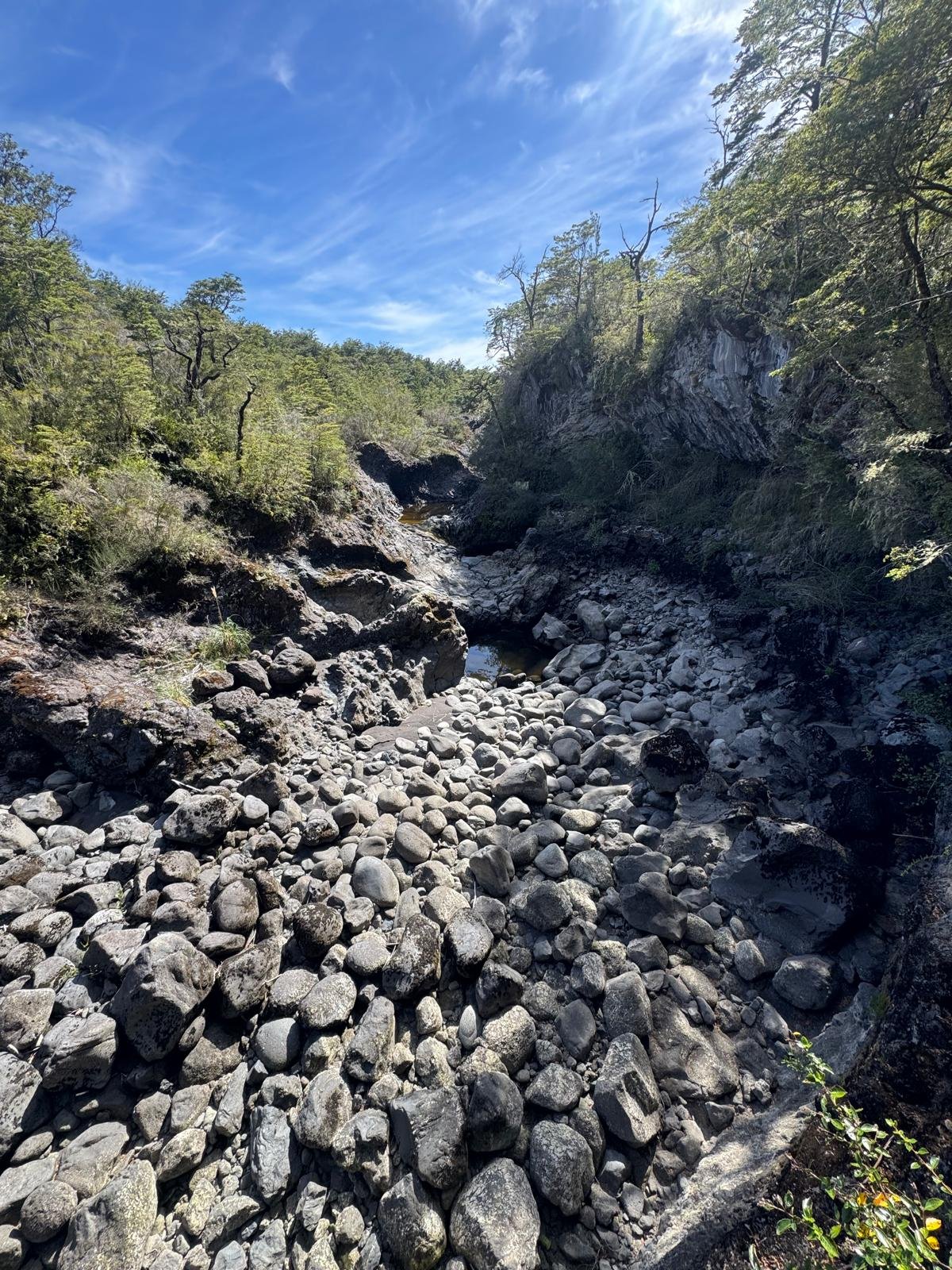
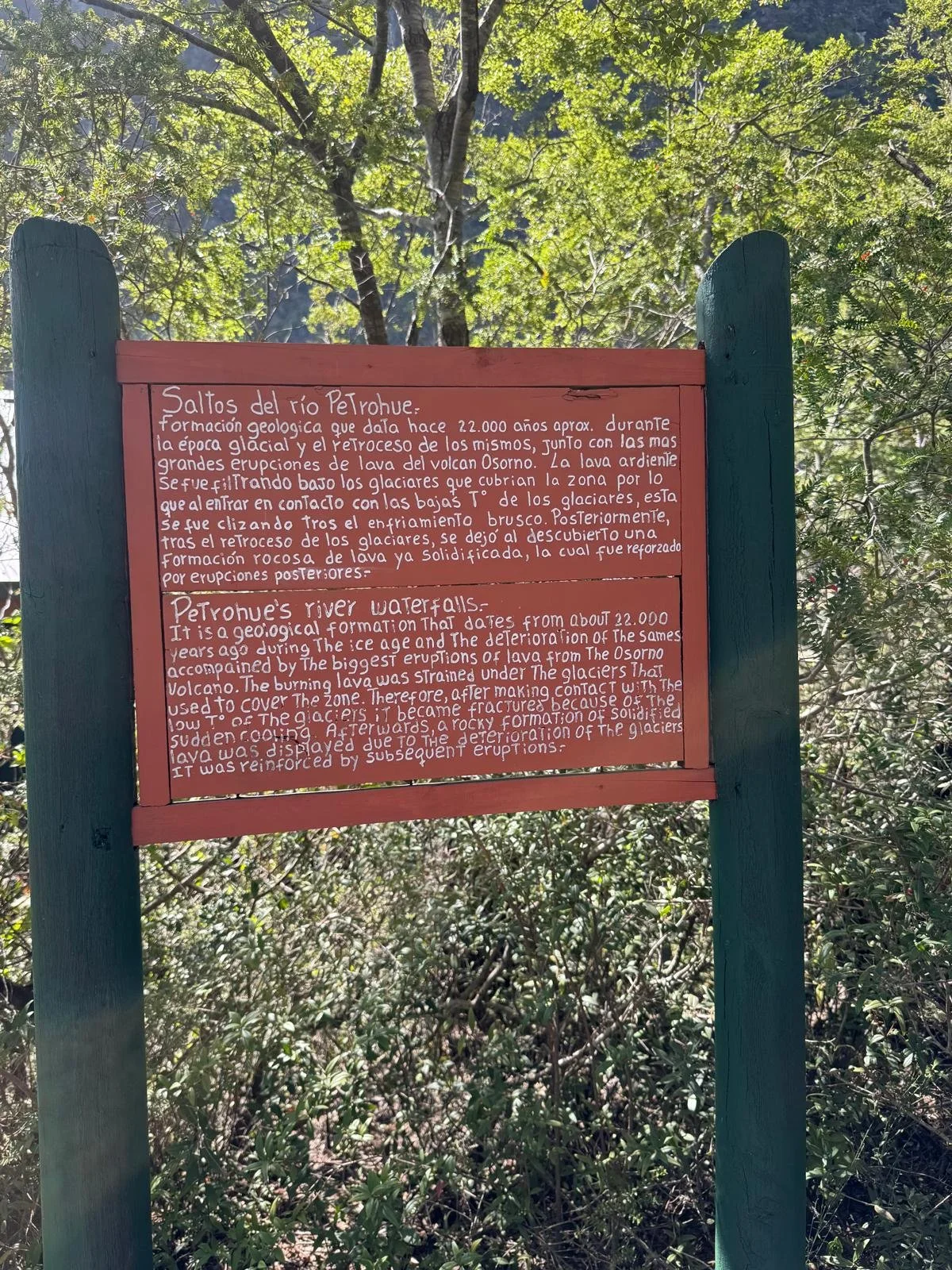
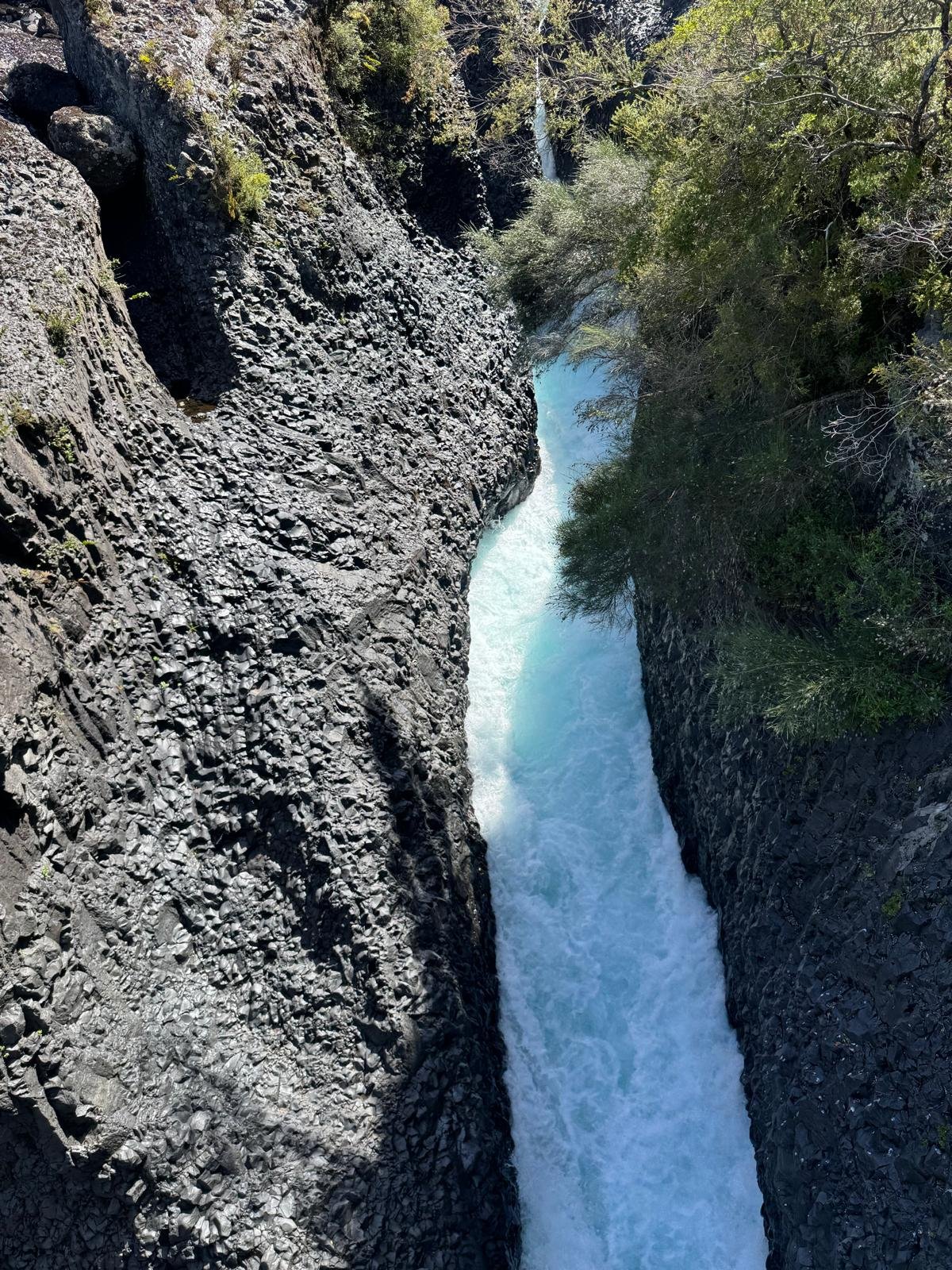
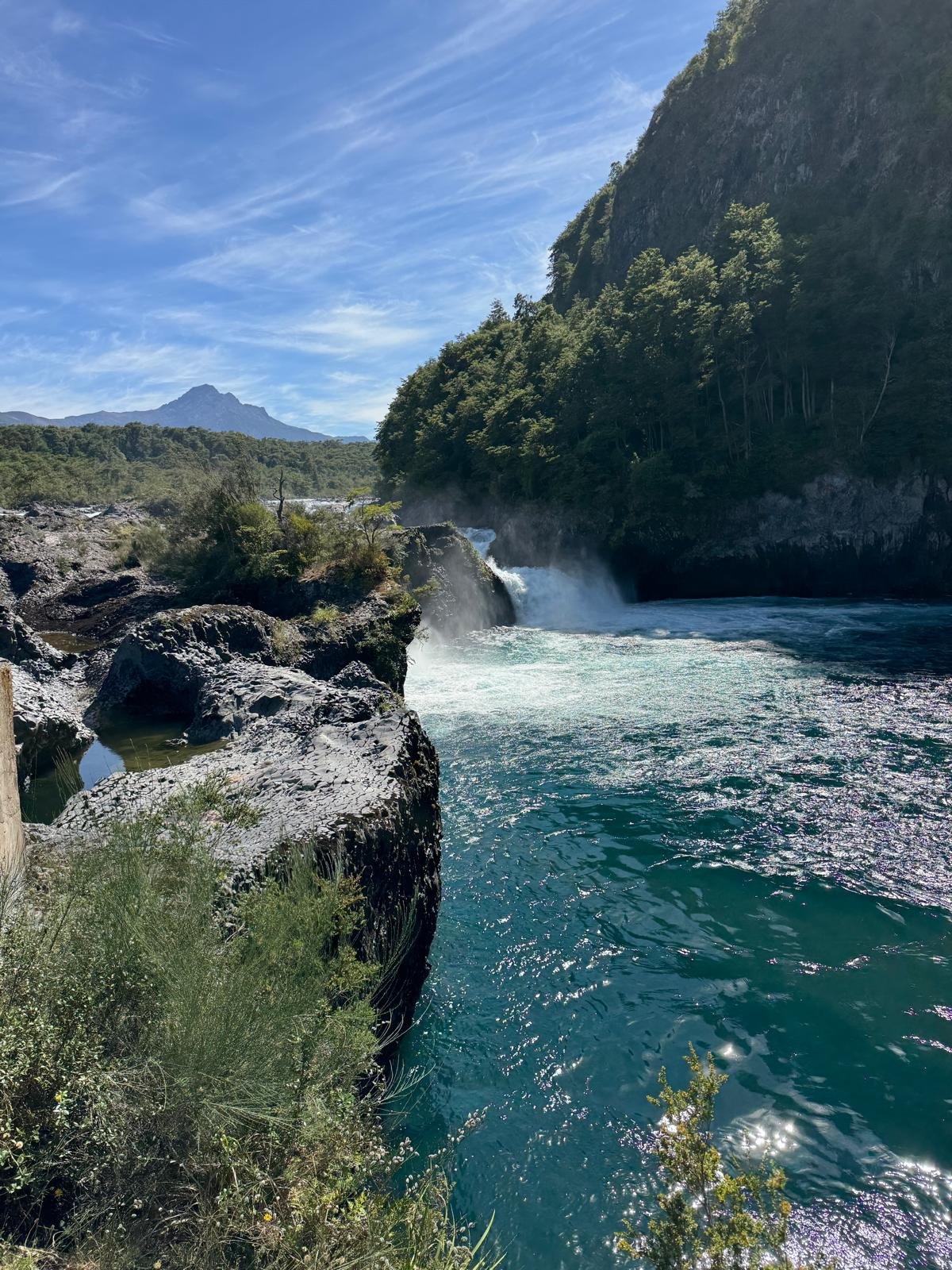
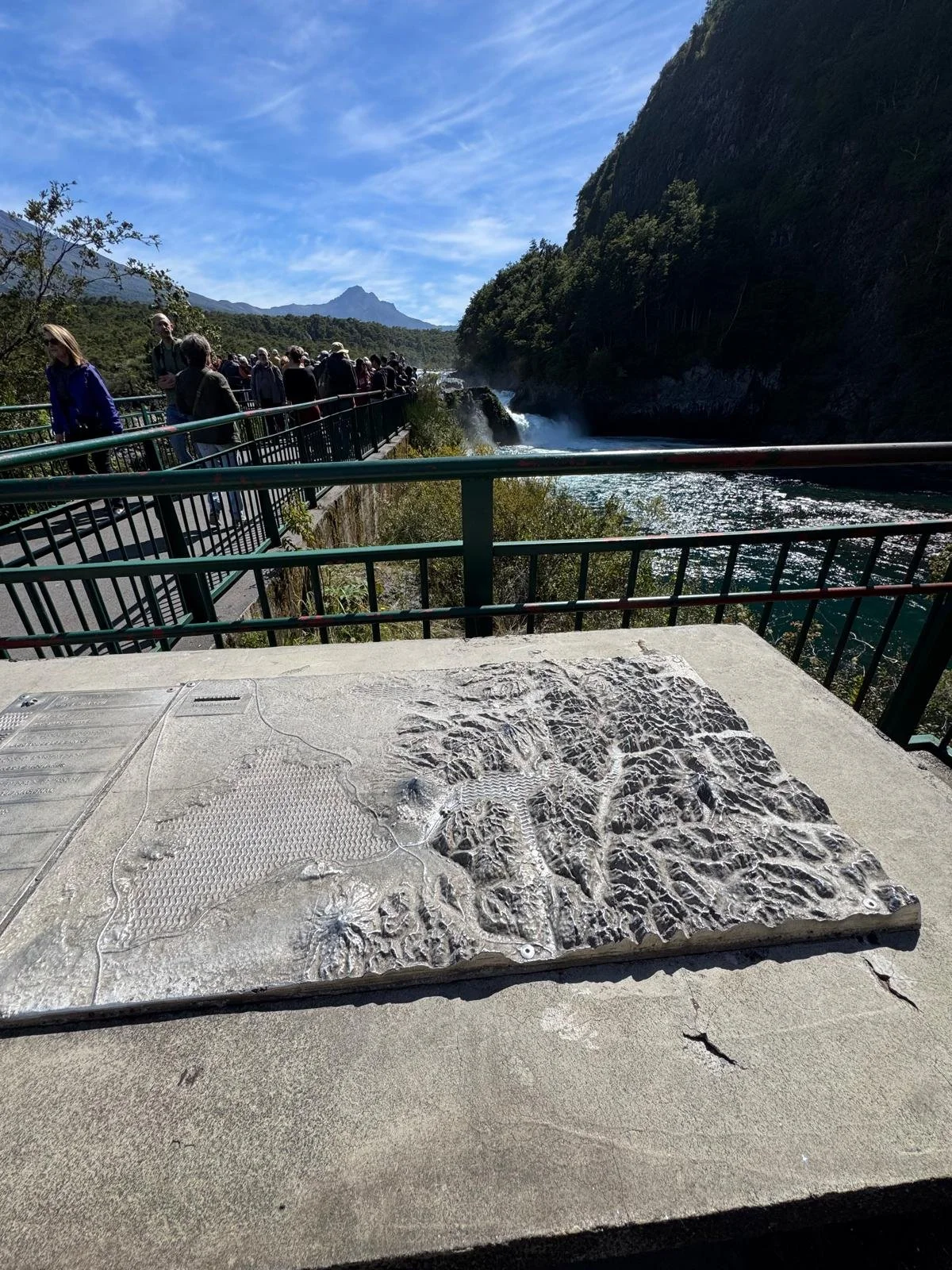
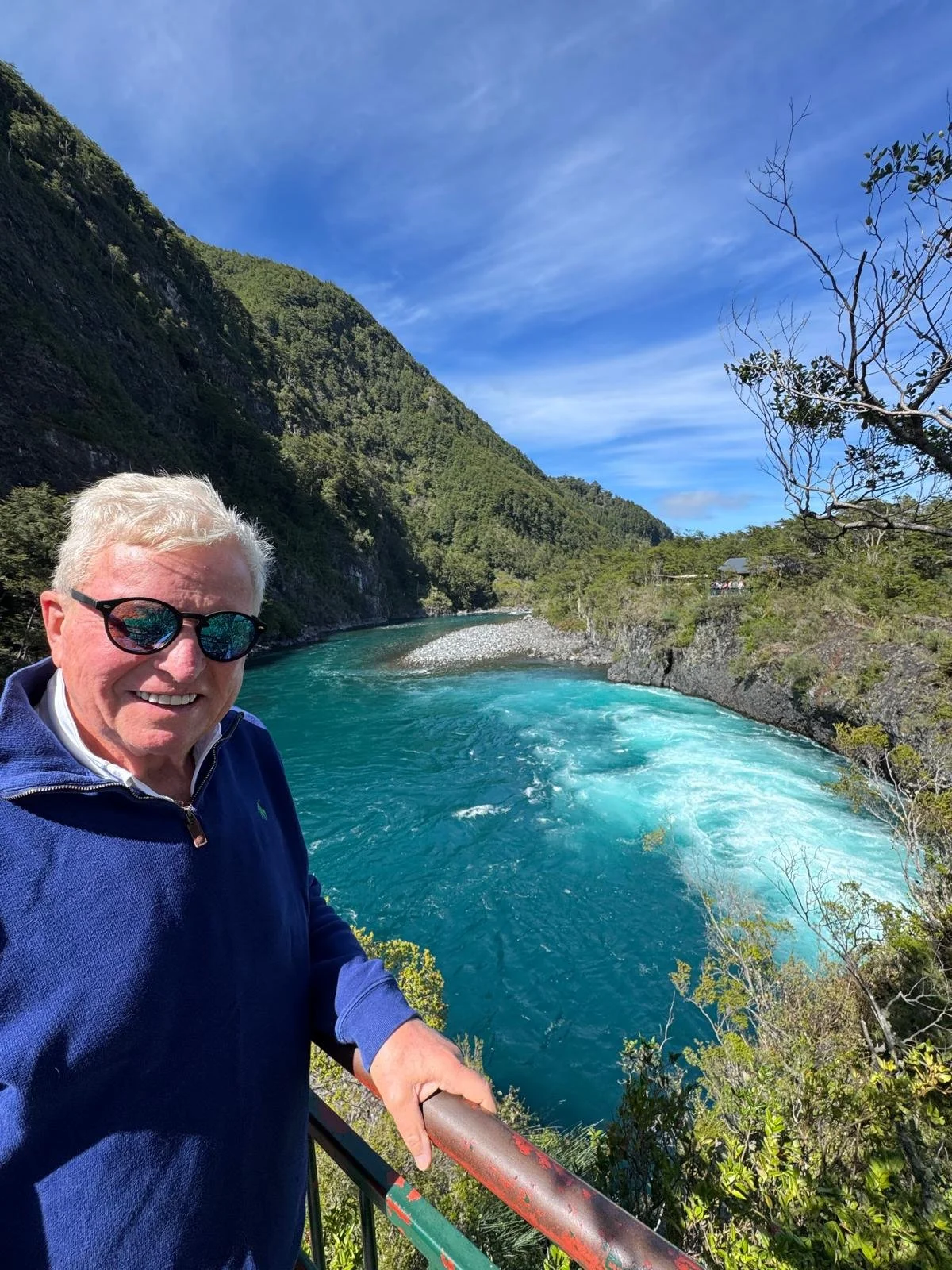
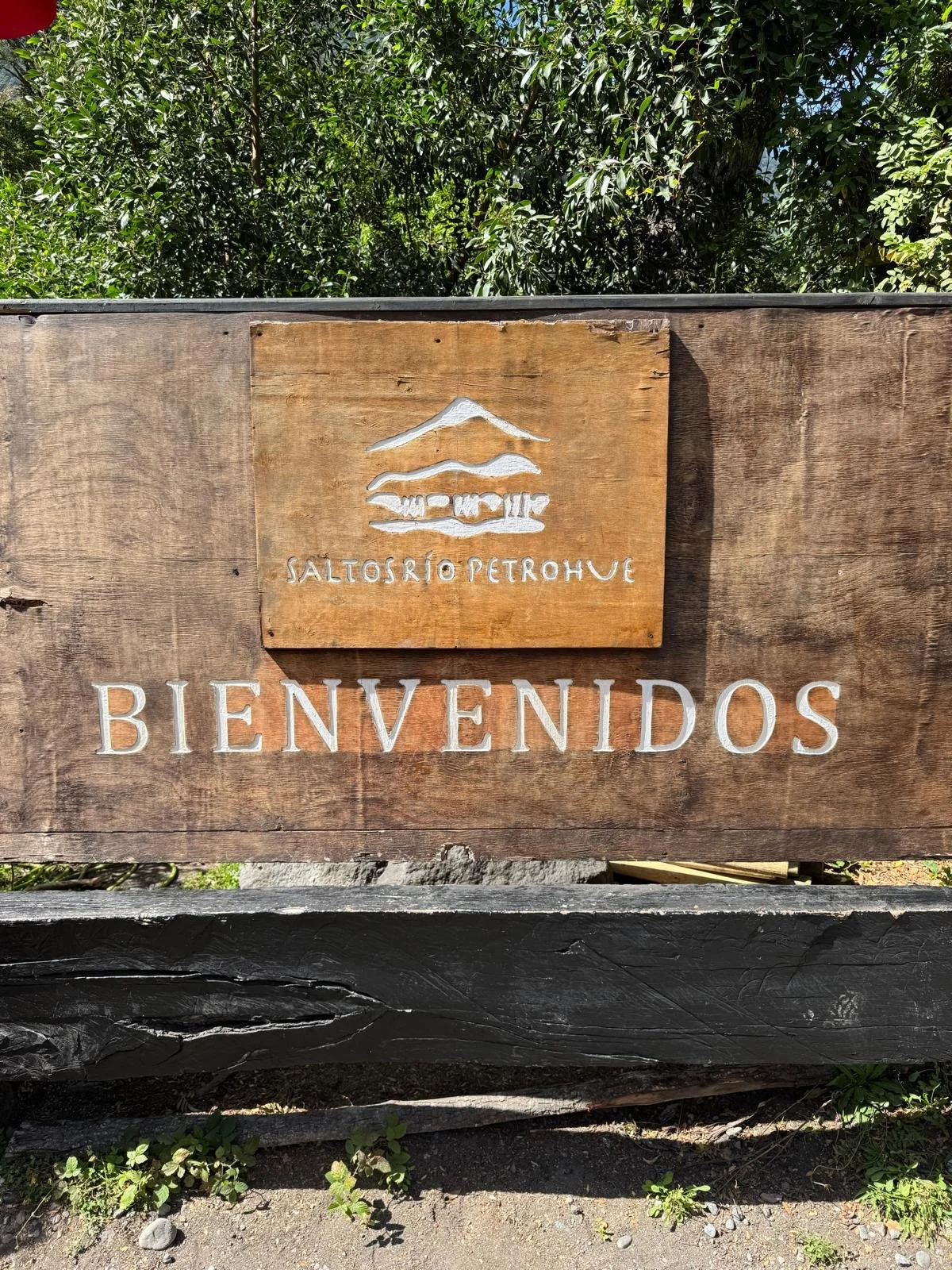
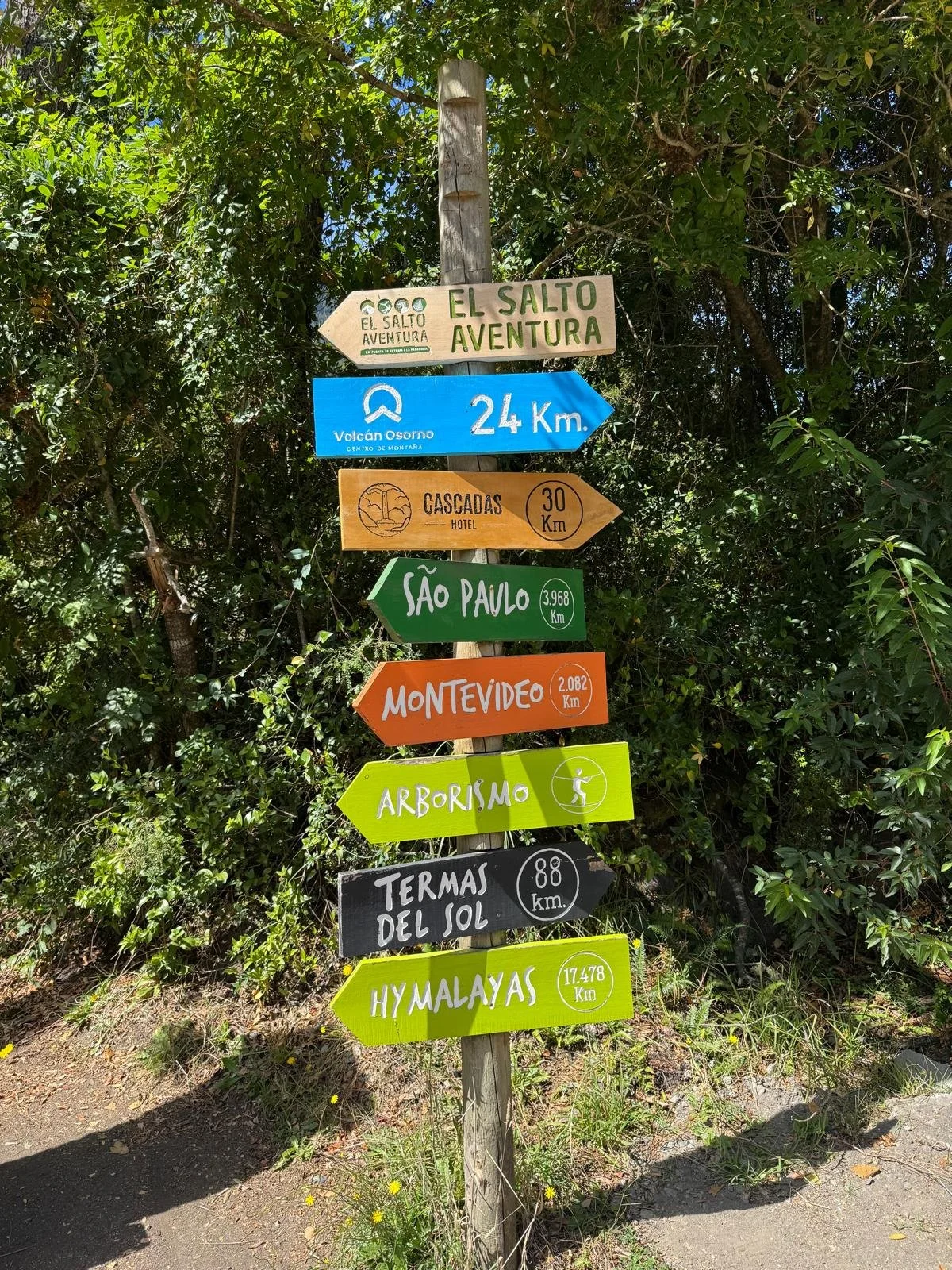
Next stop was Petrohué Falls – Saltos del Petrohué - a chute-type waterfall supported by basaltic lava stemming from the Osorno volcano, with a water flow of 270 cubic metres per second, which is even larger during the rainy season. The Falls were very clear with a pretty green hue but apparently can sometimes by loaded with sand and silt from the volcano which gives the rocks a polished look. They looked pretty stunning with the Orsono volcano as a backdrop. We were pinching ourselves that we were rewarded with such a sunny day, the Park, Lake and Falls wouldn’t have looked half as stunning if it had been cloudy.
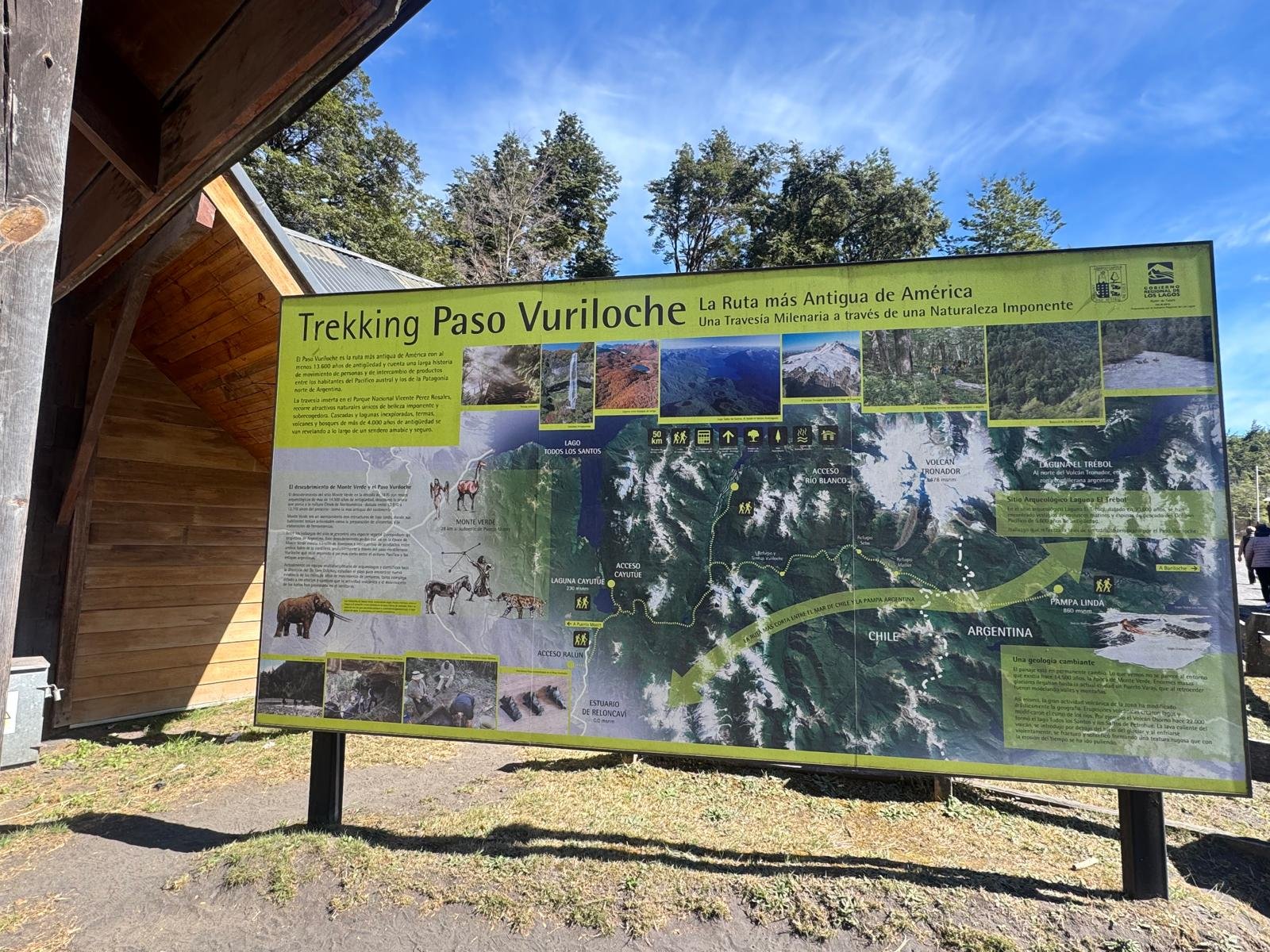
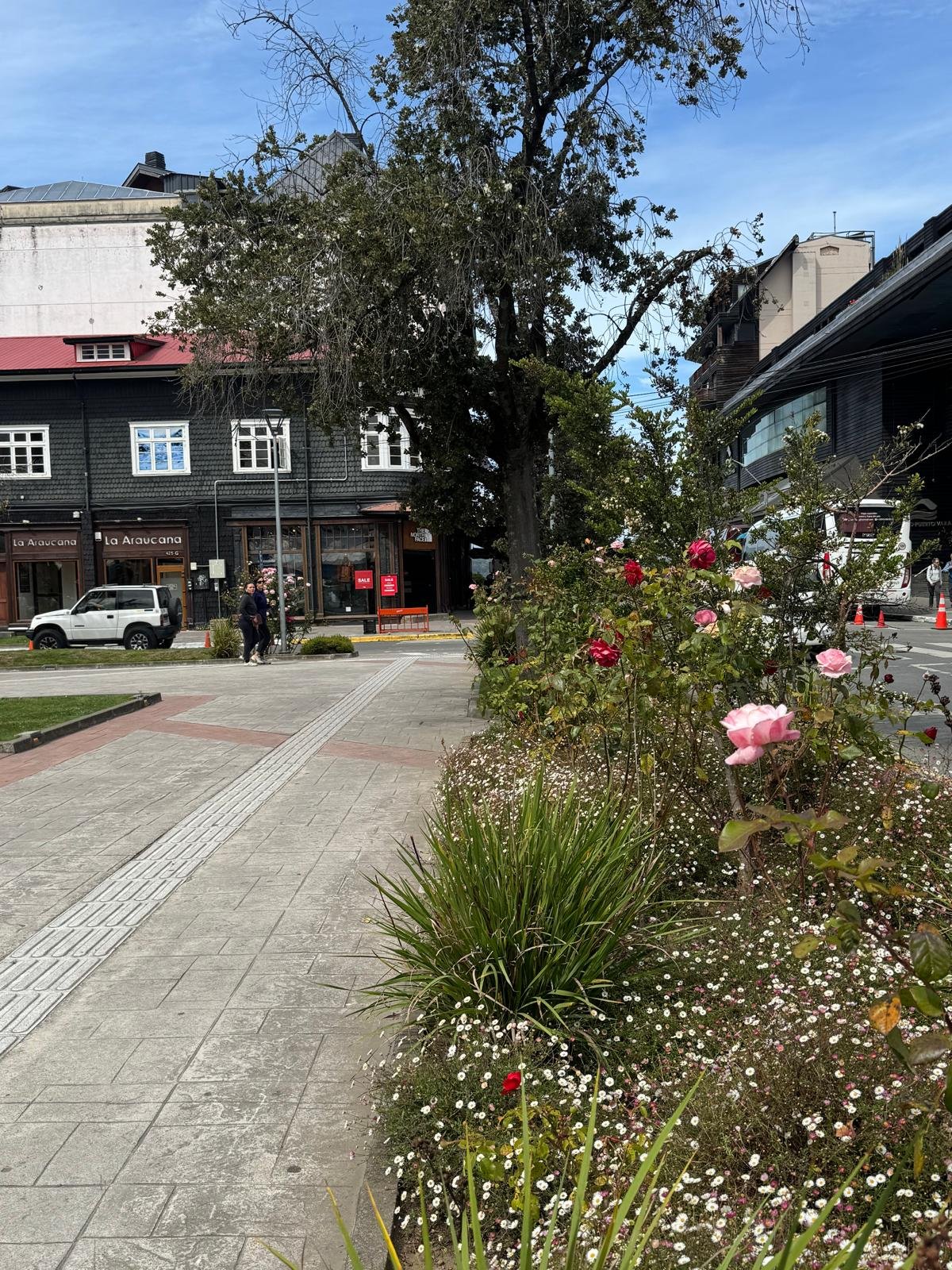
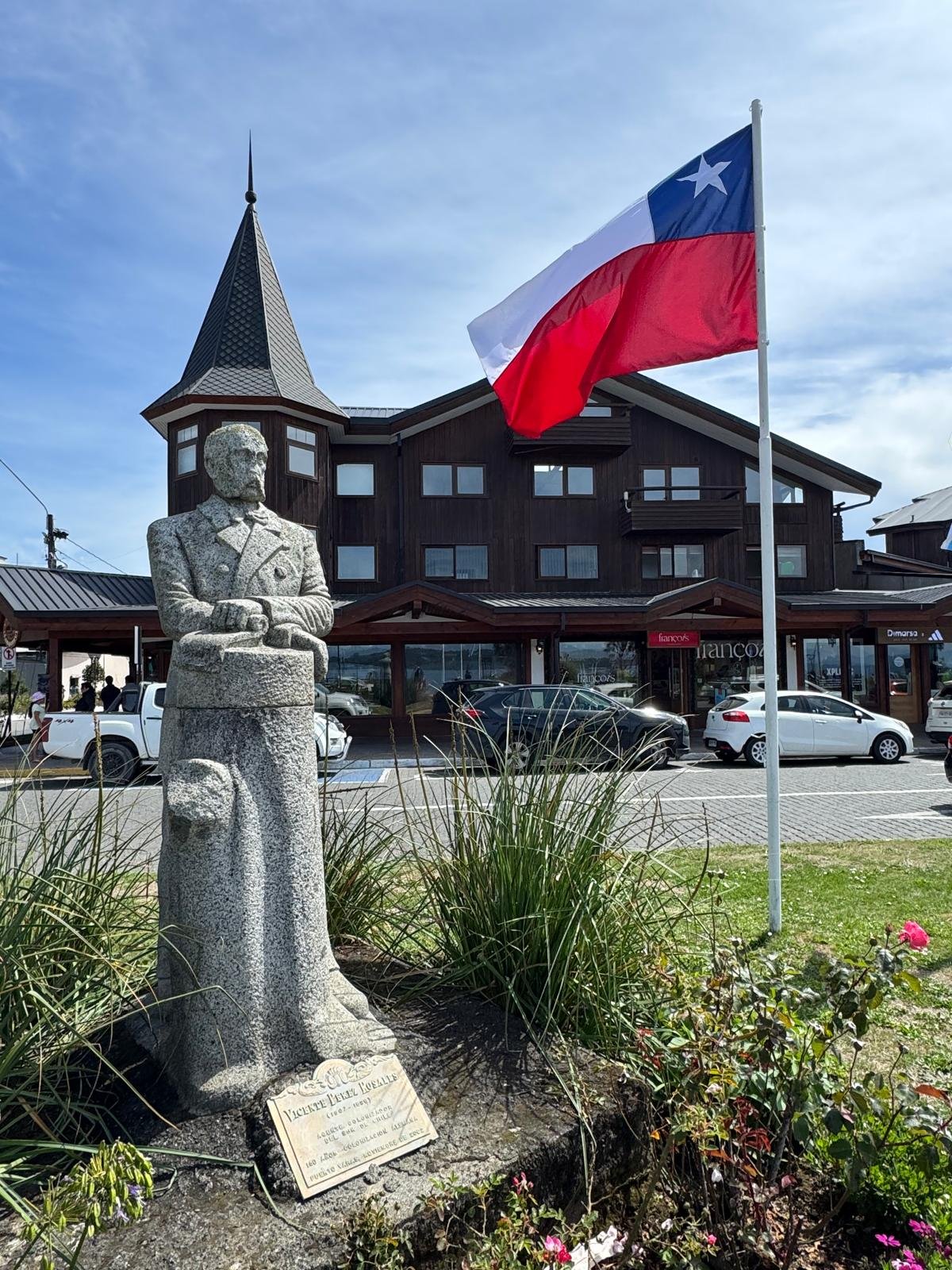
It was back to Puerto Varas for a tasty lunch and then Geoff and I had a walk around the city. It was easy to see the architectural style of the immigrants with the blend of traditional German timber-framing techniques which have been adapted to the local environment, featuring steep pitched roofs to handle the heavy rainfall, decorative shingles and intricate wood carvings. Many of the historic buildings were constructed using durable native alerce wood which is a highly valued coniferous wood from Patagonia and often called the “Redwood of the South”. It can last 3,000+ years and is highly resistant to rot and insect infestation. Sounds perfect to me with the rot I keep discovering in my 1910 villa at home! Known as the City of Roses it is easy to see why, numerous colourful and fragrant rose bushes line its streets, gardens and public spaces and the nickname stems from its beautiful floral landscapes. Walking around the pretty streets, with their German architecture we also happened upon the statue of Vicente Pérez Rosales who was a politican, traveller, merchant, miner and Chilean diplomat who helped organise the colonisation by the Germans and Chileans of the Llanquihue area – what a busy bloke, he certainly deserved to be commemorated with a statue and I’m pleased to say he was surrounded by roses too!
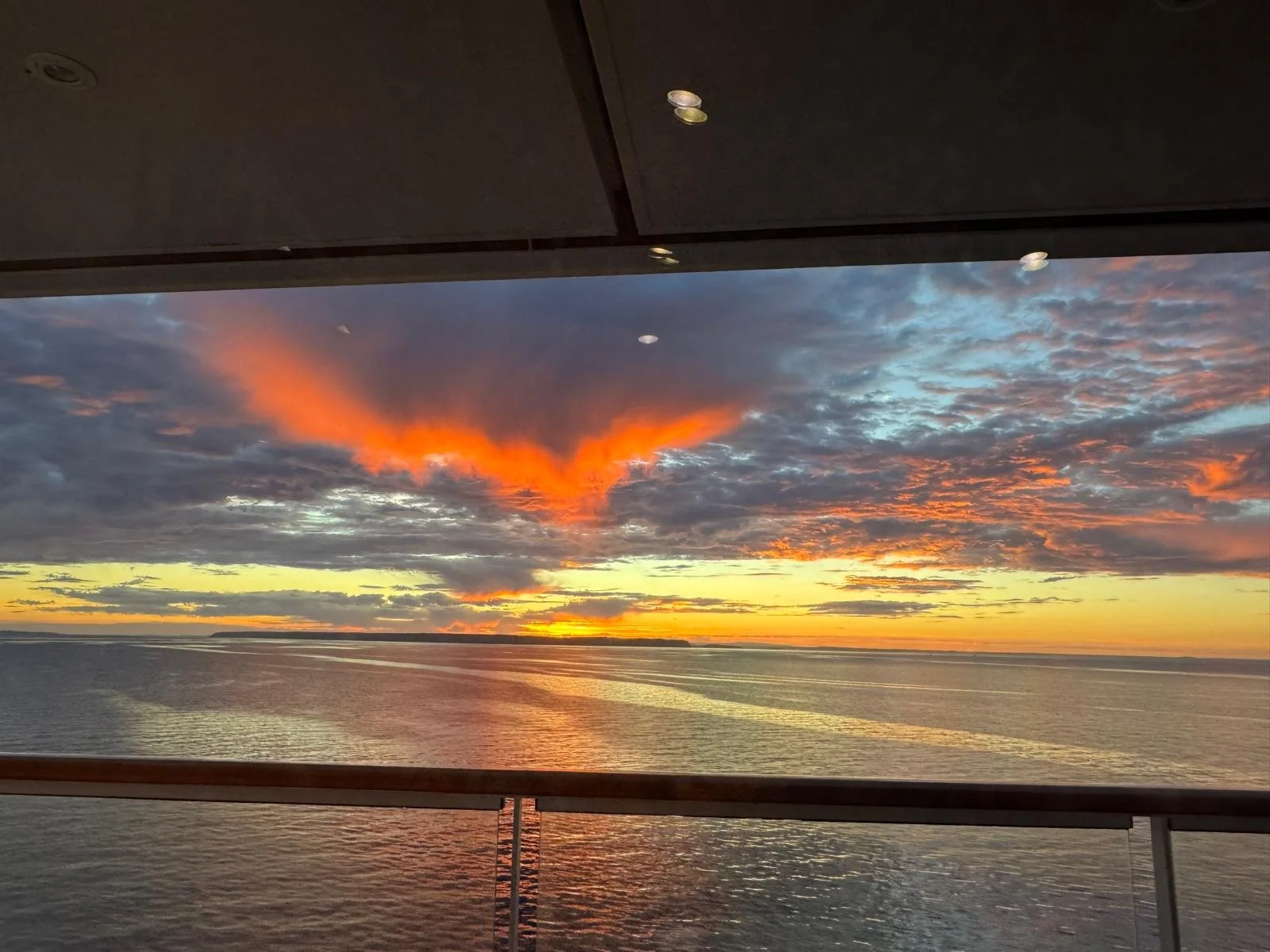
And then it was back to the tender and to our home on the water. An hour after we returned the anchor was pulled up and we were off to our next stop in two days’ time. A stunning sunset tonight – reminds me of all those beautiful sunsets on Salanjo when we sailed across the Pacific back to NZ in 2022.