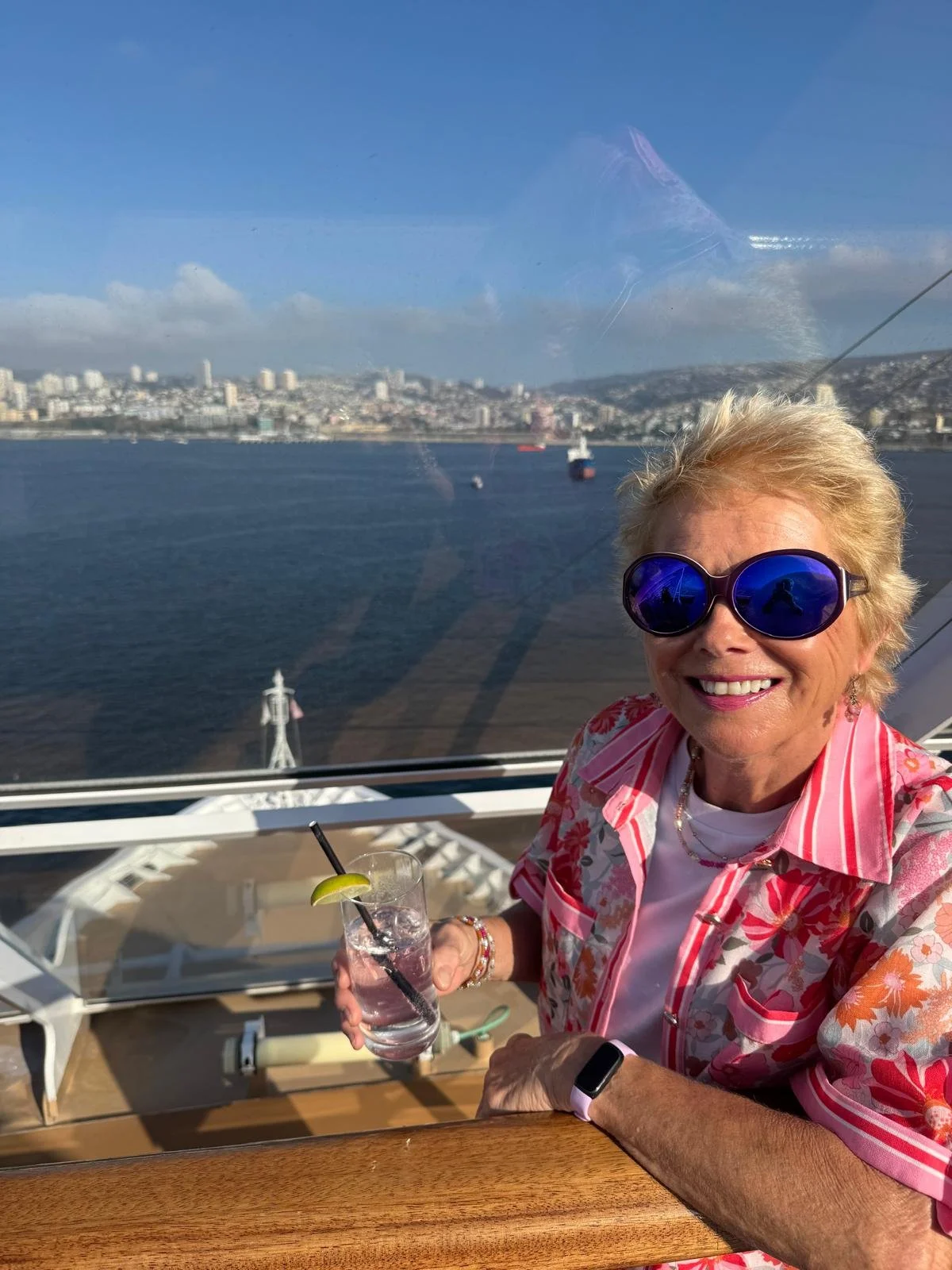
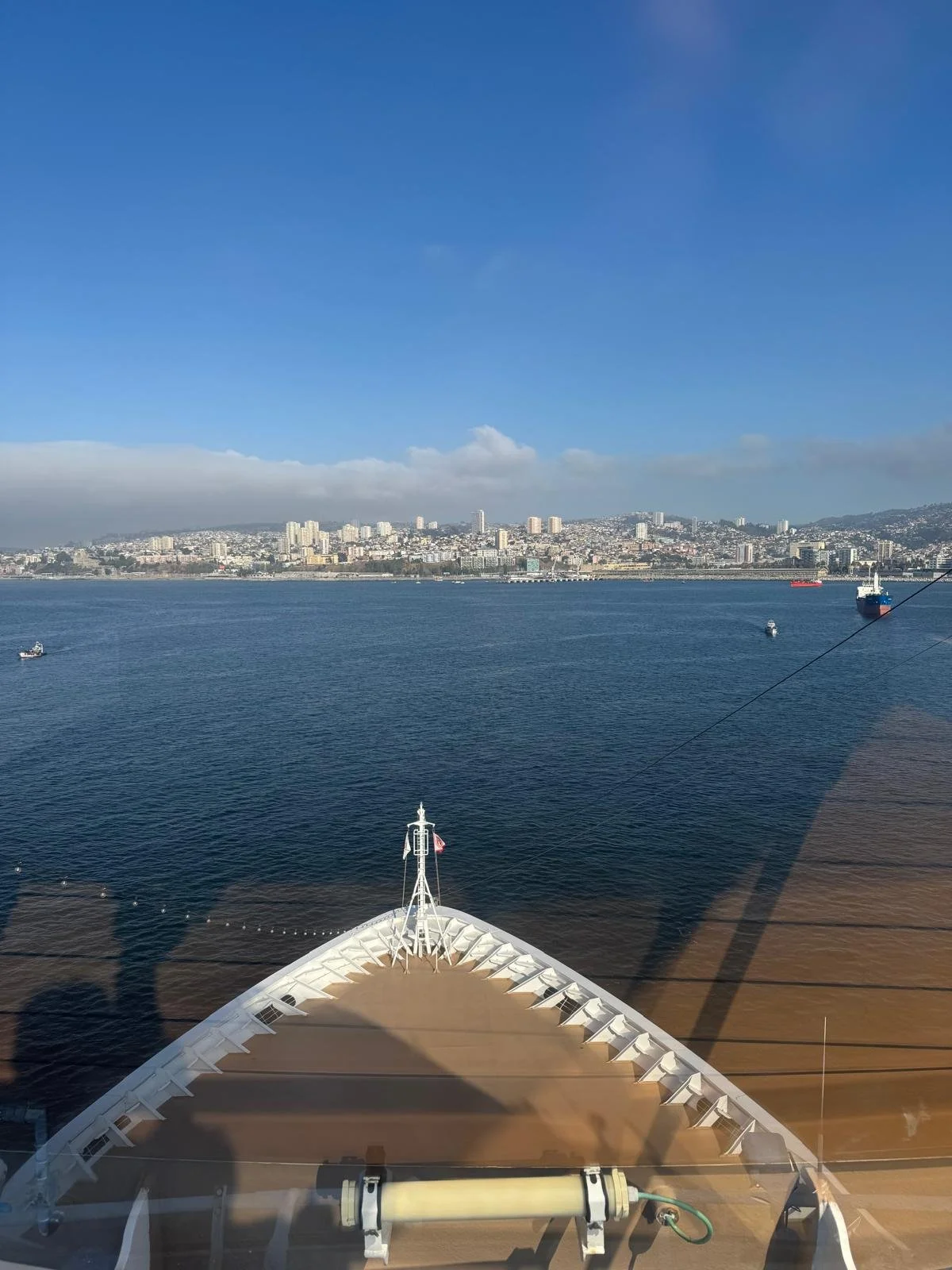
Valparaíso – The Jewel of the Pacific
Saturday 21 February
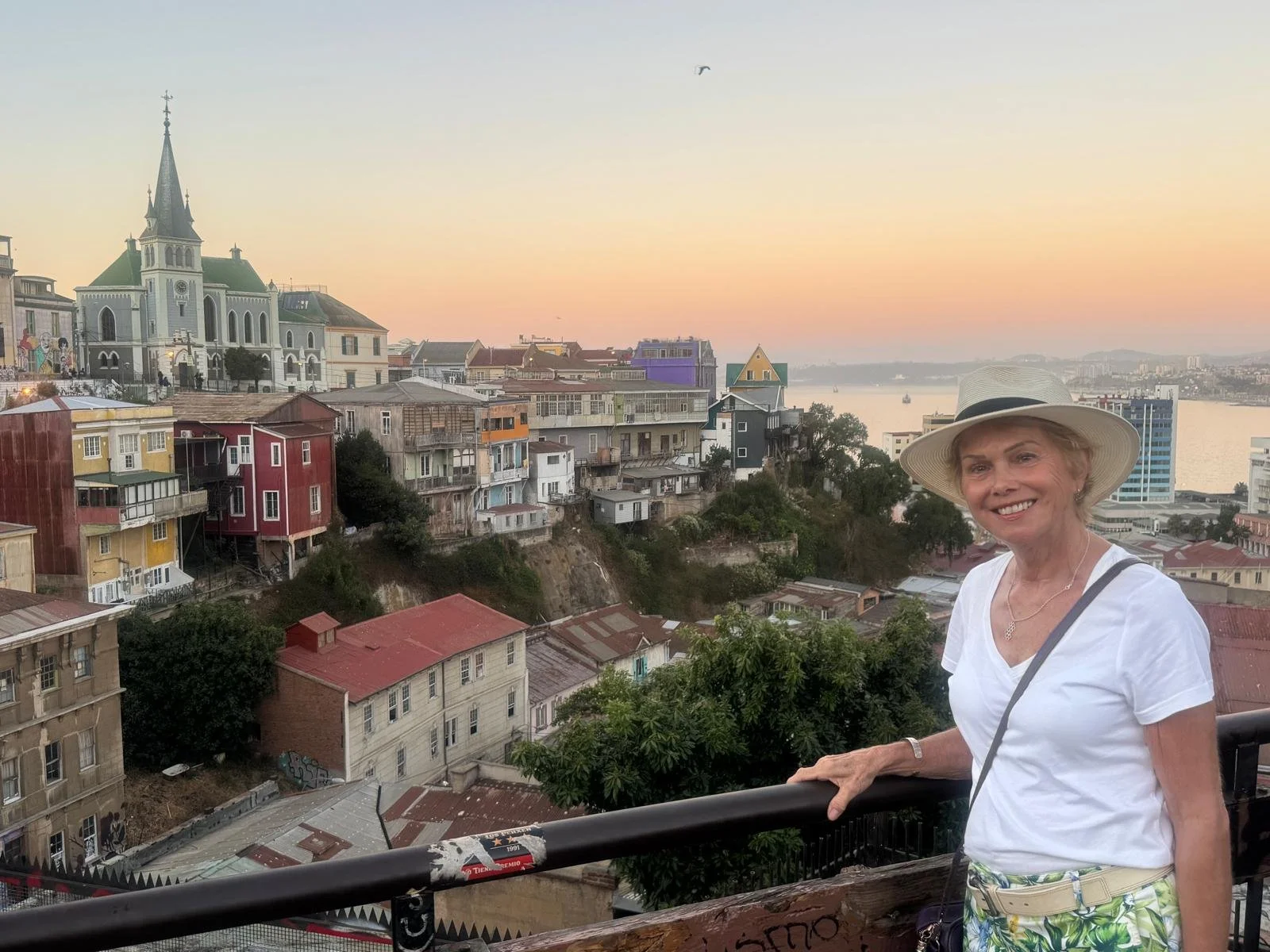
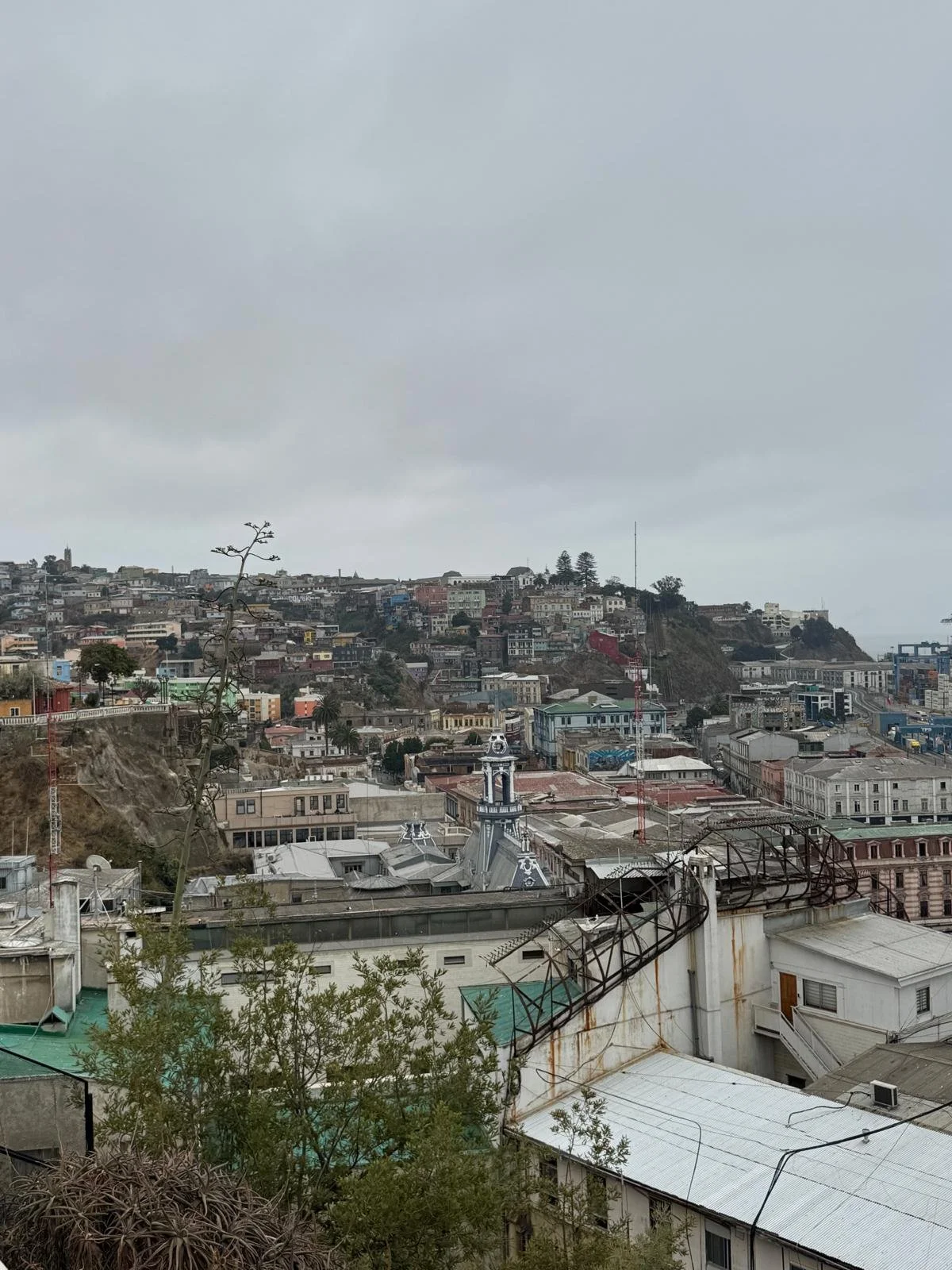
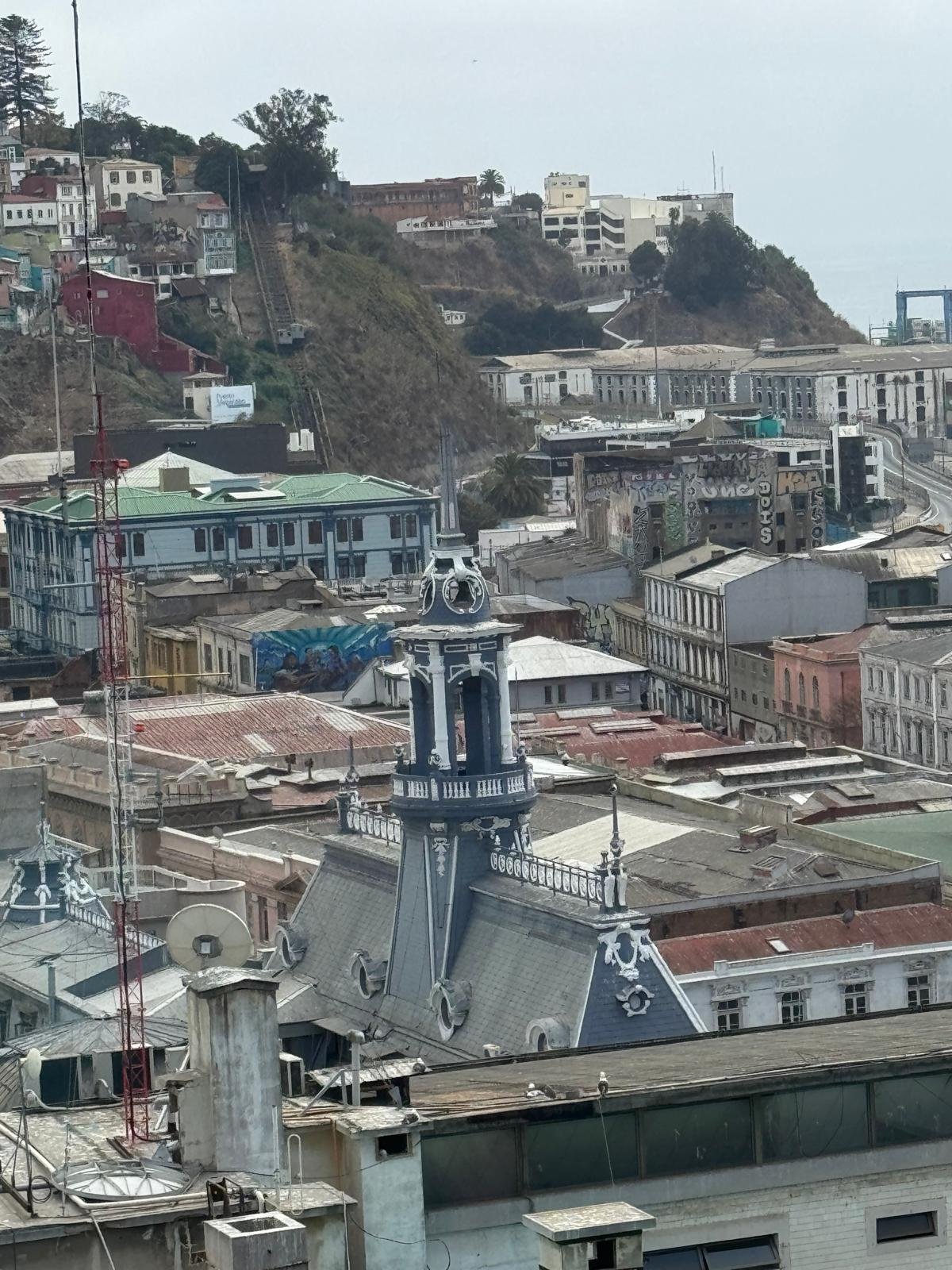
An hour and a half by car and we arrived in Valparaíso. Valparaíso is also known as "Pancho." According to tradition in 1846, construction began on the Church of San Francisco on Baron Hill and its most striking feature was the tower that housed the clock mechanism and four large clock faces, visible from anywhere, especially from the open sea, it was a landmark for sailors arriving in the bay. Upon seeing the bell tower, crowned by an iron cross, the sailors would exclaim, "There's Pancho!". It is also called the "Jewel of the Pacific " and there is a popular song that bears that title which is considered the popular anthem of the city. It’s one of Chile’s busiest ports and one of the most important in the South Pacific and it is from here that we are embarking on our Viking cruise tomorrow. Geographically it is laid out like a large natural amphitheatre and surrounded by numerous hills where most of the population lives. Due to its rich architecture, it was declared a World Heritage Site by UNESCO in 2003.
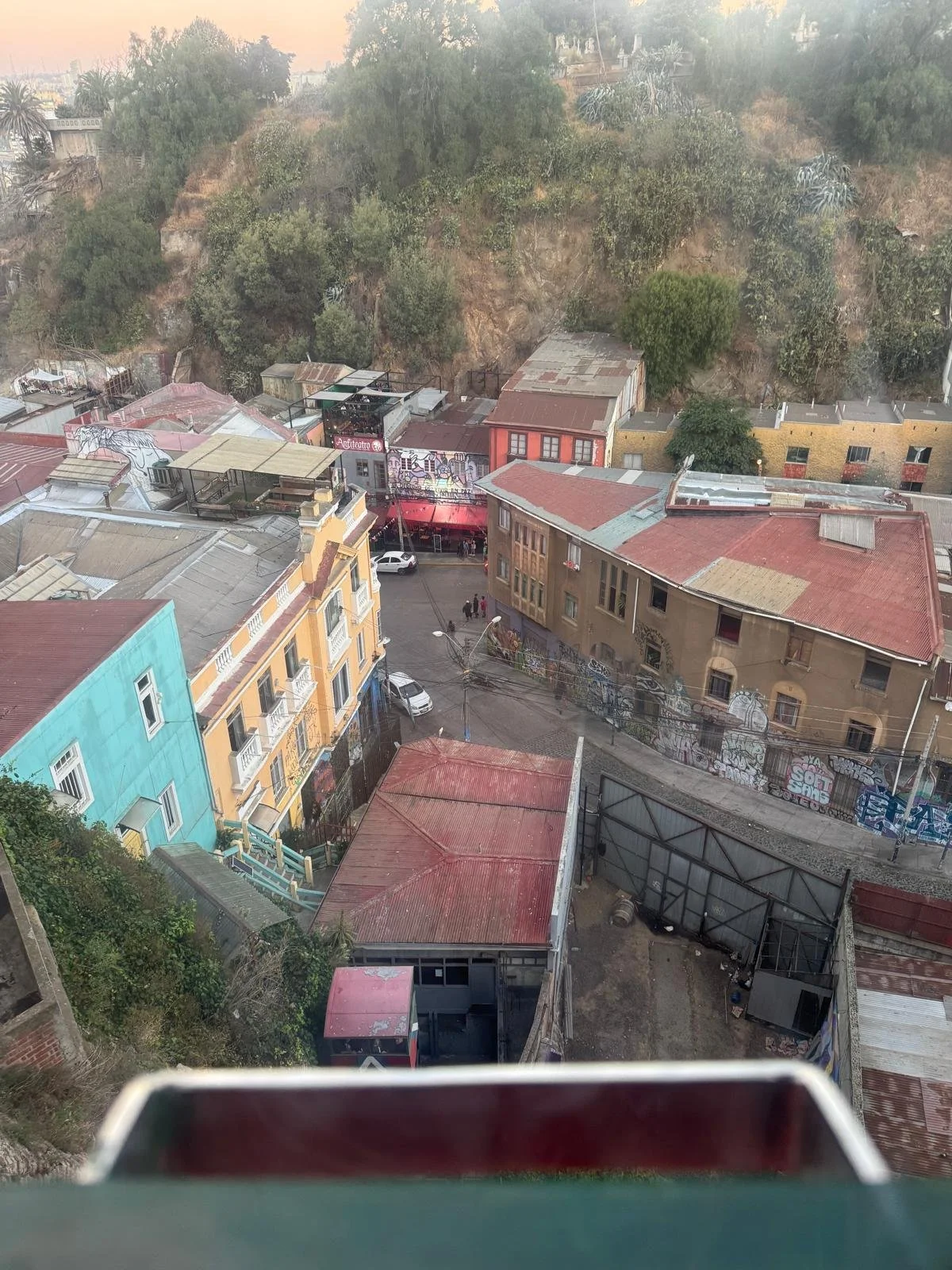
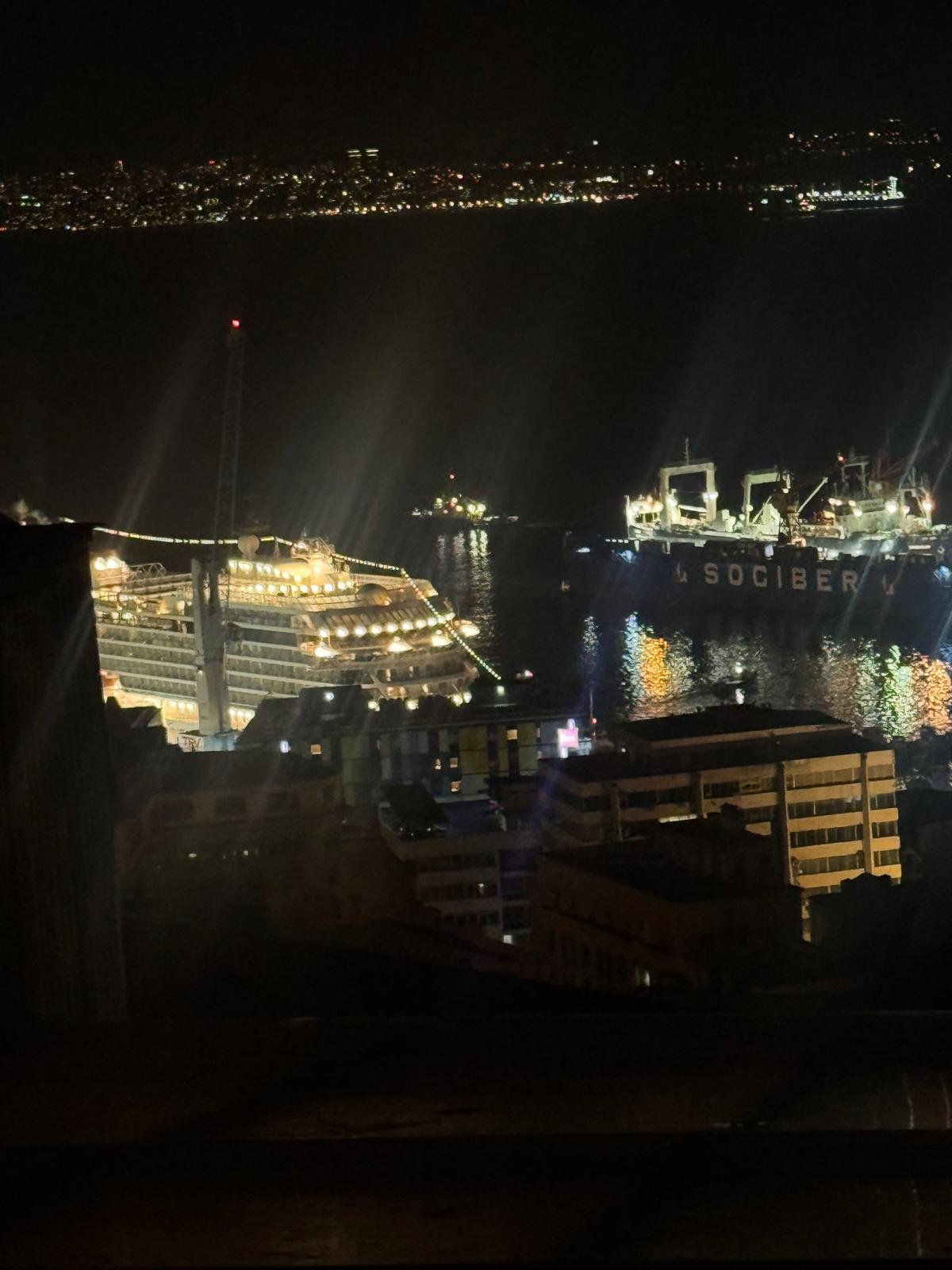
Dropped off at our hotel – the Casablu, located in the historic area of Cerro Alegre, we were shown to our room on the top floor with the most magnificent view of the harbour and there in all its glory right in front of us, our new home for the next 18 days – the Viking Jupiter!
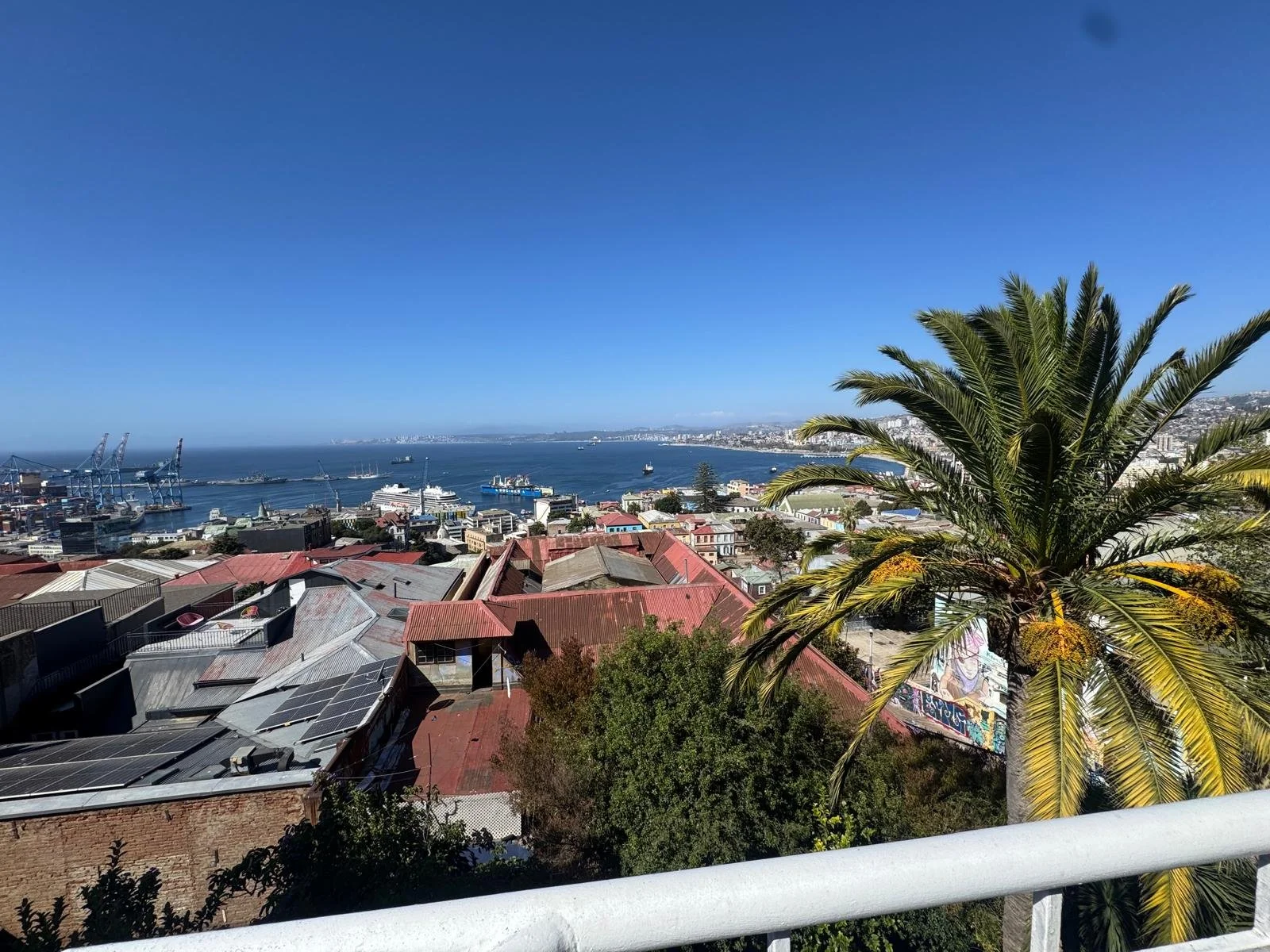
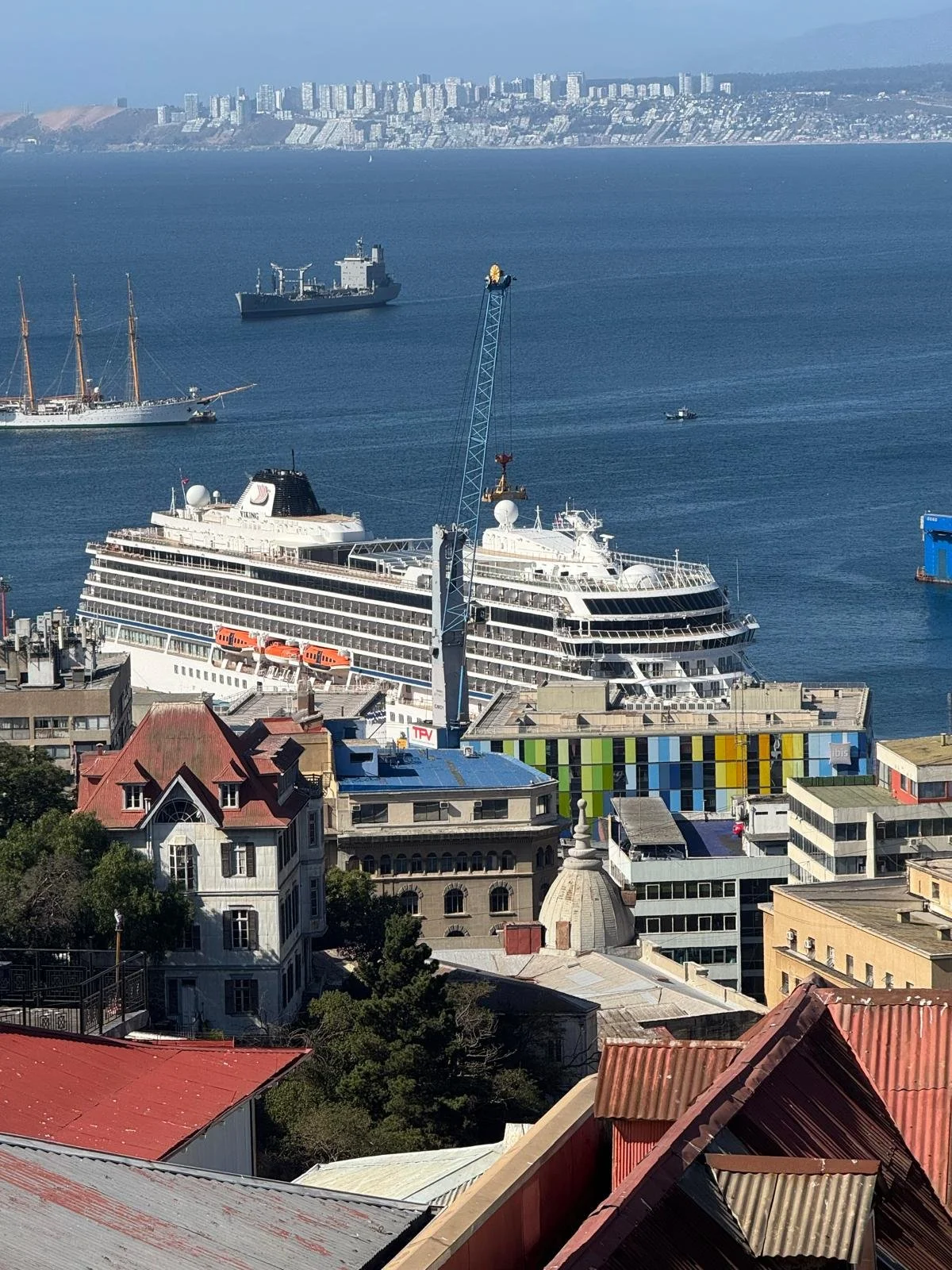
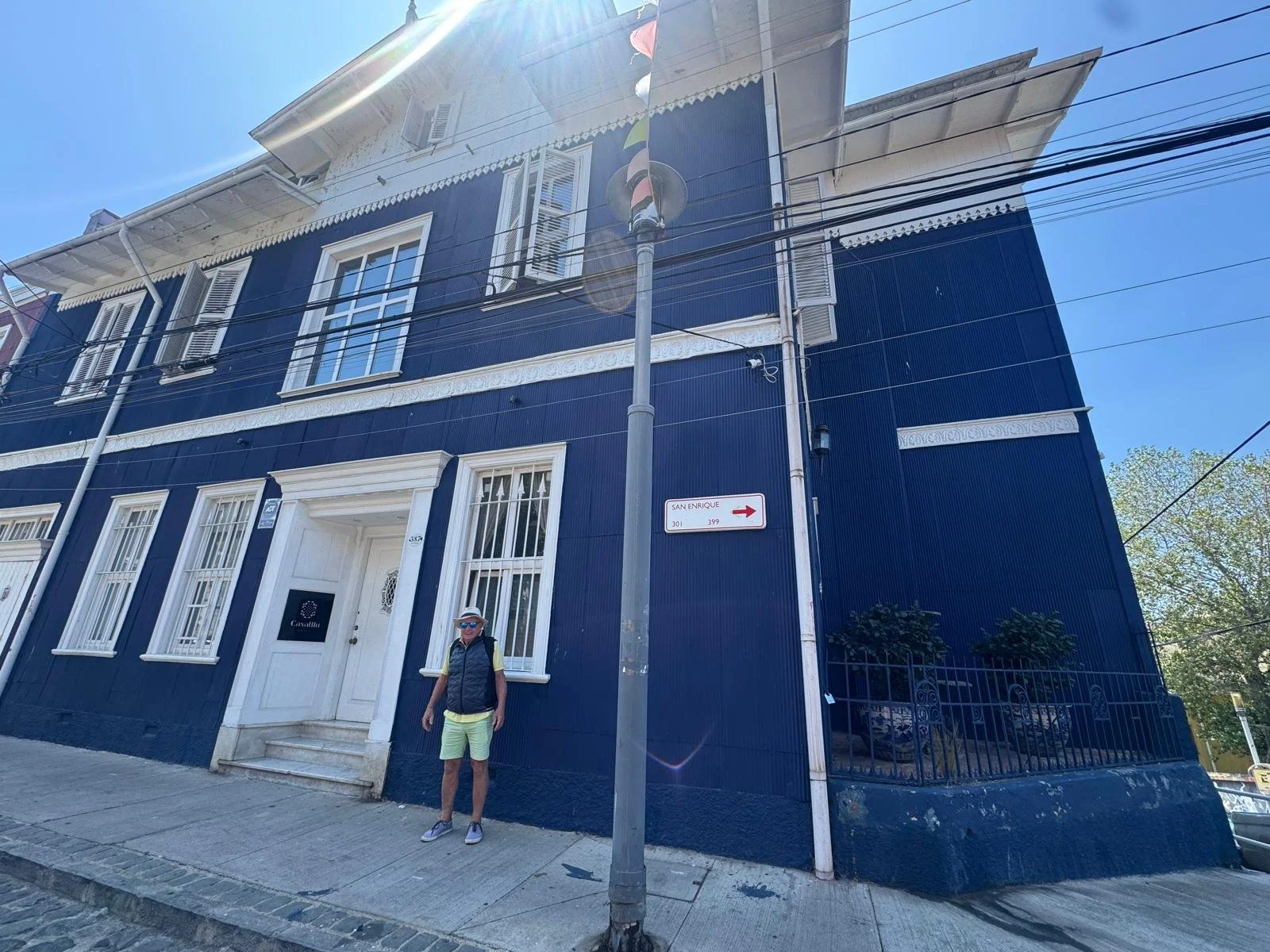
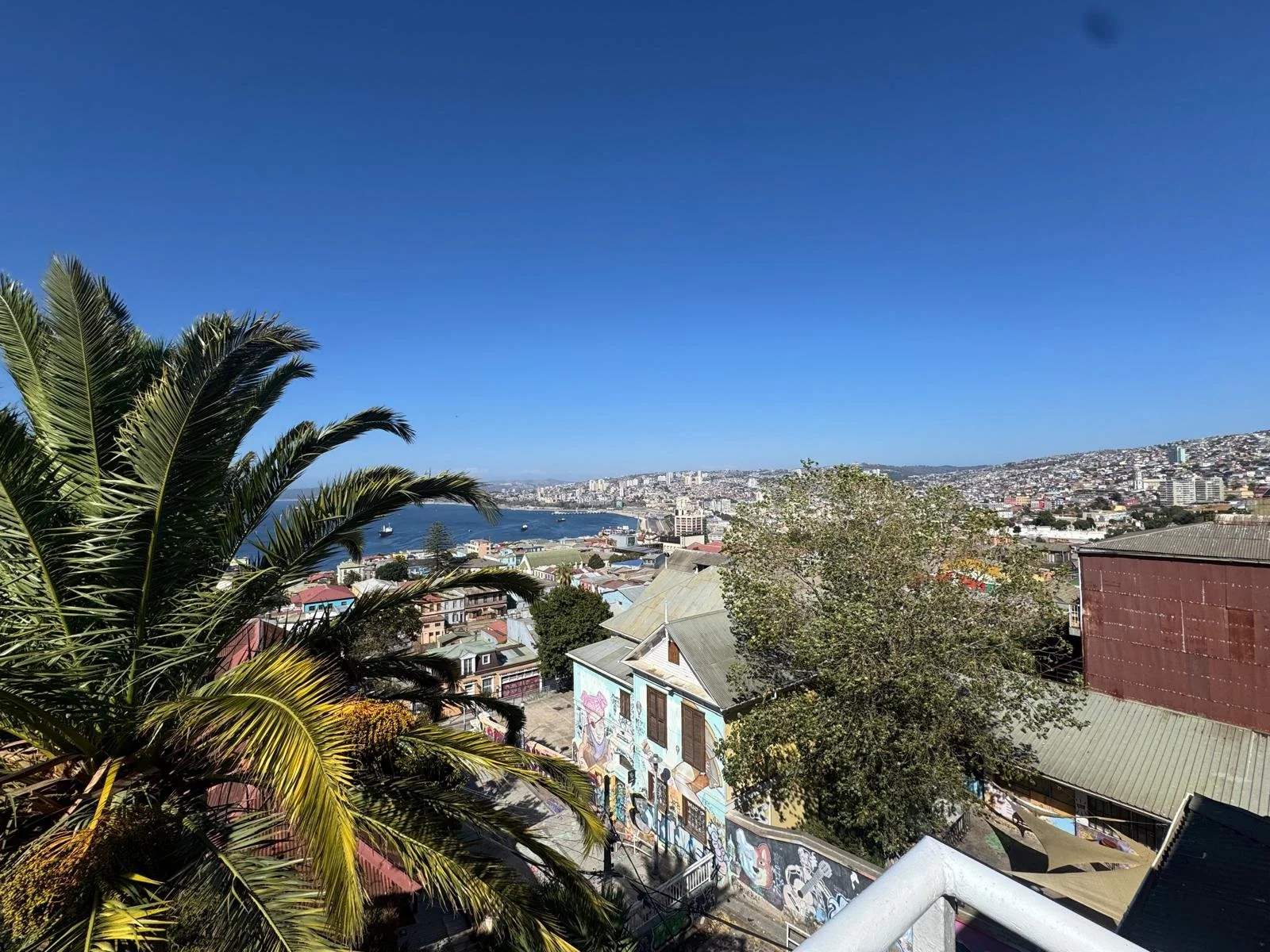
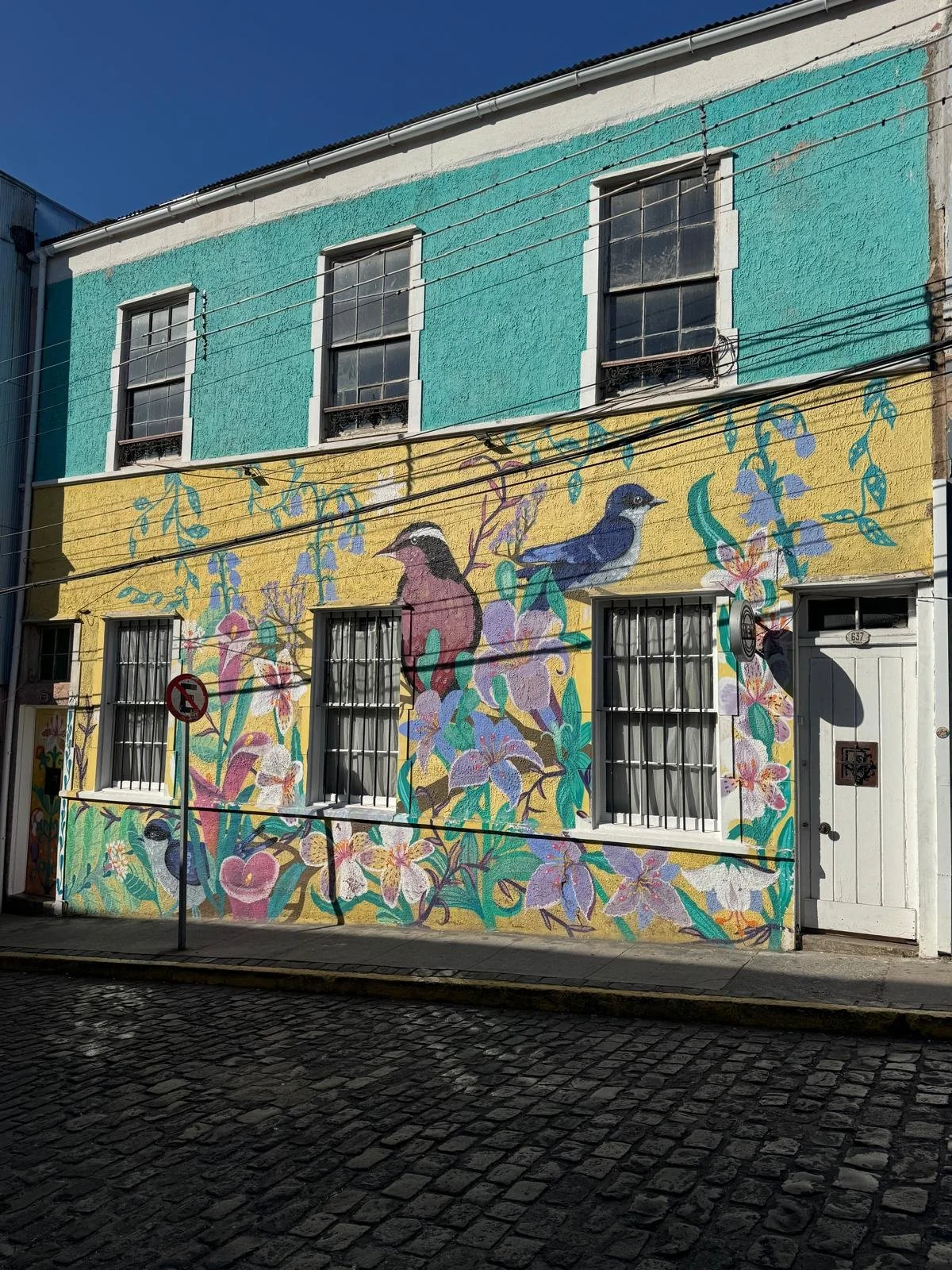
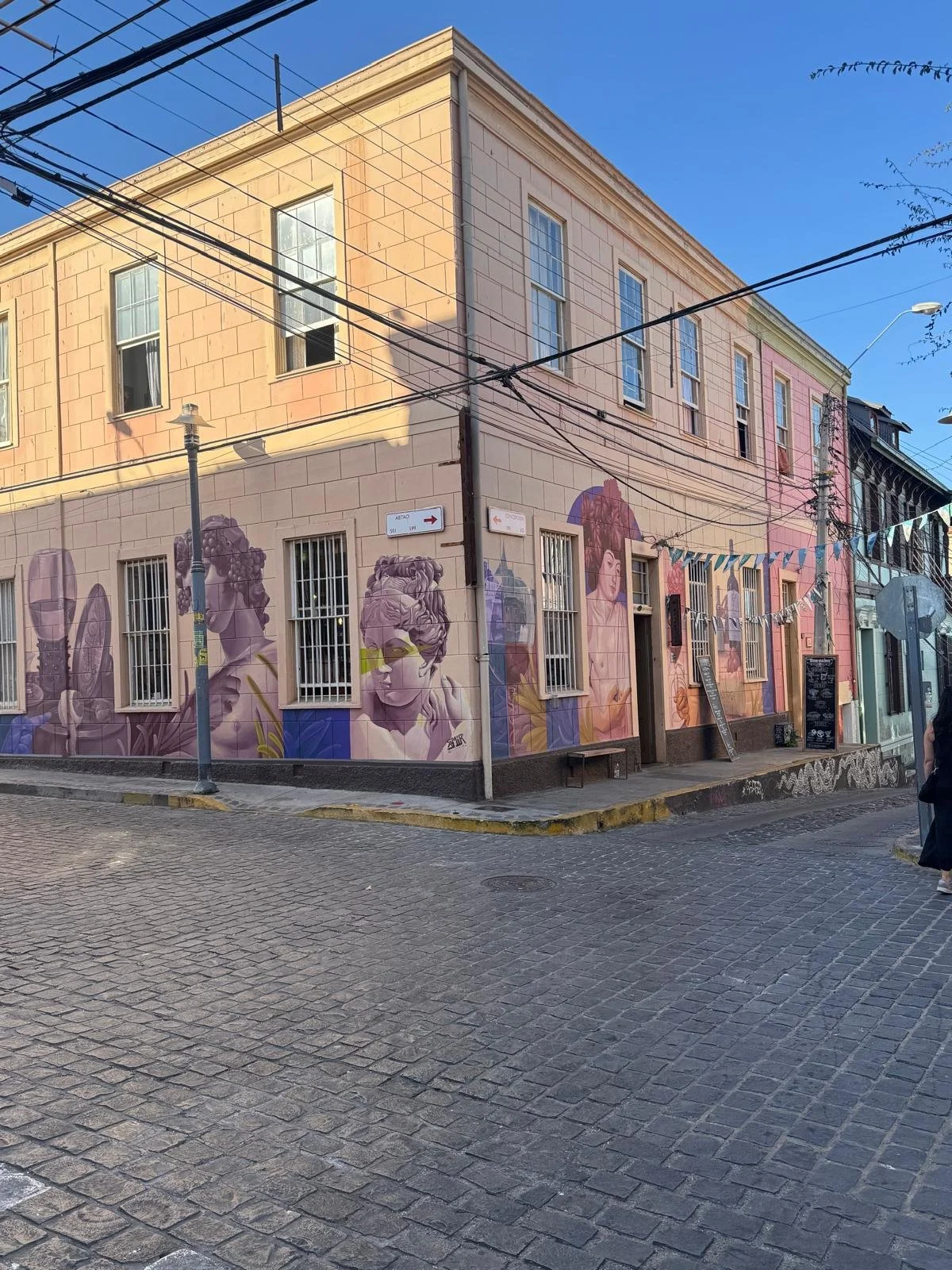
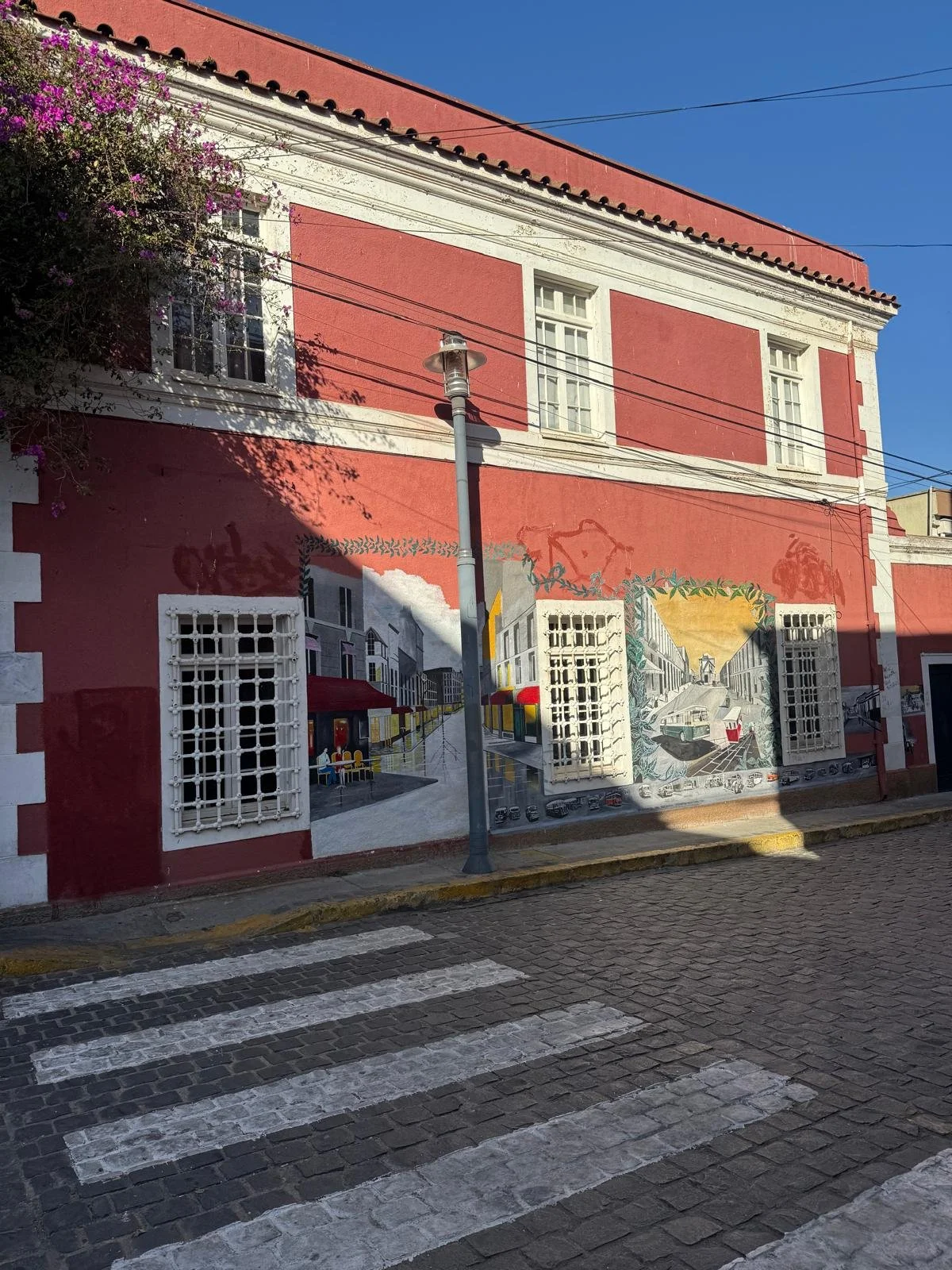
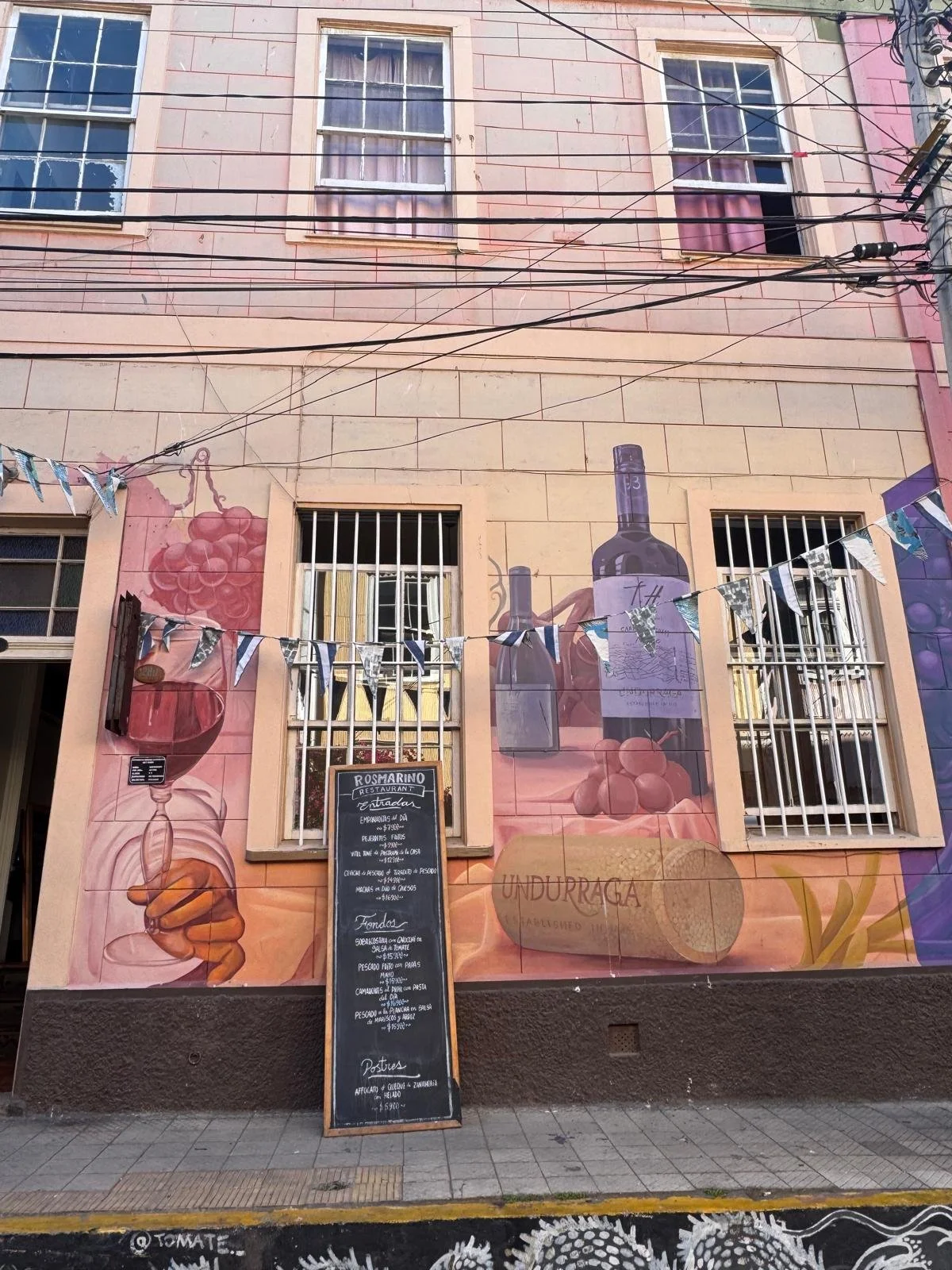
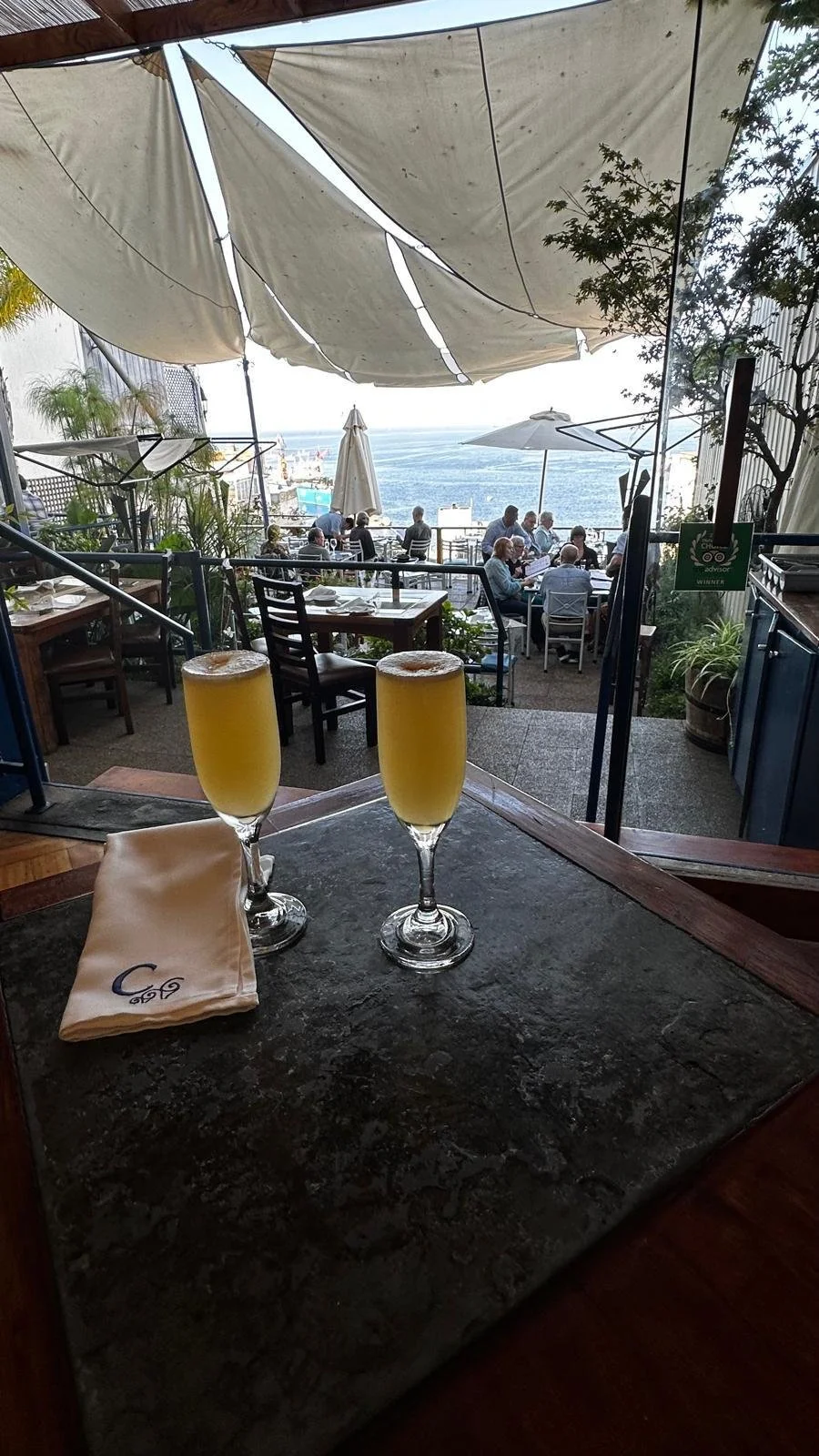
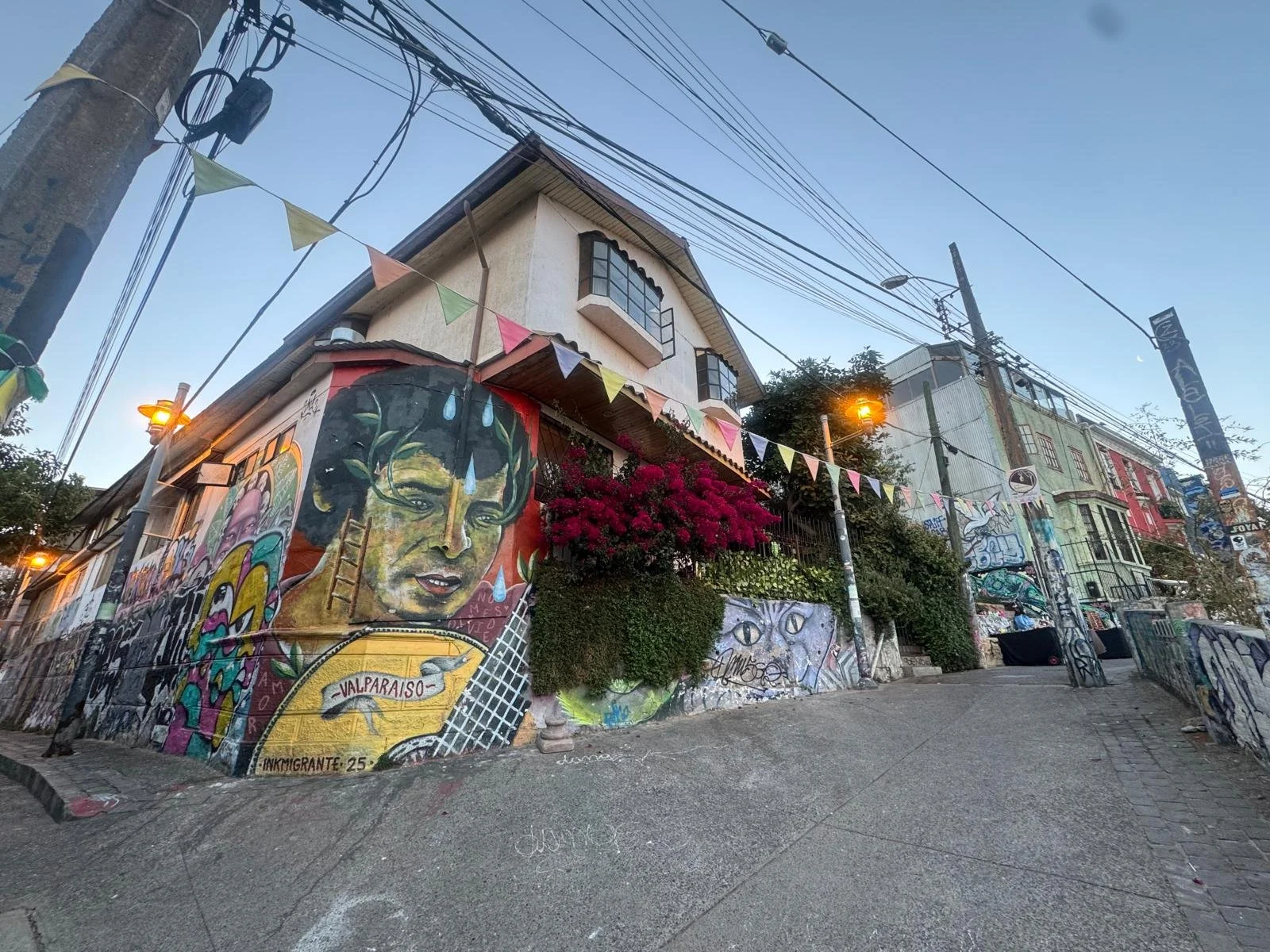
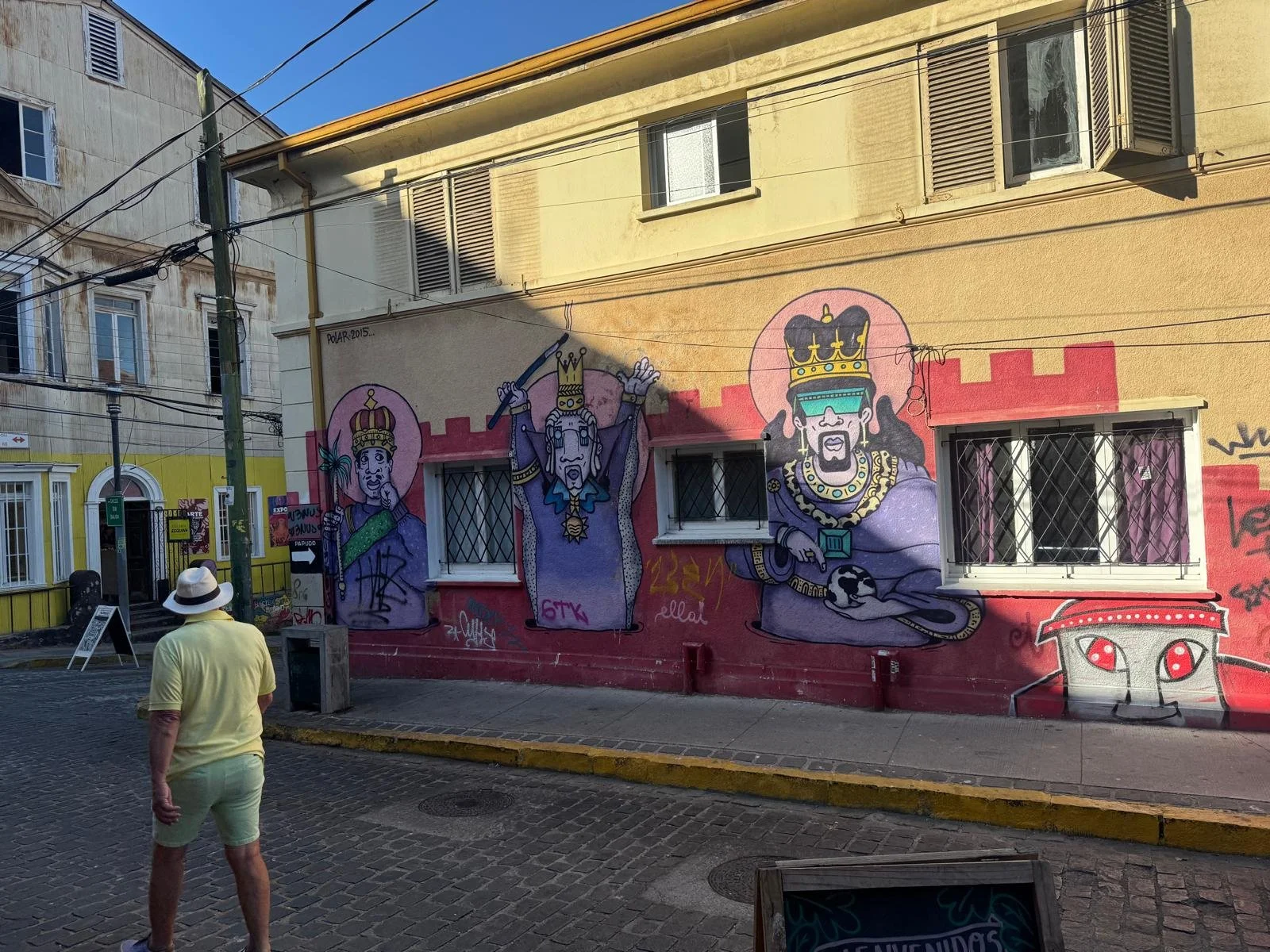
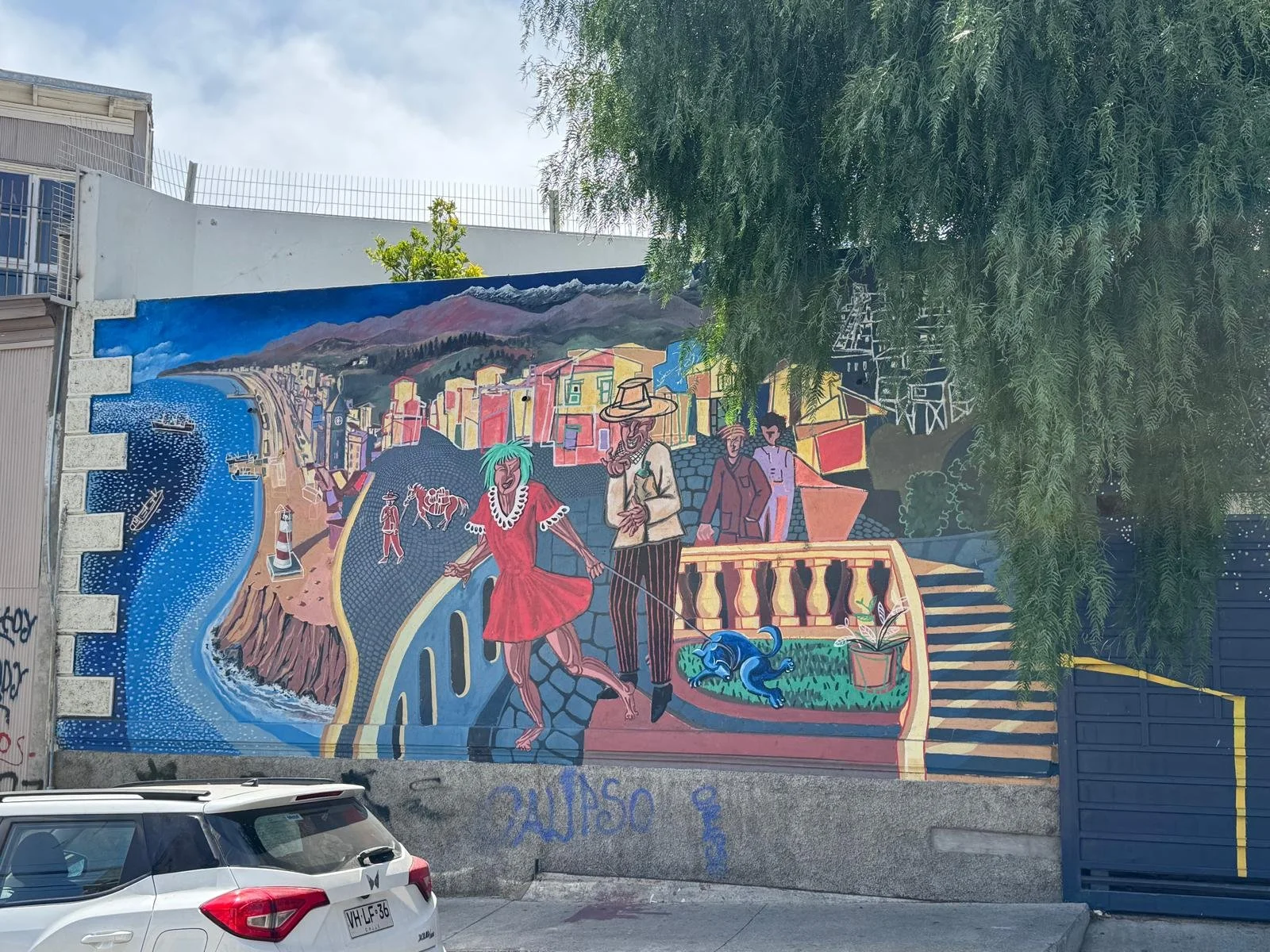
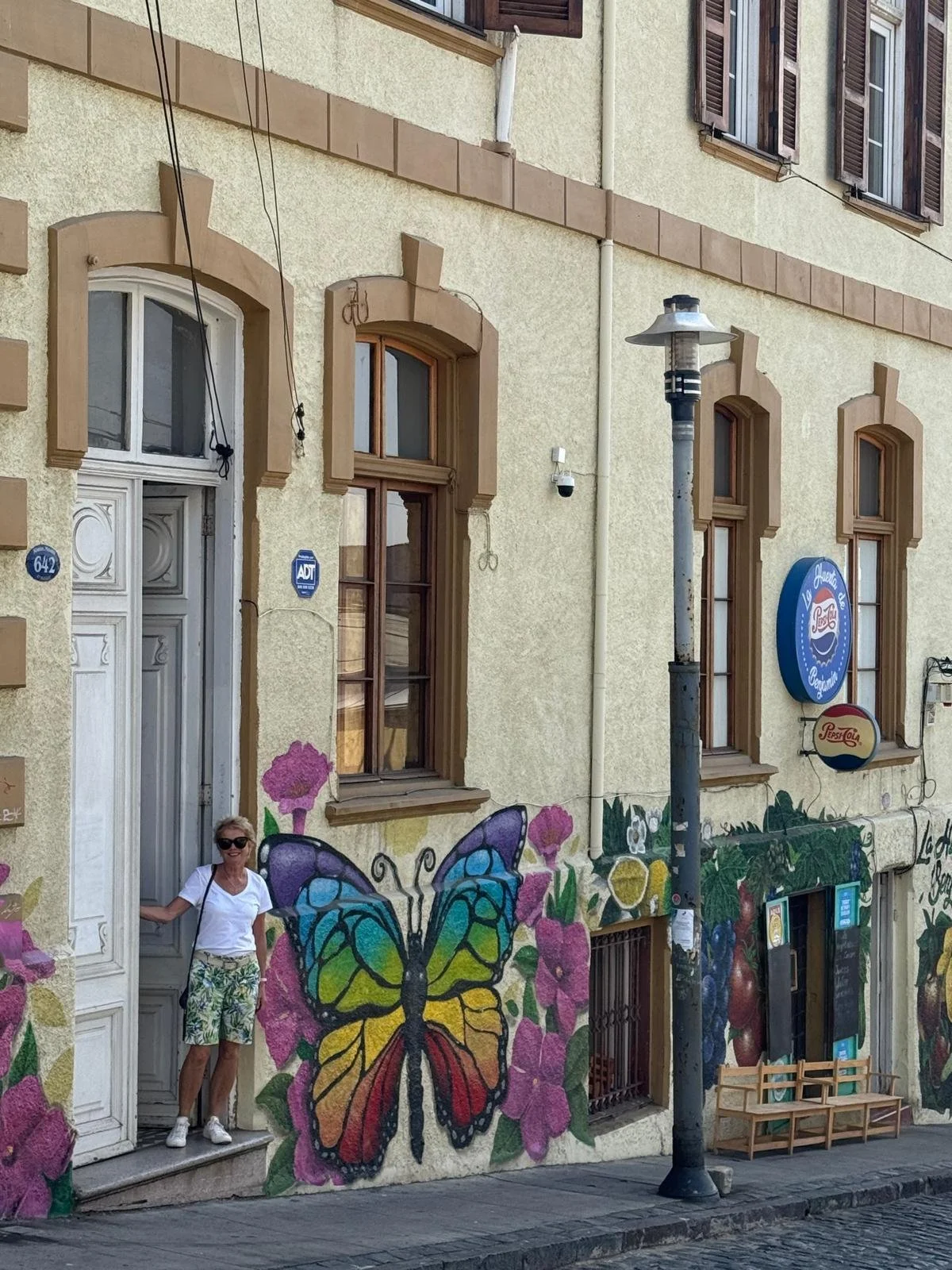
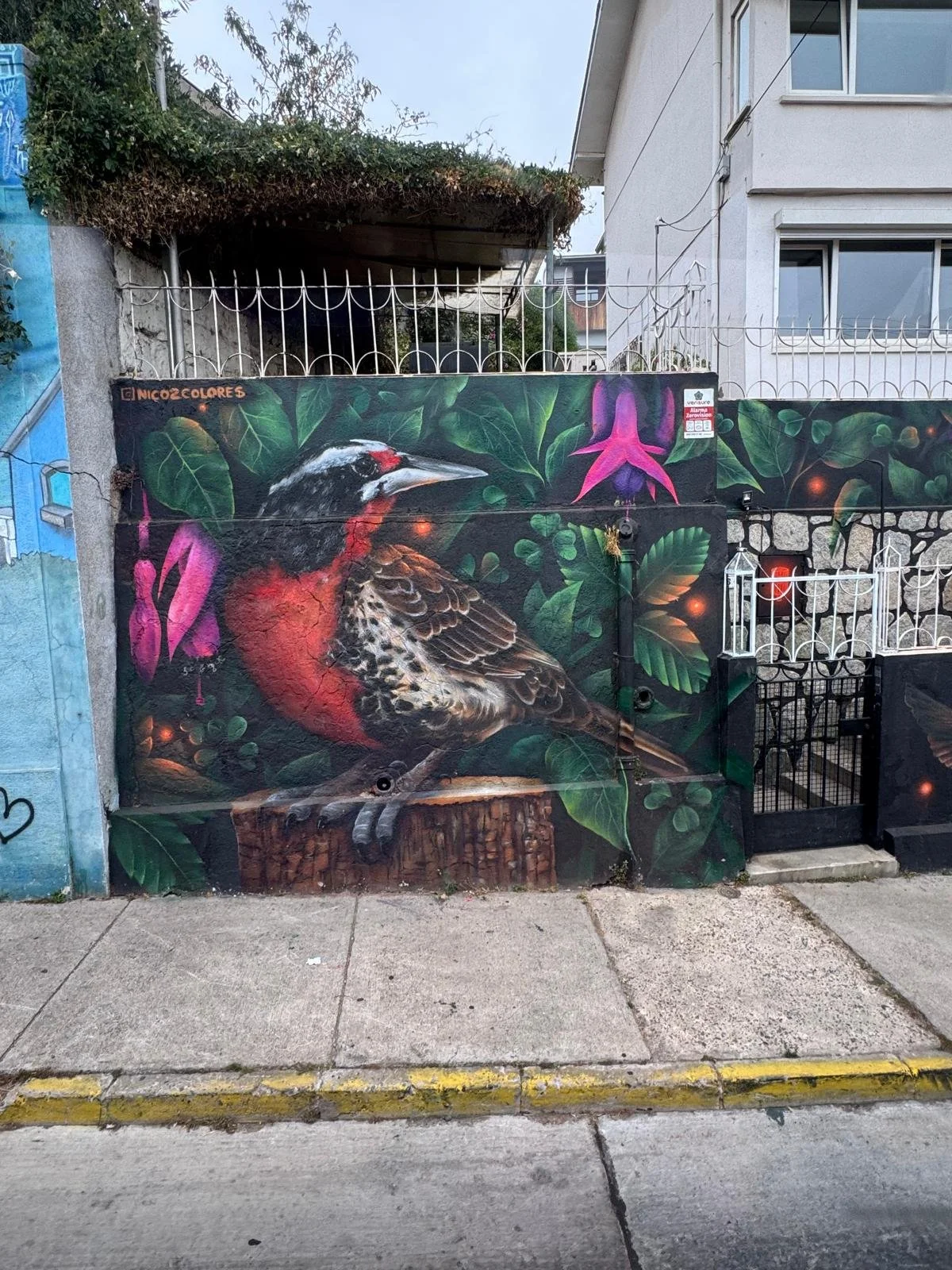
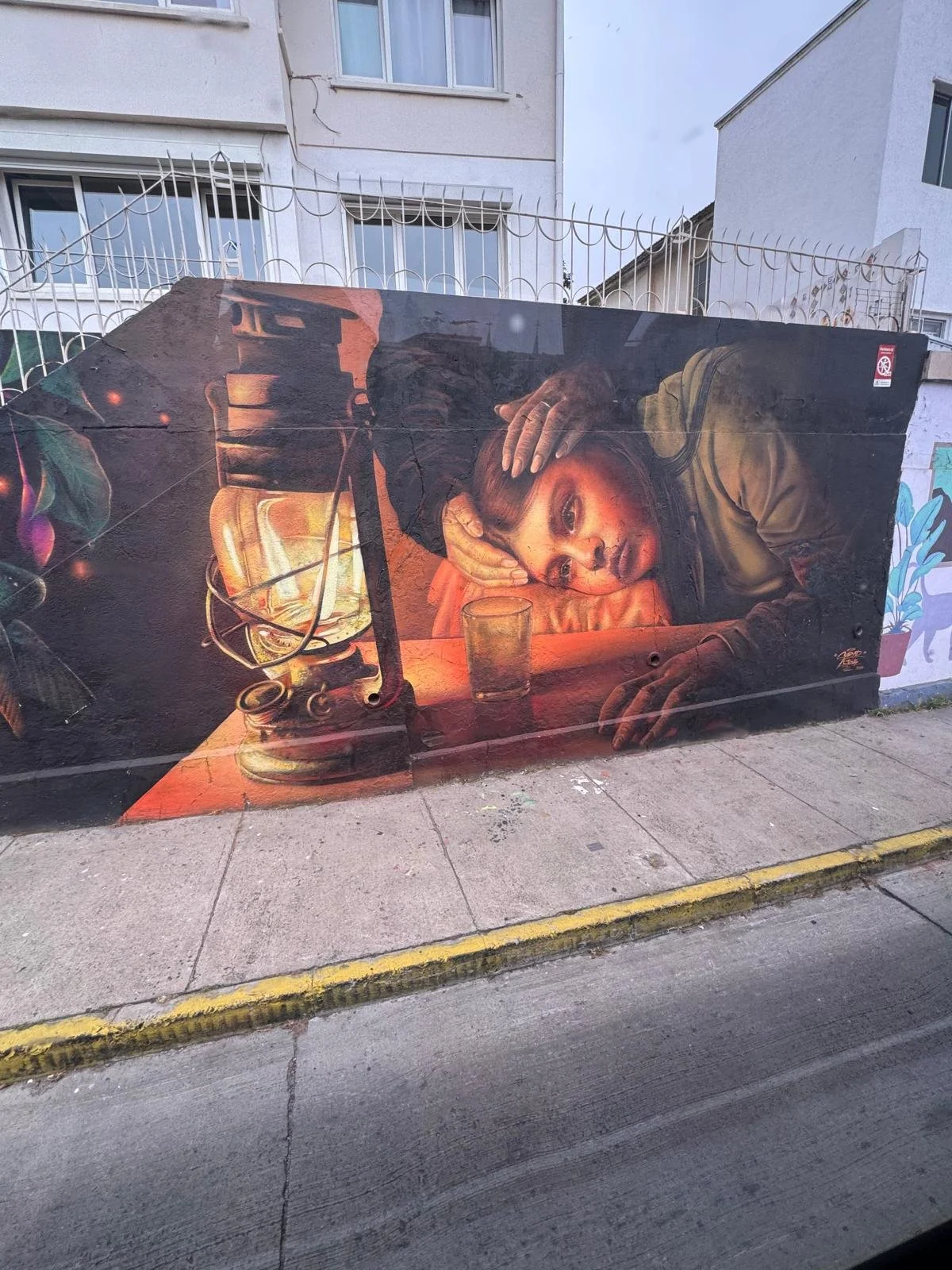
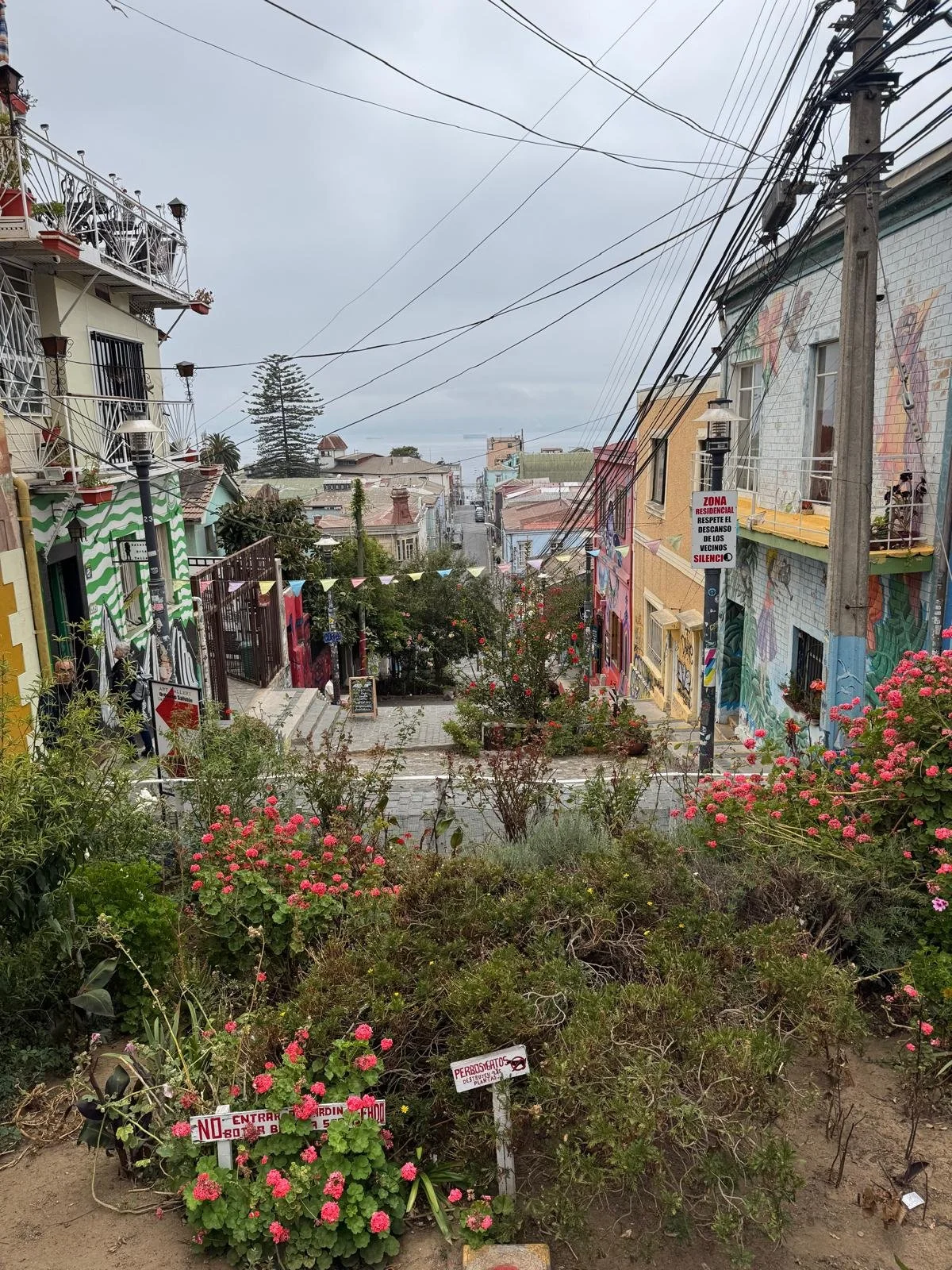
As usual, not wanting to waste any precious time, after having inhaled the magnificent view from our top floor, we headed out onto the very topsy turvey pavements to take in the area around us. The Cerro Alegre neighbourhood is located in one of the 45 hills of Valparaíso above the political and financial centre, and its name comes from the beautiful gardens that adorned the houses in the area in the 19th century. It is an area of about 0.7 km² and is very much my kind of place – so picturesque, so much colour, so many cute little buildings, art studios, shops and cafés, the highlight of which being all the beautiful colourful murals adorning so many of them and reflecting Valparaíso’s bohemian spirit– it’s a walking art gallery up and down the narrow streets, which due to the setting on the side of the hill, are full of staircases, so not great for poor Geoff with his dodgy hip! We had a wonderful time walking around with an artistic surprise around every corner. Recommended by the hotel, we stopped in to La Concepción restaurant for a light dinner and of course a Pisco Sour with a delightful view across the harbour.
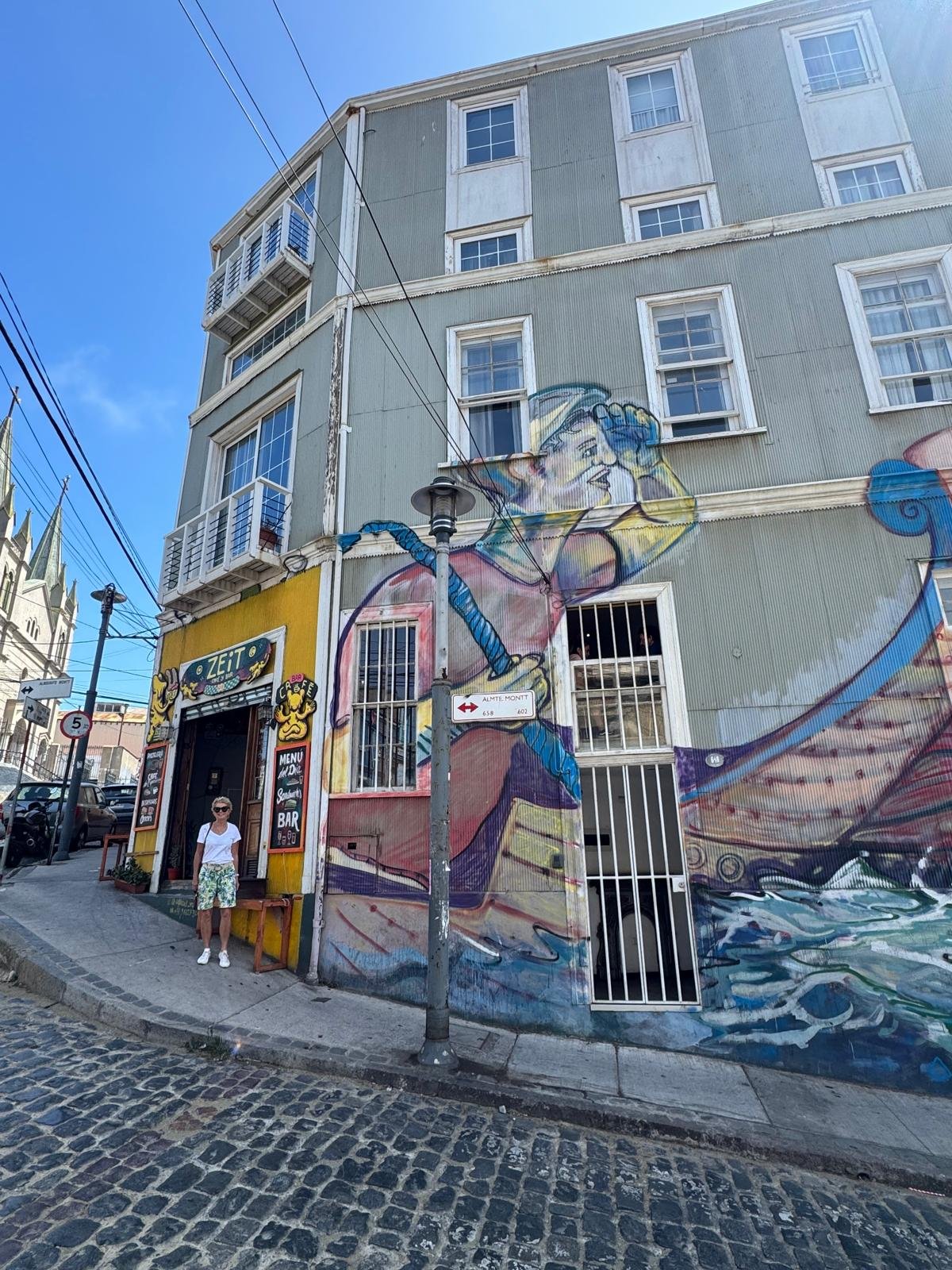
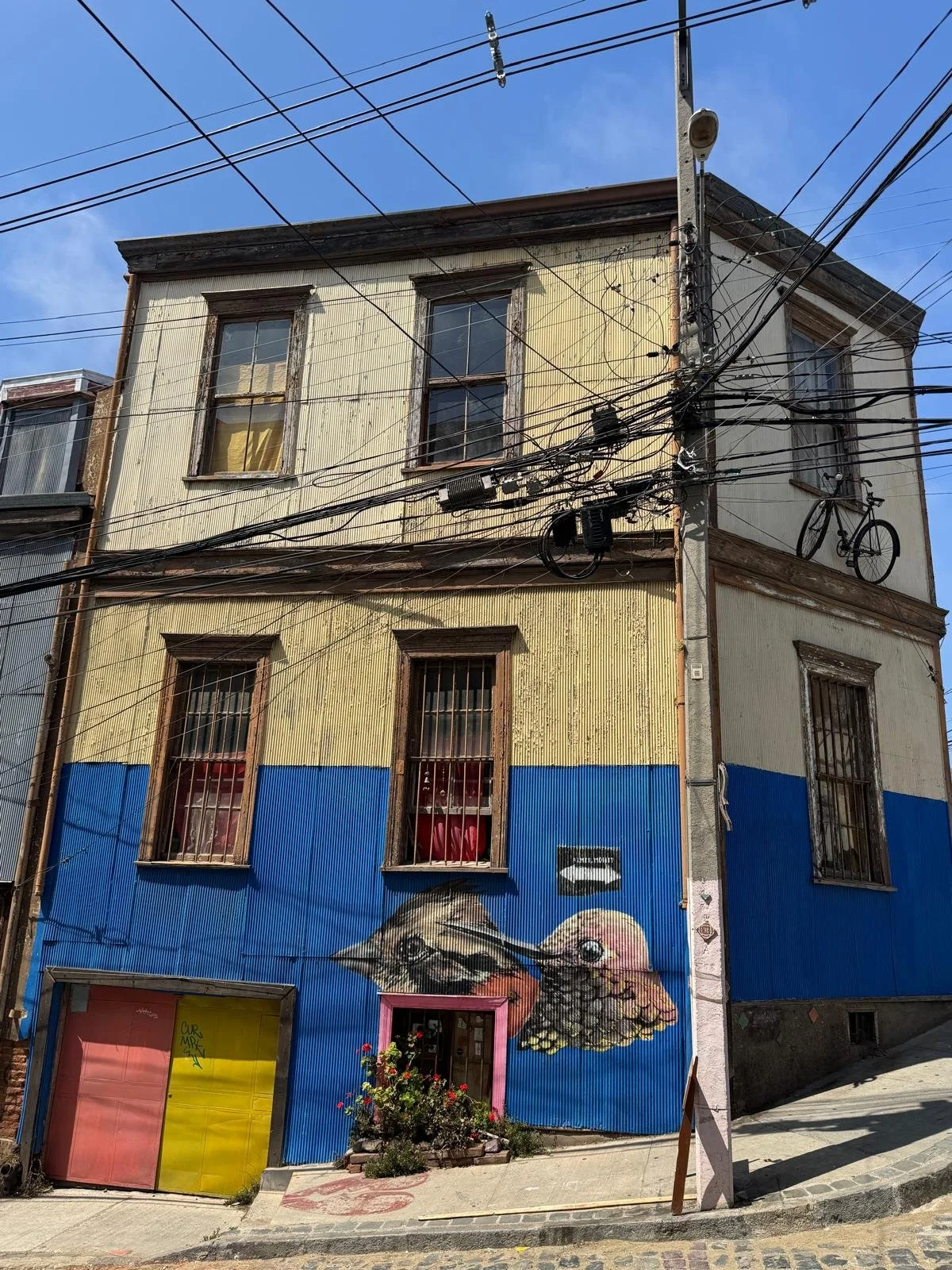
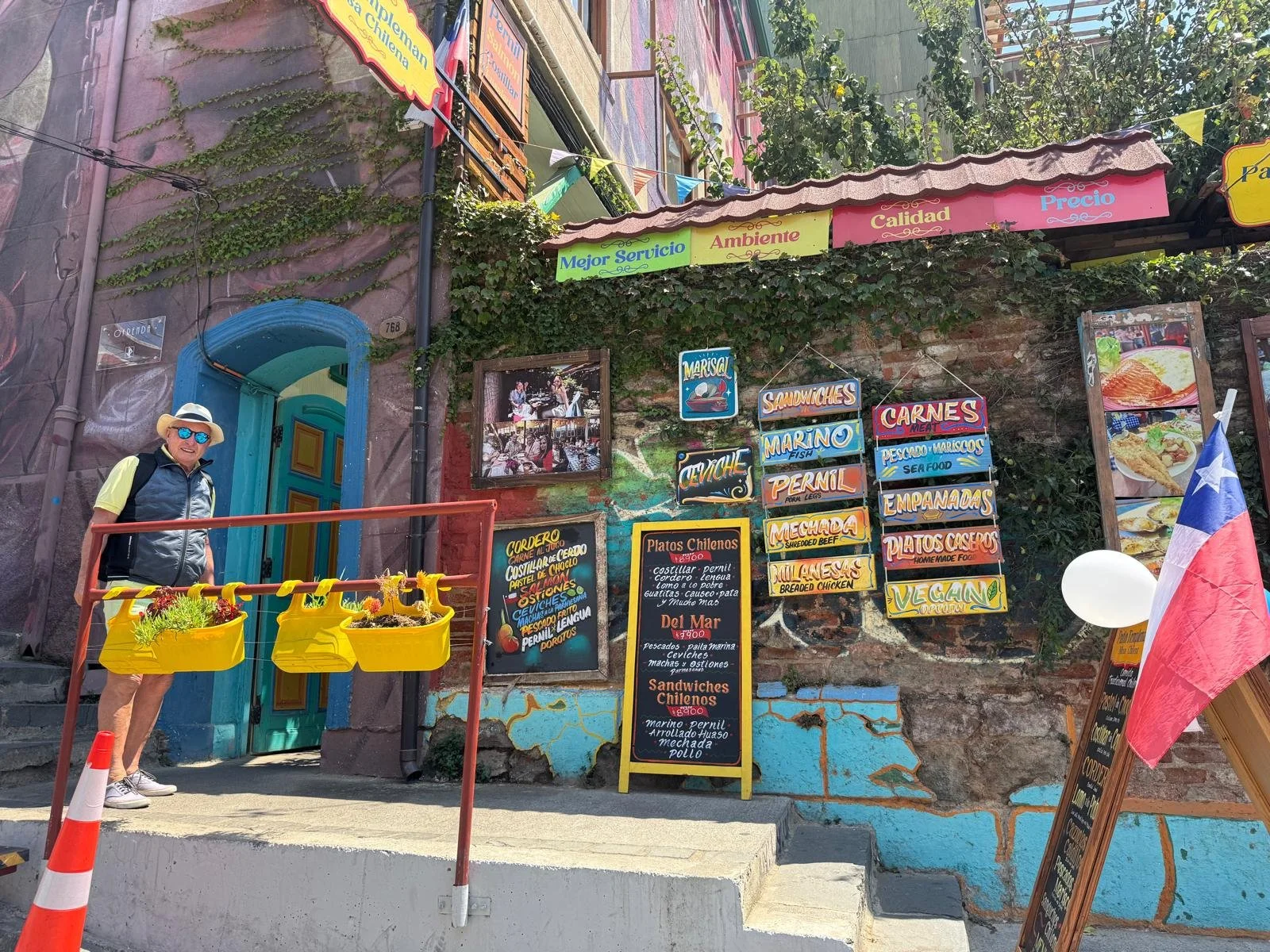
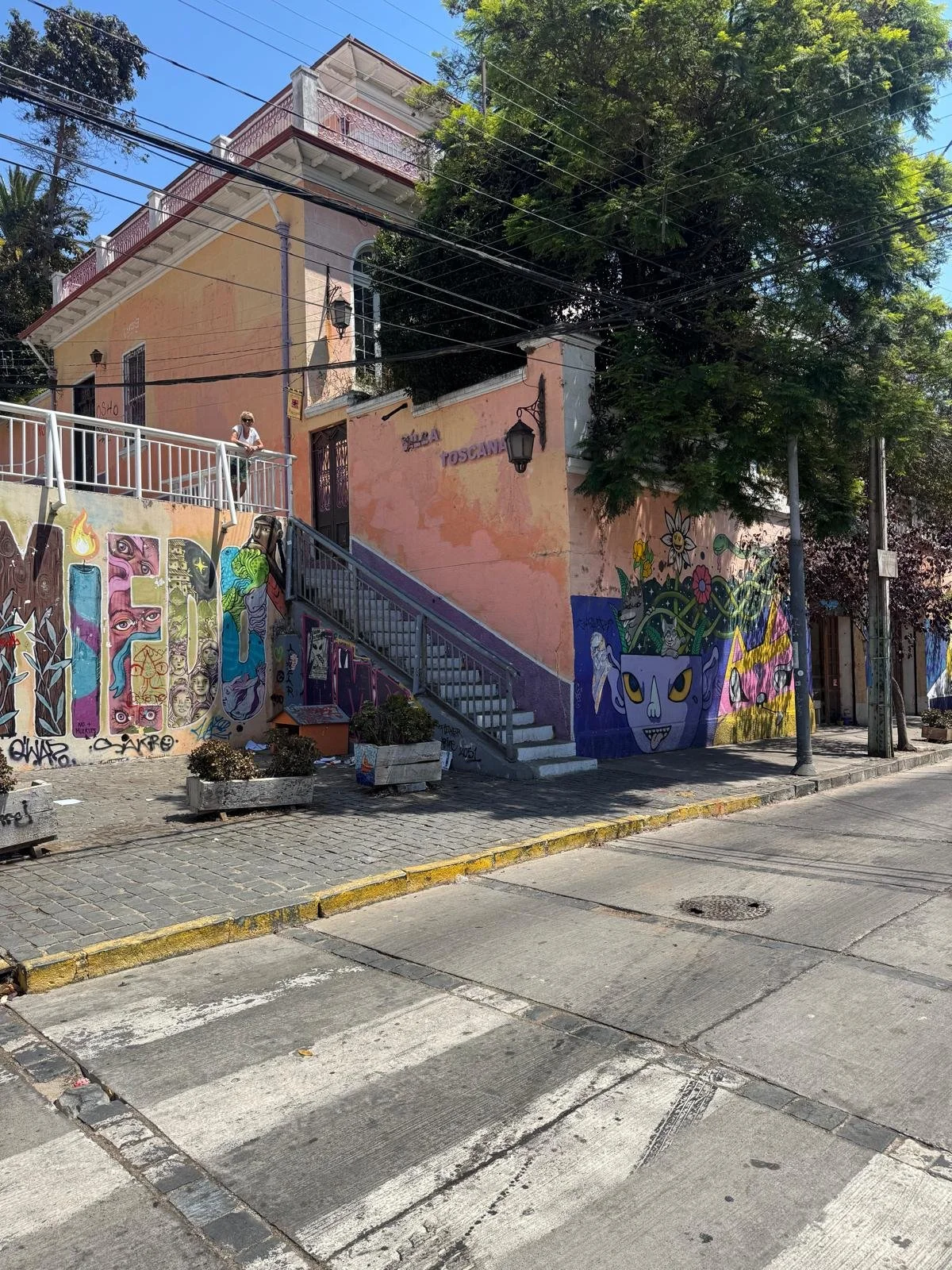
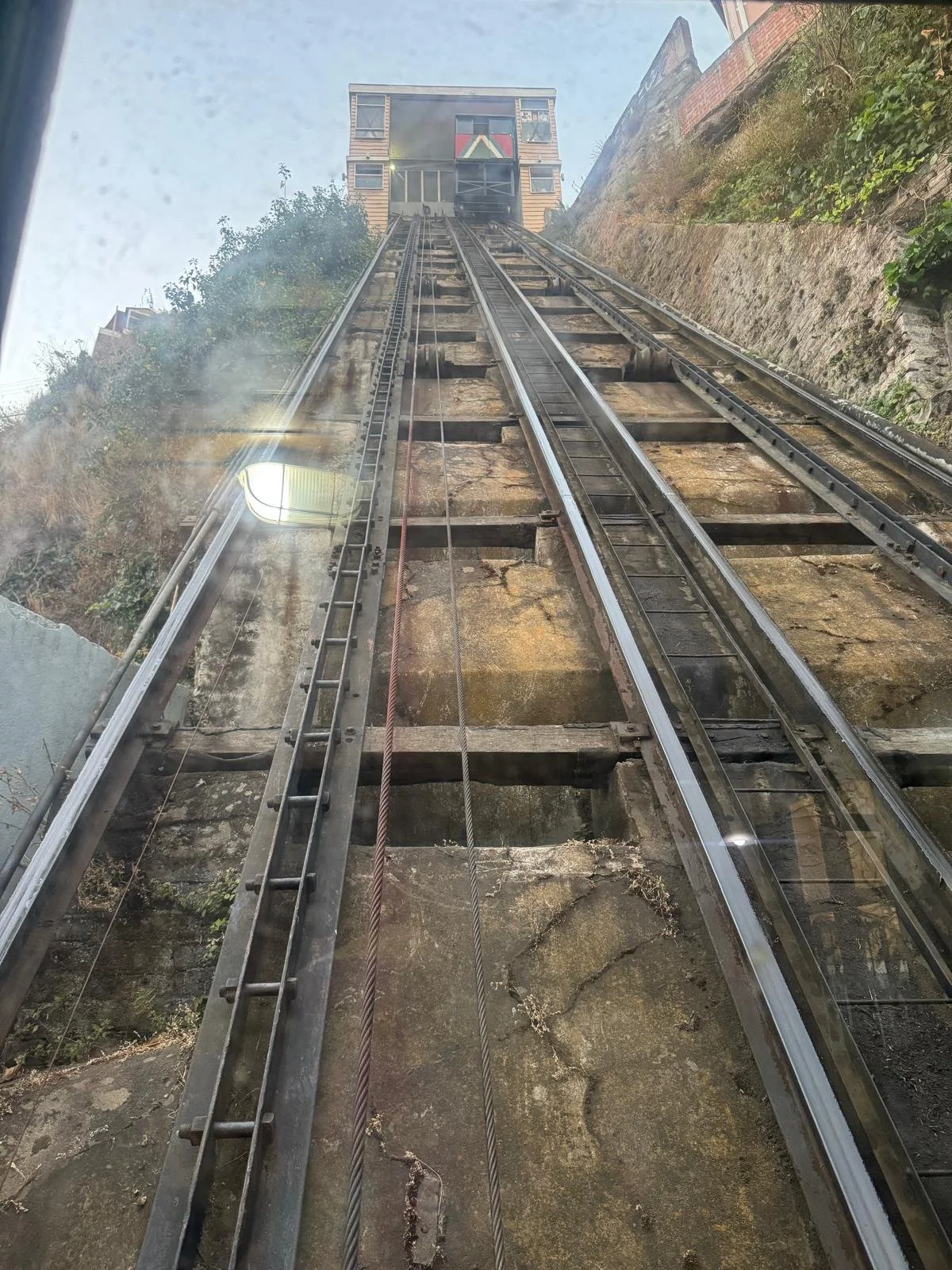
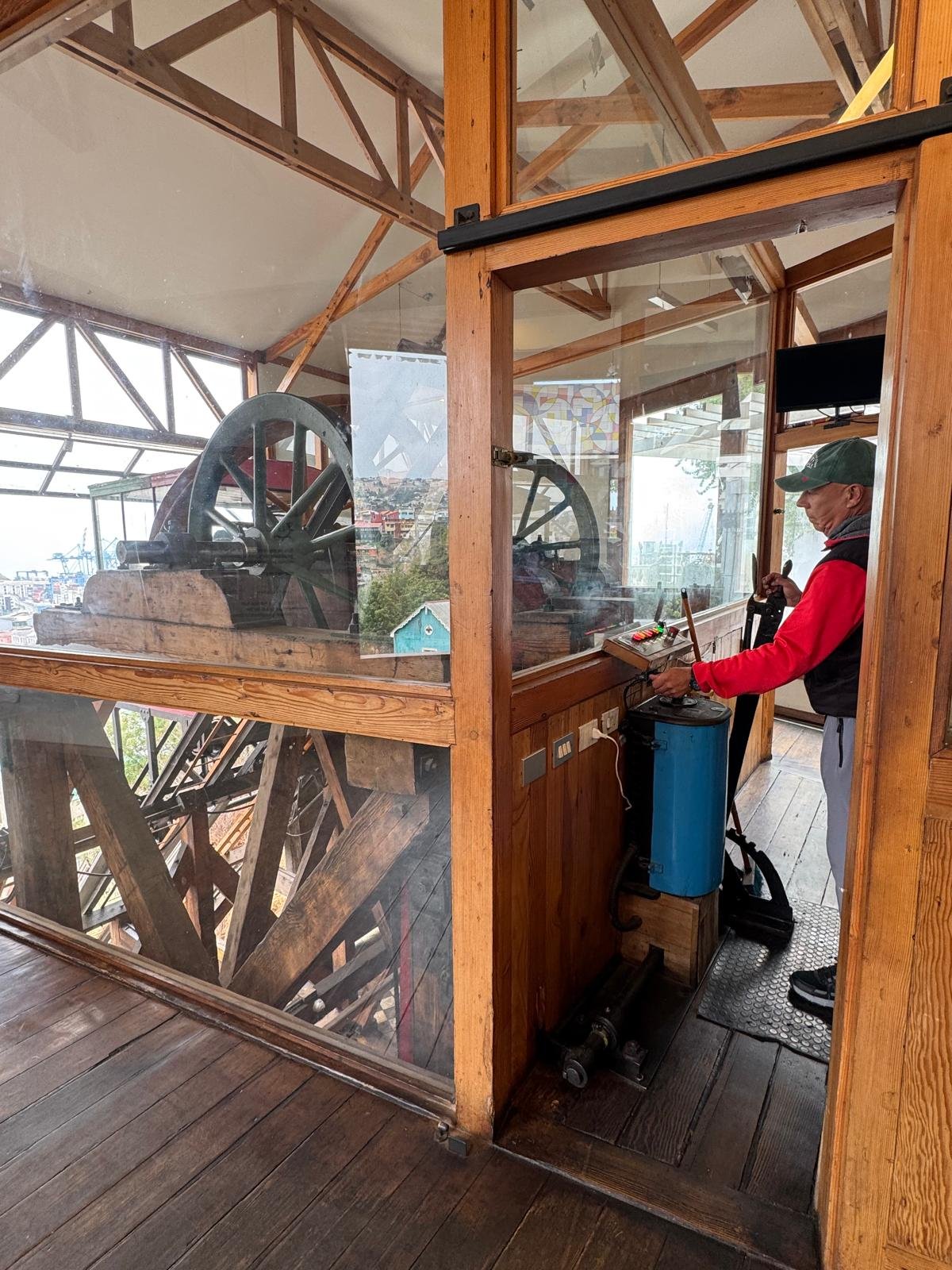
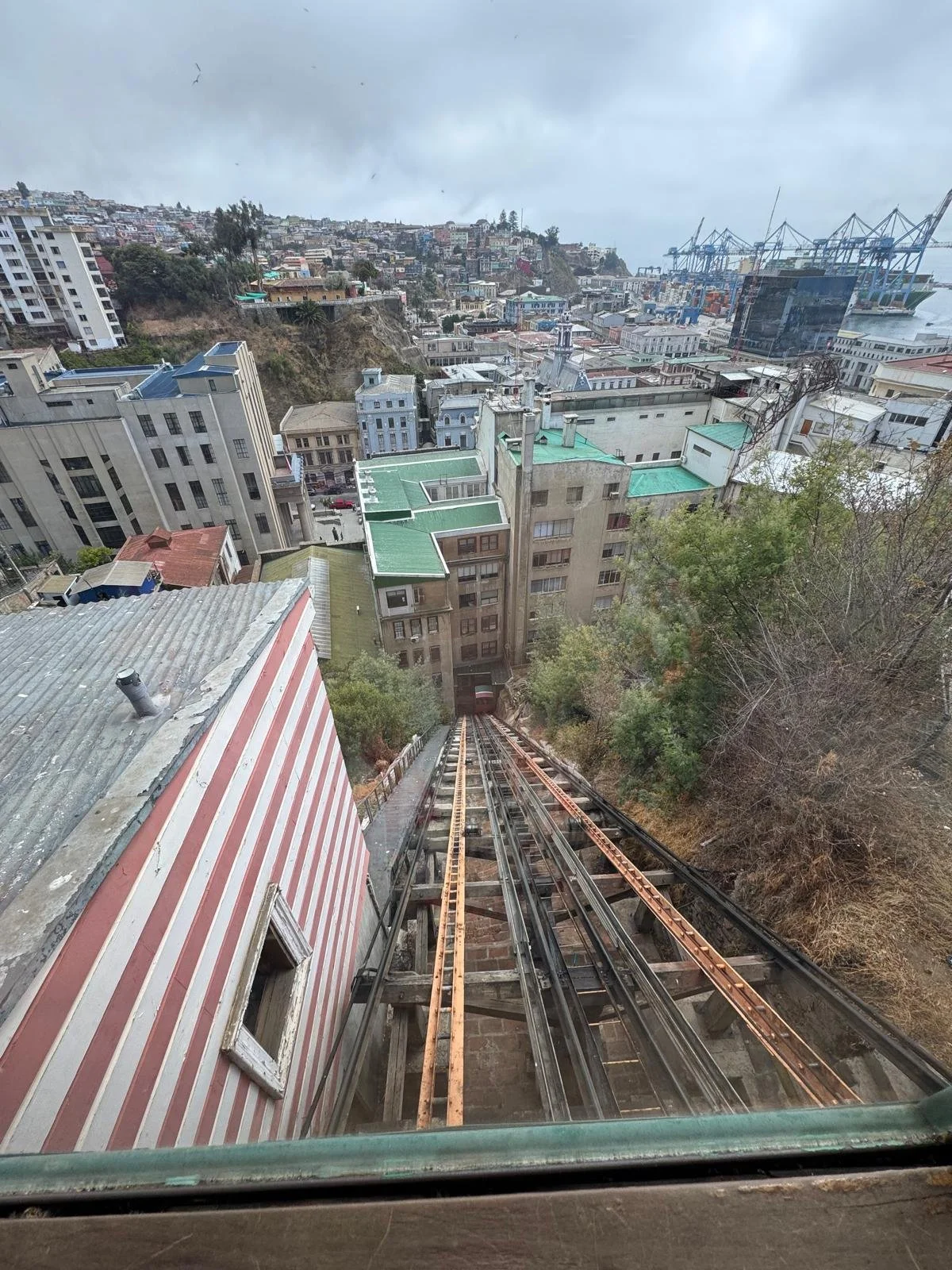
Due to all of the hills in Valparaíso, there are many small funiculars that help with the connection between the lower city and the hilltop neighbourhoods, and they also provide very scenic views. The two primary funiculars which were built in the early 20th century are both are in the Cerro Alegre where we are staying. So of course, we had to give one of them a try as we made our way down to the lower part of the city. We hopped on Funicular Concepción and got off at the lower end, but when we reached the bottom, it was cash only, of which we had none! So, after a few gesticulations and with our very limited knowledge of Spanish, we told the lady at the turnstile we would find an ATM and come back with the money (about a $4 equivalent!). Unfortunately, the area consisted of mostly closed commercial and legal buildings, but we did find a helpful gentleman who walked with us to a small variety shop and showed us the ATM at the back. It was beginning to get dark we and headed back to the funicular to pay our debt (good honest people that we are!) and passed the funicular lady en route – I tapped her on the shoulder and she said the funicular was now closed – but was very happy to accept our CLP 2,000 - good on her, we had duly paid our debt and she had a little bonus that night. Nothing left but to climb the huge staircase back up to the old town, find our hotel and bed for the night. We have windows both sides of our room, so it was lovely to see our Viking ship all lit up in the harbour on one side, and the twinkling lights of the houses on the cliff, where most of the locals live in their lovely, colourful homes.
Sunday 22 February
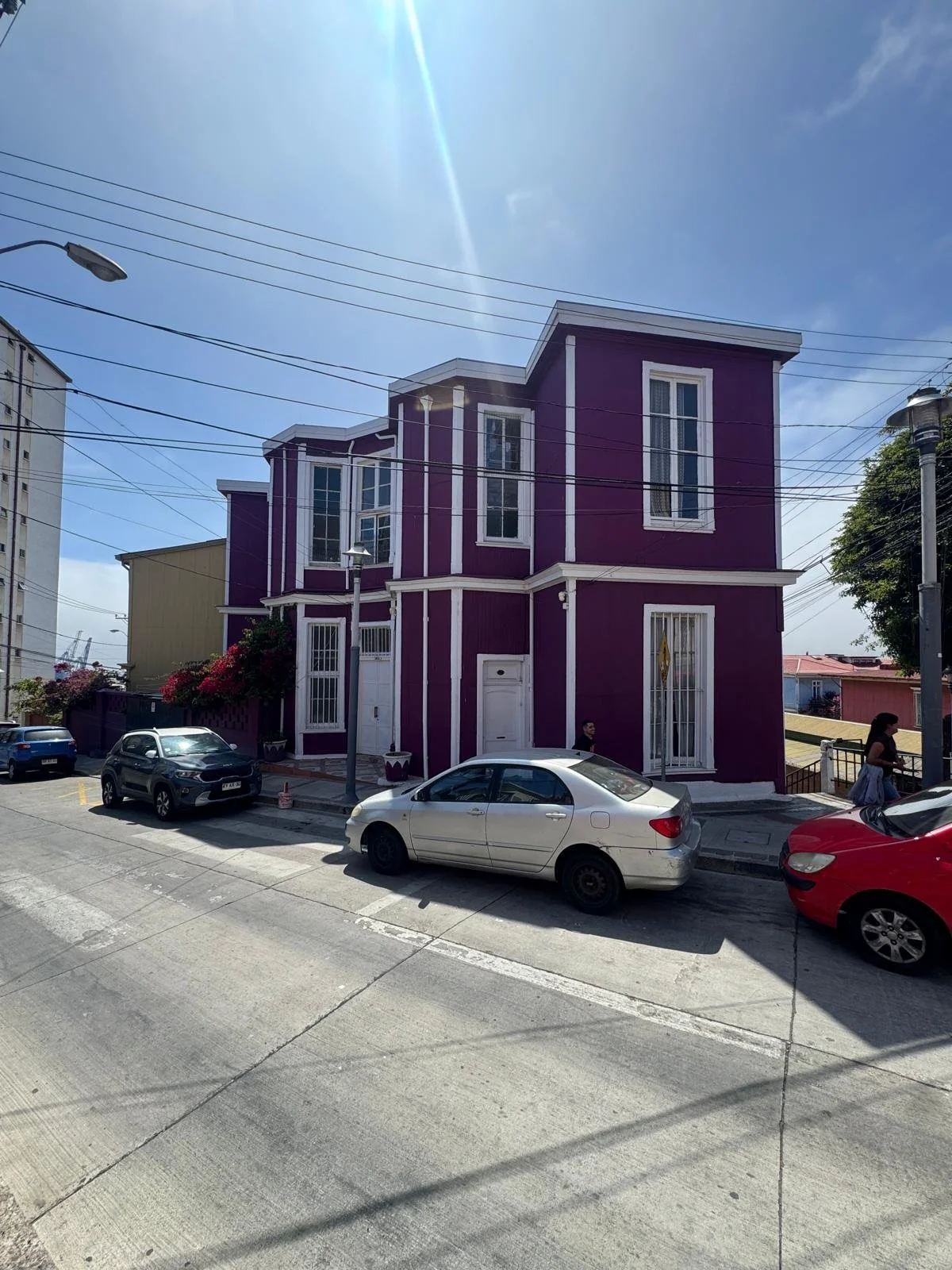
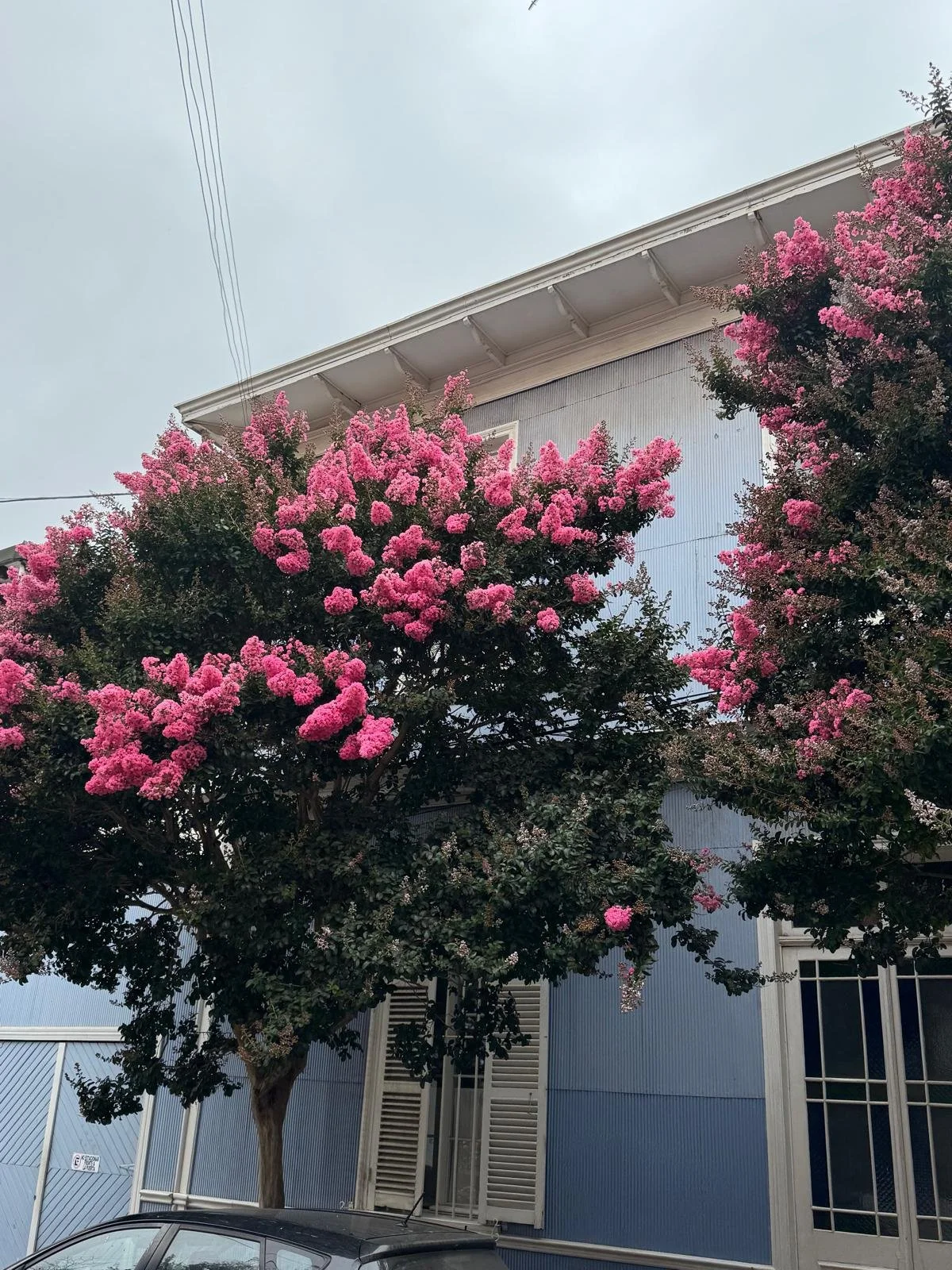
It’s D-Day for us today – this is the day we embark on our Viking Jupiter cruise – boarding time anytime after 1pm. So after breakfast on the patio of our hotel we had another little walk around the neighbourhood and took some more pictures of all the beautifully muraled (is that a word?) houses and shops. It’s Interesting to see that many of the houses are covered in corrugated iron - often called calamina locally. After researching why I found out that it originated in the late 19th and early 20th centuries when British and German immigrants used these metal sheets, which were originally brought as ballast on cargo ships, to protect their wooden-framed homes from the city's humid coastal climate, and then painted them in the vibrant, contrasting colours, creating the distinctive, UNESCO-recognized aesthetic seen throughout the neighbourhood. It certainly makes the neighbourhood very special.
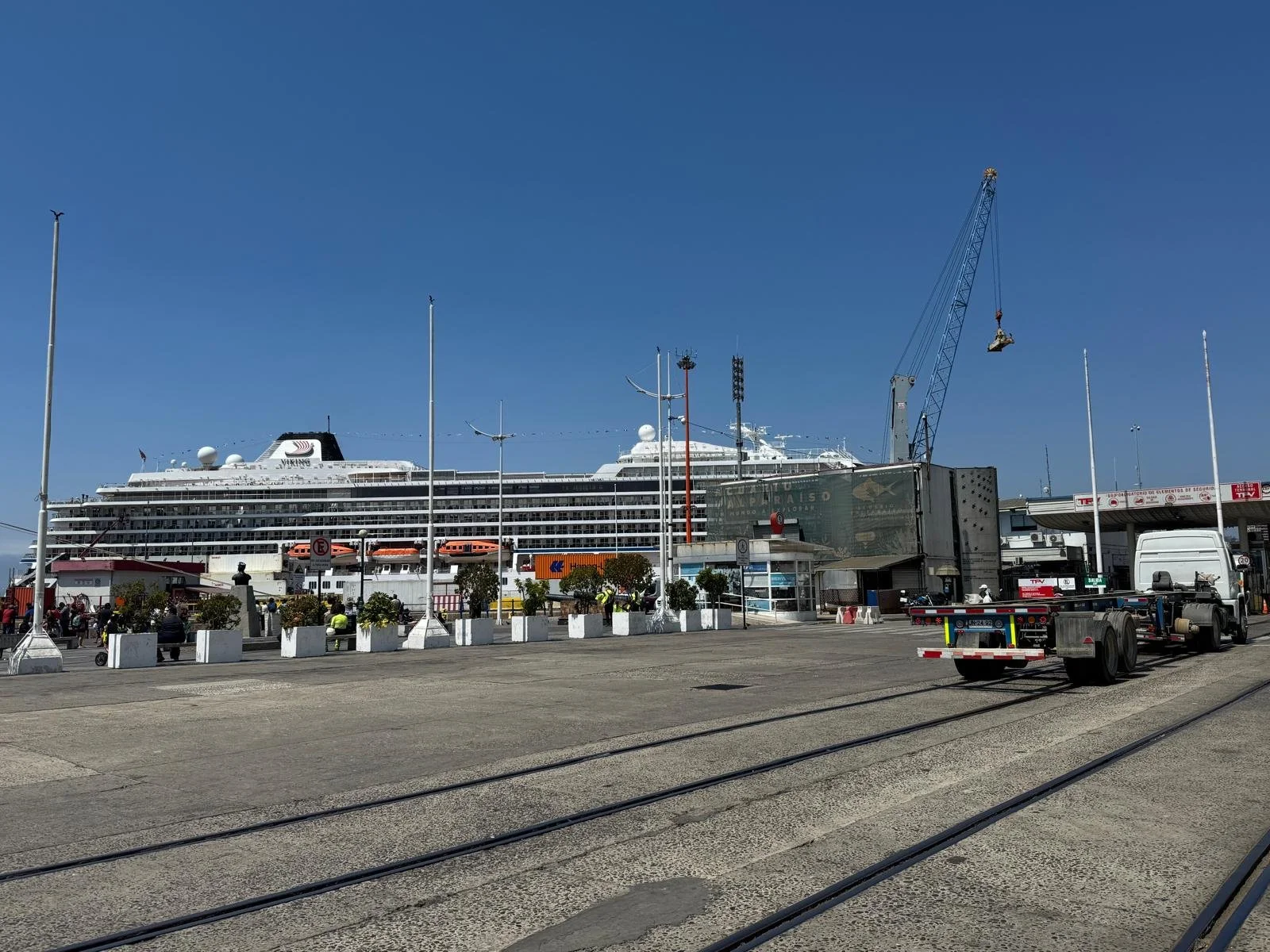
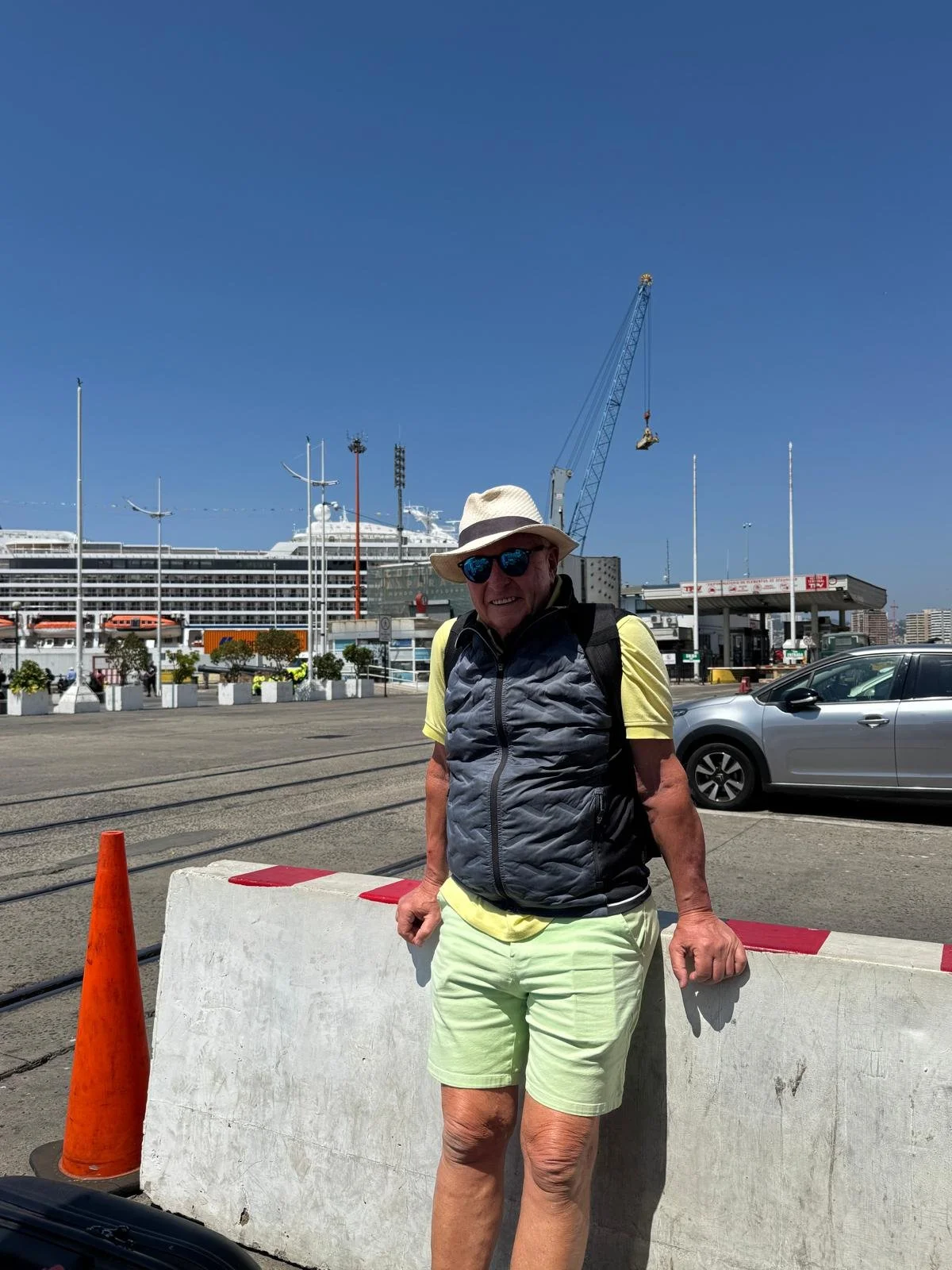
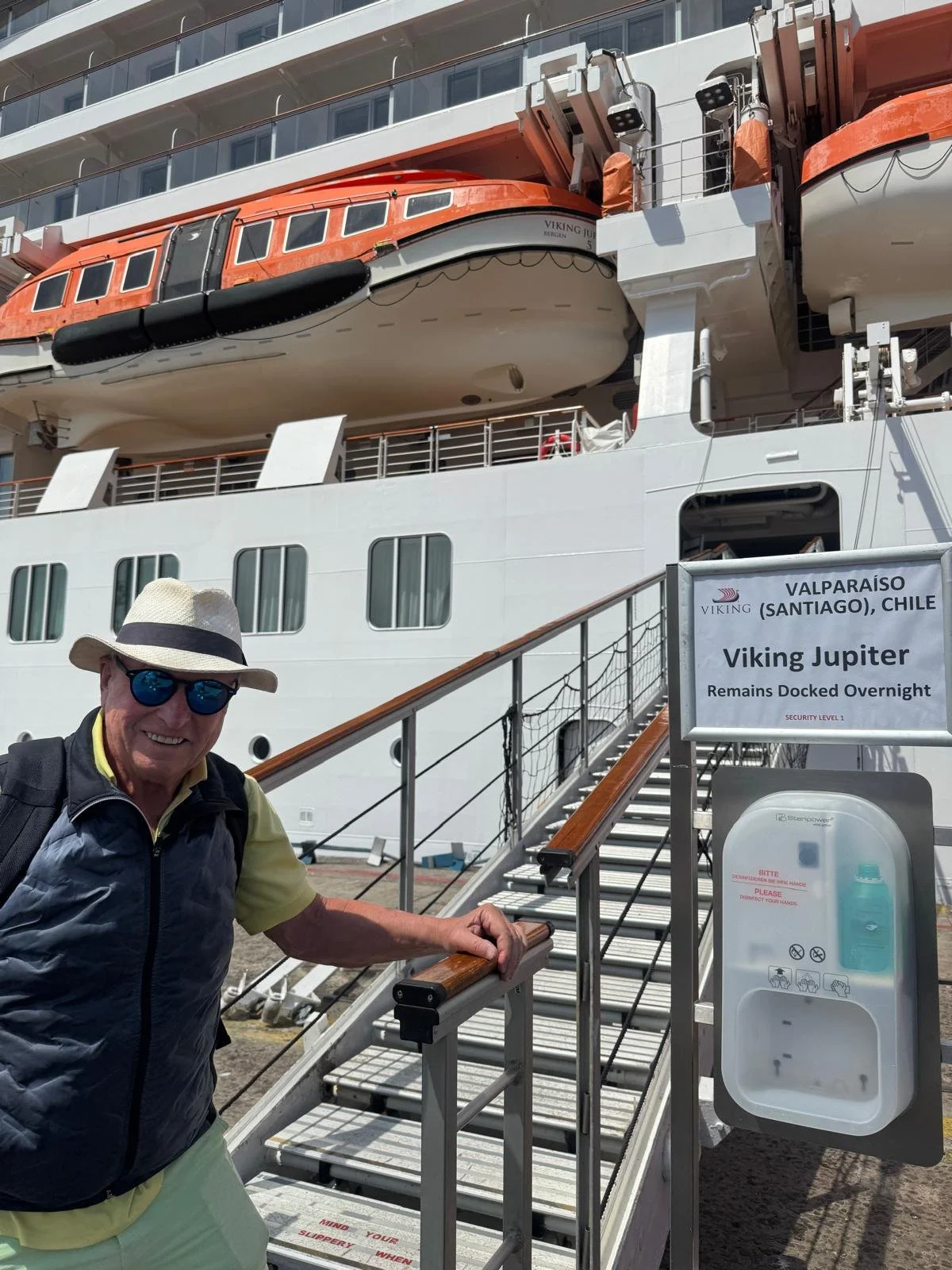
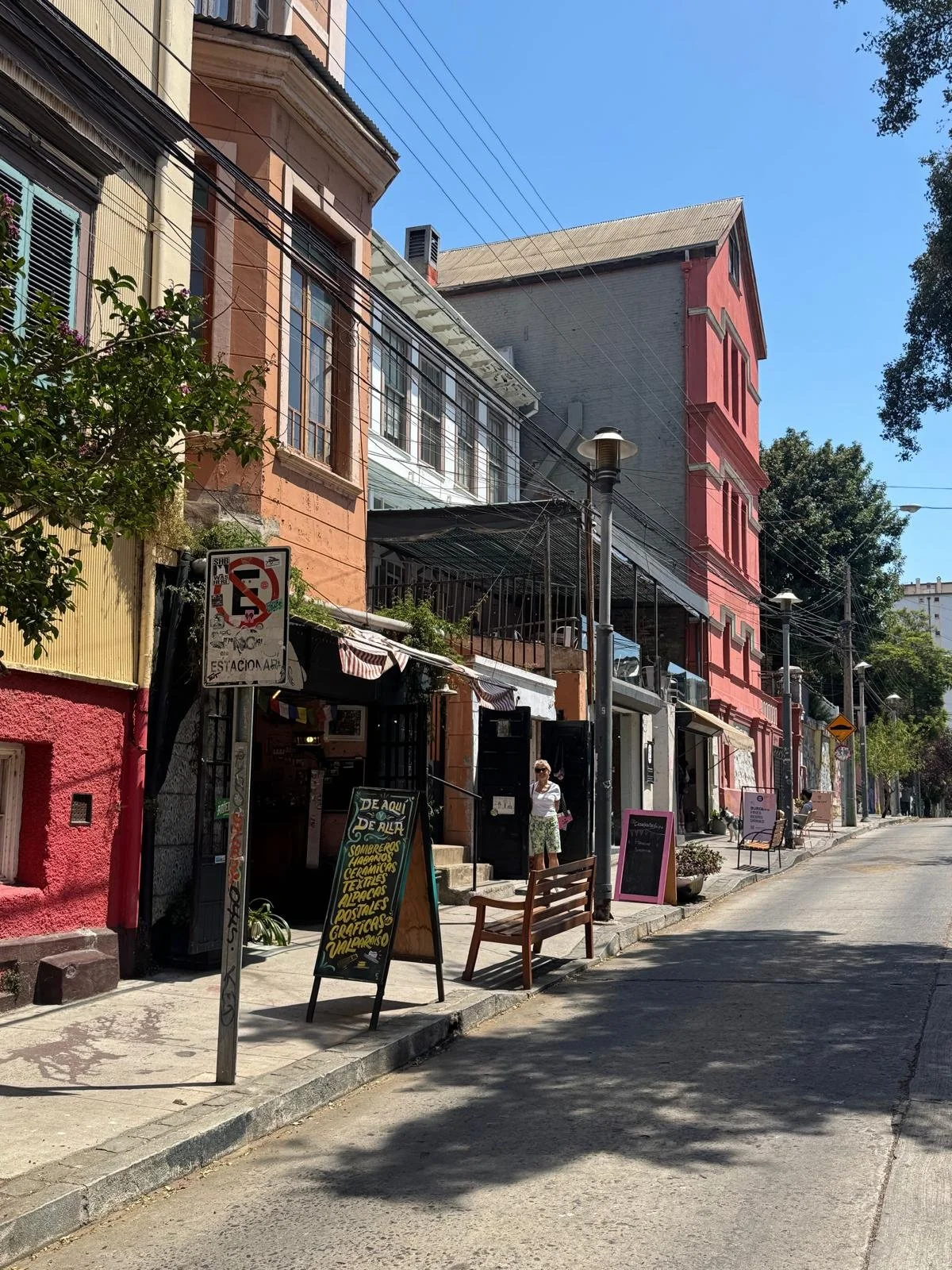
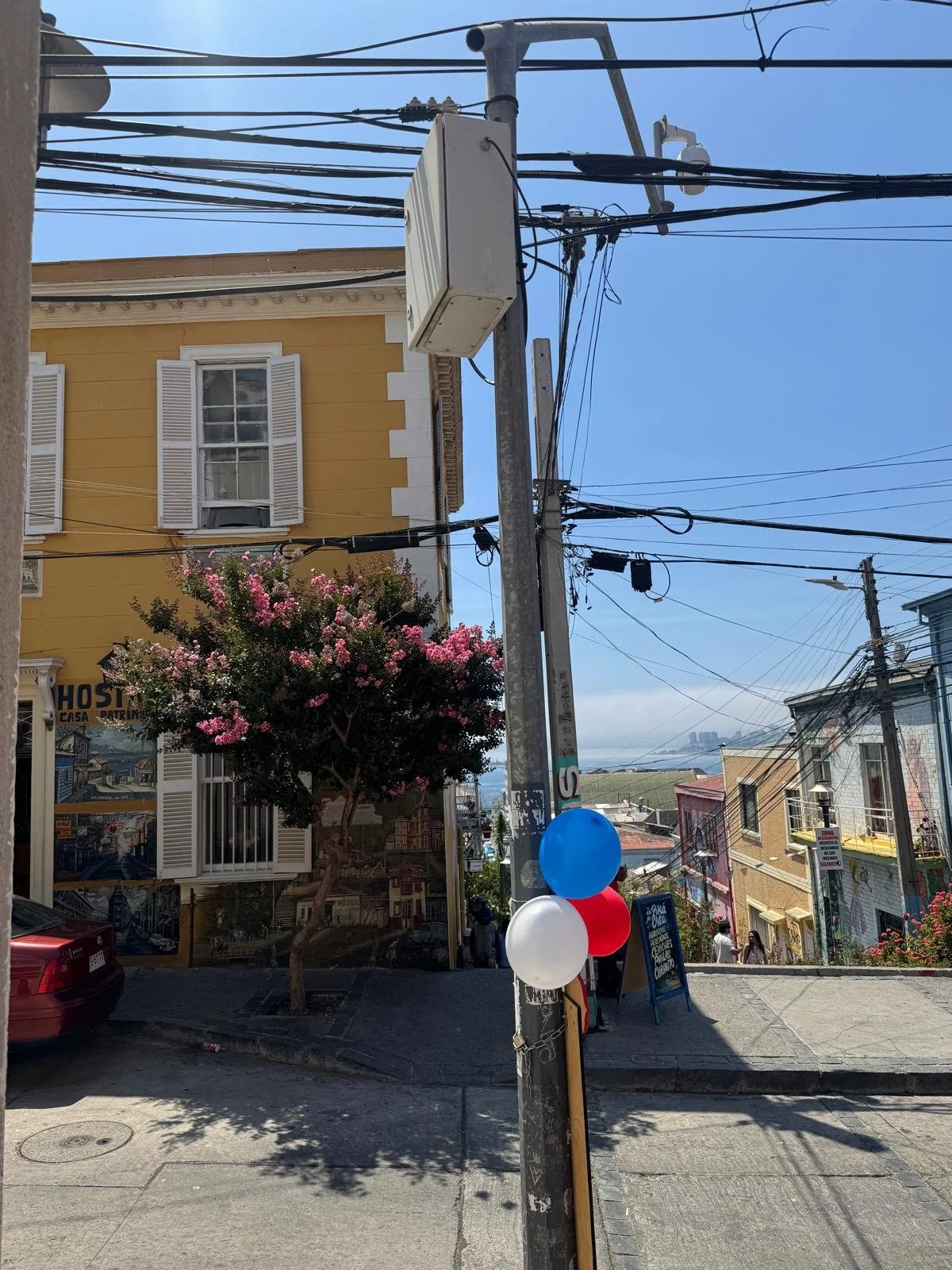
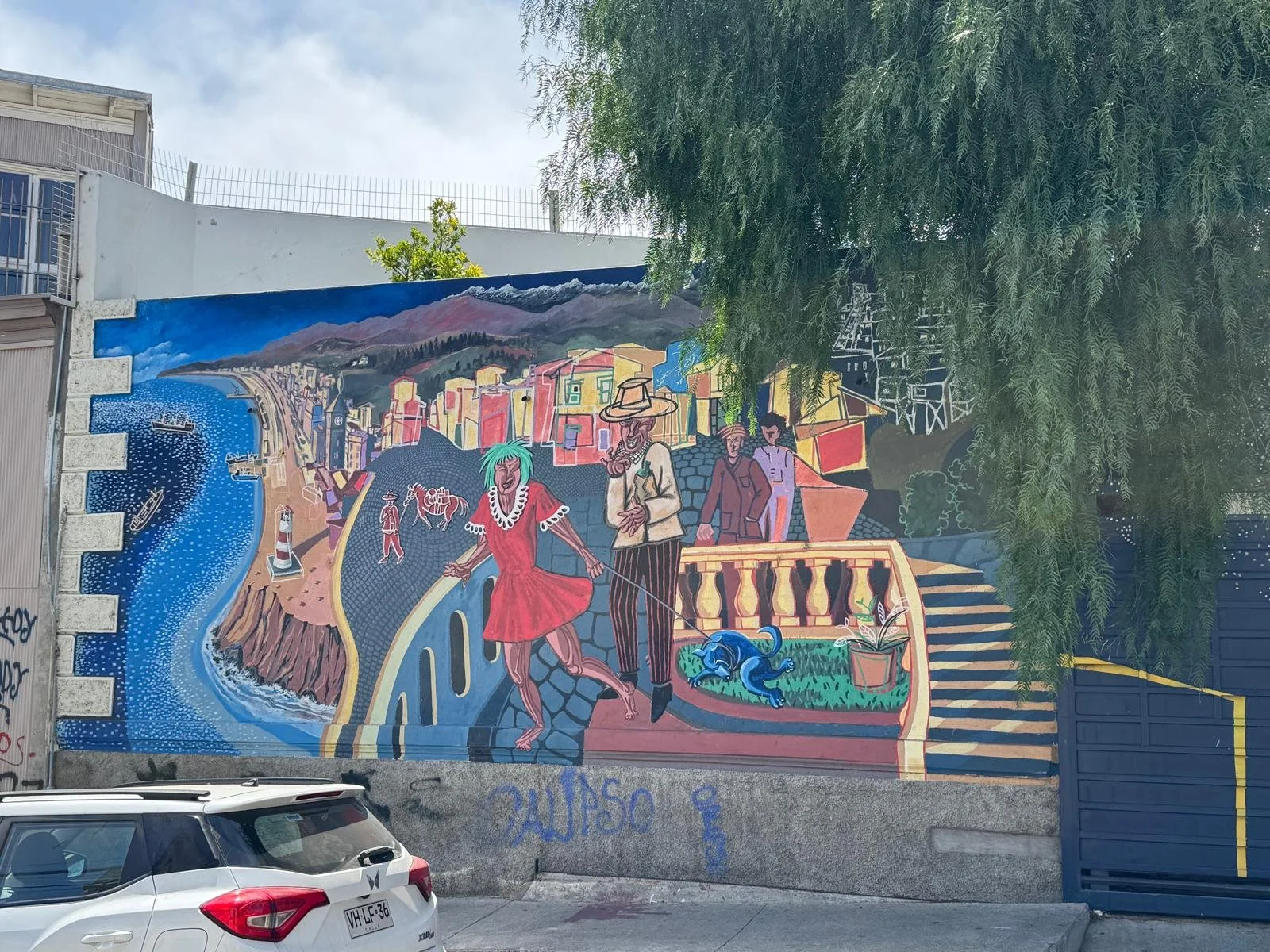
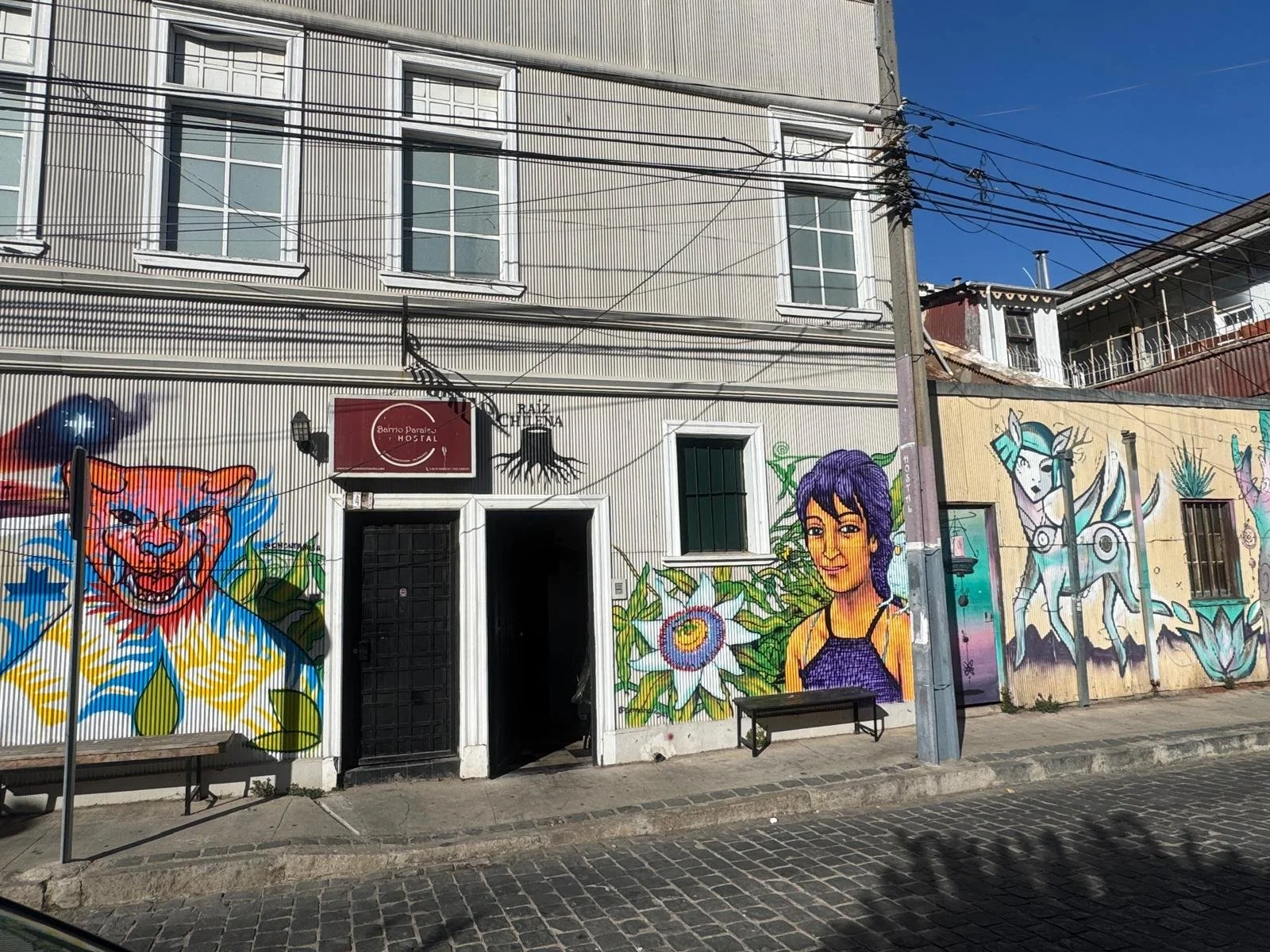
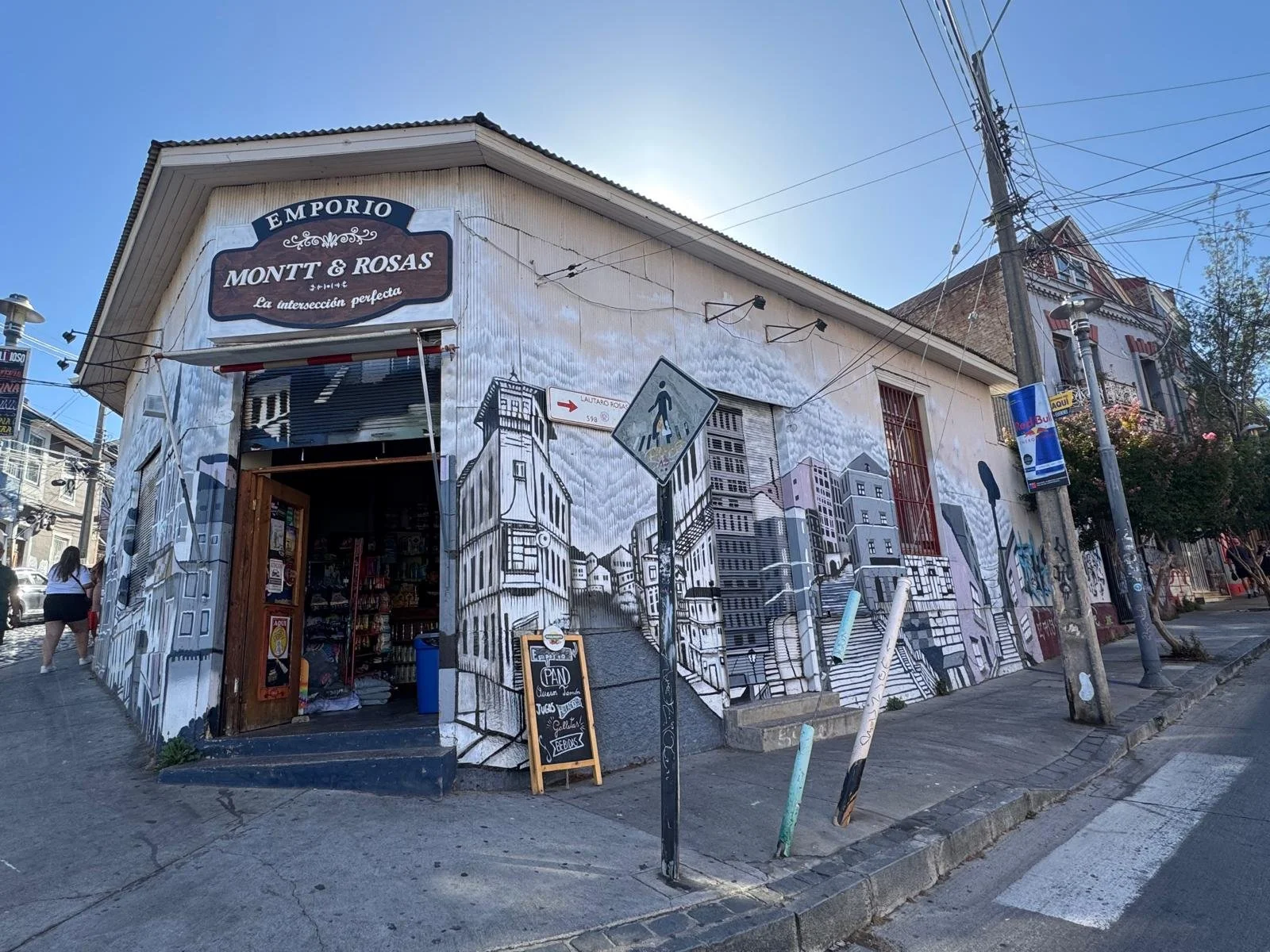
And we’re here on Pier 8 – and with a very slick check-in we’re now in Cabin 6072 on the 6th deck looking back onto the eclectic neighbourhood we left a few hours ago. The Ship is in port overnight and we have a Valparaíso tour tomorrow which I think will replicate a lot of what we have seen today, but it’s all so charming we won’t mind a repeat. All will be reported to you tomorrow!
Monday 23 February
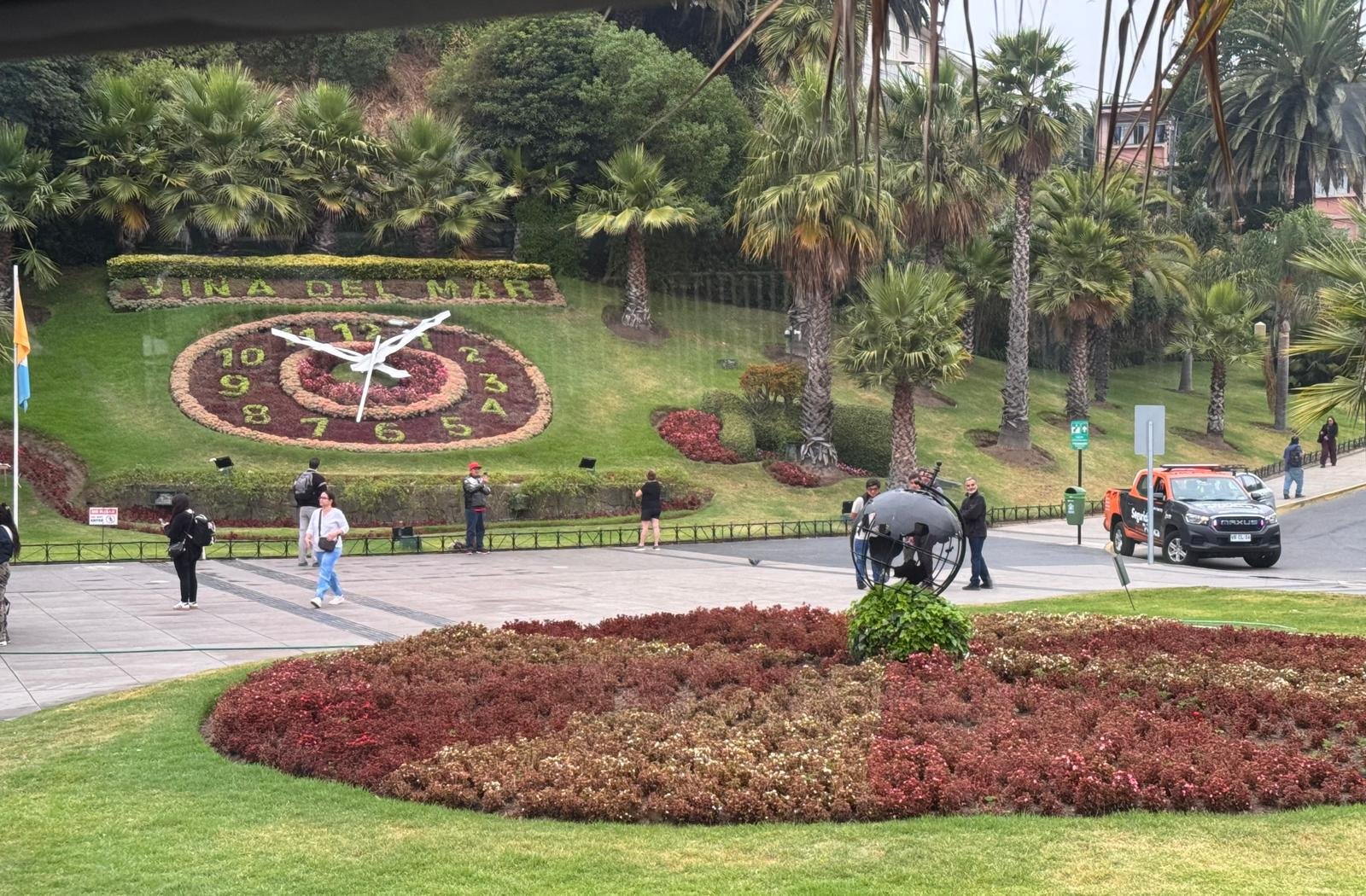
A well-deserved relaxing afternoon and evening yesterday as we settled into Viking life once again. This is our third Viking ship, this time we’re on the Jupiter. They all have the same layout, so we were very much at ease straightaway. A 6.30am visit to the gym, followed by breakfast and we were ready for our Valparaíso city tour. Firstly a bus tour of Viña del Mar on the shores of the Bay of Valparaíso. It was founded with its current name on December 28, 1874 by the Chilean politician and writer José Francisco Vergara, who together with his wife Mercedes Alvares inherited the land where the city is currently located. He decided to hire a group of engineers who made the layouts of the streets and formed an urban centre. Viticulture, began in the Marga Marga estuary basin when its lands were acquired by Alonso de Riberos in 1580, who planted the first vineyards . Located opposite the path that connected the port of Valparaíso with the Quillota valley, they became known as Viña de Riberos or Viña de la Mar, a name that came to encompass first the basin, then the settlement established on the banks of the Marga Marga, and later the city. Wine production in the area continued until 1827, when the old vineyards were destroyed by a wind and rainstorm. So despite being known as Vineyard of the Sea – there is now not a vineyard in sight!
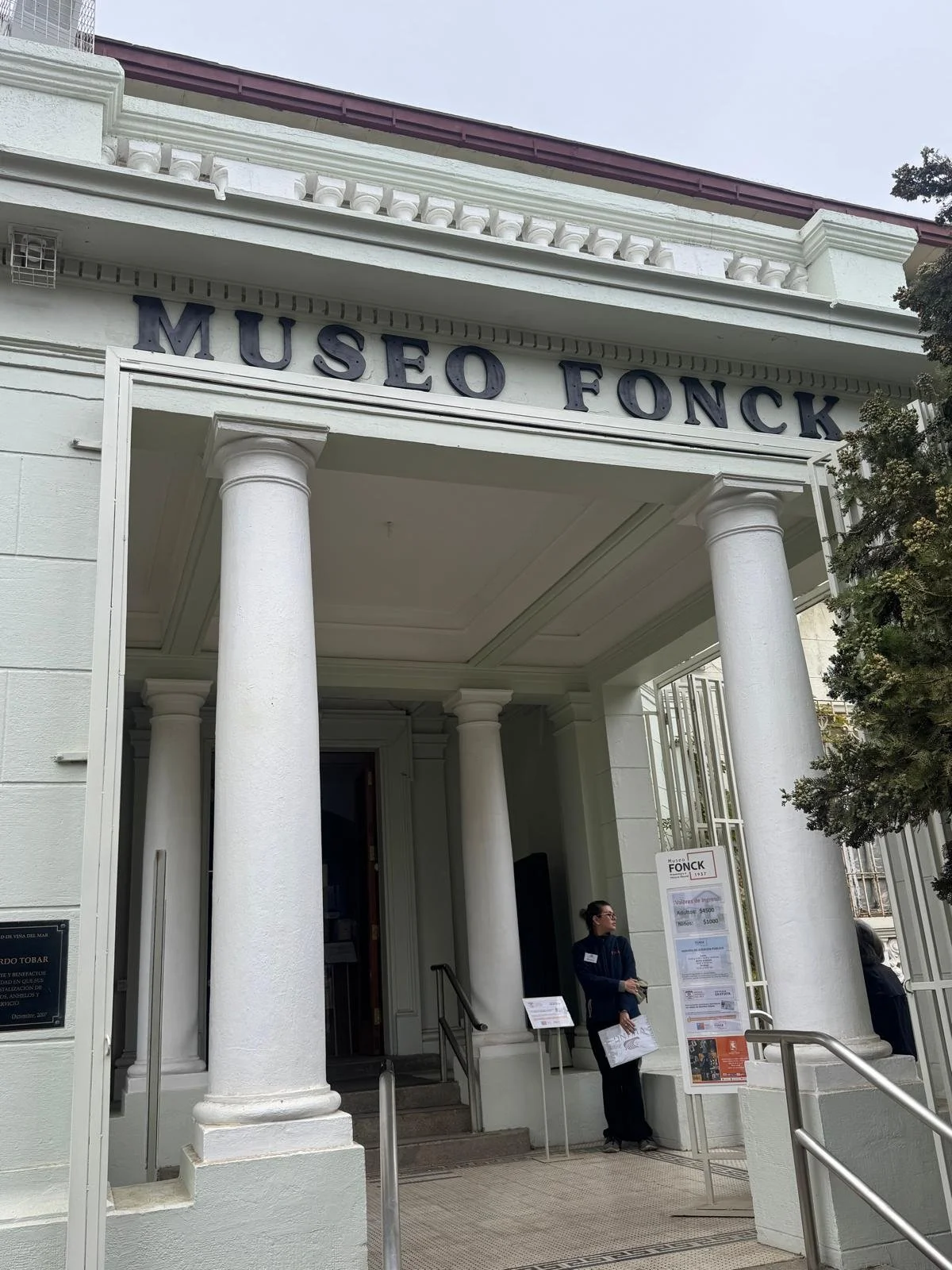
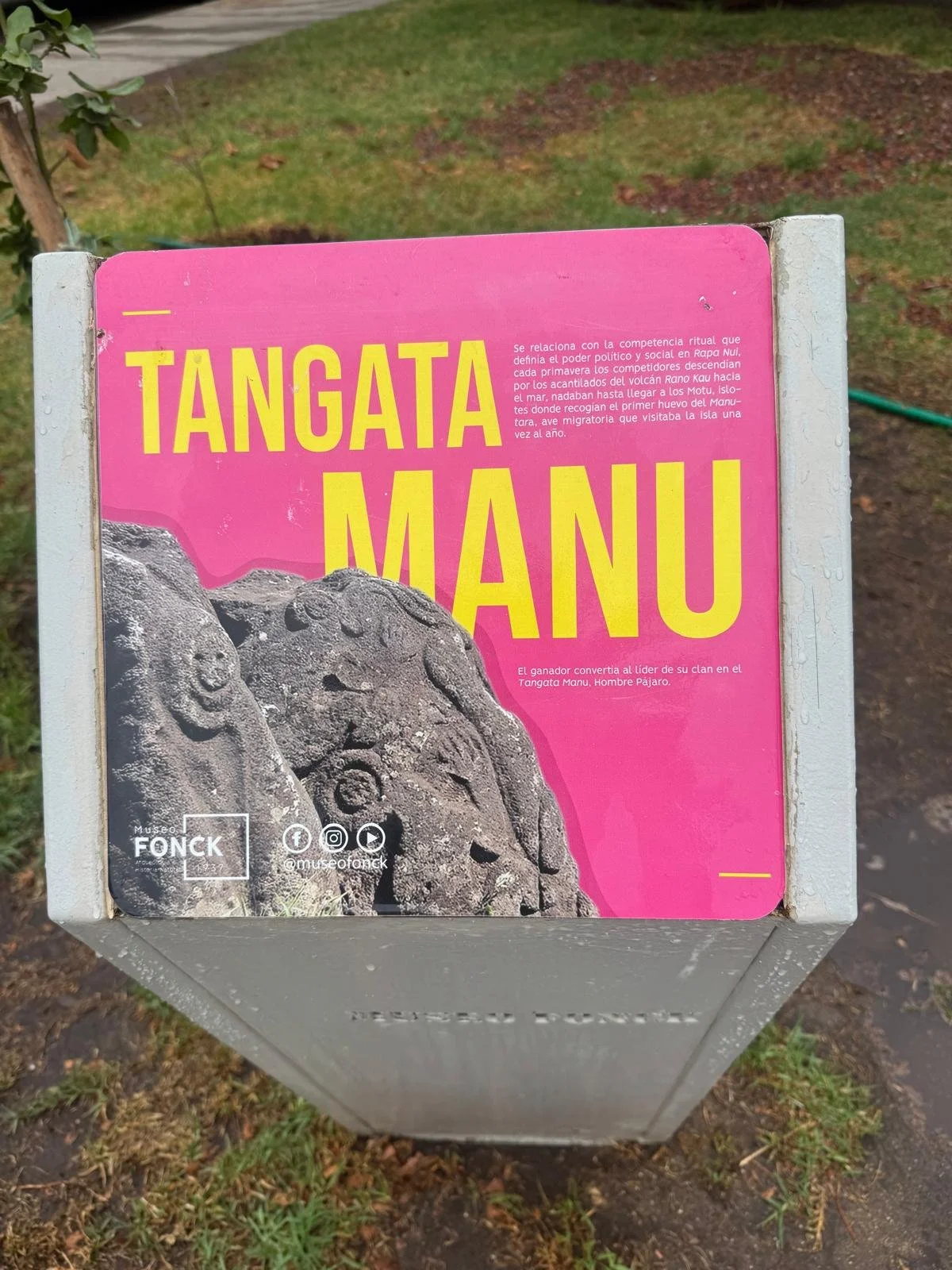
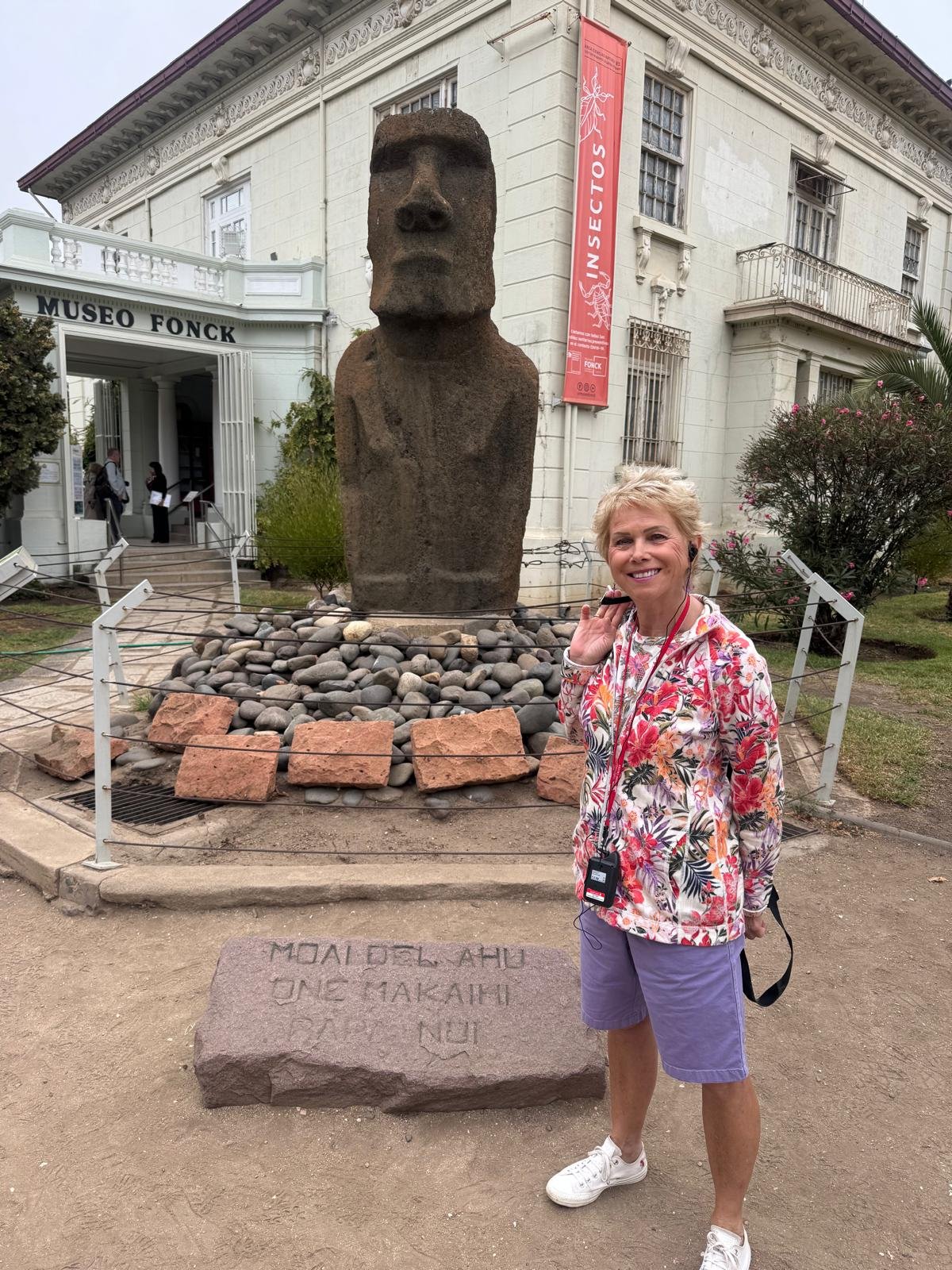
Our first stop was the Fonck Museum. Originally the home of the wealthy Délano family in the early 20th century, this impressive building was acquired by the local Municipal Authorities in 1985 and converted into a museum. It is named in honour of Dr Francisco Fonck Foveaux, a German-born physician, explorer and philanthropist who made significant contributions to the archaeology, history and geography of southern Chile. Two principal collections are housed here - a natural history department dedicated to Chile's native fauna and flora and an archaeological department offering a permanent display related to the indigenous peoples of Northern Chile, the Aconcagua region and the Mapuche in the south of the country. The museum also houses one of the most important collections in the world related to Easter Island, including the only genuine Moai statue in the whole of continental Chile, which is located outside in the garden at the entrance.
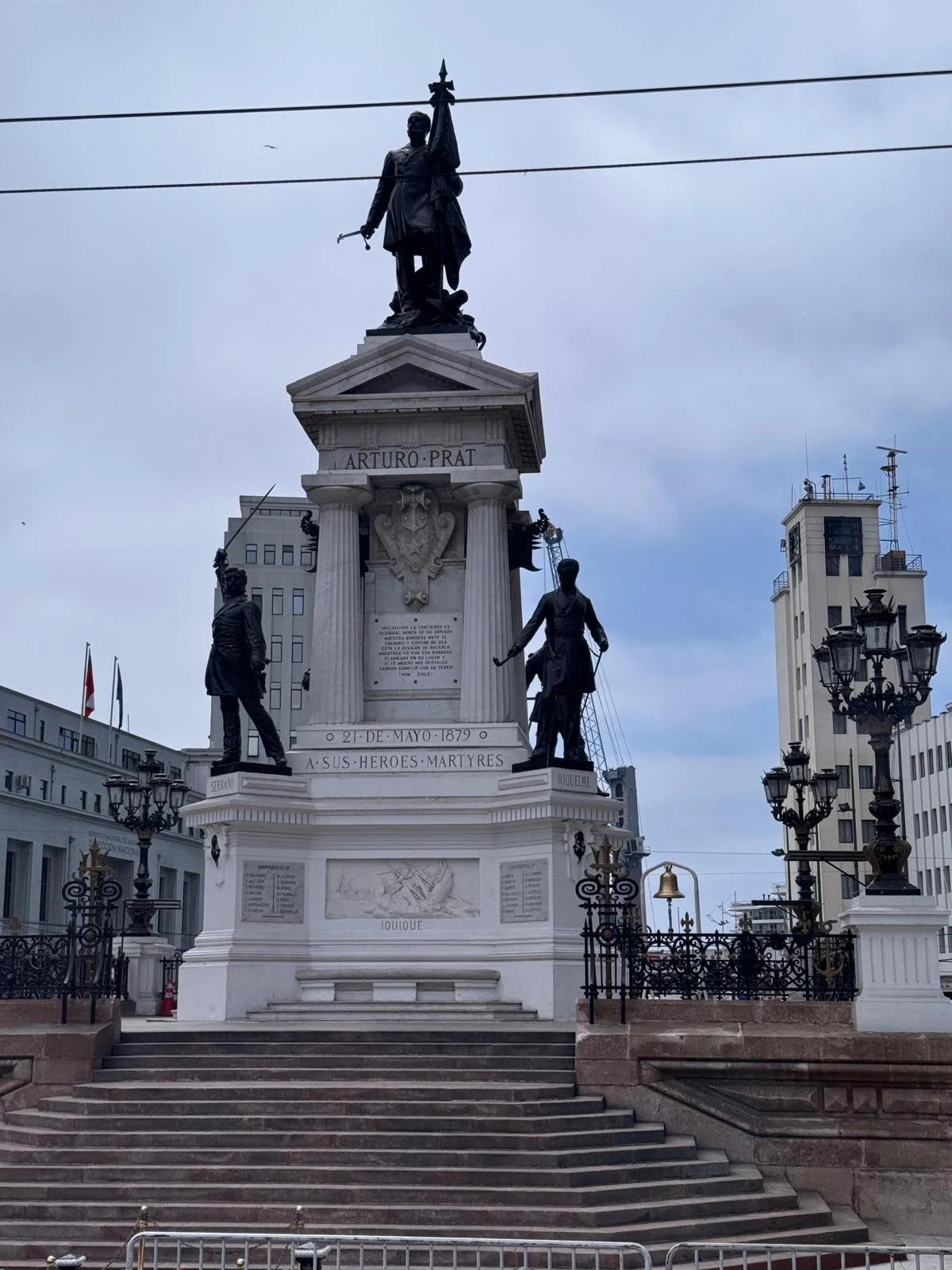
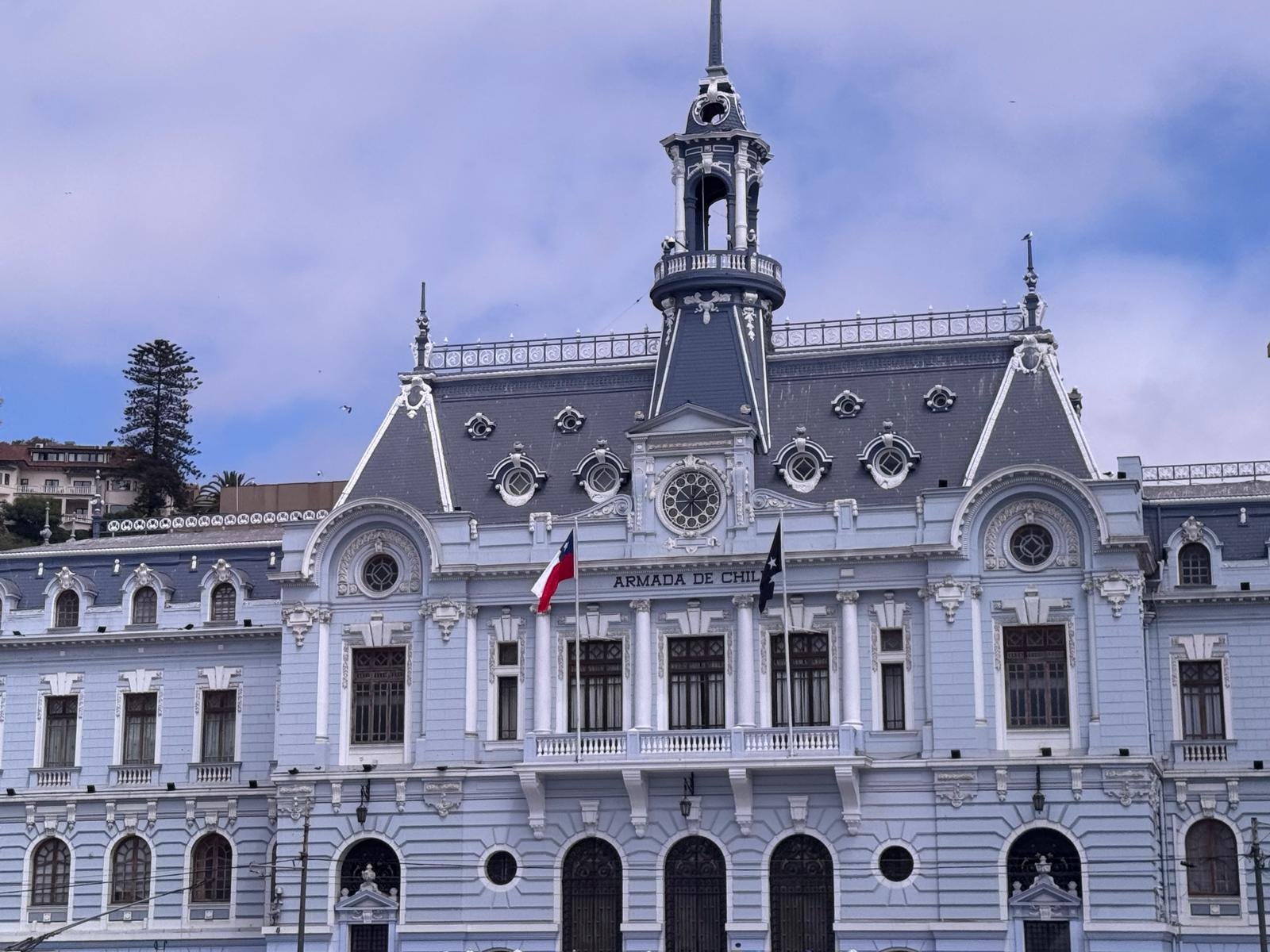
And then if was back into Valparaíso city to check out the colourful buildings – we pretty much followed the same roads as Geoff and I had done the day previously, but in much less detail, and then we took the funicular back down to the lower commercial area and the coach picked us up to drive us around Sotomayor Square in the main civic centre, near the Port. The Square is named in honour of Rafael Sotomayor, a civilian hero of the War of the Pacific in the late 1880’s and in the centre of the square is a monument to the Heroes of Iquique and the remains of Arturo Prat, a Chilean Navy officer and lawyer who was killed in the Battle of Iquique. Appropriately, one of the most beautiful buildings in the square is the Armada de Chile – the Chilean Navy Building which was declared an Historical Monument in 1979.
And that marked the end of our thoroughly enjoyable, and very interesting visit to Valparaíso, and it was back on to the ship to prepare for our departure and the beginning of our cruise.
At 1800 hours on the dot – we pulled away from the dock en route to Puerto Montt.