Ushuaia - “end of the world, beginning of everything."
Sunday 1 March
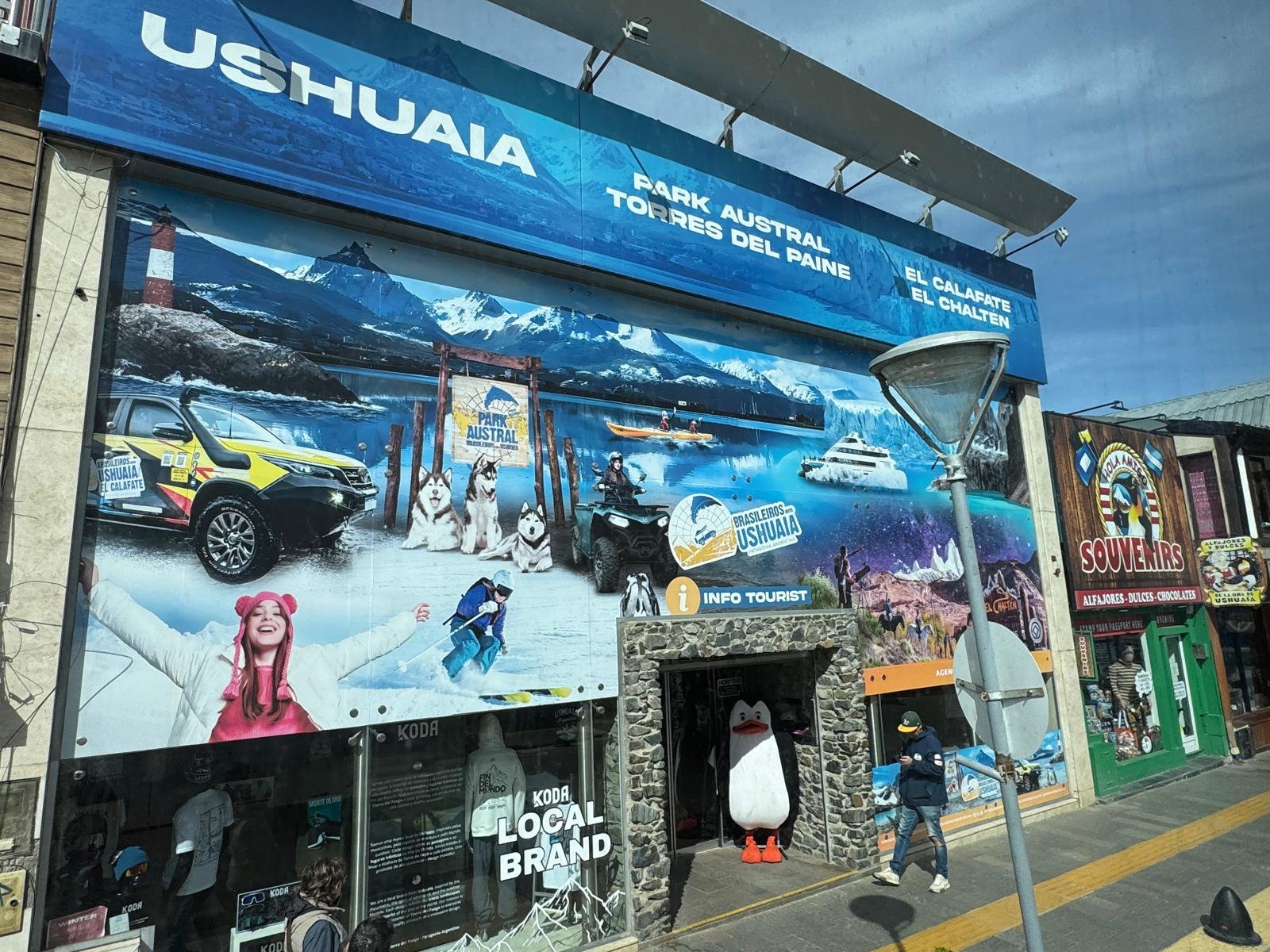
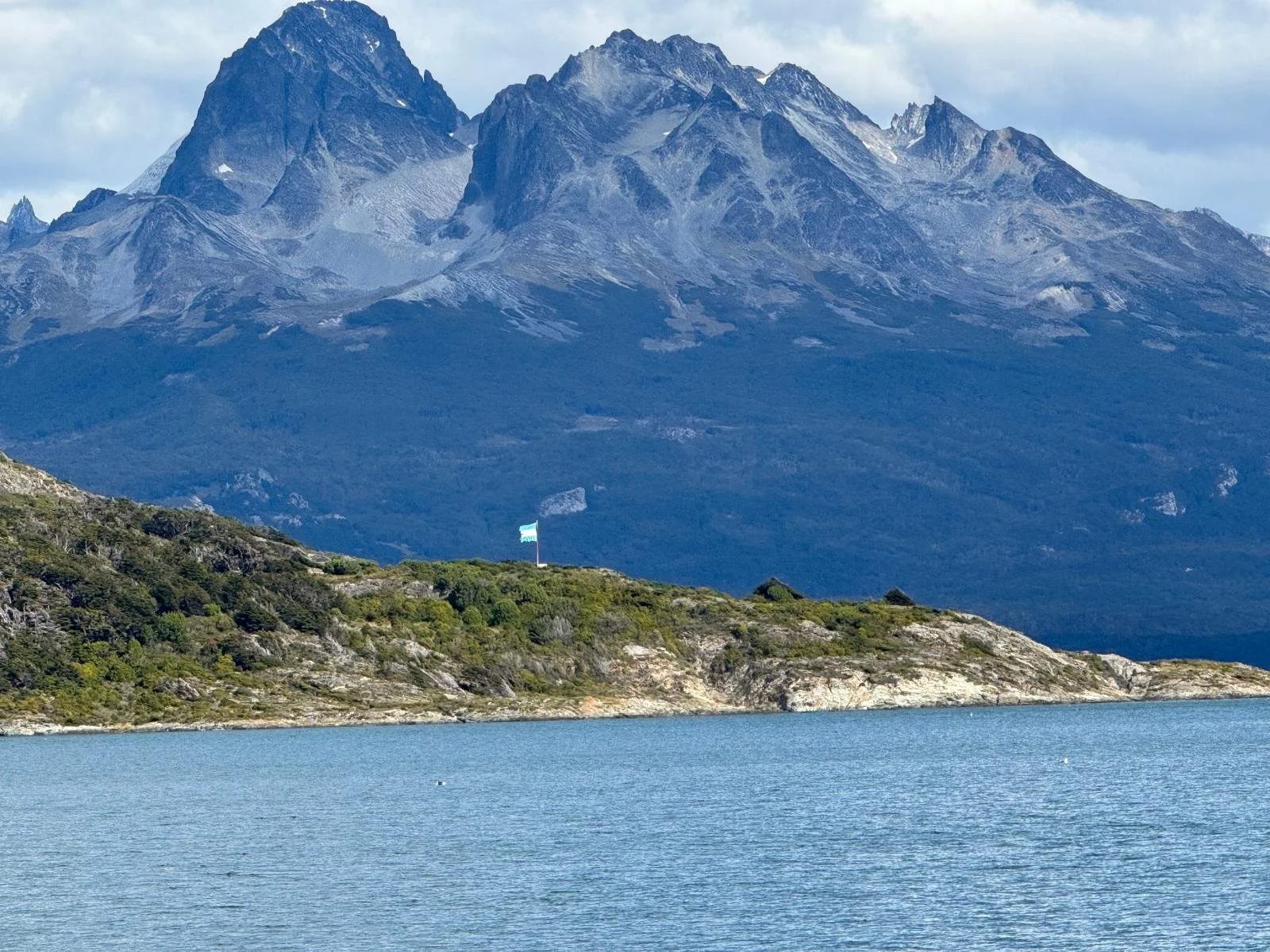
And here we are, at the southernmost City in the world and the closest population centre to the South Pole. It is an awesome setting, tucked between the Beagle Channel (named after Charles Darwin and his ship HMS Beagle) and the southernmost slopes of the Andes. And what a glorious, sunny, clear morning to arrive! Ushuaia is the capital of, and gateway to, the celebrated Tierra del Fuego, the “Land of Fire” named by Spaniards upon seeing the constant flames burned by the indigenous Yamana (Yagán) to keep warm. This very unspoilt region comprises of the large island of Tierra del Fuego and countless Chilean and Argentinean lands, Andean peaks, vast plains covered with green forests, pristine lakes and mammoth glaciers! It all looked pretty spectacular from the top deck of our ship when we docked this morning.
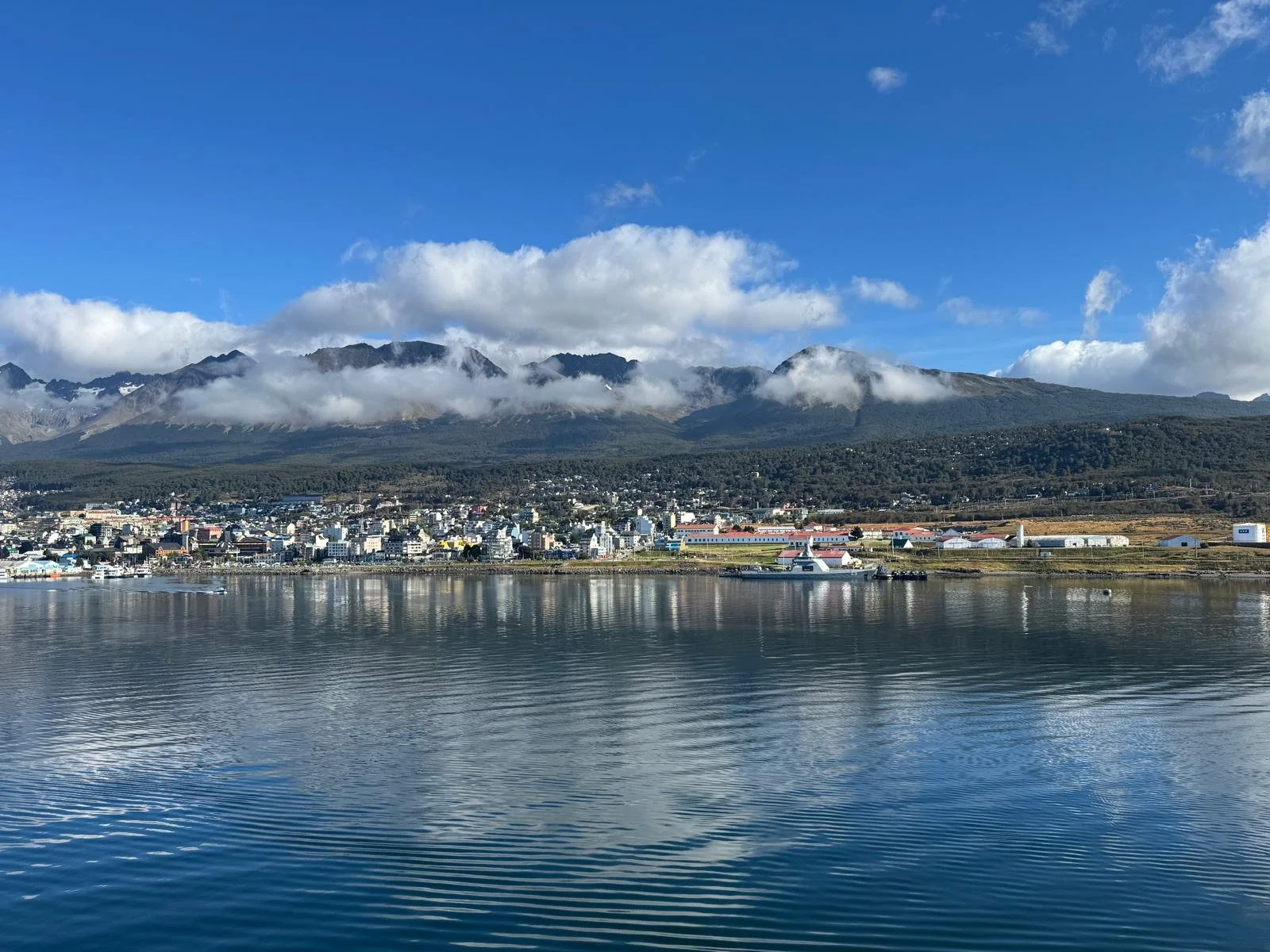

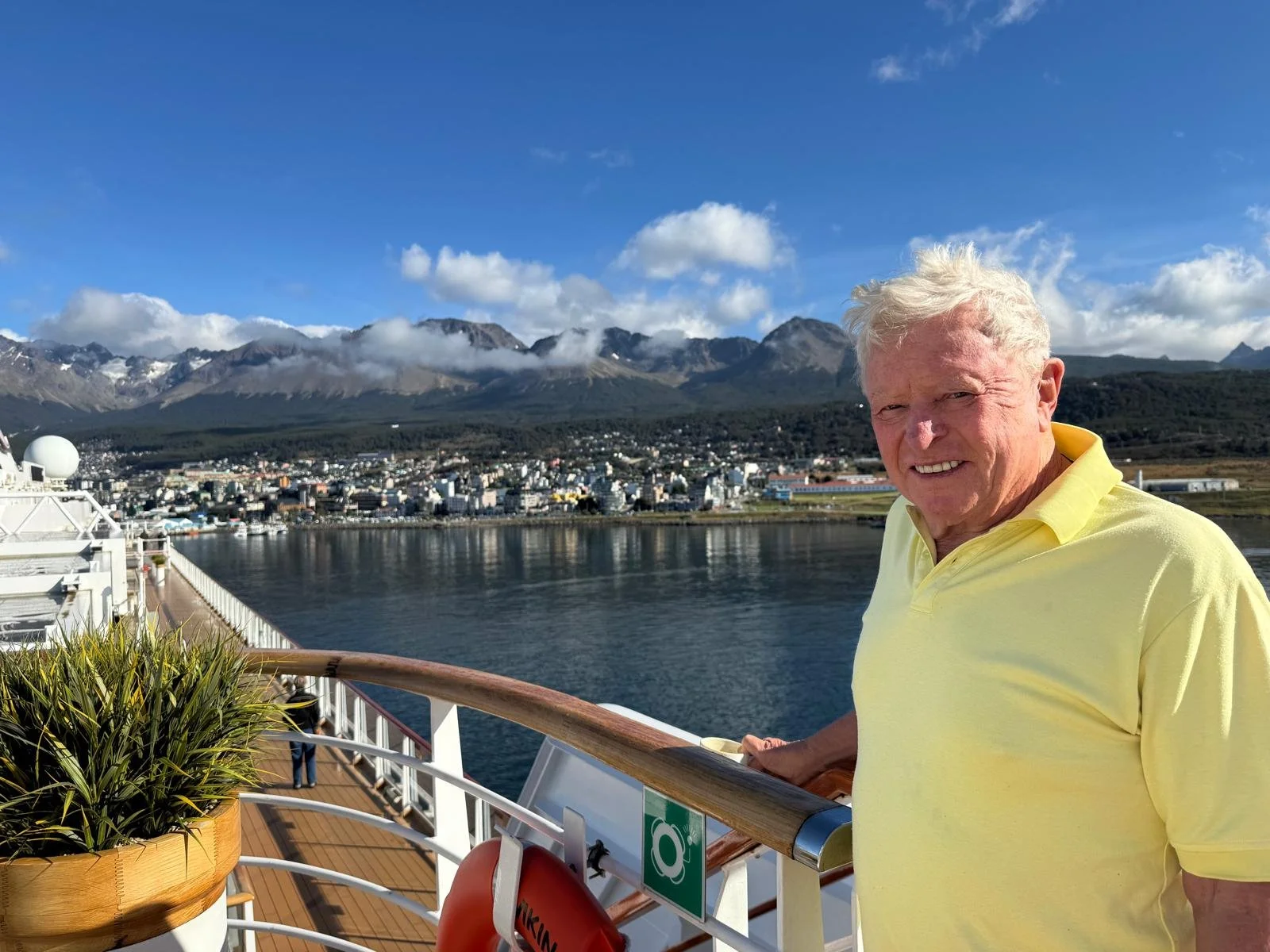
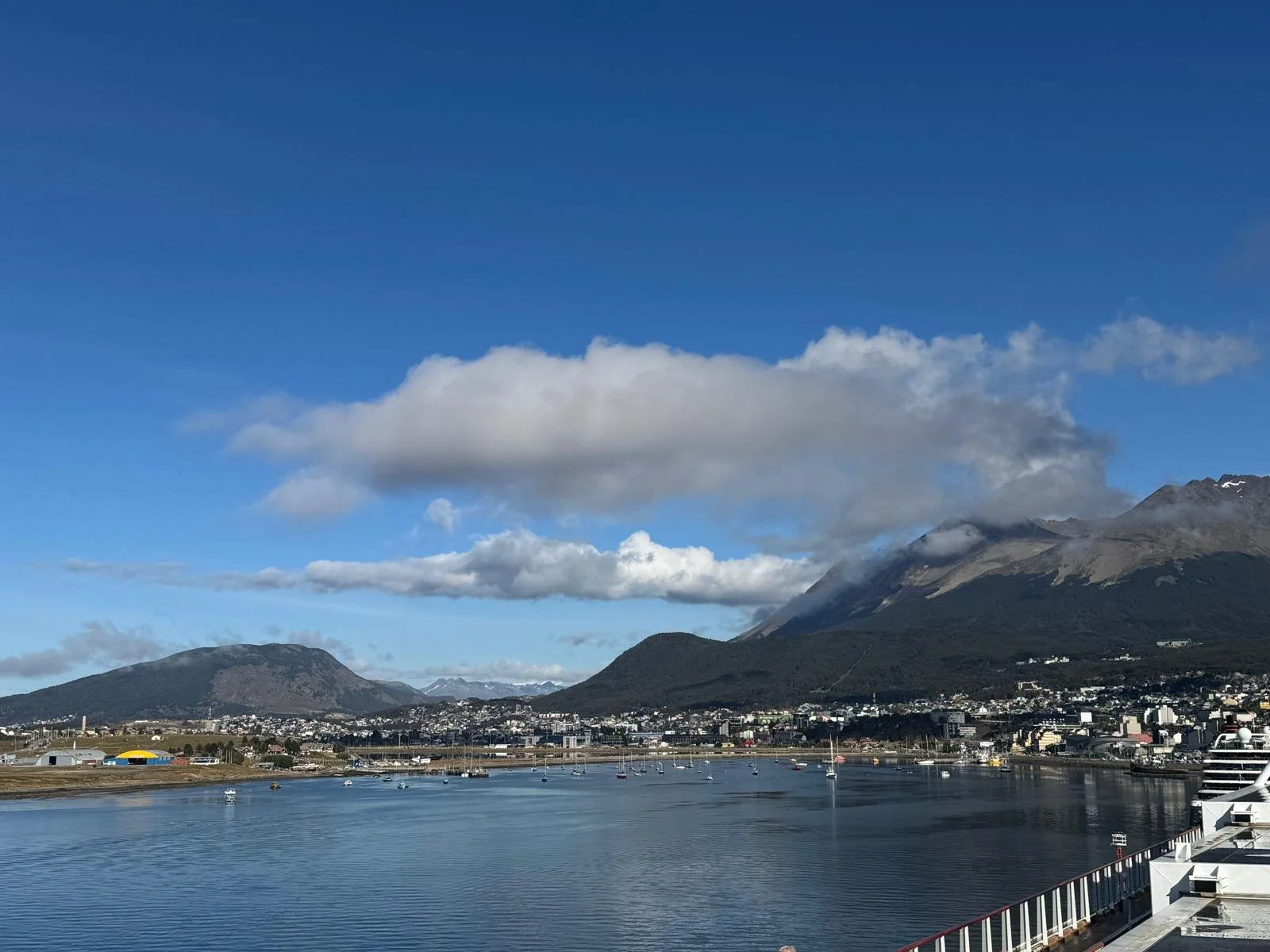
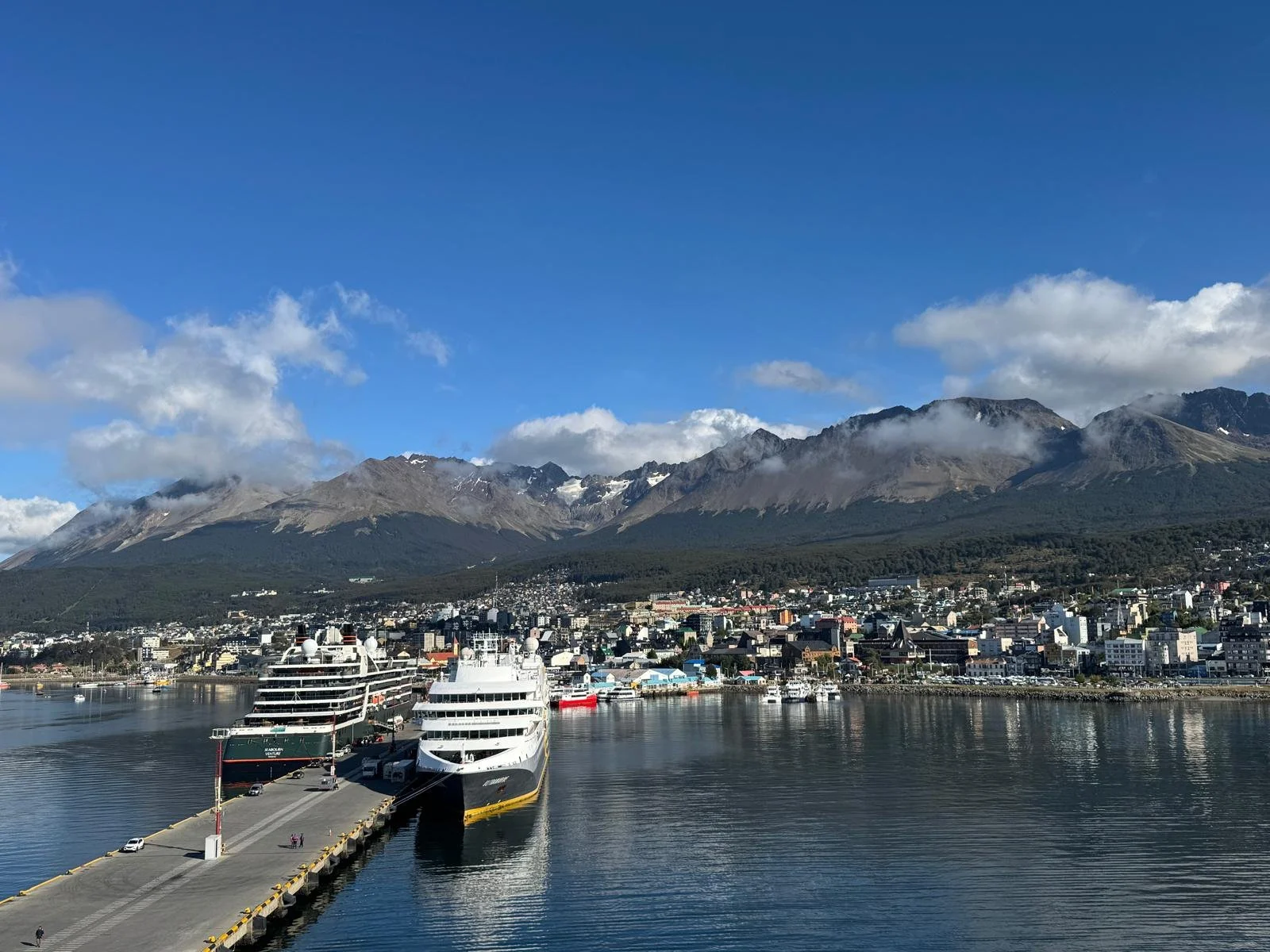
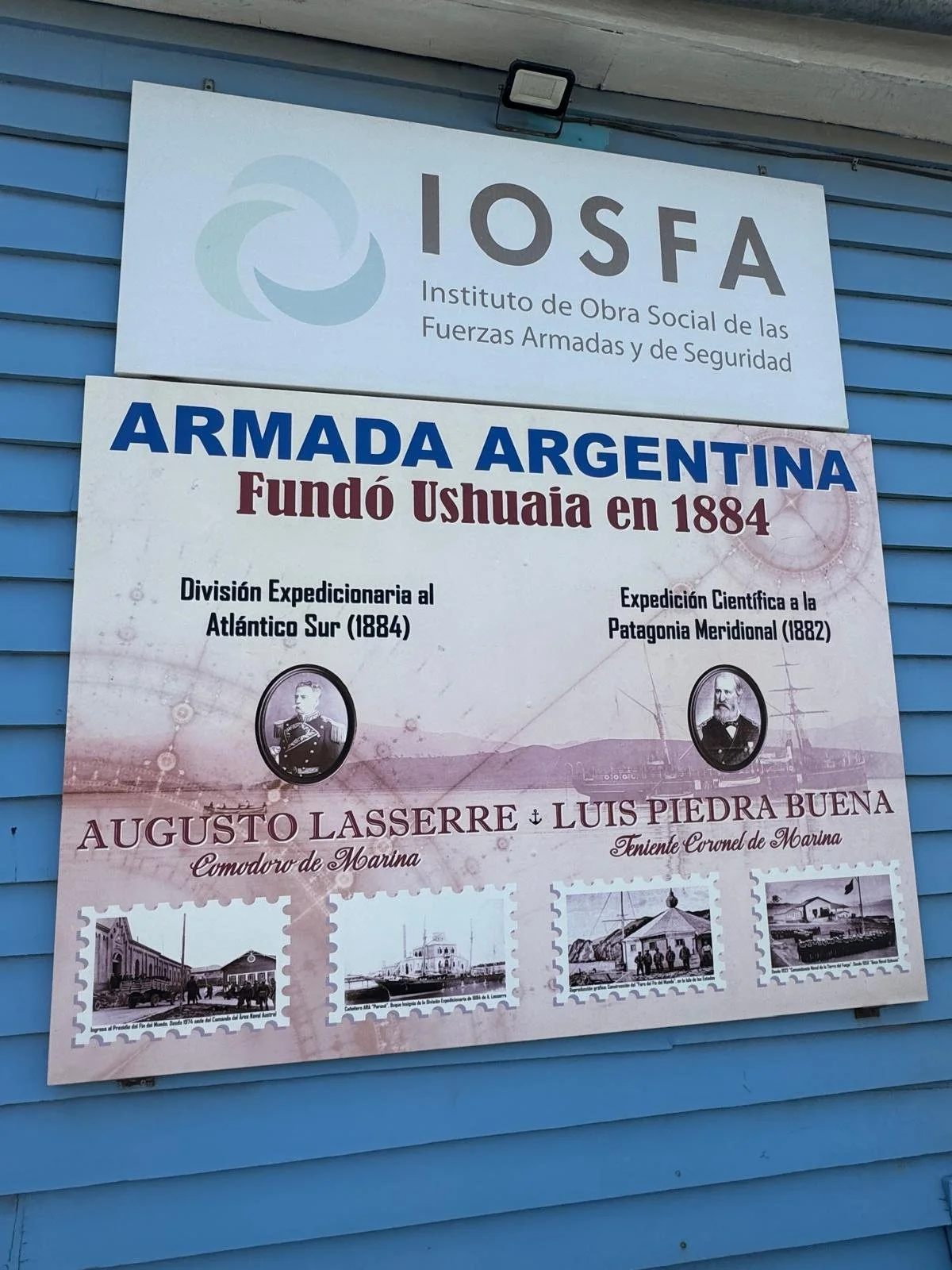
With a population of 80,000, it was officially founded on 12 October 1884 by Augusto Lasserre, it was originally established as a penal colony and strategic settlement. It is the starting point for expeditions to Antarctica and indeed, we saw a couple of expedition boats in the dock making preparations for their next voyages. In addition to being an administration centre, it is an industrial port and tourist hub and considered the southernmost city in the world. The word Ushuaia comes from the Yagán language, “ush” means at the bottom and “uaia” means deep bay that faces west”. Ushuaia has a subpolar oceanic climate with the average temperature of the warmest month at just over 10 °C and in the winter at 0 °C! Strong winds from the west quadrant originating in the Pacific, often batter the city which is why trees unprotected from storms grow following the direction of the wind, which causes them to be called “flag trees” because of the inclination they are forced to take. No palm trees here and definitely not a liveable place for me with this cold weather. Our guide told us it rains almost every day, and luckily for us, as with our day in Punto Varras, we were very fortunate to have one of their rare sunny days.
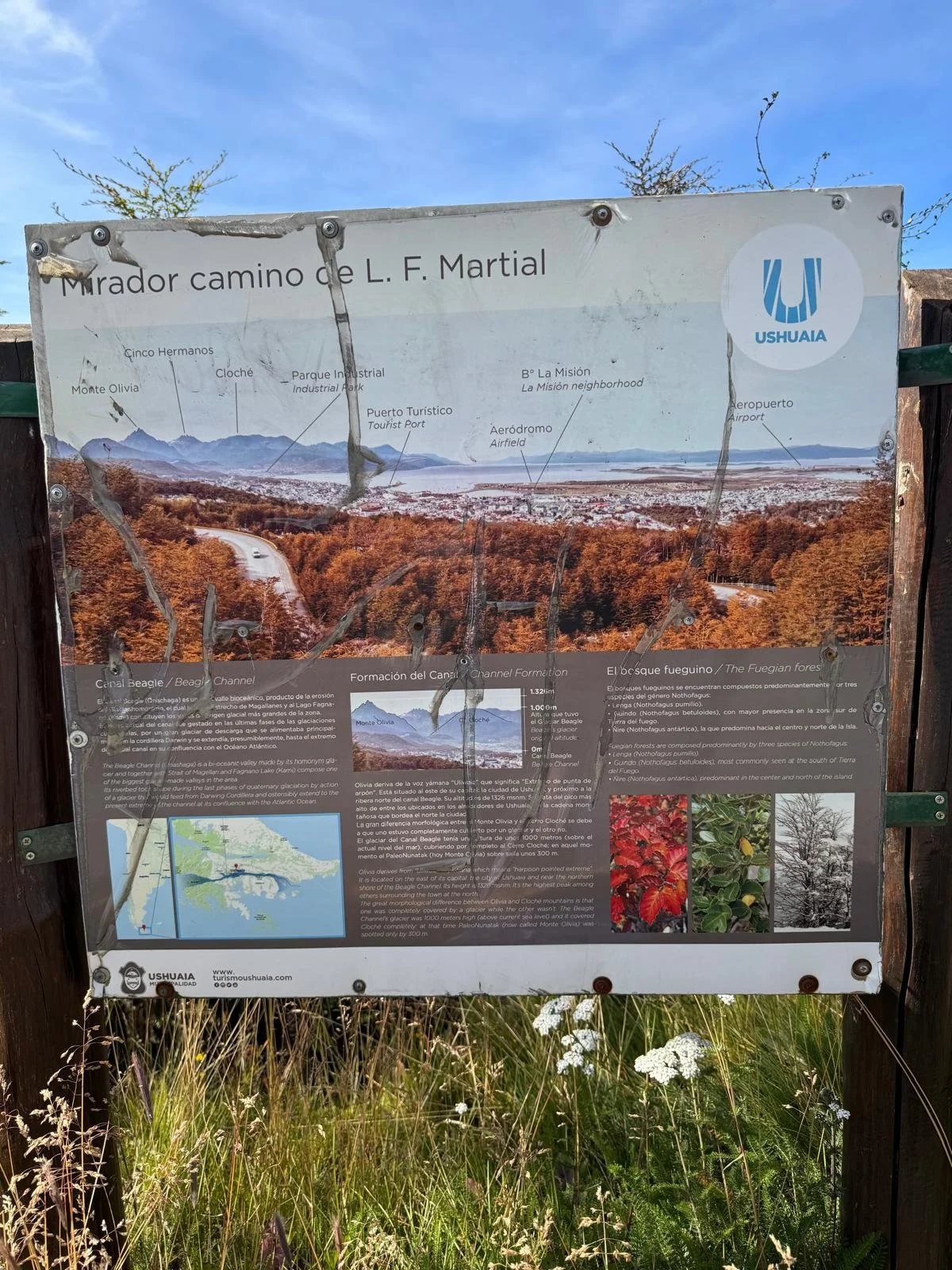
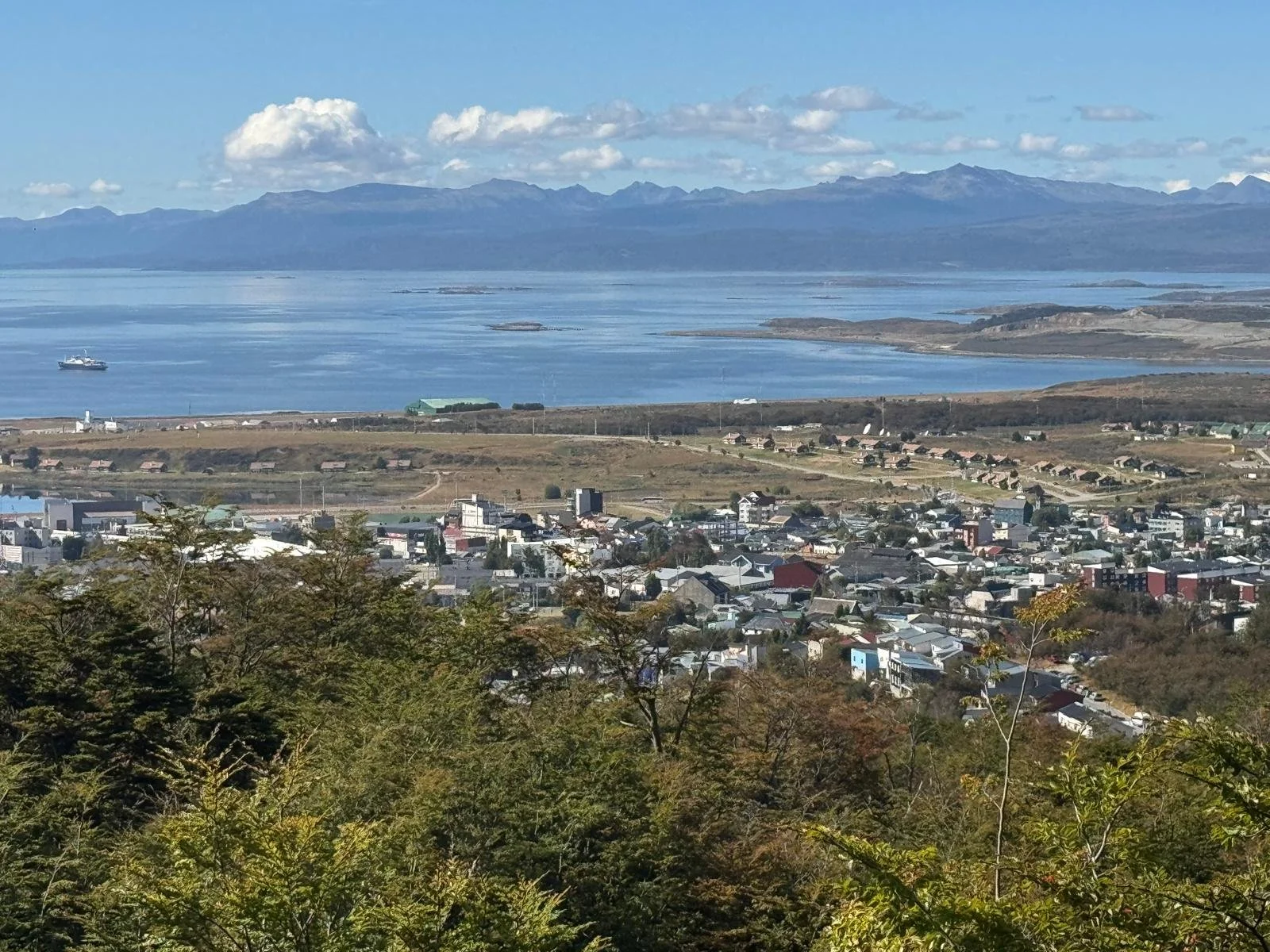
With two tours today and a lot of information to absorb, we were on the bus pretty much as soon as we had docked, so no time was wasted by having to go ashore in a tender. The city is really small with quite steep hills and our first stop was at the top of one of them to get a panoramic view and our bearings.

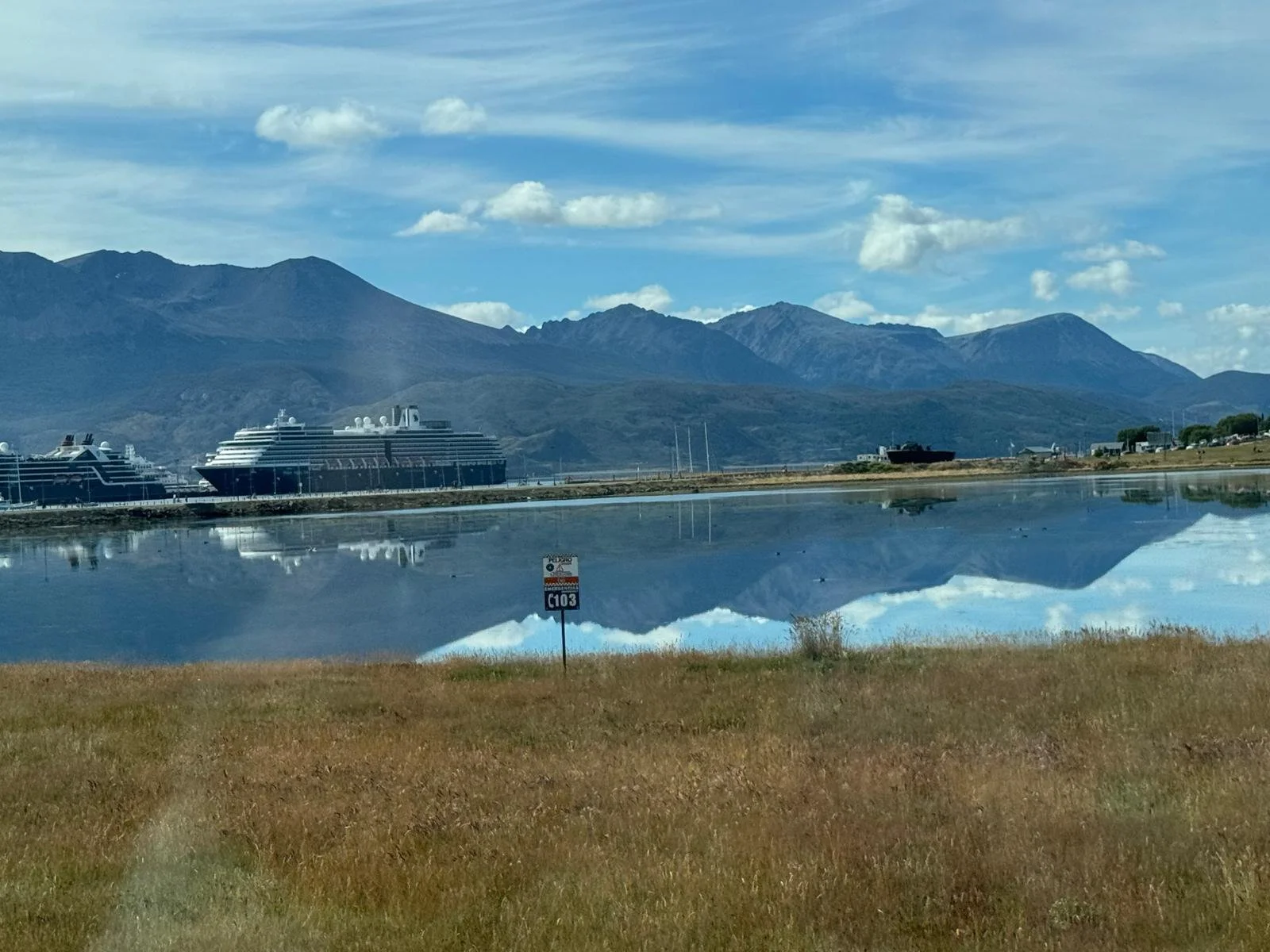
The Argentine Navy have a current base here, and our guide pointed out that a lot of the population here are connected to the military and we passed a number of their houses on our route, with many of them flying the Argentinian flag. Next stop was the old Ushuaia Prison, known as the “Prison at the End of the World” it operated between 1902 and 1947, and housed dangerous criminals and political prisoners and the inmates actually built the town and the naval base. Having been closed for humanitarian reasons by President Juan Perón, its facilities were transferred to the Argentine Navy which established its current base near there in 1950, and acts as the main logistics port to Antarctica. Upon its closure, the inmates were moved to other prisons in Argentina.
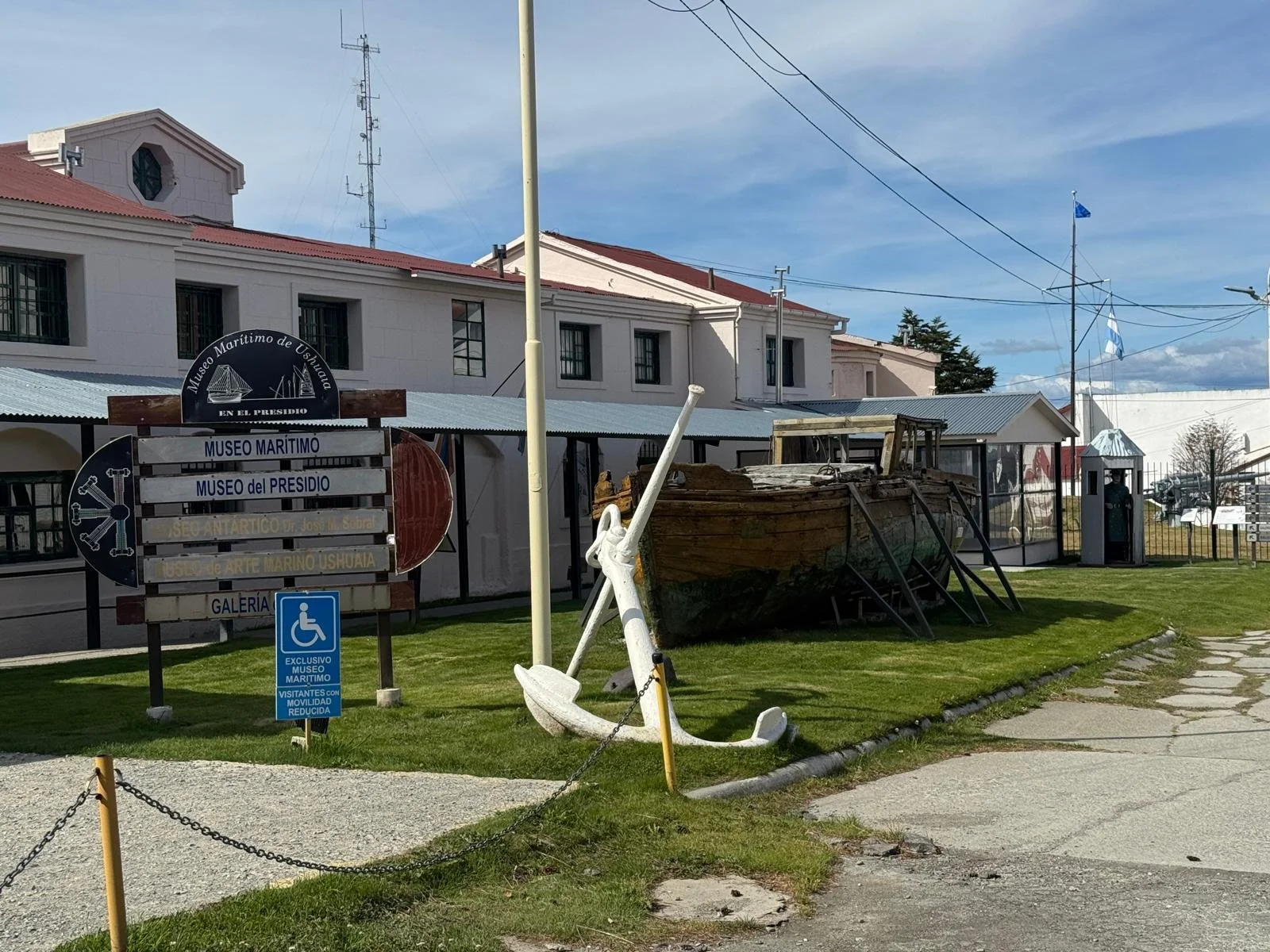
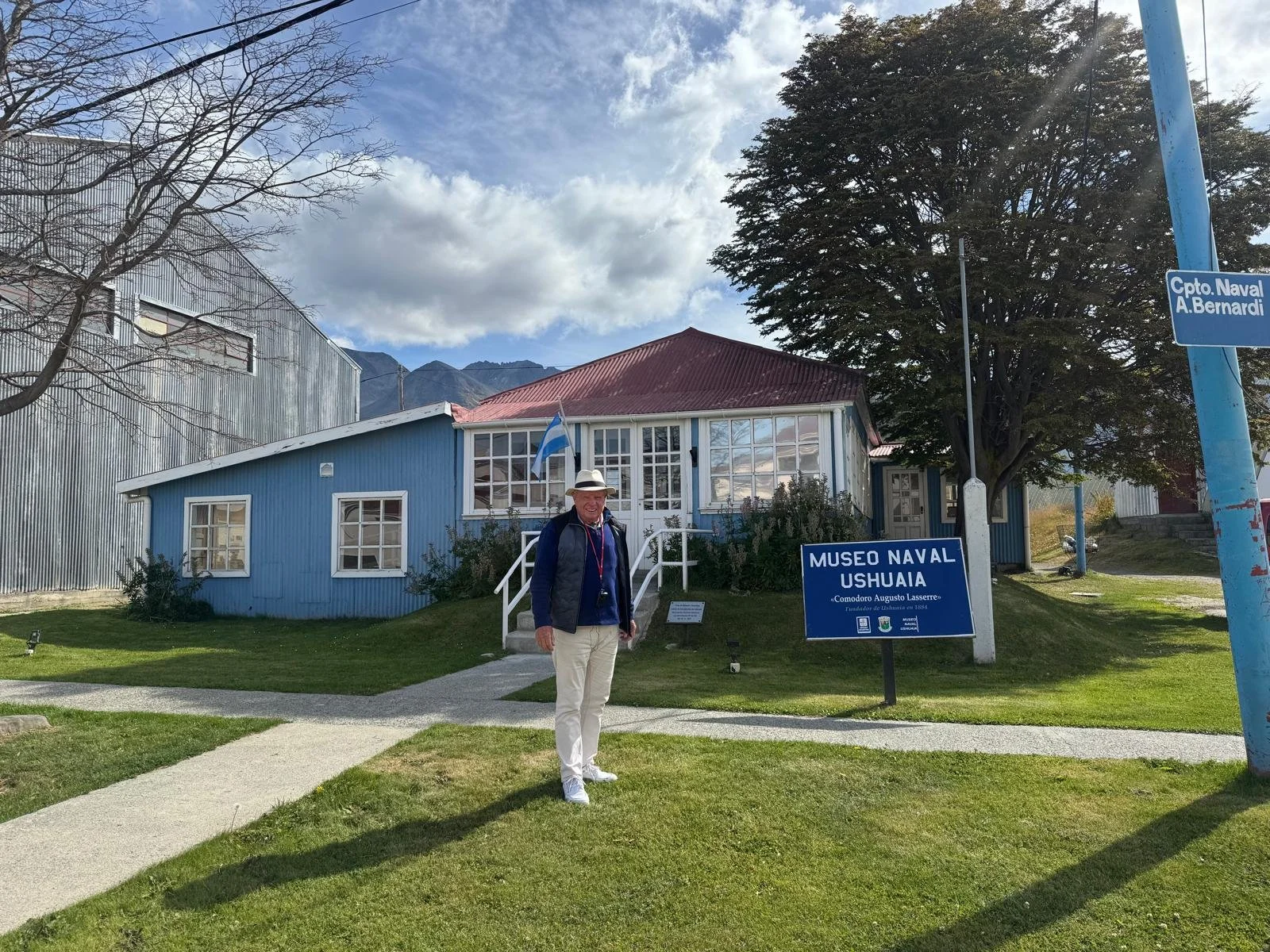

Construction of the prison began in 1902 and was completed in 1920. It consisted of five star-shaped pavilions, each with two floors, and 386 stone cells of about four-square metres each, with 60-centimetre-thick stone walls, and housed more than 540 inmates. We couldn’t believe how tiny they were, and even on this sunny day, how cold they were. Imagine how awful it must have been being imprisoned here, in this climate. Rudimentary workshops existed for carpentry, blacksmithing, printing, mechanics and shoemaking and those considered to be of good conduct, worked cutting down trees for firewood to heat the prison and subsequently for construction of houses in the city. A small train ran to Tierra del Fuego National park and transported the inmates there in order to chop the trees for the firewood (more of this later).
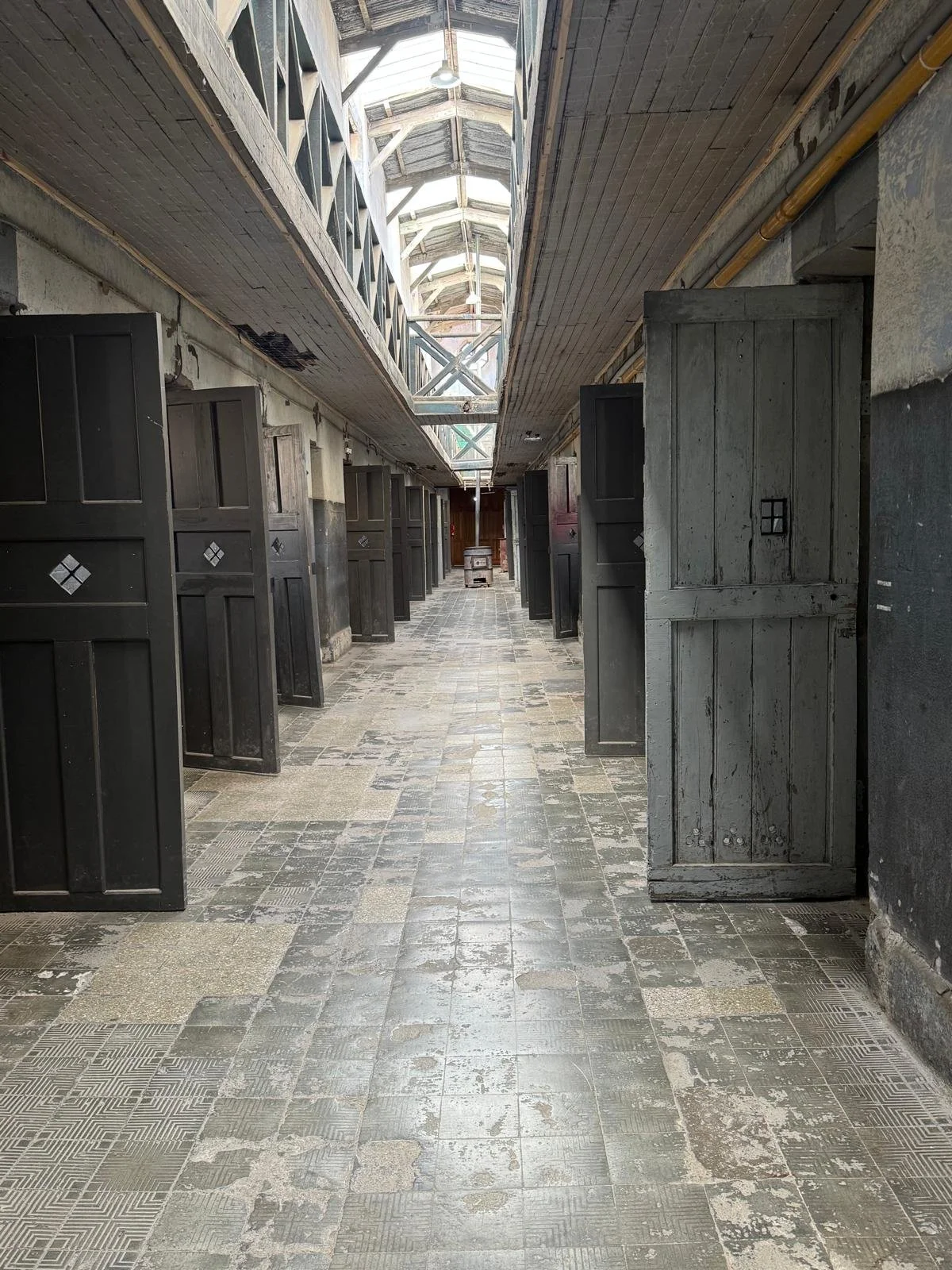
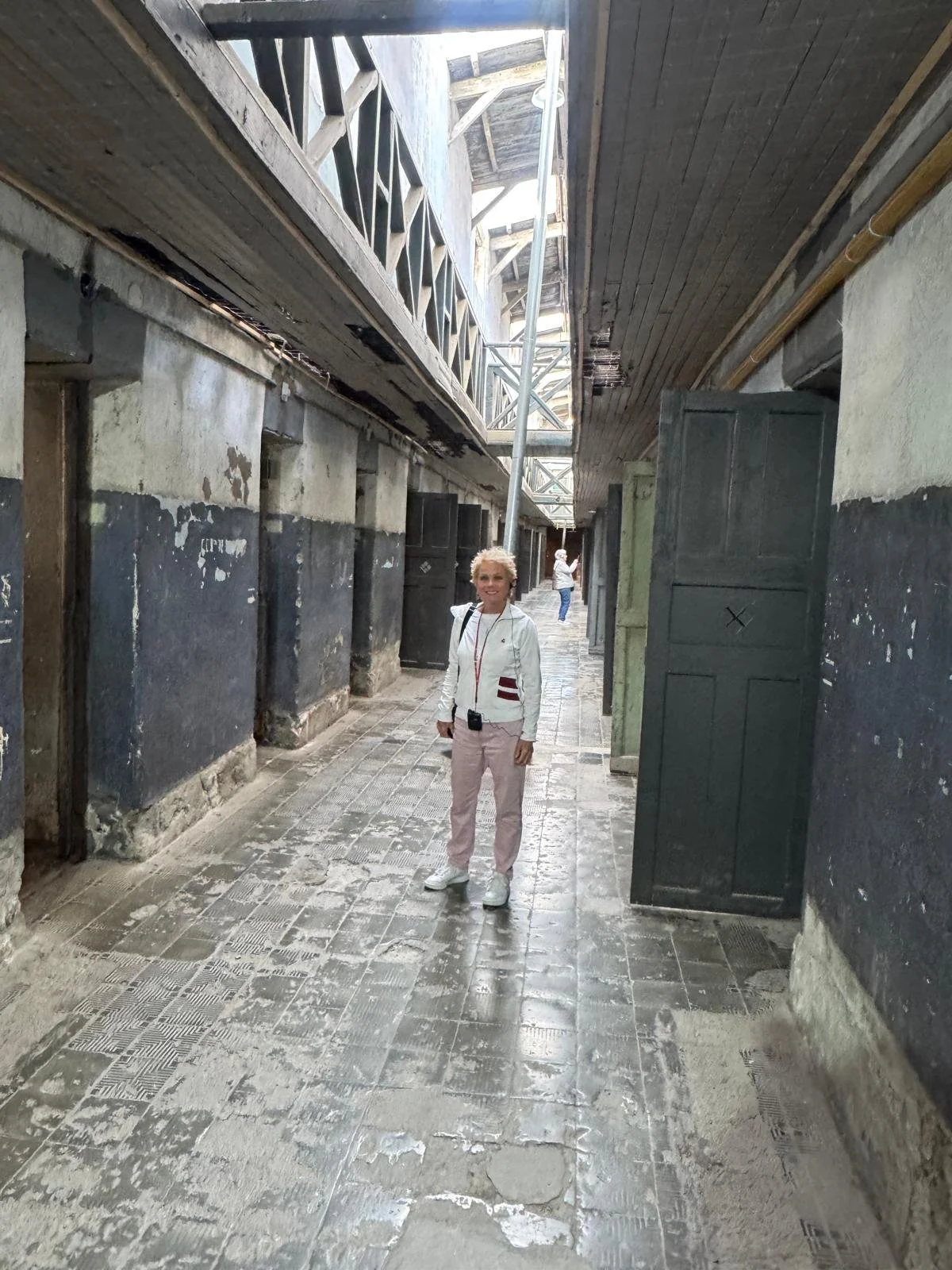
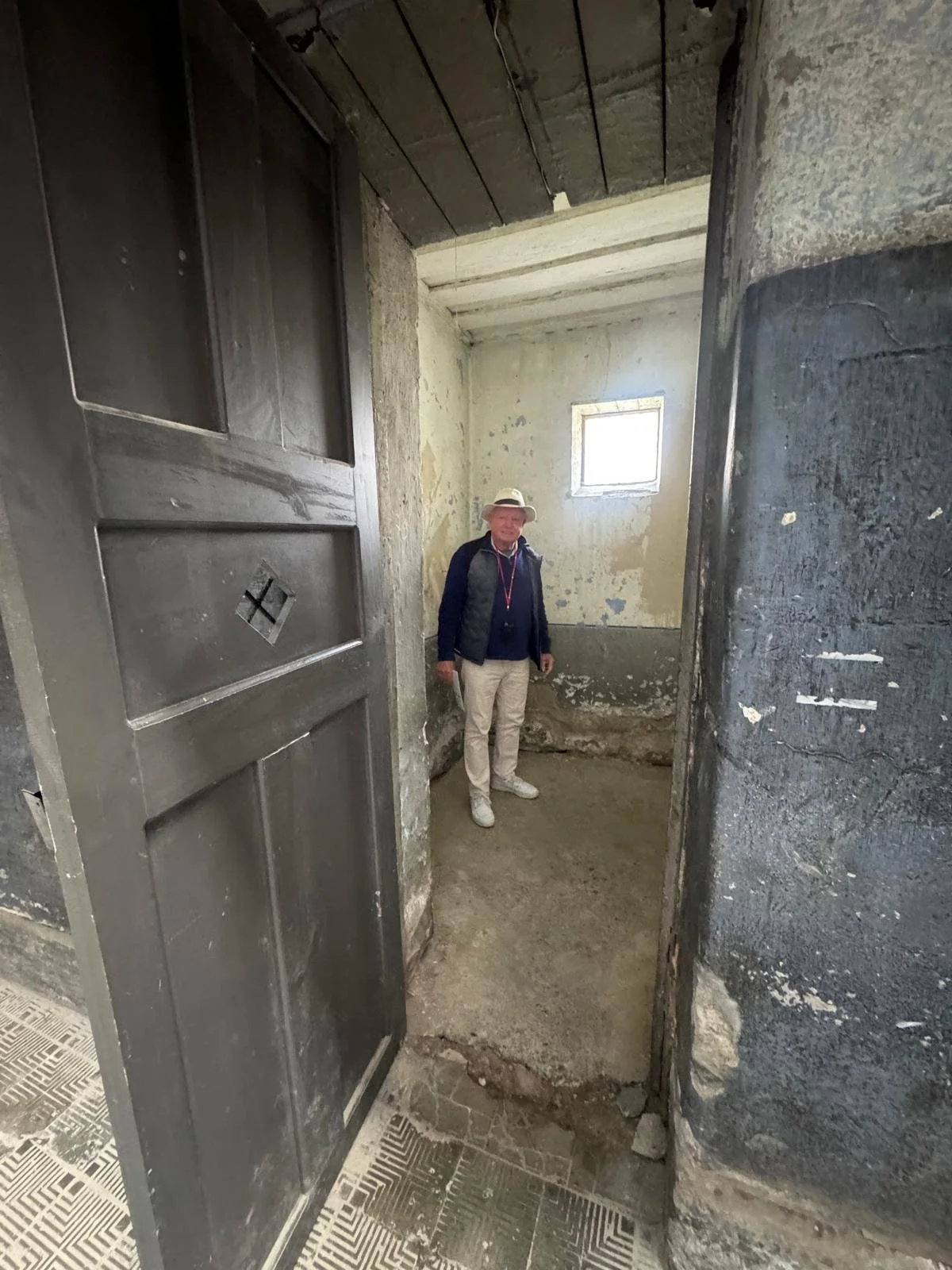
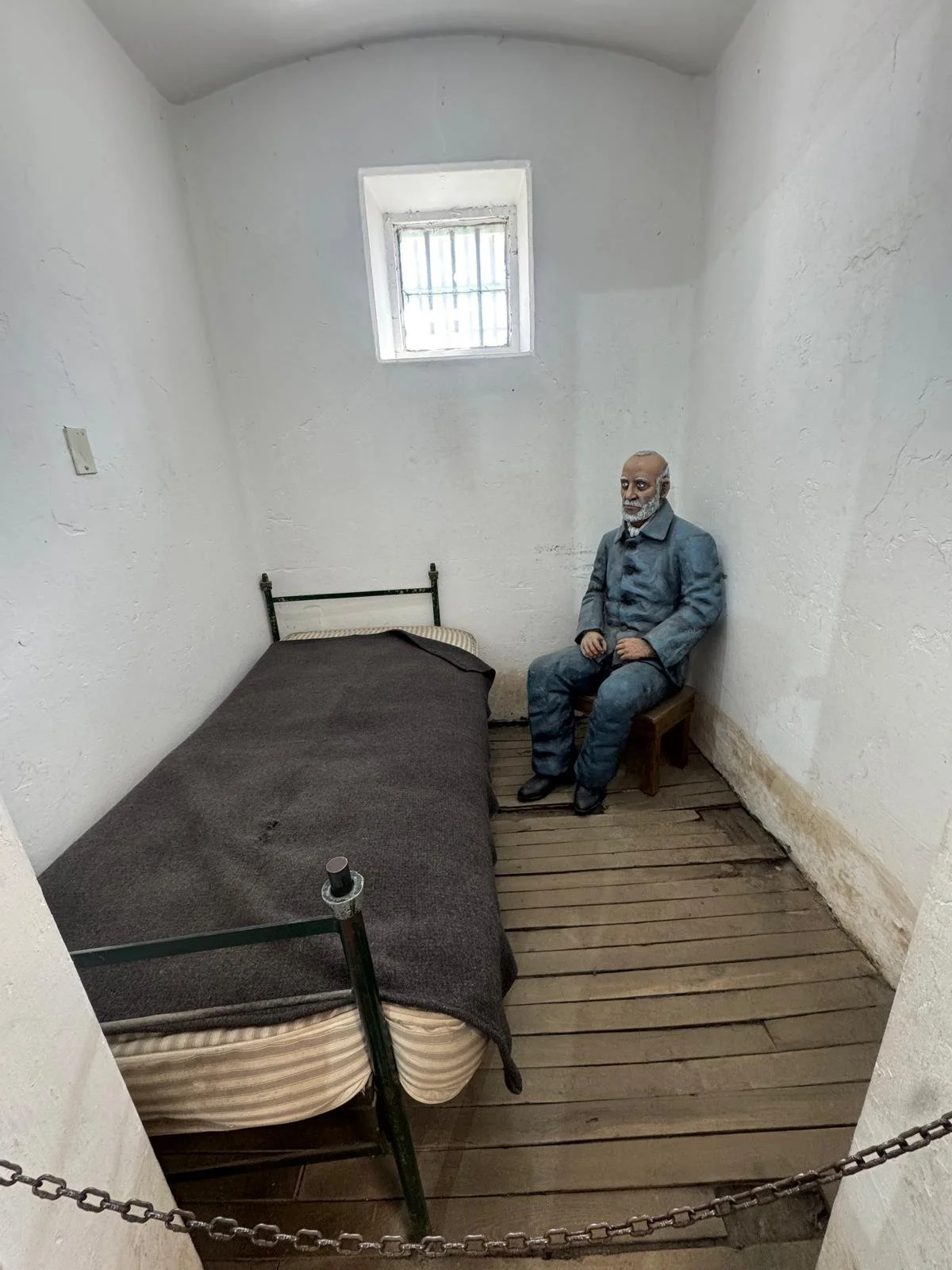
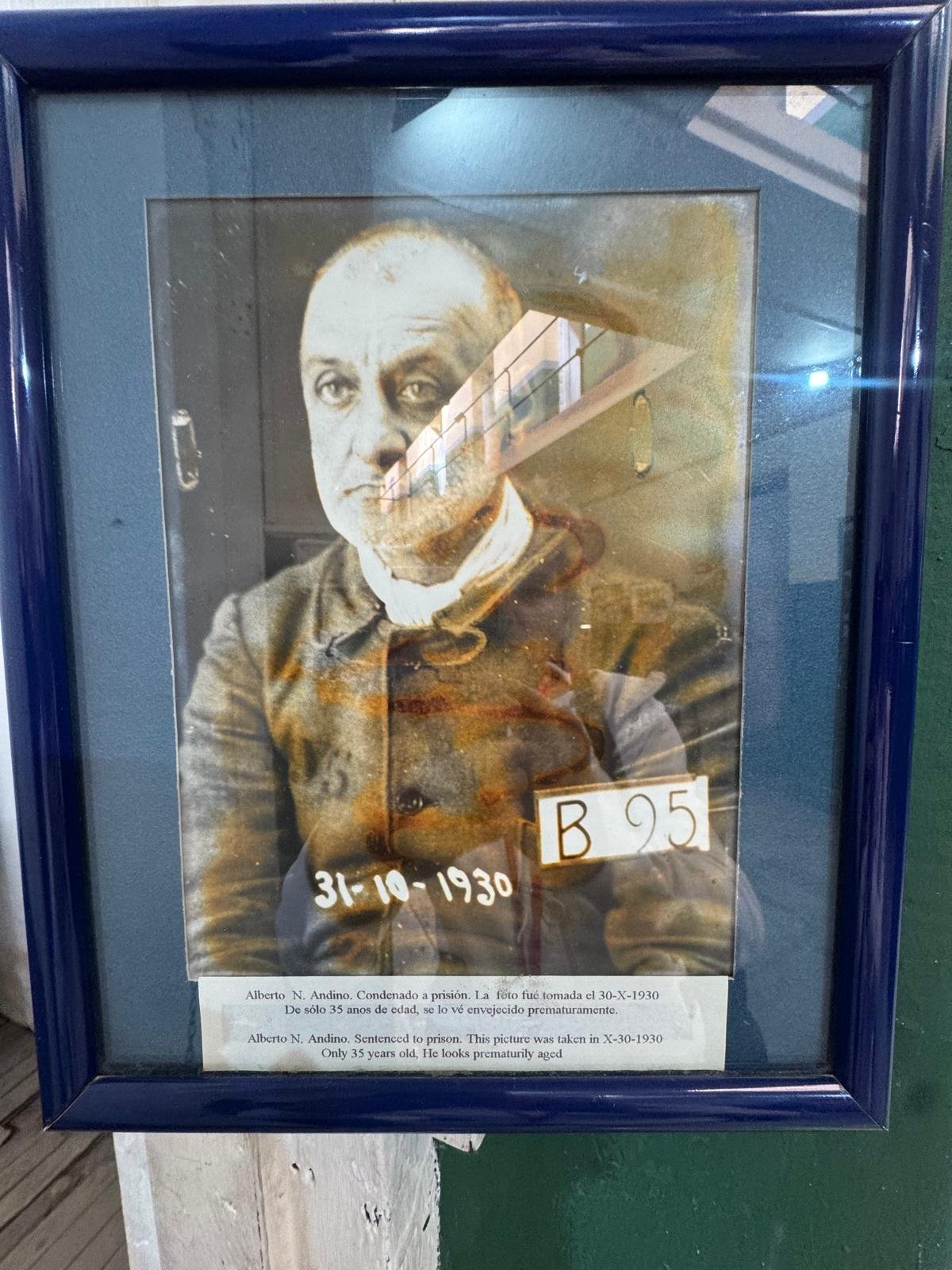
These “well behaved” prisoners were happy to be outside doing gruelling manual work as it was preferable to being inside in their cold, cramped cells. Prolonged exposure to extreme cold, malnutrition and harsh working conditions contributed to their cognitive decline and chronic physical ailments – see the photo of Albert Andino below – this prisoner looks about 70 years old and was in fact only 35 years old.
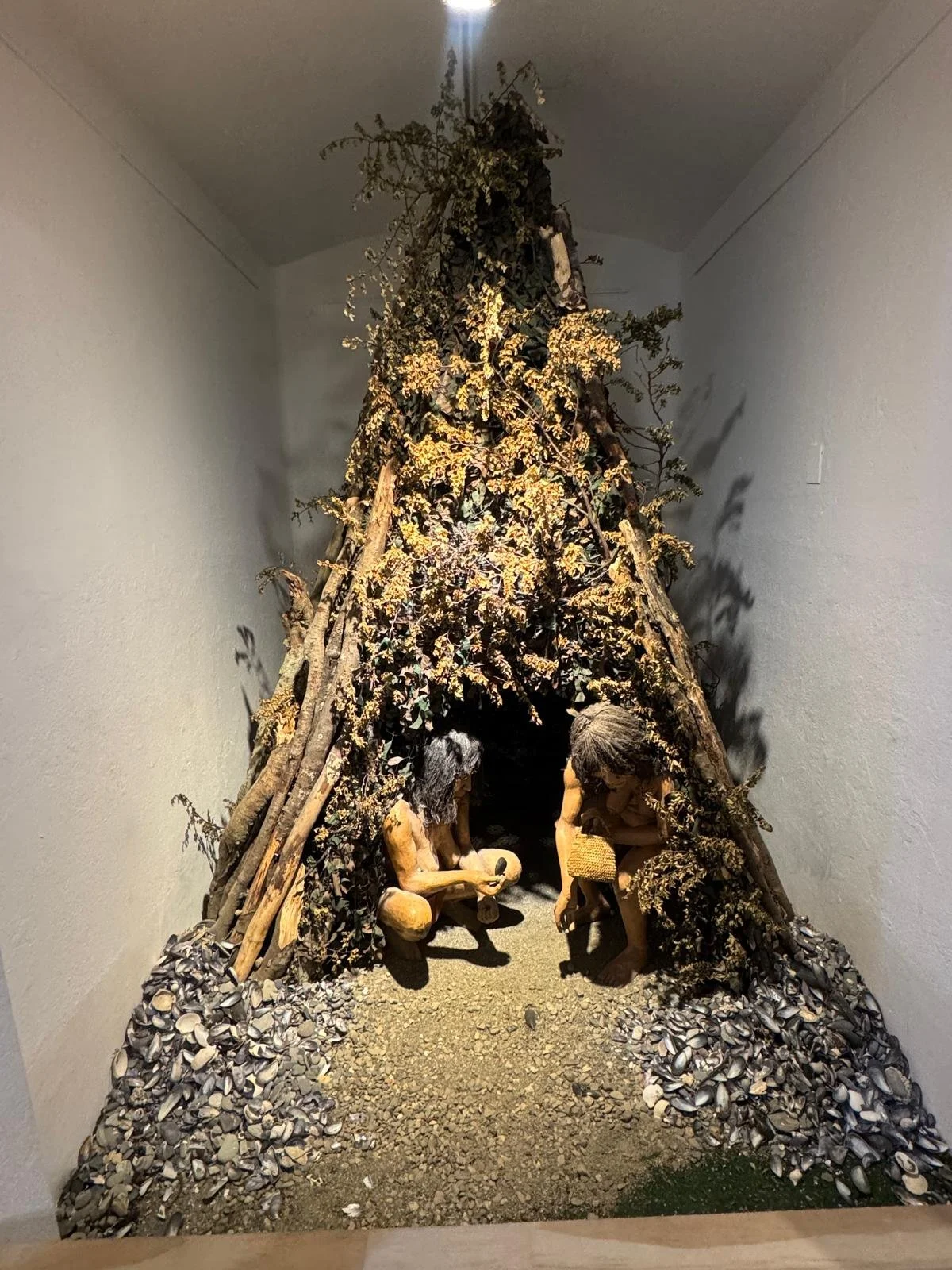
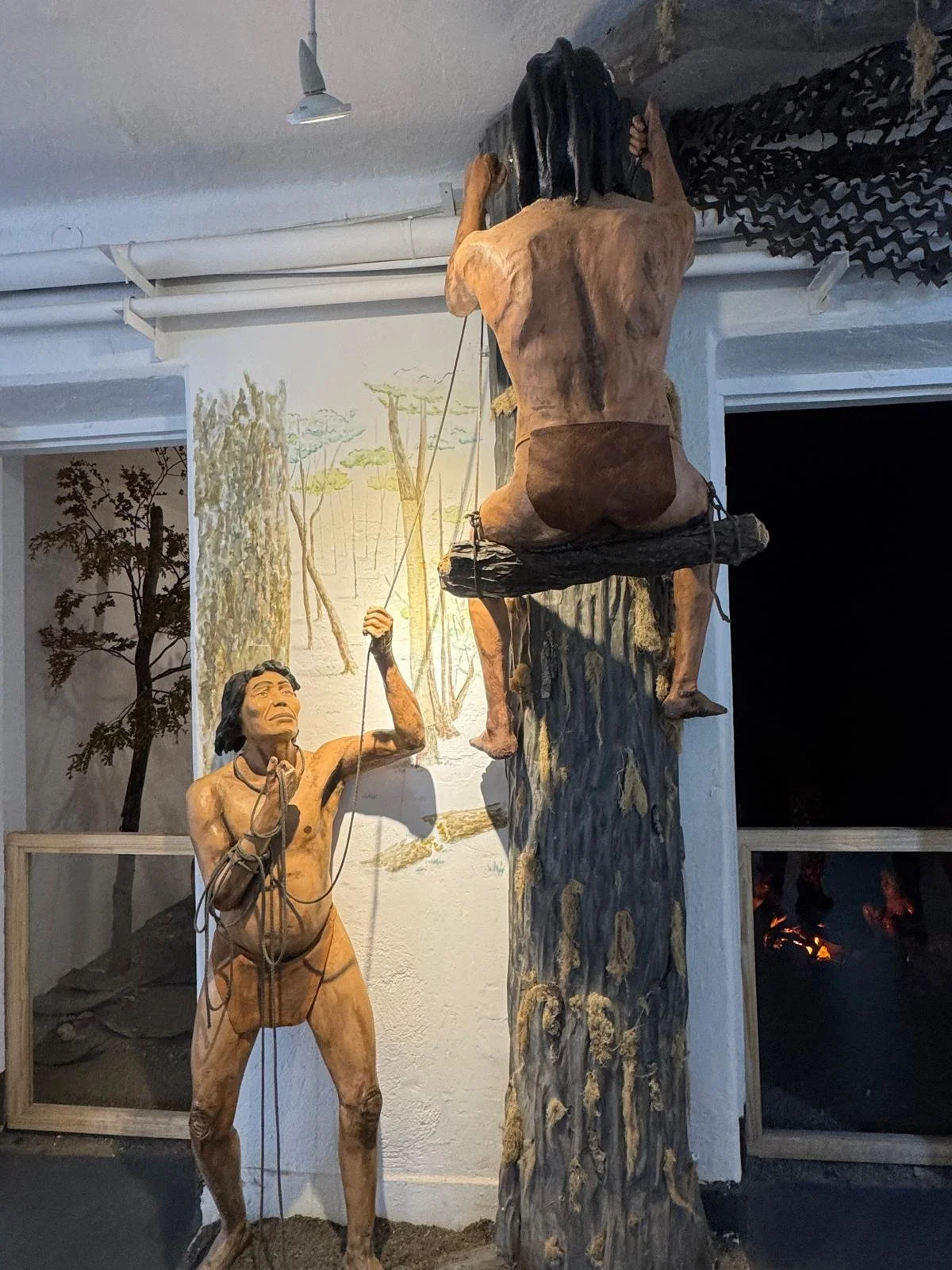
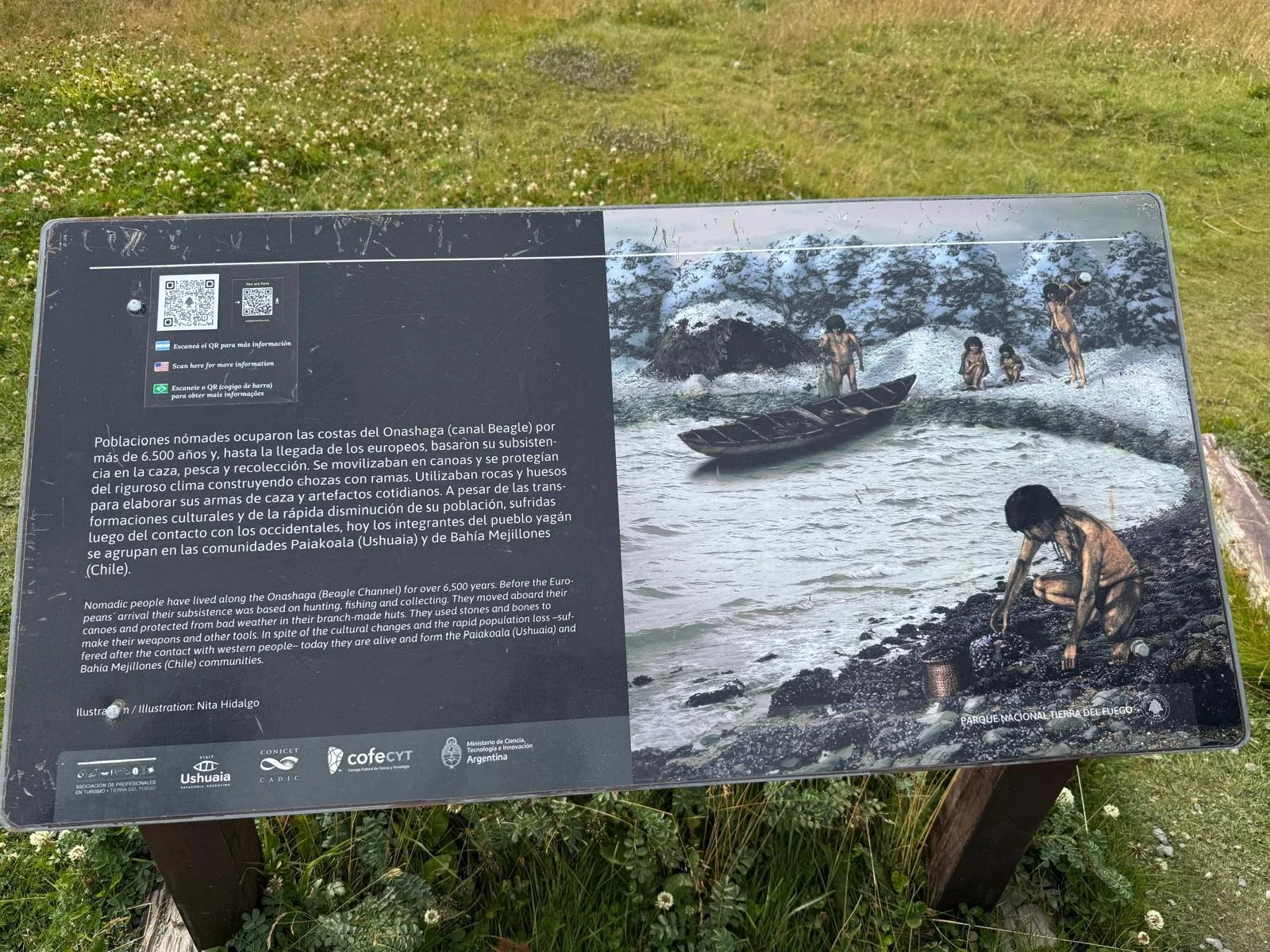
Another interesting exhibit in this old prison was dedicated to the Yagán people who are indigenous to the Beagle Channel and have inhabited this region for more than 6,000 years. The exhibit features included a life-sized replica of their bark canoes and many reconstructions of their daily lives, including a typical nomadic shelter designed taking the form of a dome-shaped beehive hut. These were built by the women and featured a framework of flexible branches covered in seal skins, tree bark, grass and ferns and featured a central fire. The Yagáns were of a cheerful temperament, and they lived a nomadic life, travelling in canoes while hunting, gathering, and fishing. They wore little to no clothes, usually just a loin cloth, and were able to survive in the harsh climate because they used rock formations on their land to shelter from the elements, they covered themselves in animal fat to trap the heat and to provide an extra layer of fat, and their customary resting position was a deep squatting position which reduced their surface area and helped to conserve heat. In 2017, the census from the National Statistics Institute recorded a Yagán population now of only 1,600.




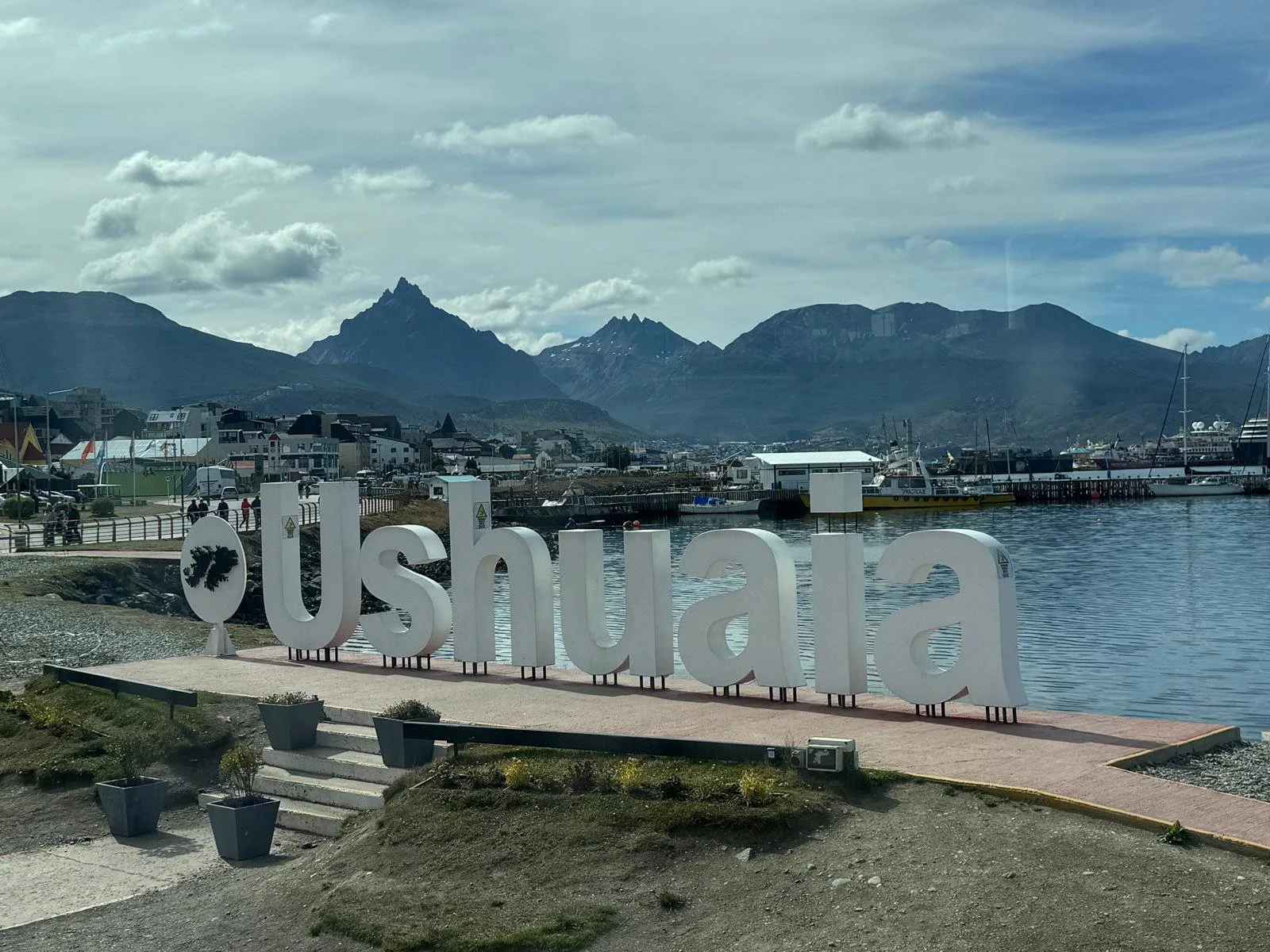
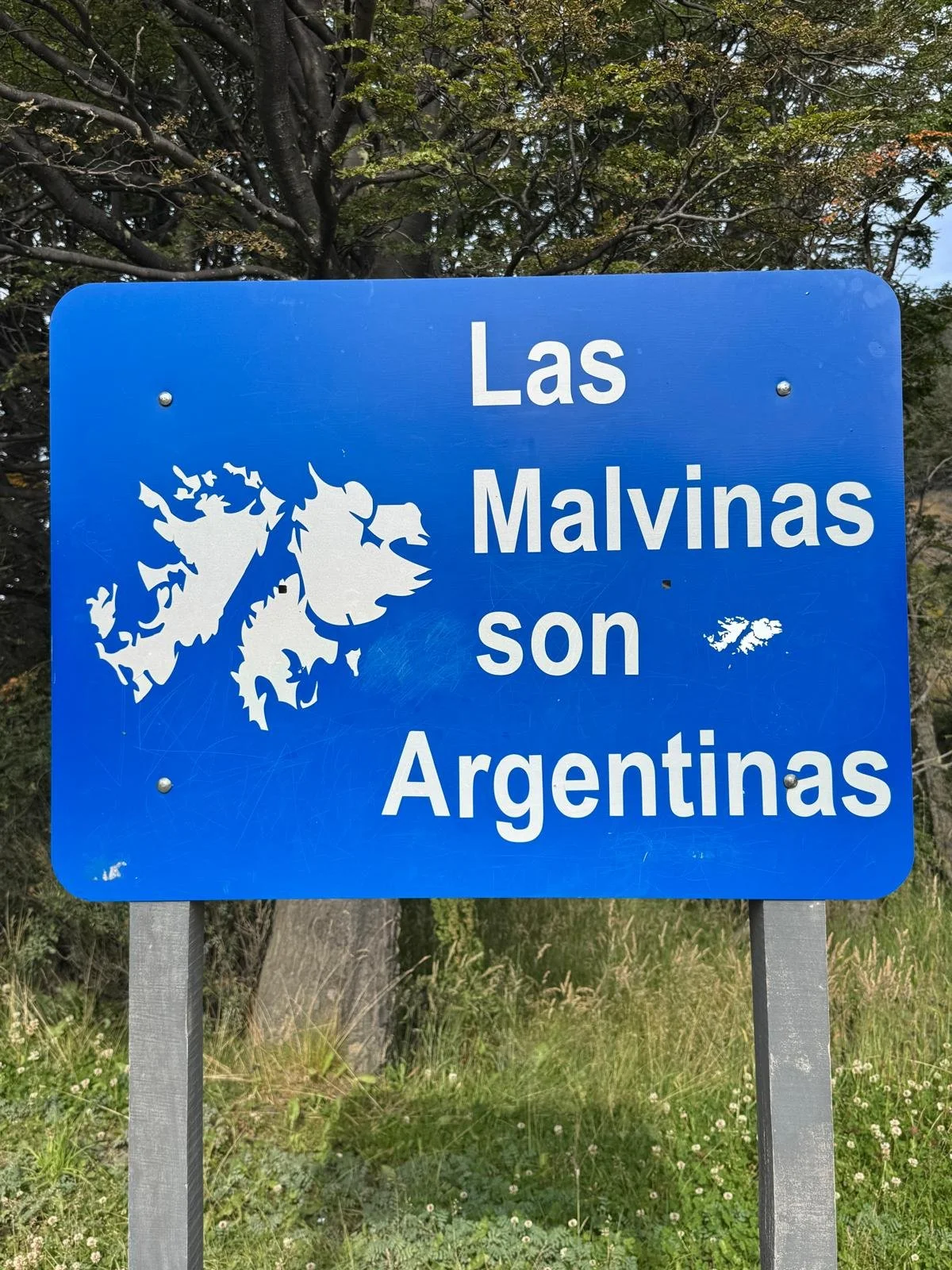
A quick stop at the famous photo op sign of Ushuaia and then it was back onto the bus and back to the Pier, a rush for us as we were booked on our second tour of the day of which the departure had been brought forward by 30 minutes. We hightailed it up the gangway, straight into the buffet, walloped down a quick salad and within 25 minutes were back on another bus for our afternoon trip.
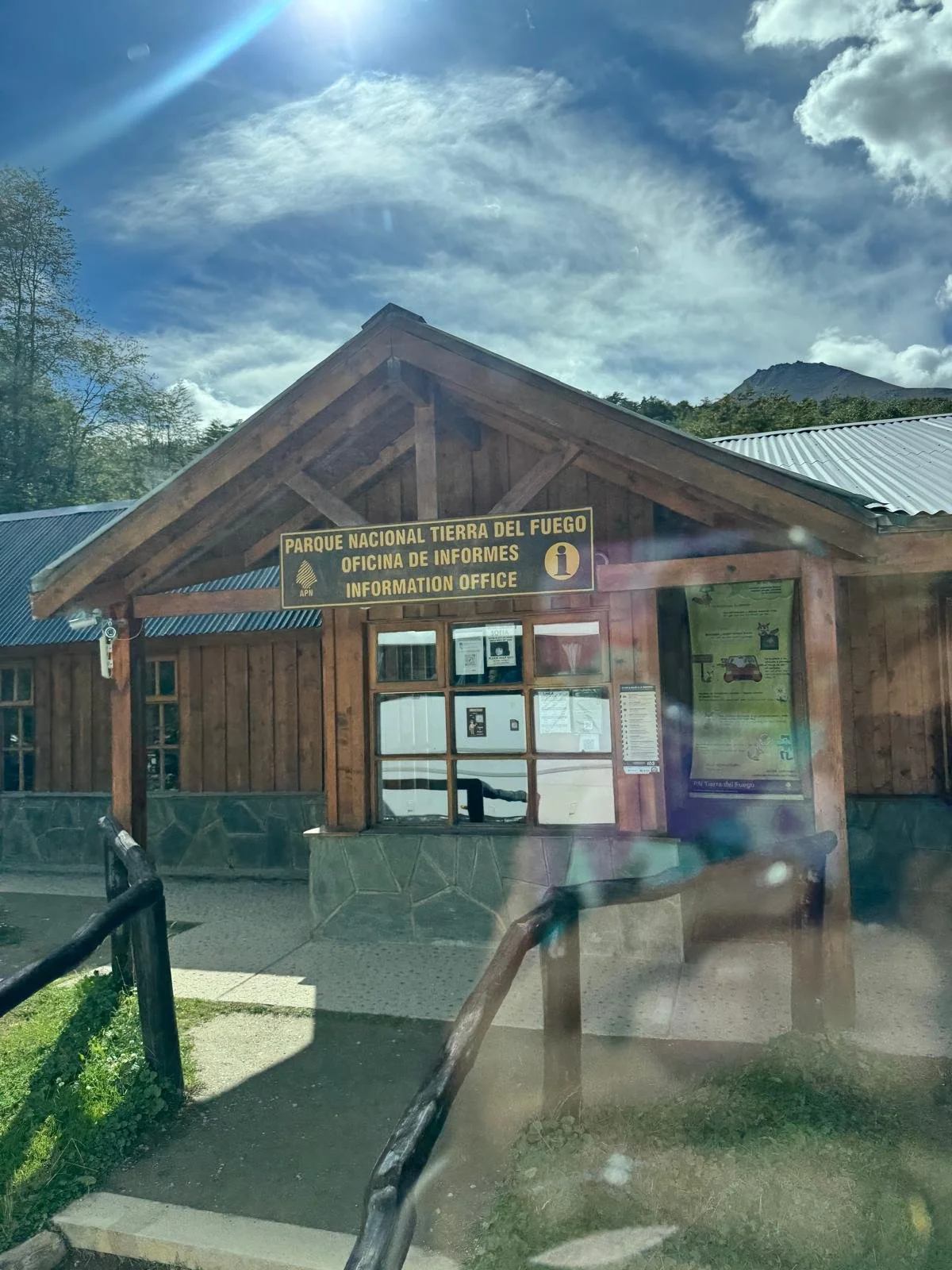
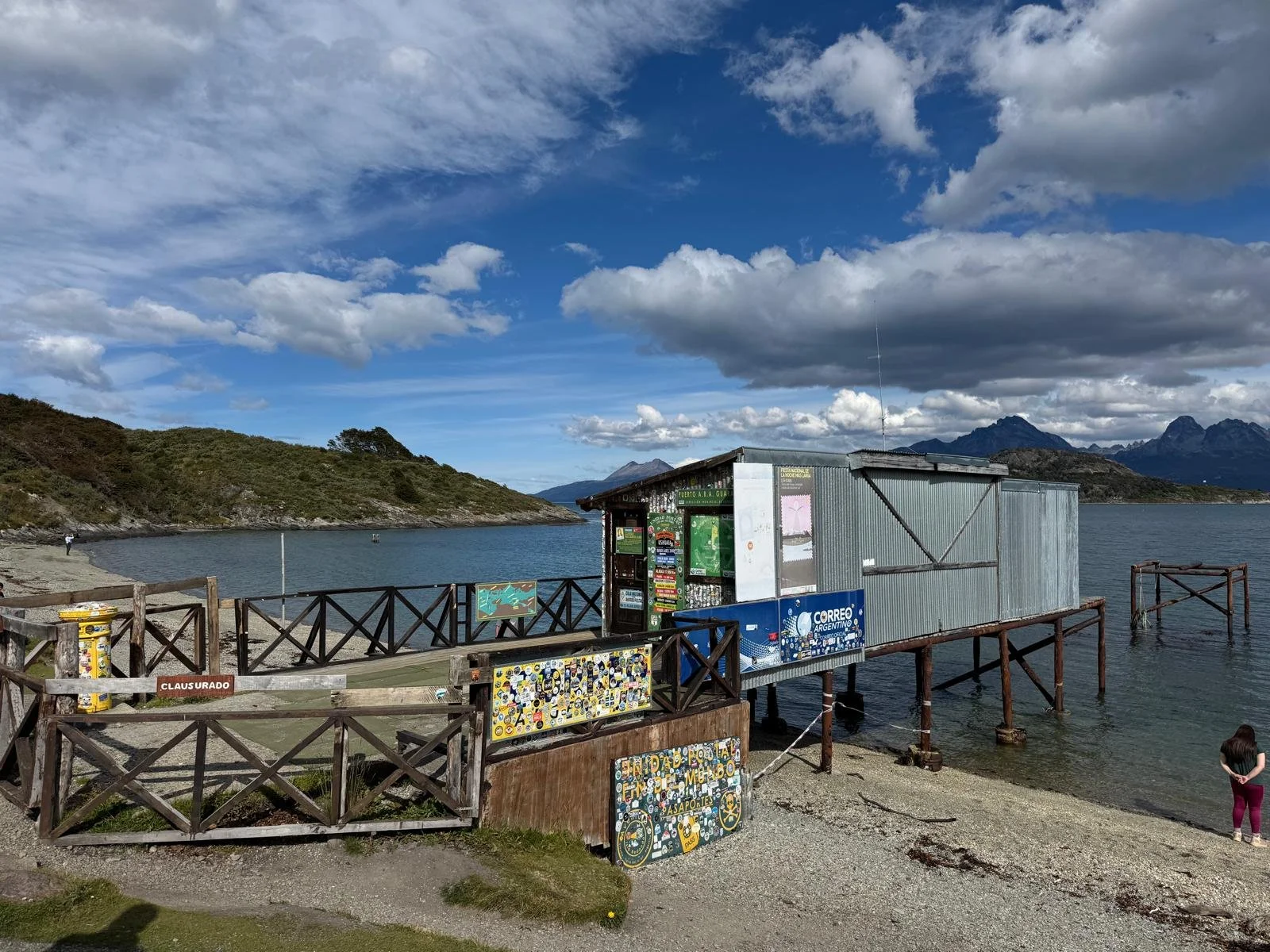
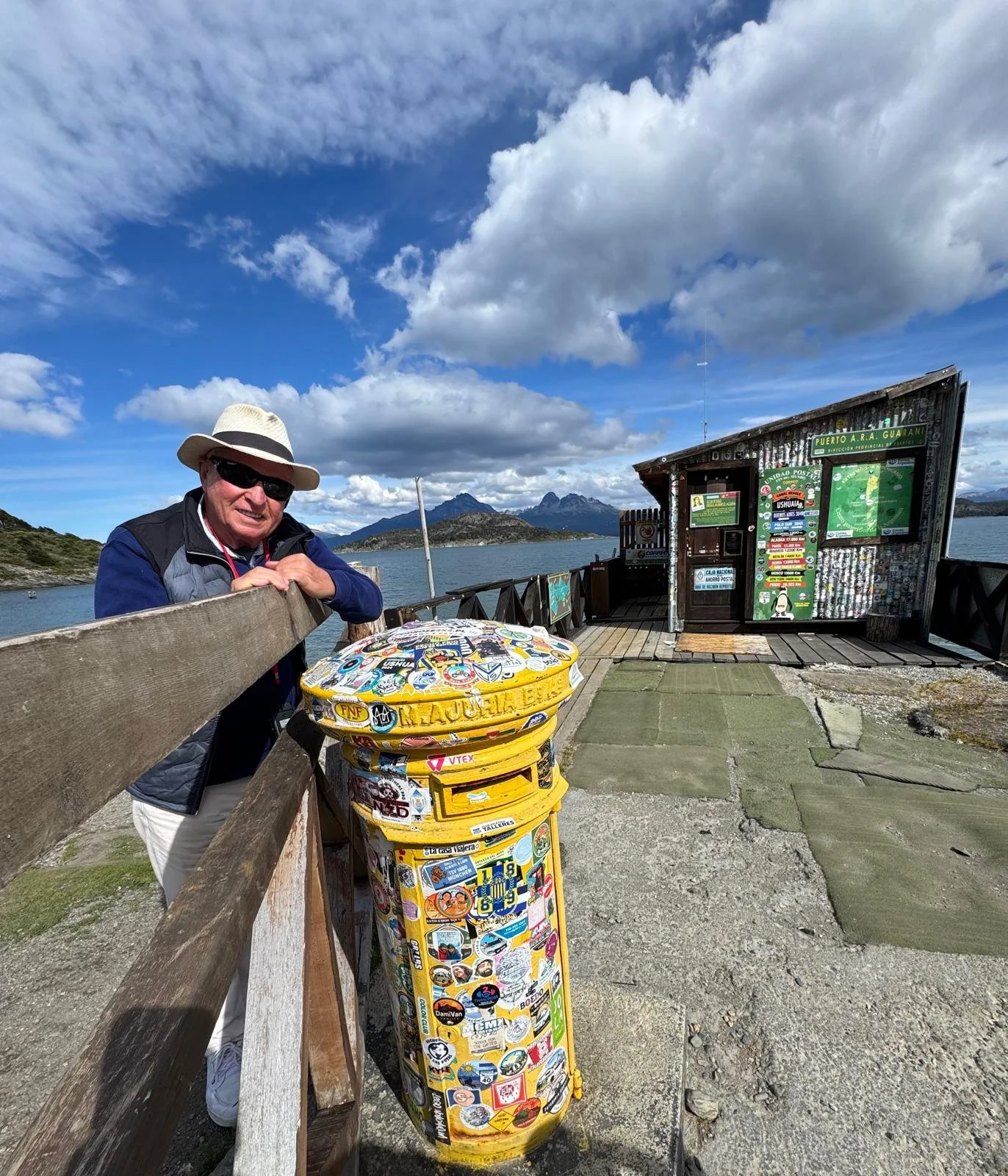
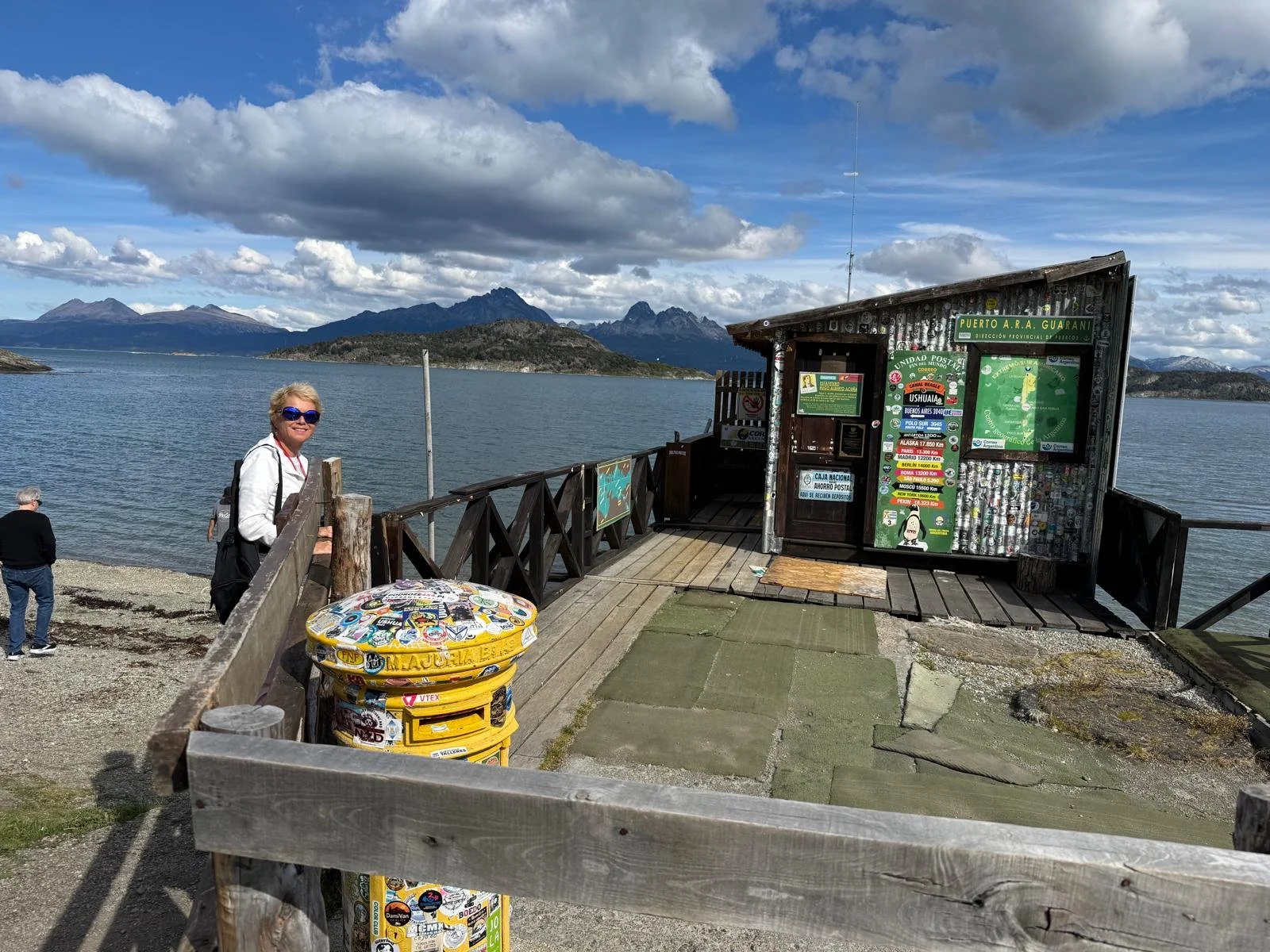
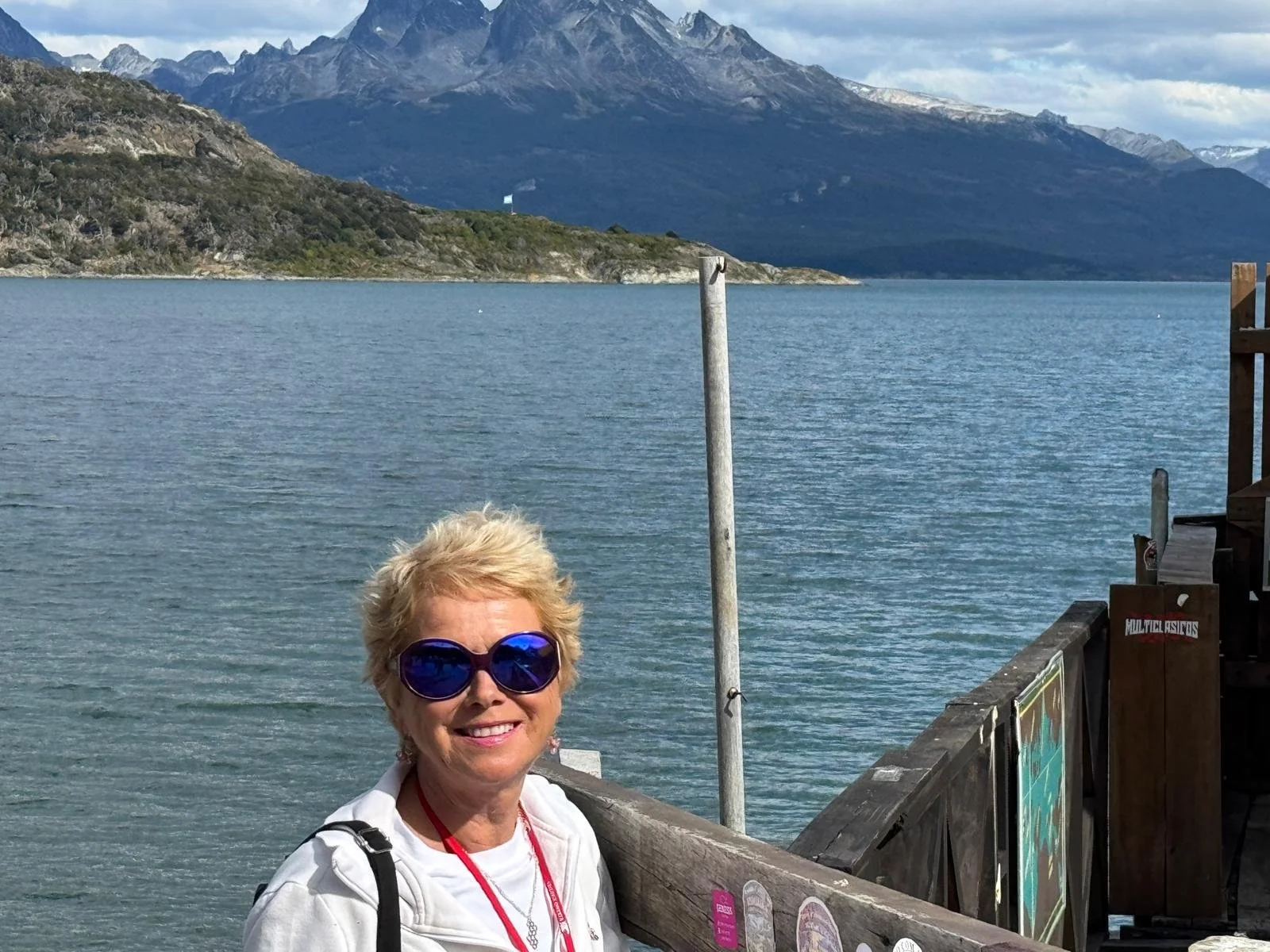
The drive out was slightly repetitive of the morning’s tour, but as we entered Tierra del Fuego National Park, we stopped to look at the southernmost post office in the world! (there’s plenty of “southernmost” things here, funny that!). Located in Ensenada Zaratiegui Bay, this small, corrugated iron shack on the shores of the Beagle Channel apparently allow you to send postcards with a special “End of the World stamp” I would definitely have been up for sending one to each of my six grandchildren, but unfortunately it was a Sunday – and it was shut! On one of the very rare sunny days here, with tons of tourists around, they missed a big opportunity to sell a lot of cards with their special stamps!!!!!! Never mind, it was fun to admire it, especially the old-fashioned, British style post box, although it was painted yellow, not the traditional red.
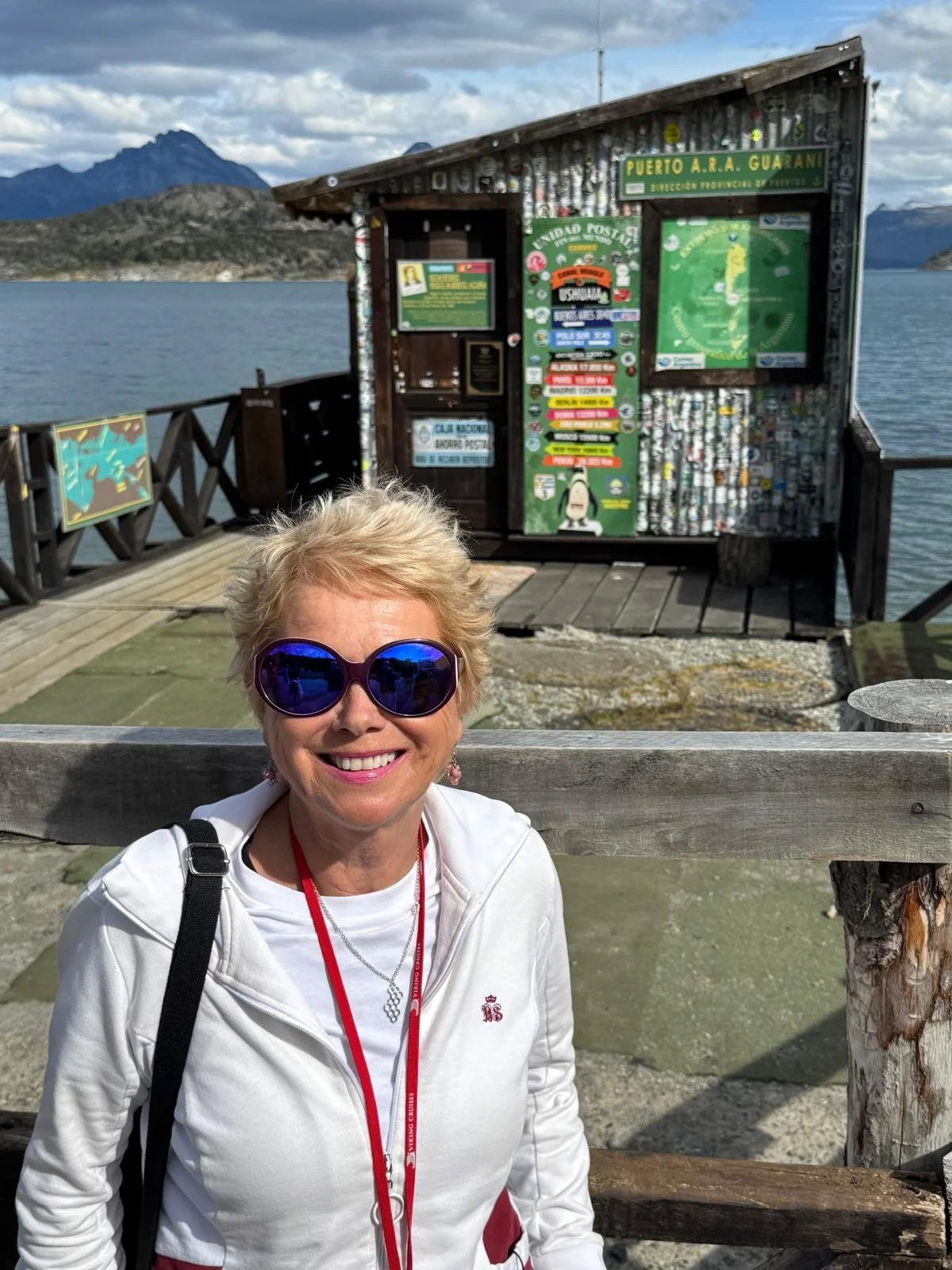
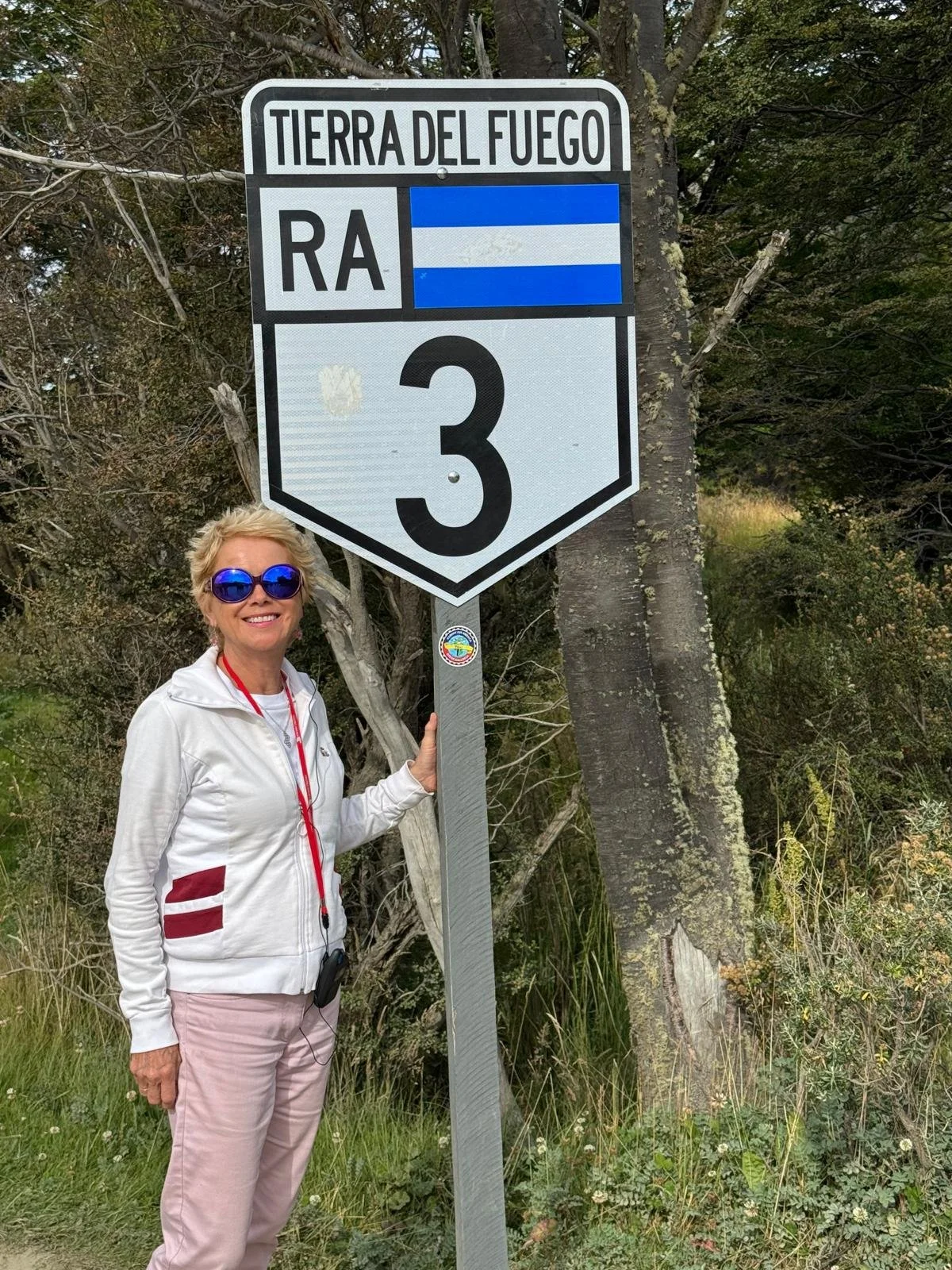
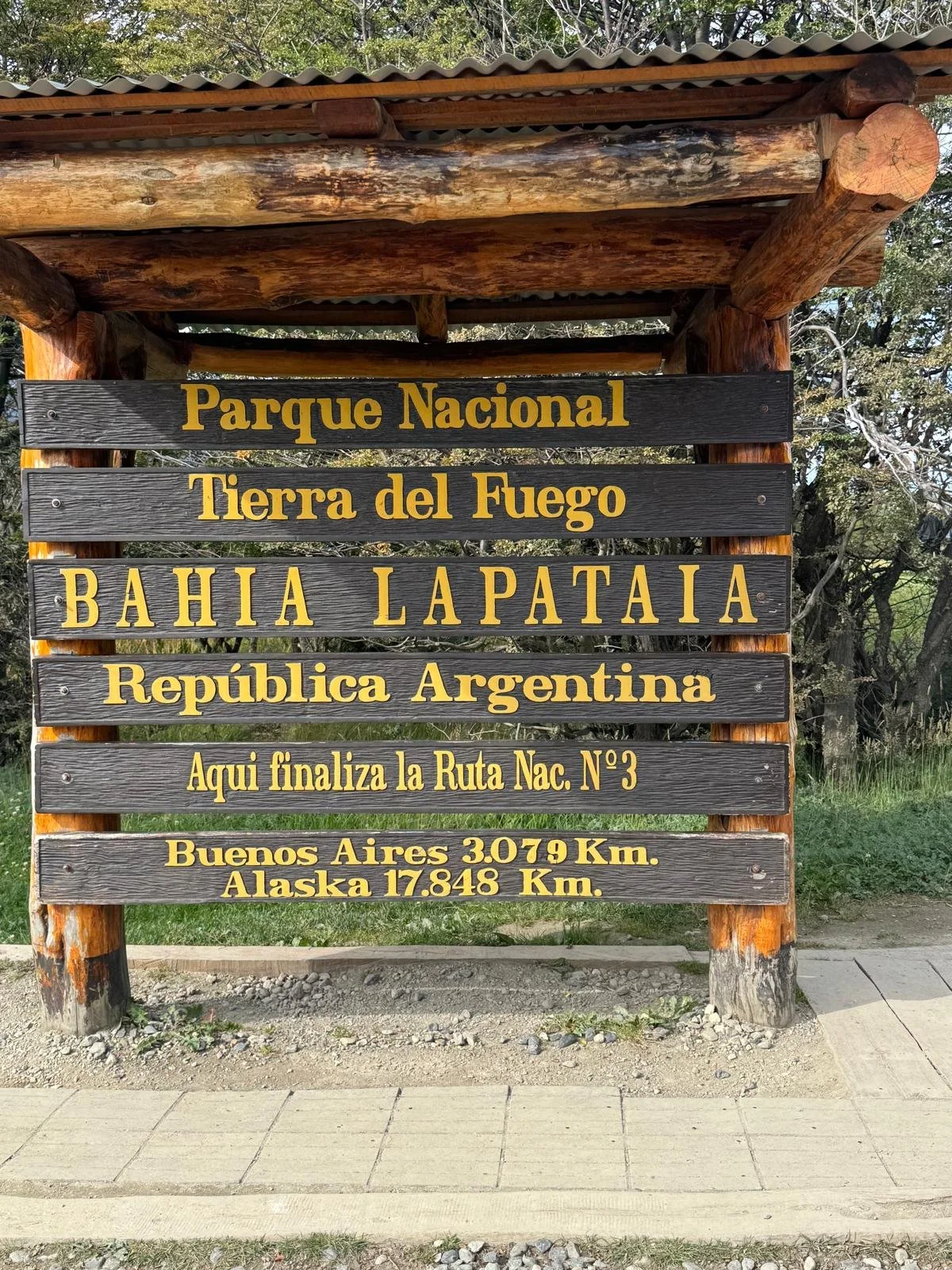
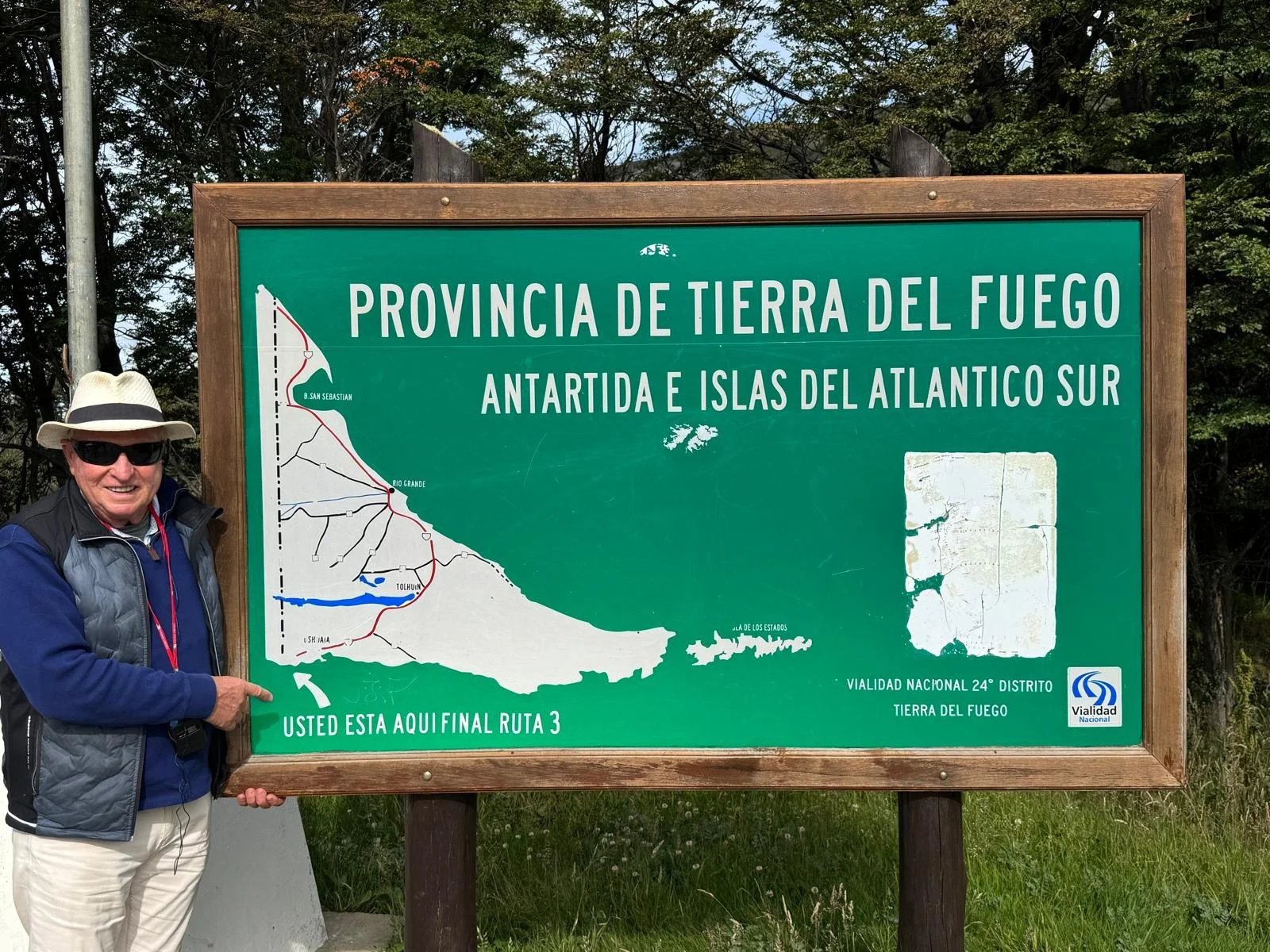
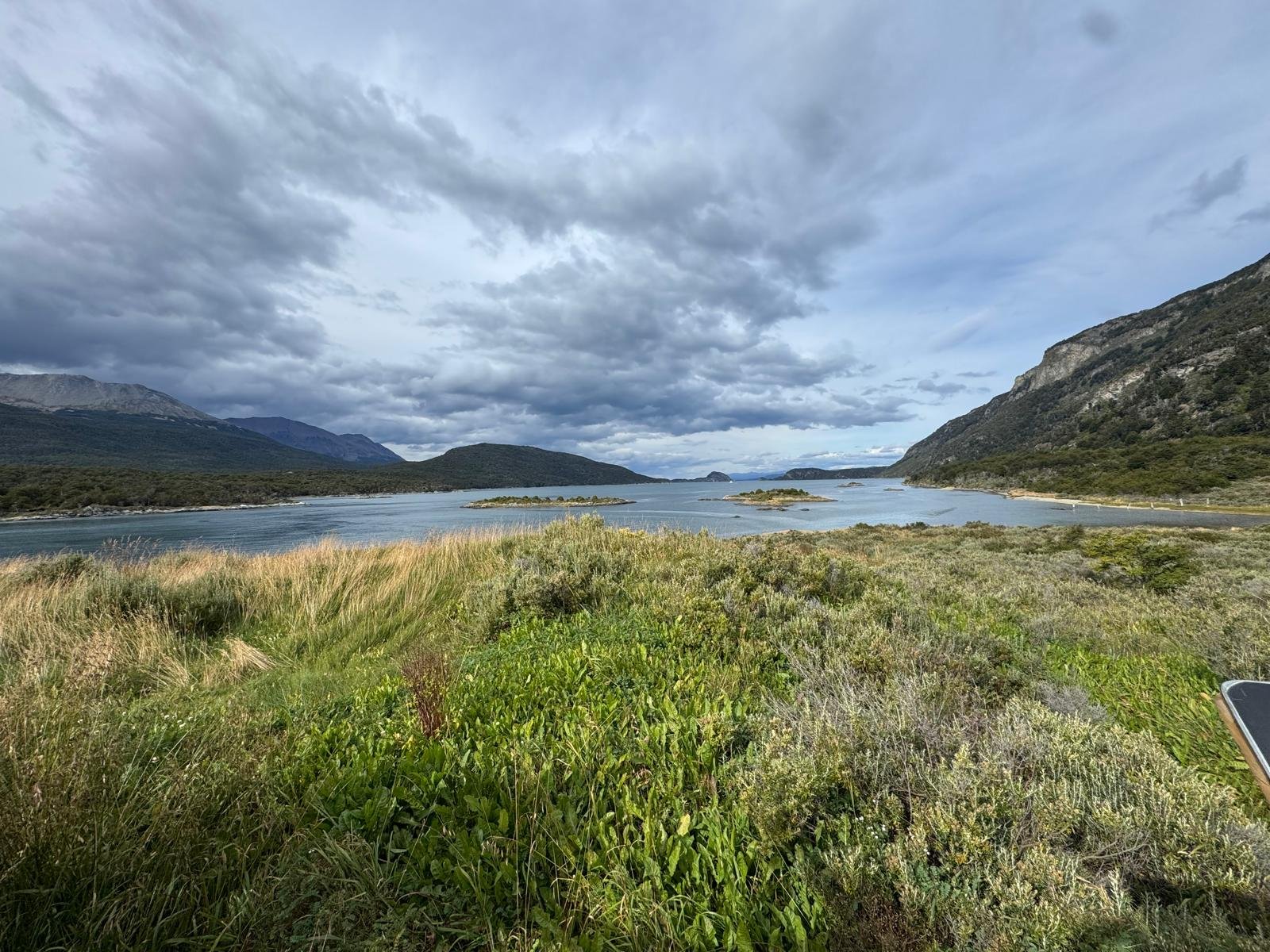
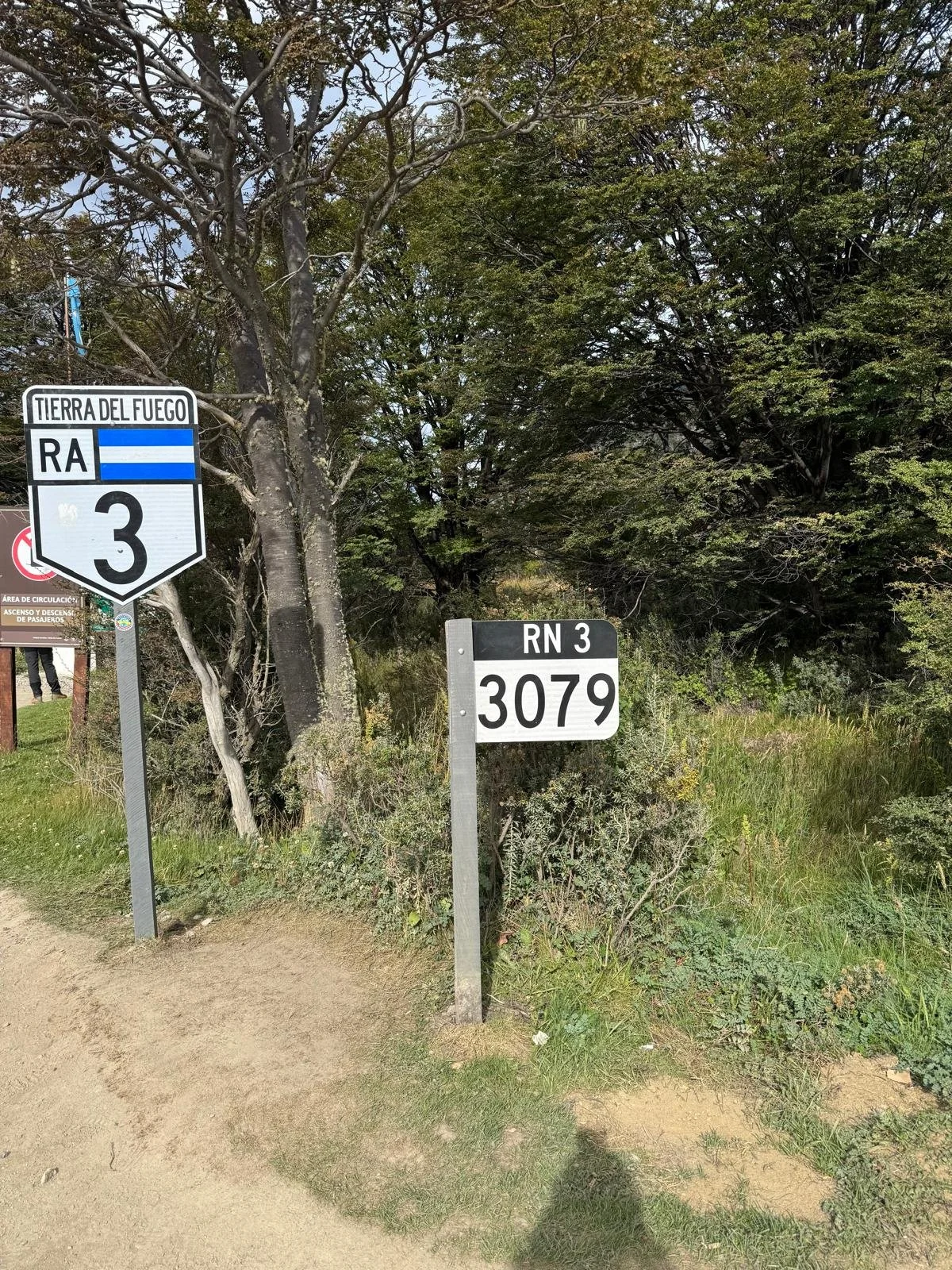
Next up a stop off at Lapataia Bay, a fjord that marks the end of National Route 3 and the famous Pan-American Highway which starts in Alaska, and is the world’s longest road network, stretching approximately 30,000 to 48,000 kms. It connects almost the entire American continent from Prudhoe Bay, Alaska to Ushuaia and crosses 14 countries, including Canada, the USA, Mexico and most of Central and South America. The only impassable section is a dangerous part called the Darién Gap, a jungle that separates Panama from Colombia which is a stretch of approximately 100kms, and travellers have to ferry their vehicles over on cargo ships. Have a look at the photos below – some nice, fancy colourful signs here too!
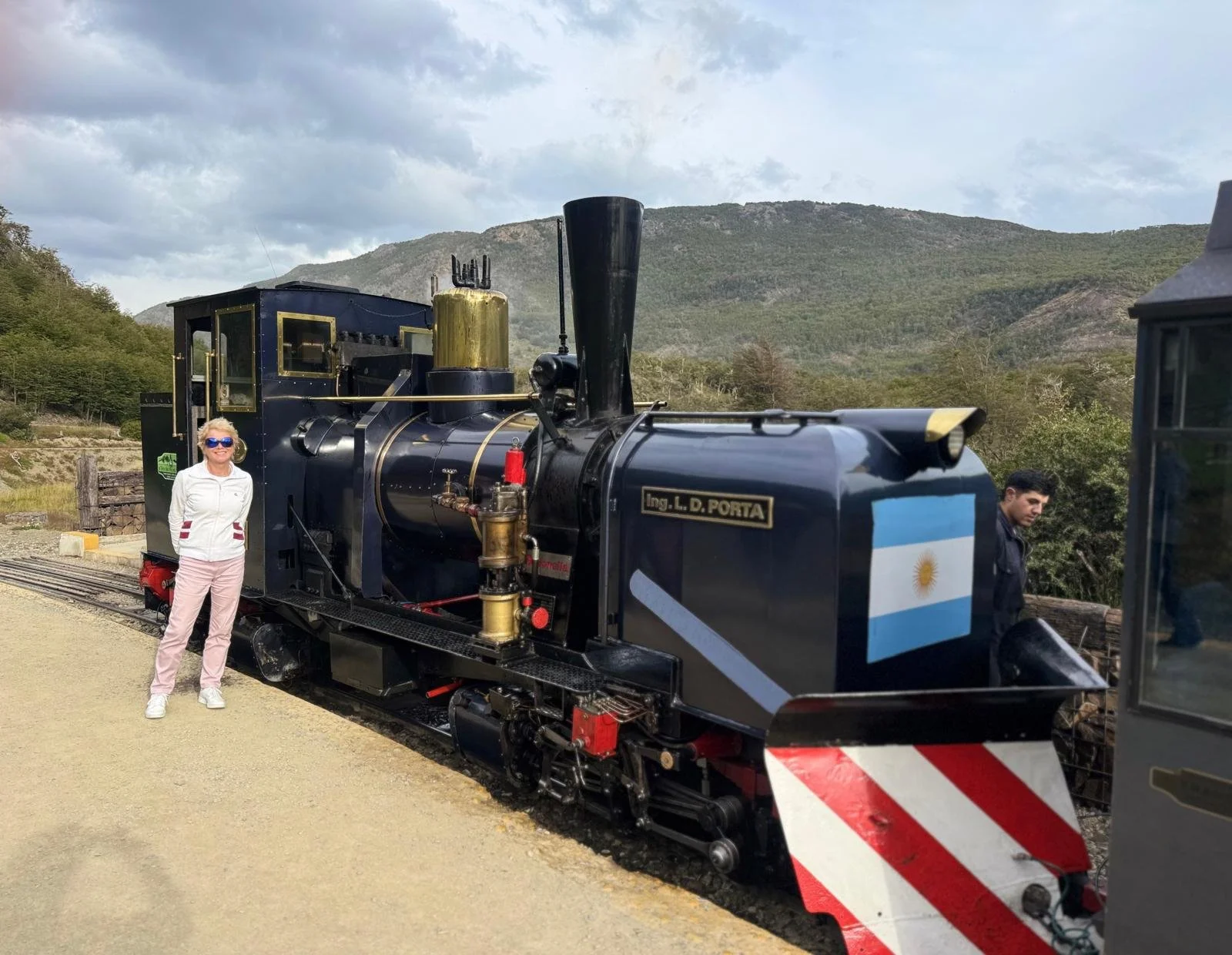
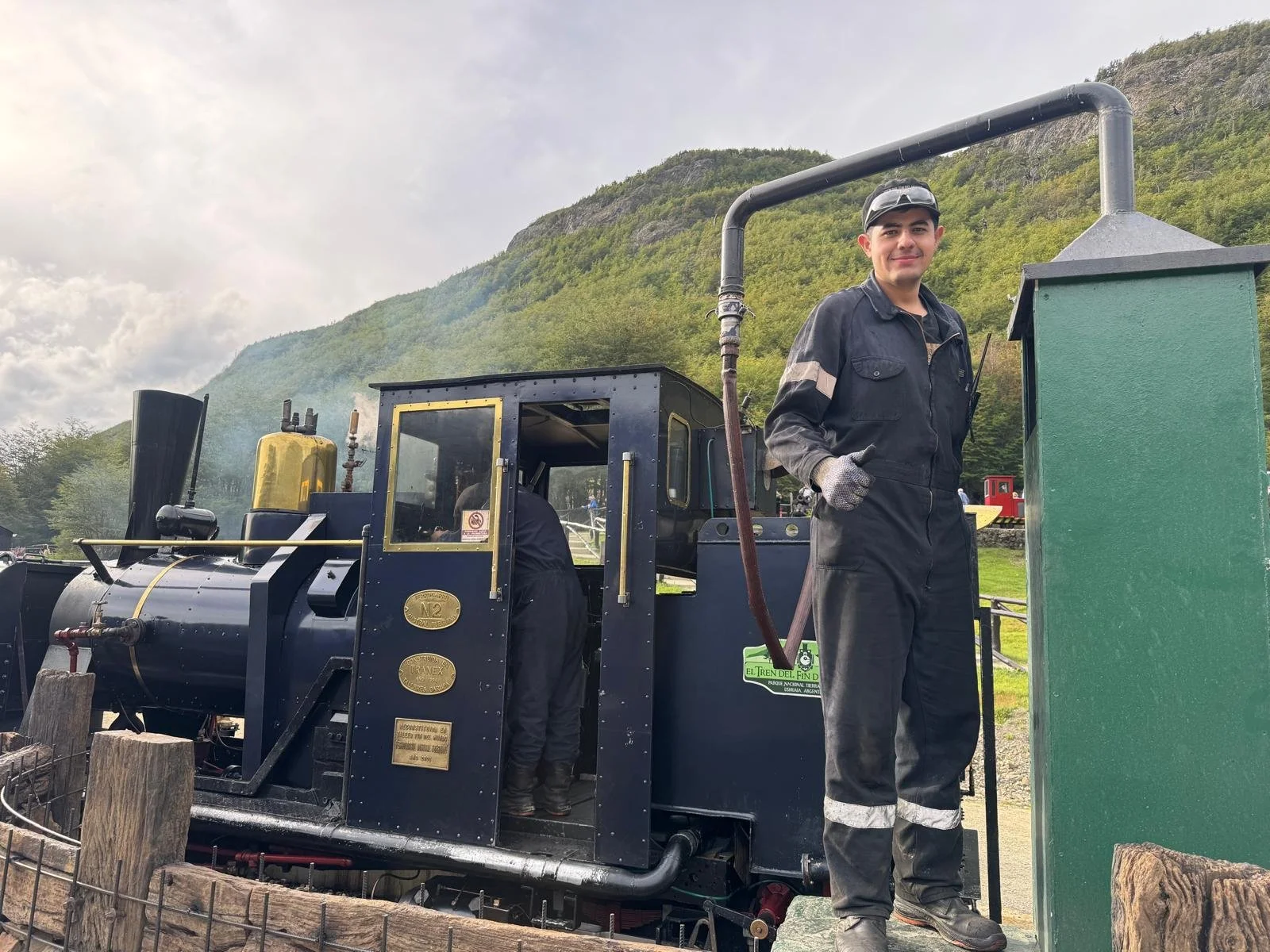
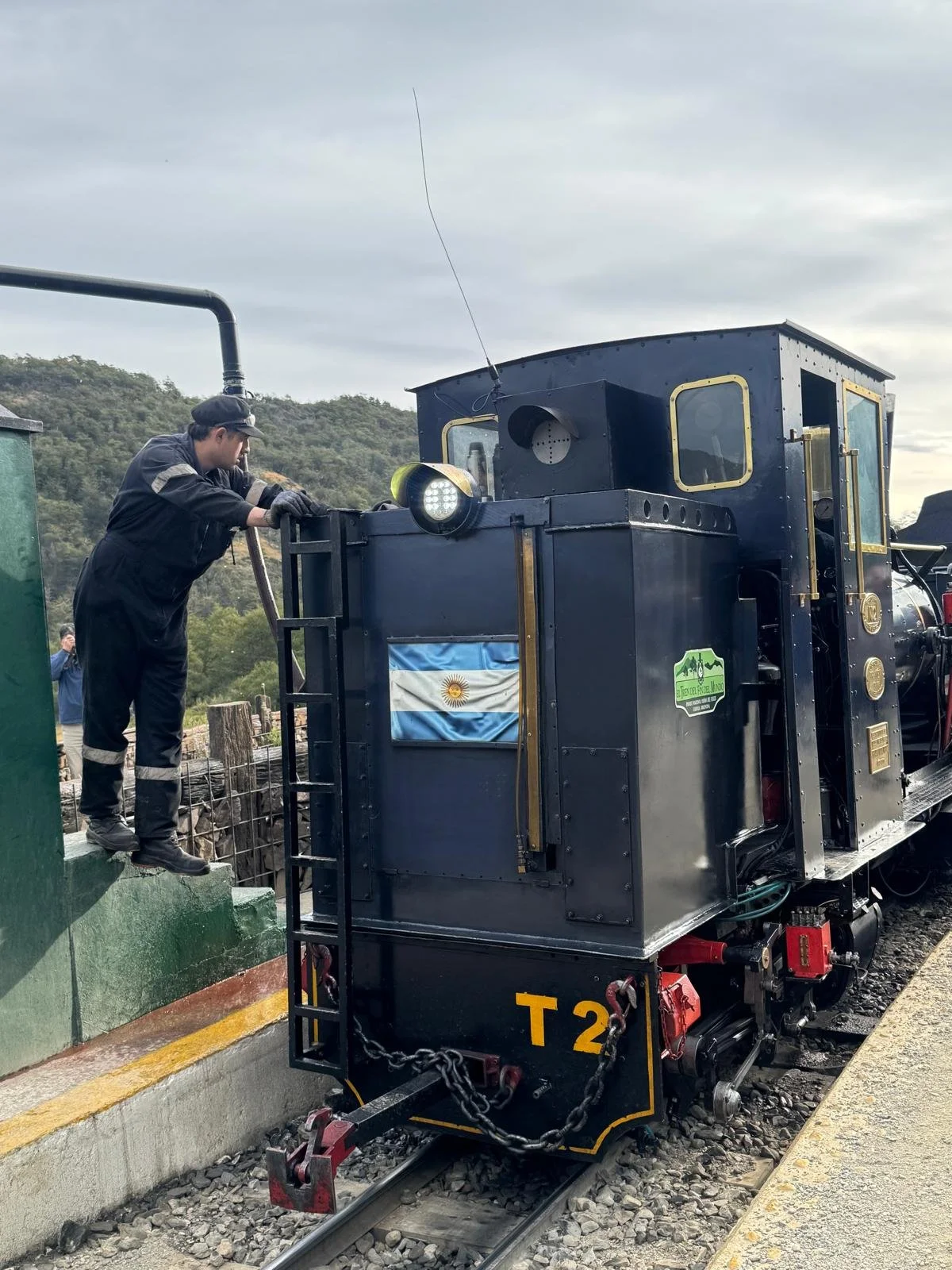
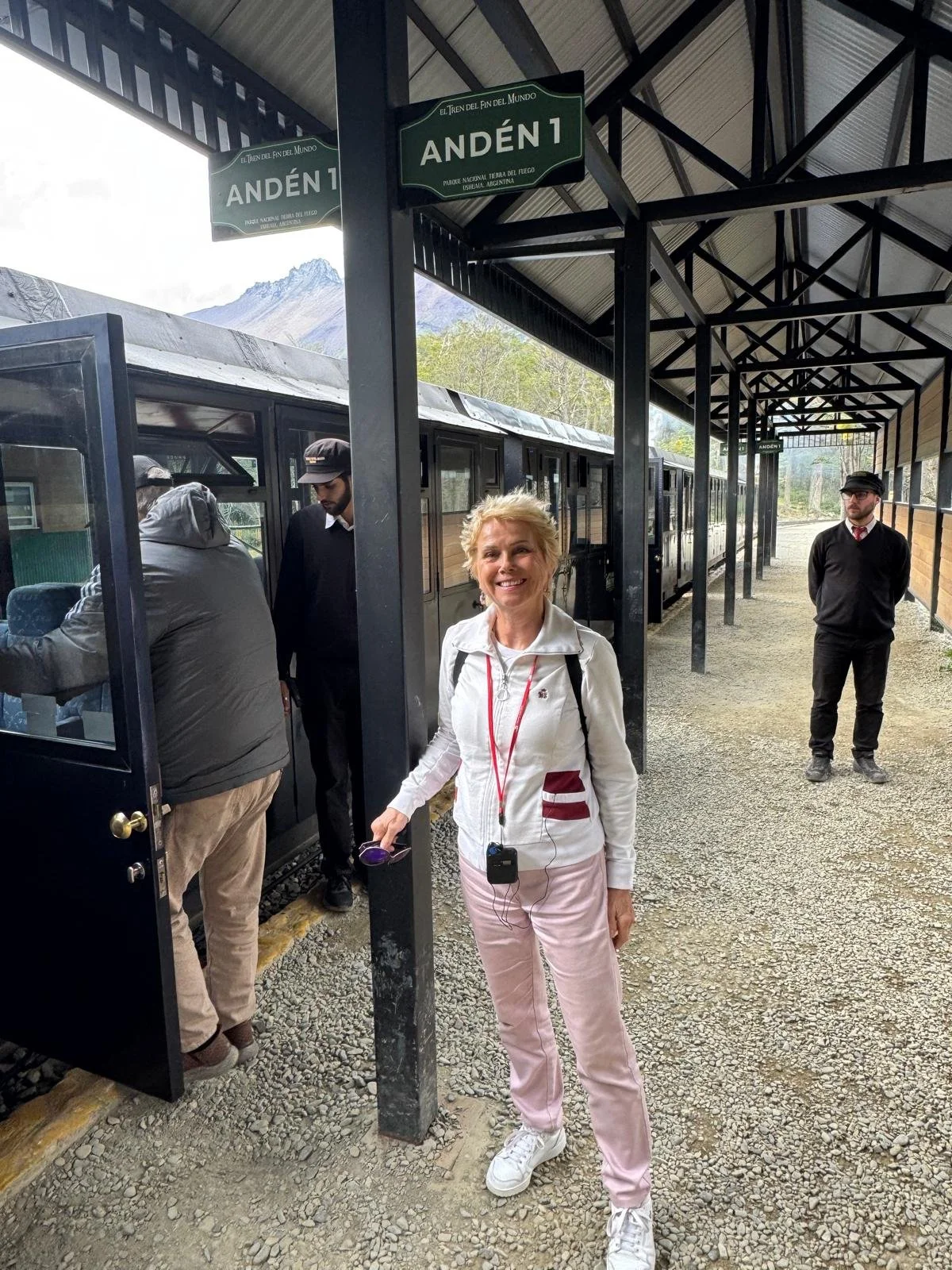
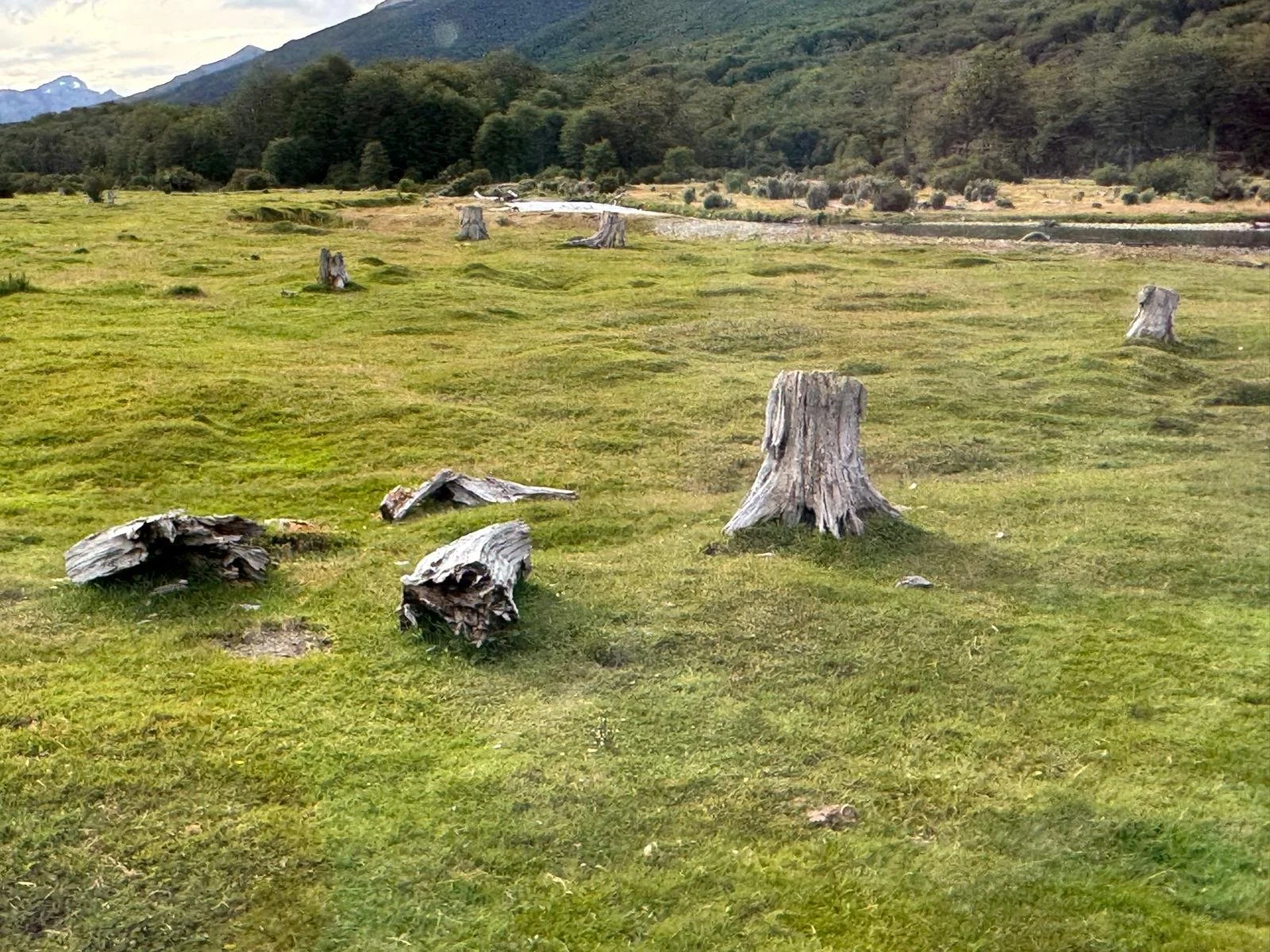
The highlight of our afternoon was the “train to the end of the world” which starts in the National Park of Tierra del Fuego. The train travels along an old wooden track and recreates the journey the prisoners took all those years ago when they collected firewood to take back to build the prison and other buildings in the town. The vintage locomotives have been especially redesigned, and the carriages now have large windows, but there were six of us to a carriage and we obviously weren’t as lean as those poor, but very fit, prisoners, so it was a very cosy journey! During the trip we could see an endless vista of tree trunks after all their chopping for fuel and building, as well as the forests and peaty bogs of the park. First stop was at the Macarena waterfall, quite a hike with many steps but with a nice vista at the top. All I could think of on the way down was the mid-1990’s hit song by Los del Rio that we all had on our brains back in the day and couldn’t stop singing, so I almost danced down the steps.
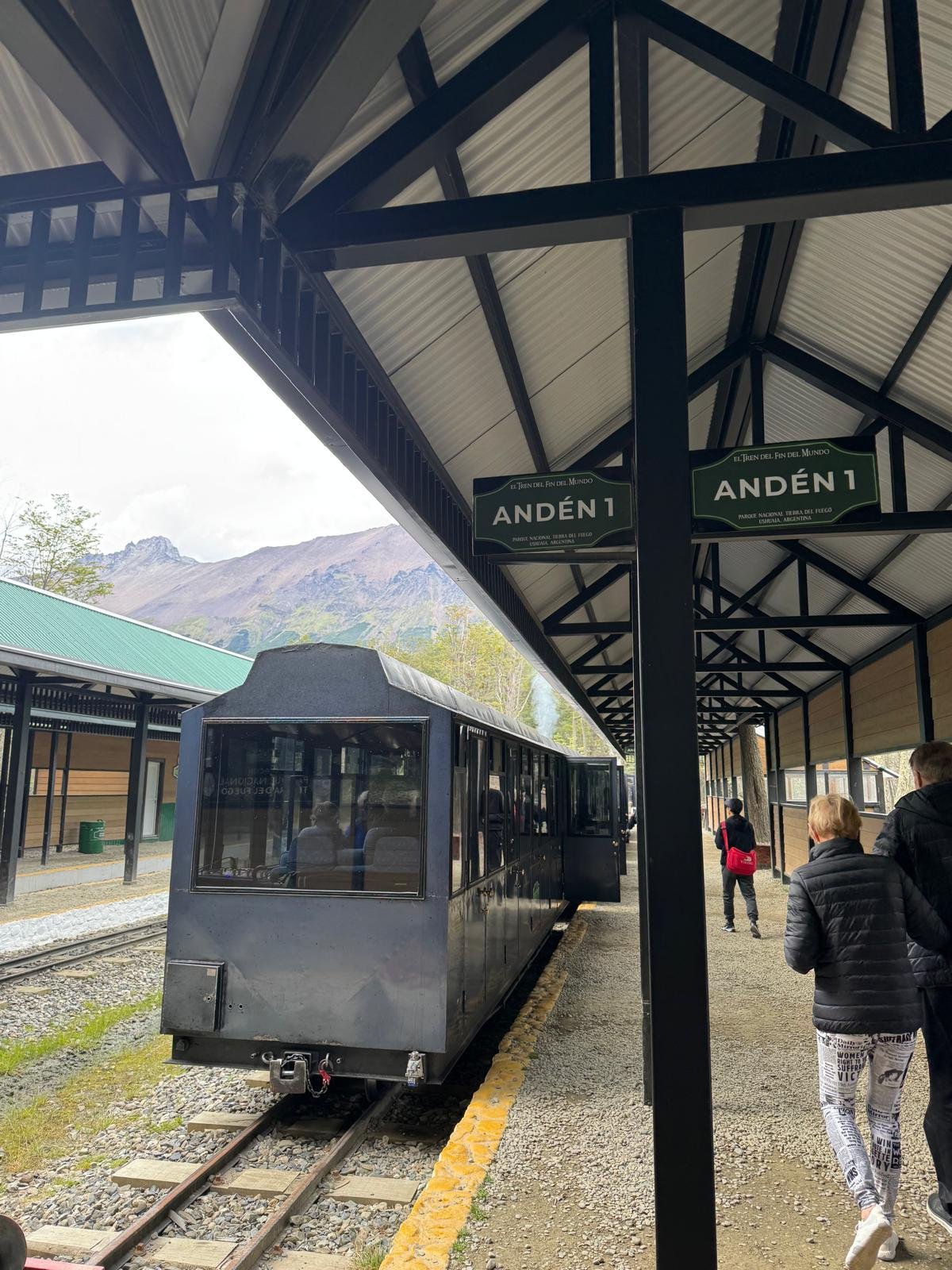
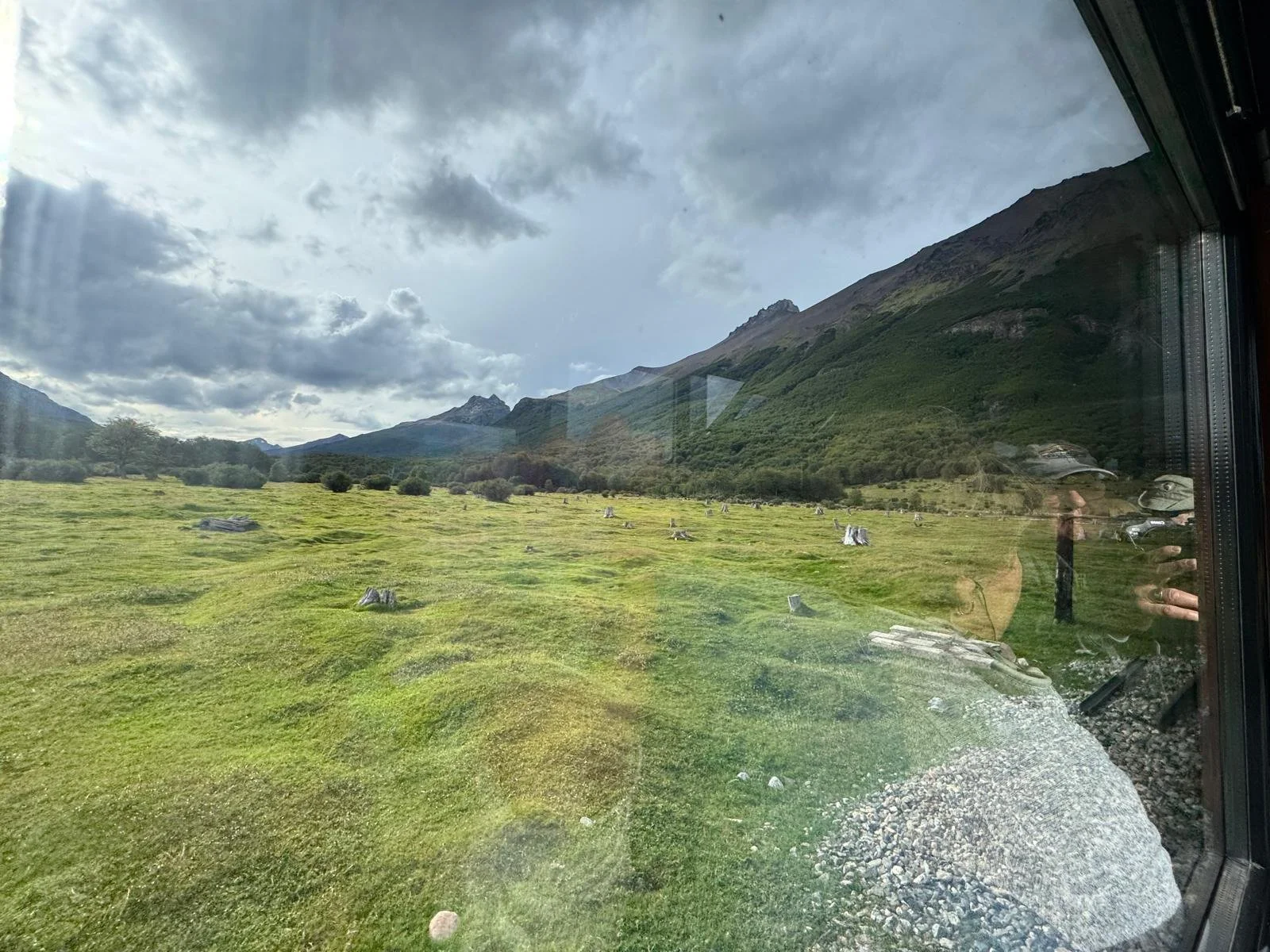
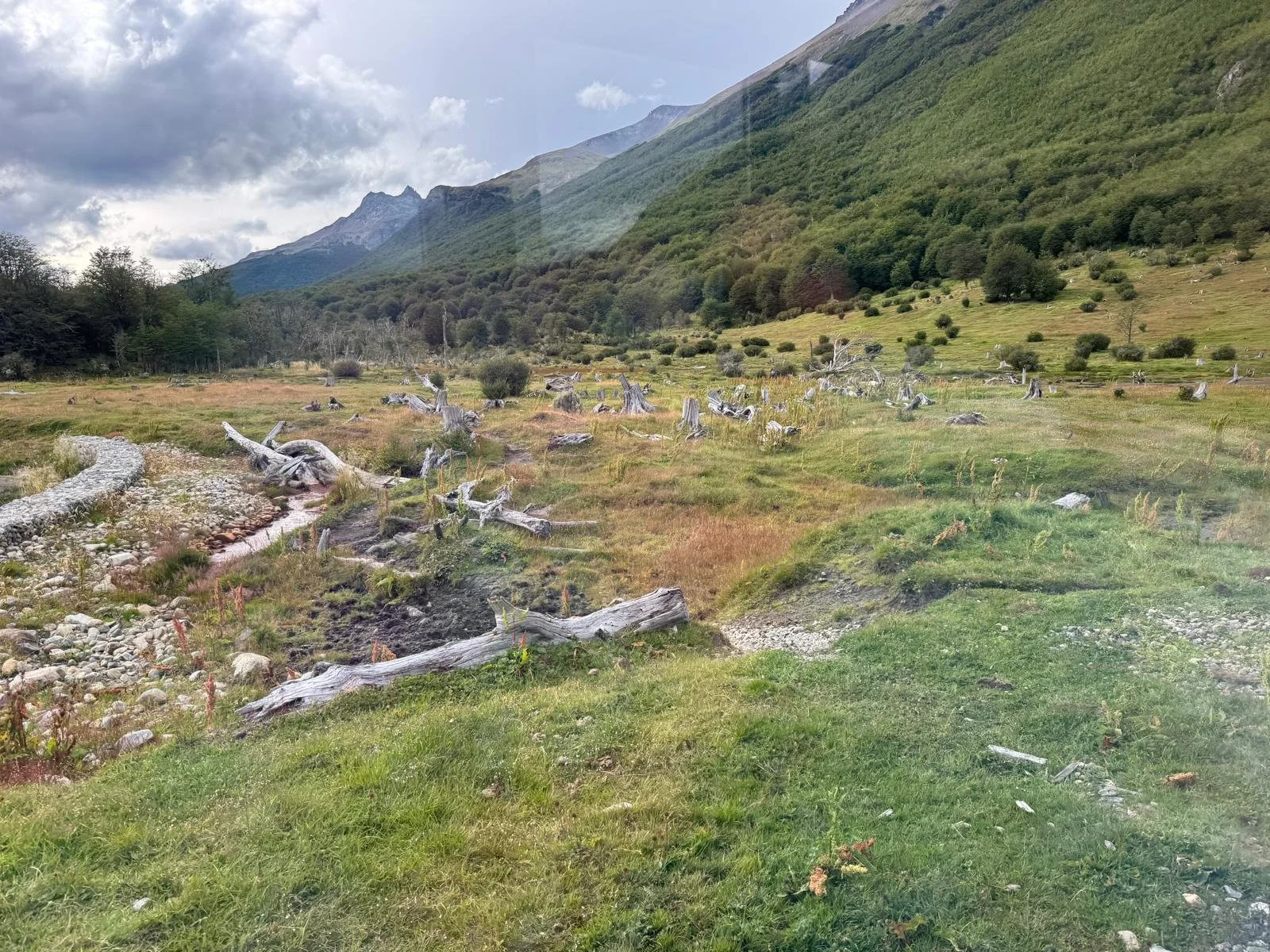
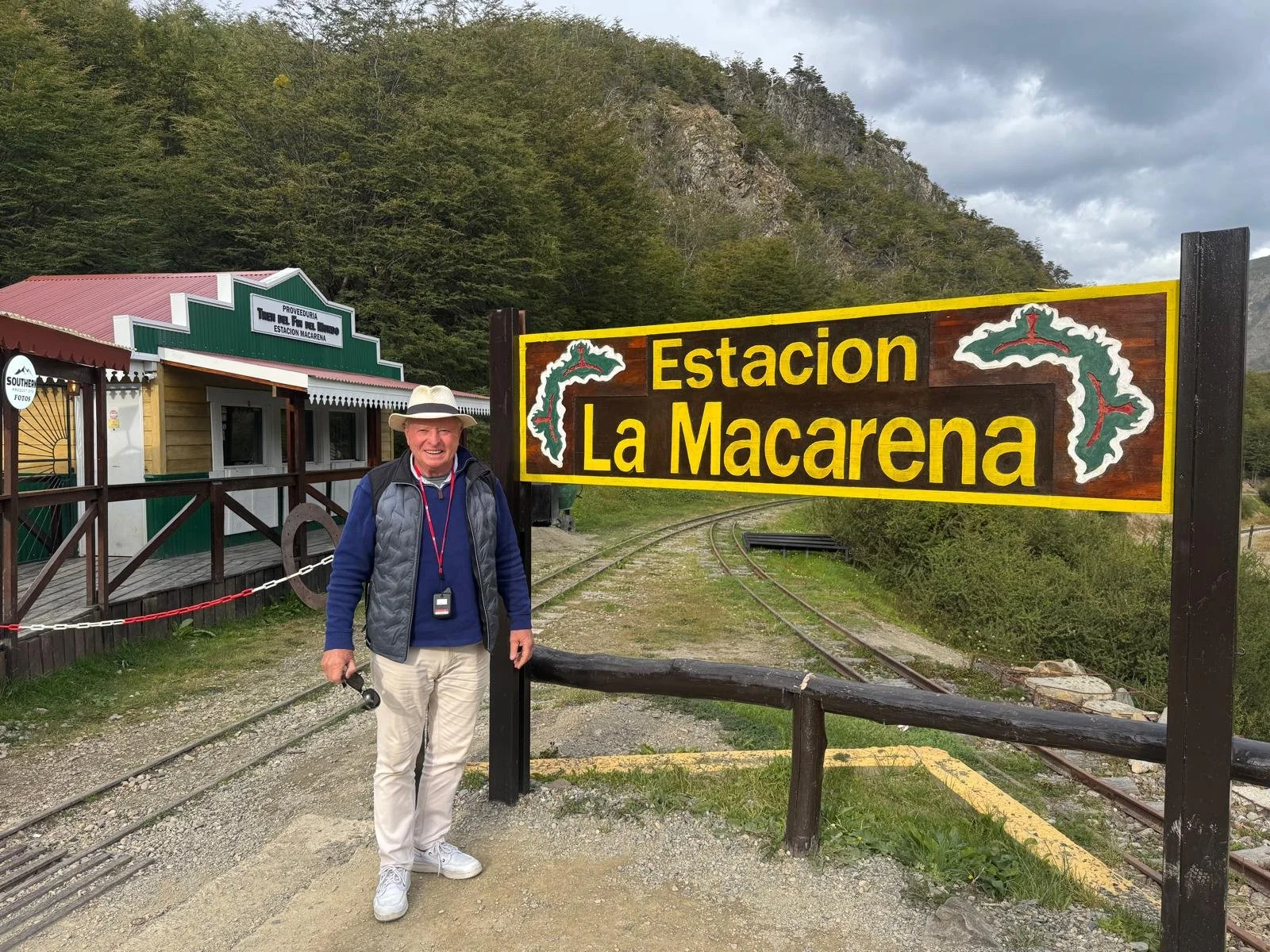
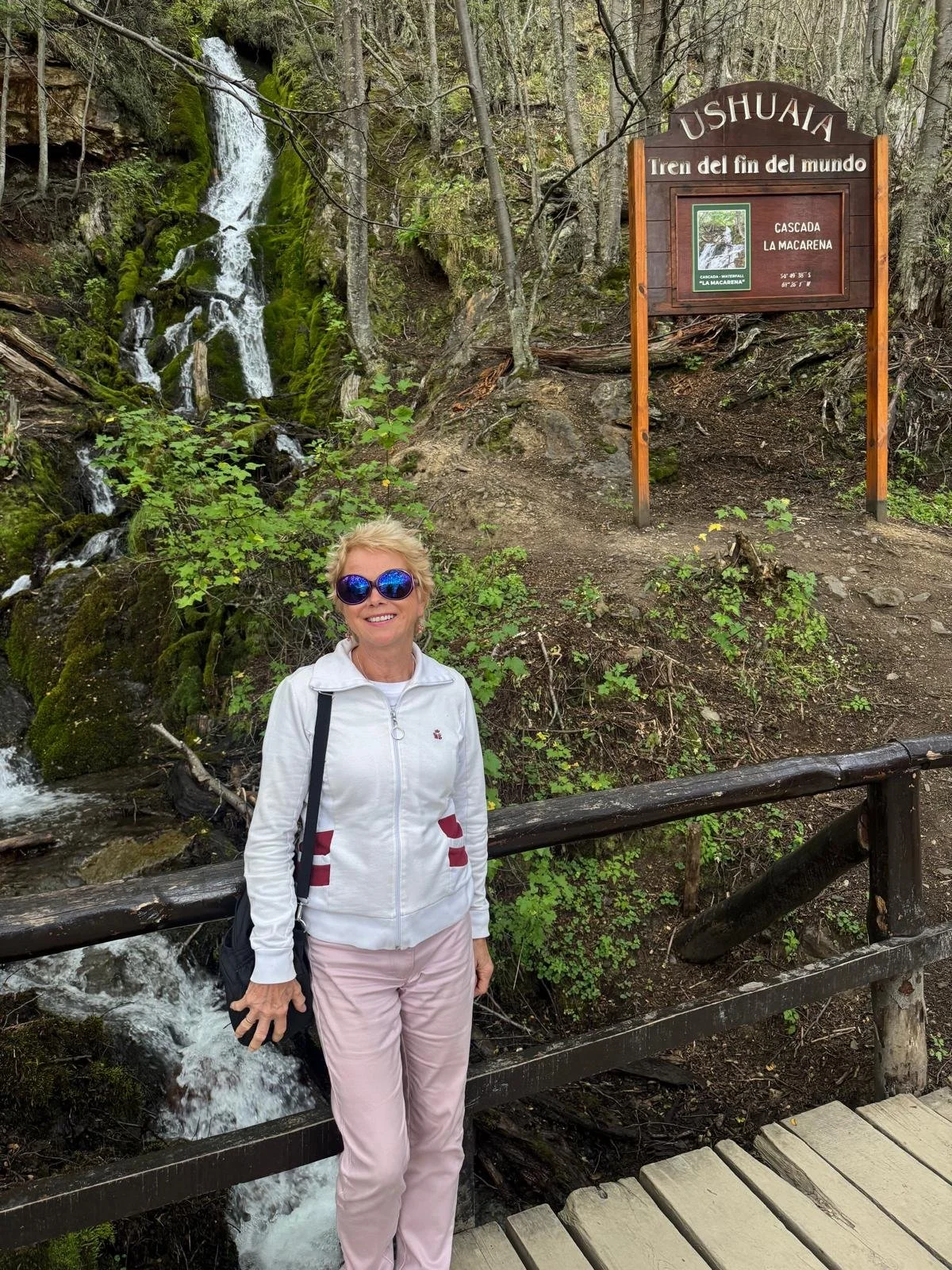
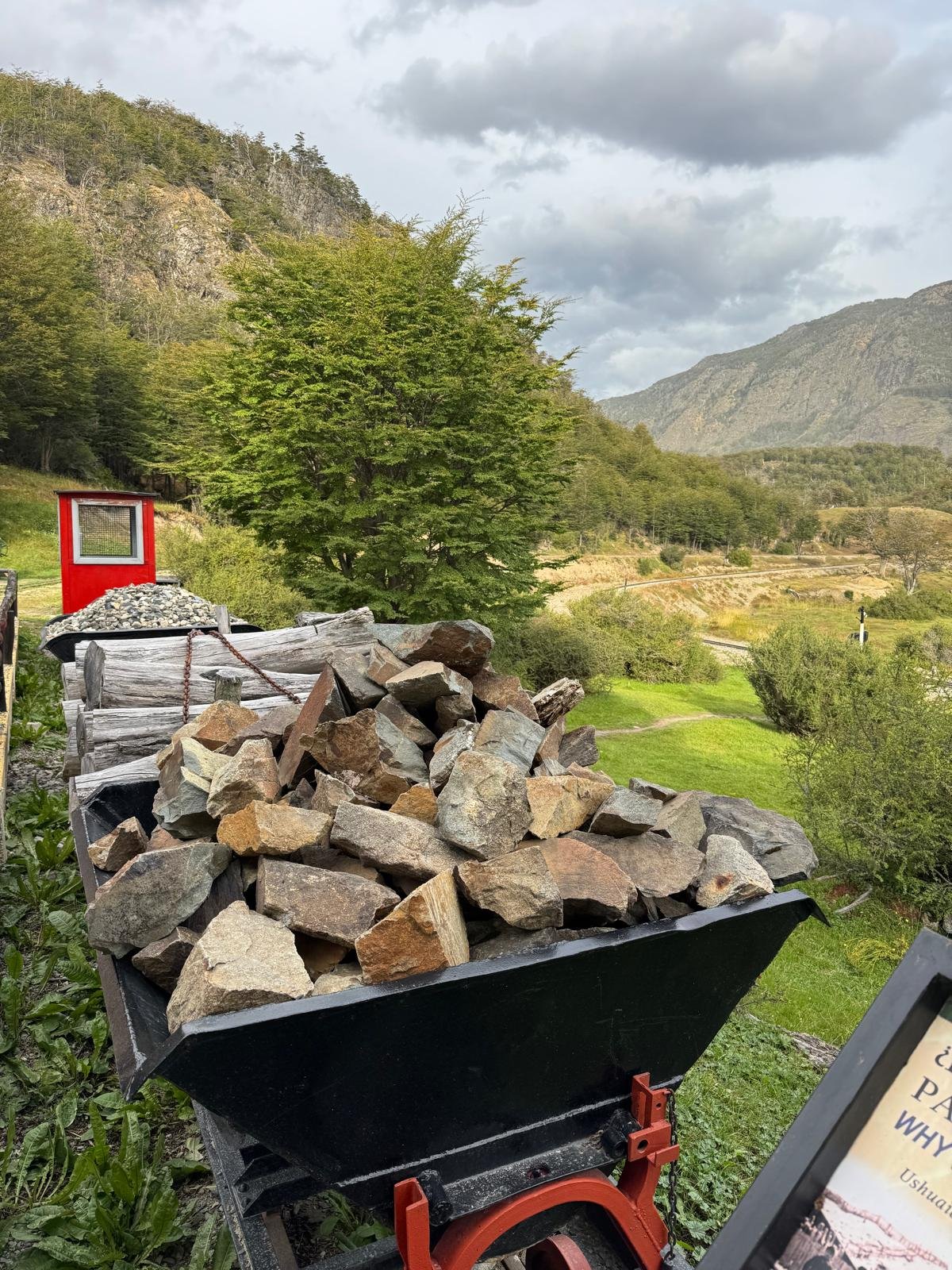
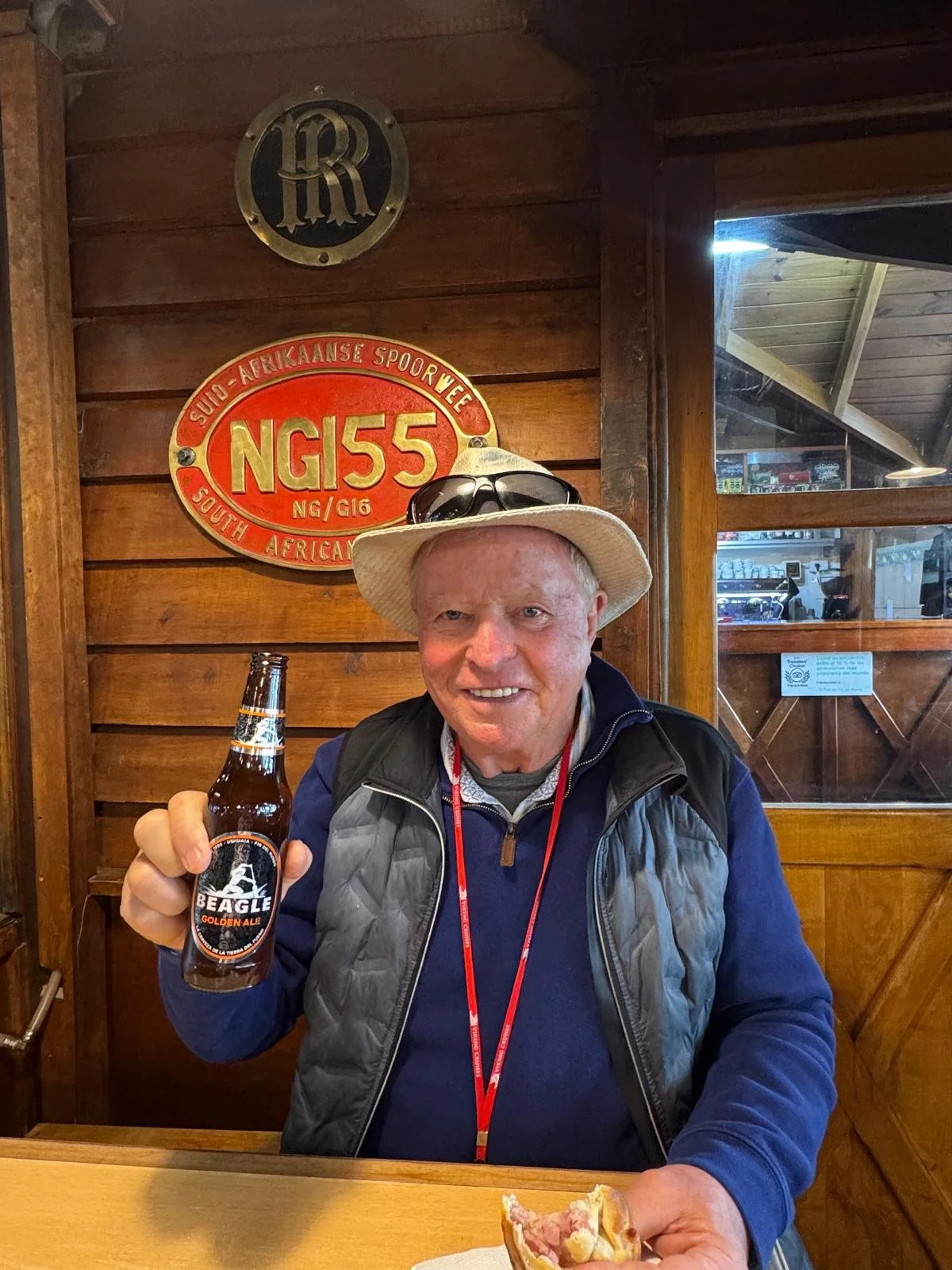
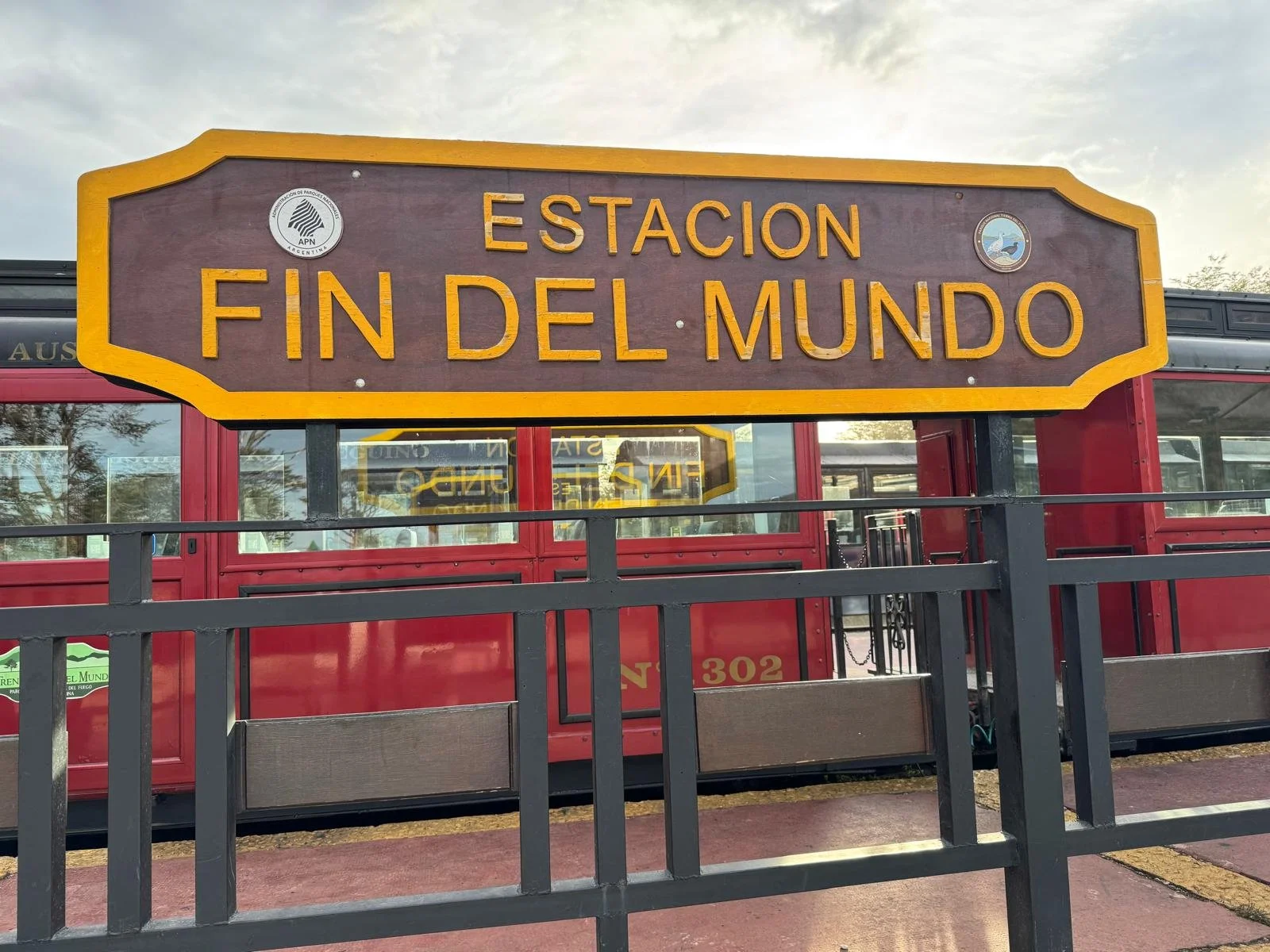
The locomotives are custom-built narrow-gauge steam, with robust iron boilers powered by high-pressure superheated steam, and feature 4ft coupled wheels also with a heavy-duty construction suitable for steep gradients and the harsh, cold, very demanding Patagonian weather conditions here. Our final stop was at the End of the World Station (of course!) where we were suitably fed and watered – Geoff delighted to enjoy his first Beagle Beer!
It really was a great day for us, so much to learn, so many interesting things to see and also pretty special to be able to say that we have ventured this far south on the globe!