Aguas Calientes – known as Machu Picchu Pueblo
Sunday 15 March
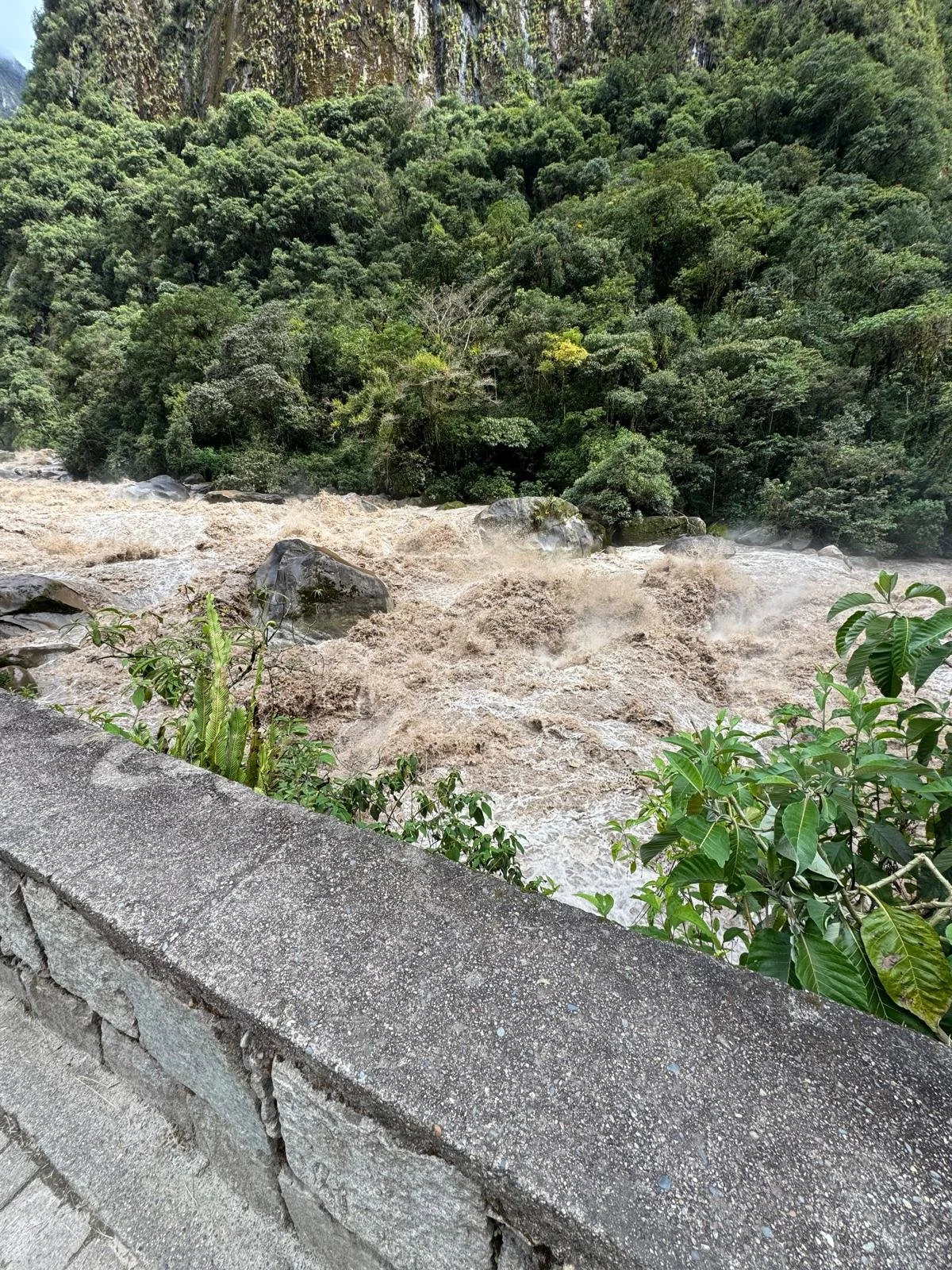
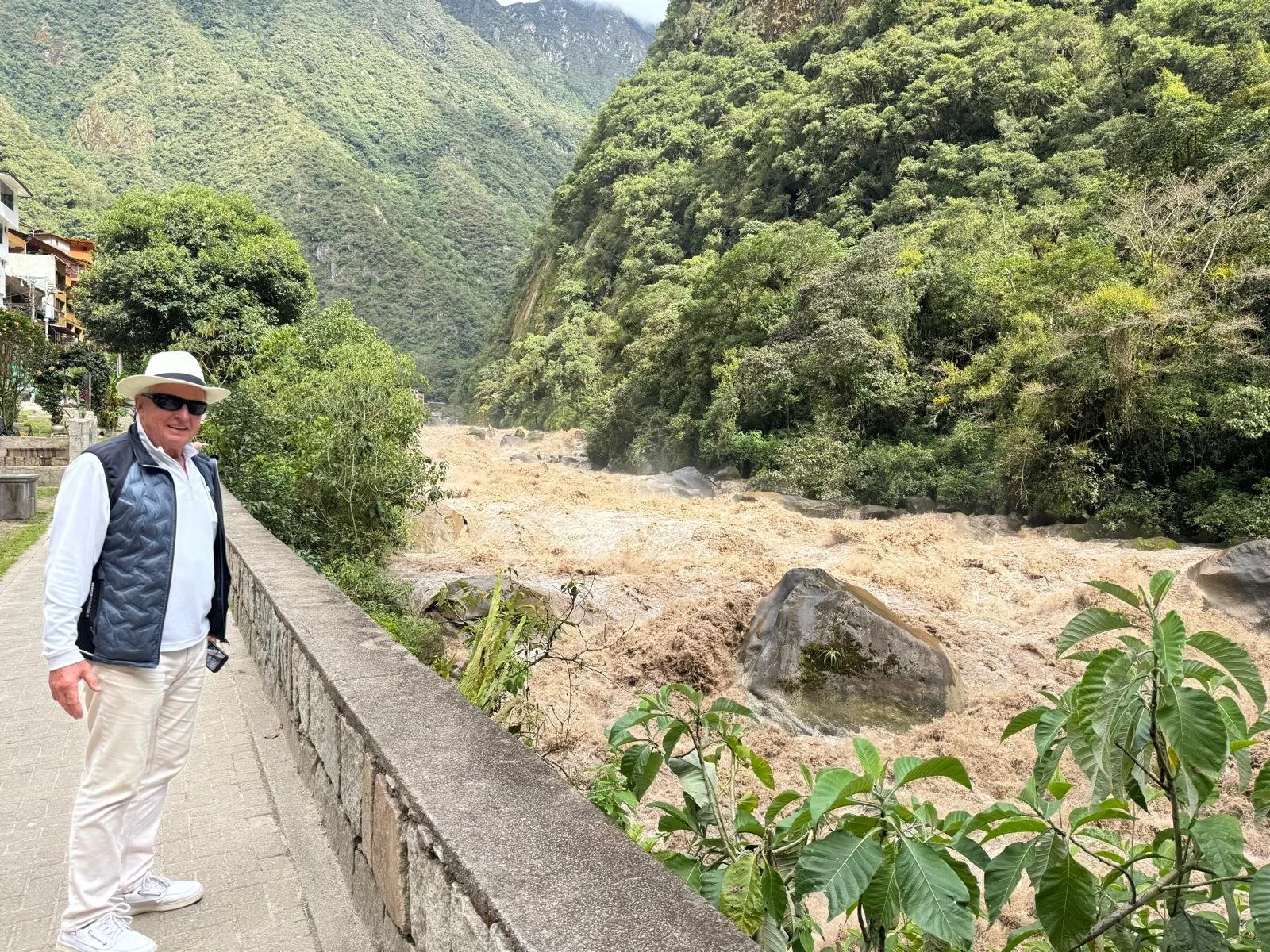
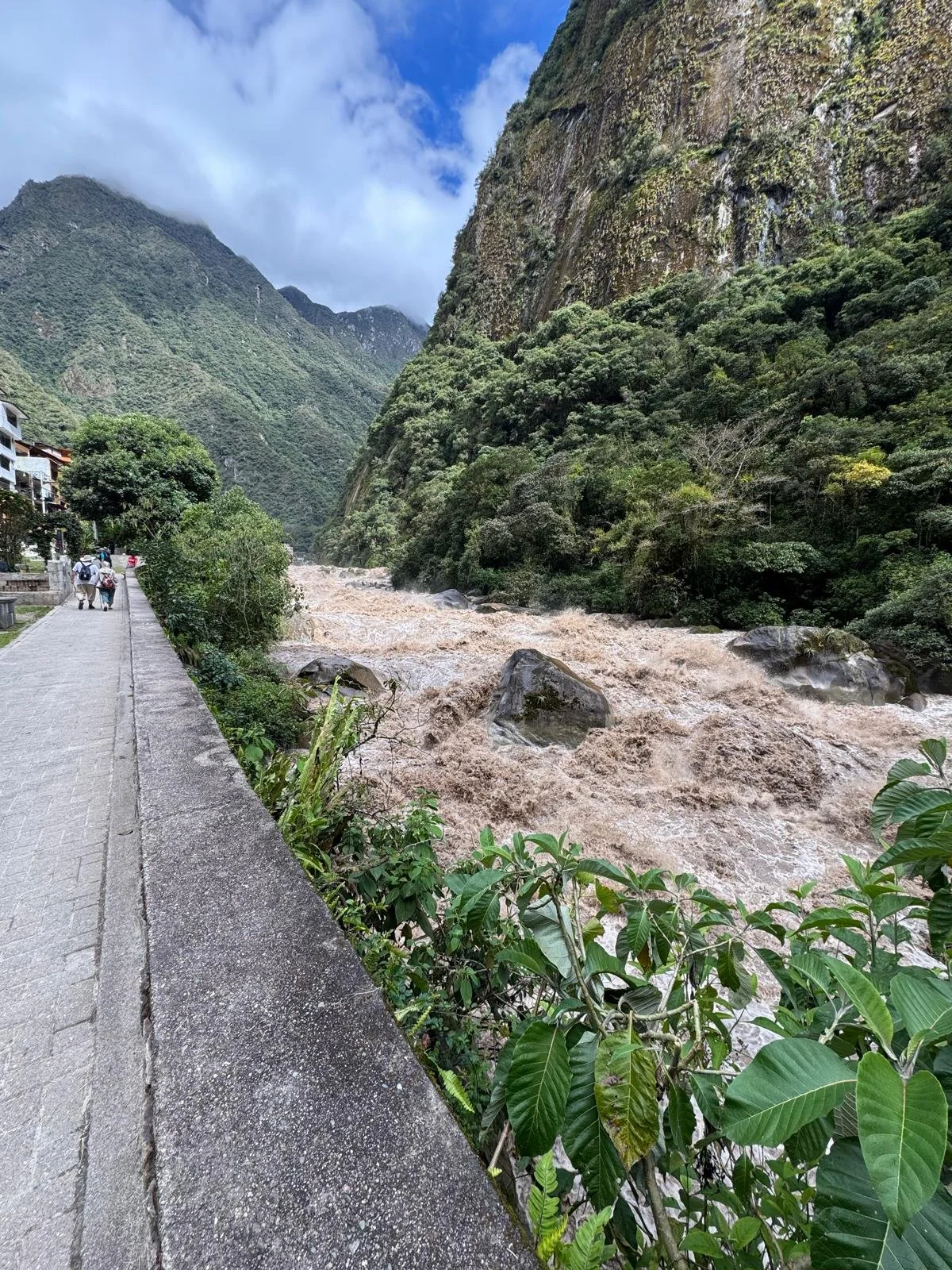
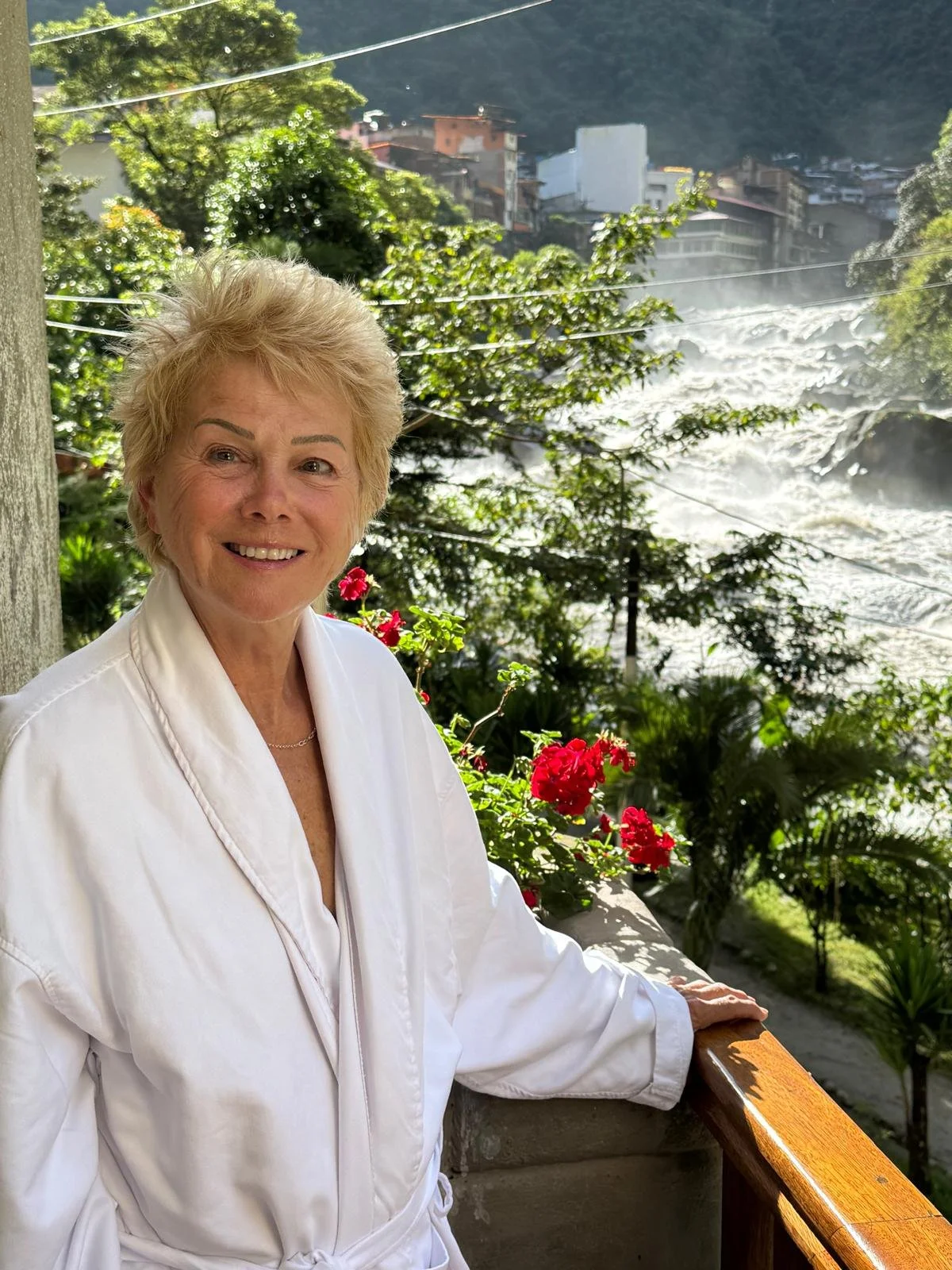
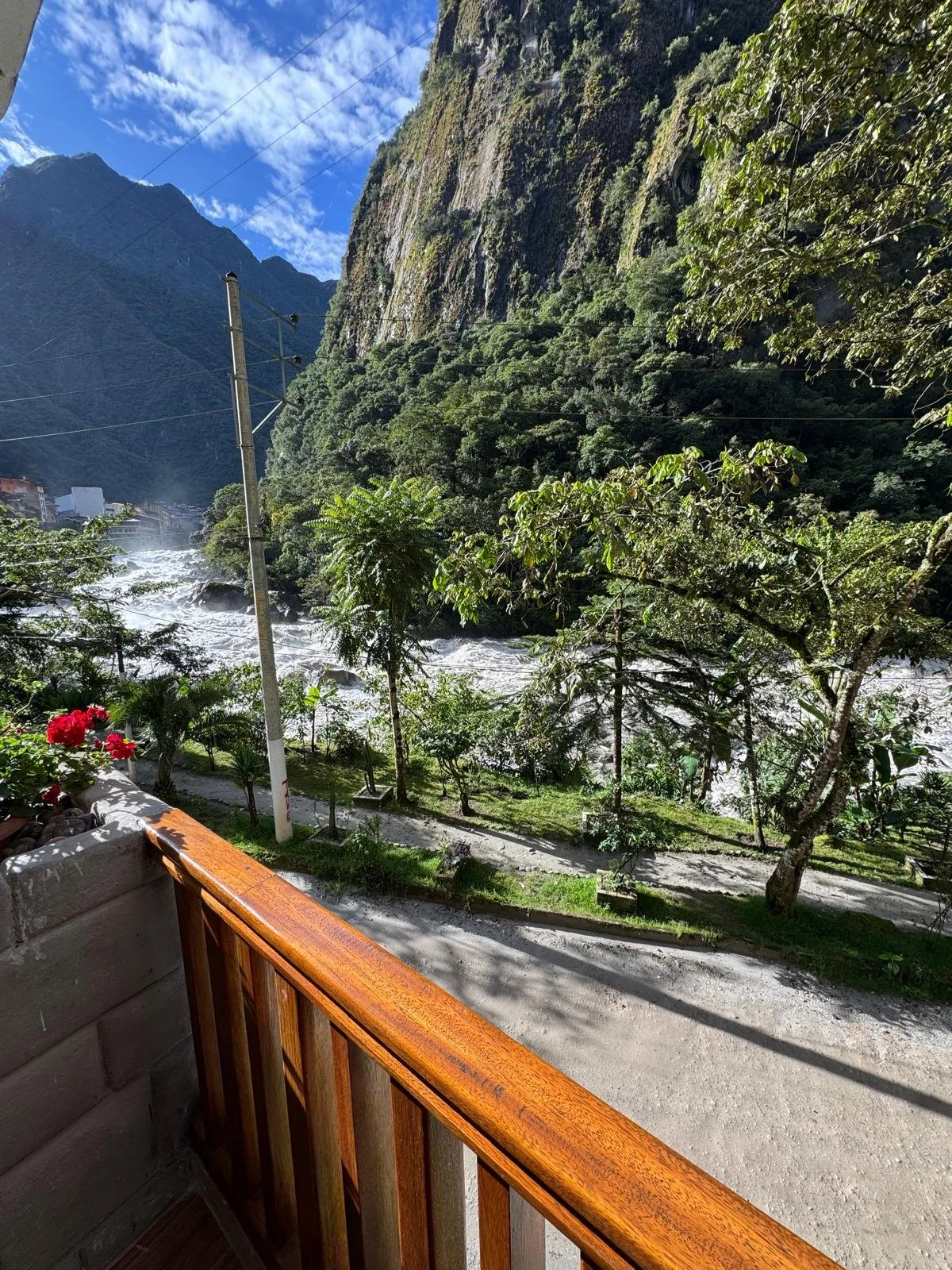
After our incredible first day at the Machu Picchu Citadel, we are now installed at the delightful Sumaq Hotel in Aguas Calientes, the town where we got off the train this morning. Our room faces the rapids of the Urubamba River – and I can tell you they are pretty loud and wild – even with the windows shut. We had a delicious dinner tonight and I can’t resist telling you this….remember I said in a previous blog that Peru has between 3,000 and 4,000 varieties of potatoes? Well, would you believe for dessert tonight I had a Papita Rellena Andina – an Andean potato stuffed with melted chocolate, covered with crispy quinoa and served on a creamy banana base and accompanied by Amazonian vanilla ice cream. And it was bloody delicious!
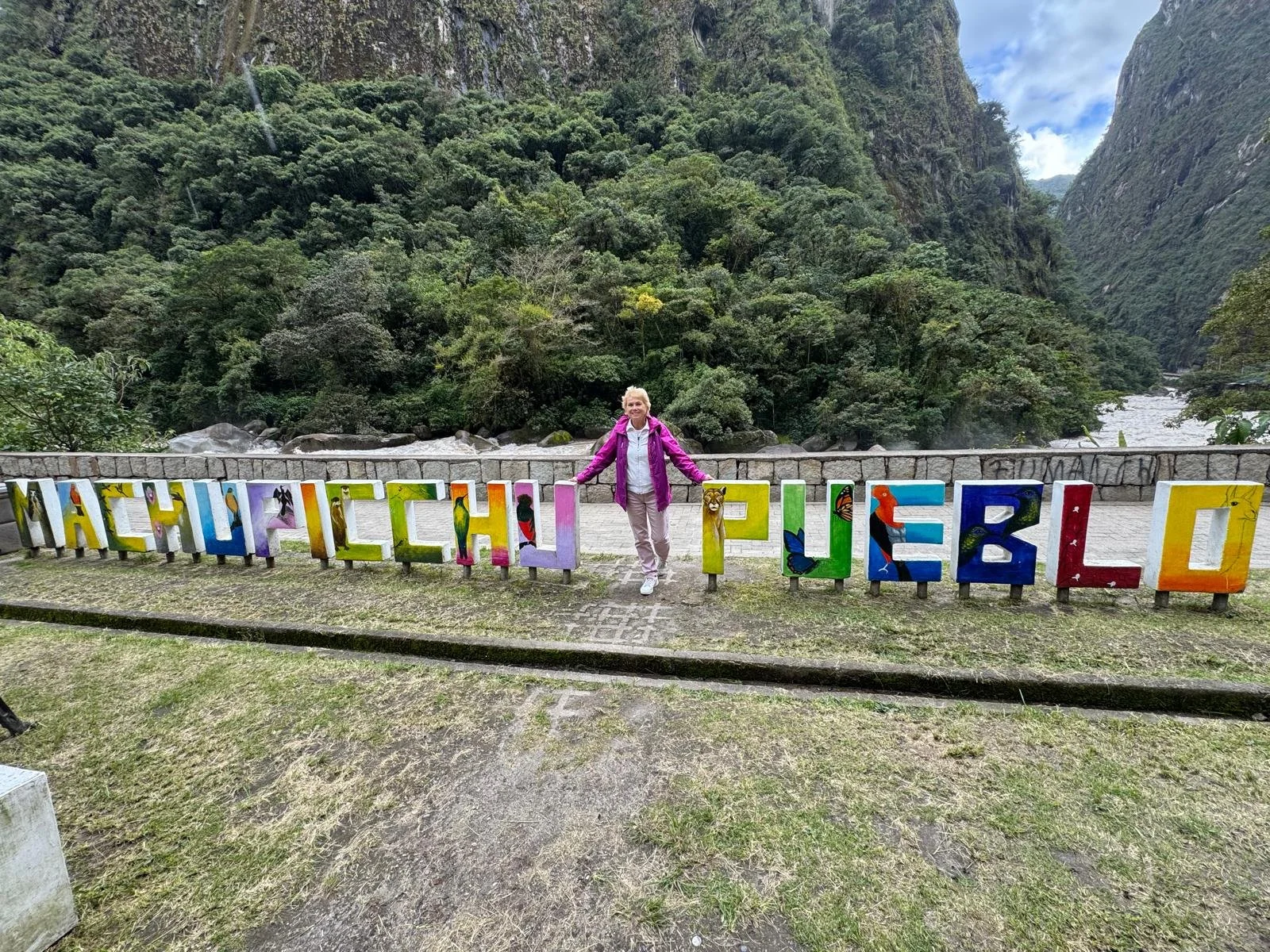
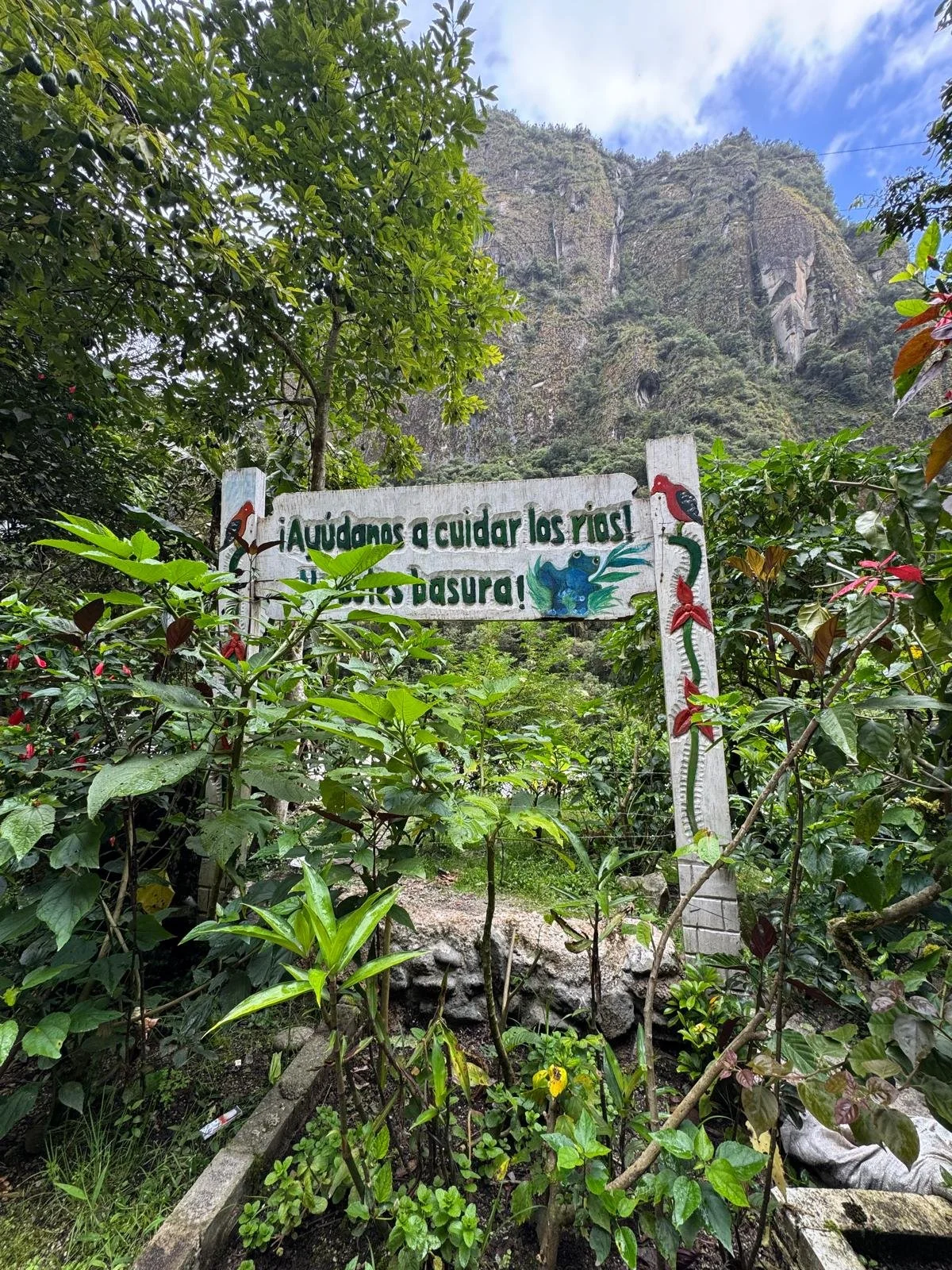
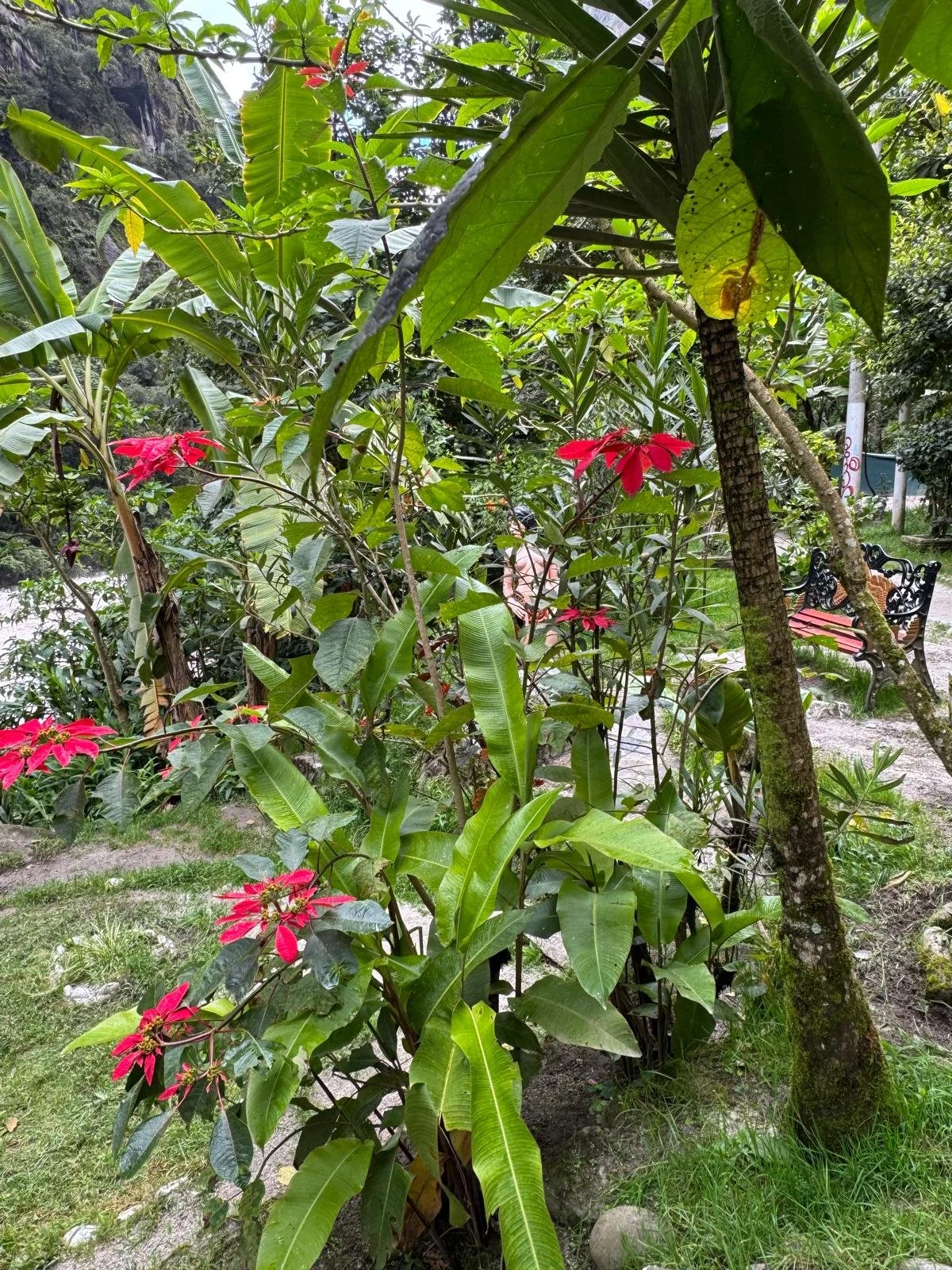
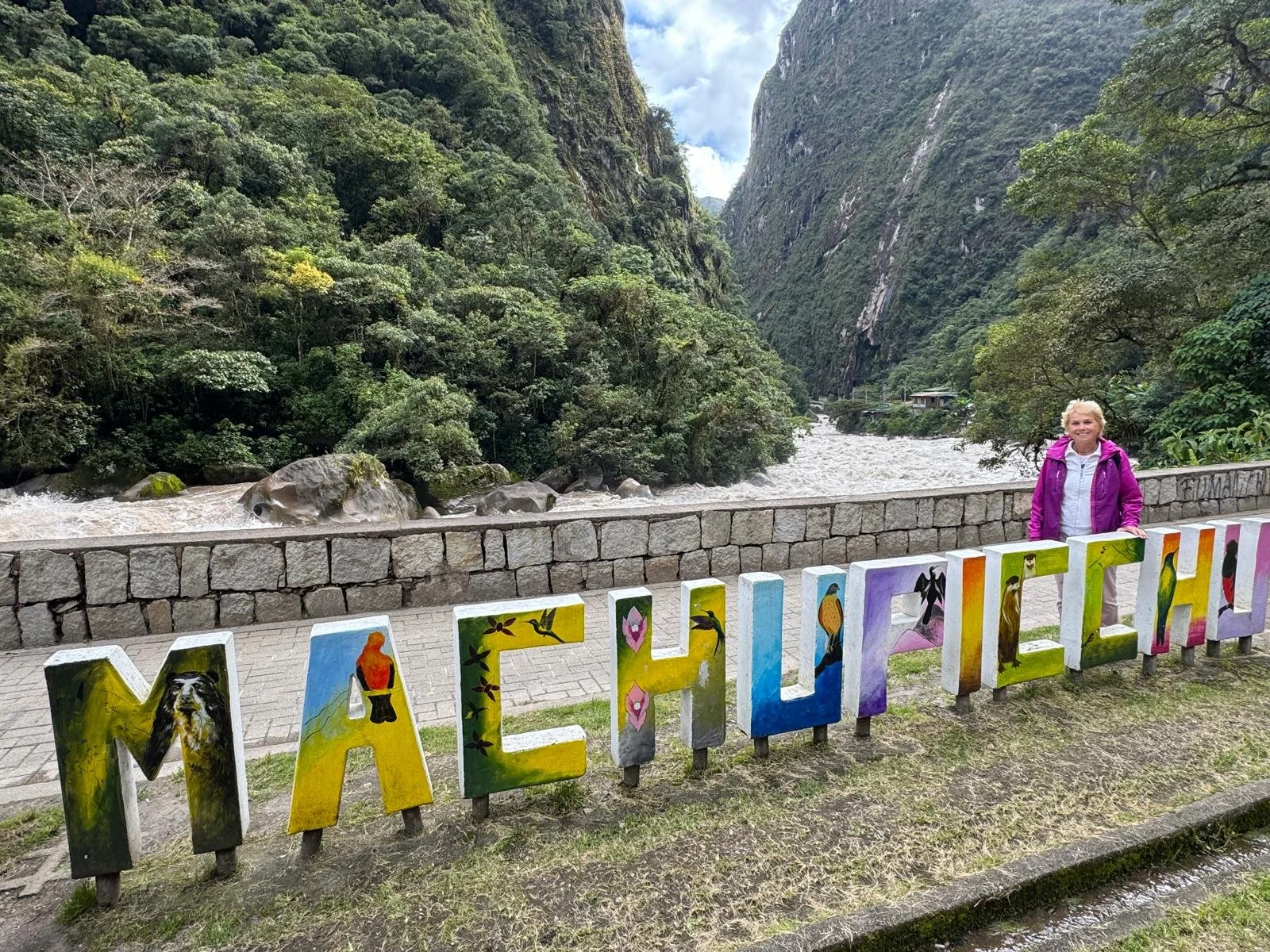
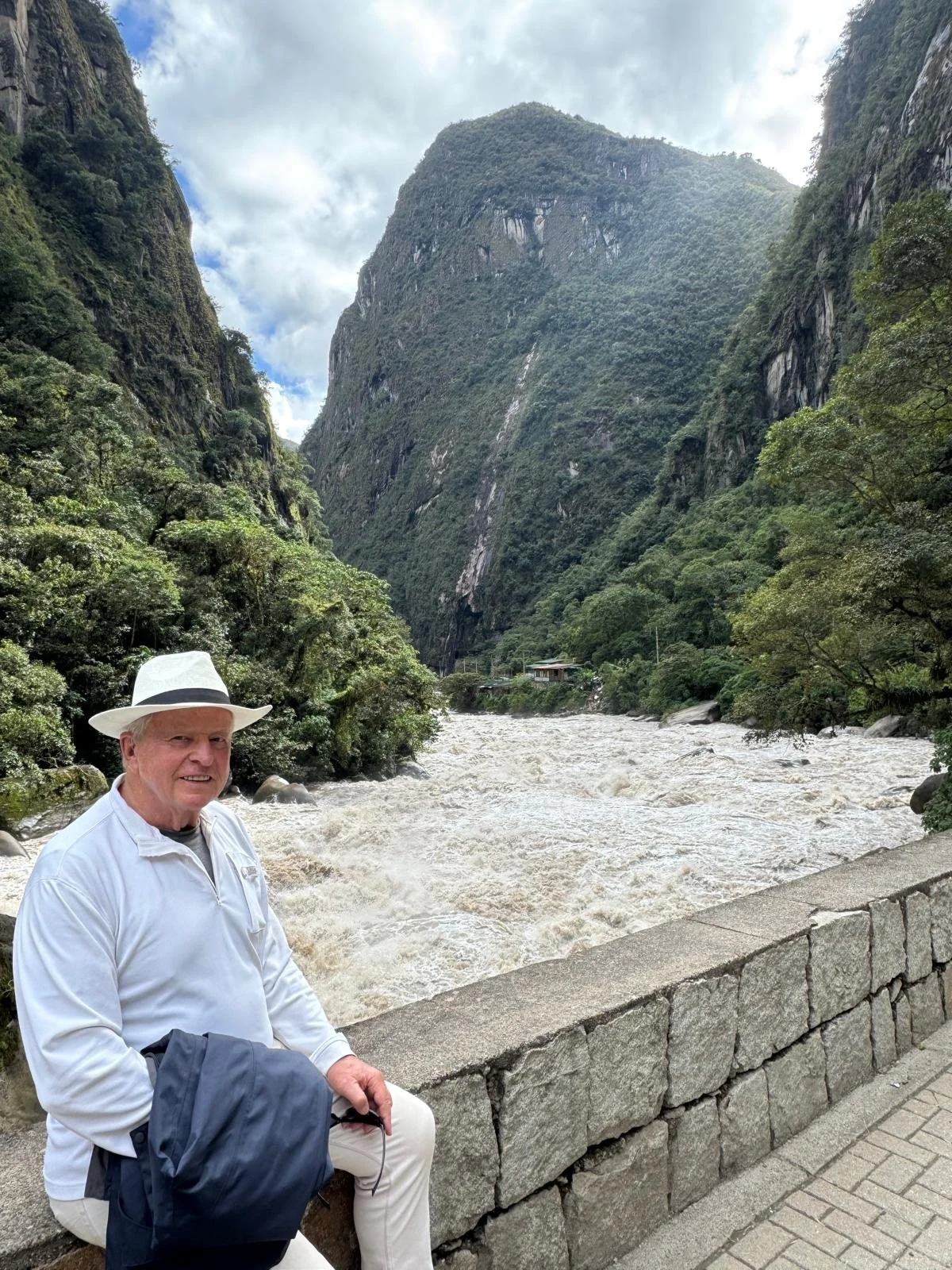
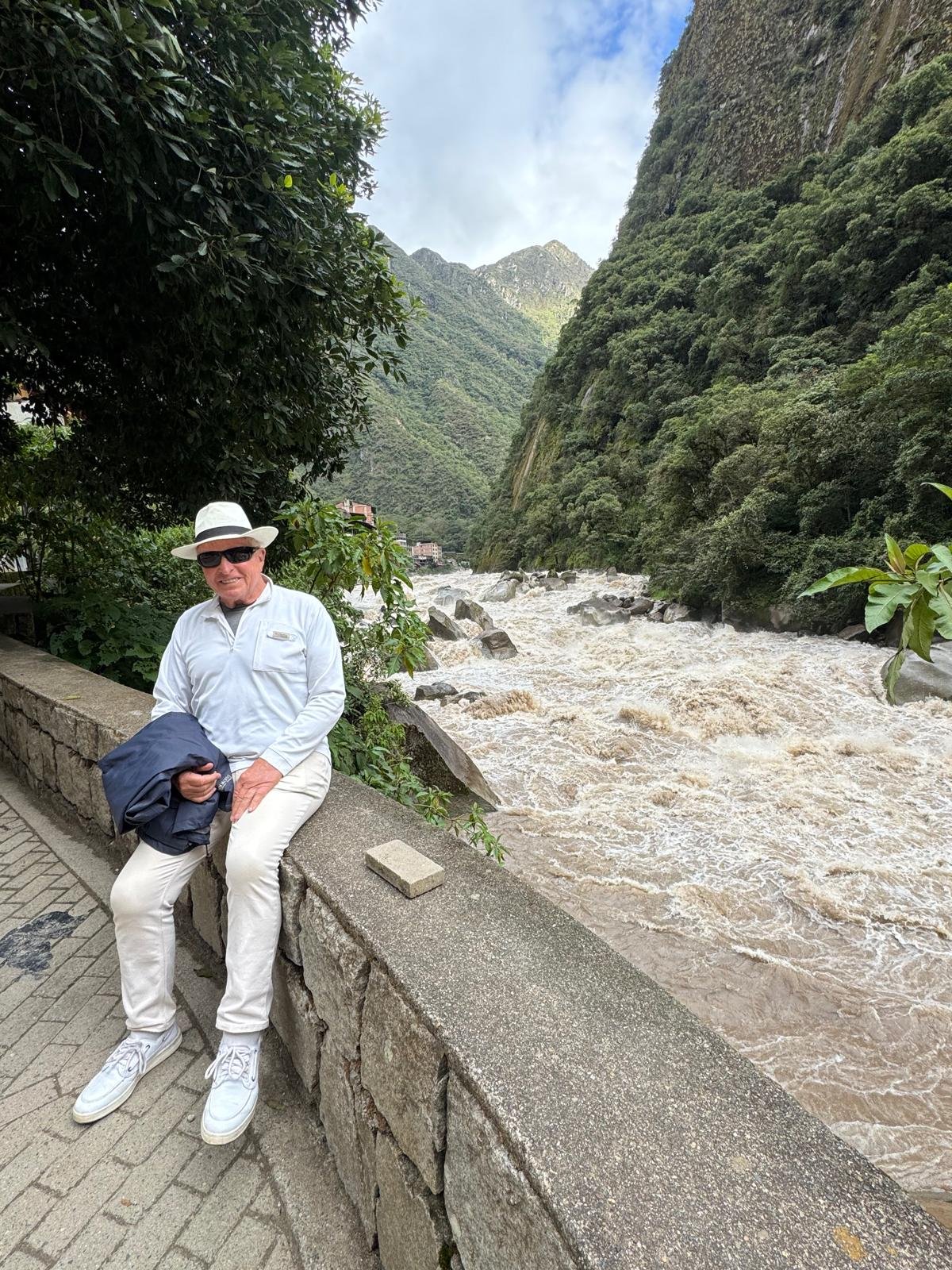
Aguas Calientes (Hot Waters), known as the Machu Picchu Pueblo, began in the early 20th Century as a worker’s camp (Maquinachayoq) for the construction of the Cusco to Santa Ana railway which was formerly established in 1901 and consolidated after the completion of the railway in 1931. Its history is linked to tourism after the rediscovery of Machu Picchu and its own famous hot springs, and it is the gateway for the buses taking us tourists up to the Machu Picchu Citadel. It is only accessible by train, no roads lead directly to it.
Oscar Yokichi Nouchi was a Japanese immigrant who came to Peru in 1917 and worked as a railway labourer here. He was crucial to developing the early town building a 21-room hotel with railway wood in 1935, and helped build the infrastructure and a hydroelectric plant. He twice served as mayor and left a lasting legacy in this region.
Monday 16 March
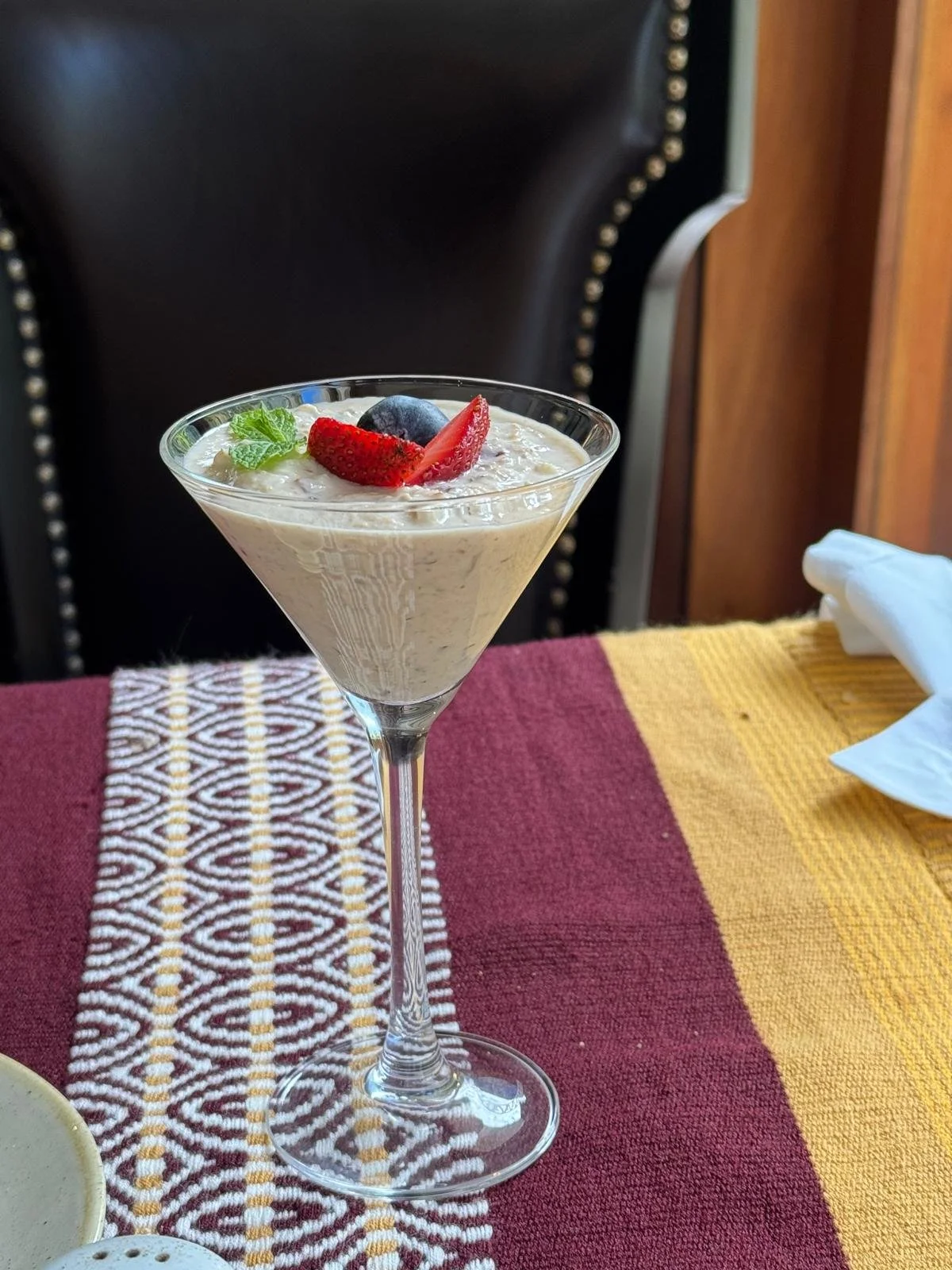
No early start today for a nice change, so it was great to be able to have a leisurely wake up and what a lovely sight when I drew the curtains – clear sunny skies and that amazing river literally roaring in front of us. Off to the most exquisitely beautiful buffet breakfast I think I have ever had. Tiny cubes of mango, wafer thin slices of avocado, little rectangles of cheese with dainty purple flowers on each one, thin slices of smoked trout adorned with pretty flowers, even the oatmeal looked like a dessert sundae, home-made purple blueberry yoghurt and delightfully wafer-thin-pastry Danish pastries with delicate slices of fresh fruit on top.
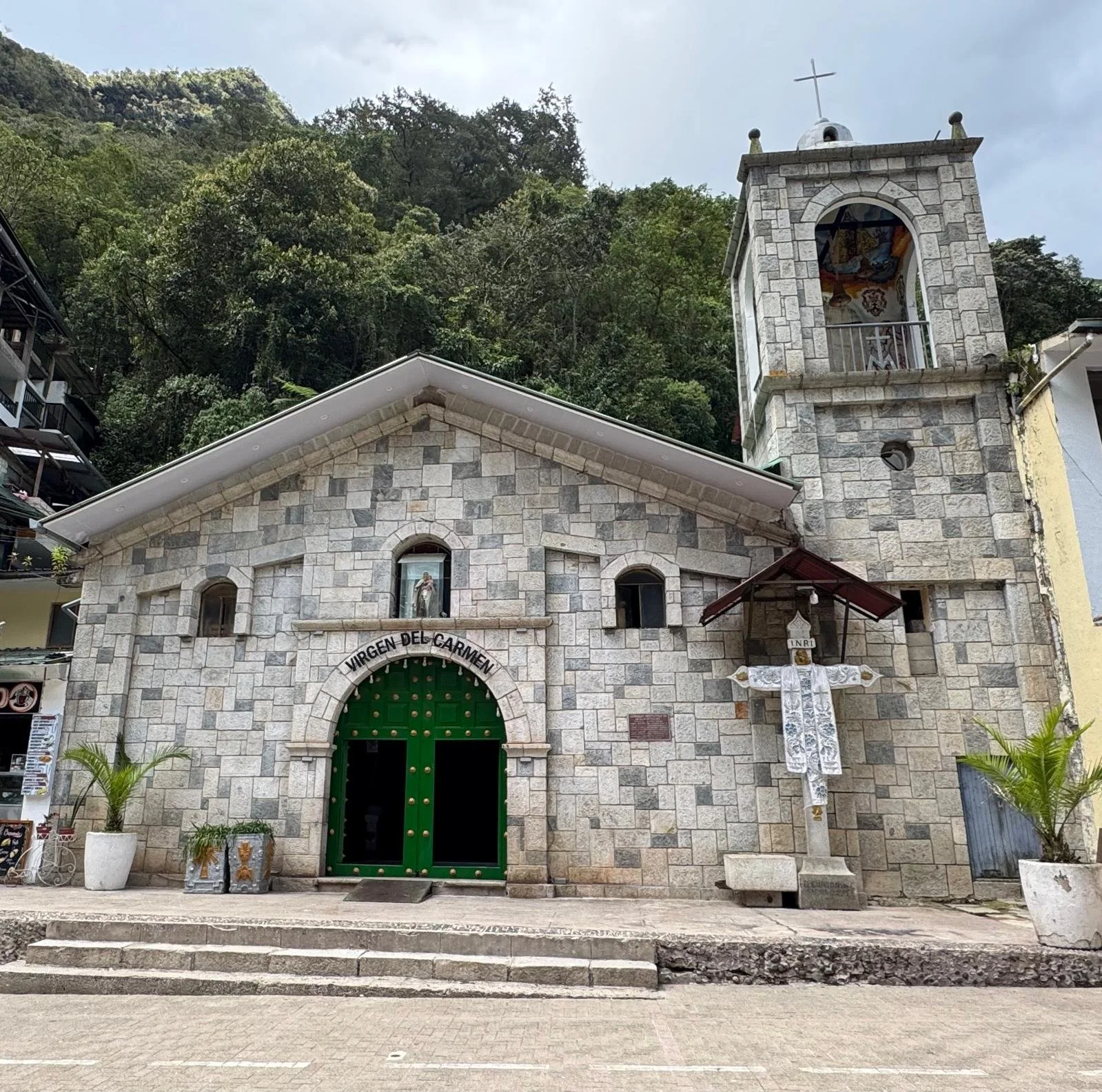
When we returned from our Machu Picchu visit, we walked about this pretty little town. The town square, the Plaza Manco Cápac features the picturesque Parroquia Virgen del Carmen – a small Catholic church with a simple, rustic stone façade and a beautiful frescoed bell tower. Inside was plenty of purple around the altar – not because they knew I was visiting but because it is Lent, and purple is the traditional colour of Lent.
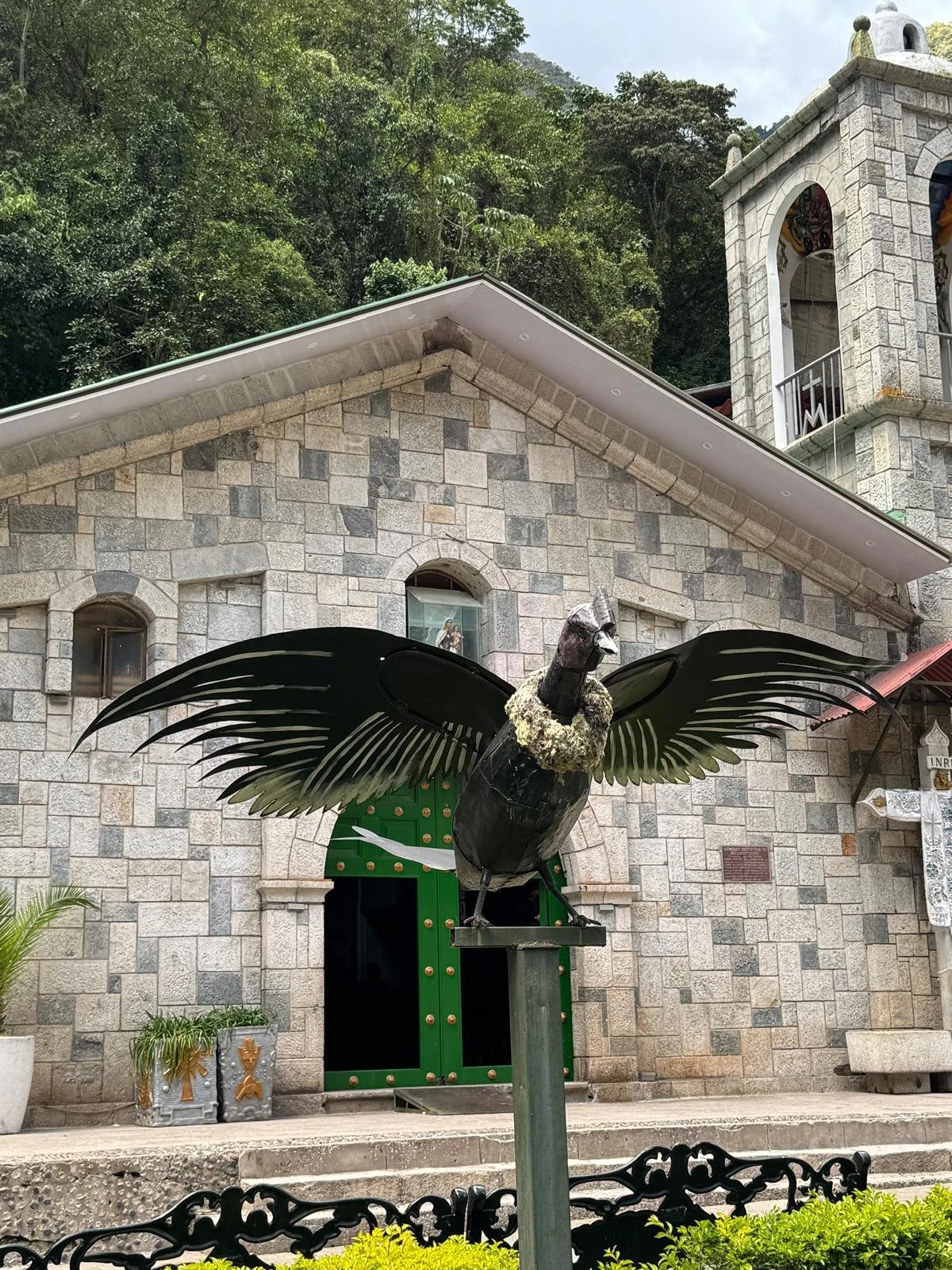
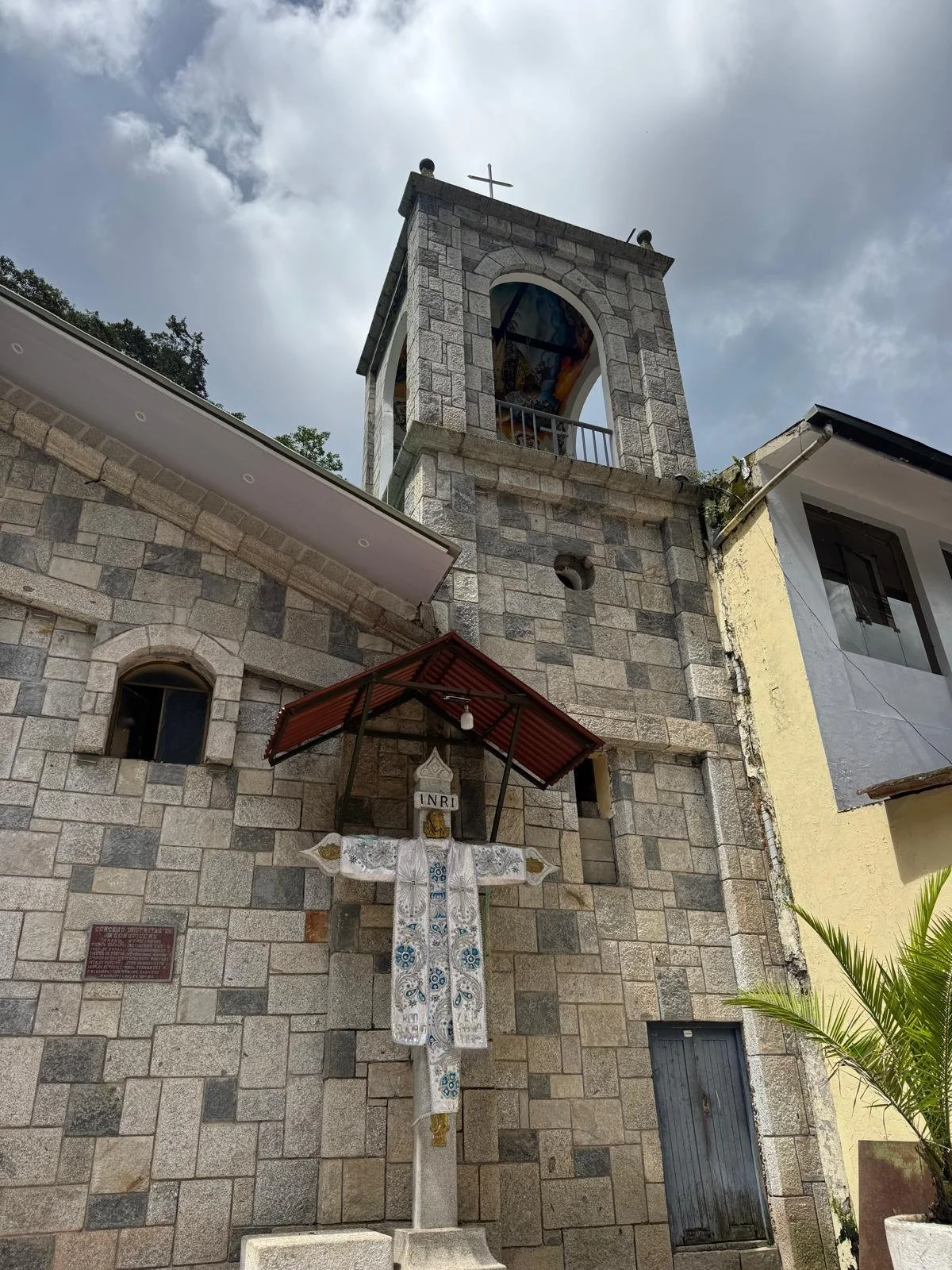
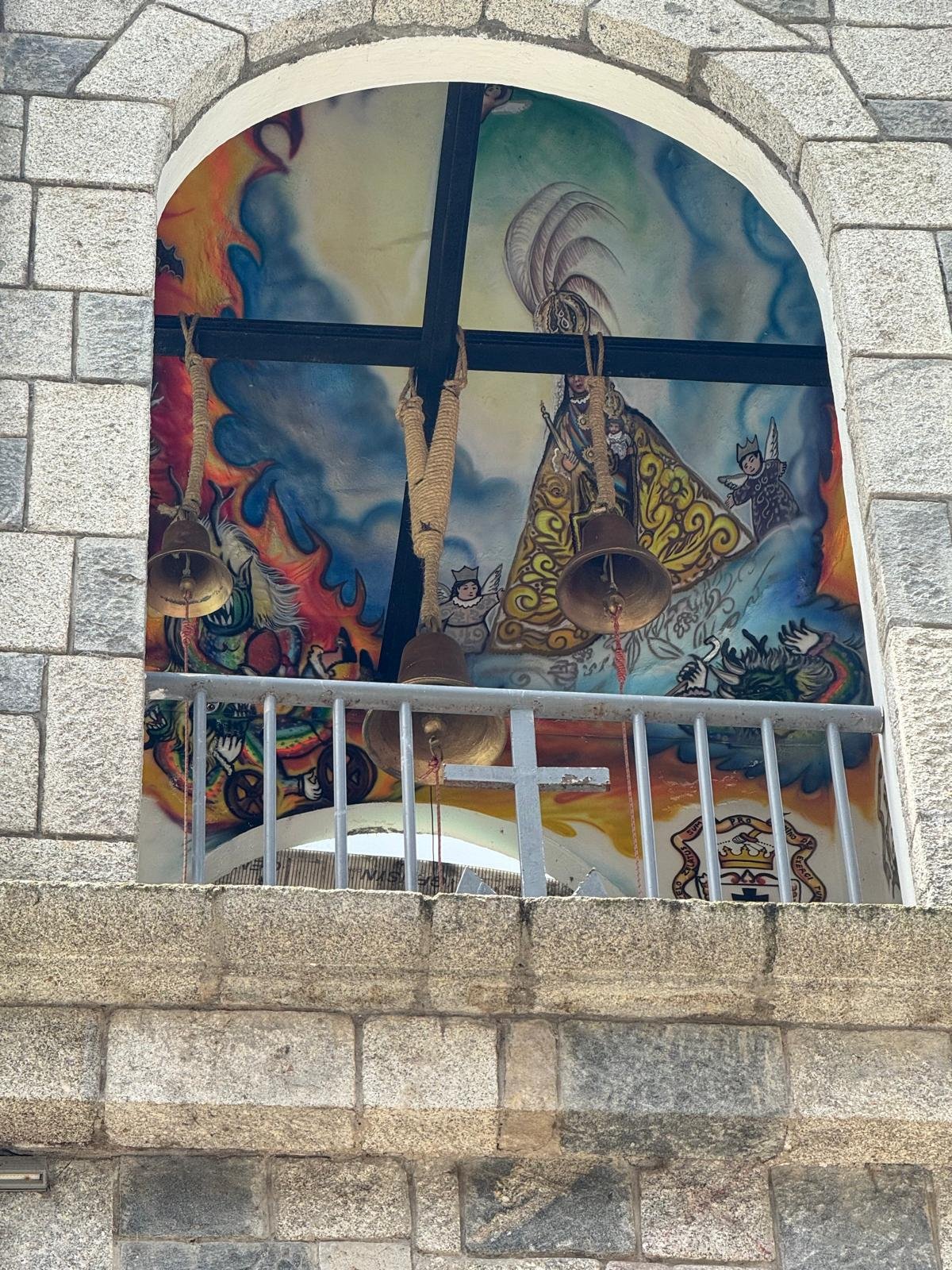
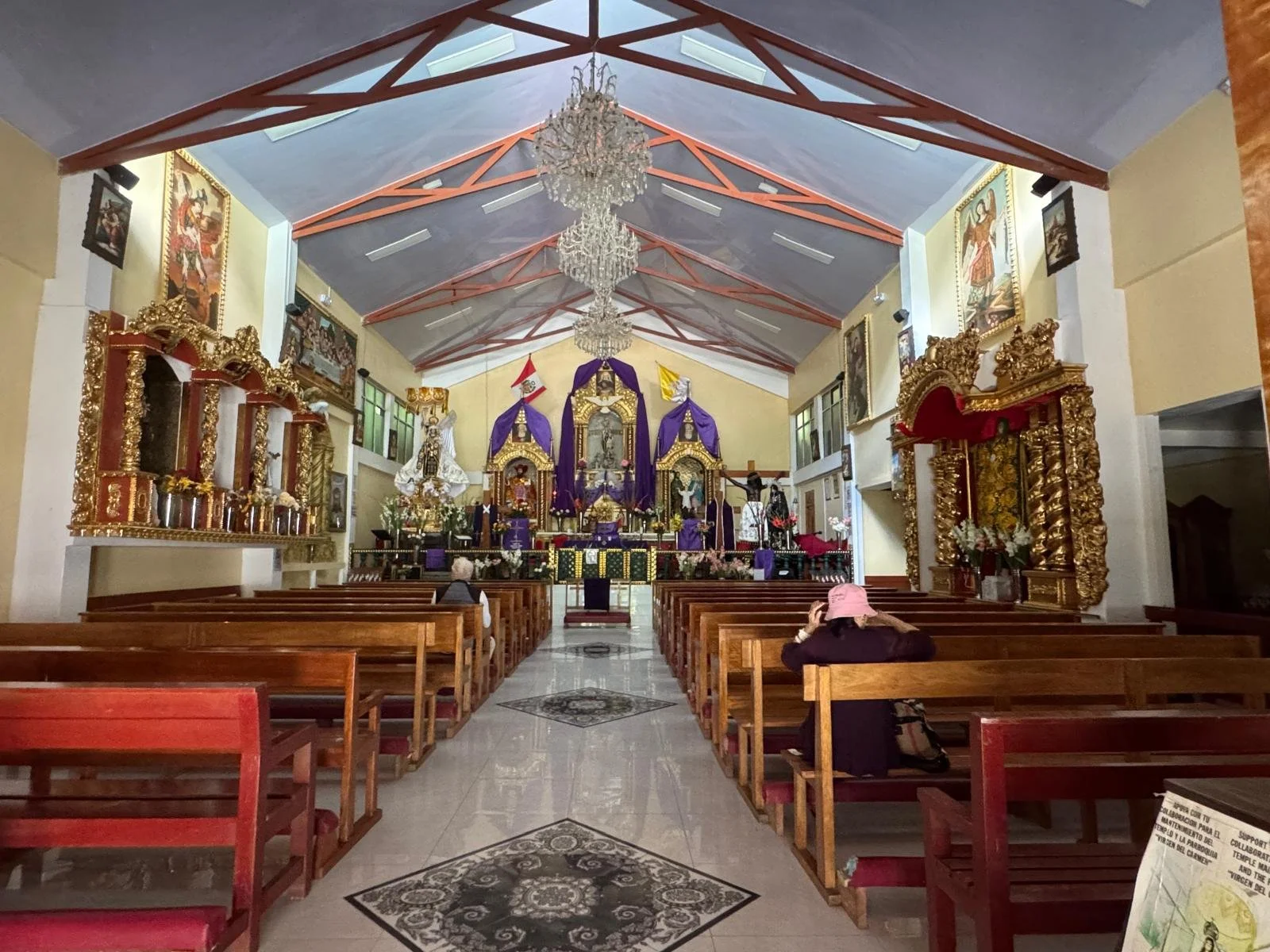
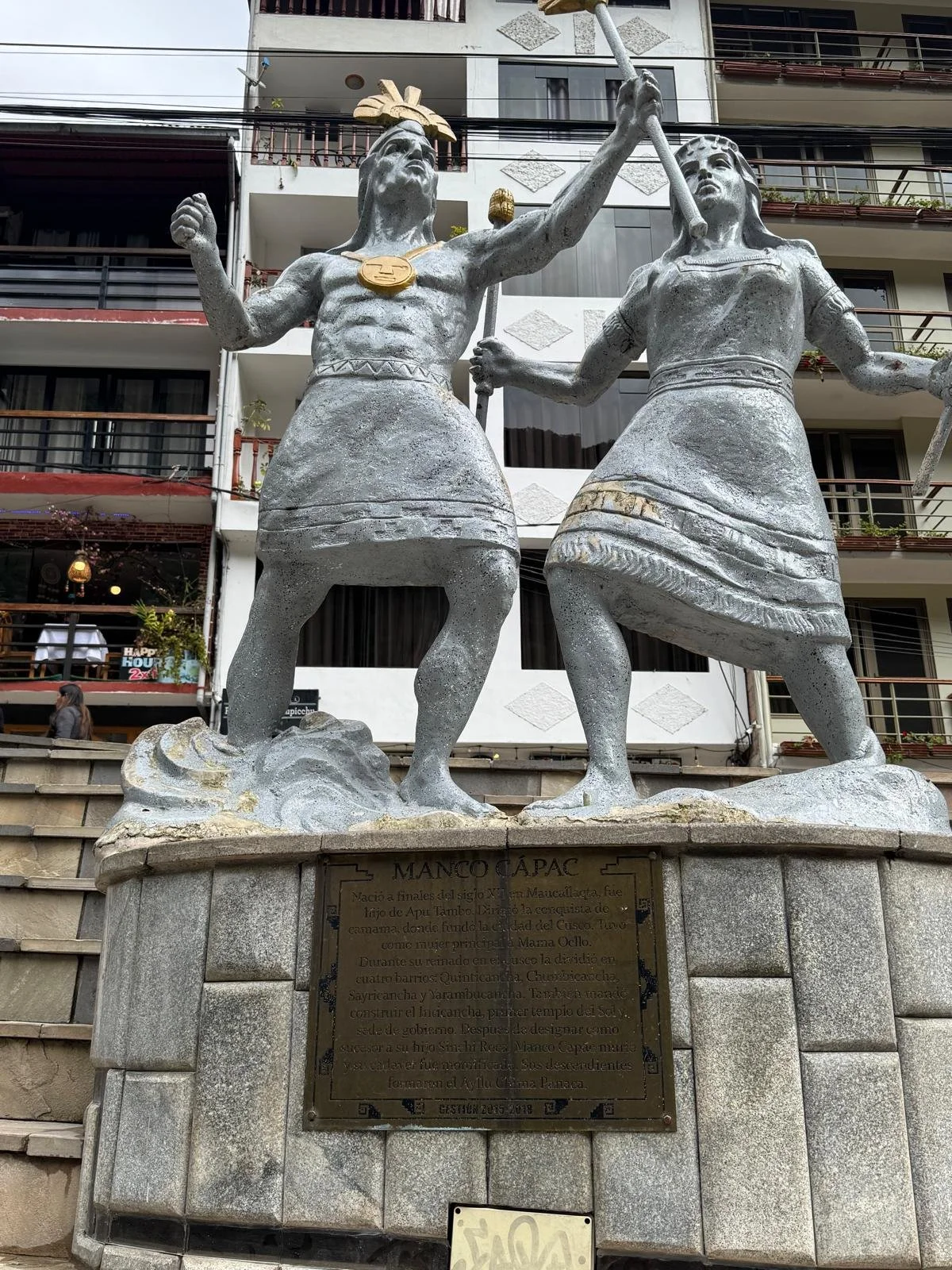
The Manco Cápac statue is centrally located in the square. He was the legendary first Sapa Inca and founder of the Inca civilisation in Cusco, around the 12th or 13th century. According to Andean myths, he was the semi-divine son of the Sun God, Inti, who emerged from Lake Titicaca with a golden staff to establish a new city and teach agriculture, civilisation and law to the local people.
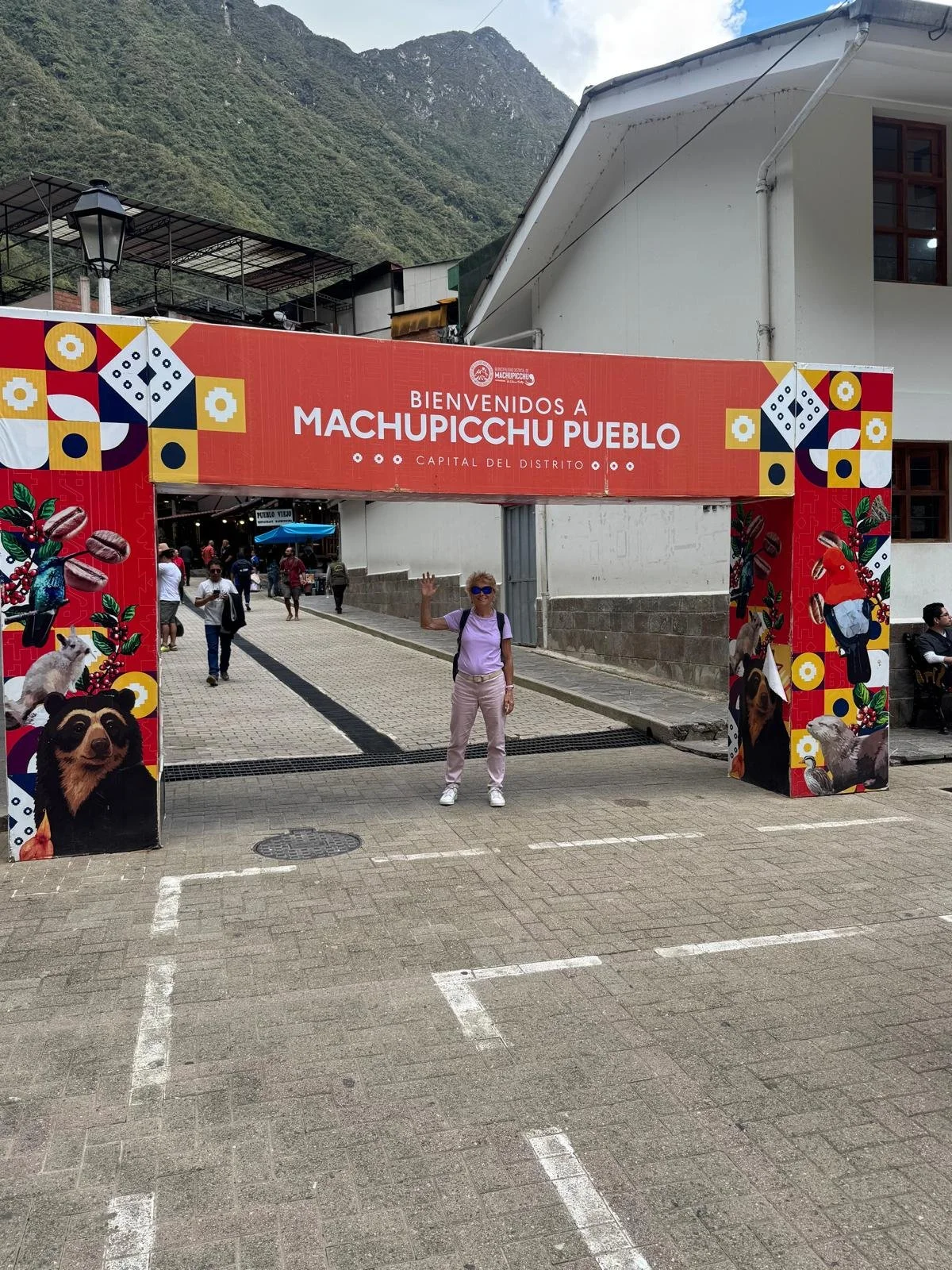
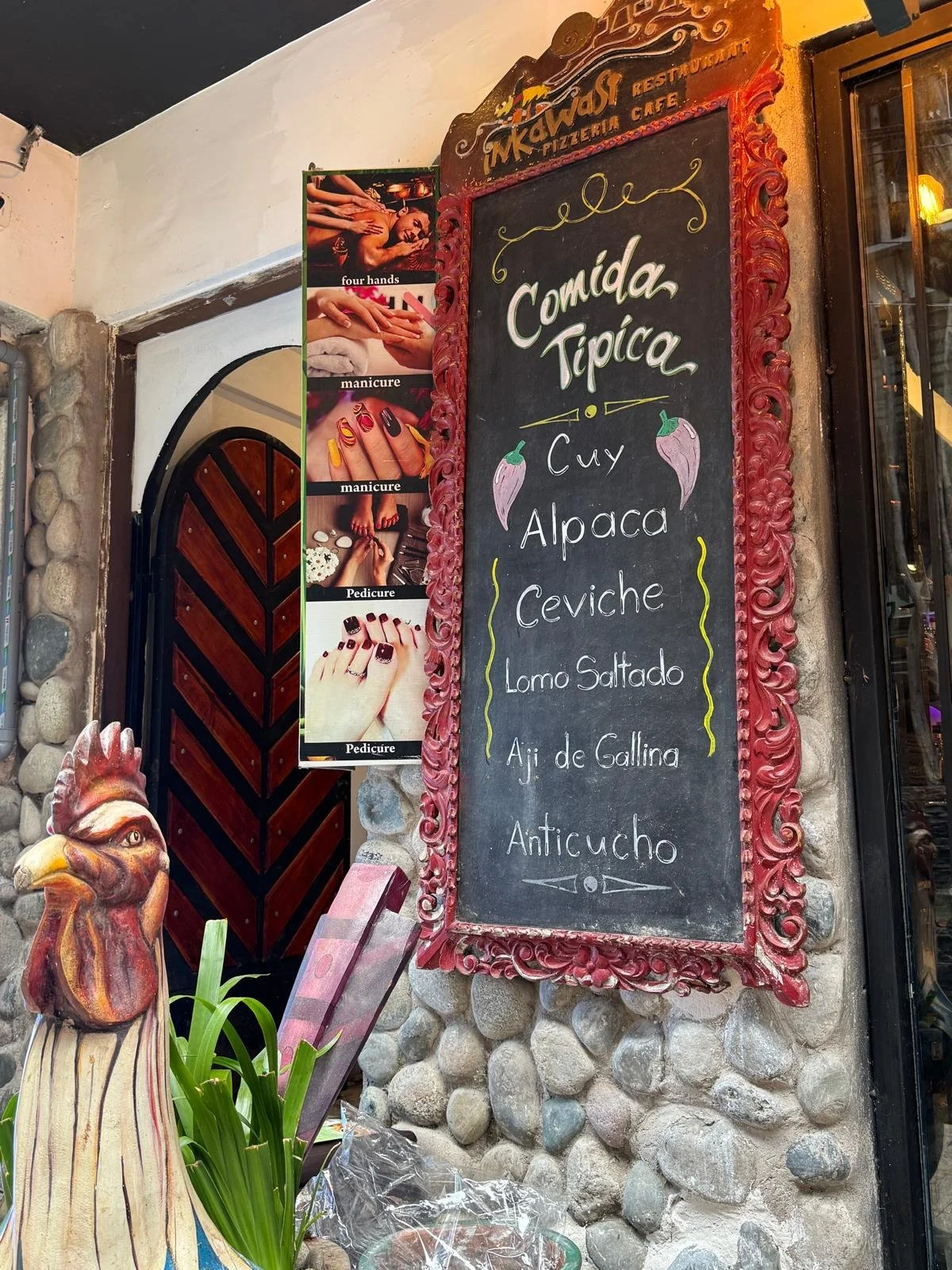
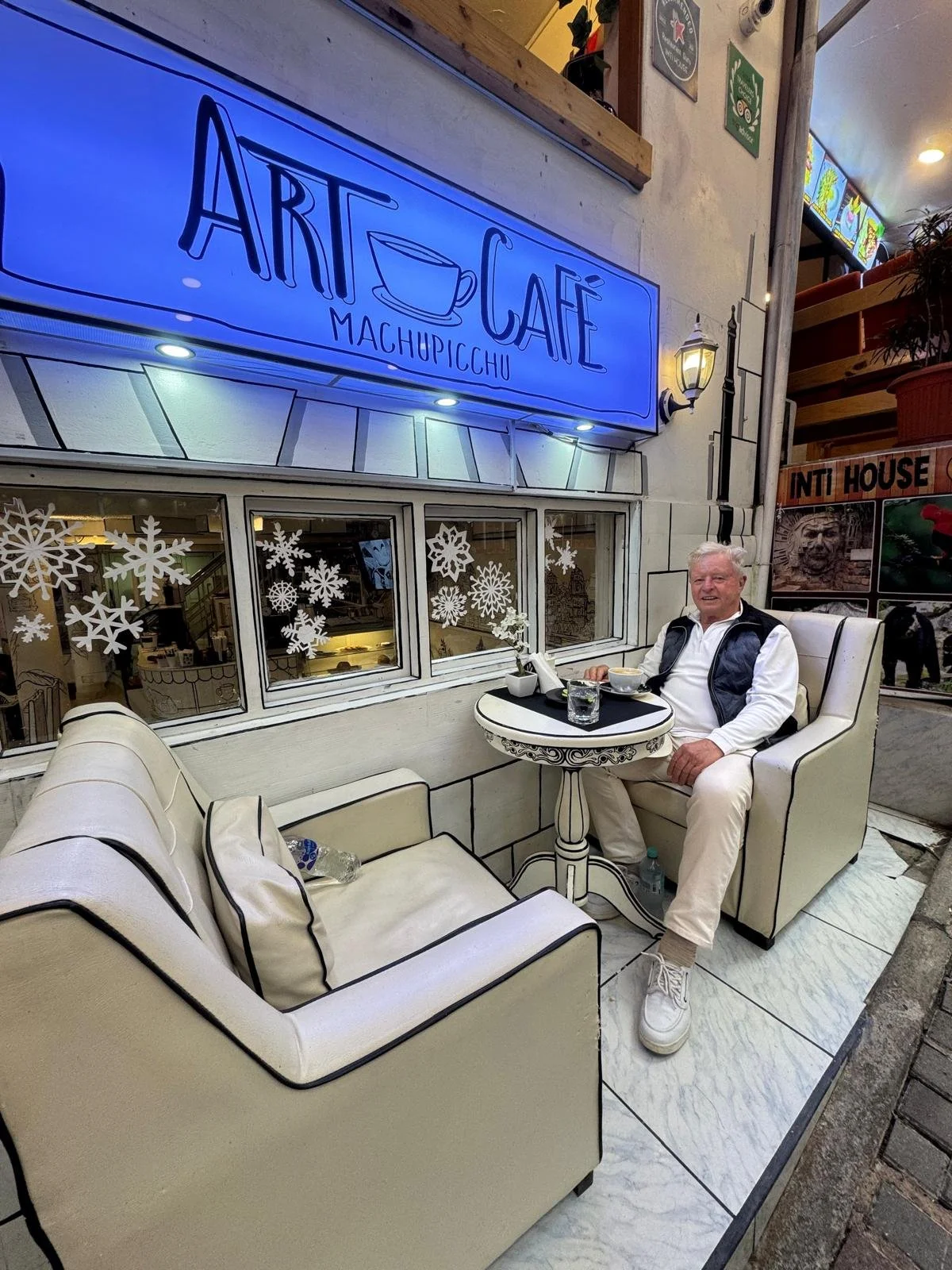
A lovely walk through the town which features a fair few inclines, we admired all the menus many of which featured guinea pig (cuy) and alpaca and a both of which we have so far managed to avoid, we then stopped off at a quaint little arty coffee shop for a quick rest – we have certainly put in the steps these last few days!
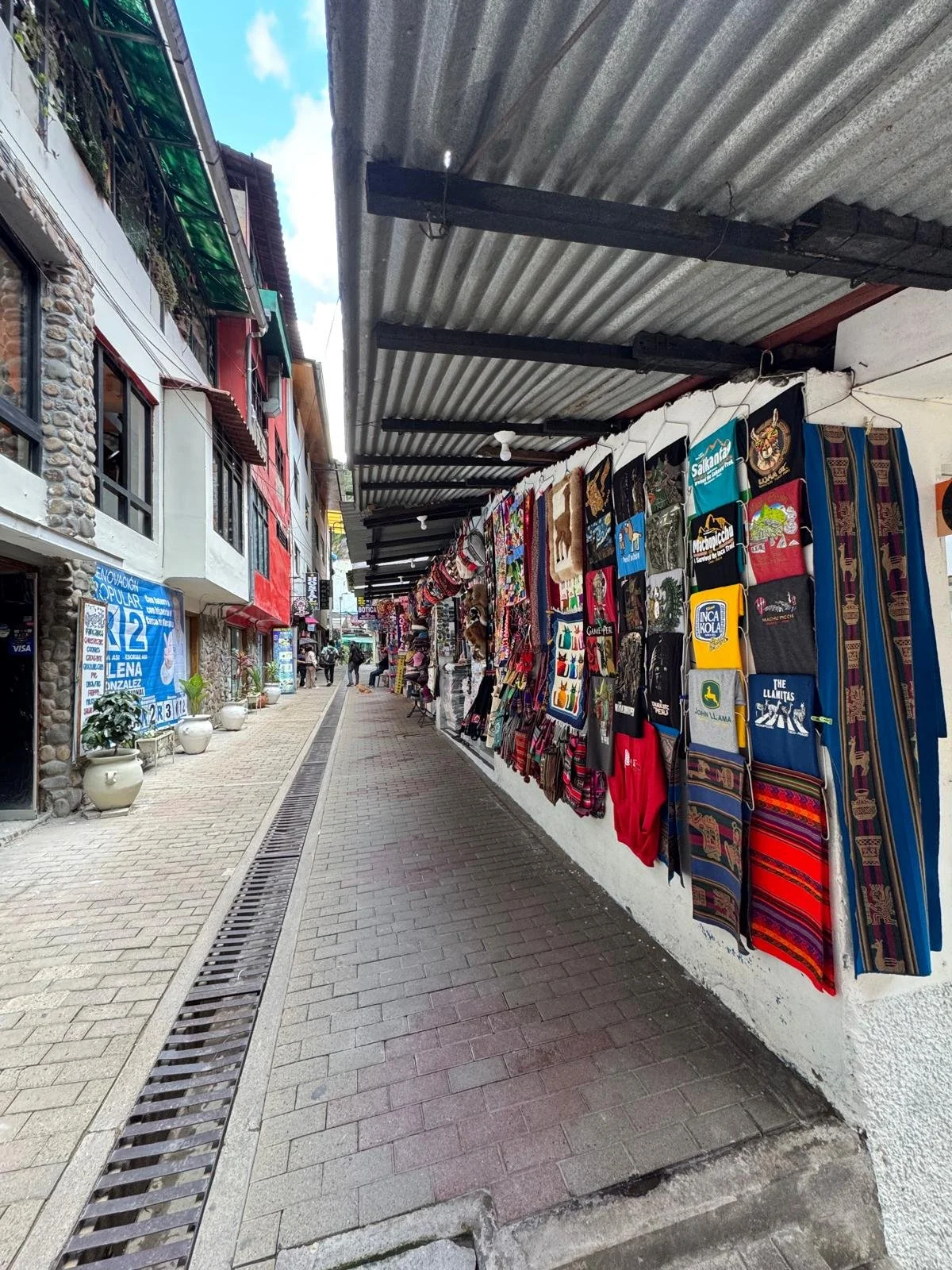
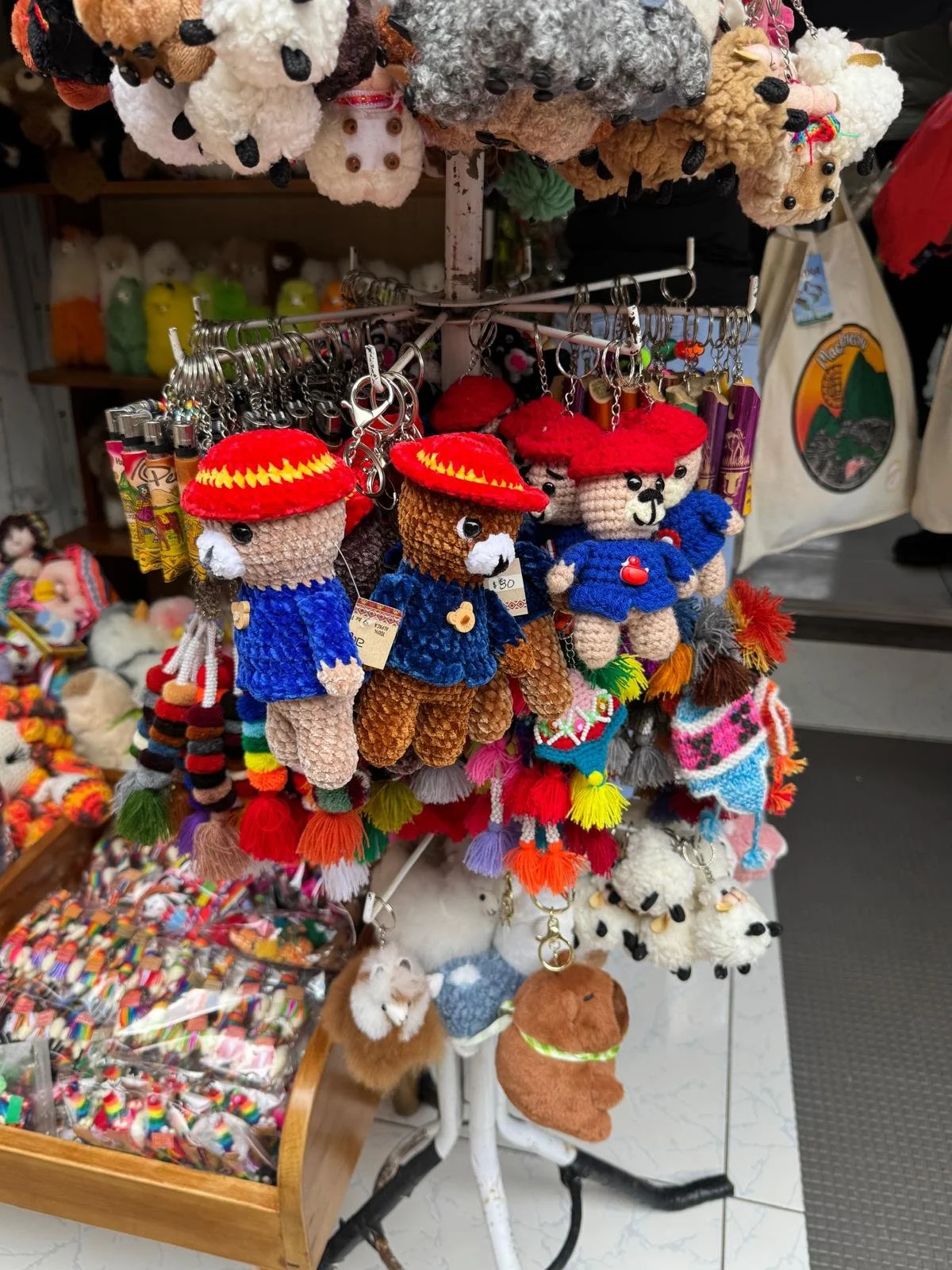
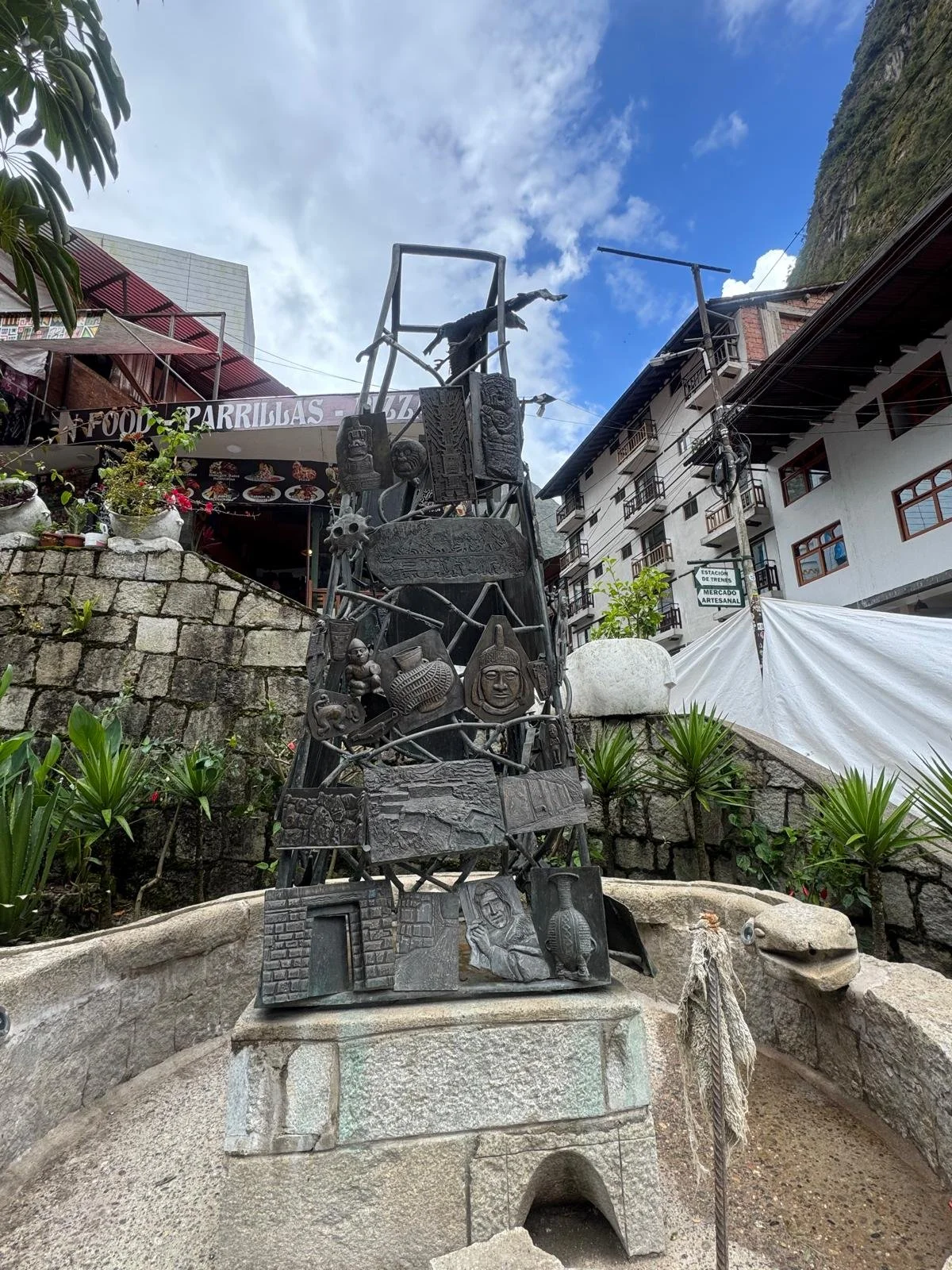
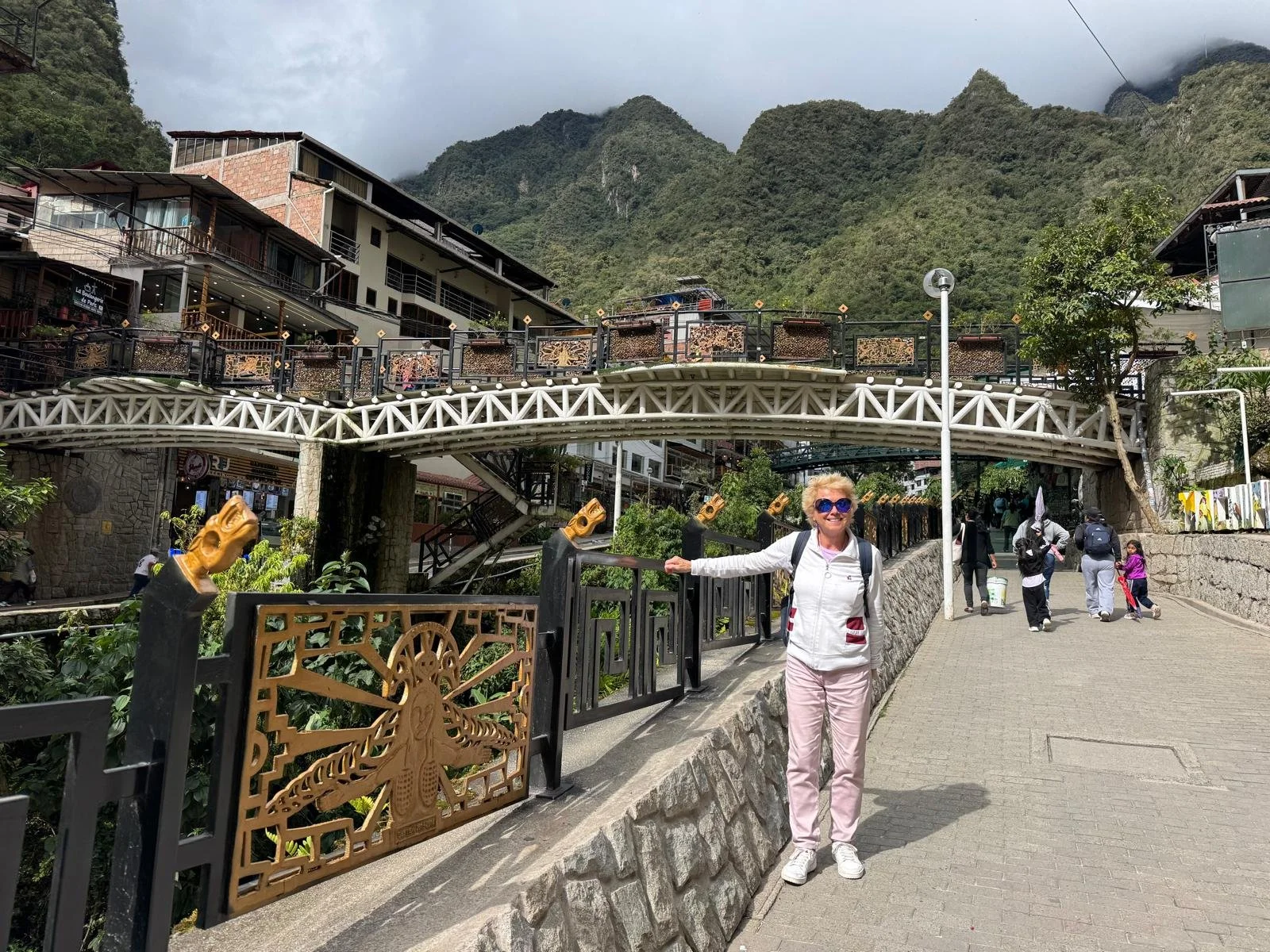
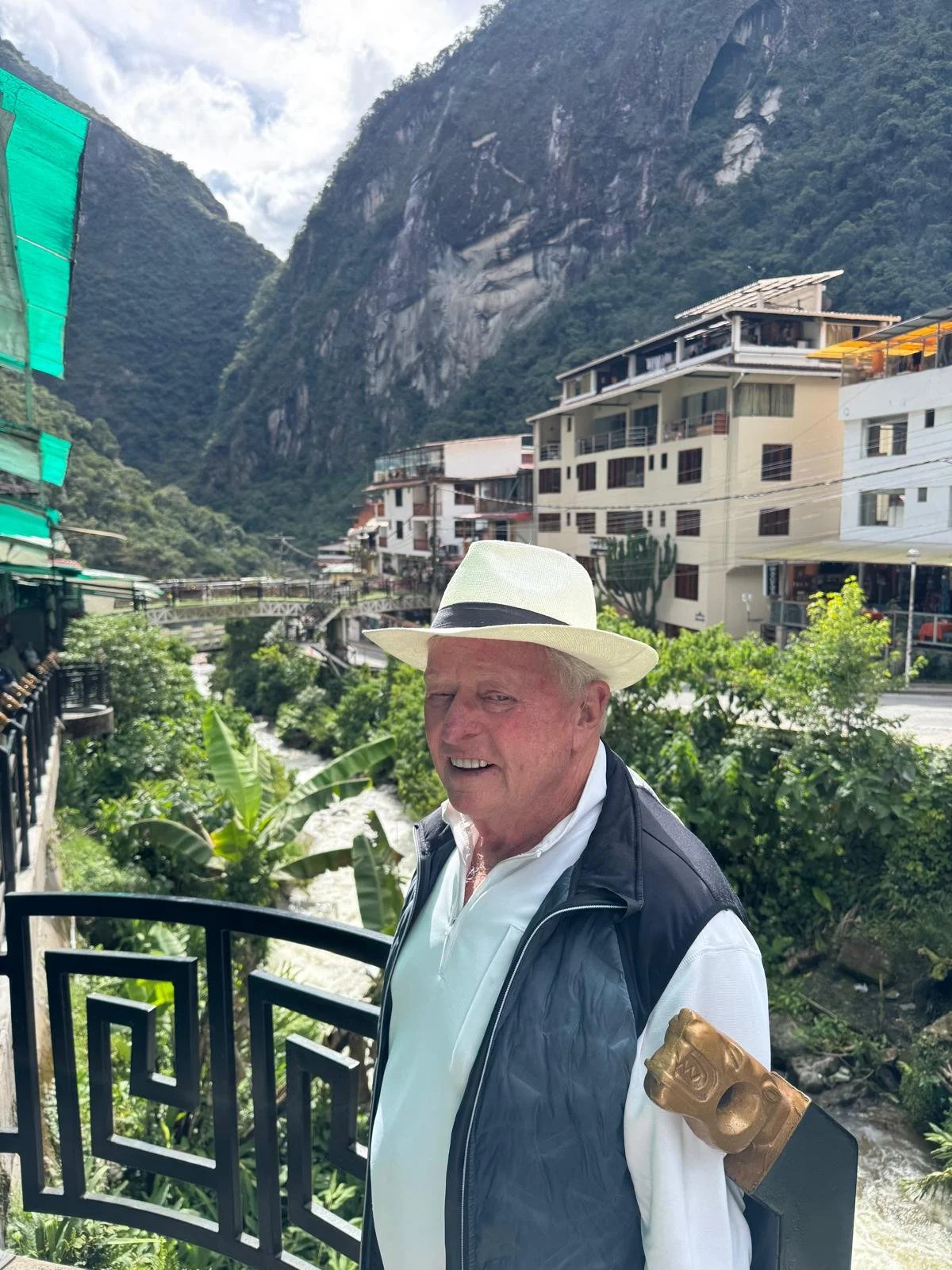
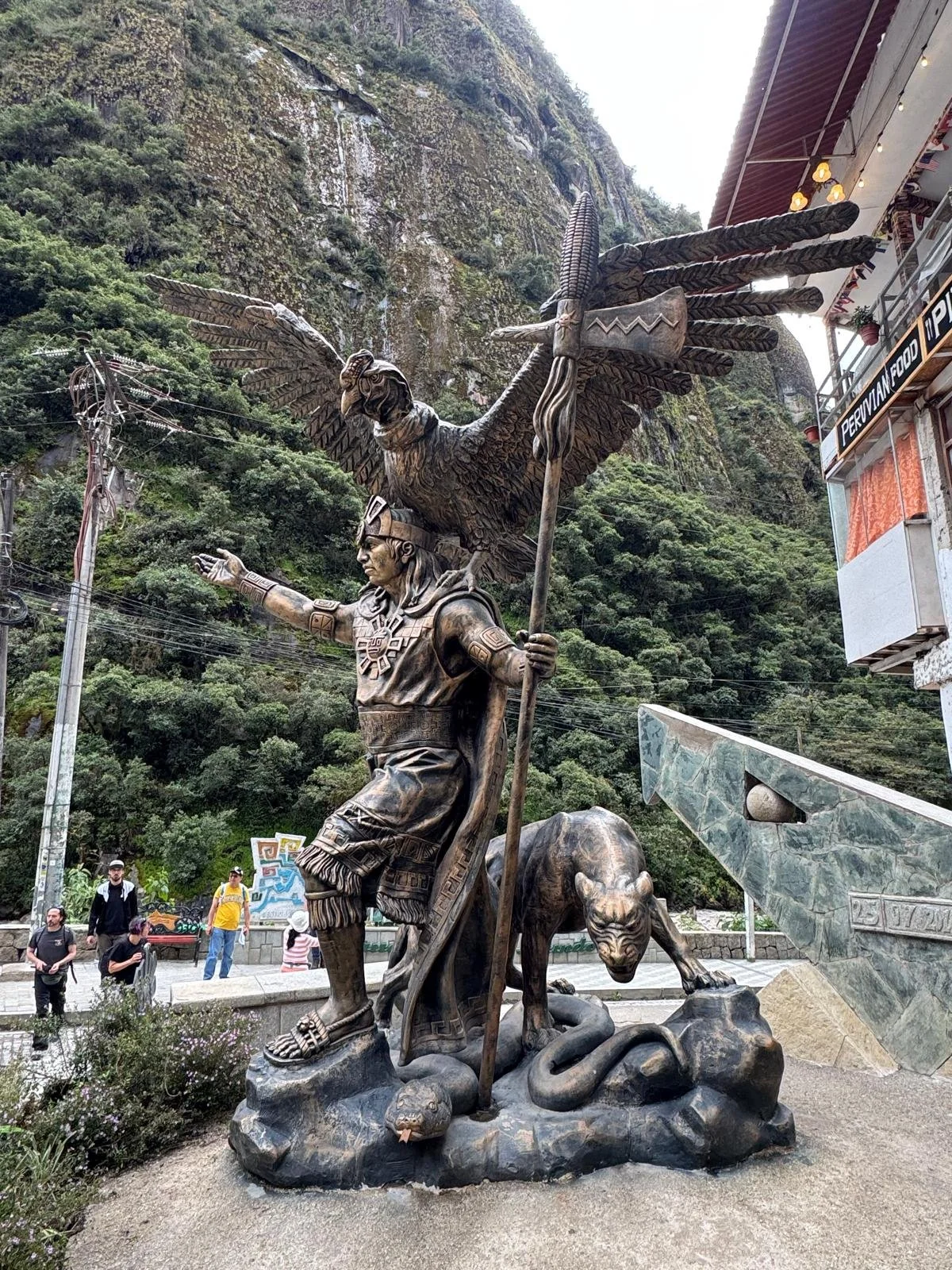
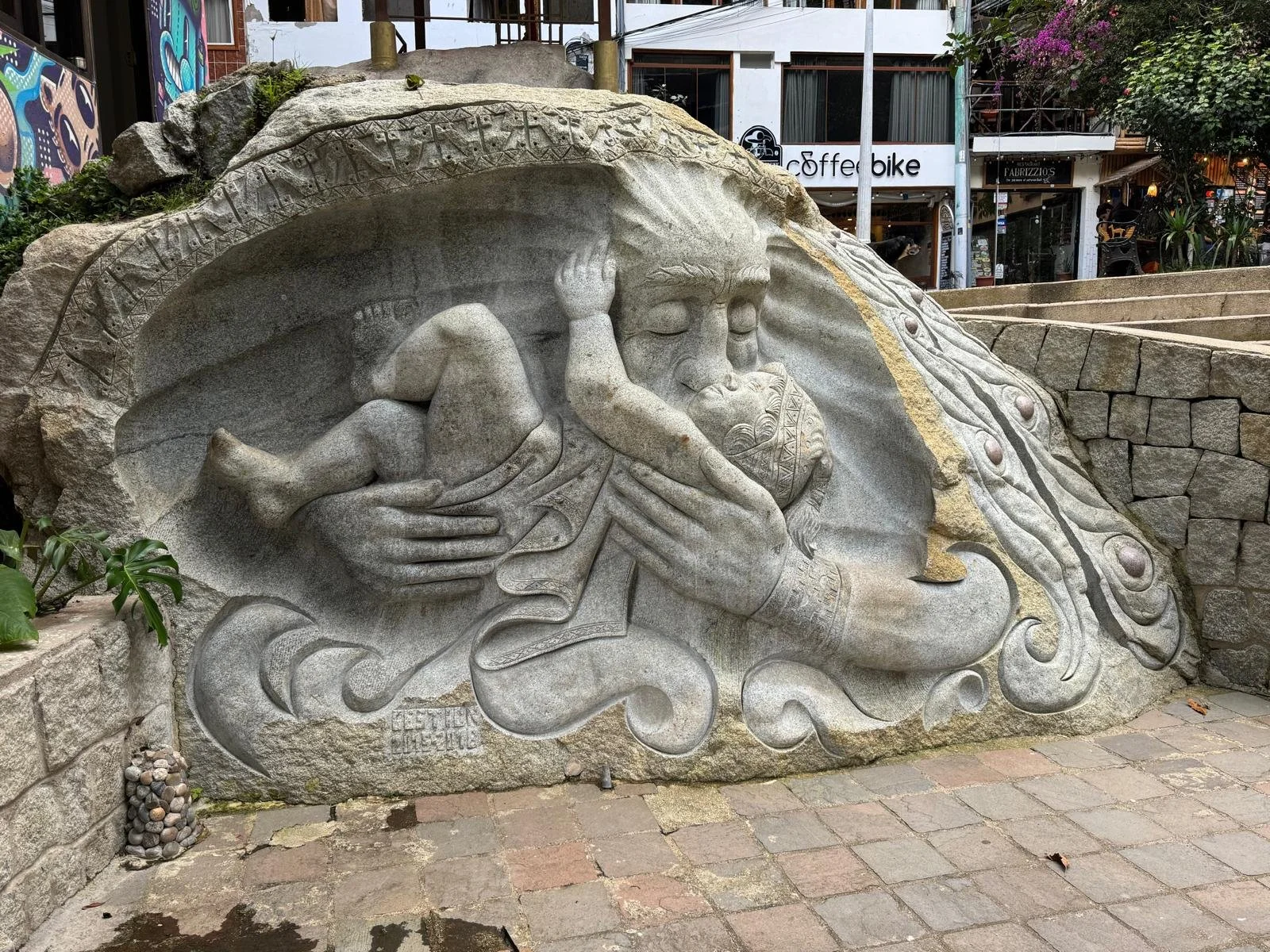
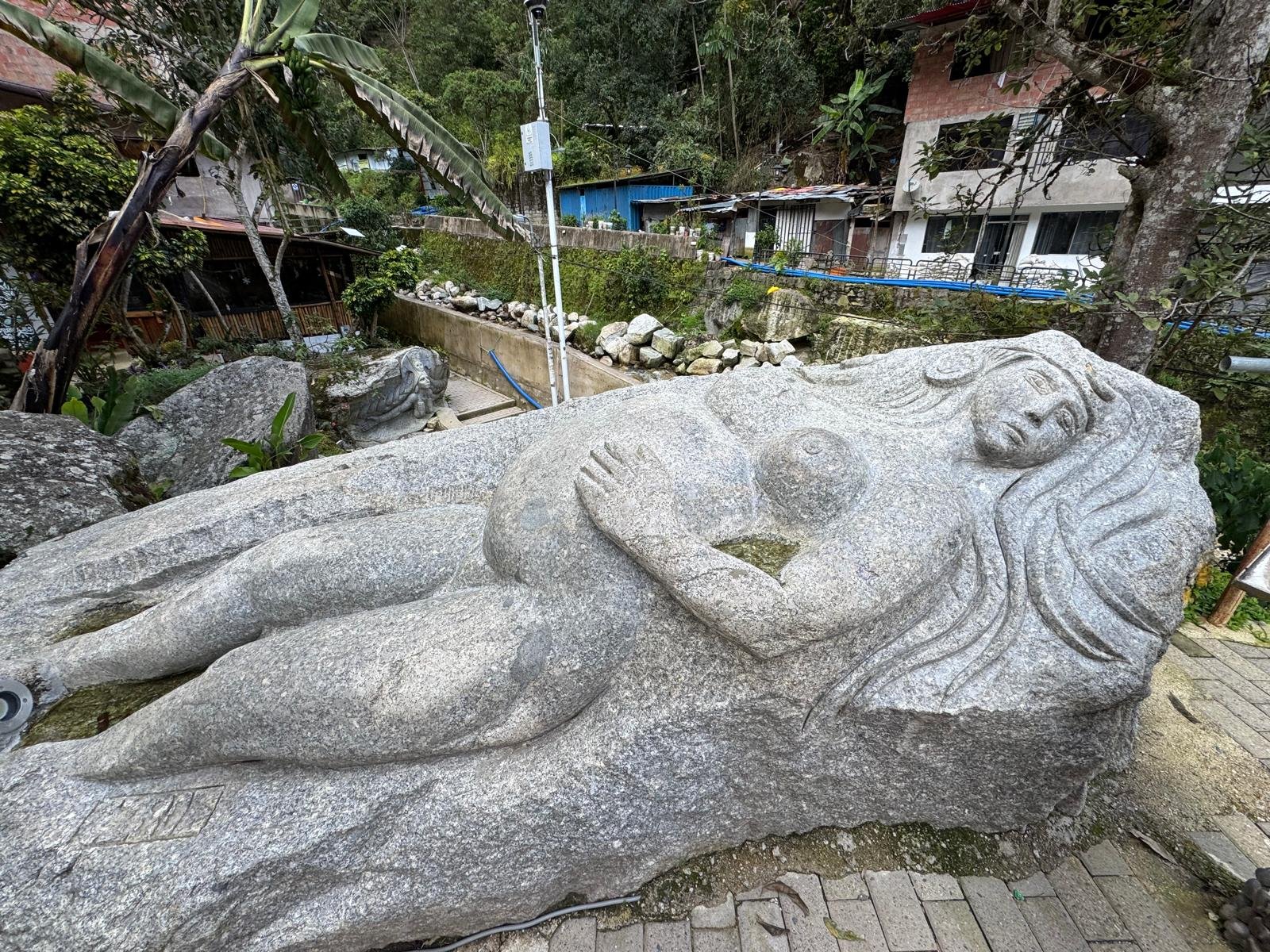
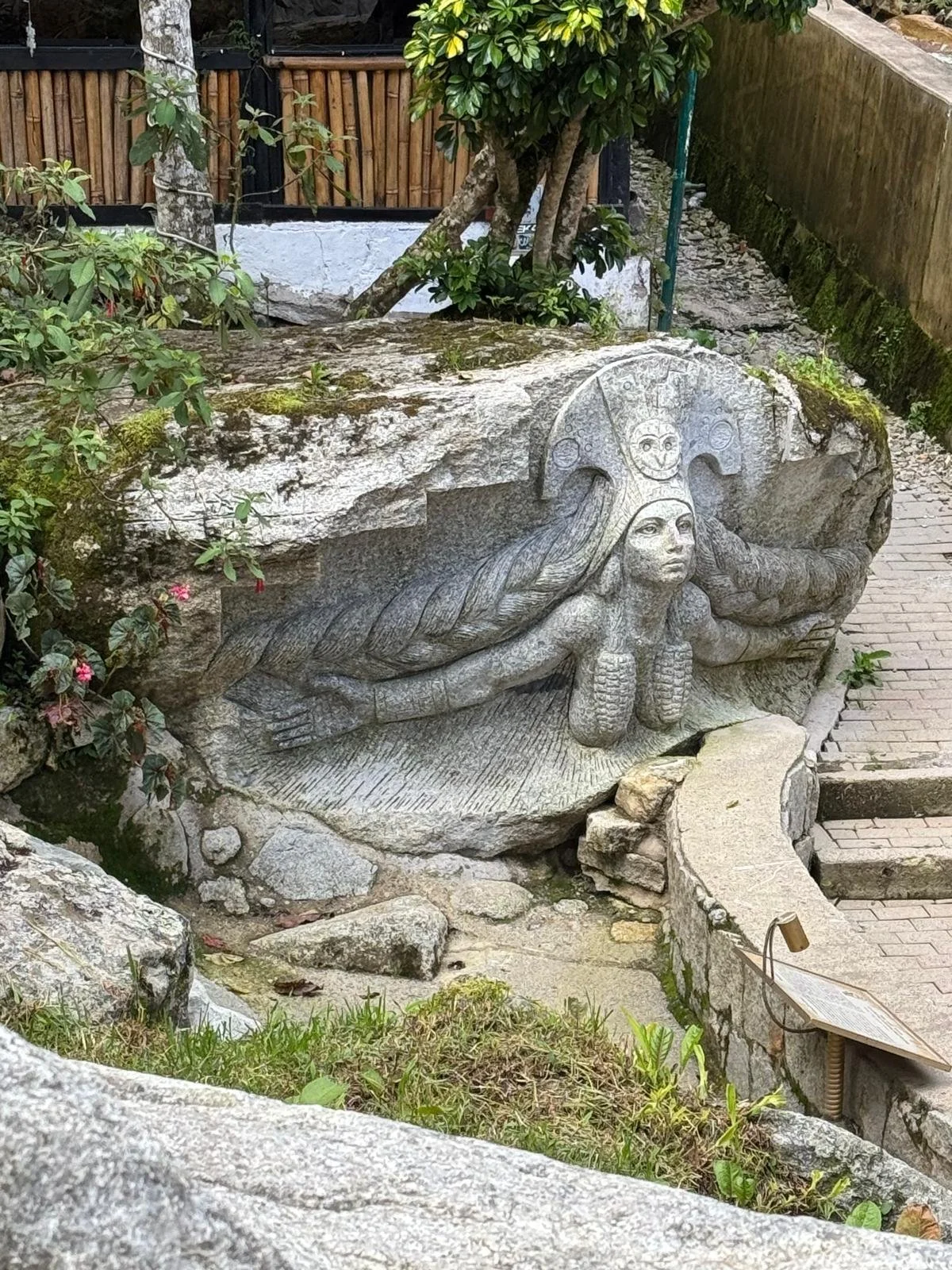
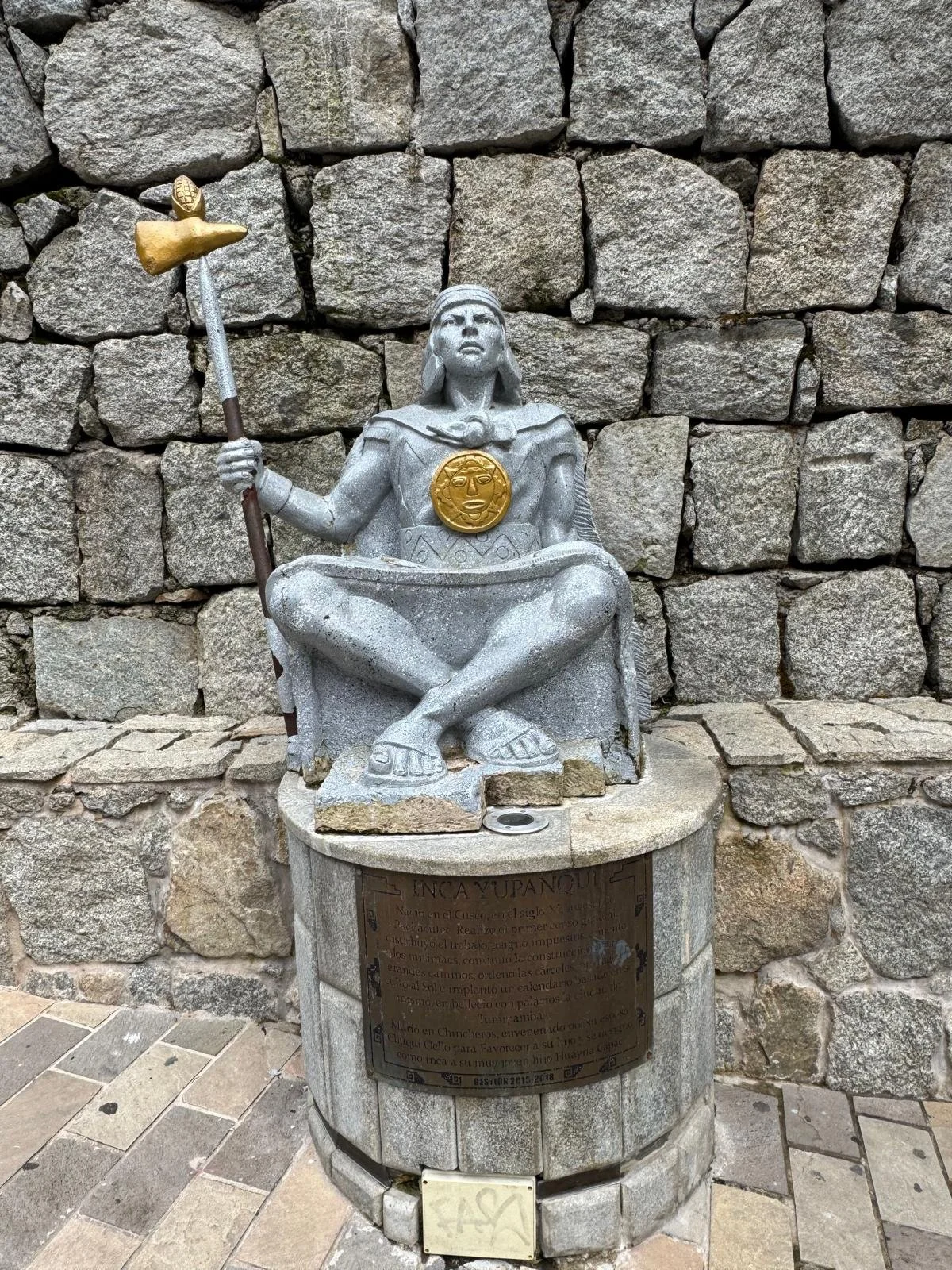
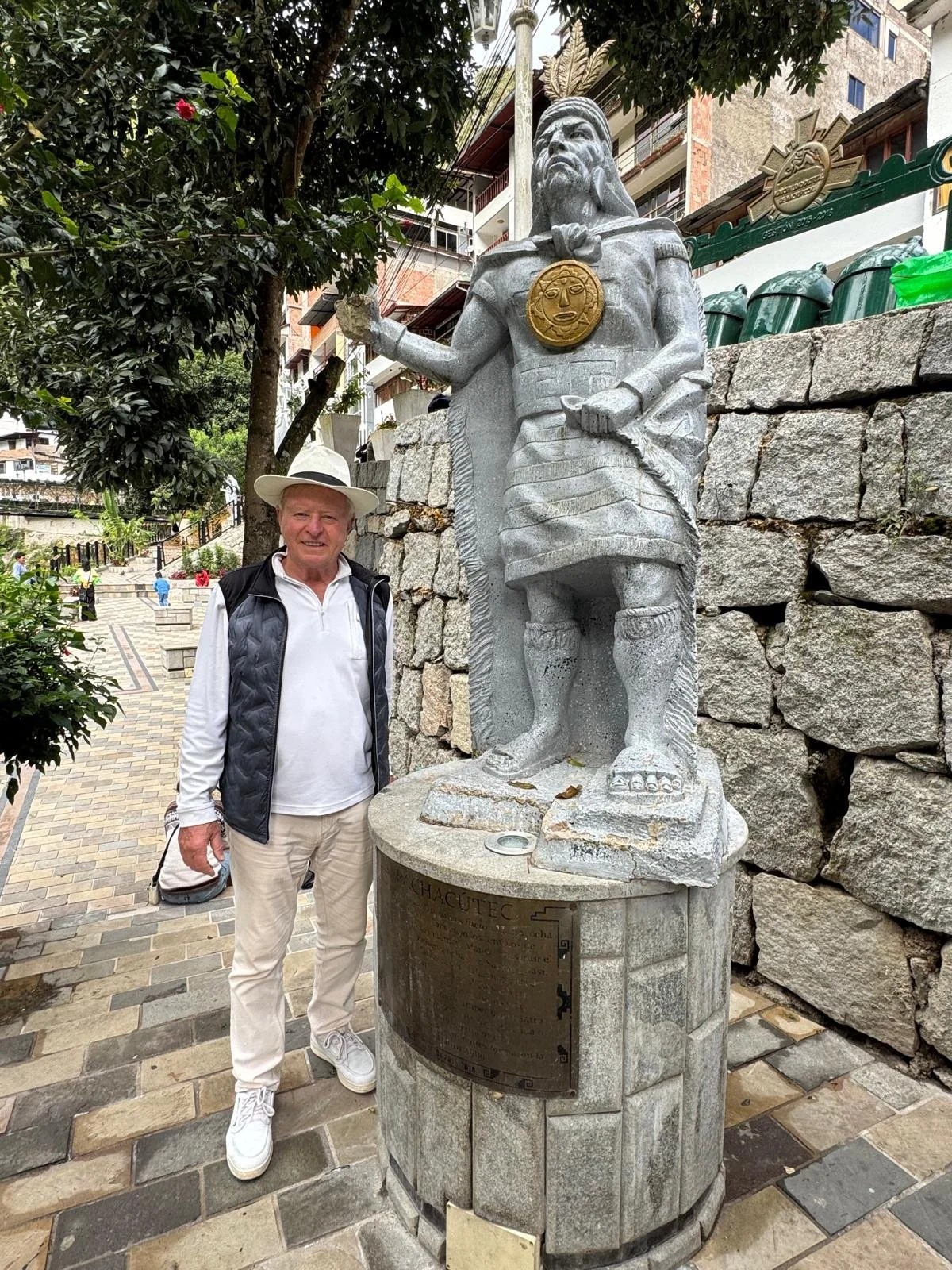
Aquas Calientes features many sculptures, a very imposing one in the centre of town of the Inca Trilogy of the Condor, the puma and the snake and 37 granite stone sculptures called “Stone Chronicles which were created in 2017 by Cusco artists which reflect the Inca world view and Andean mythology throughout the town. We spotted a few of them, including the Pachamama (Mother Earth) – a representation of life, fertility and abundance, Apu holding a child symbolising the protection, love and care given by the mountain gods, and Mama Cocha, representing the Mother of the Lakes, a goddess of the sea and water.
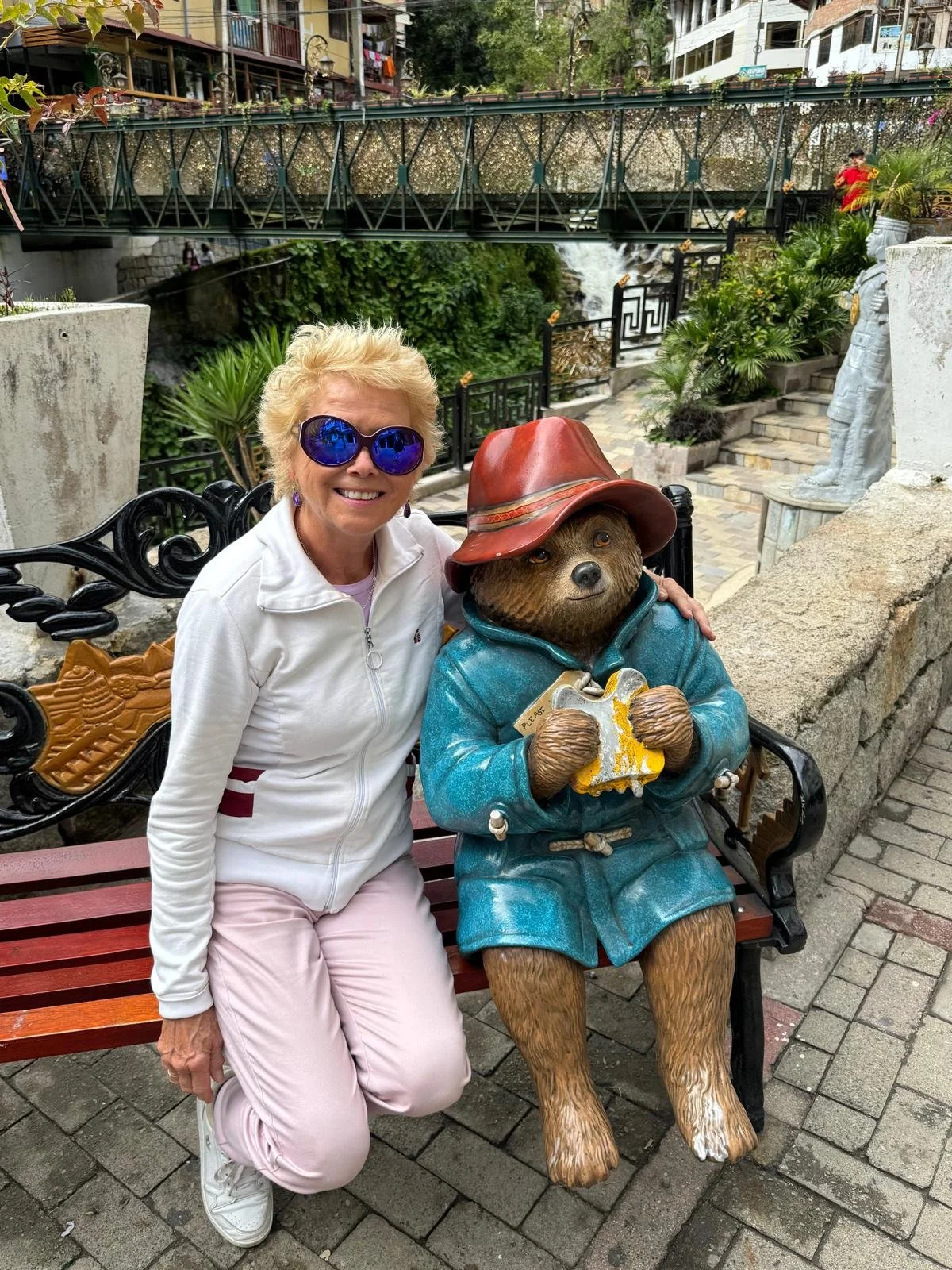
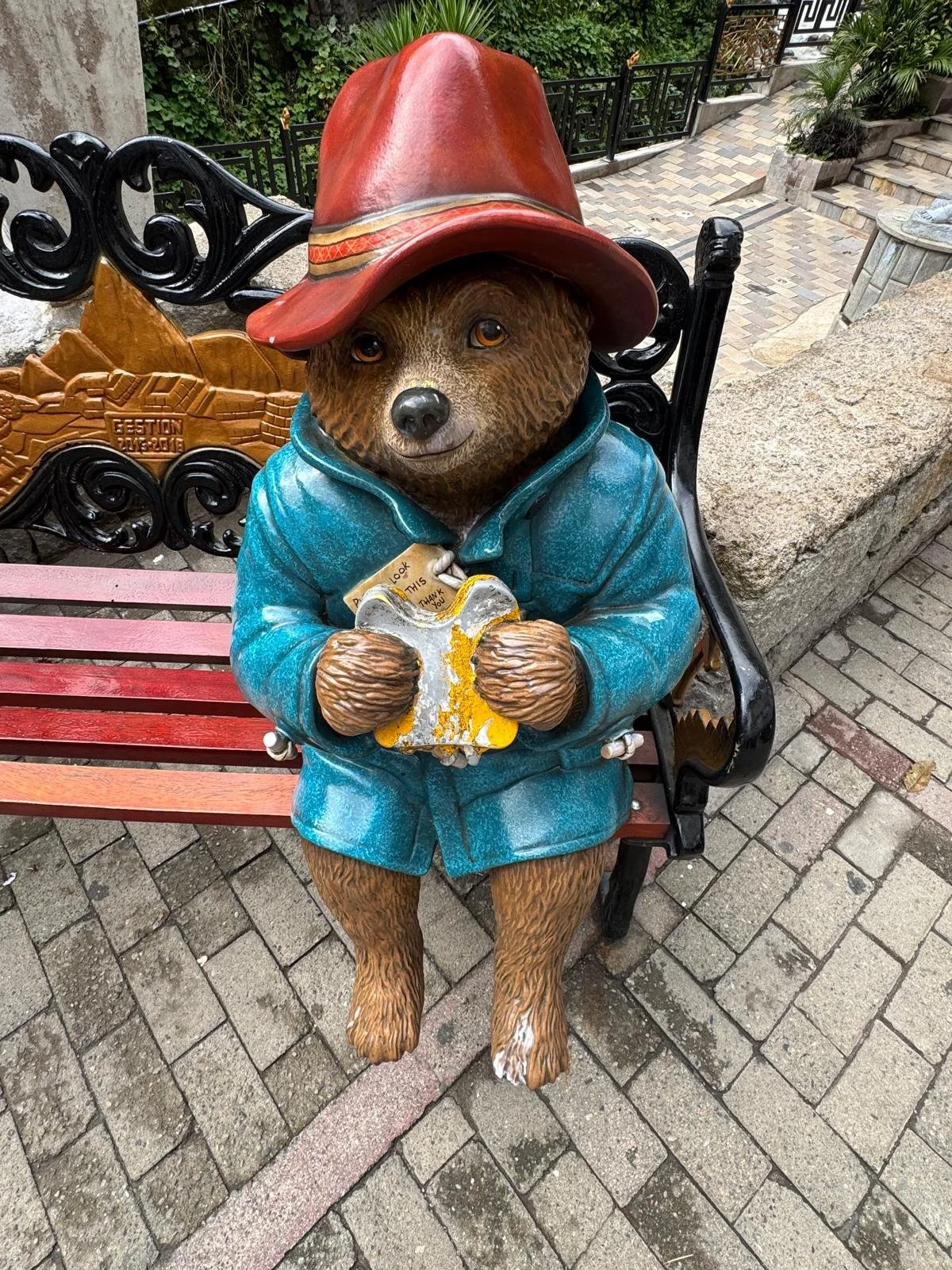
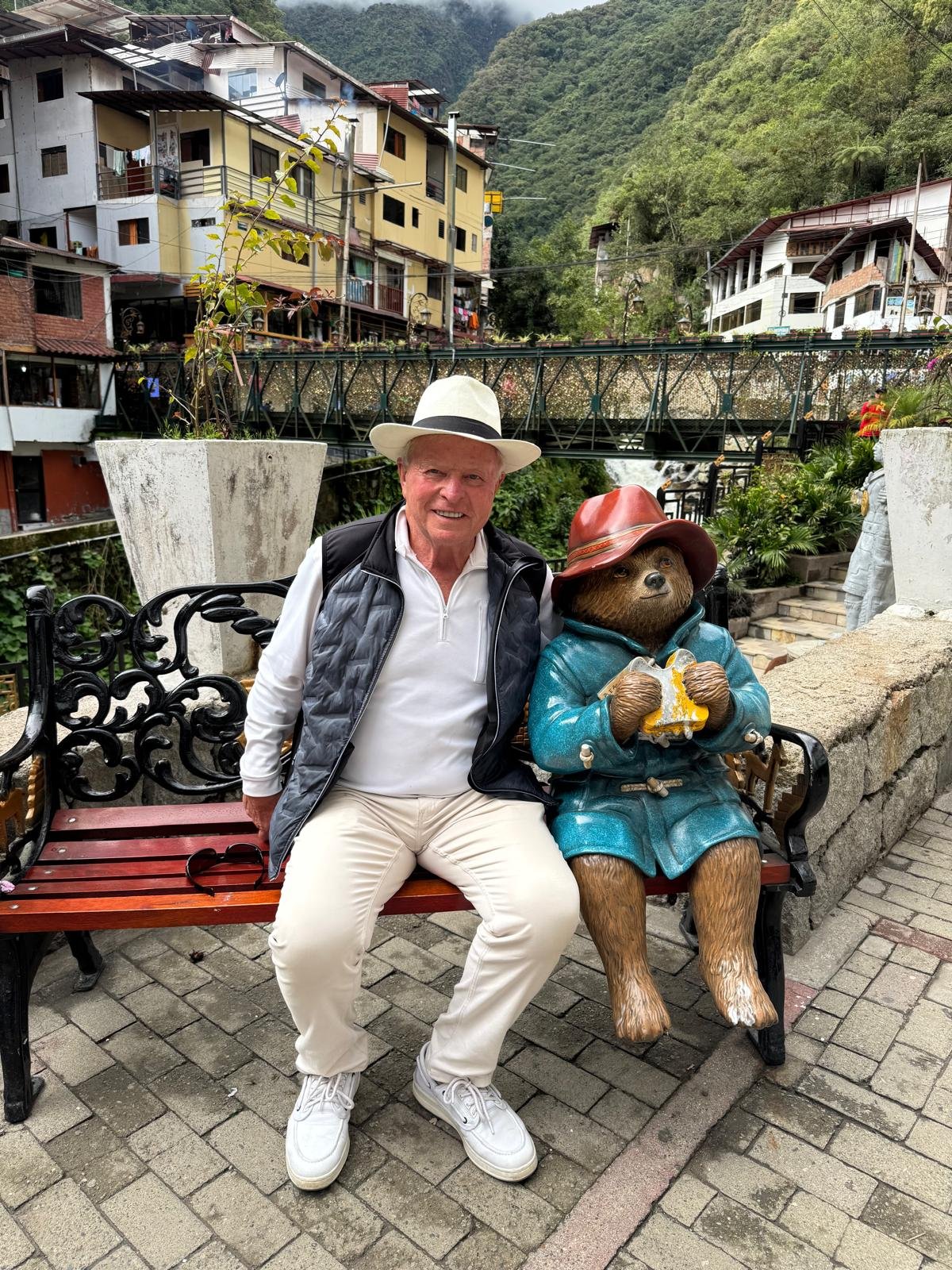
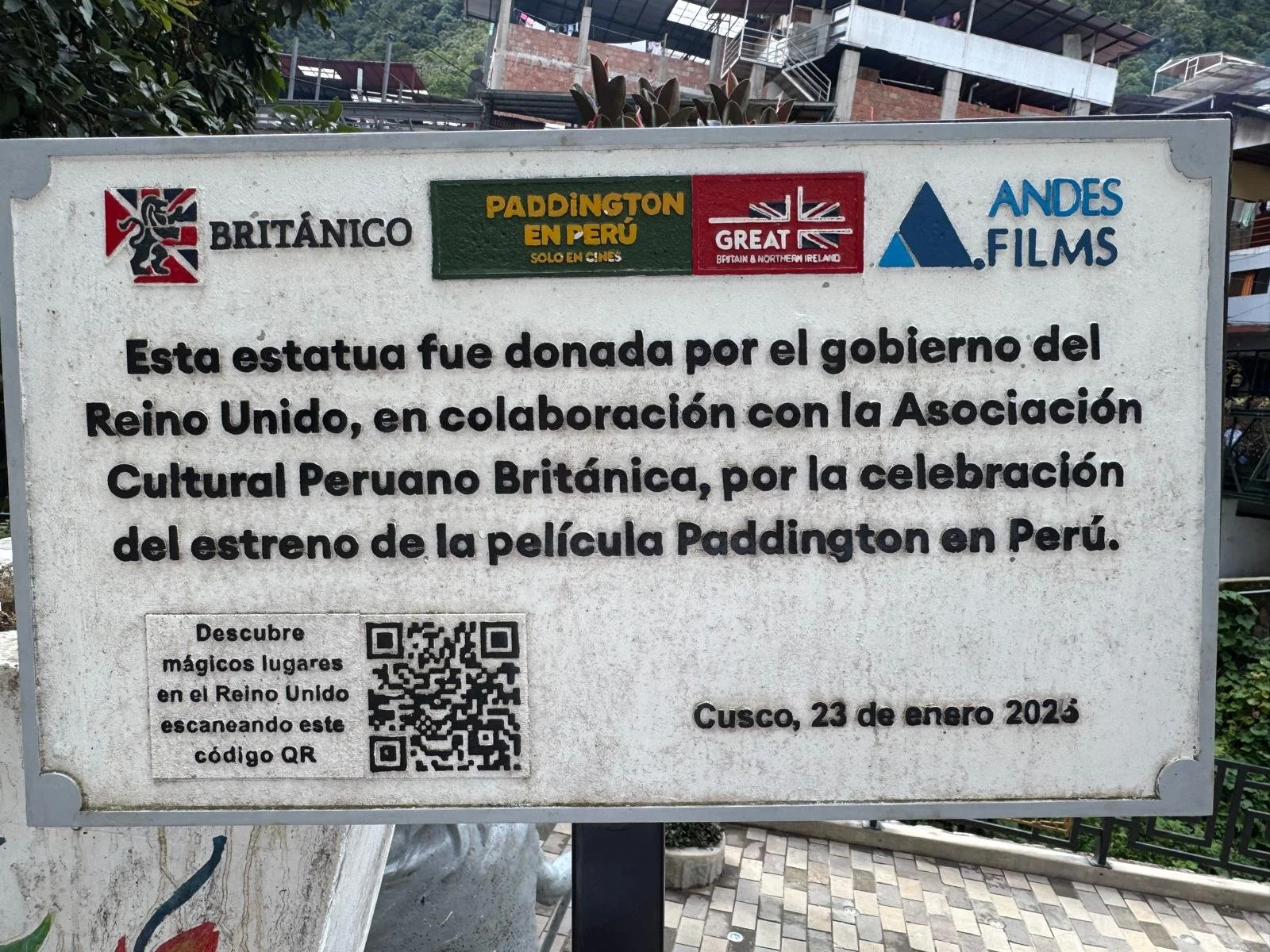
Our final stop was to see a more whimsical sculpture of our favourite bear – Paddington of course. We all know he hails from “darkest Peru”, so it was important we said hello to him before we left. The bronze statue was inaugurated in January last year and donated by the British Embassy and partners to celebrate the film “Paddington in Peru”.
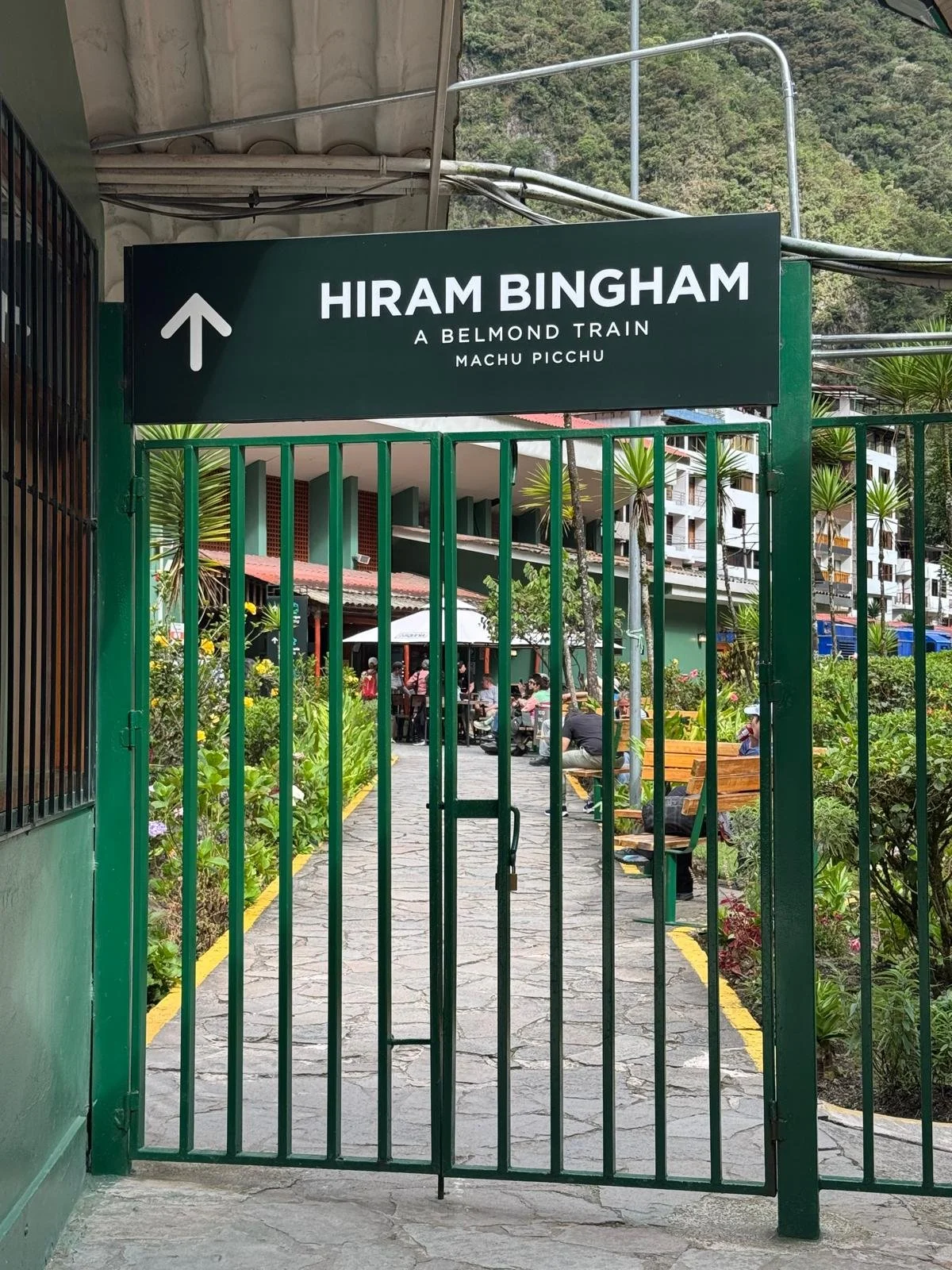
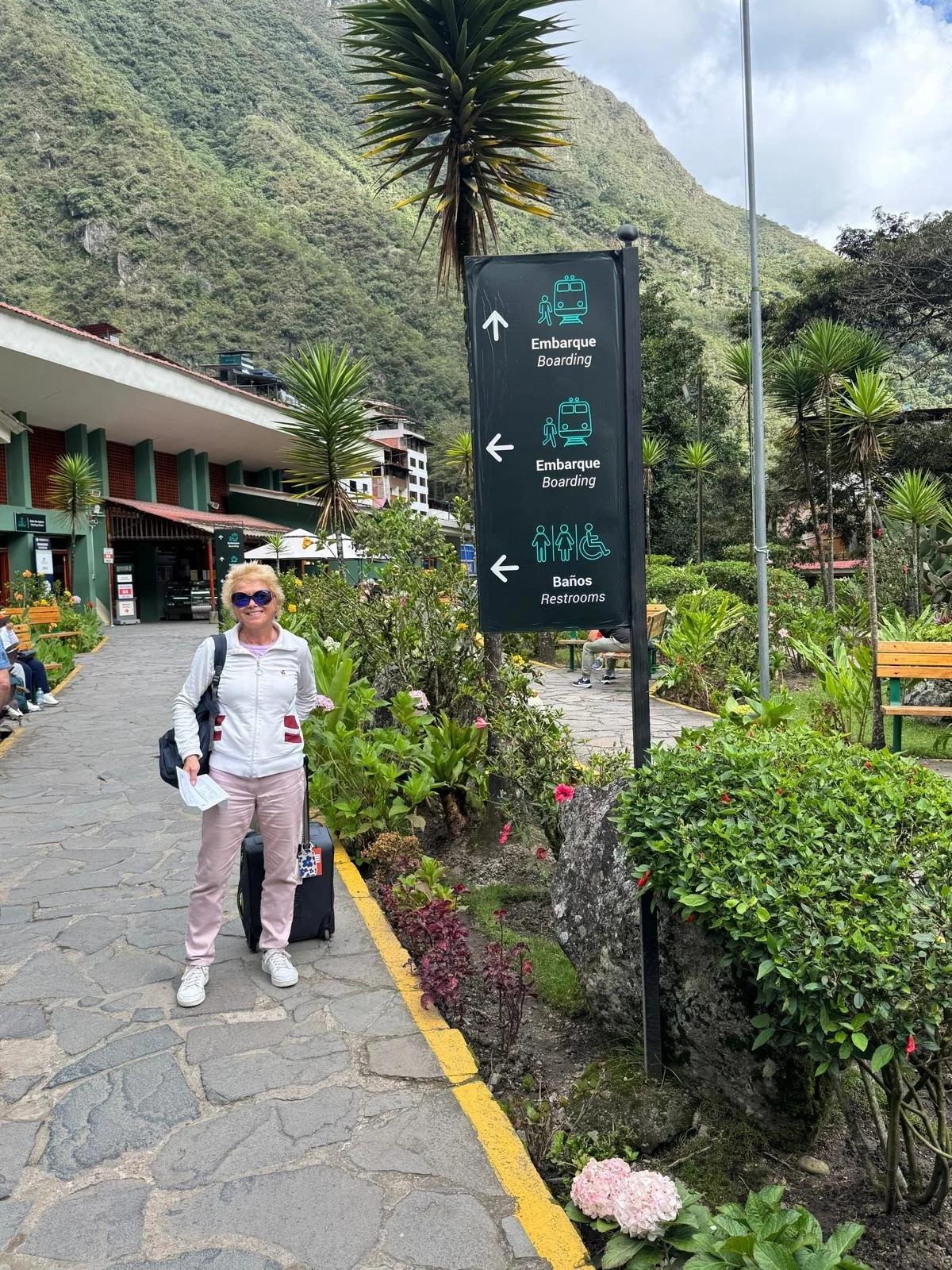
And then it was back to the hotel to collect our bags and walk back, past the river, which was absolutely raging, to the very pretty Hiram Bingham Station for our return train to Ollantaytambo and the two-hour drive to Cusco for the next exciting part of our journey.