Machu Picchu – our second day in this incredible Incan Citadel
Monday 16 March
What a fabulous morning! We woke to the sounds of the gushing Urubamba River and clear blue skies – this is very unusual as there are only two seasons in Peru, the rainy season and the summer season. The rainy season is from December to April and the Summer season is from May to November. Apparently, it has rained all this week except for yesterday and today – how lucky were we!
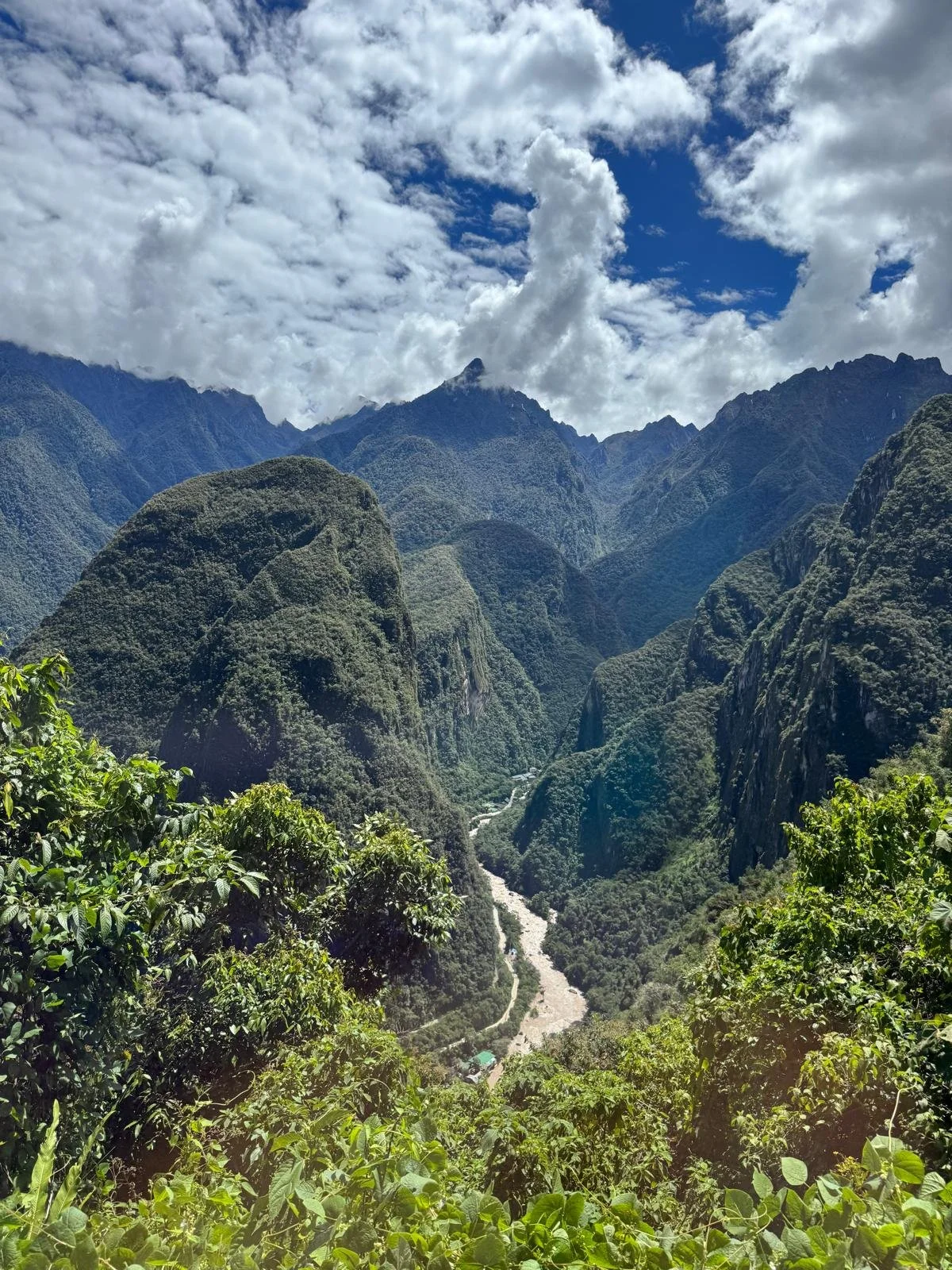
I’m going to divide today into two blogs as there are two different parts to the day. The first part - we were met by our lovely, very knowledgeable guide, Reuben, who had kindly shown us around Machu Picchu yesterday and today we learned we were going back again to see some parts that we had missed. So it was back on the zig-zagging bus and up to the top, and enroute I snapped off a photo of the river far down below, if you zoom in and look at the buildings, one of them is our lovely hotel, the Sumaq – so now you can envision the view we had from our balcony when you followed the course of the river.
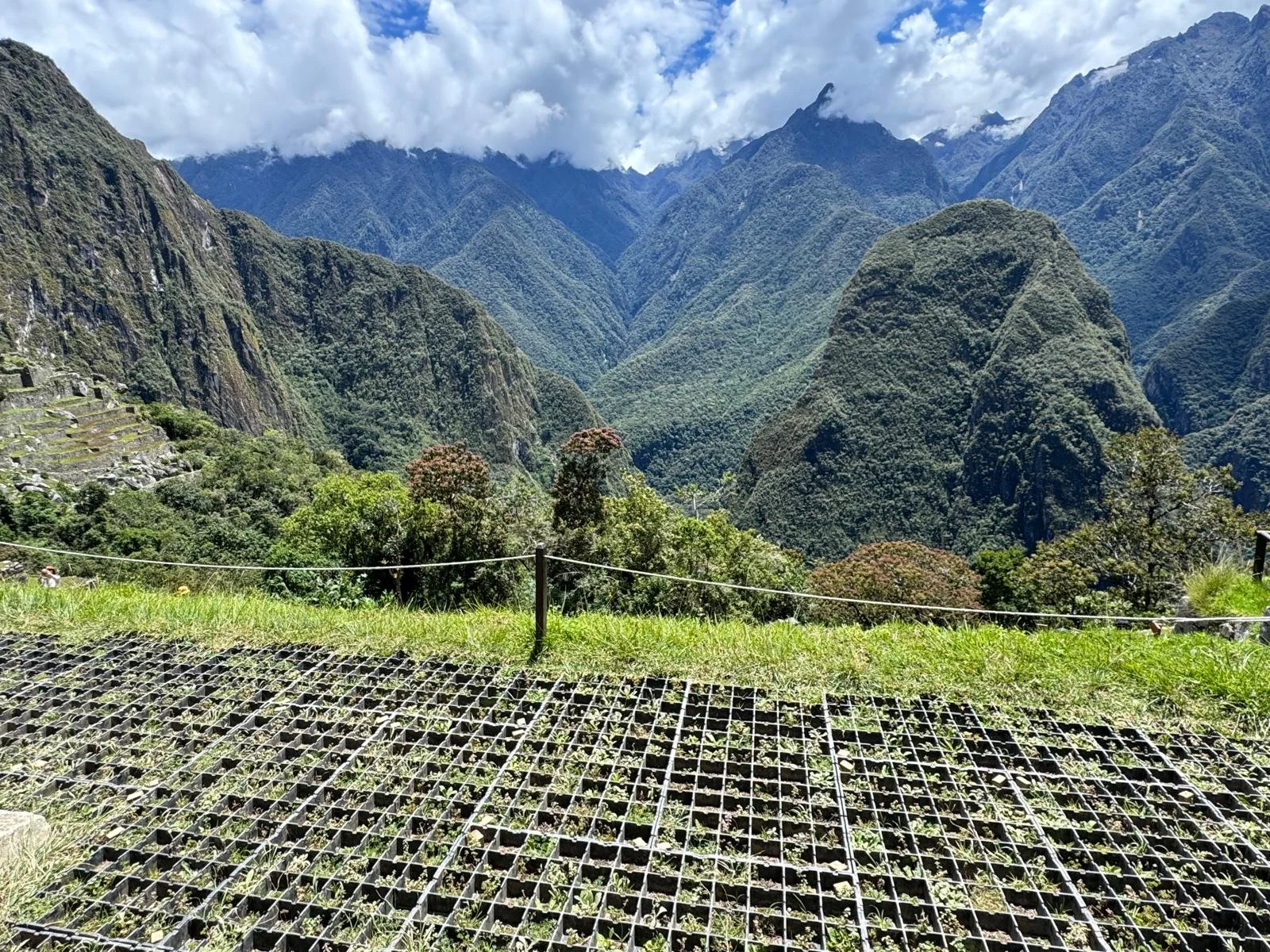
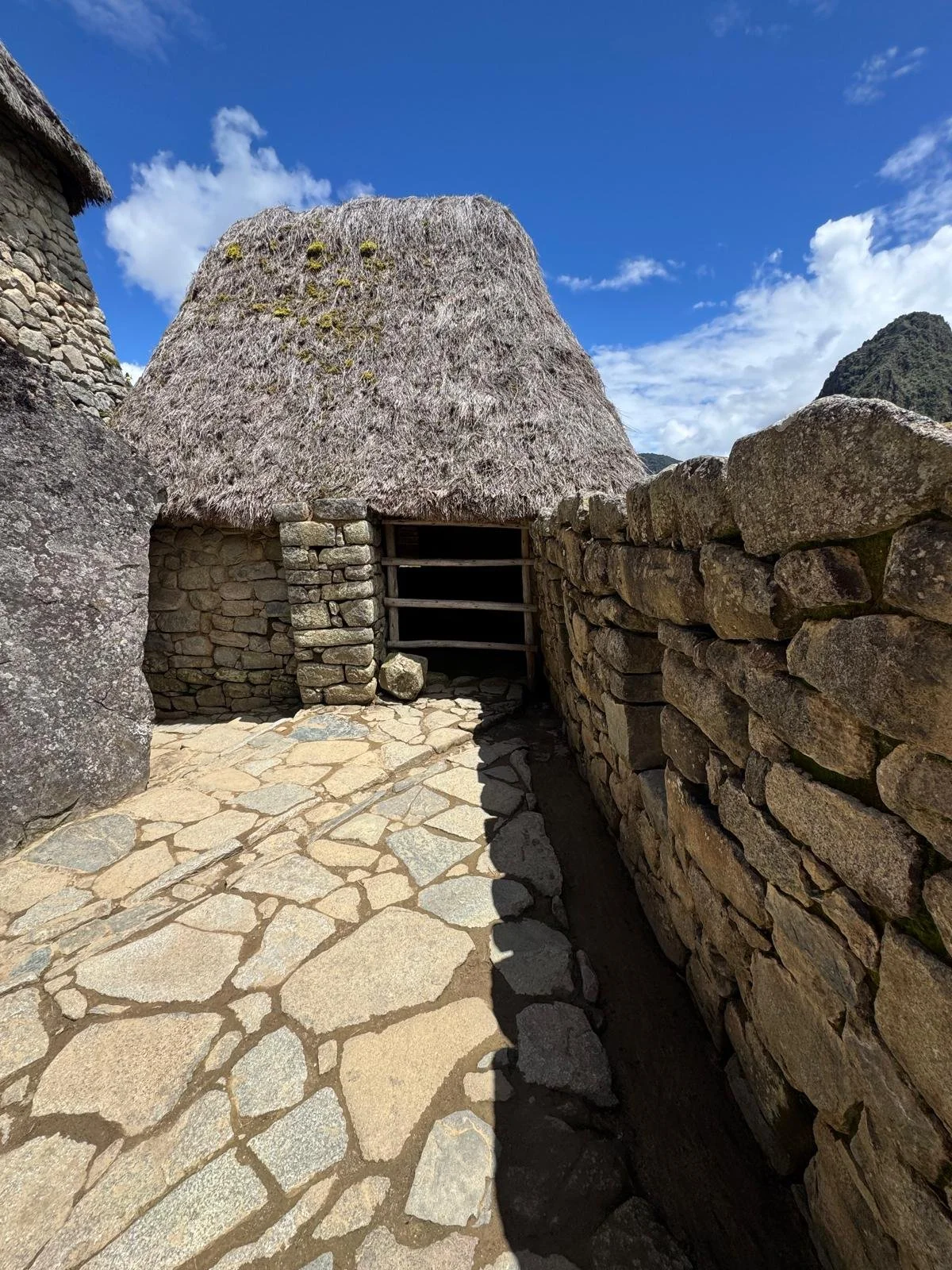
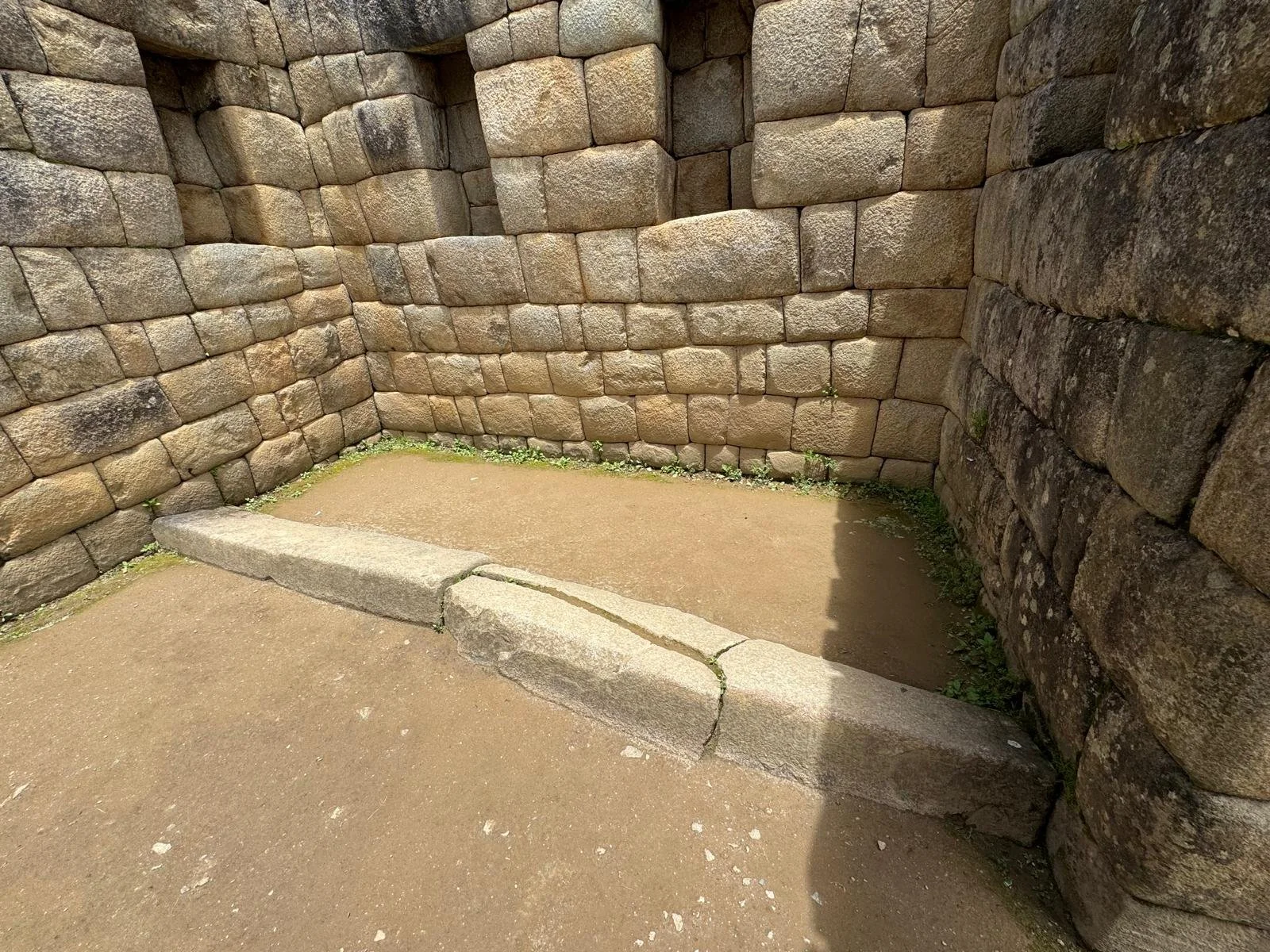
First stop was the Inca Royal Palace and the entrance to it. It was the seasonal home of King Pachacutec, his main palace being in Cusco, and it was situated below the Temple of the Sun in an elevated spot for privacy and panoramic views. It had a dedicated water channel, and his bedroom was quite big compared to the rooms in the common peoples’ home and his bed would have been of Andean grasses, covered with llama skin and alpaca wool covers. He also had his own private bathroom – just for him and his concubines! The kitchen, when it was discovered, still contained some pottery and dishes, and also skeletons of guinea pigs – so they obviously ate guinea pigs on their special occasions too! It had a big balcony overlooking the main square and rooms for his servants.
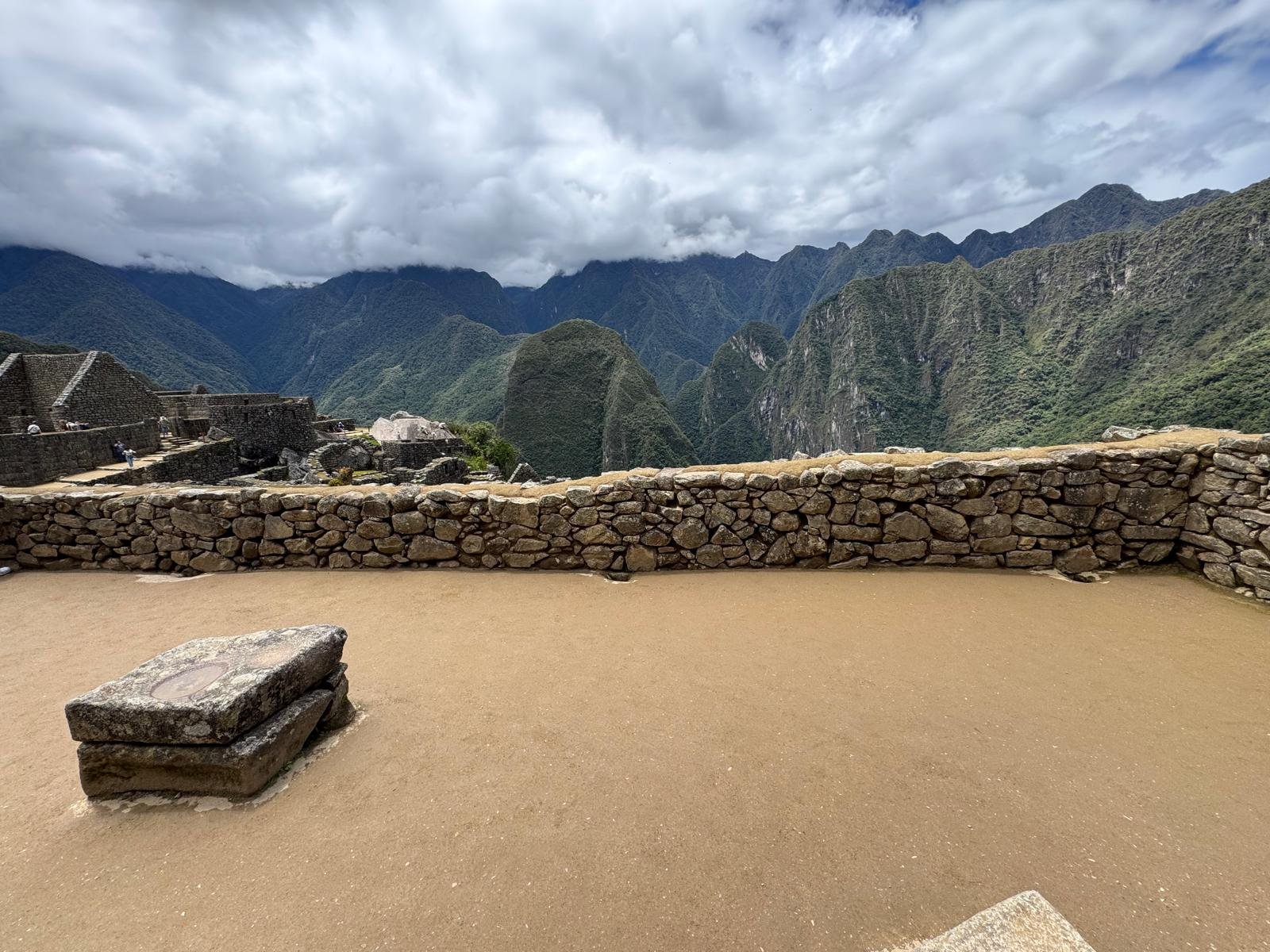
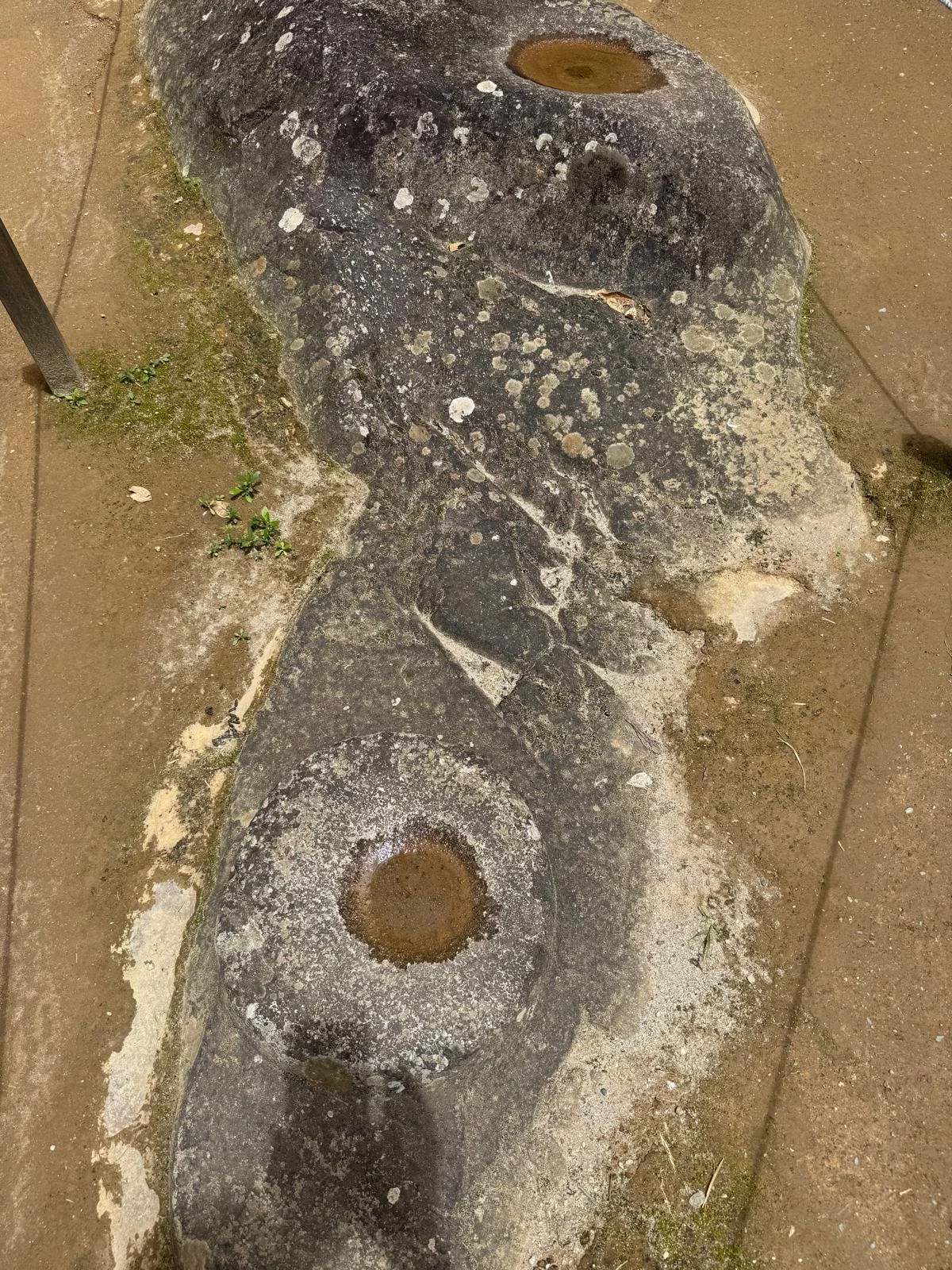
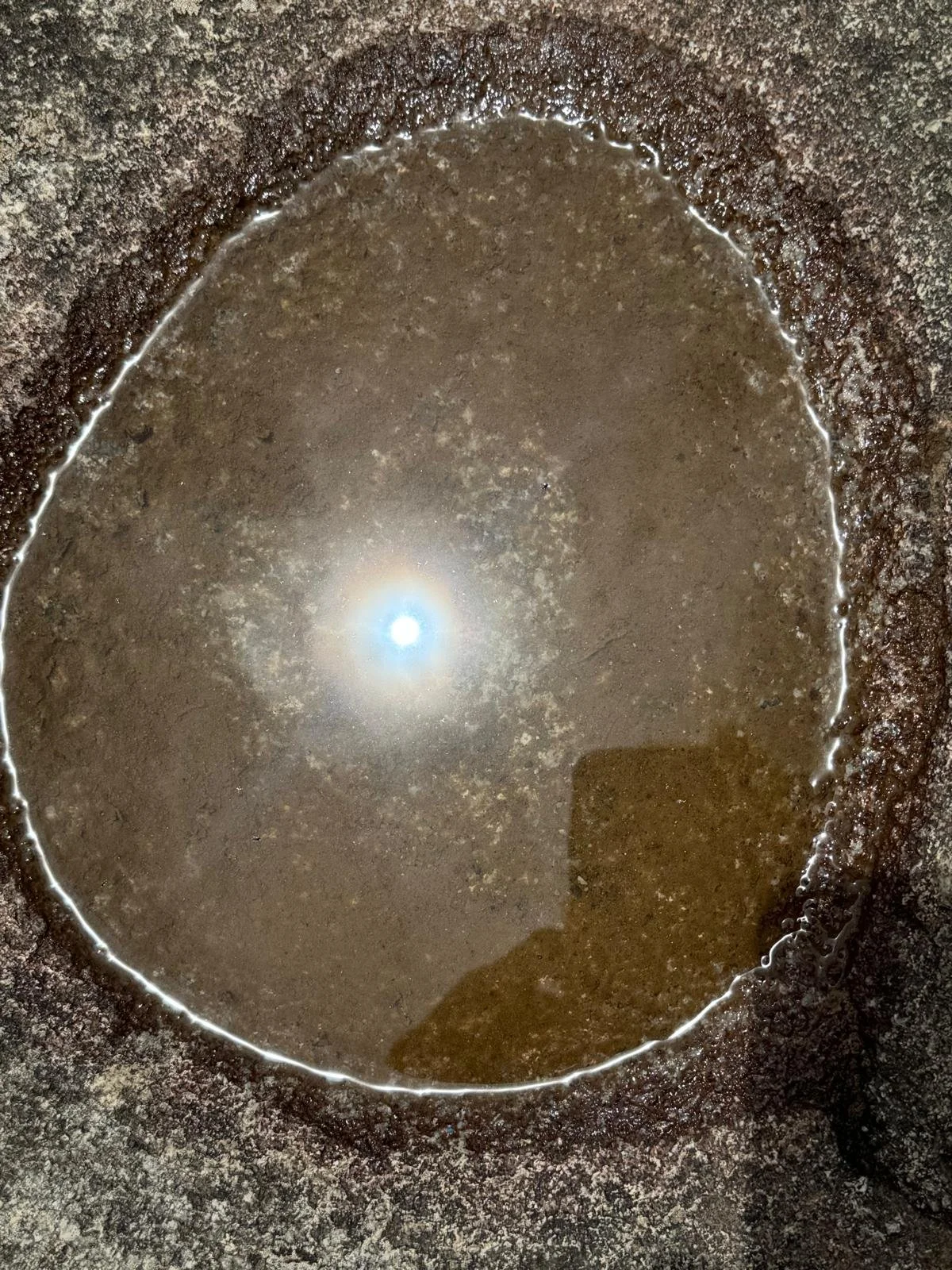
It also featured something very clever – water mirrors. These were carved stone dishes filled with water and known as Espejos de Agua. They were used to observe the reflections of the sun and stars and to track the Mama Killa – the moon, acting as a mirror of water. Sunlight acts as a marker for the solar year and helped guide their agricultural practices. Have a look at the photos – we tried it out and yes, we could quite easily see the sun. The alignments represent the blend of scientific solar observation and profound spiritual reverence for the cosmos. In other words, it was the Inca version of an astronomical observatory. They also provided the Incas with a telescope to see the Milky Way at night.
Two other interesting snippets of information for you – the Noble people wanted to be taller, generally the Peruvians are around 1.60 metres in height (which was perfect for me walking around all these ruins, but Geoff certainly had to do a bit of ducking and diving!) so they used to bind two pieces of rounded wood around their babies’ skulls when they were a month old and at their most pliable, and bind them in cloth distorting the growth by applying pressure and this continued for about six months. The result being that adult Noblemen were about 1.70 metres tall. The second fact being that only the sons of the Noblemen were allowed to go to school!
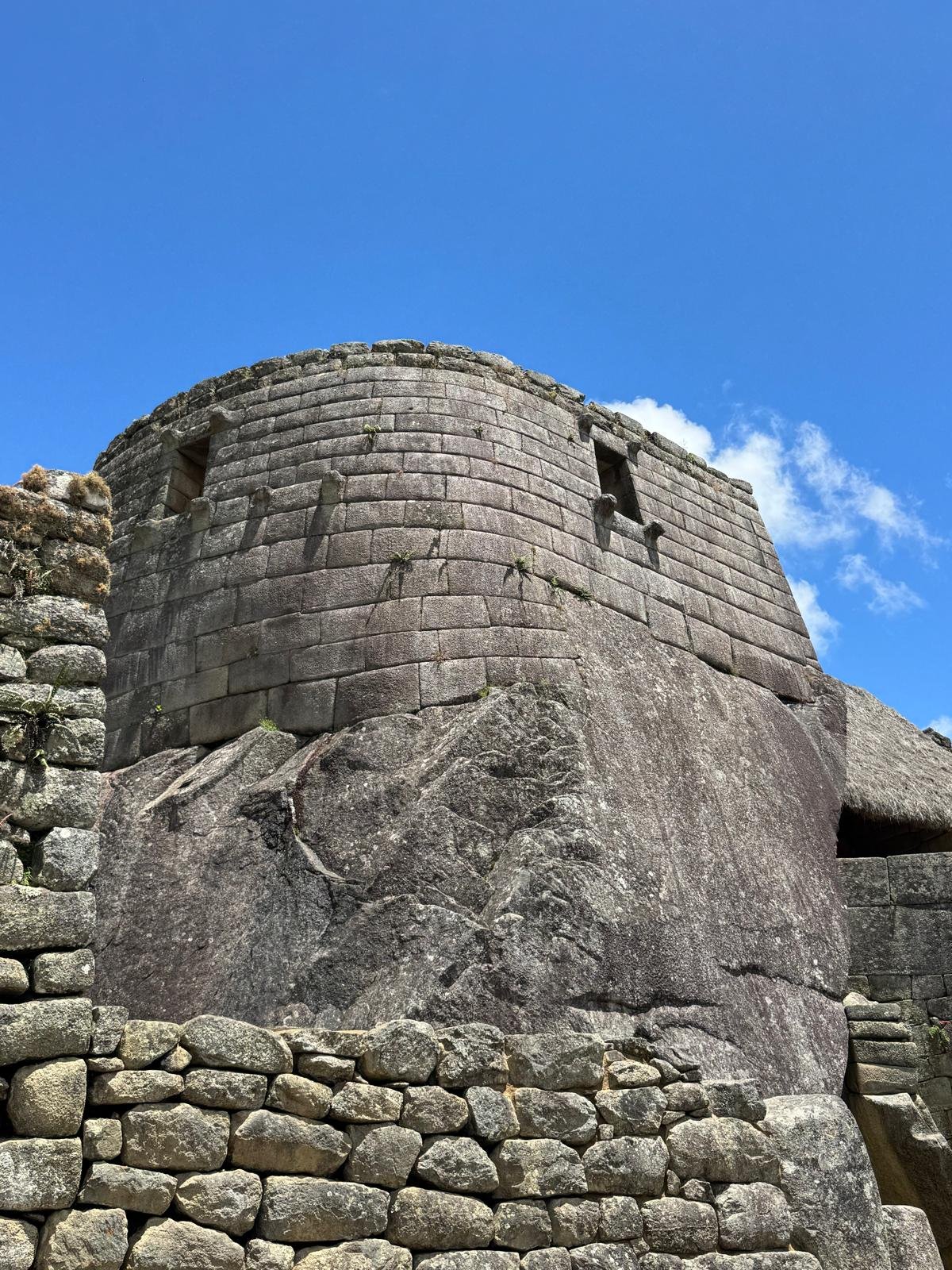
I talked about the Temple of the Sun yesterday and today we went below this Temple which was dedicated to Mother Earth (Pachamama). It features two windows which are sun-aligned in design so the Inca could track solstices. The left window tracked the Summer Solstice, and the right window tracked the Winter Solstice. Under the semicircular building was a cave with the Royal tomb underneath and also a place to store their gold and silver statues.
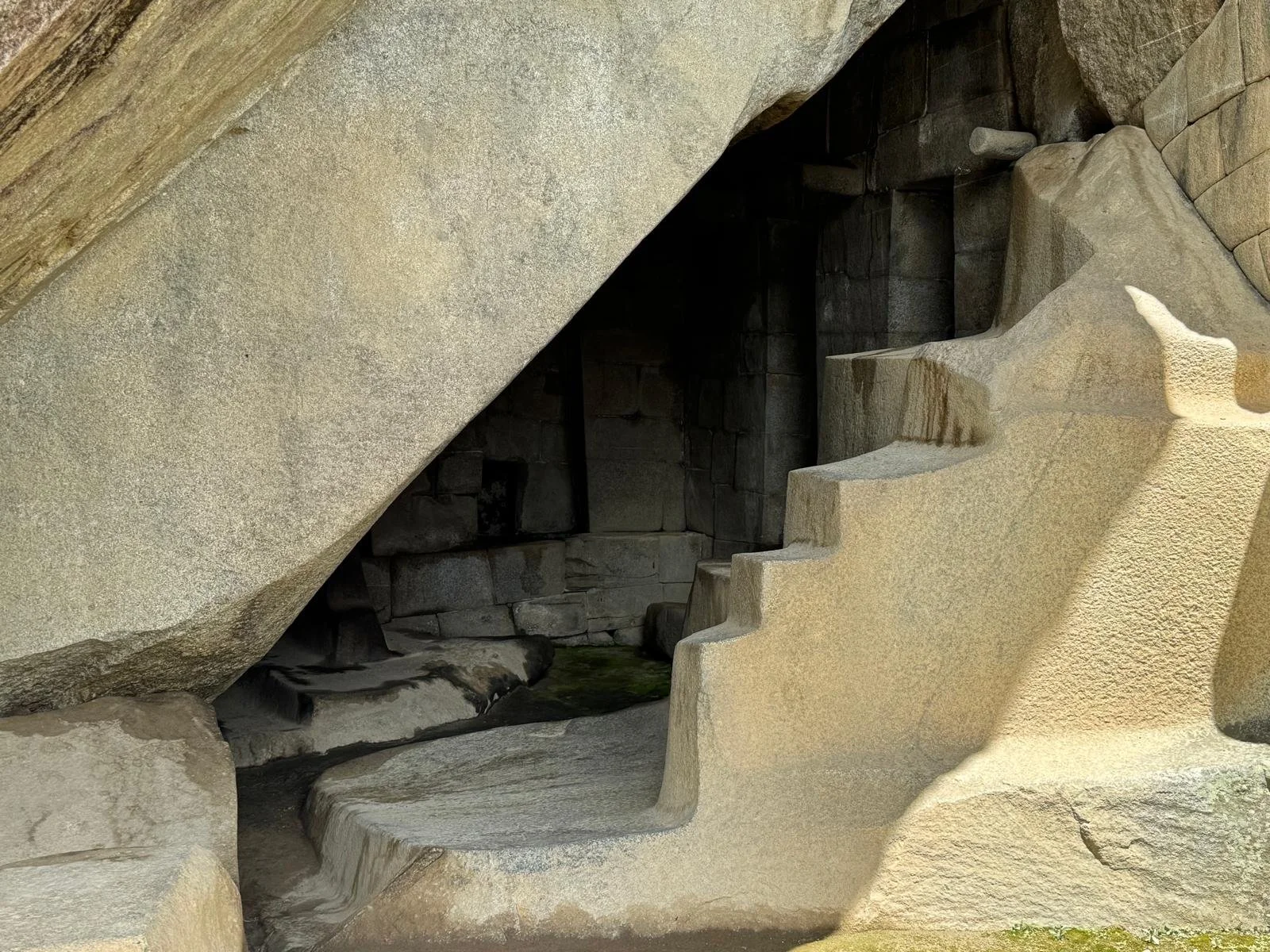
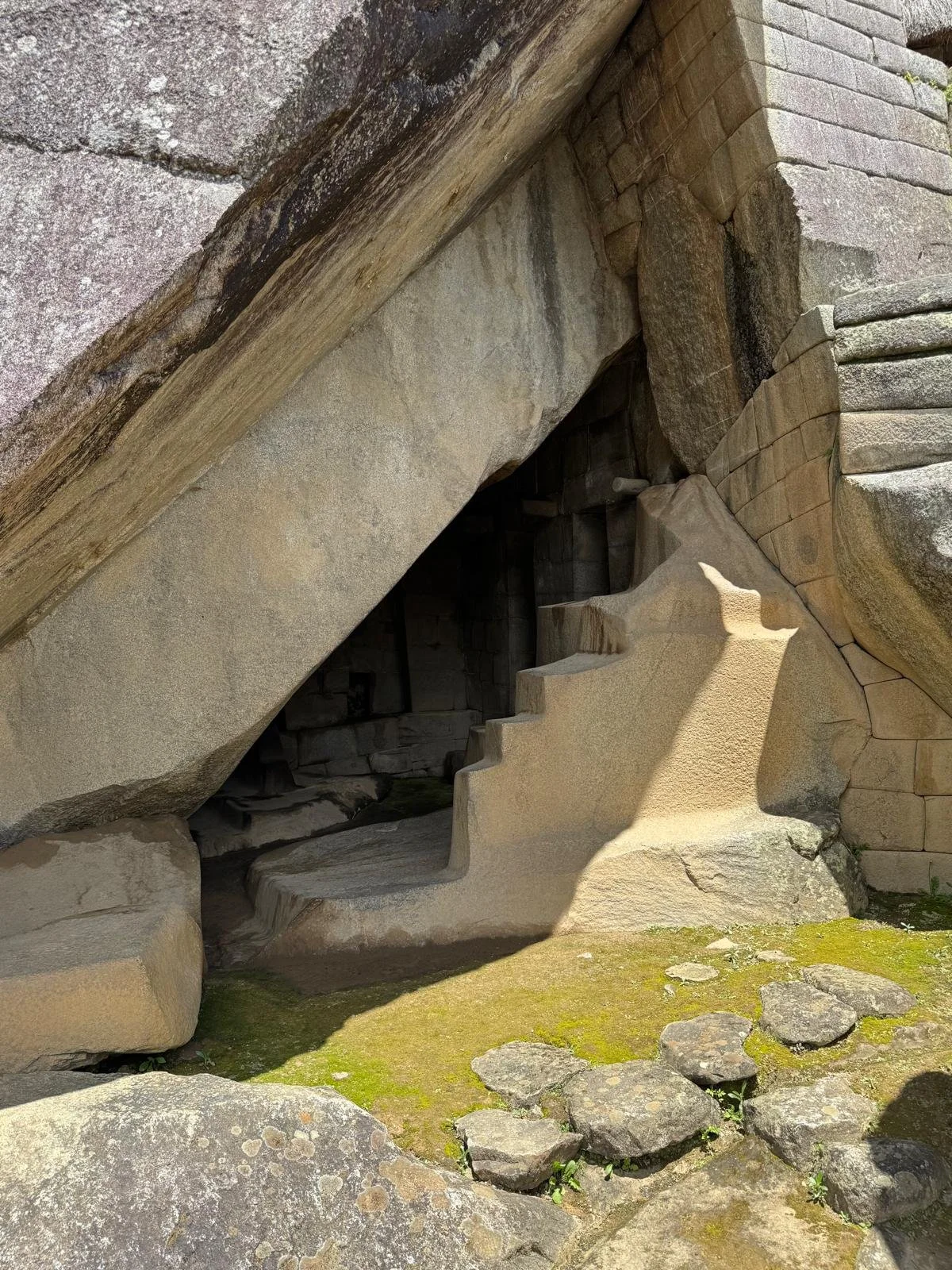
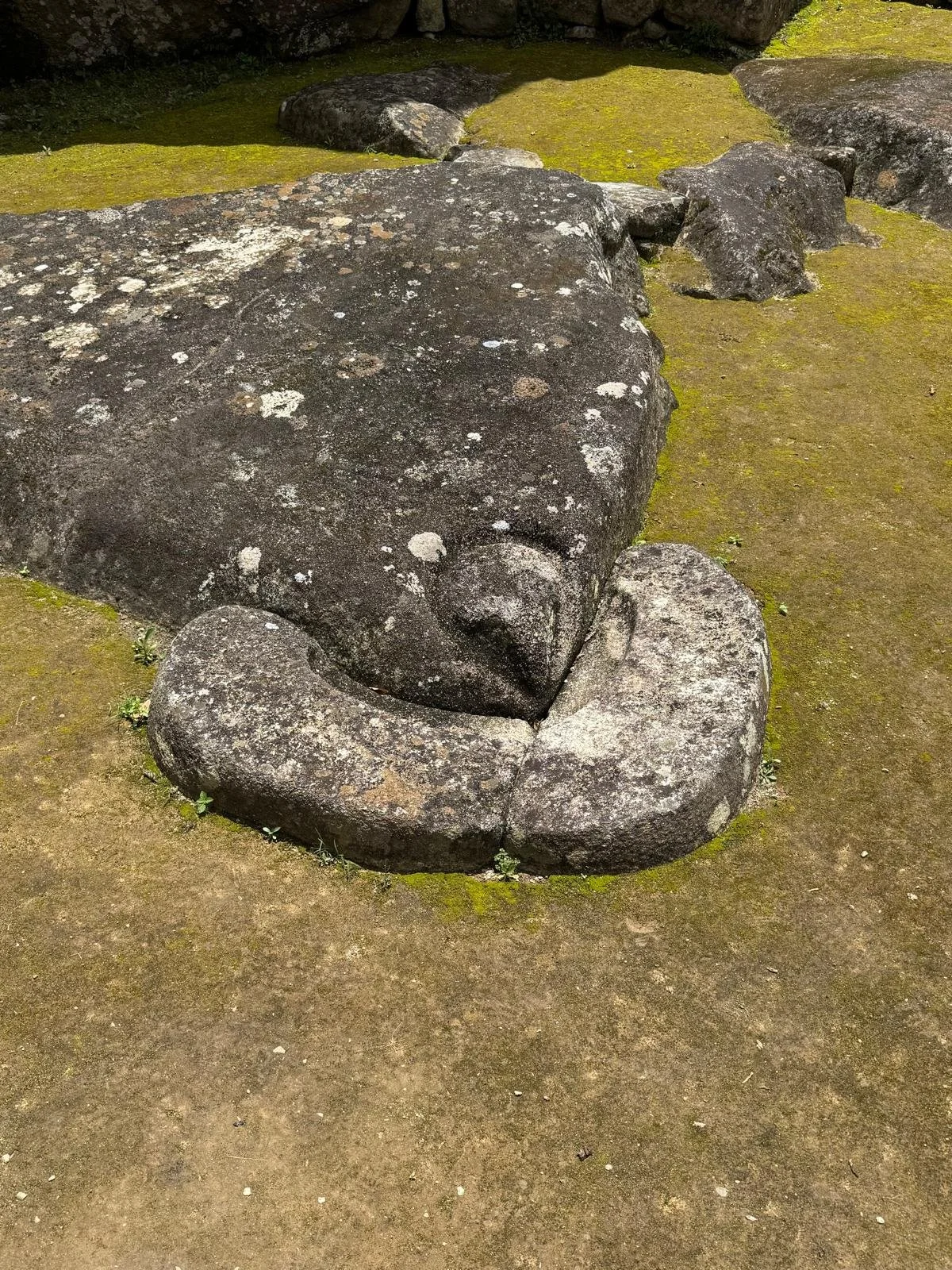
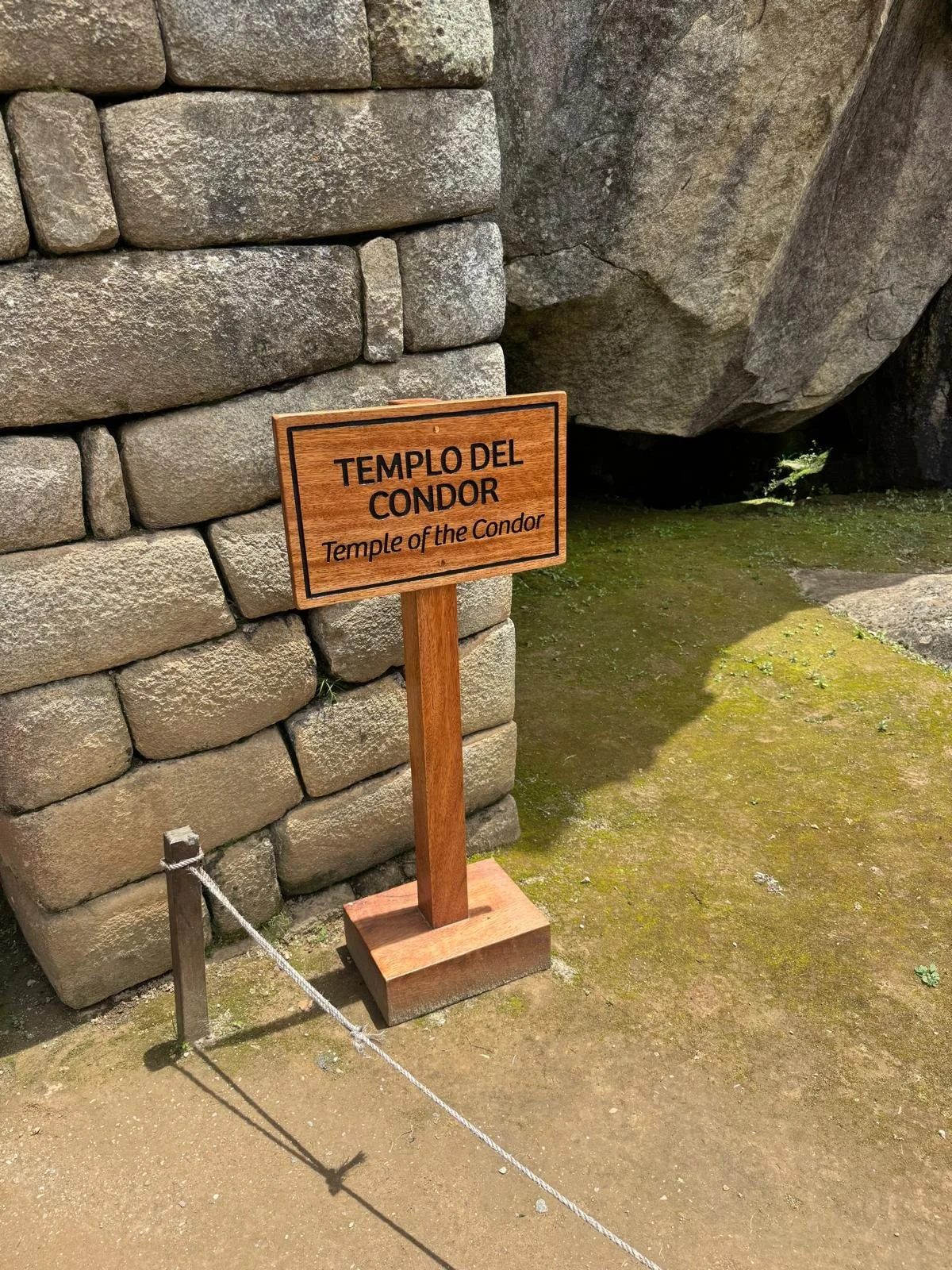
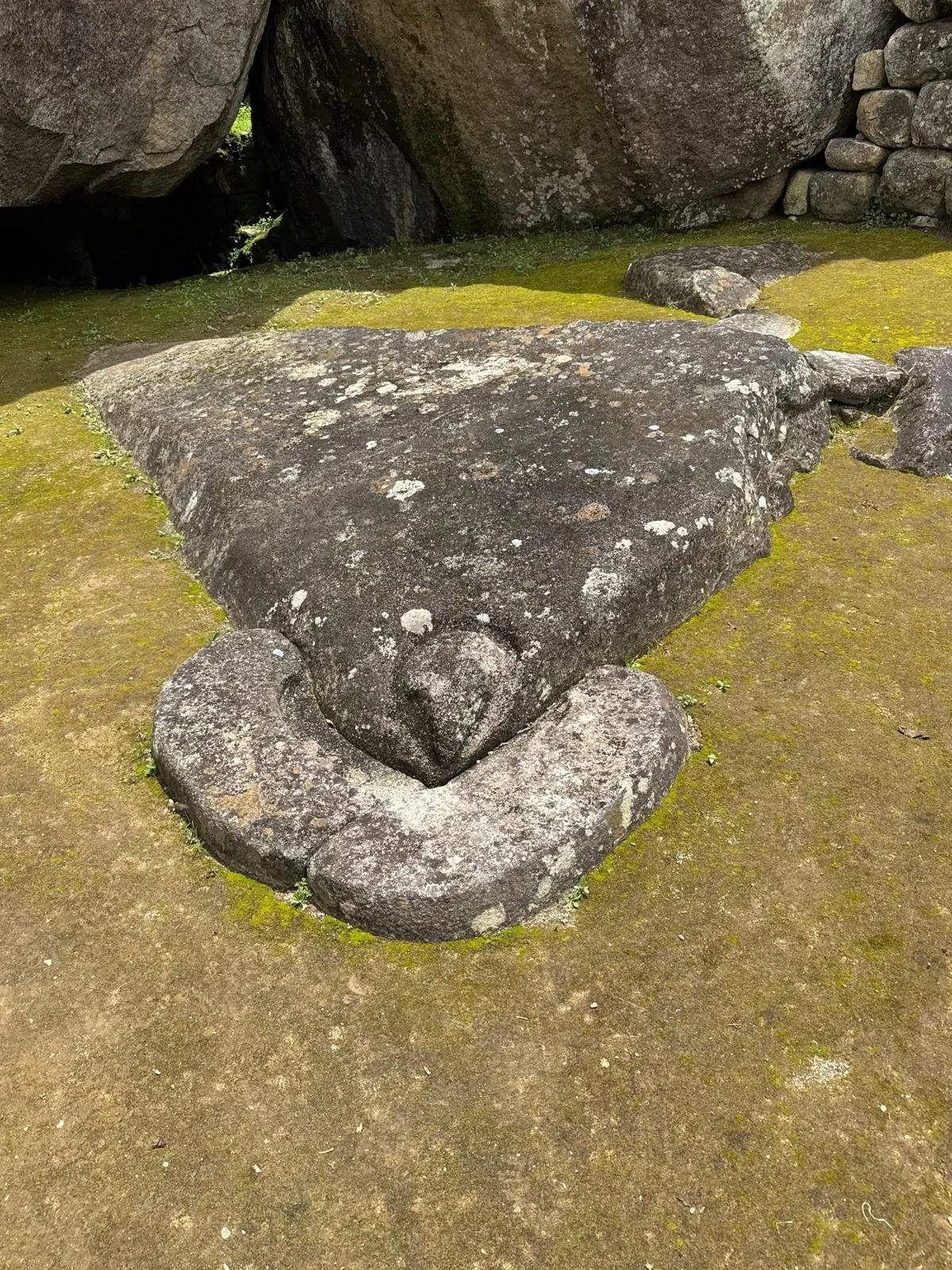
The Temple of the Condor was our final stop and is a 3D religious site which features a carved rock forming the wings of a condor, with its head and neck sculpted on the floor, creating a “landing” bird. This represents the Uku Pacha – the Underworld. It was the ceremonial centre for rituals often associated with sacrifices and spiritual transitions. The Andean condor is a sacred animal linking earthly and celestial realms symbolising rebirth or the soul’s journey. Excavations found ashes, ceramics and llama remains in a nearby small cave which indicated its role in sacrificial and burial rituals – sometimes in a foetal position.
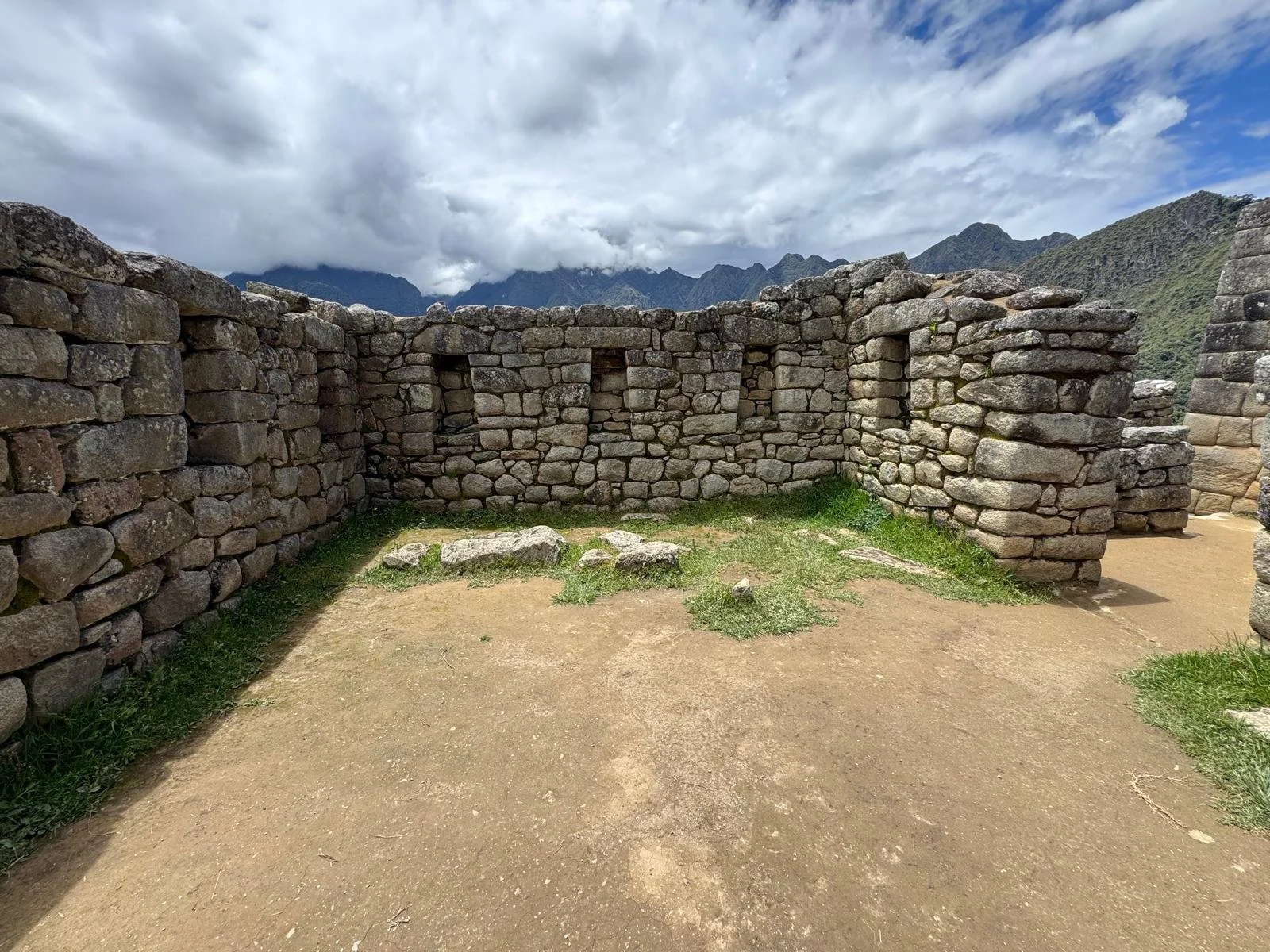
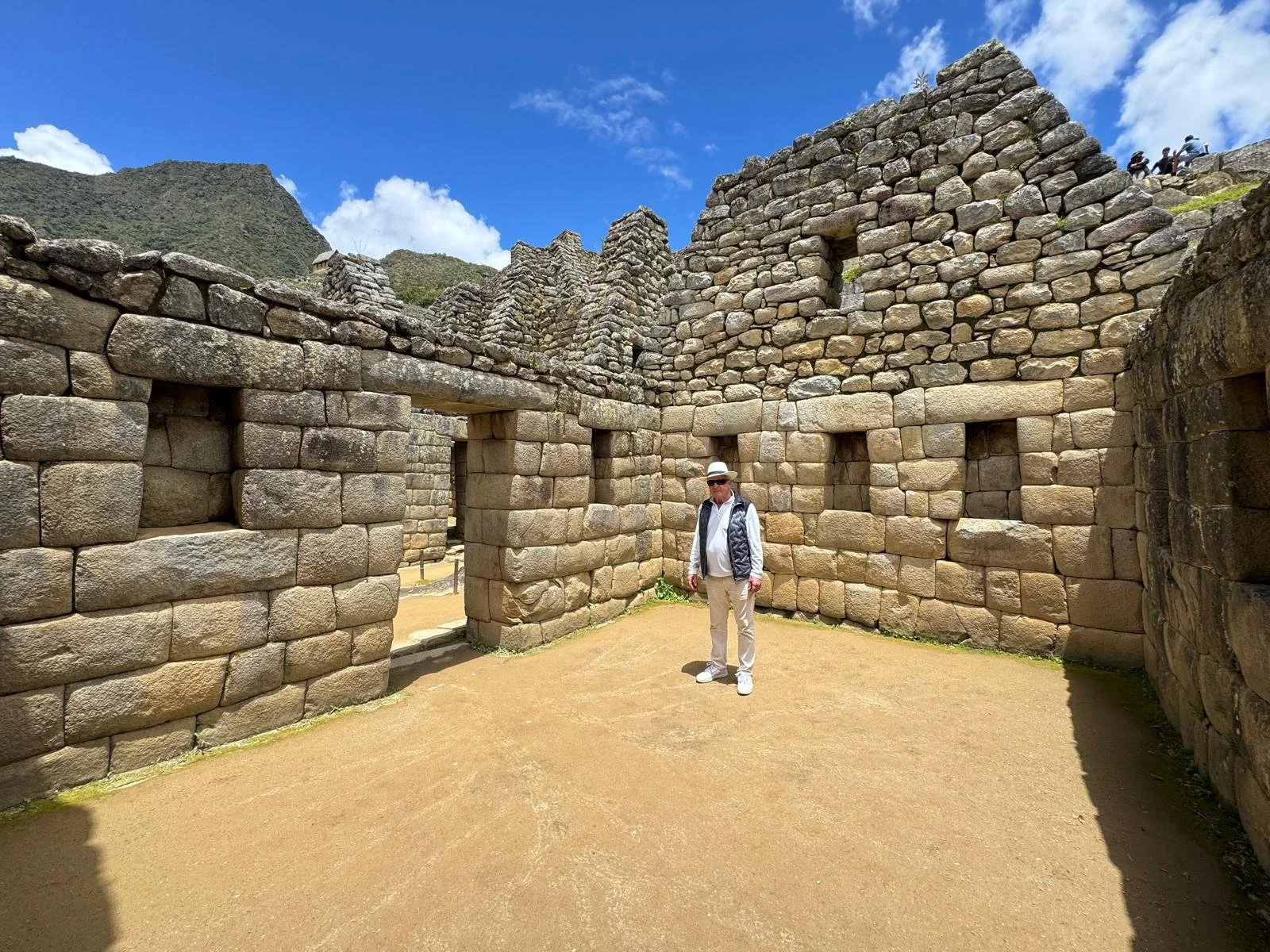
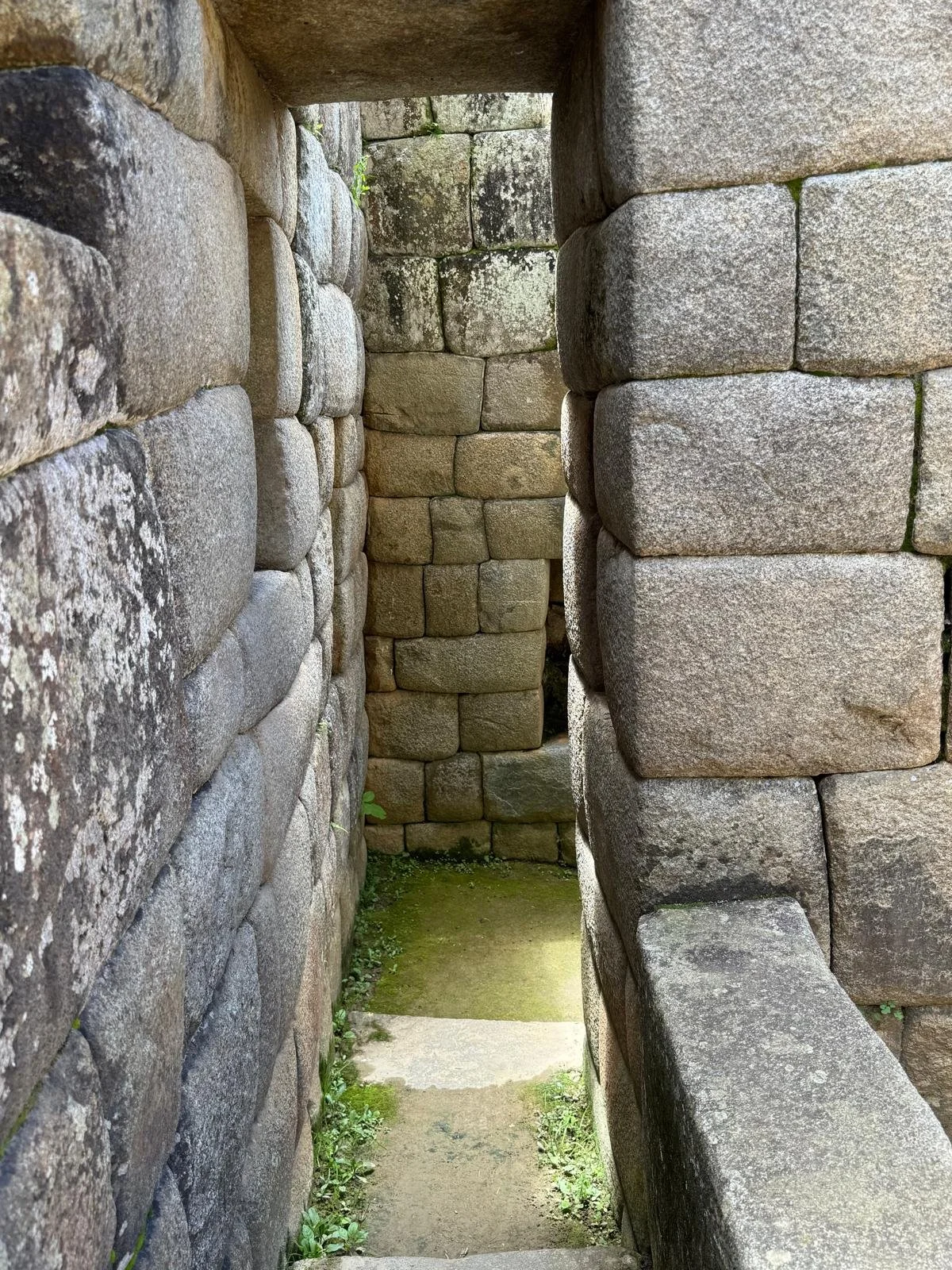
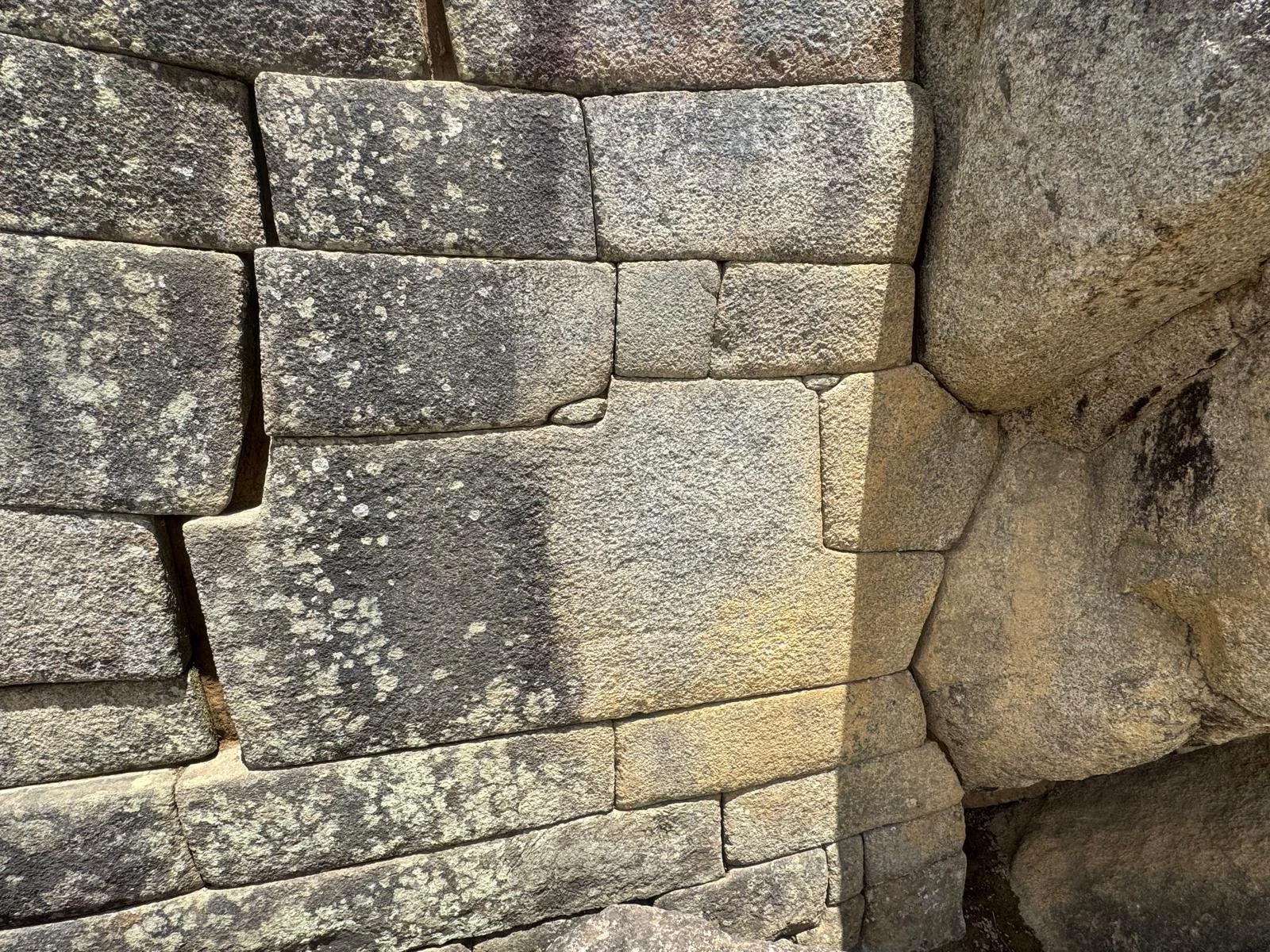
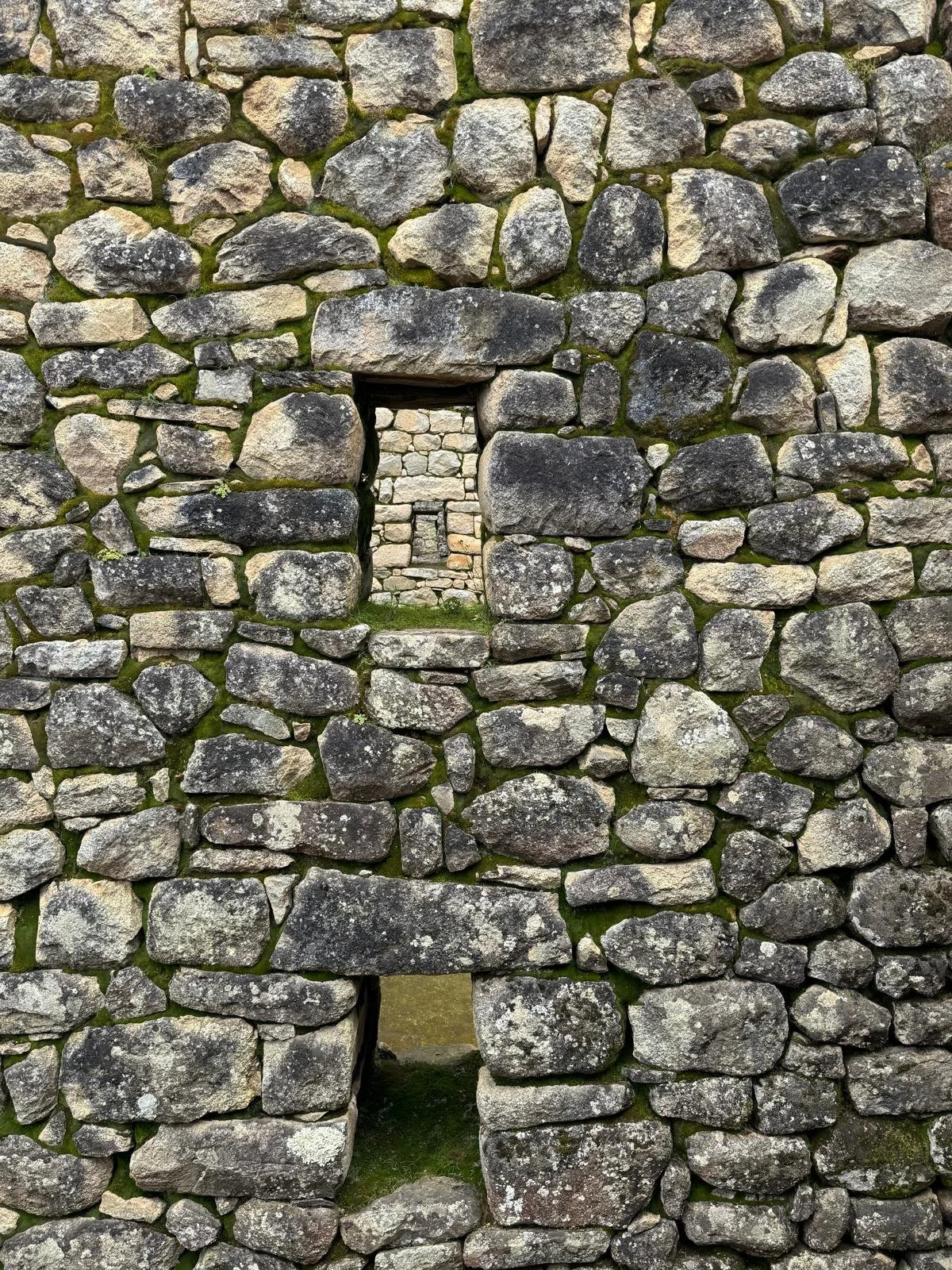
And once again, I can’t help going back to the amazing stonework – look at these symmetrical windows and doorway, and the amazing way the solid mountain granite stones line up on the corners!
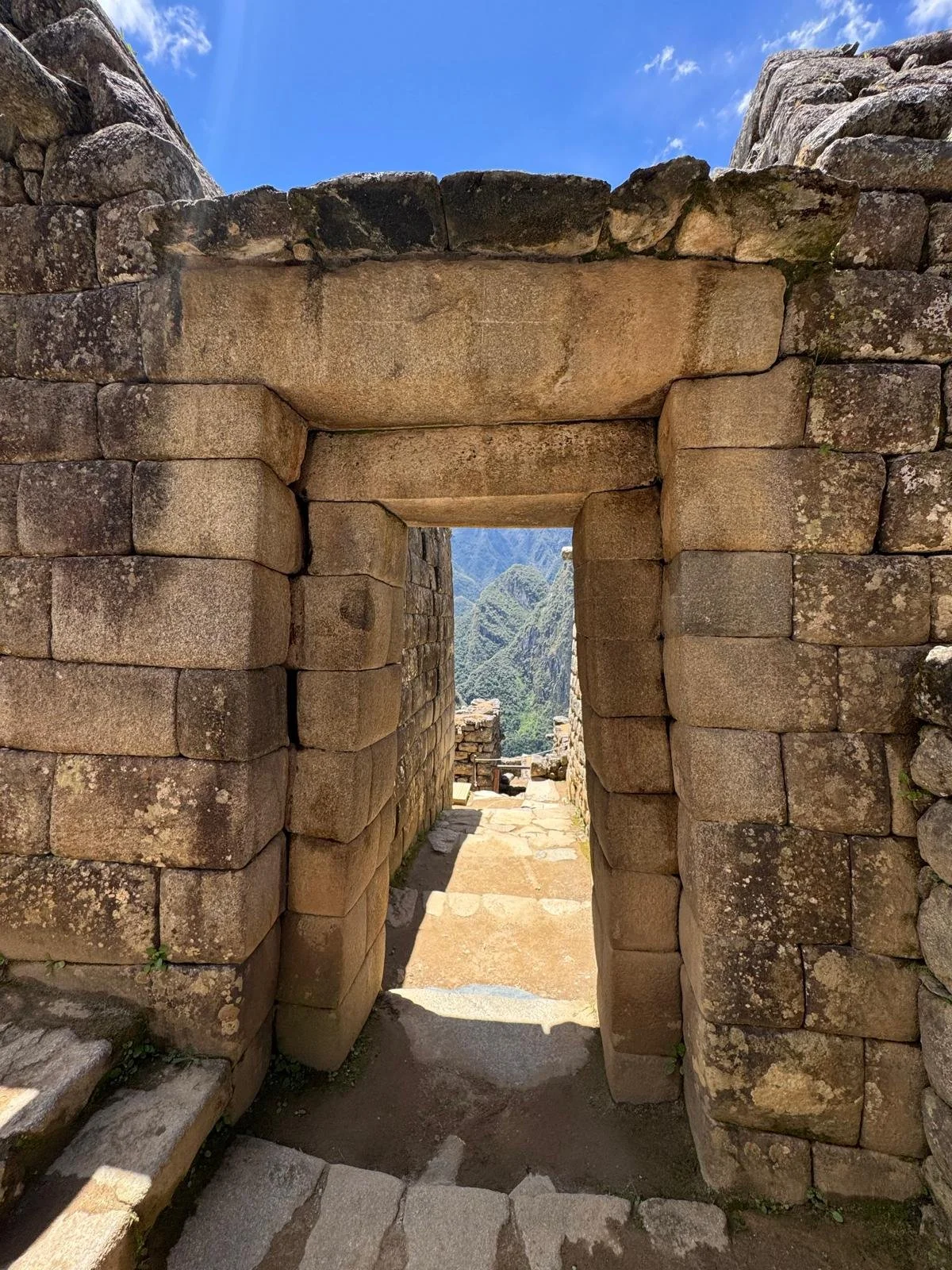
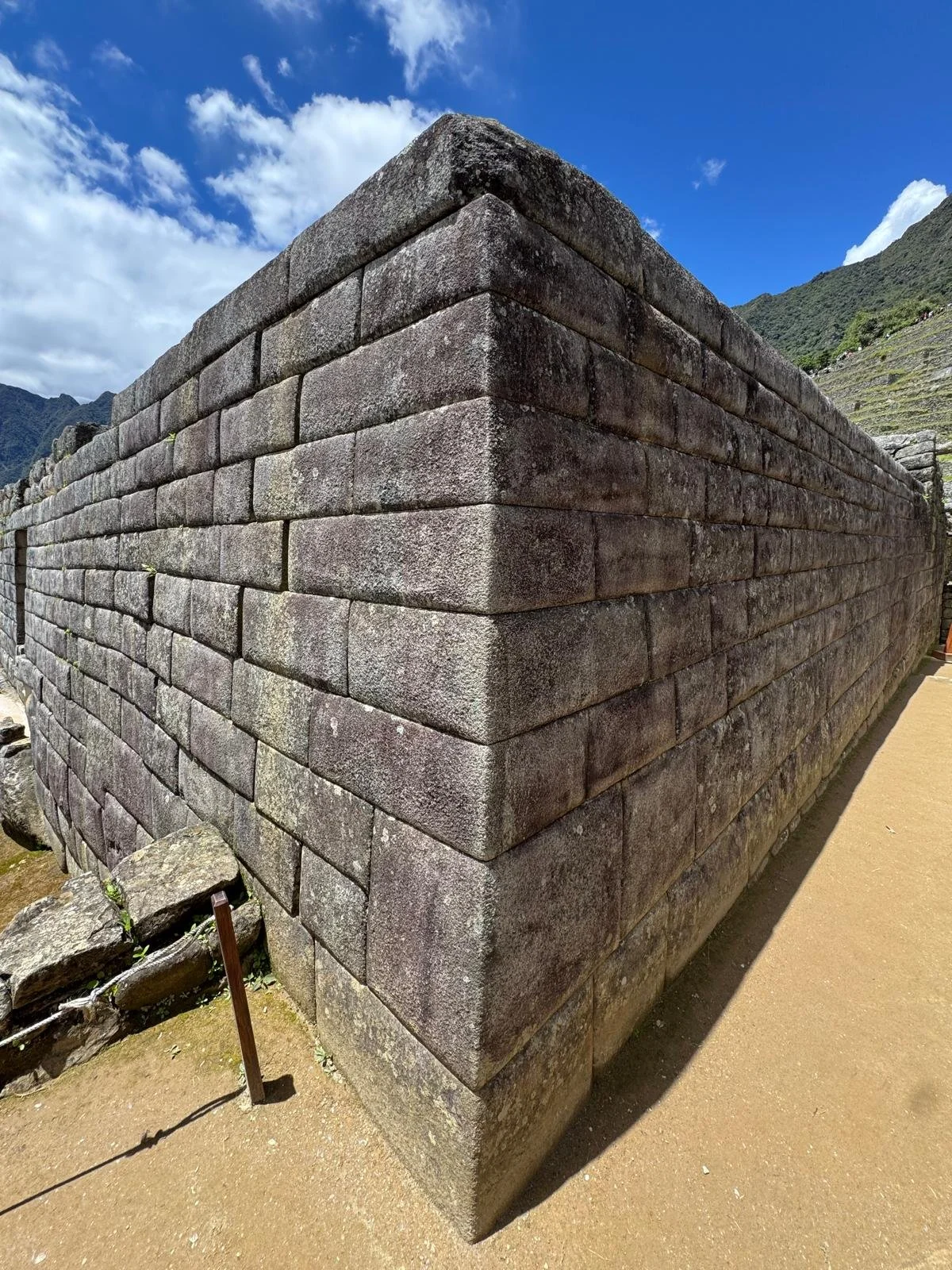
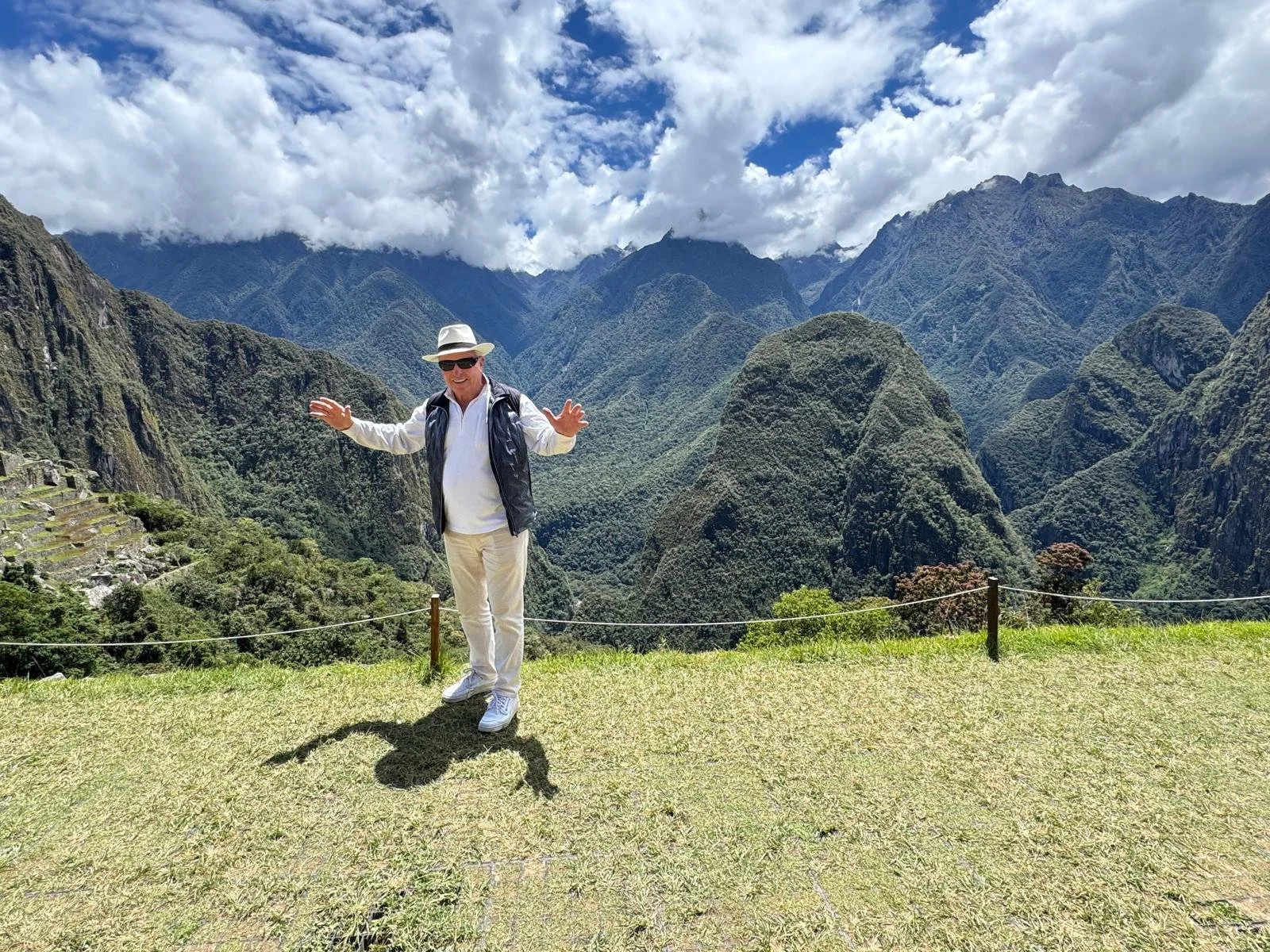
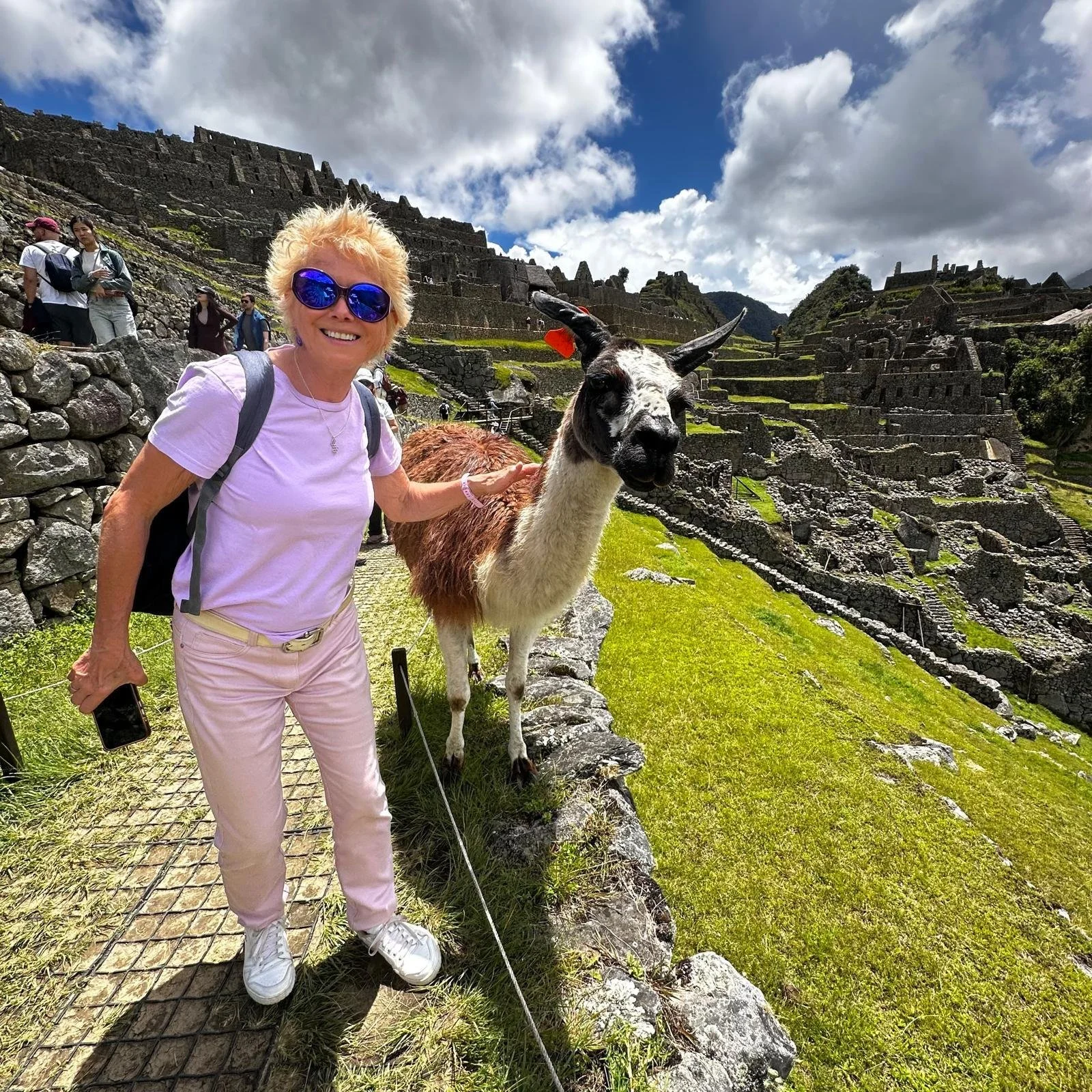
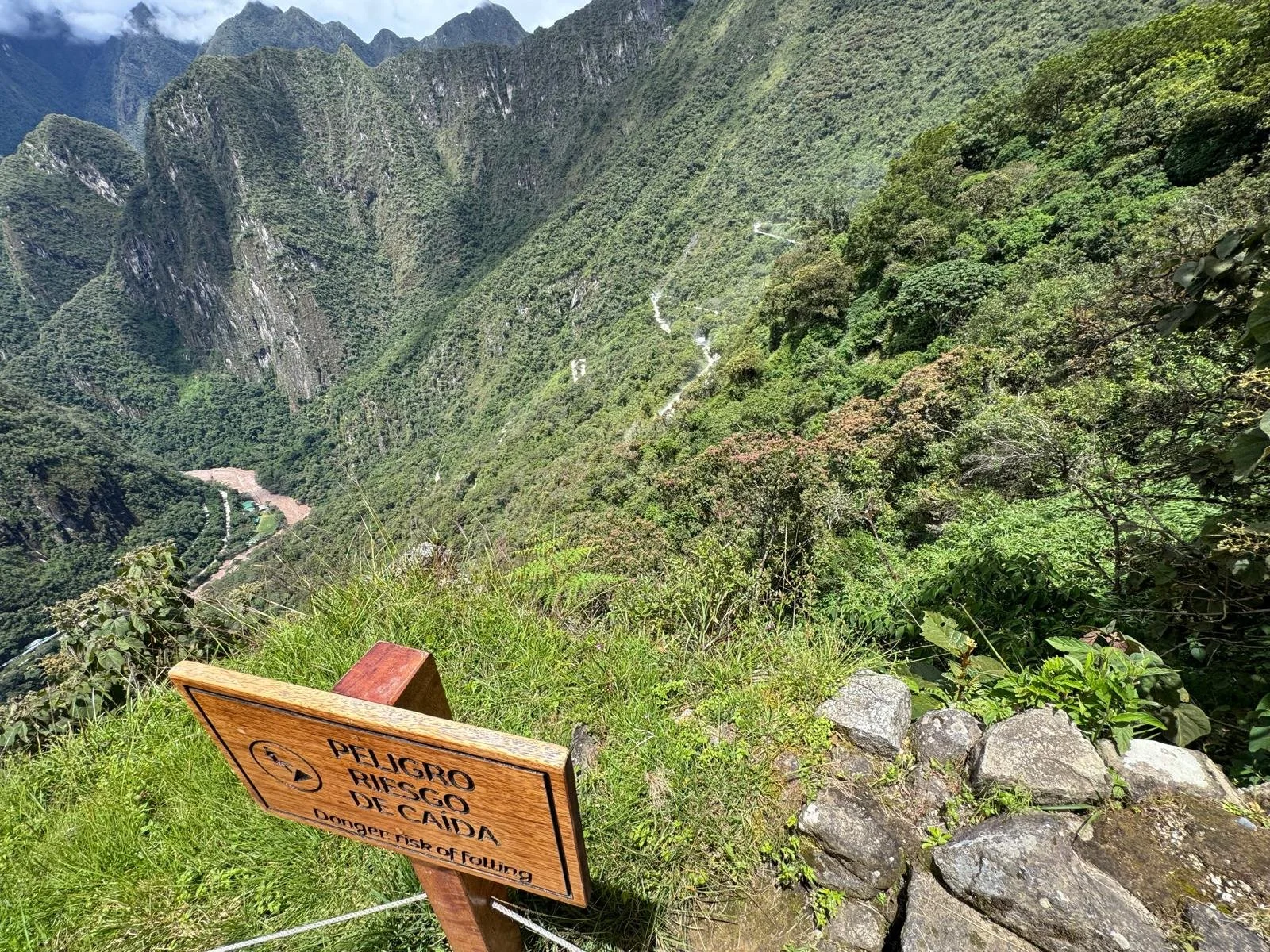
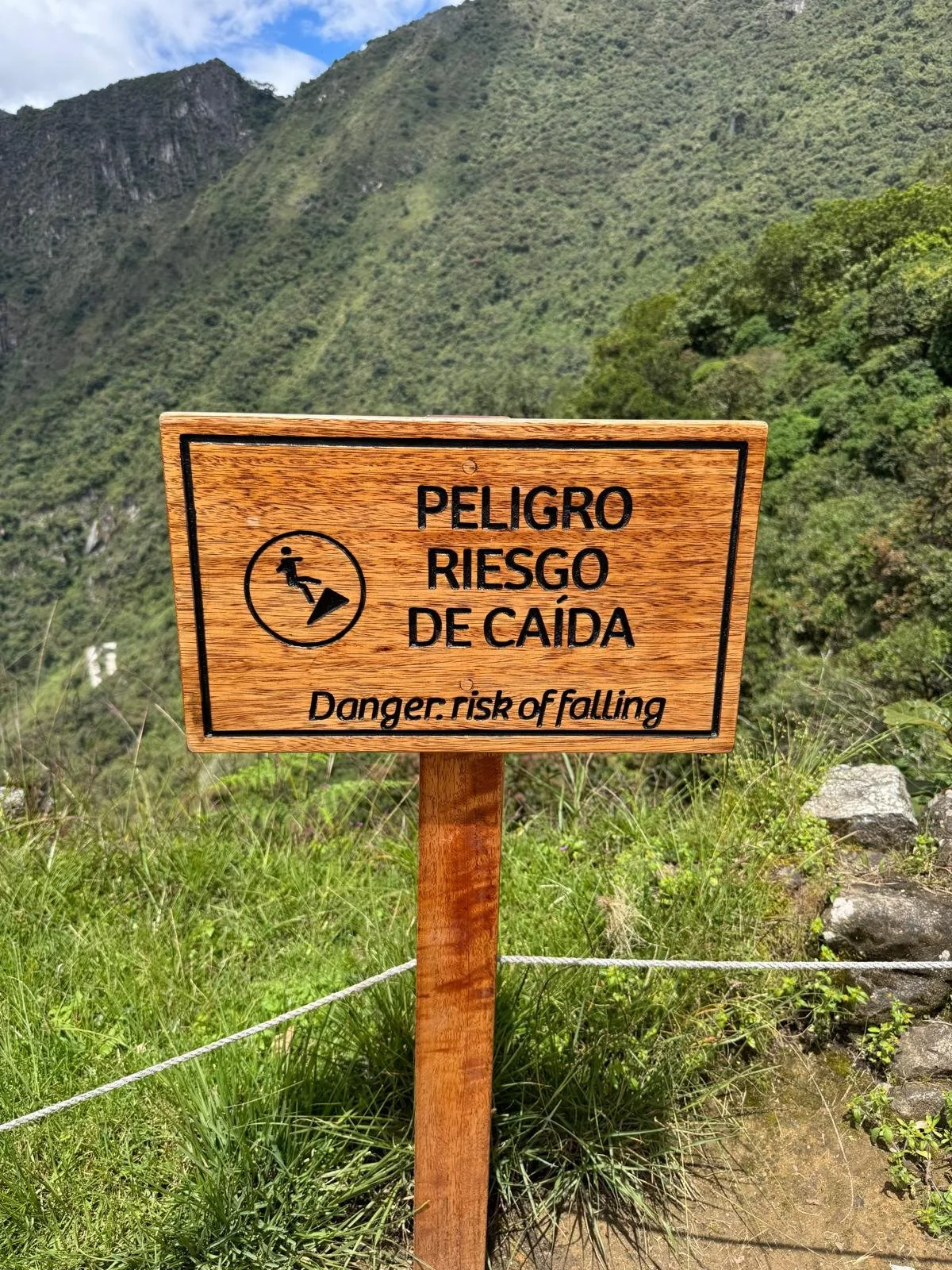
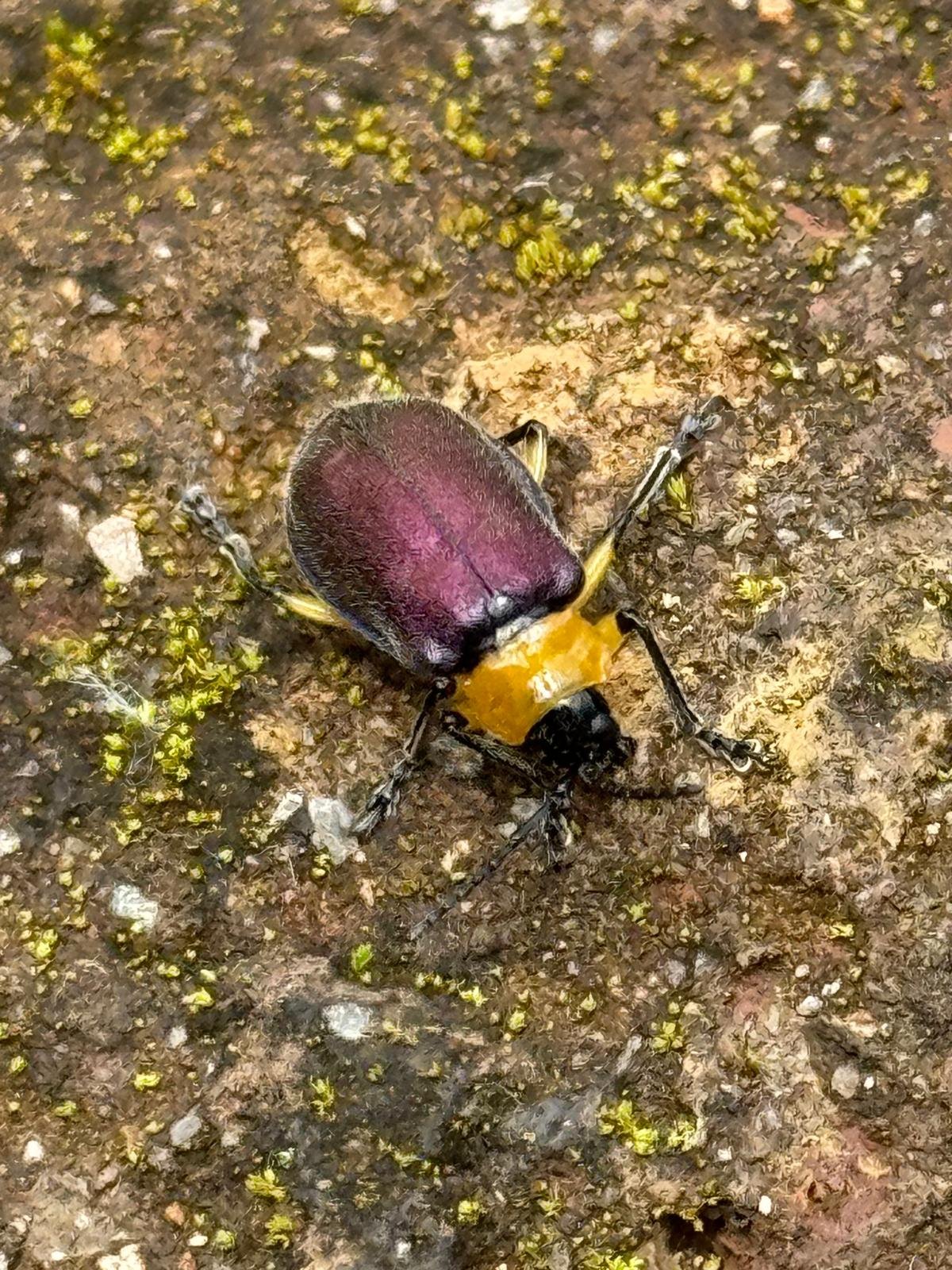
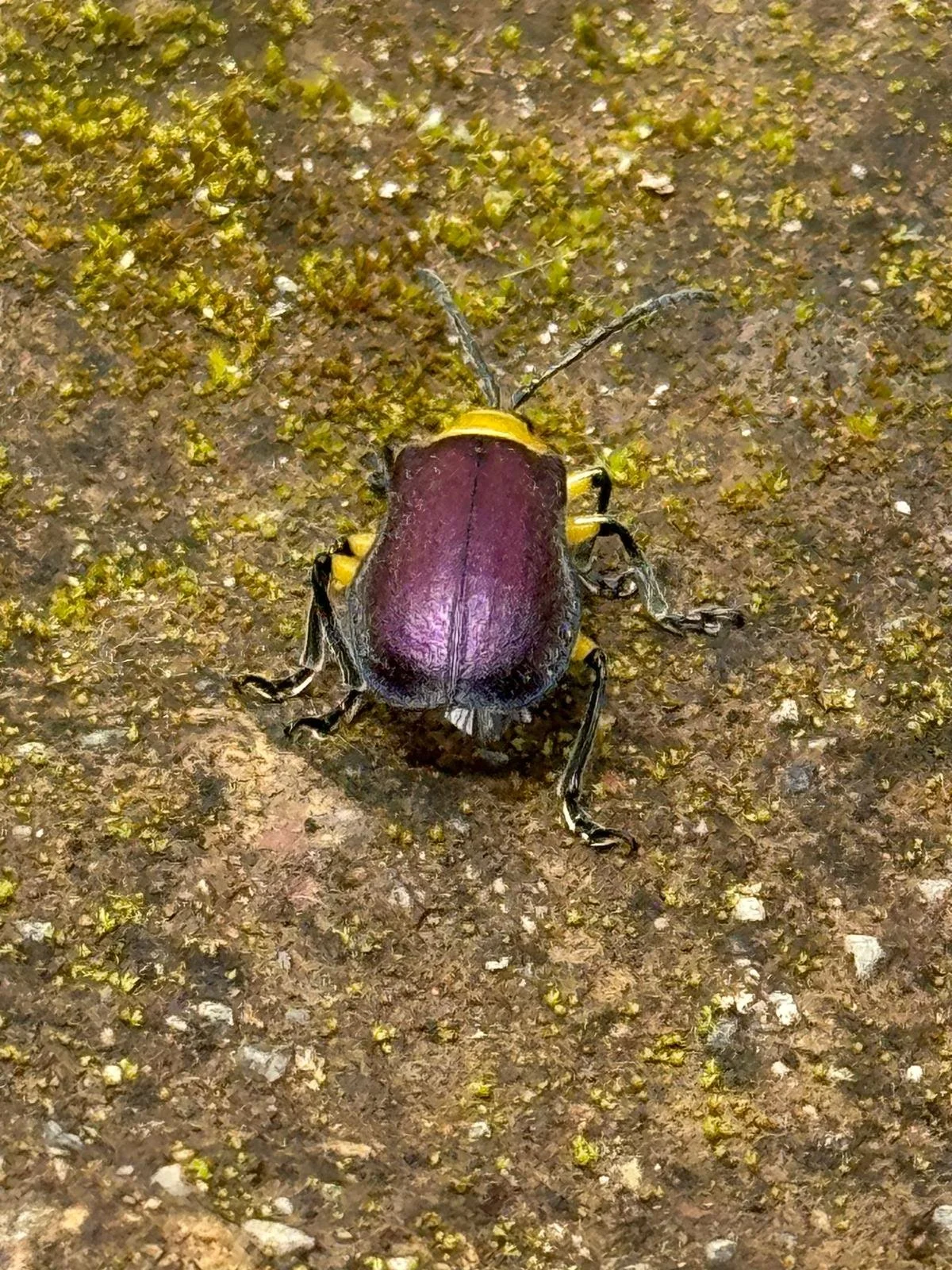
And finally, I can’t leave this place without talking about the hundreds of stone steps we walked up and down, and in and out, some steep, some very uneven, some a little slippery and mostly all without bannisters. Hats off to Geoff who managed to get around all of this with a smile on his face, despite having had one hip replacement last August and the second one due next month – no mean feat! I also would like to mention the Peruvian Health and Safety – or lack of it! Look at the wires at the edge of some of the drops, many hundreds of metres down – the wire only came up to Geoff’s knee, so that would hardly save you if you had a fall. I guess the sign telling us there is ”Danger: risk of falling” was enough to cover that! I also managed to pat the llama and spot a purple beetle too before we left this magical place and boarded our bus to zig-zag our way home!