Puno and Lake Titicaca – We’re on Top of the world!
Wednesday 18 March
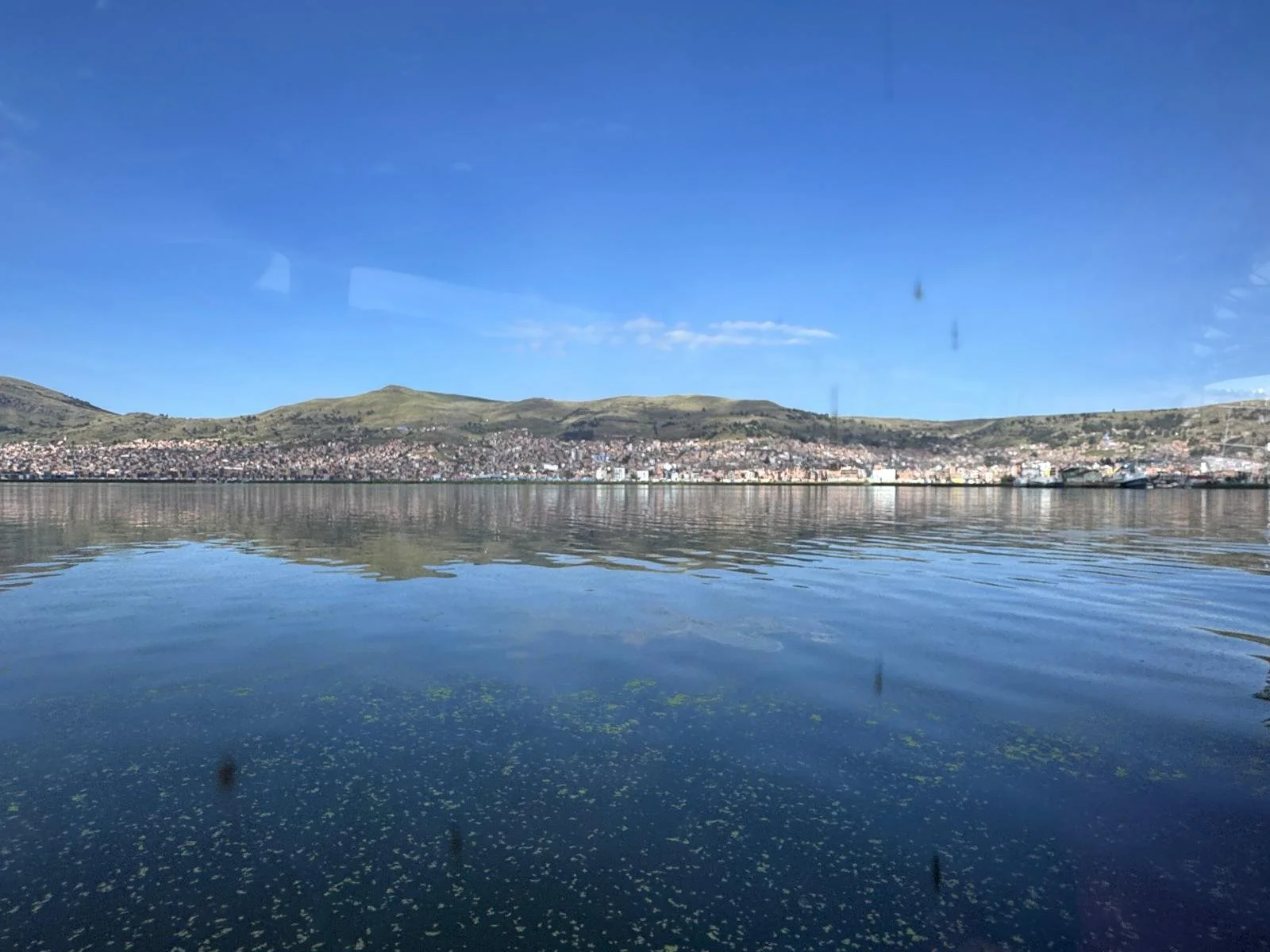
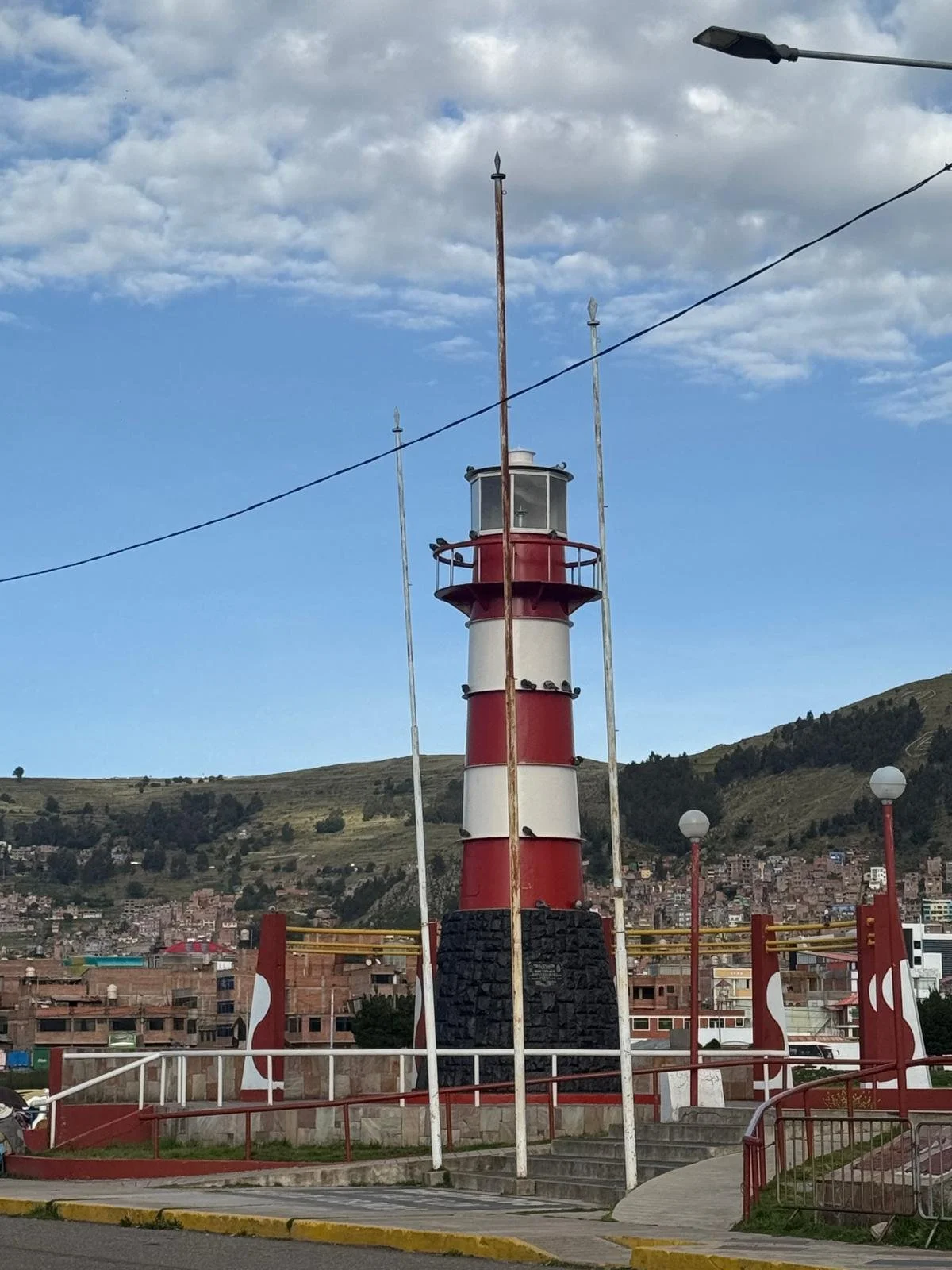
We arrived in Puno around 6.30pm and were met and transferred to our hotel – all very seamless once again. Our room overlooks Lake Titicaca (spelt Titikaka here) and we can see all the lights of the city sparkling in its clear waters. Puno is a high-altitude city, and we can really feel this, just climbing up a flight of stairs, normally a breeze for me, I have to stop at the top and catch my breath. It is in southeastern Peru and is known as the “folklore capital” of the country, famous for its cultural festivals and traditional music, and is a key hub that acts as a gateway to exploring the traditional life of Lake Titicaca. It is situated between the shores of the lake and the Andes mountains surrounding the city and has a population of around 140,000. Less than two miles of flat land lie between the shores and the foothills which has caused the city to expand upwards onto the hillsides which is where the less developed and poorest areas are – steep streets, generally unpaved and not accessible by car. The city was established in 1668 by viceroy Pedro Antonio Fernández de Castro as the capital of the province of Paucarcolla with the name of San Juan Bautista de Puno. The name was later changed to San Carlos de Puno in honour of King Charles II of Spain. It is an important agricultural and livestock region – llamas and alpacas graze on its immense plateaus and plains, and much of the city’s economy relies on the black market fueled by cheap goods smuggled in from Bolivia.
Thursday 19 March
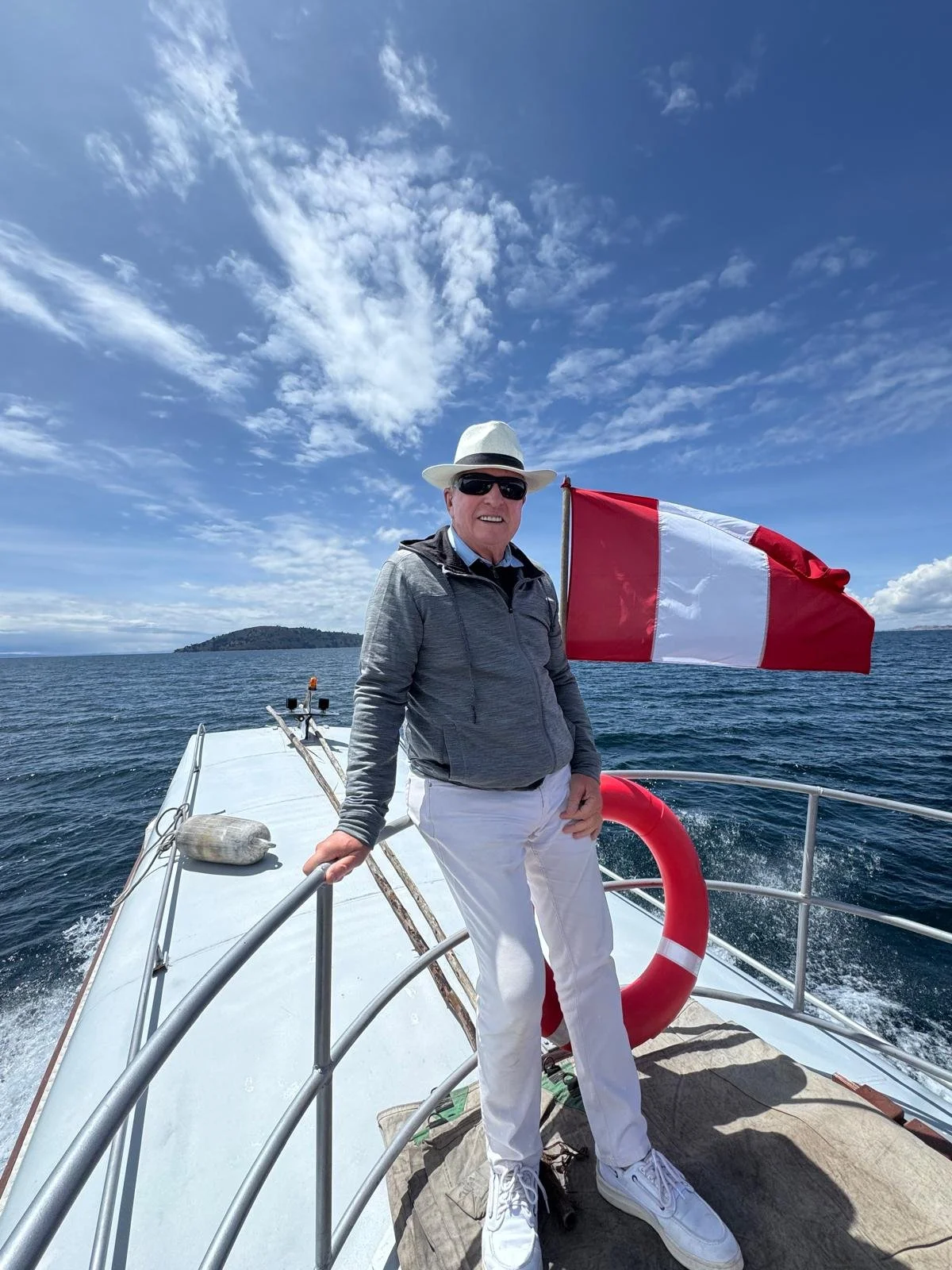
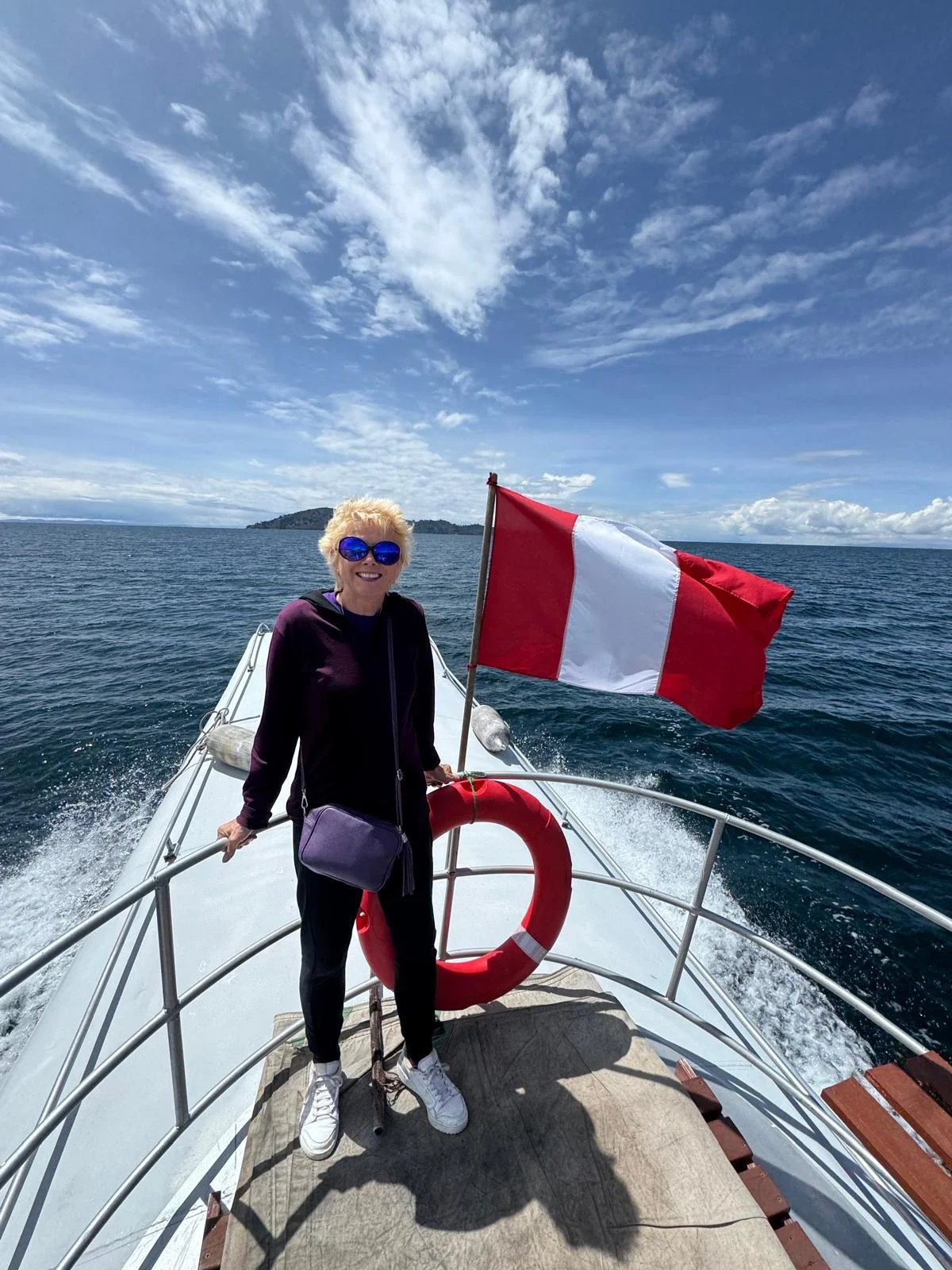
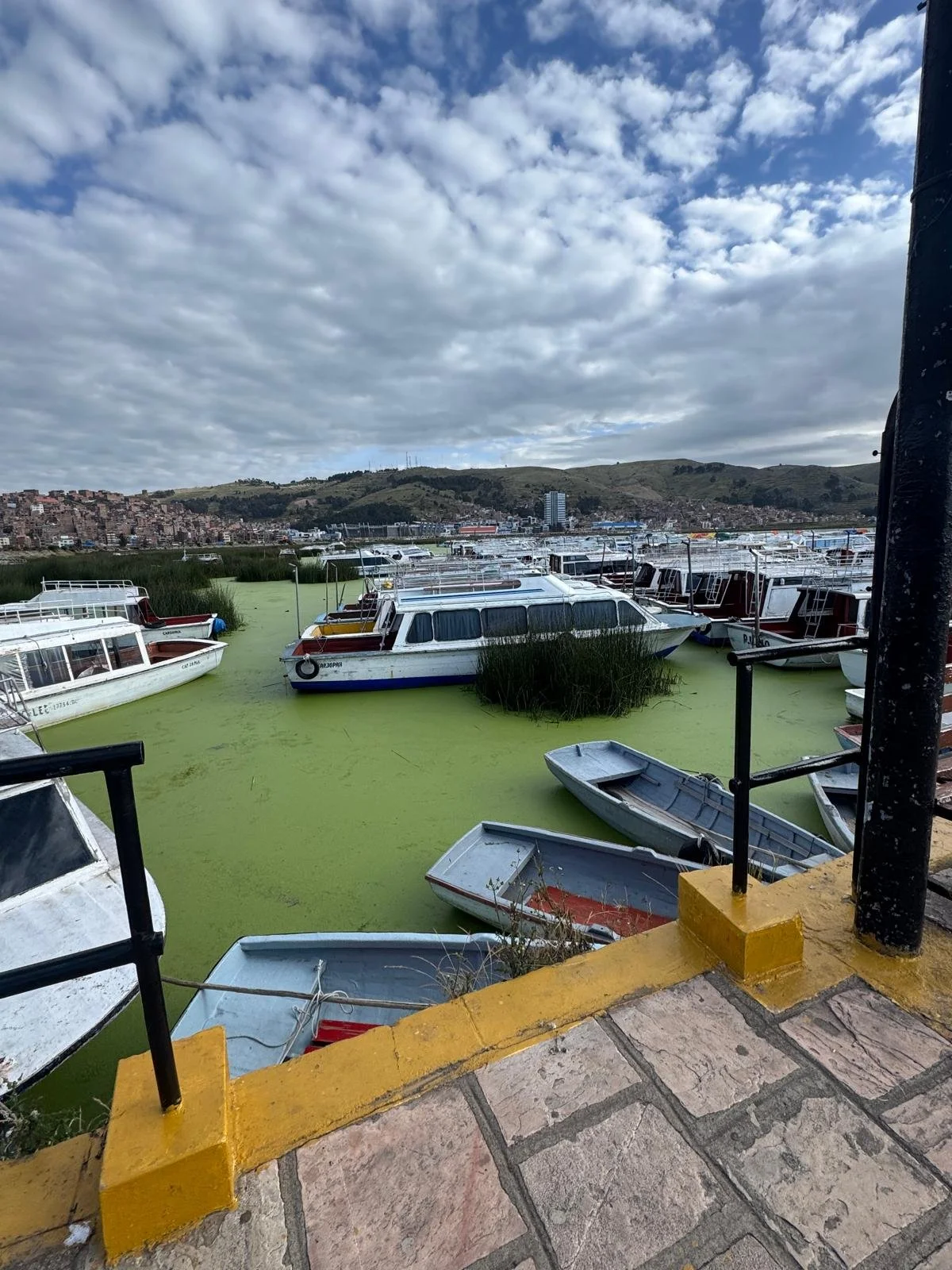
We didn’t know it when we were picked up at the hotel at 7.00am (yes, another early start) that we were in for such an interesting and incredible day. Down to the wharf we were onto the boat and off over Lake Titicaca, the world’s highest navigable lake, a freshwater lake and the largest lake in South America, both in terms of the volume of water and surface area – 170 kms x 70 kms (the same size as Puerto Rico!). It sits at 3,812 metres above sea level in the Andes Mountains on the Peru-Bolivia border, 60% on the Peruvian side and 40% on the Bolivian side. It is famed as the birthplace of the Incas, from where the world was created, when the god Viracocha came out of the lake and created the sun, the stars and the first people.
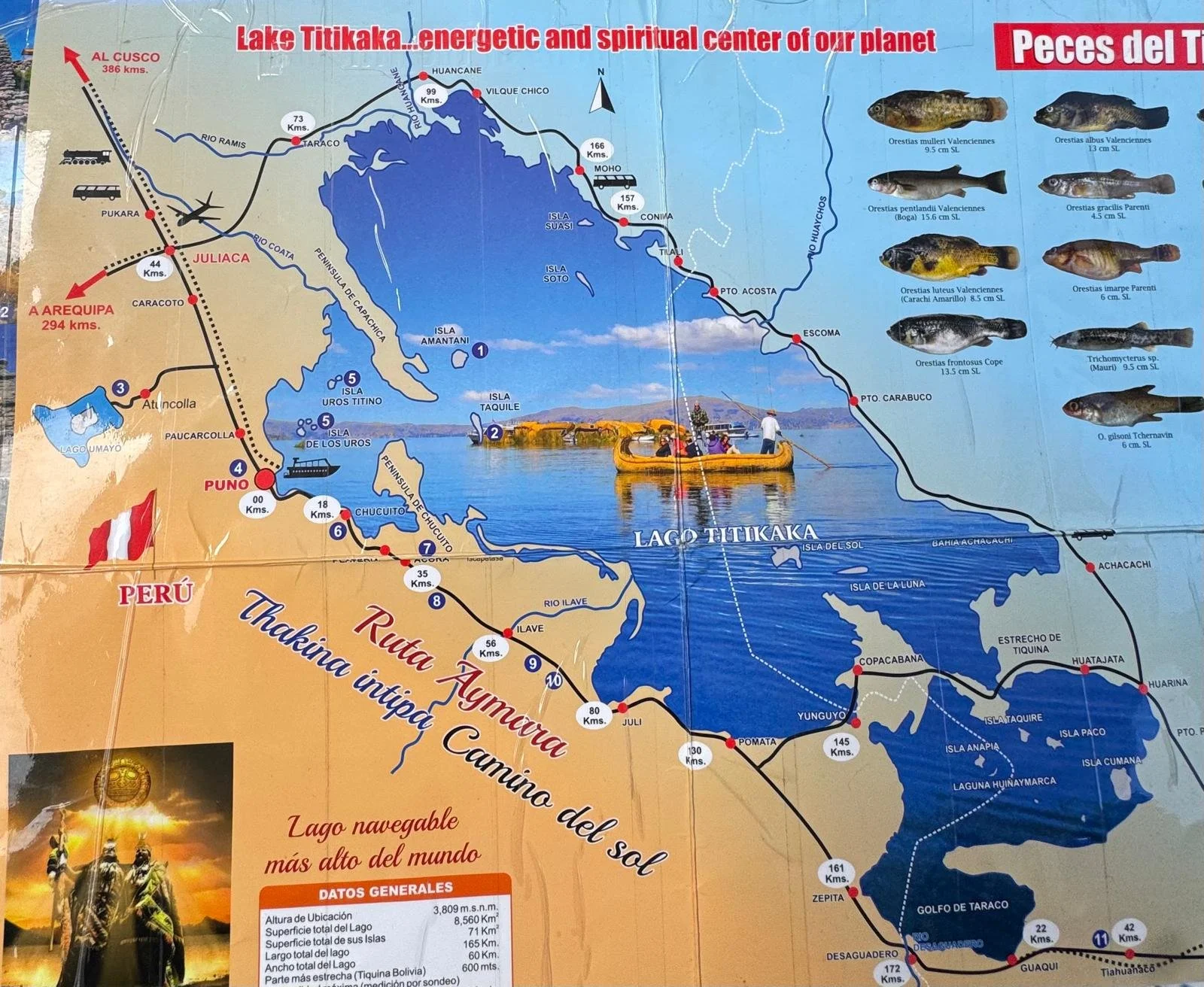
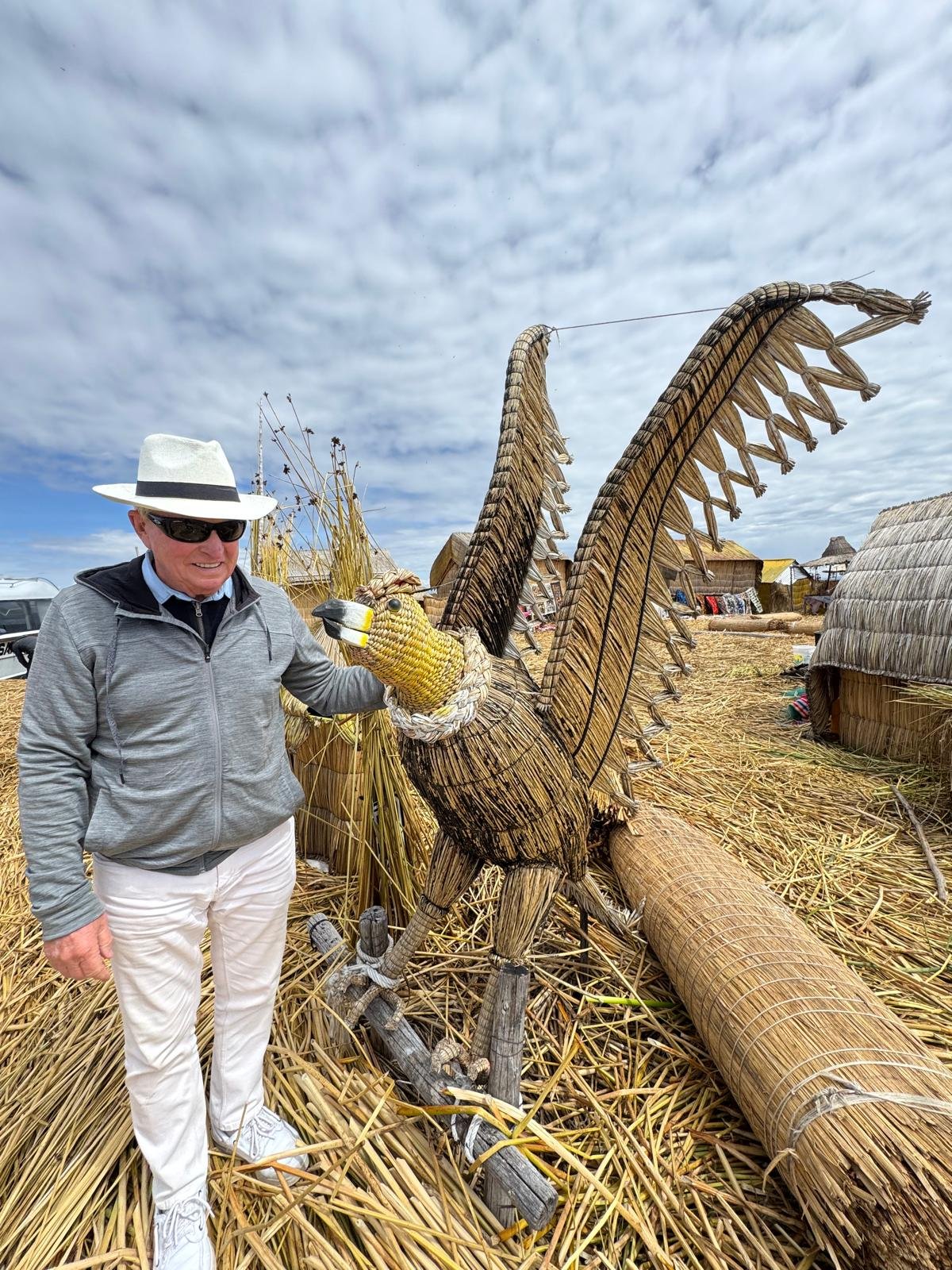
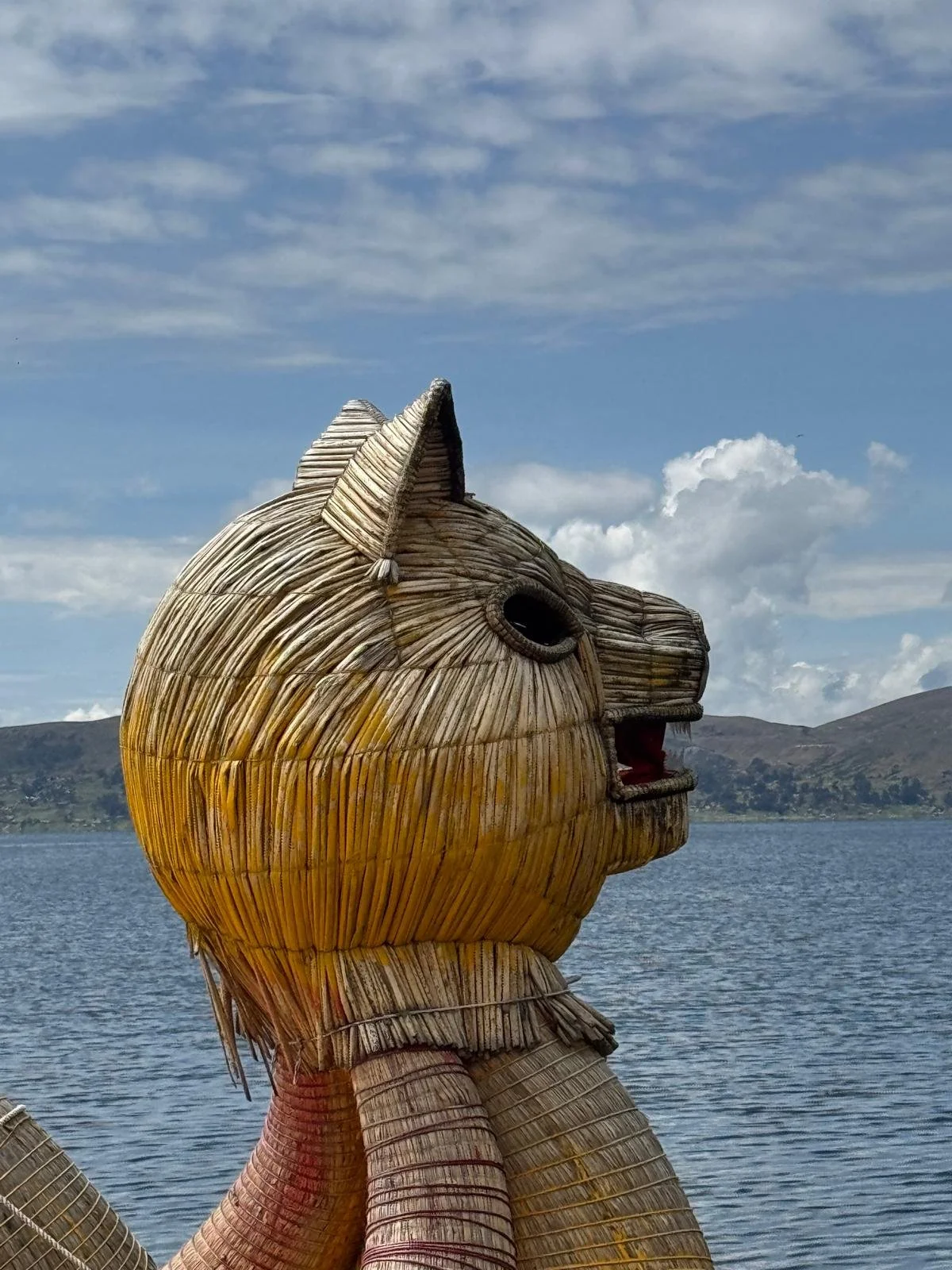
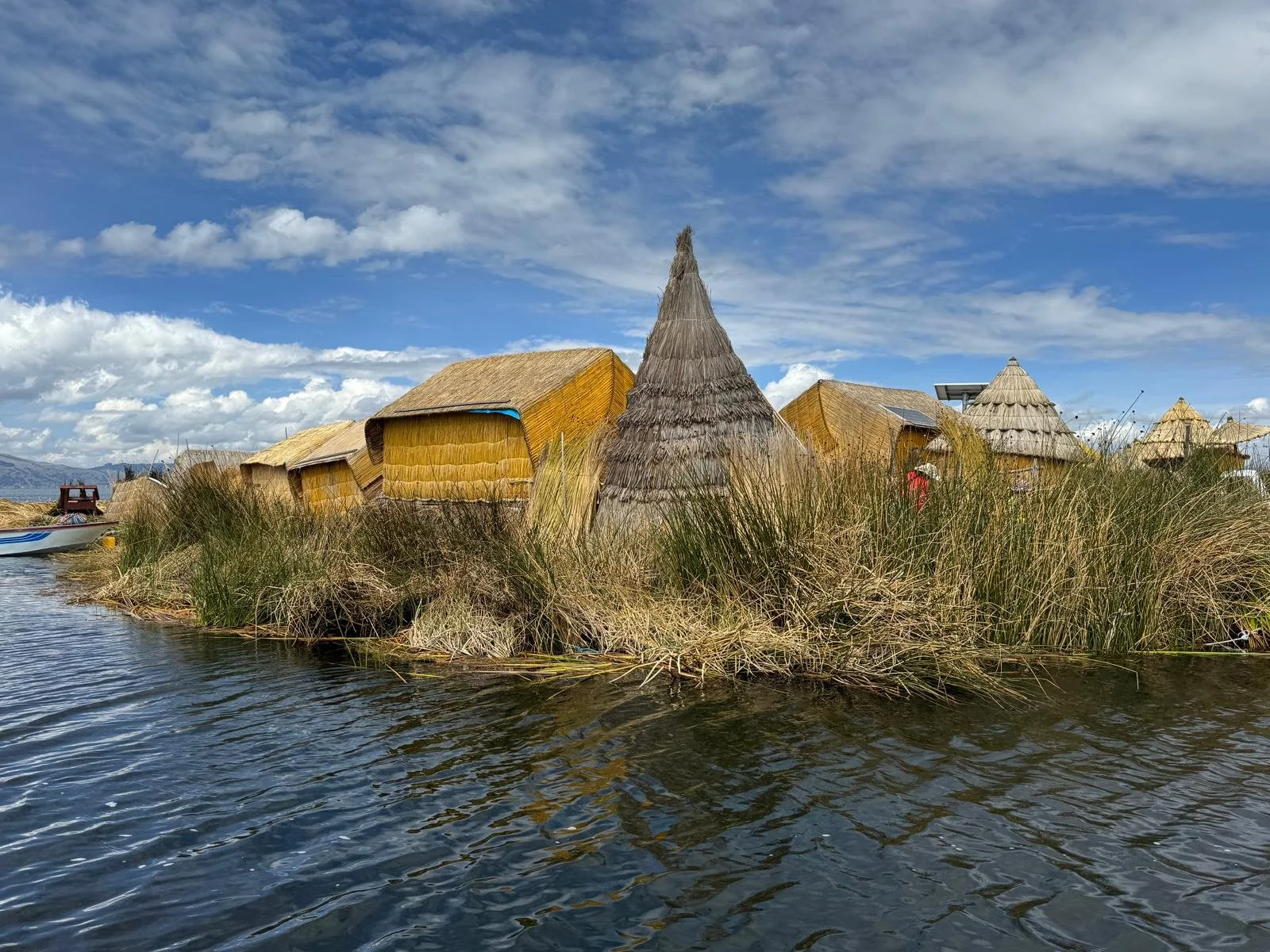
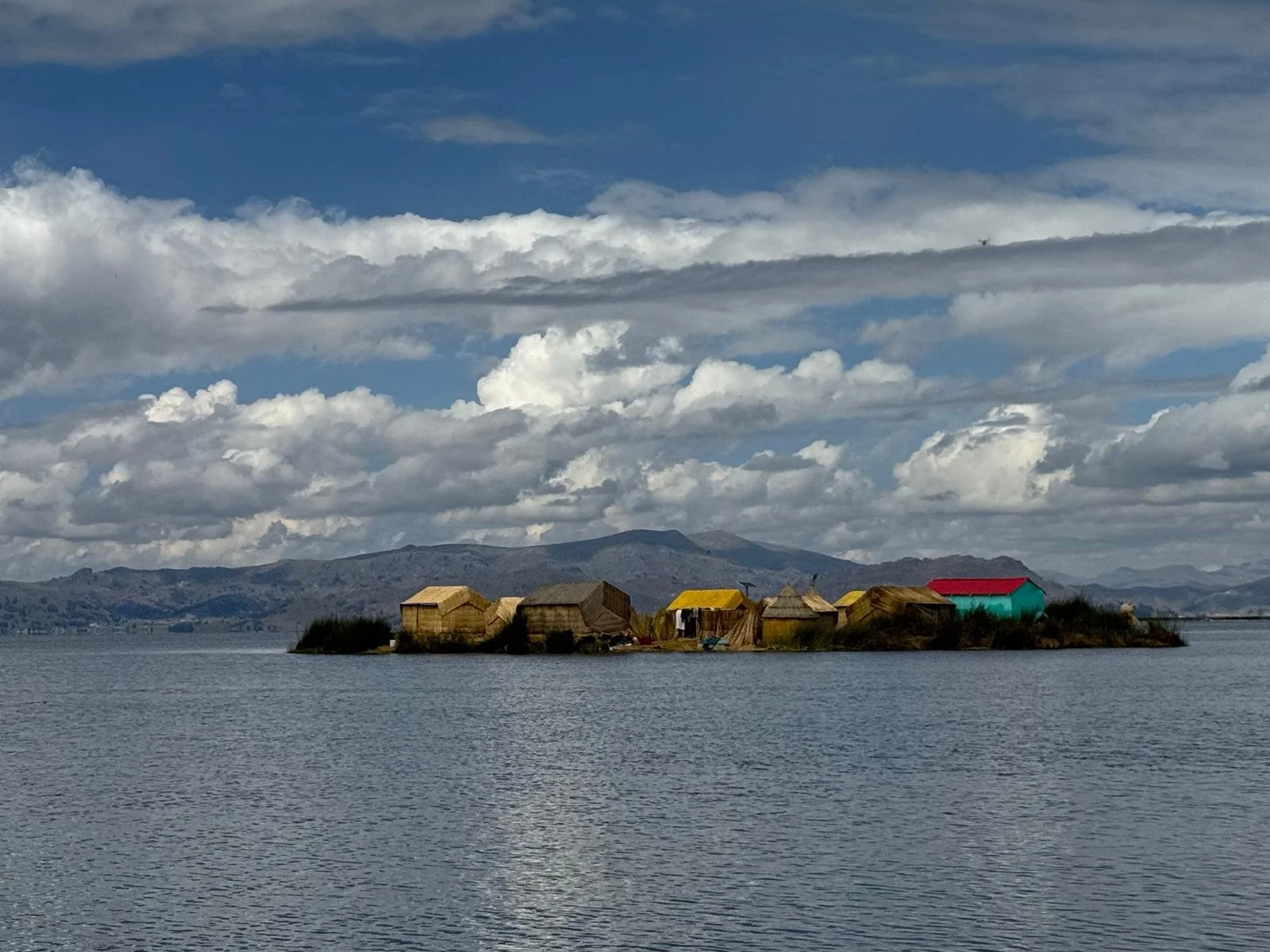
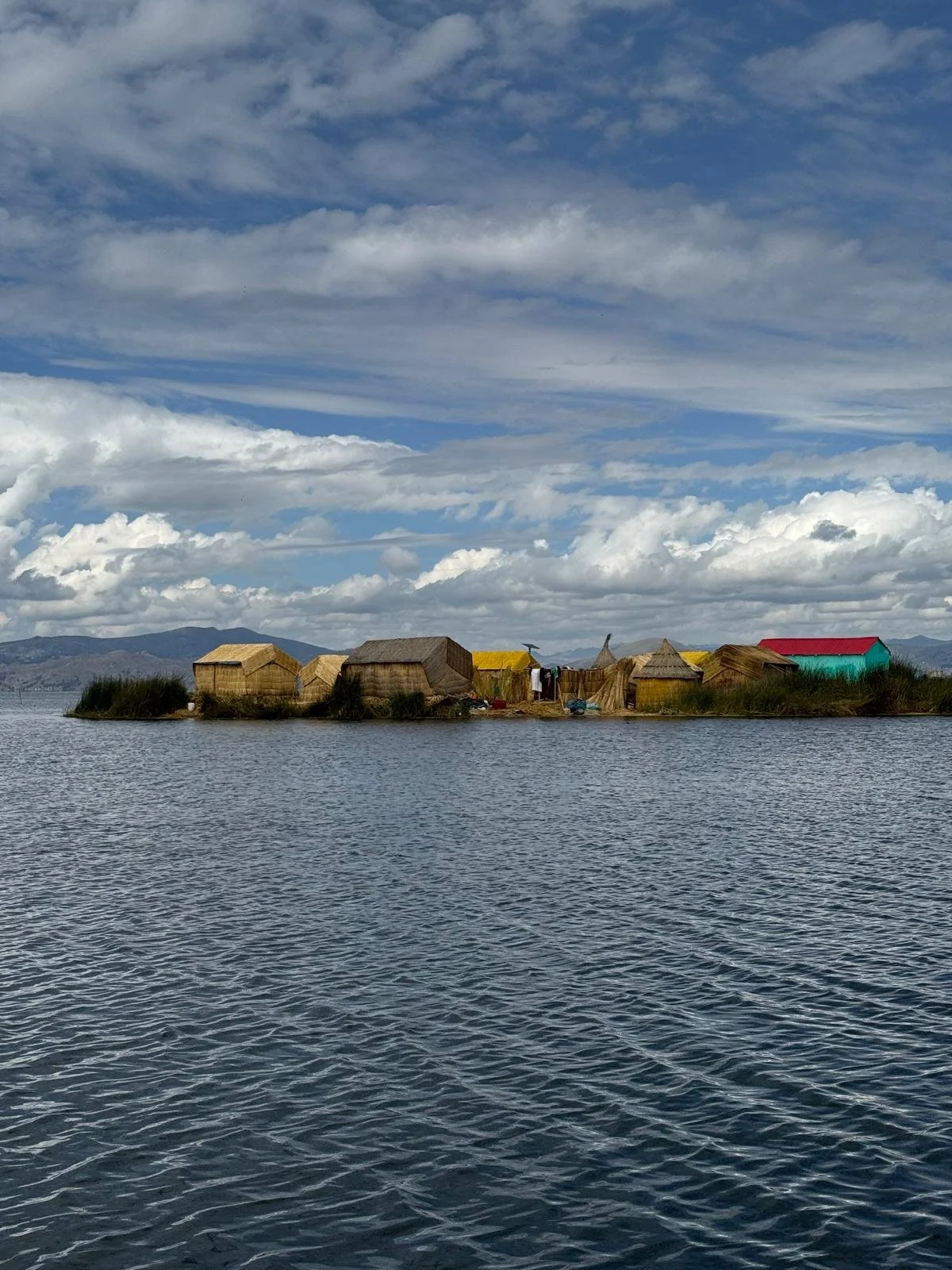
Some tribes from Bolivia came down from the forests in 600BC and settled along the coast of the Lake and slowly came to live on the floating islands. More followed, especially during the period when the Incas were conquering the local tribes, as the islands provided an escape from the Incas. These islands are the forty-one Uros Islands and are a unique community of floating islands on Lake Titicaca and are constructed entirely from totora reeds.
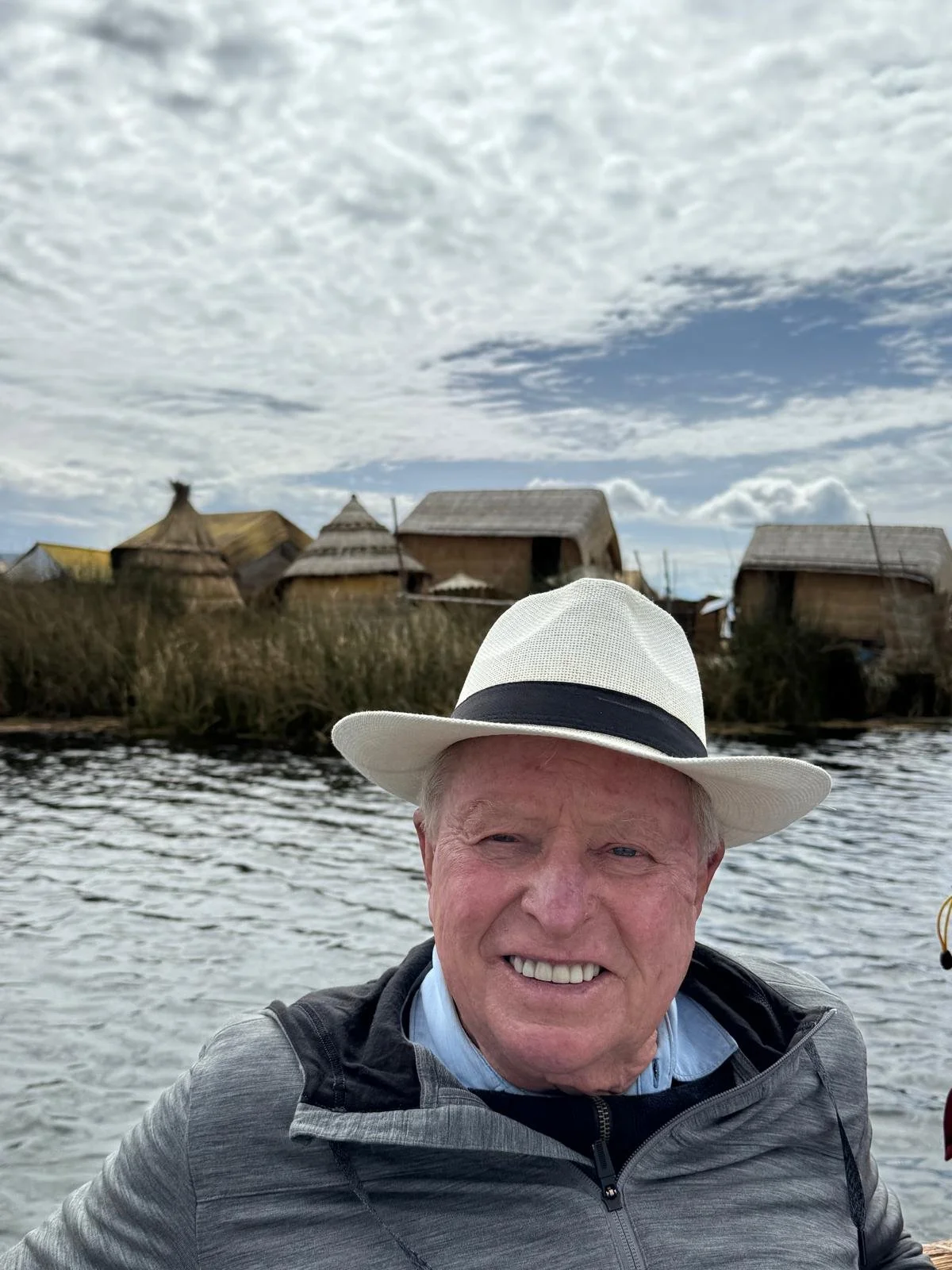
Uros means “shy” which refers to hiding and resting on platforms in the reeds. They are about an hour’s boat ride from Puno, and it was the most fascinating sight when we pulled in and tied up at Isla Titino not to a wharf but to a big bundle of reeds! We were warmly greeted by the local families, five in all consisting of 26 Uro-Aymara people. The young children go by boat every day to school in Puno which is all arranged by the local government. Most marry between 16 – 18 years, and they usually meet their partners during celebrations when they get together with locals from the other Uros Islands which total about 2,000 people in all.
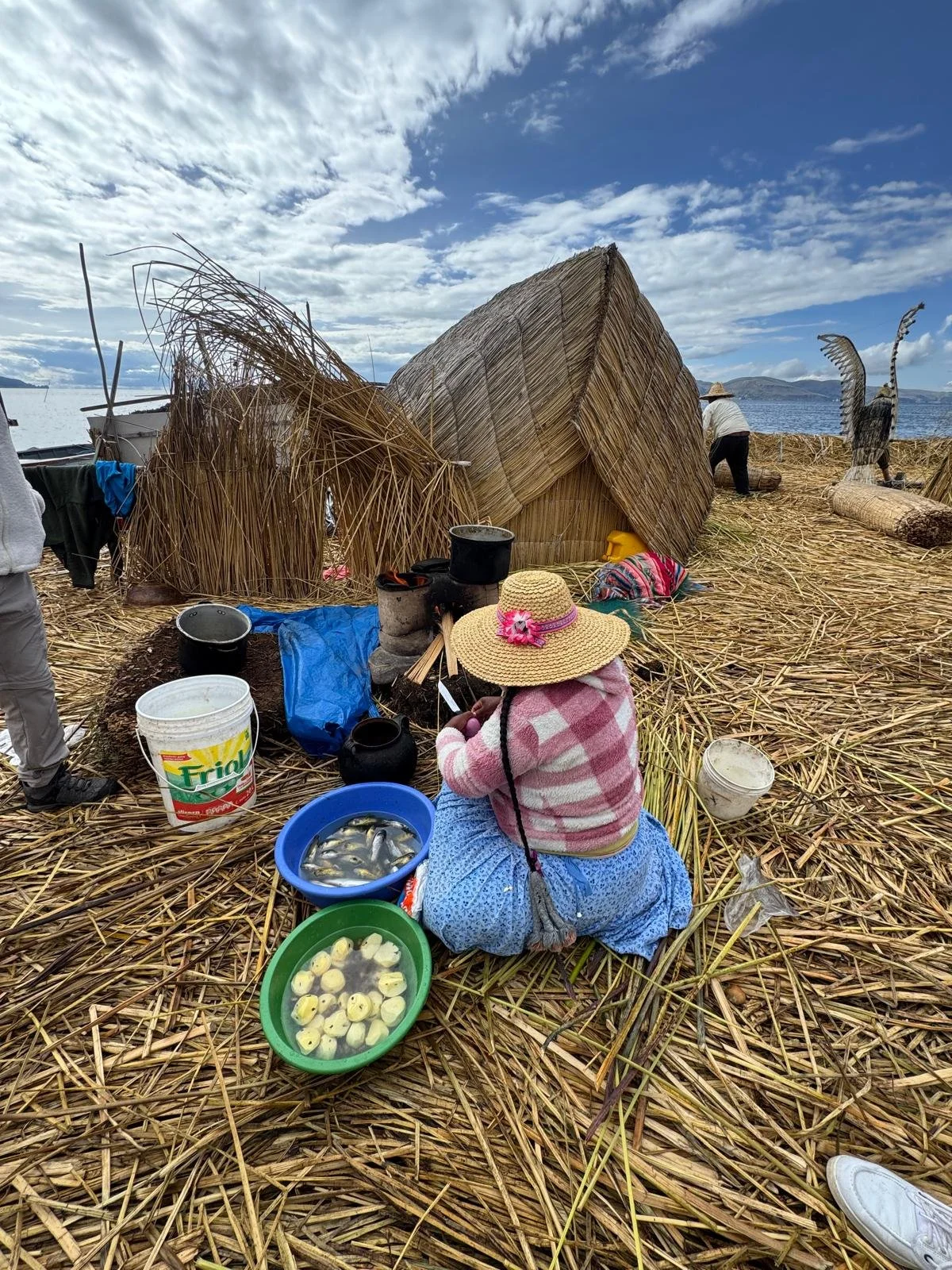
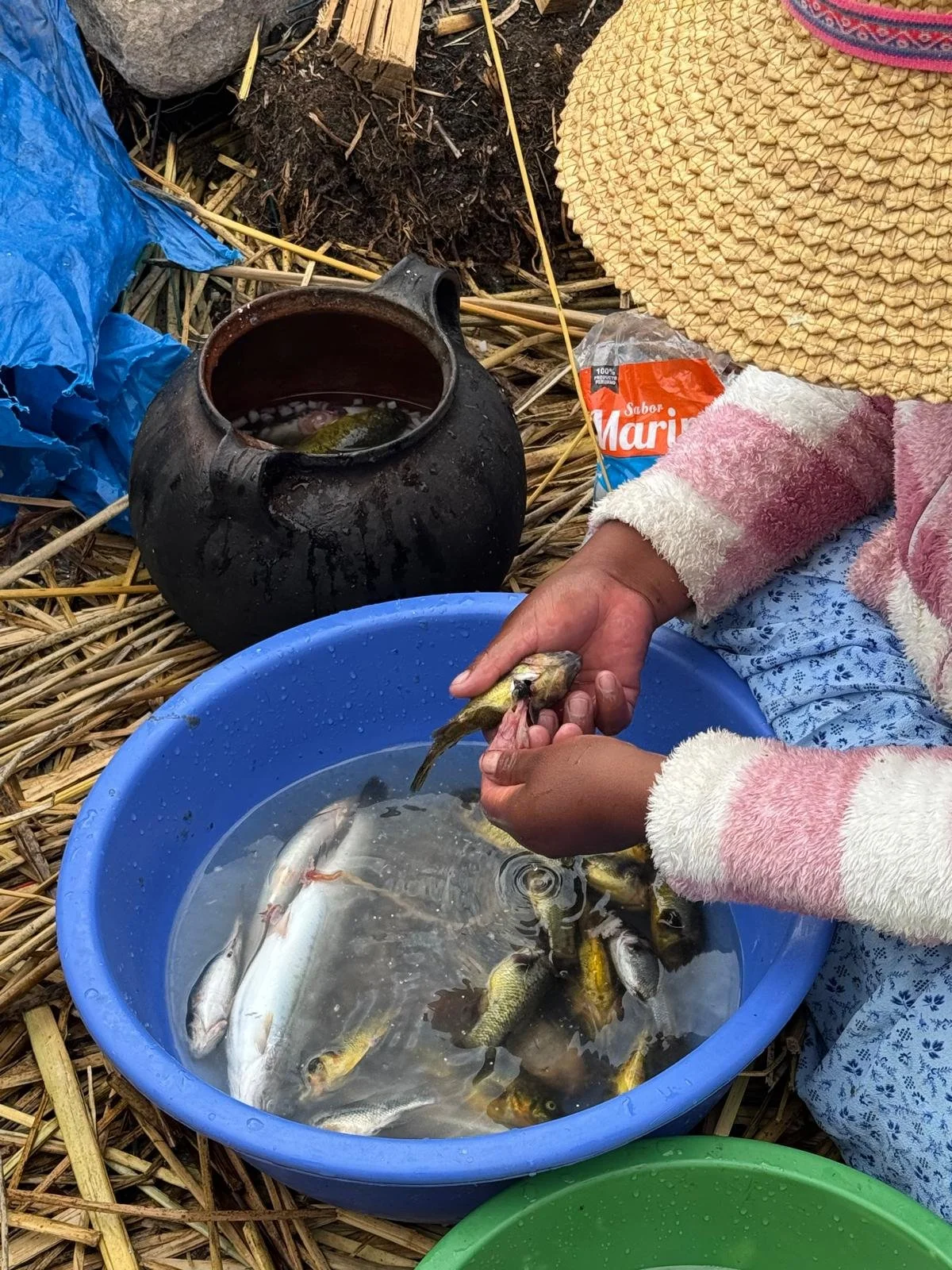
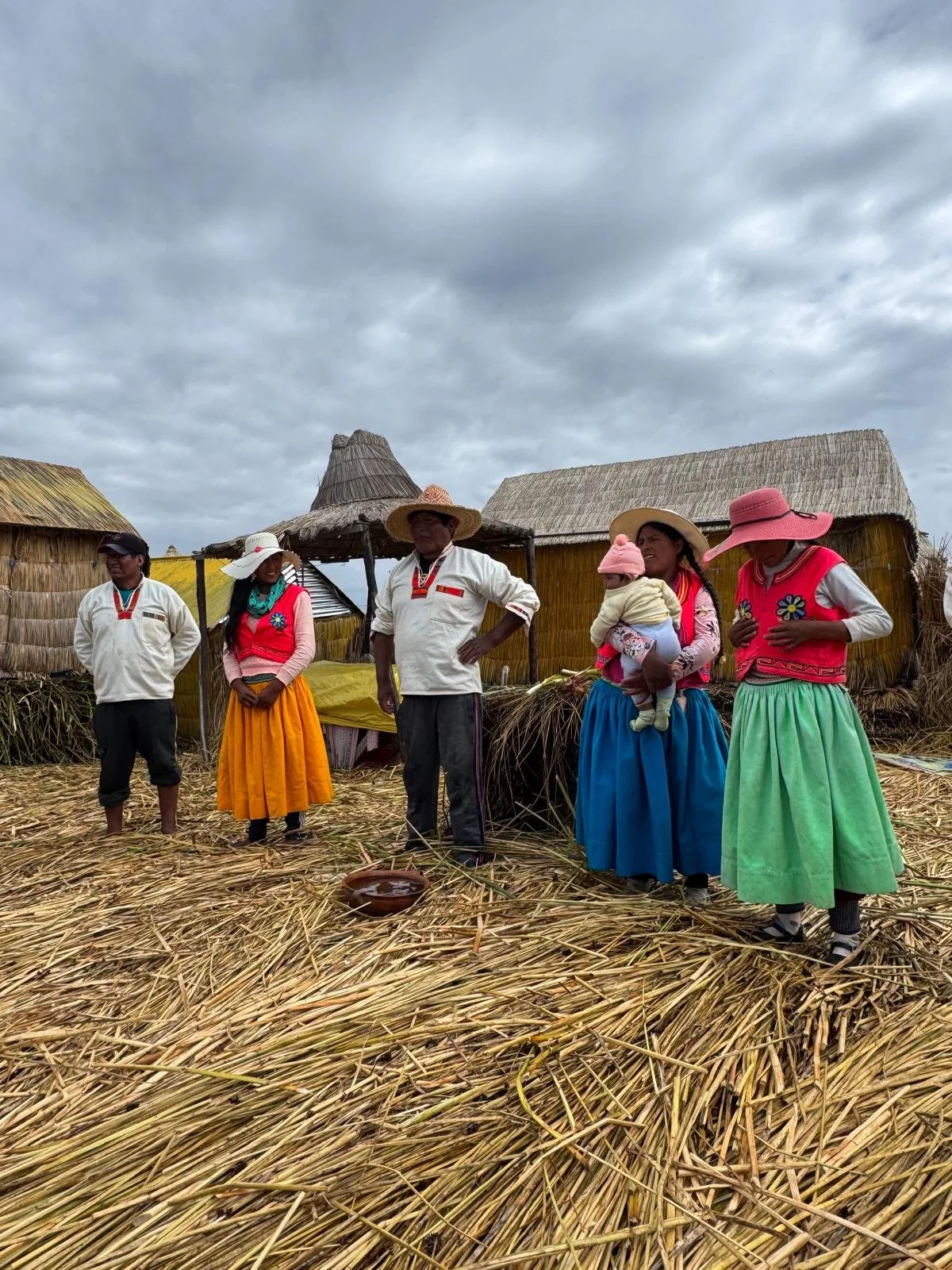
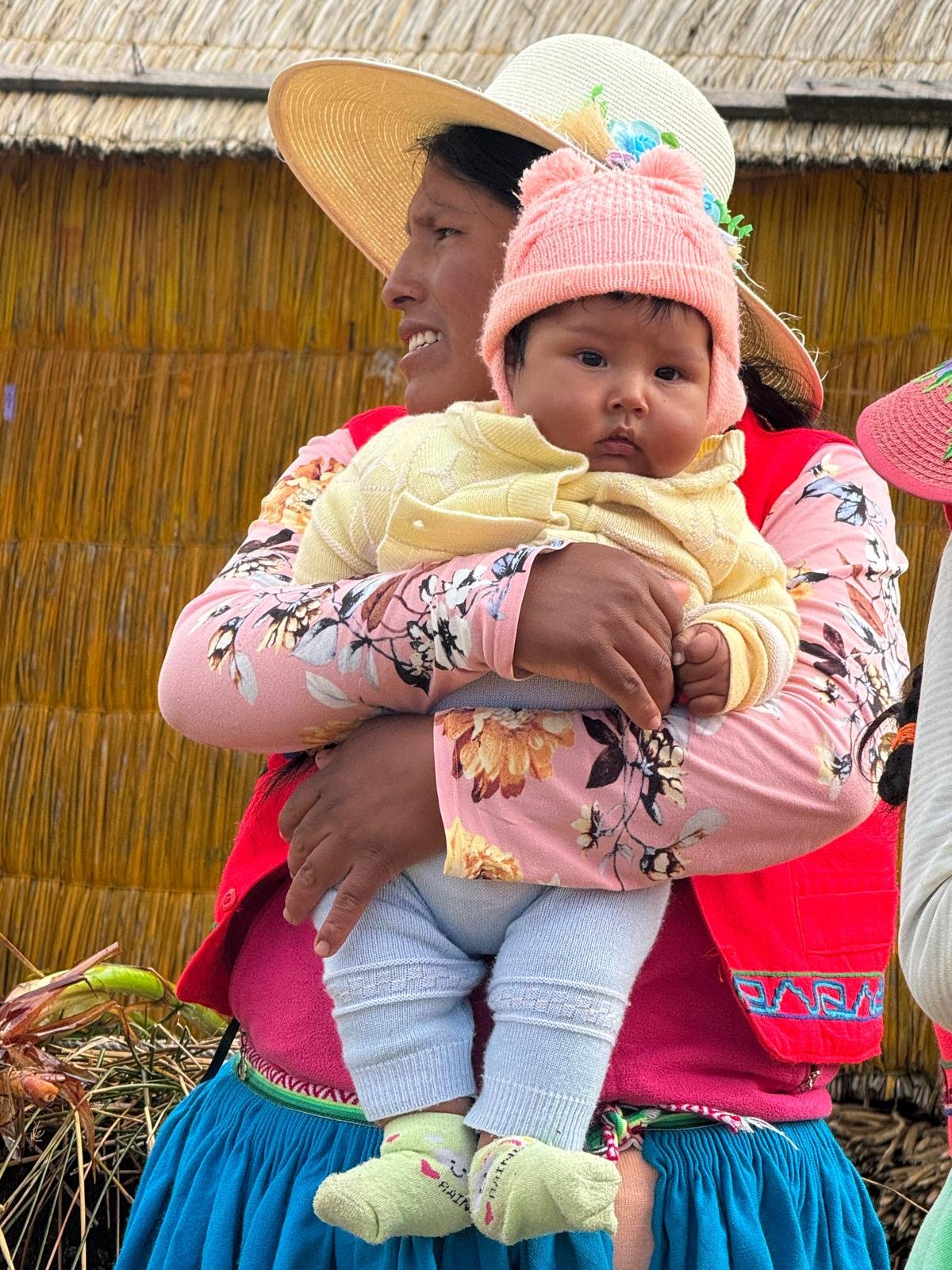
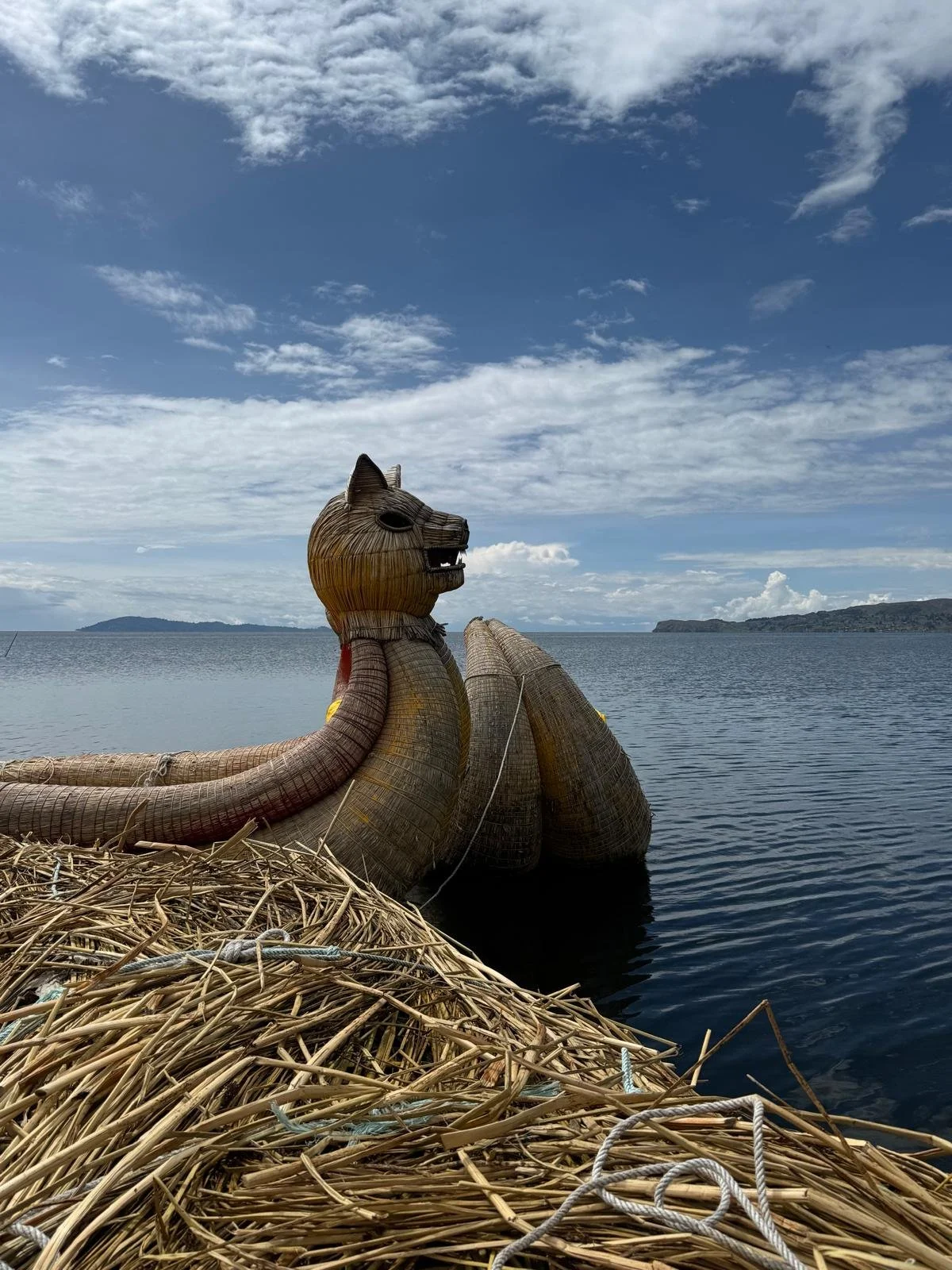
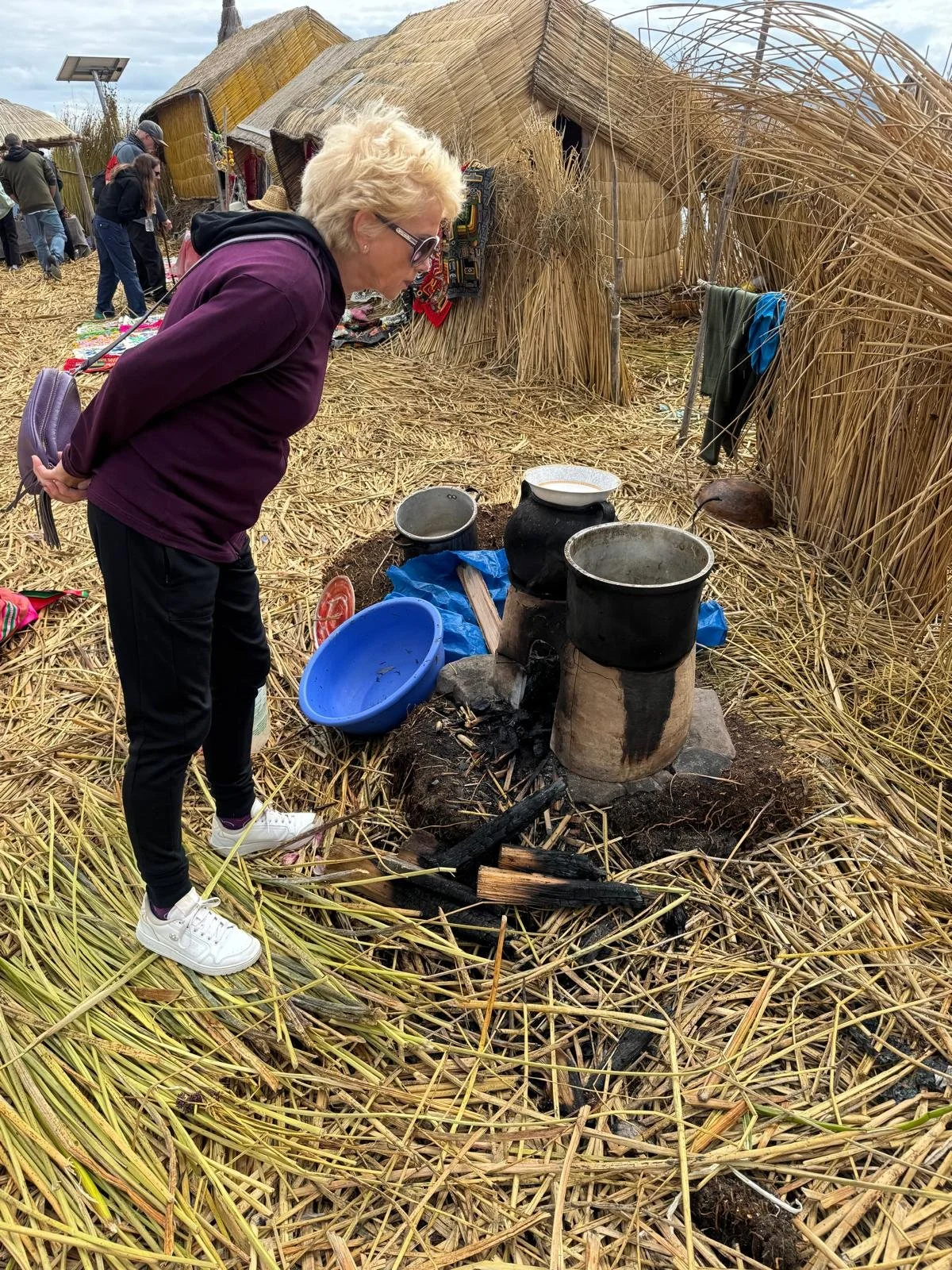
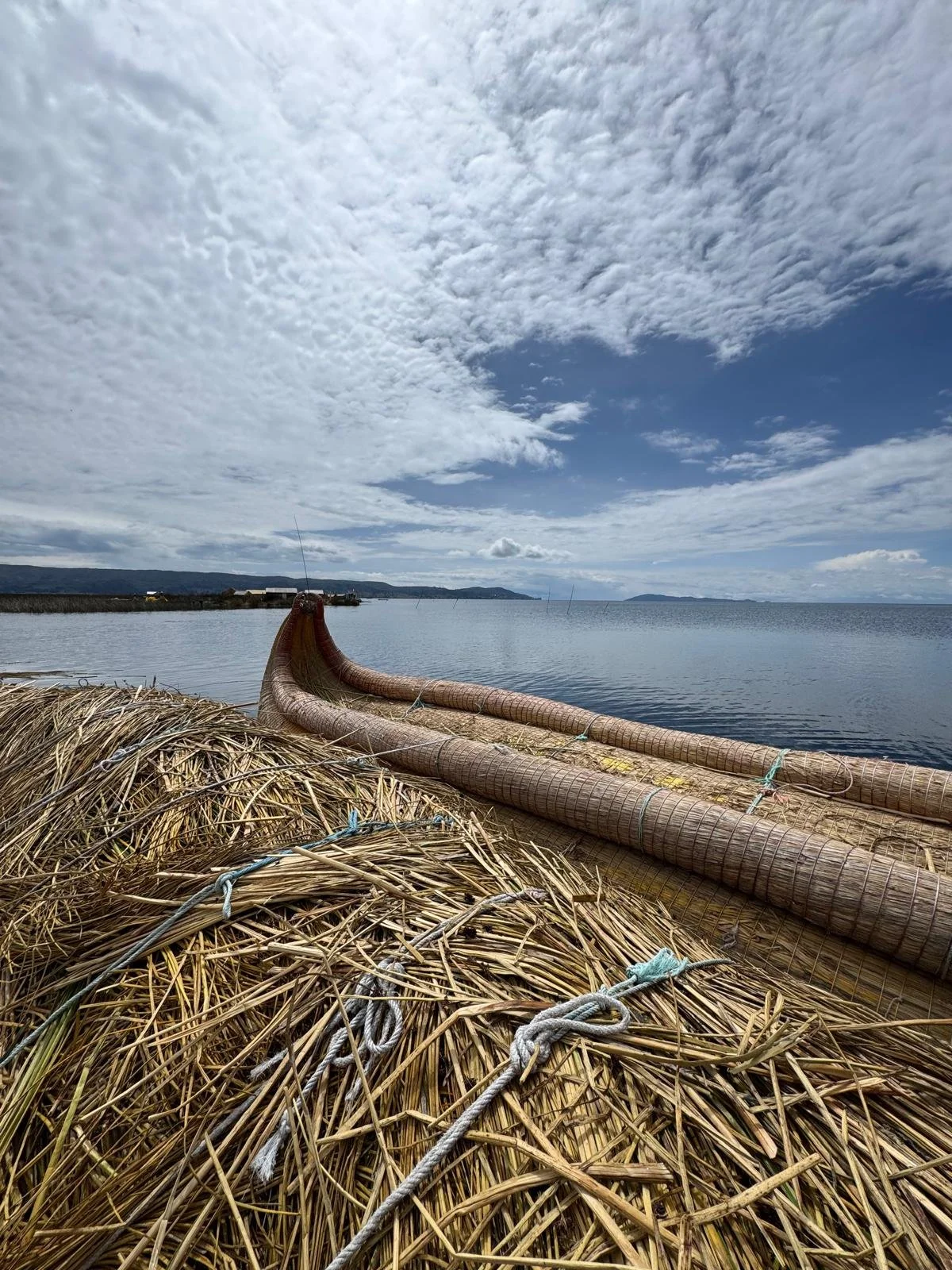
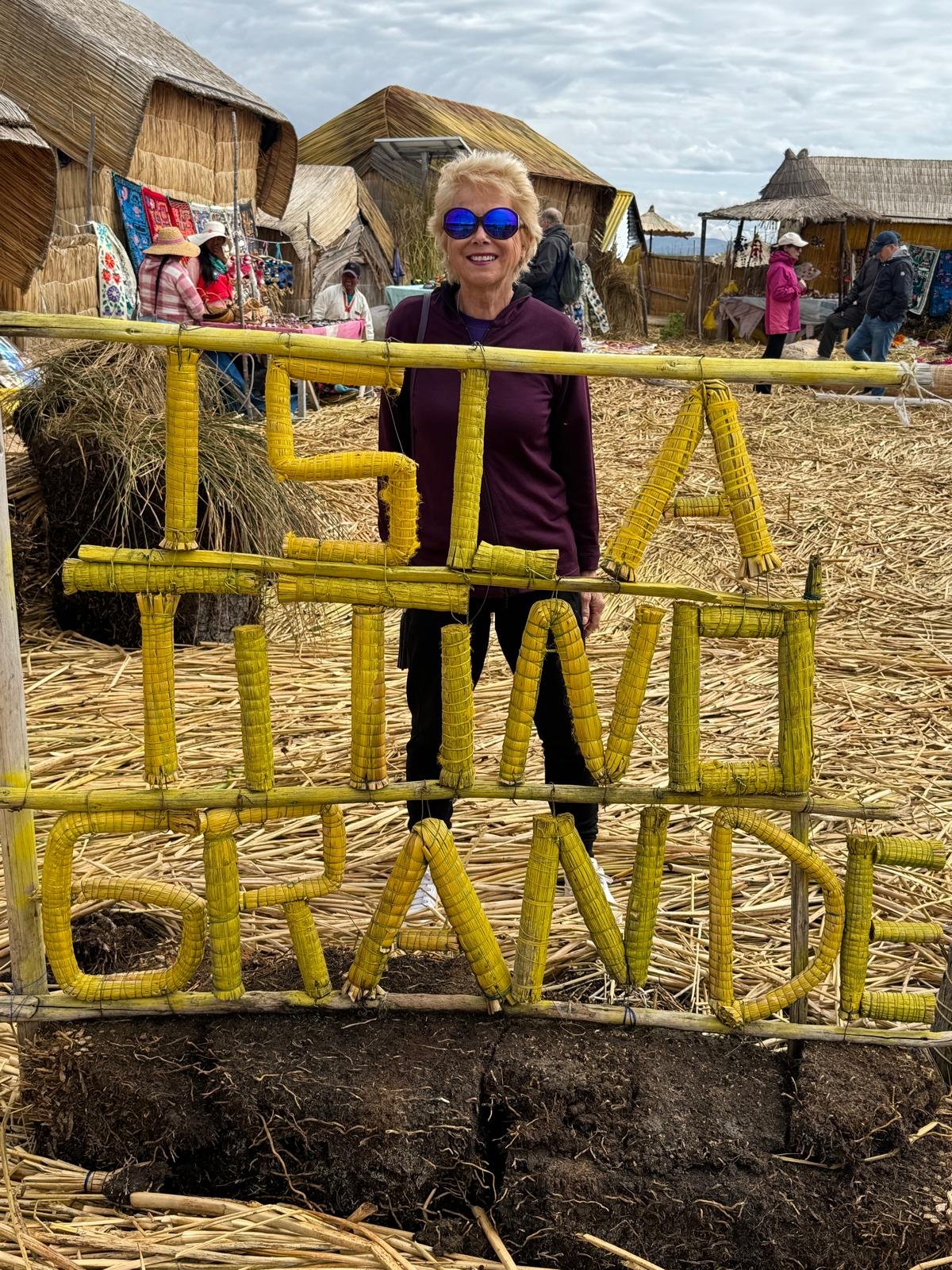
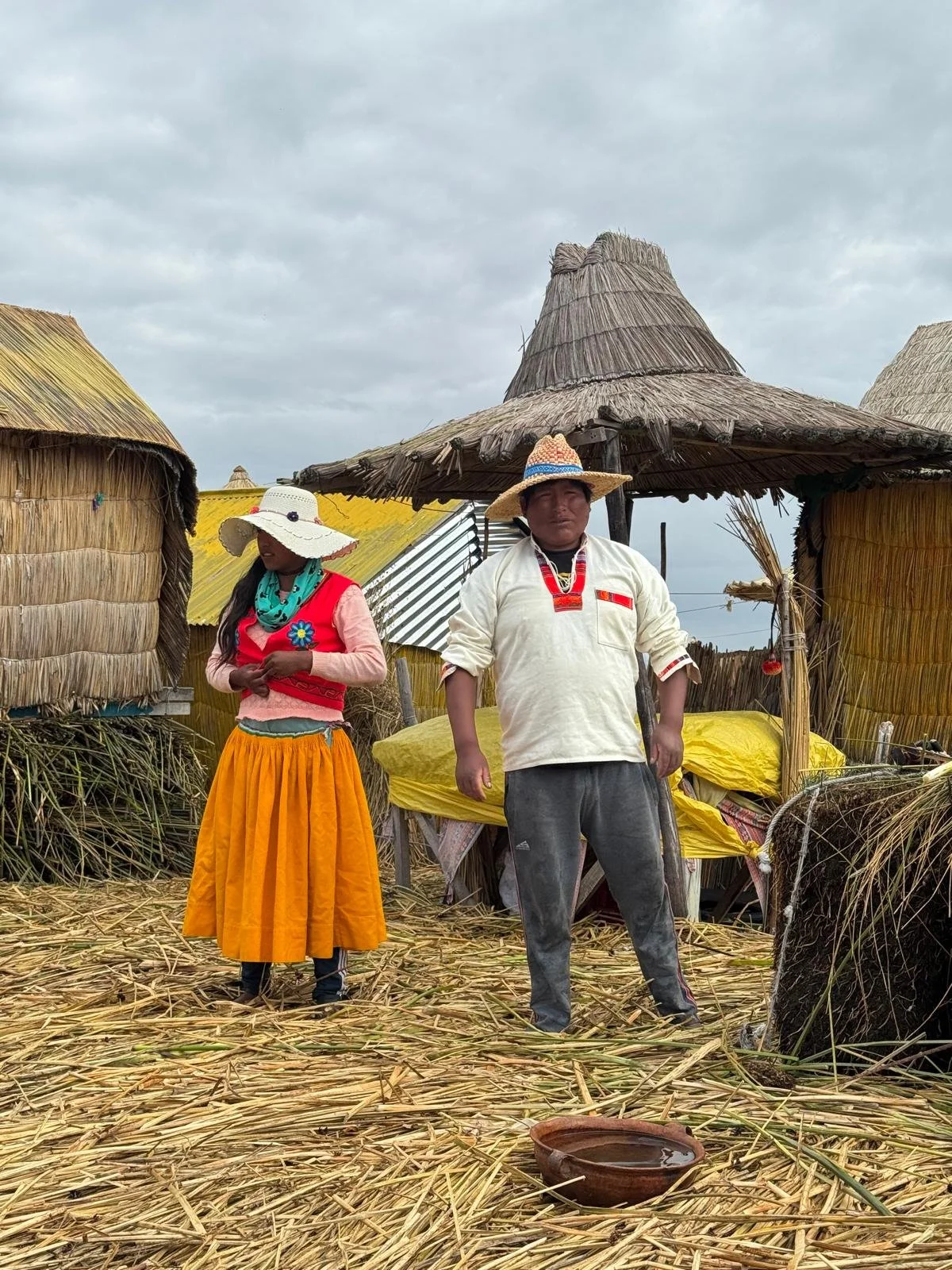
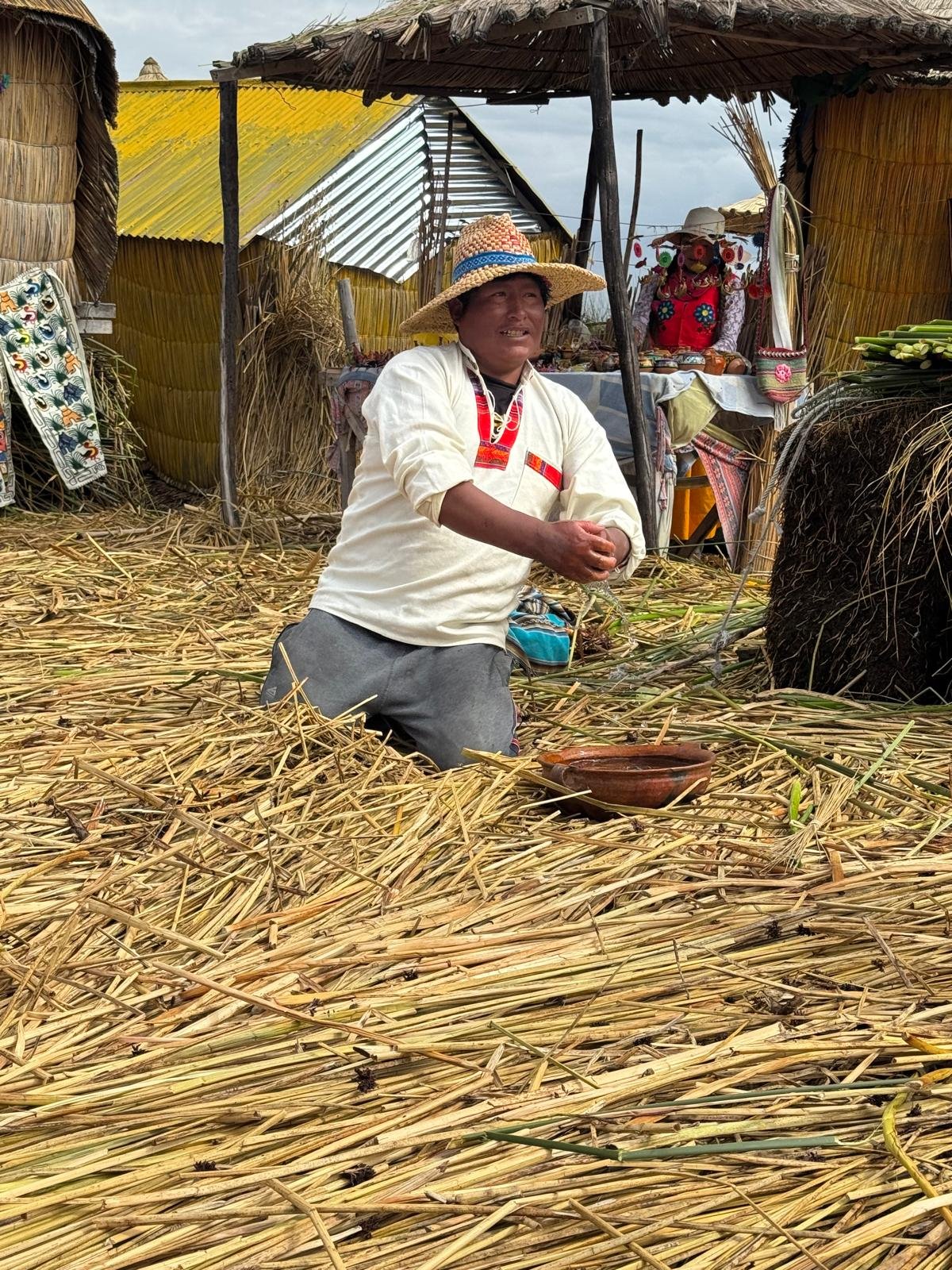
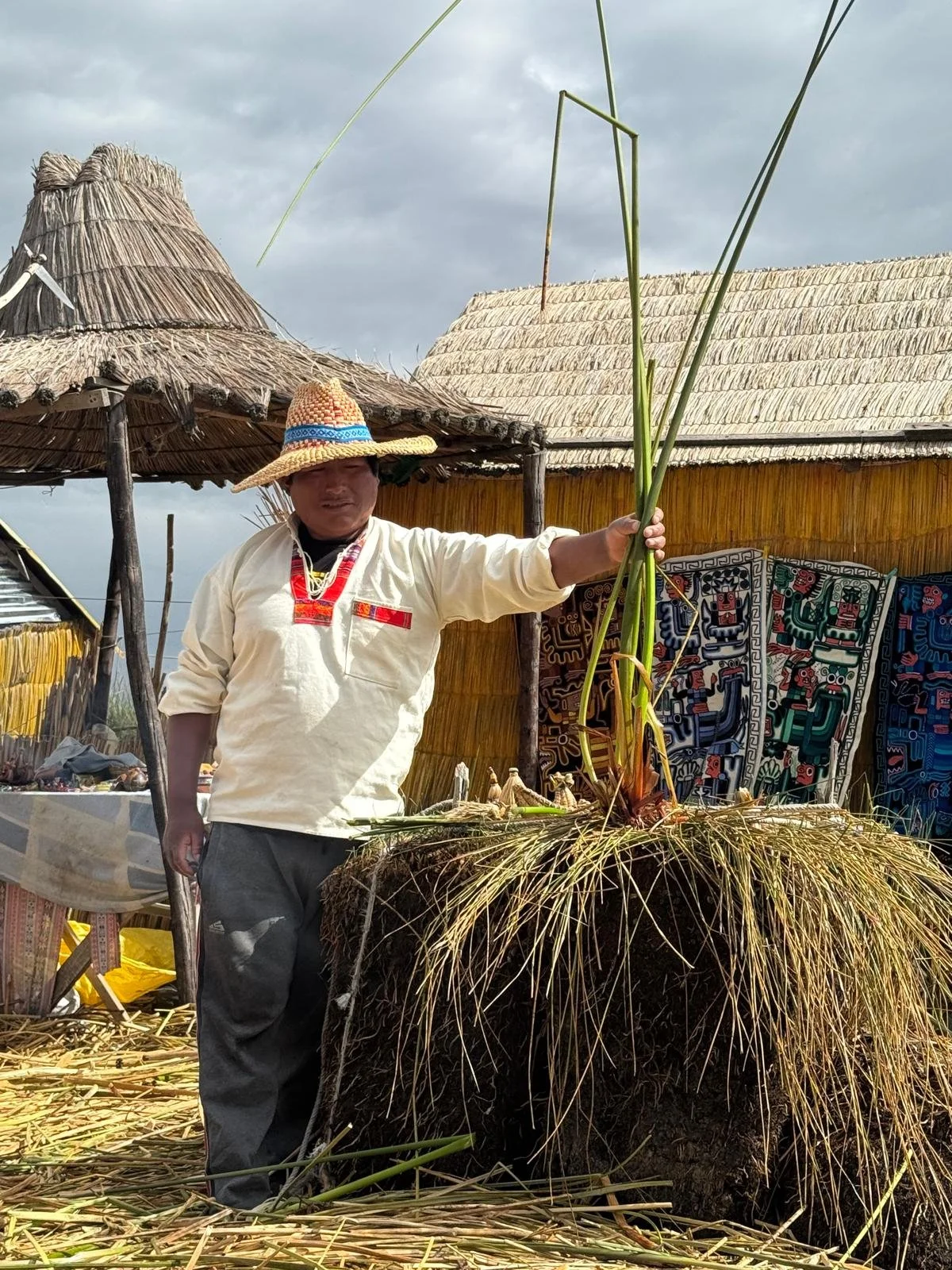
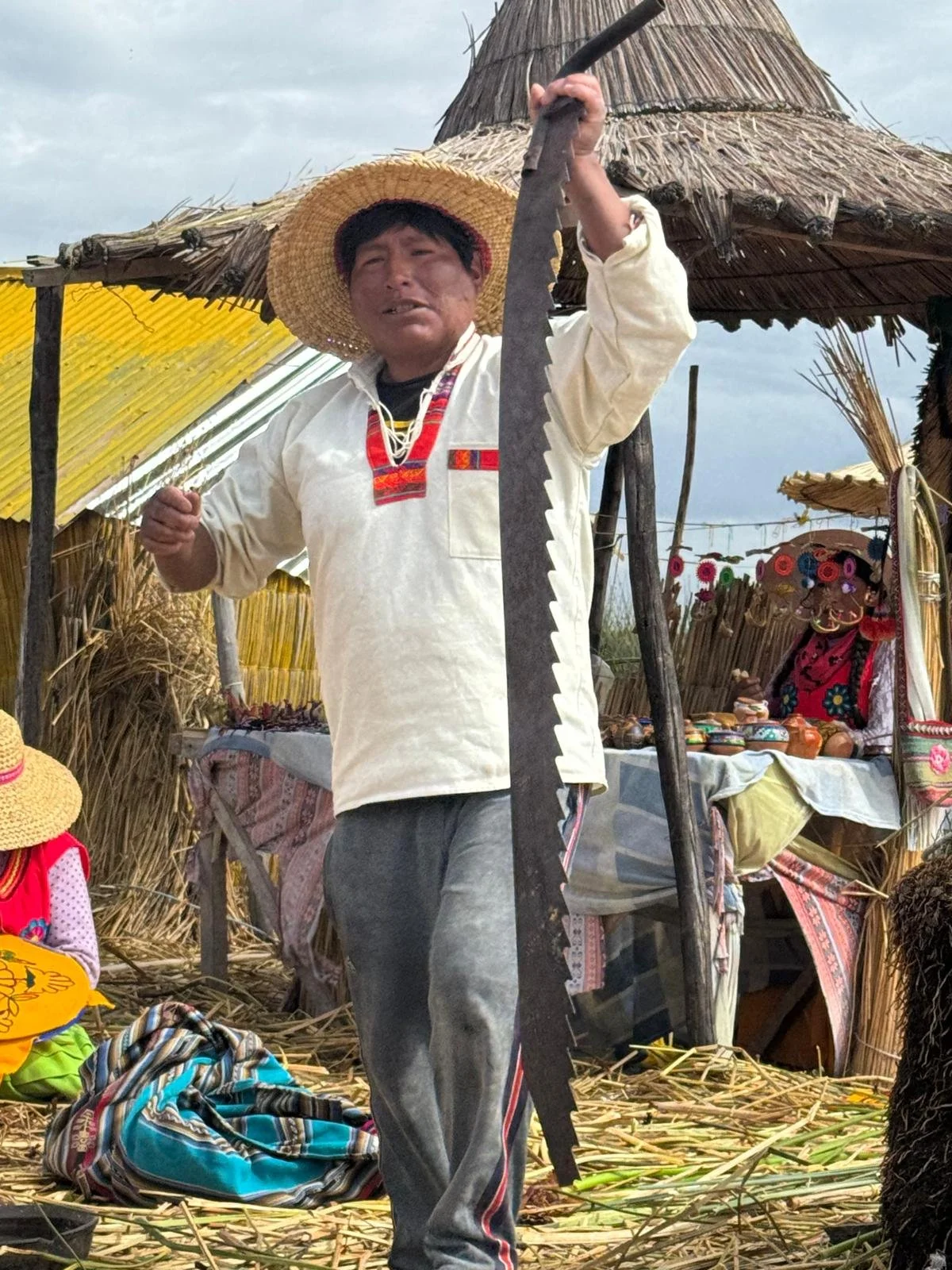
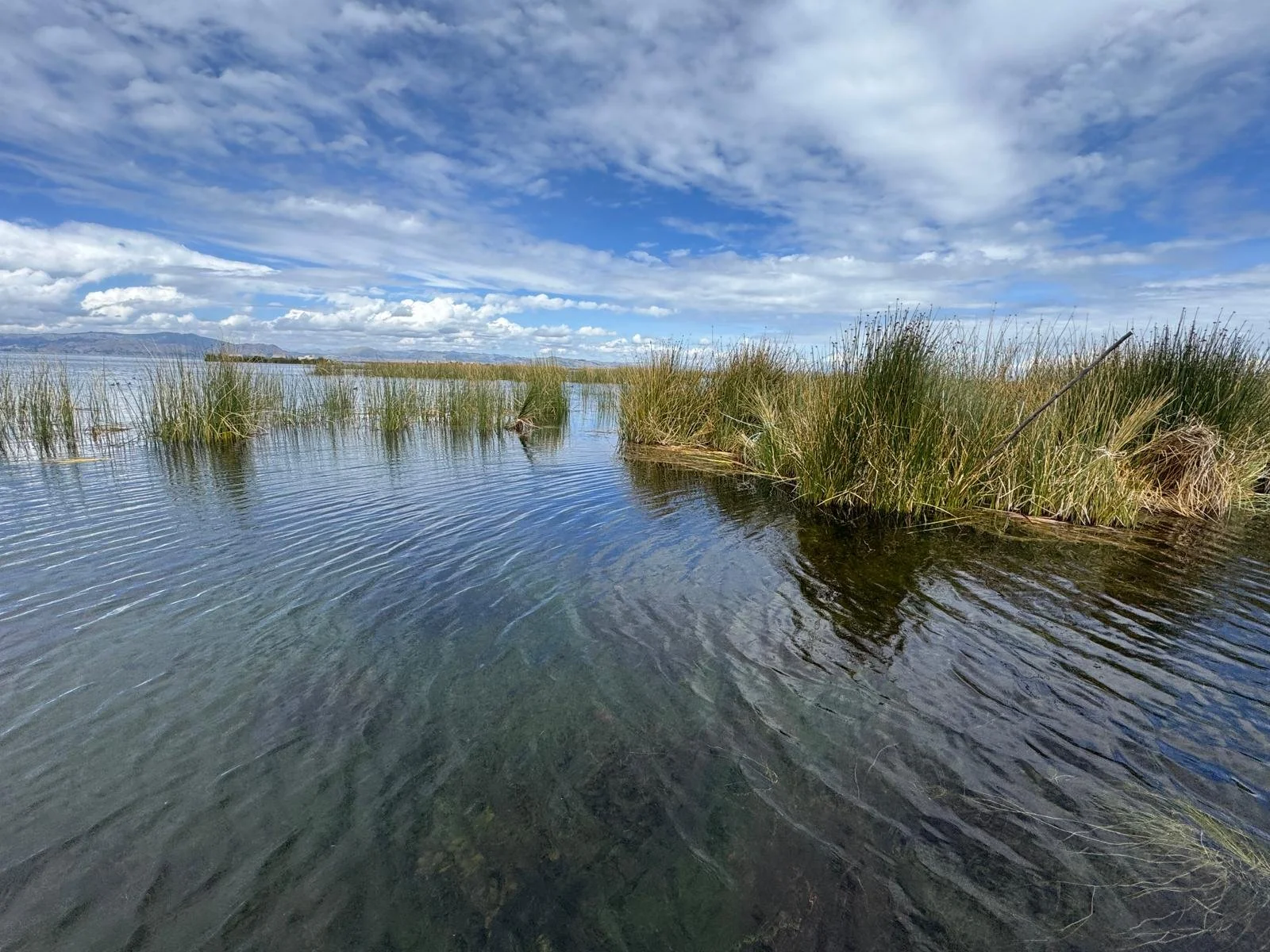
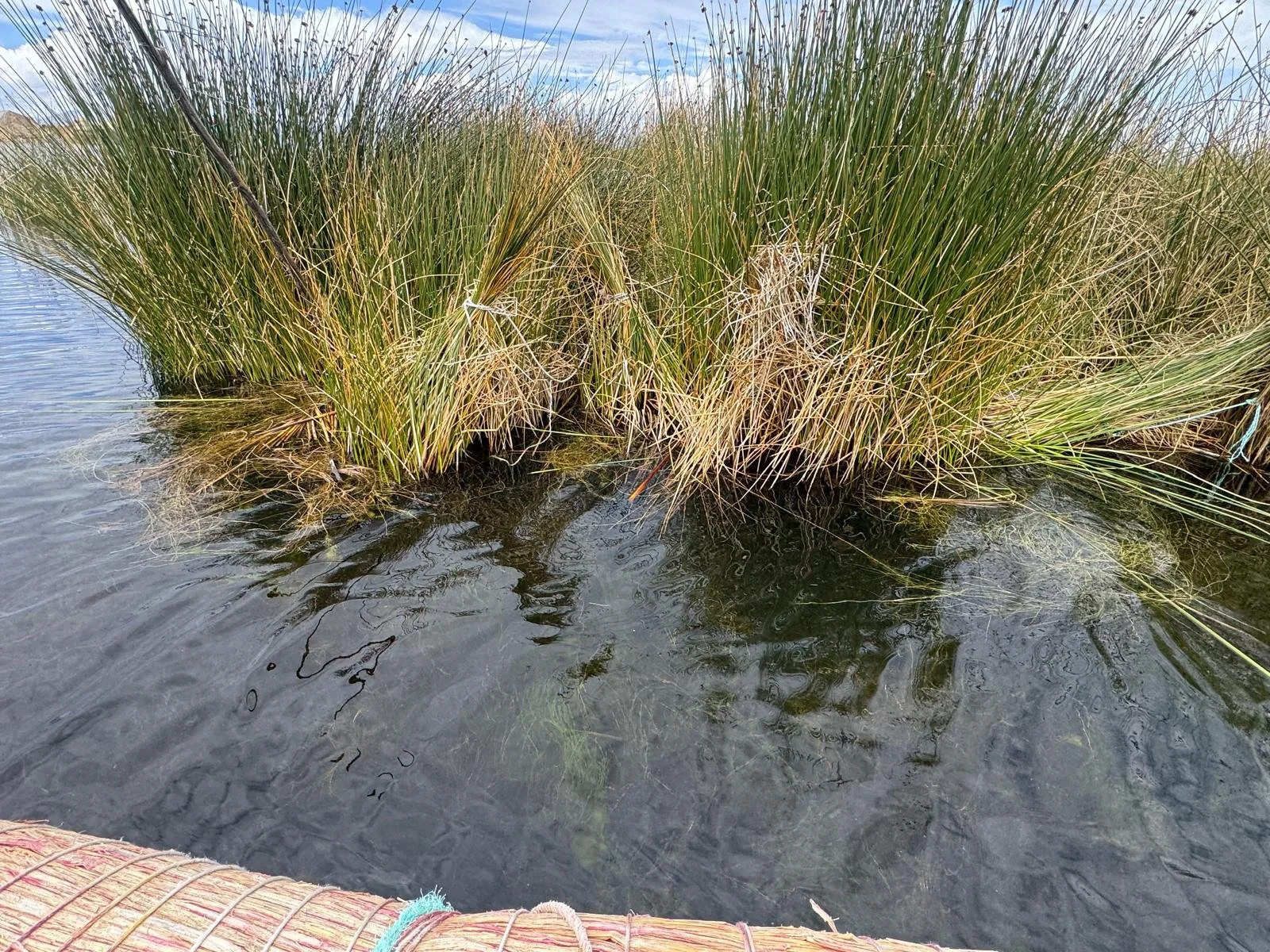
Each island has a leader, and we were treated to a fabulous demonstration of how they build their islands by Titino’s Leader. During the rainy season the soft waves move the roots of the totara reeds, and they break, and the root is like a cork, so it floats.
They join the roots together and anchor them in the quite shallow water with sticks, and the roots then get intertwined. They used to bind them with totara reeds, but they weren’t so strong, so these days they bind them with rope purchased in Puno. Thirty blocks of these reeds make an island. They wait six months for the roots to bind and then they put layers of about one metre of totara reeds on top which they jump on to compact them. The houses used to be quite small, so they make them taller now due to the humidity. Because the bottom layer of the roots rots, they move the houses yearly! The reeds are so soft that the families don’t wear shoes as they get lost in the reeds (fortunately we didn’t lose ours!). It takes one year to make an island which lasts for forty years, then they move all the houses and make another island! Isn’t this fascinating? I’ve never seen – or heard – of anything like it! They don’t even get rid of the old roots – because they are so fertile they plant potatoes on them. If a family wants to move house – they literally saw off the land around it – as the Leader said….like a birthday cake and it’s Hasta La Vista”! Titino Island is three metres thick and thirteen years old!
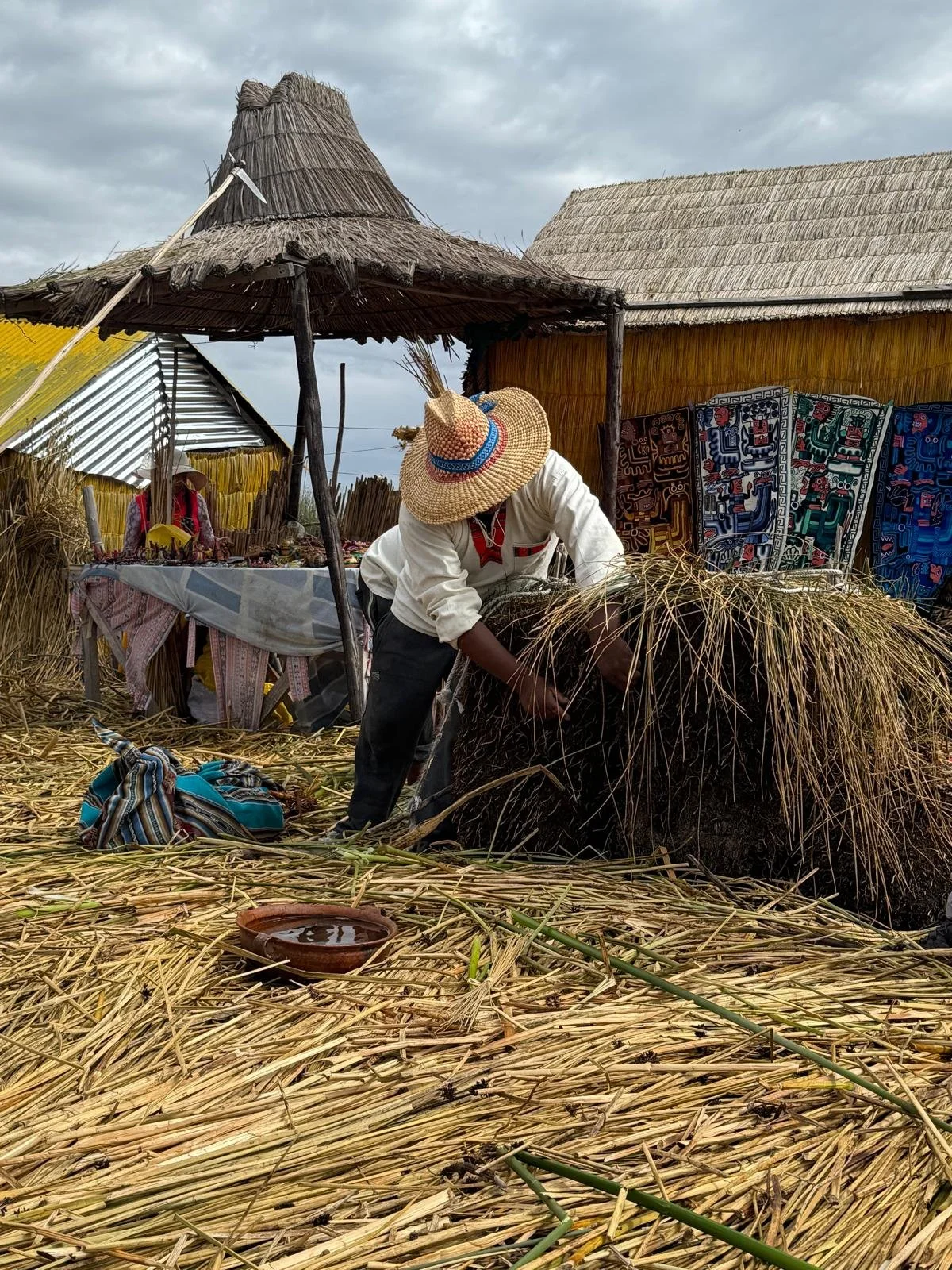
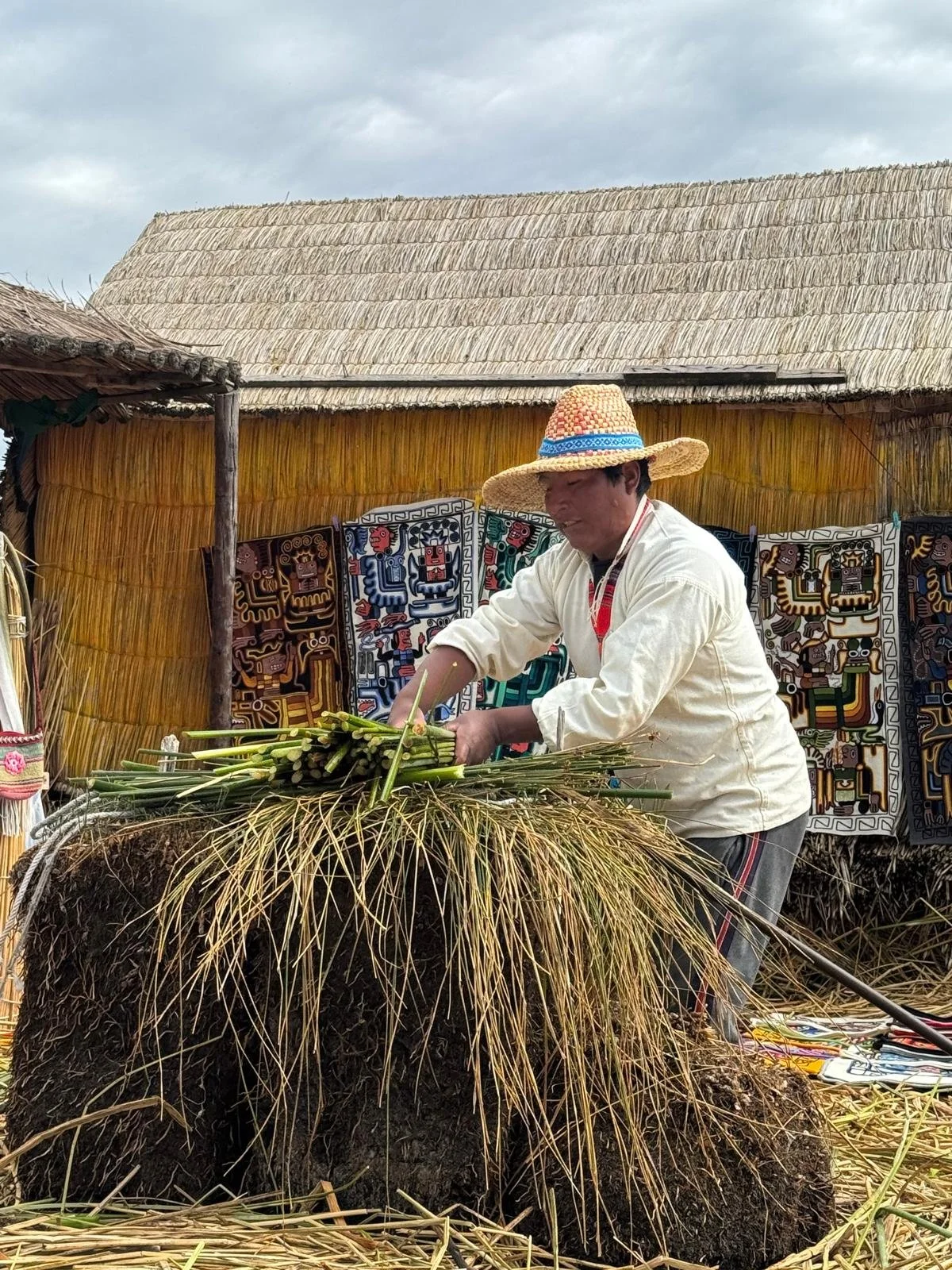
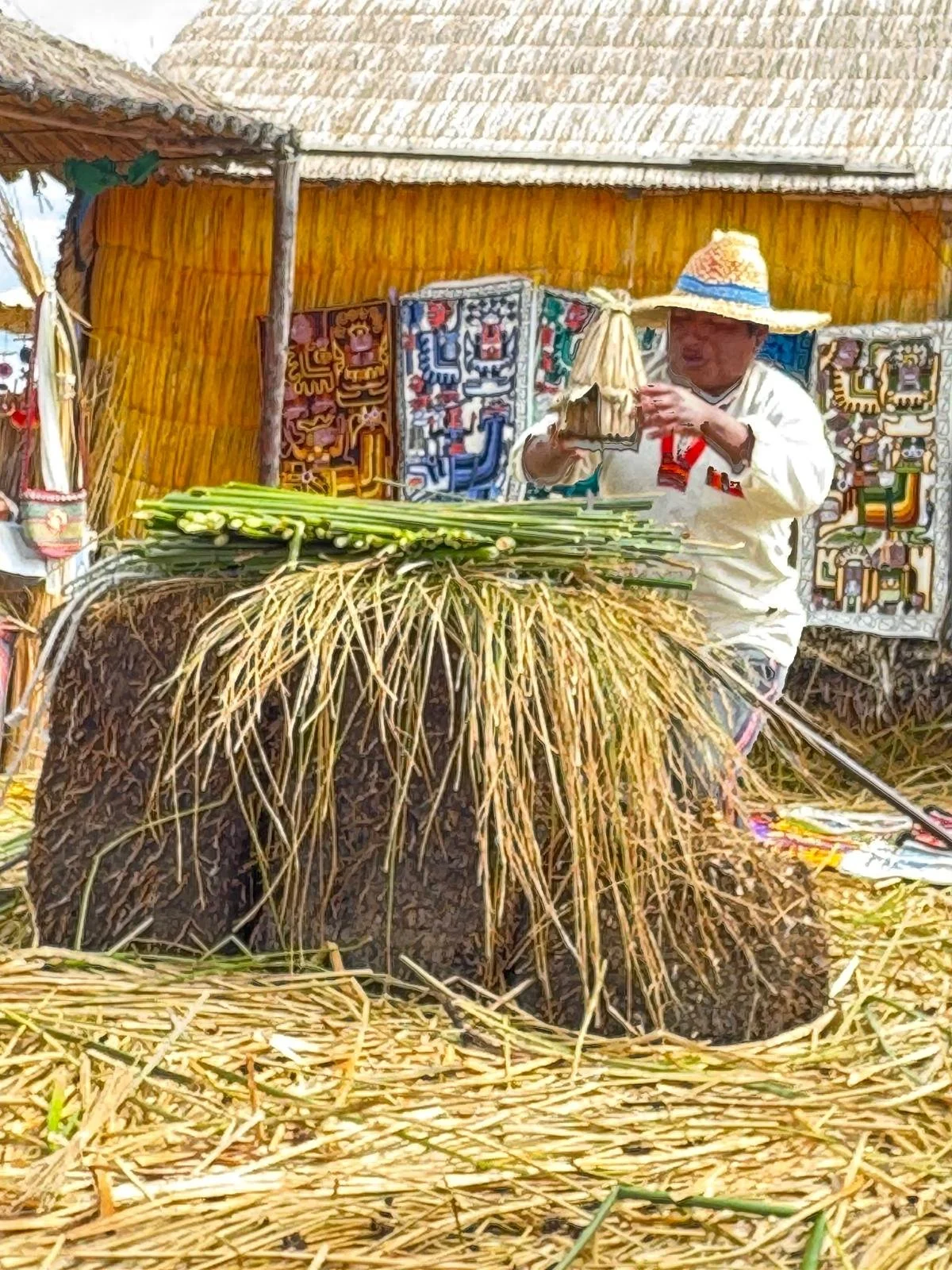
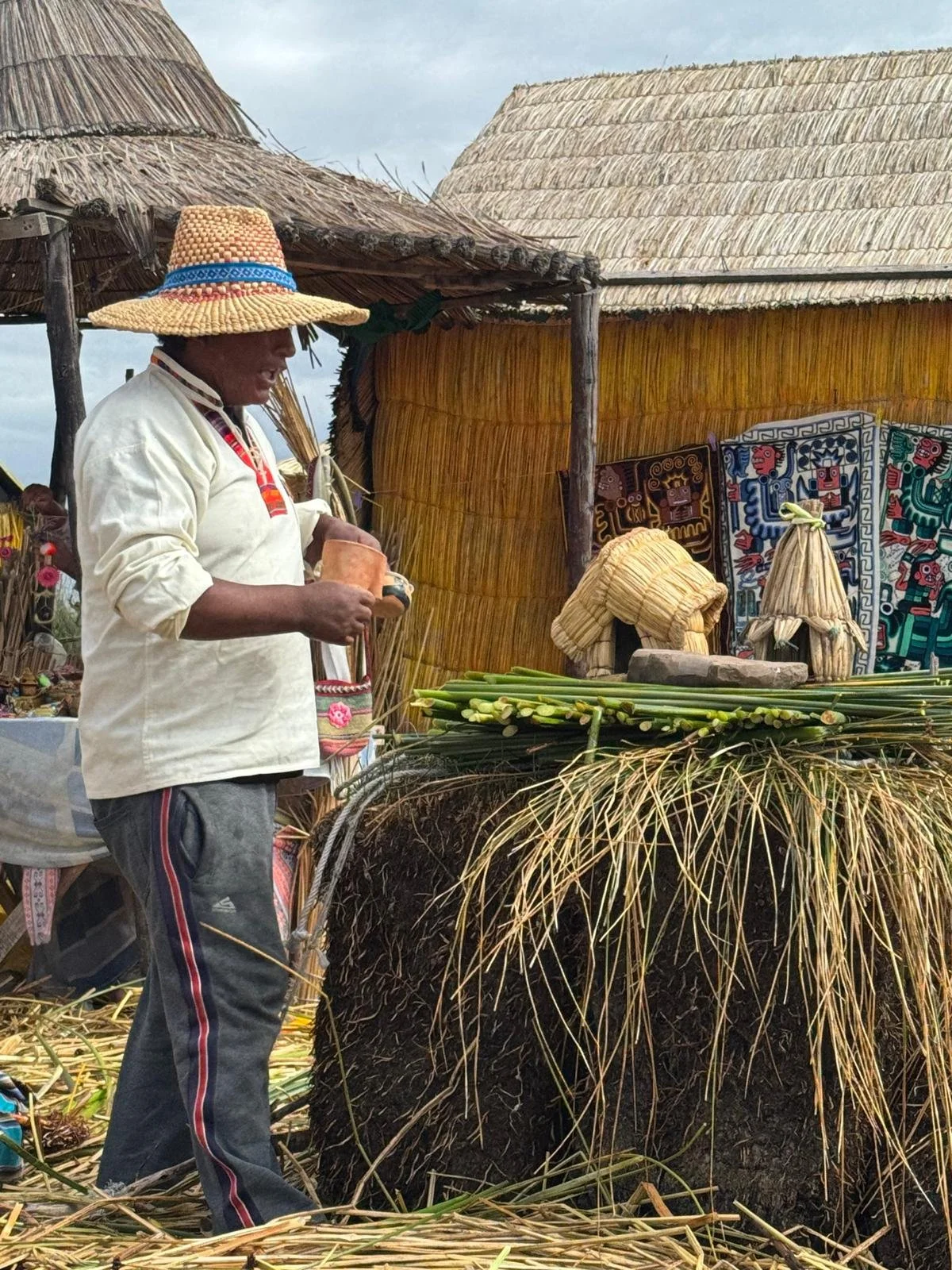
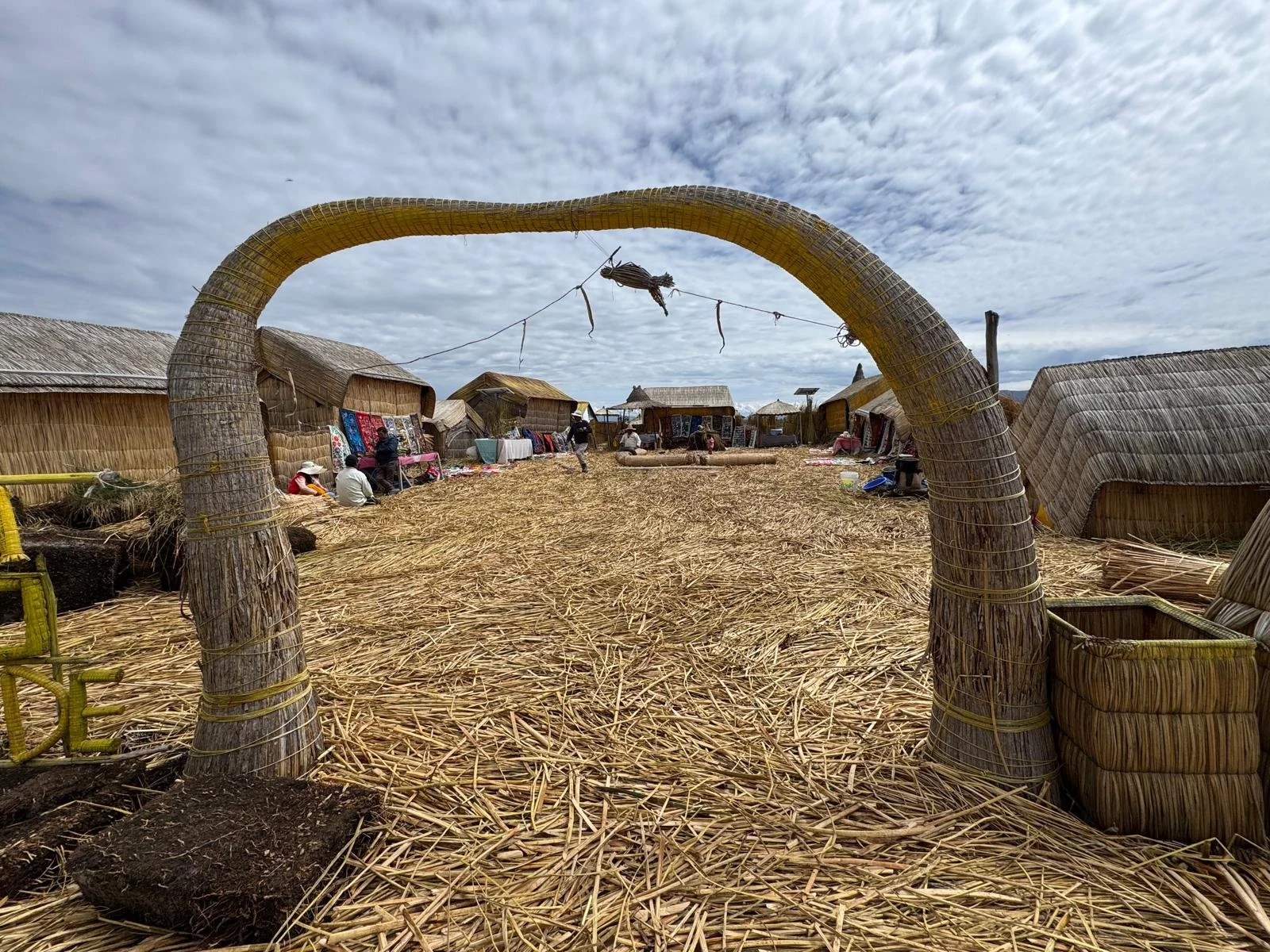
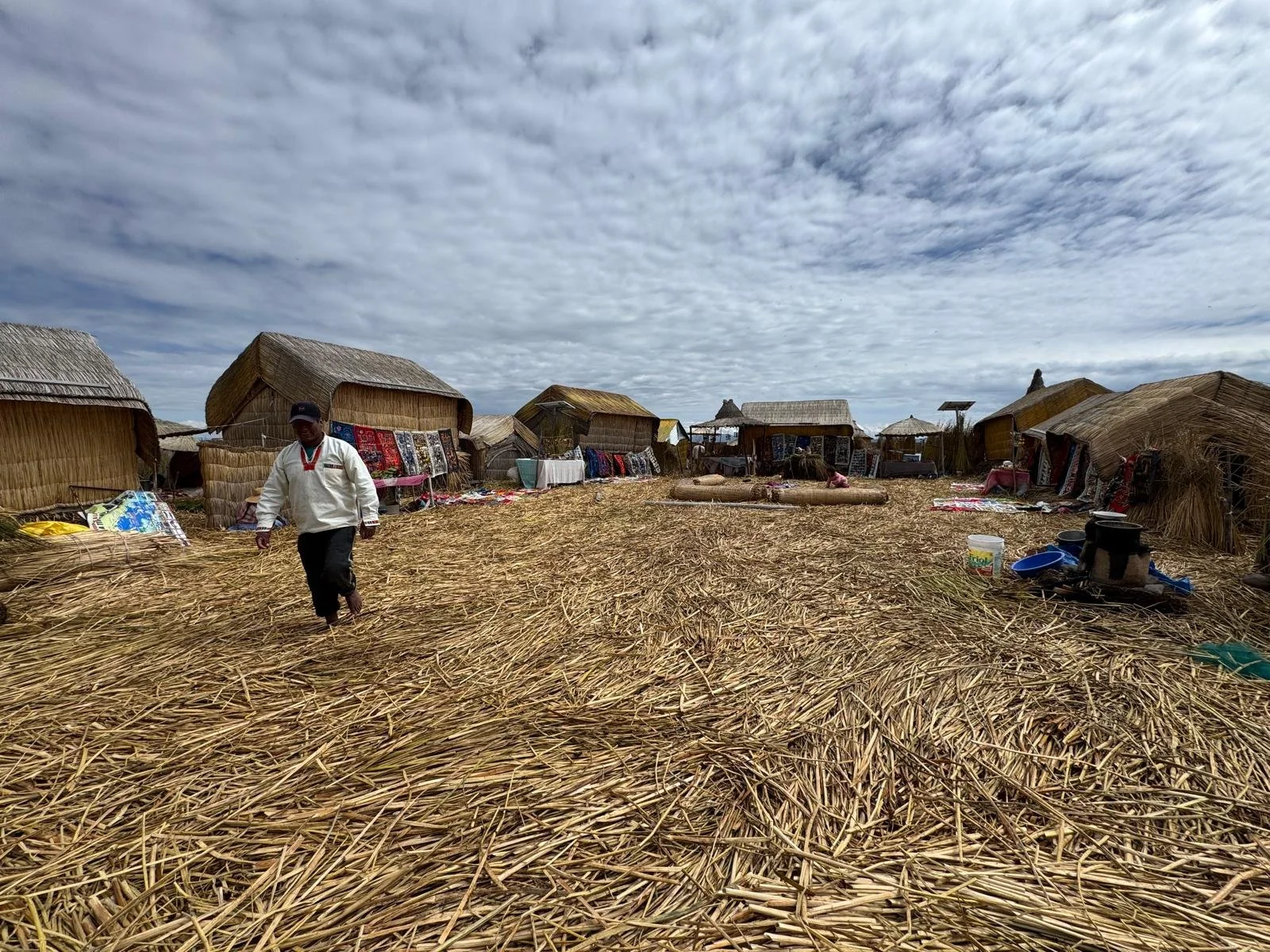
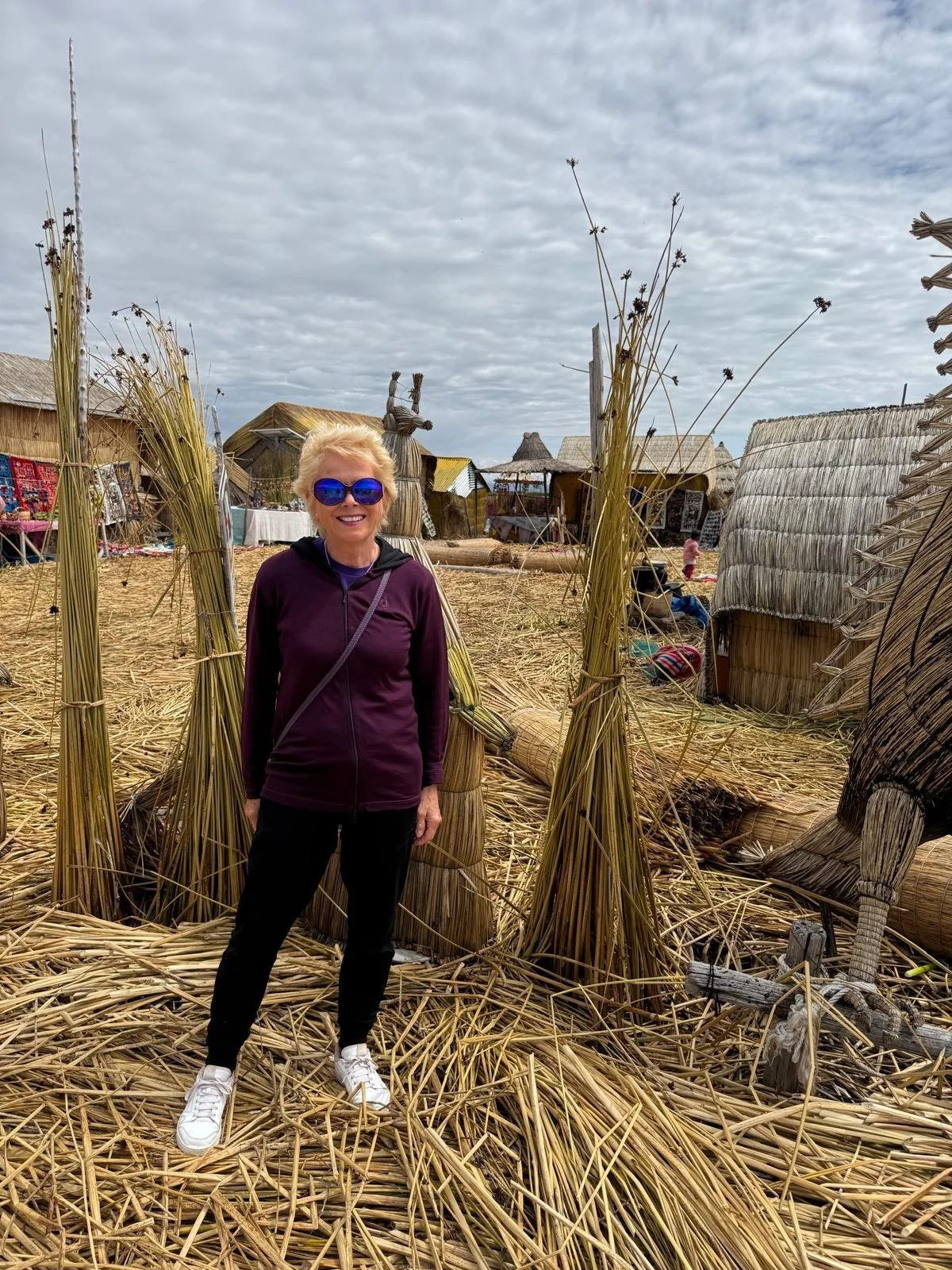
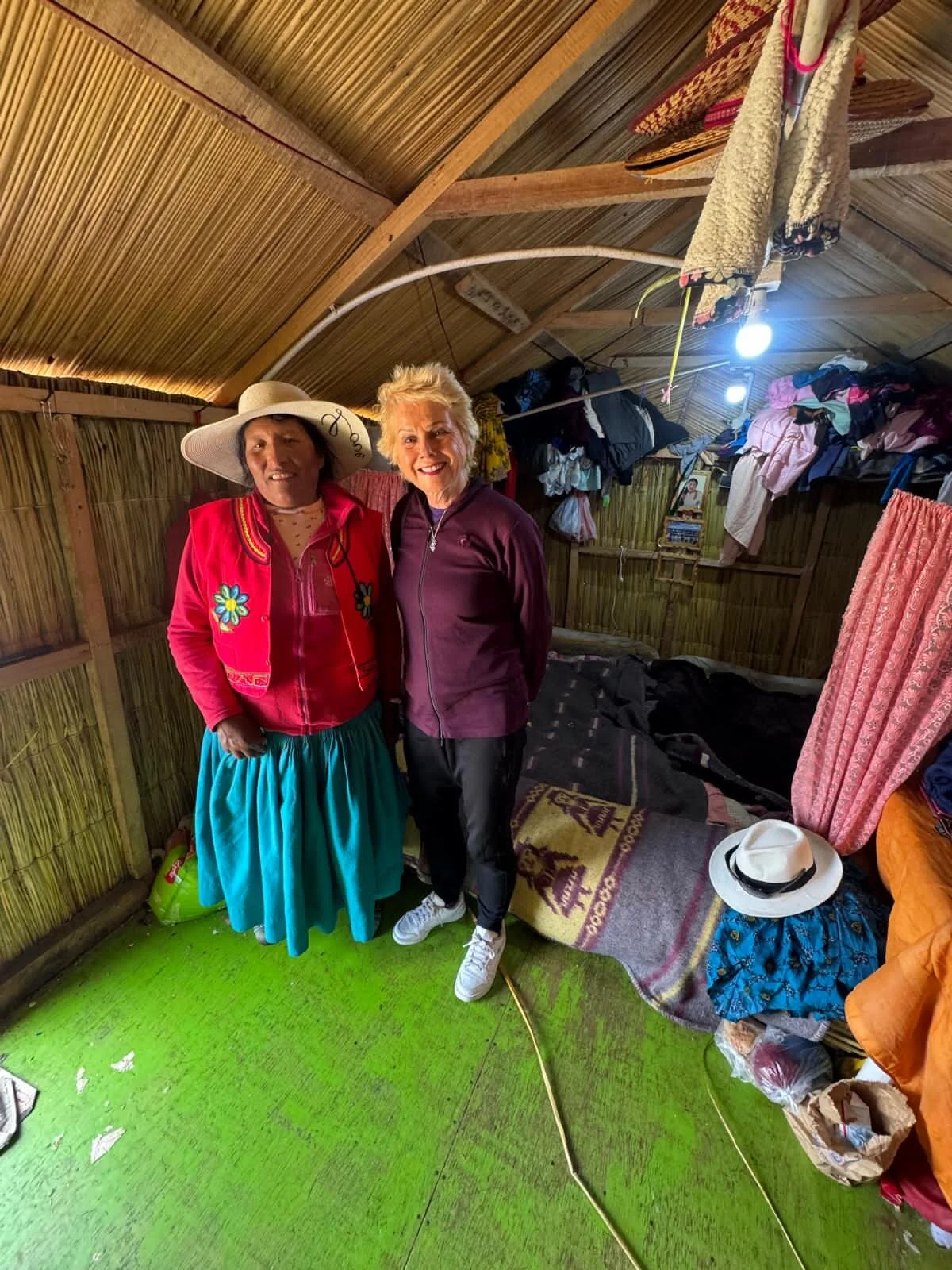
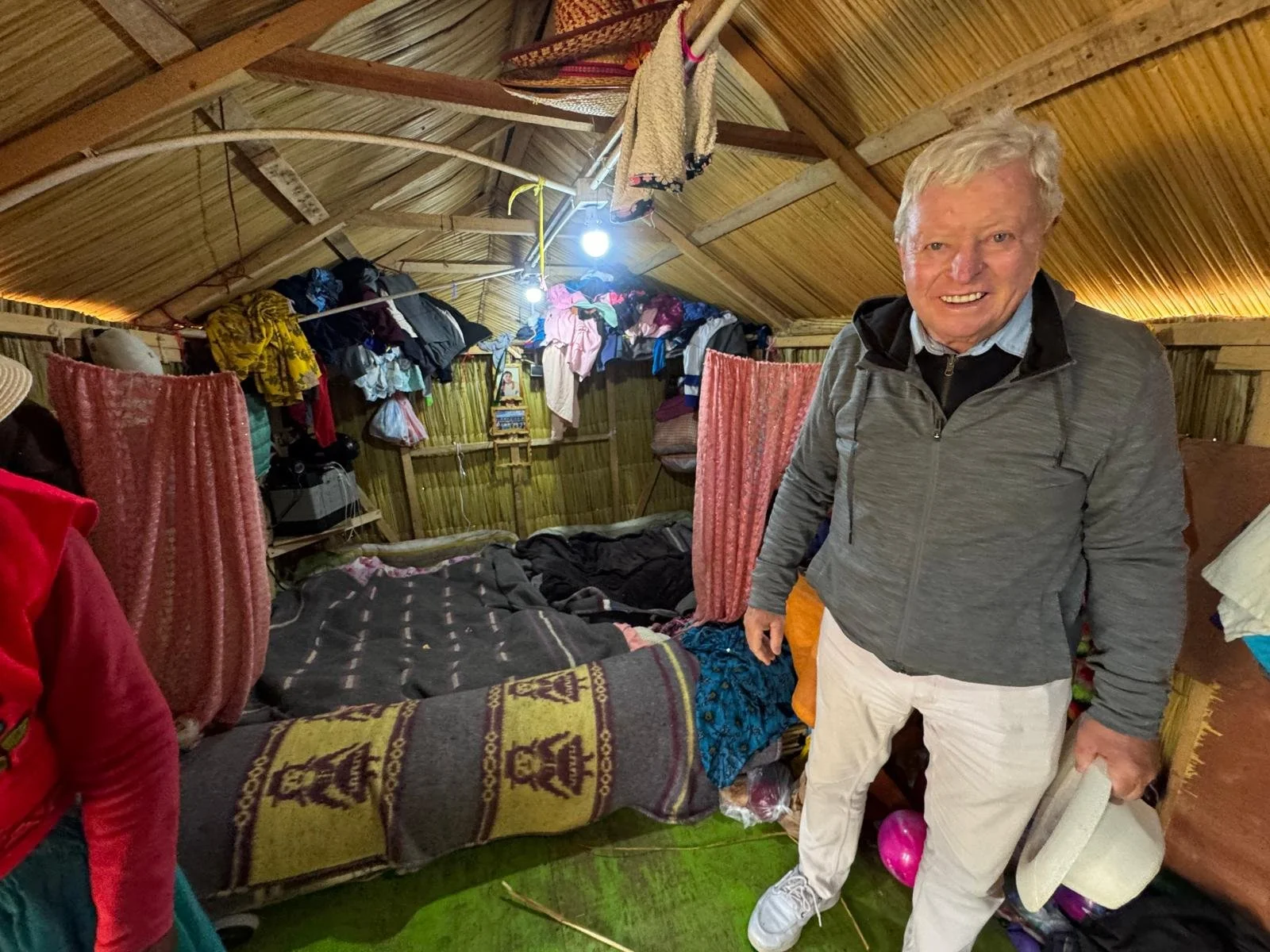
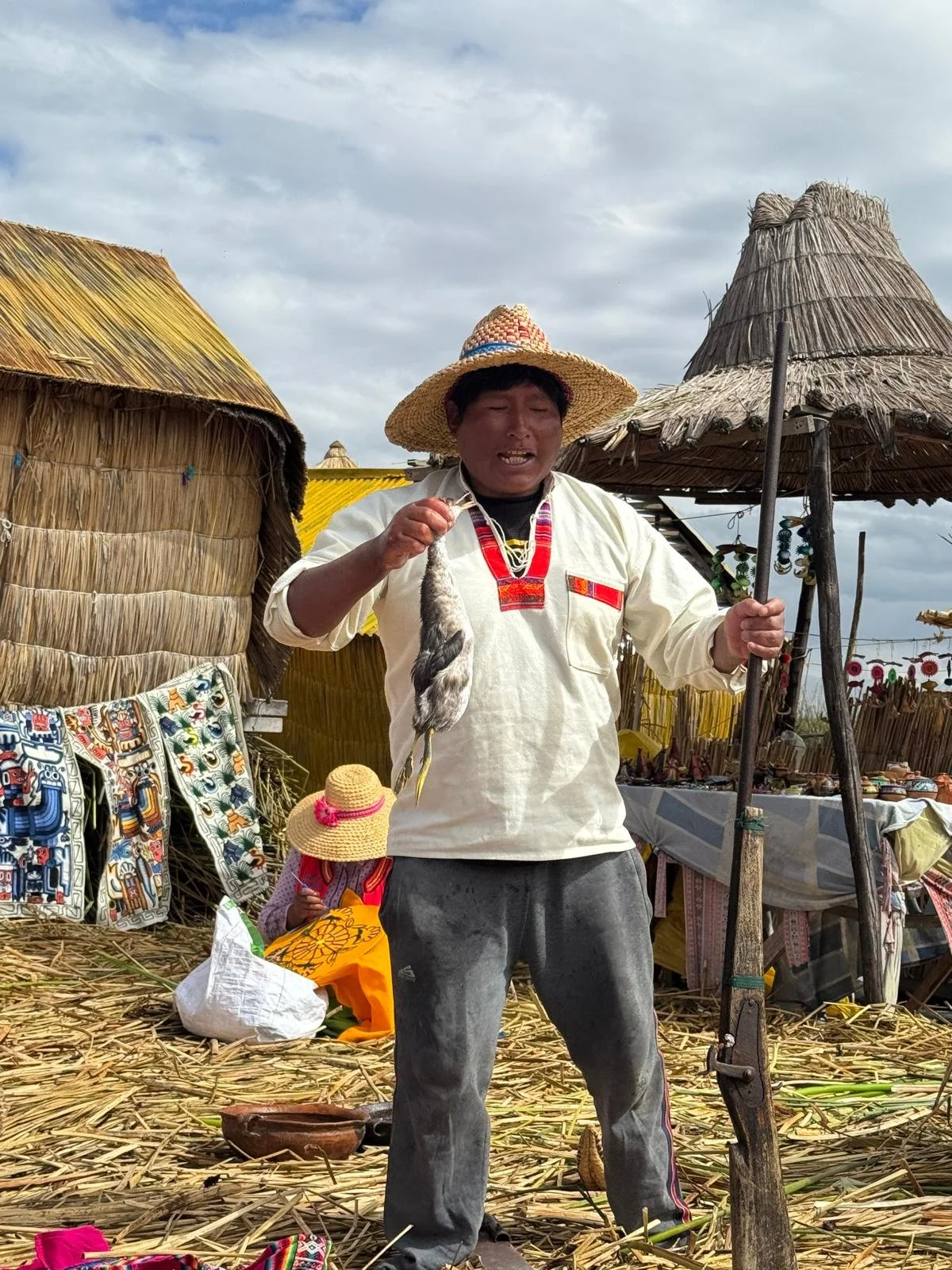
We were invited into one of the houses to have a look…quite tiny and four people live in it. The women spend they time making traditional crafts which are sold to the tourists and the men fish and hunt, only allowed on the weekends, and they are only allowed three shots, so they have perfected the art of mimicking the birds, so they don’t waste their three bullets!
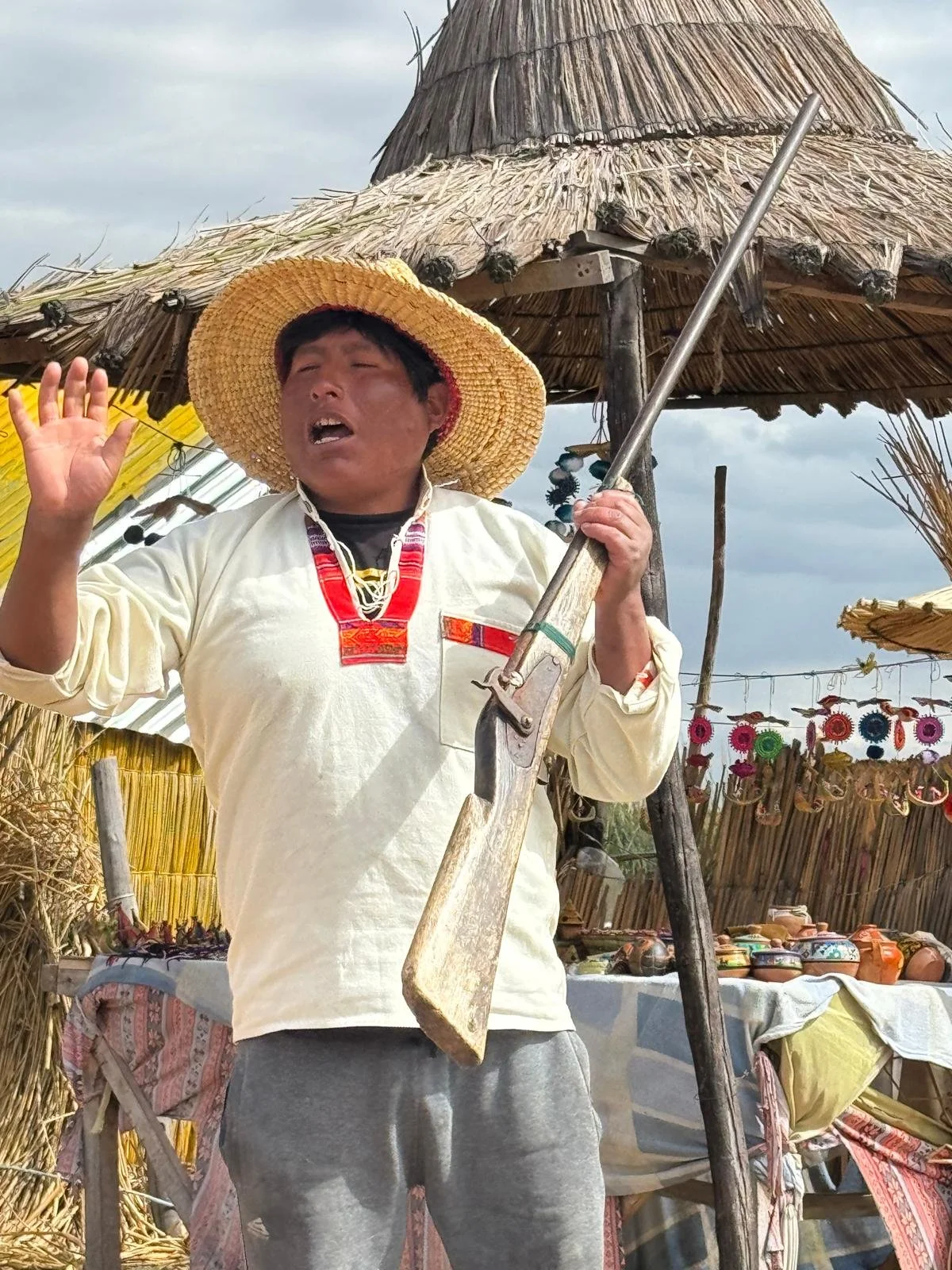
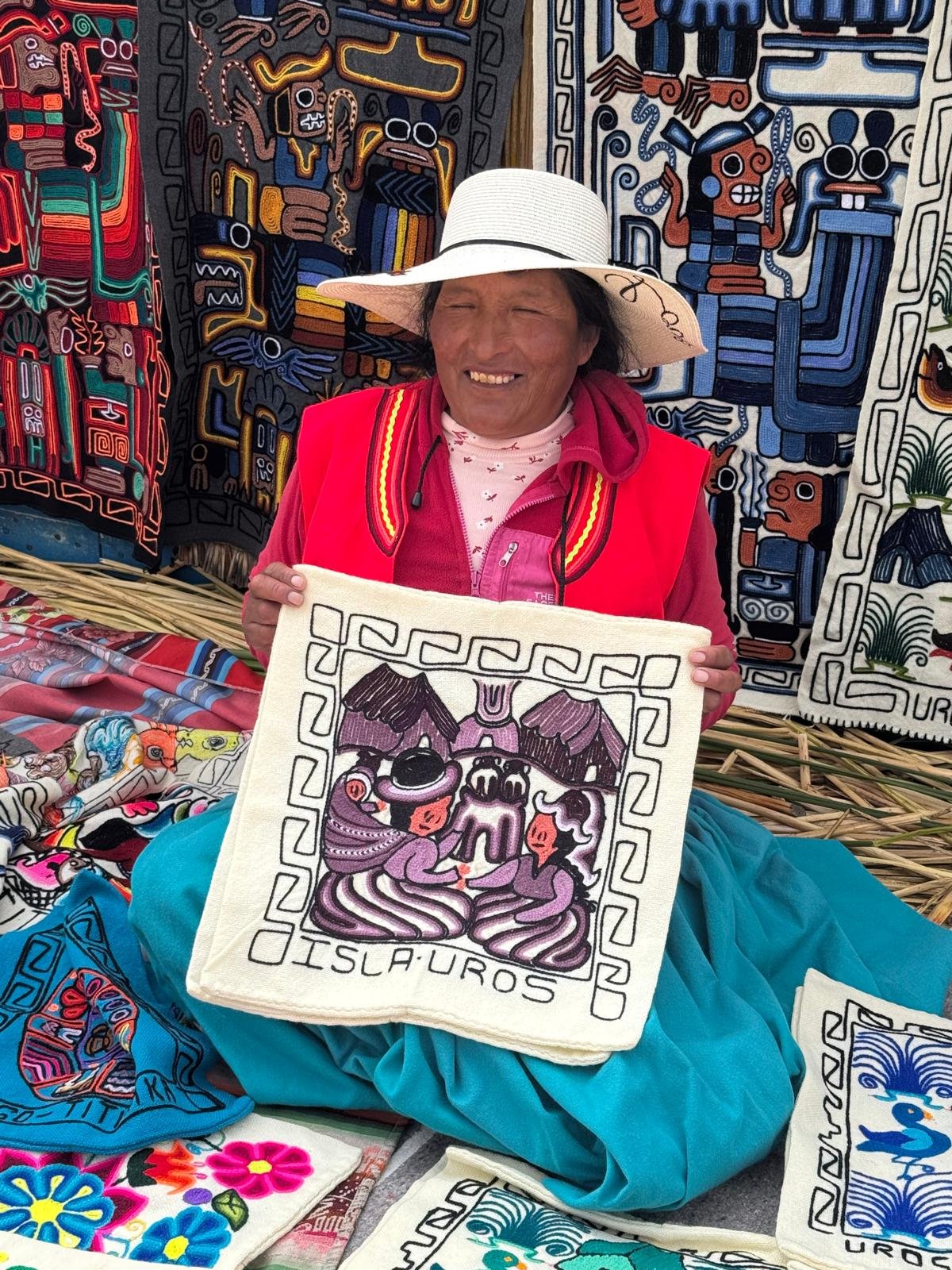
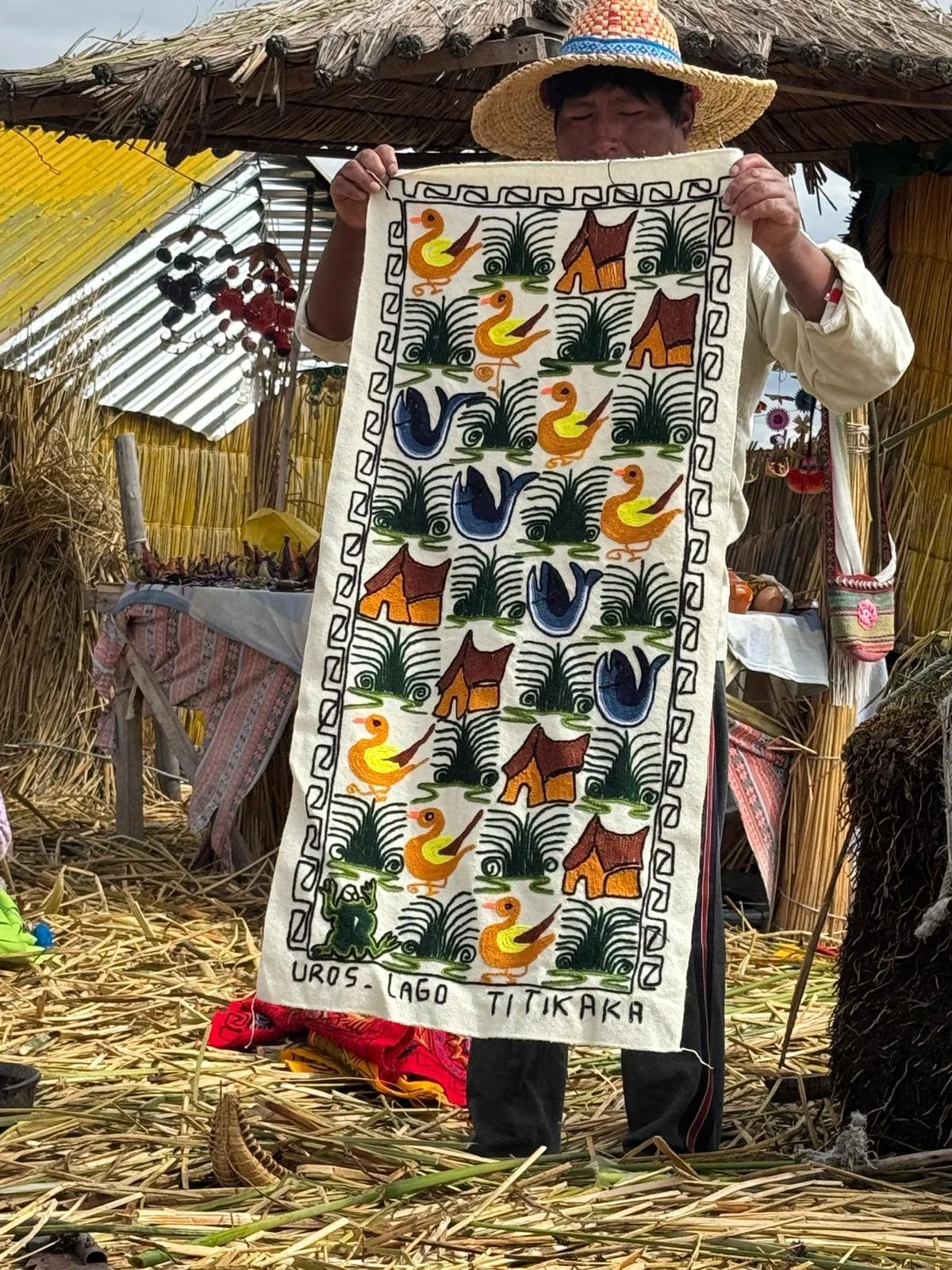
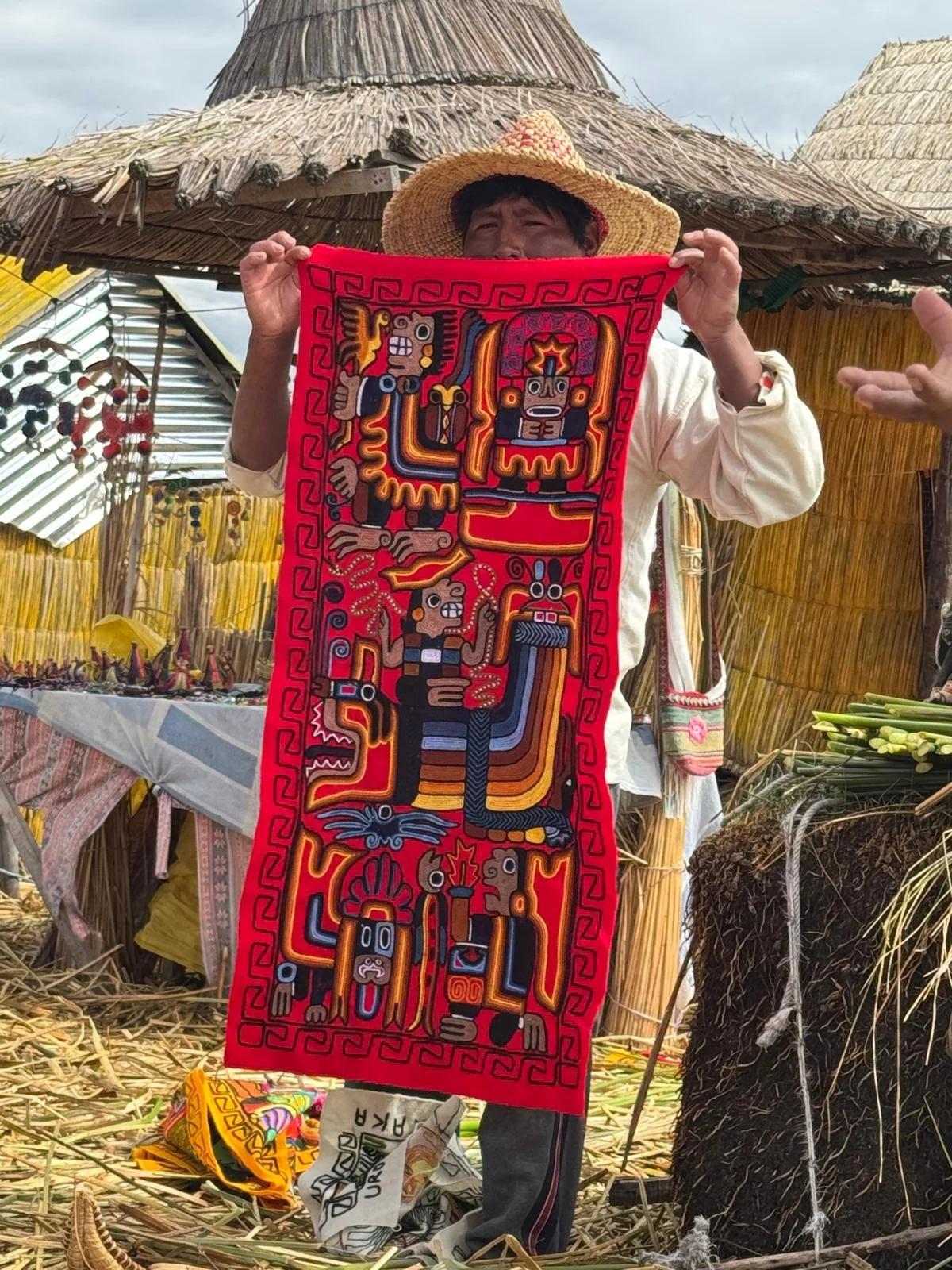
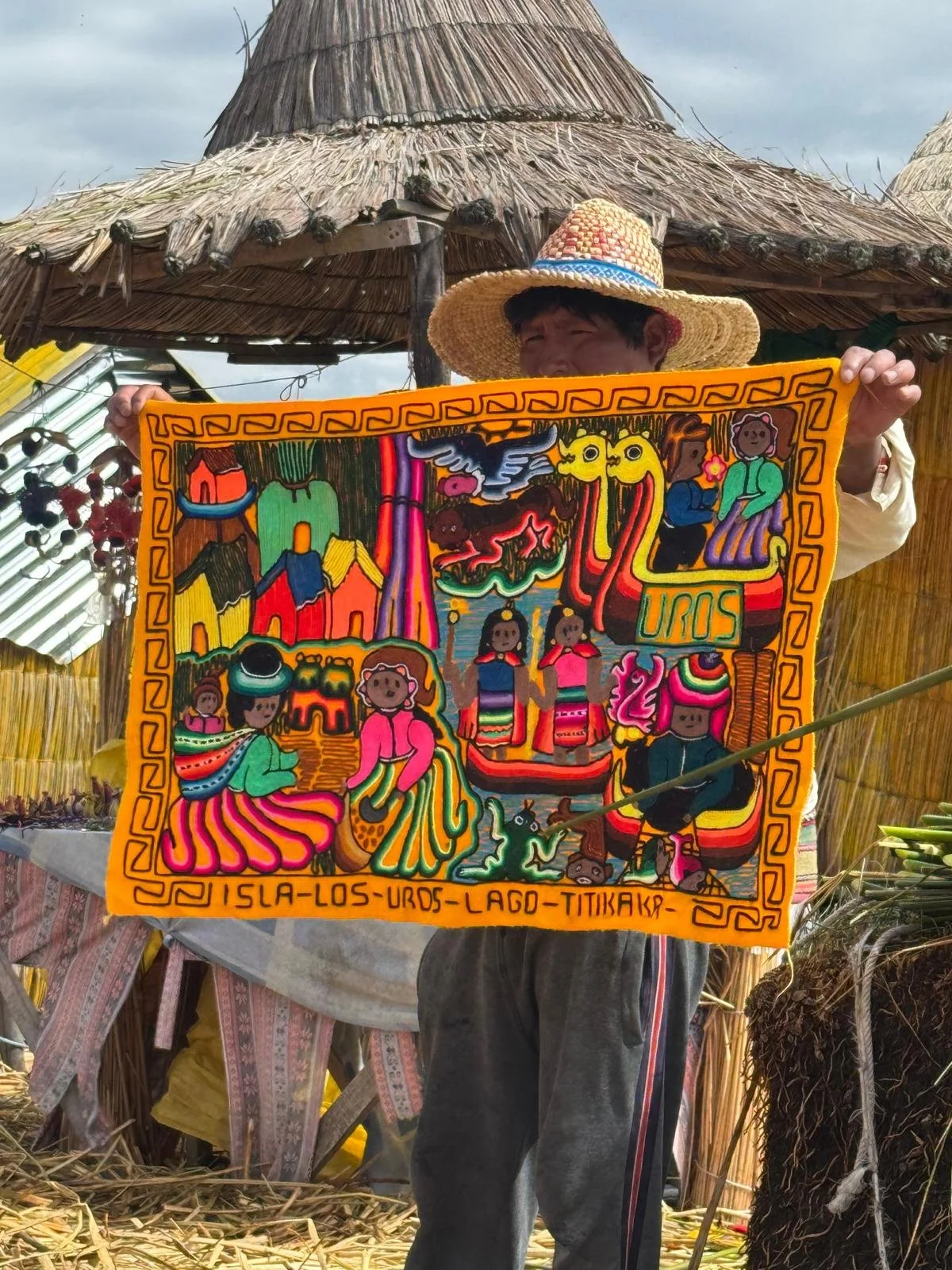
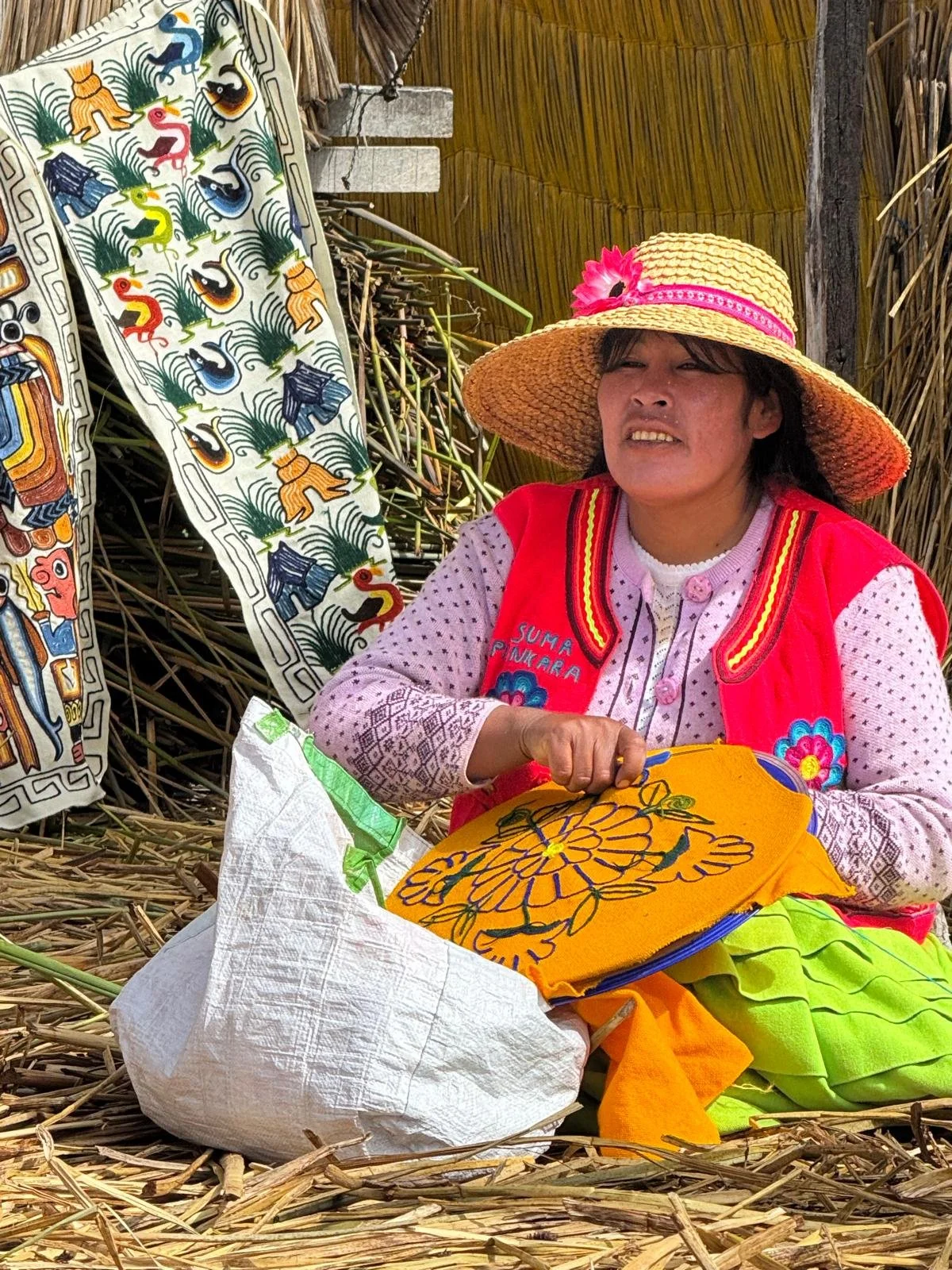
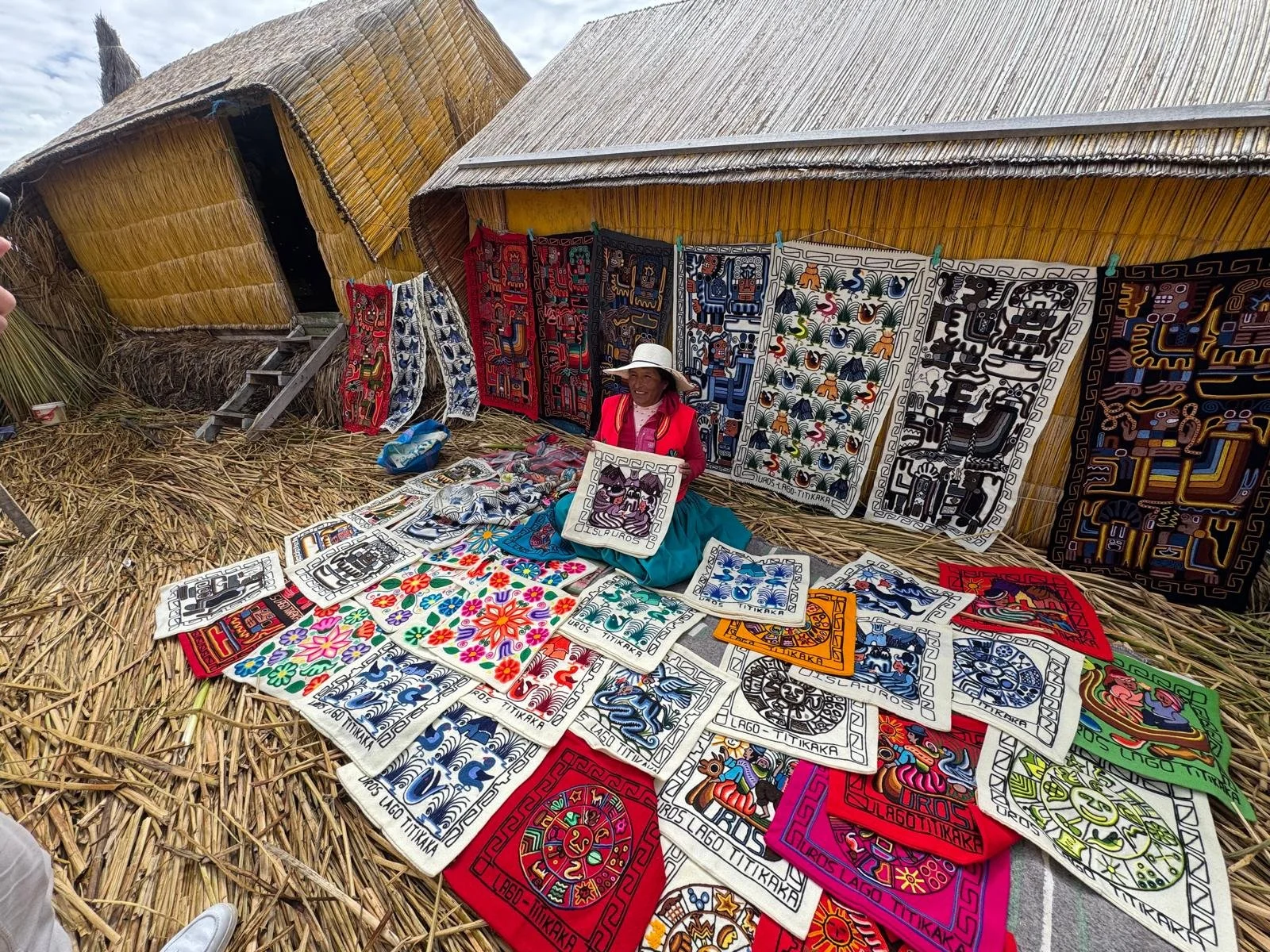
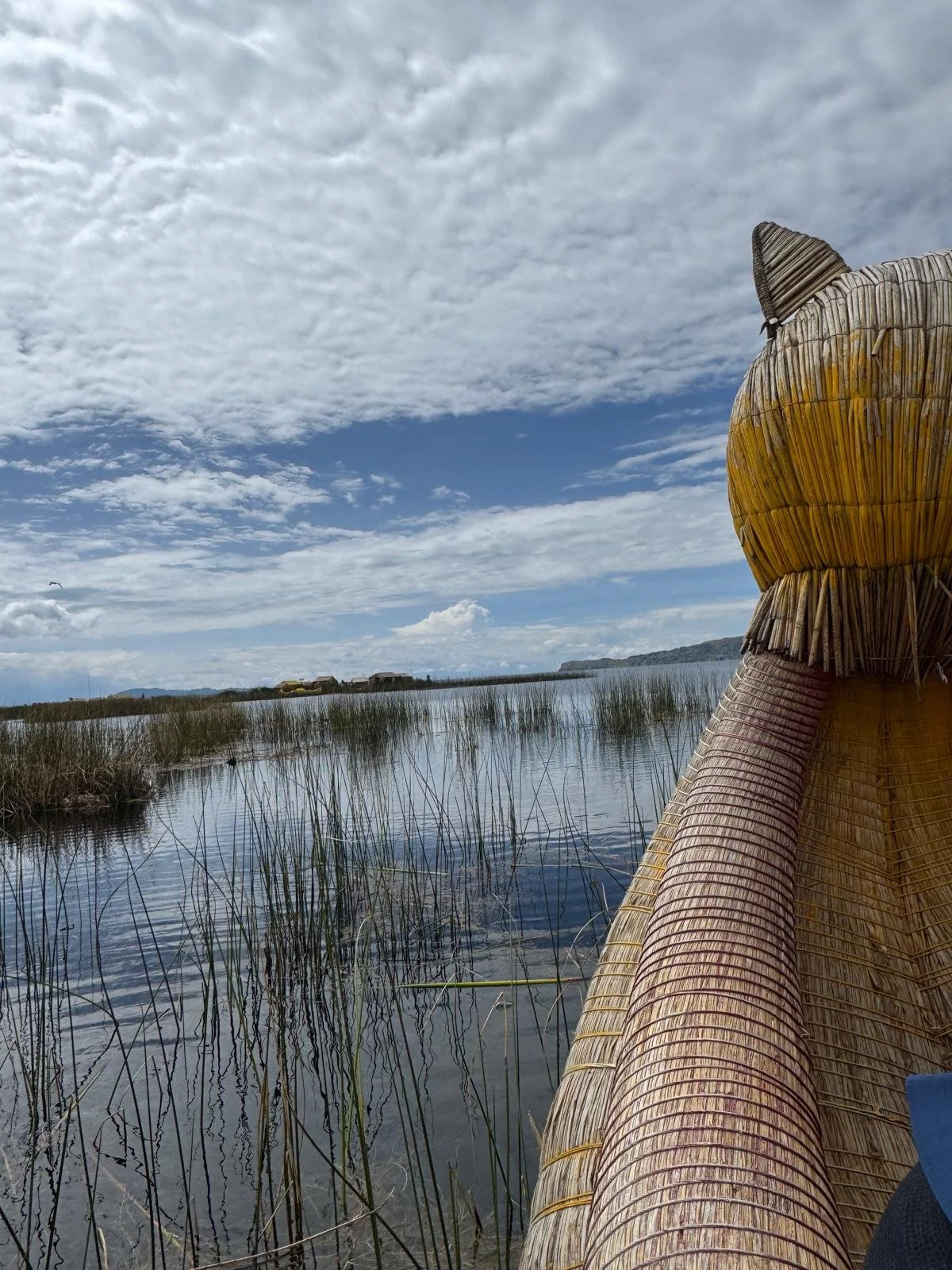
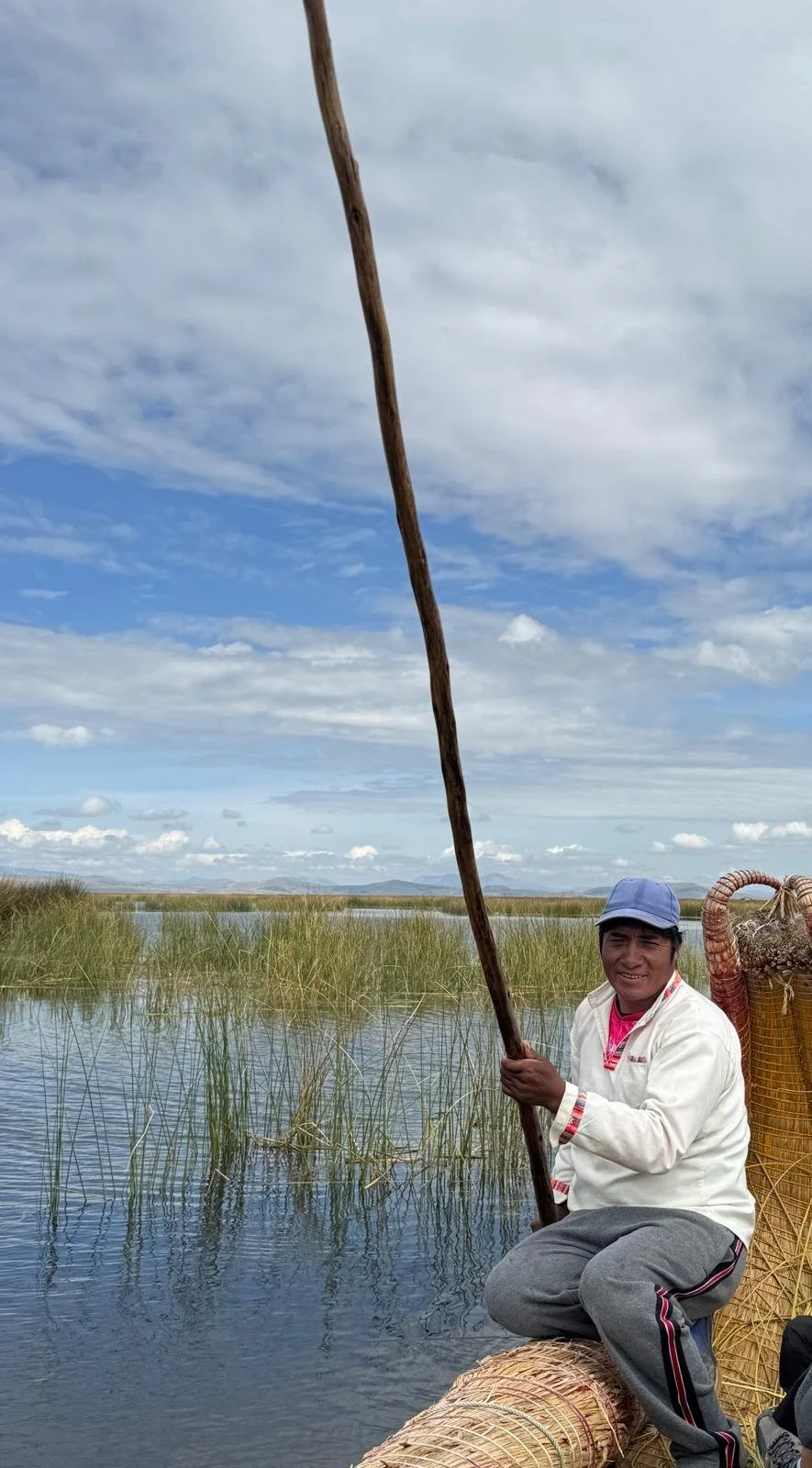
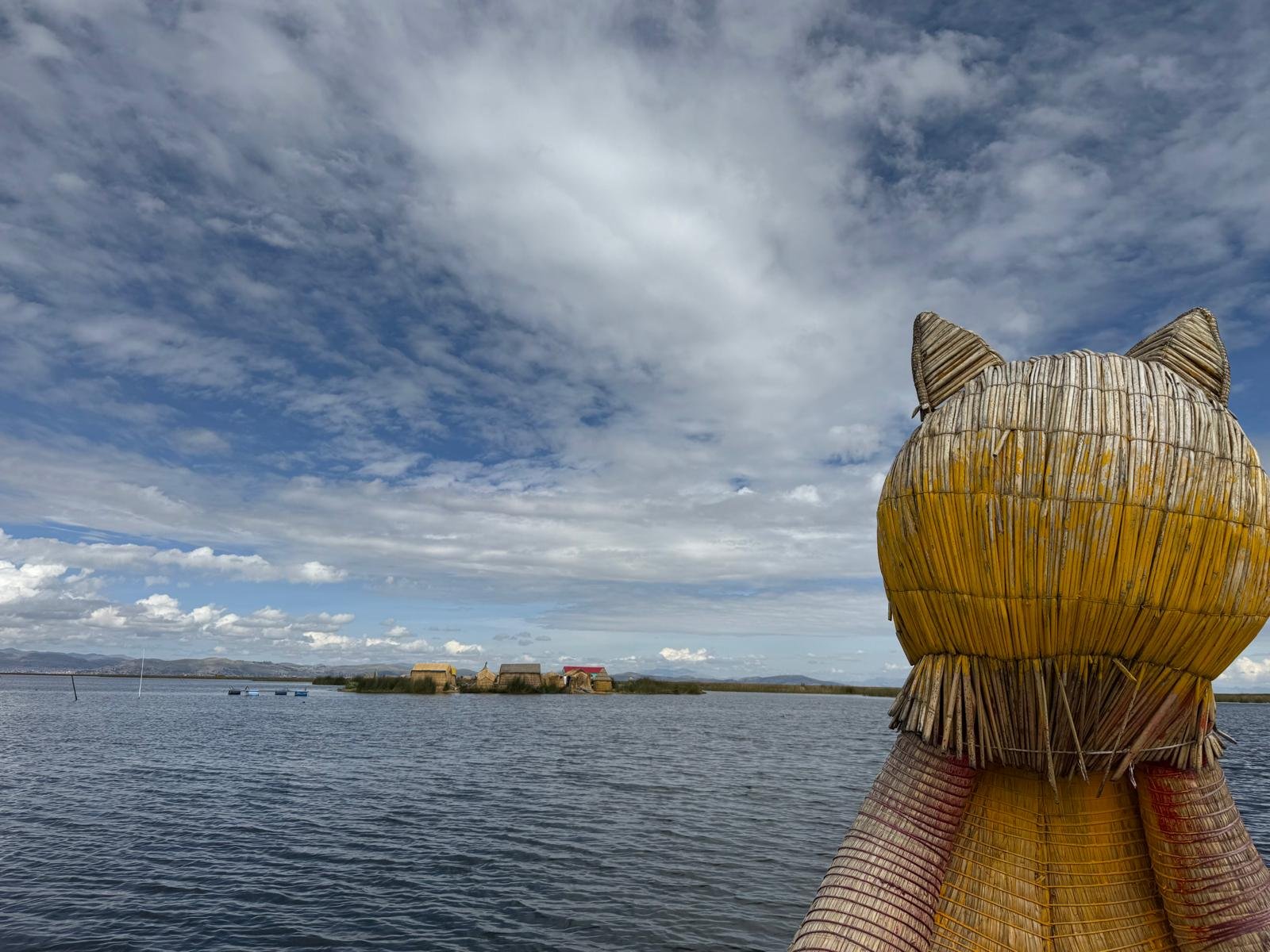
We went for a sail on the reed canoe – it was incredible, so strong and completely made of totara reeds – we passed another little island and it was interesting going through all the reeds, which they also eat – you pull them from the water and they are about five metres long, but the white end is edible and apparently tastes like celery! It was really an amazing and very surprising experience.
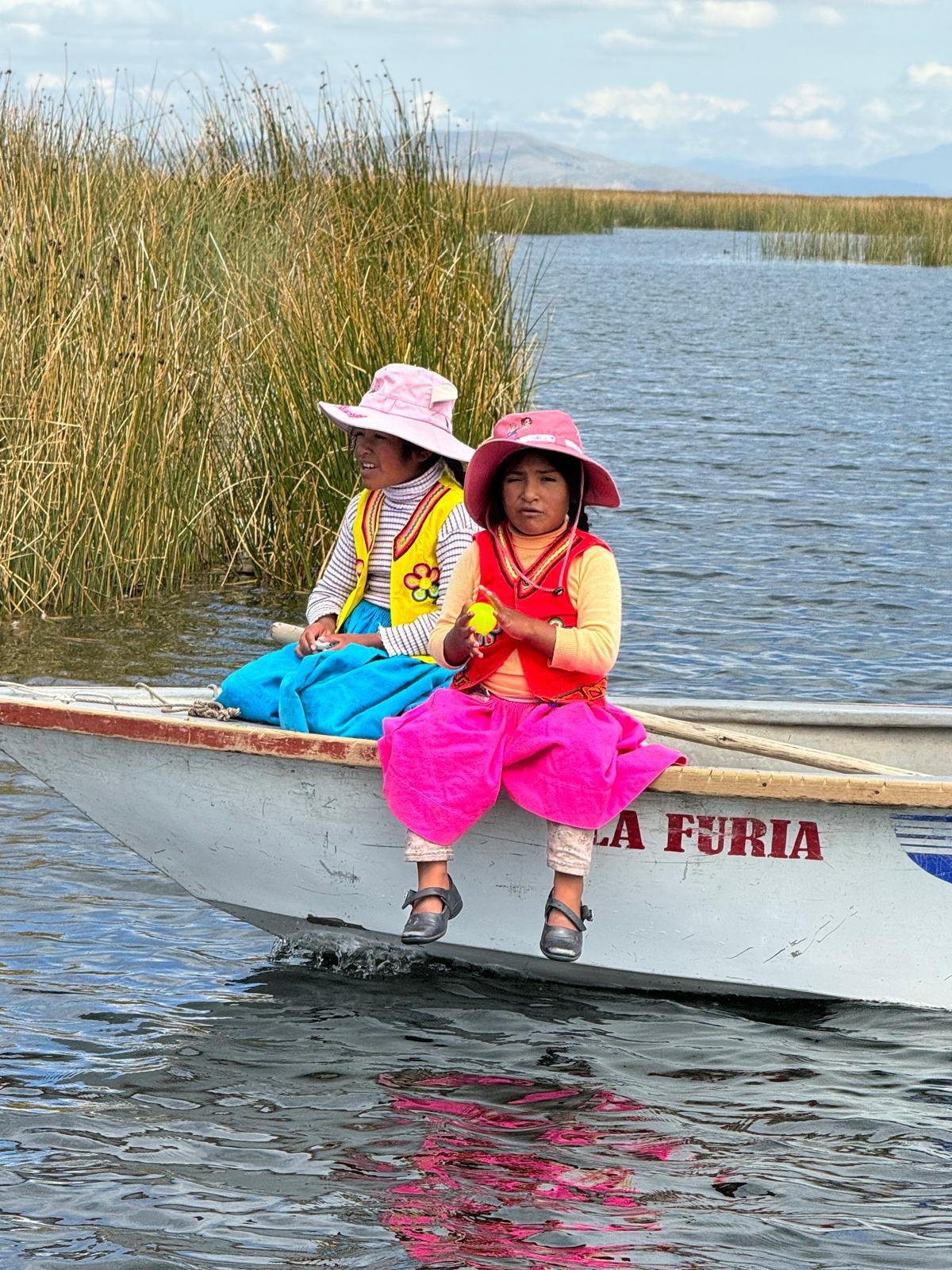
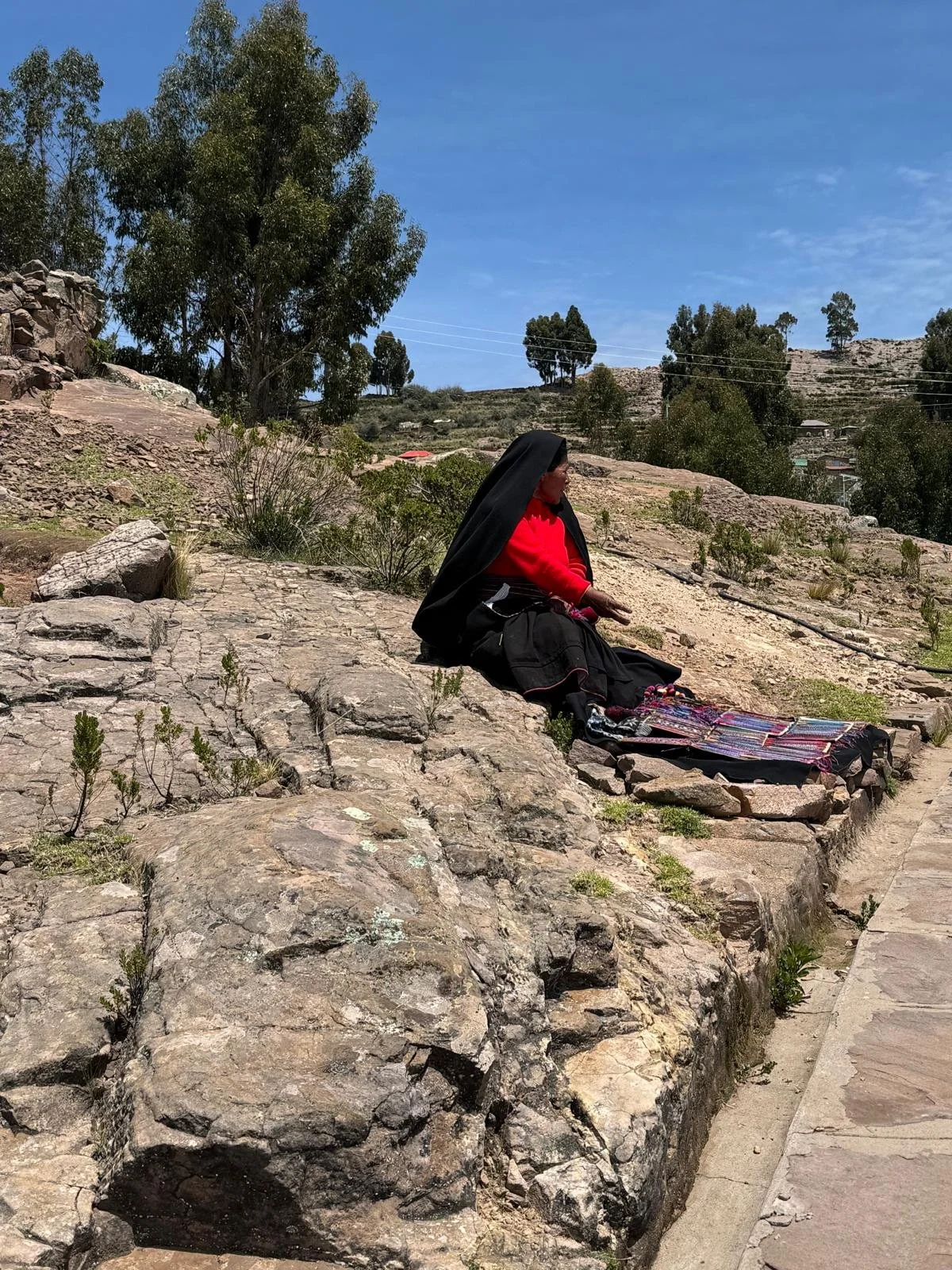
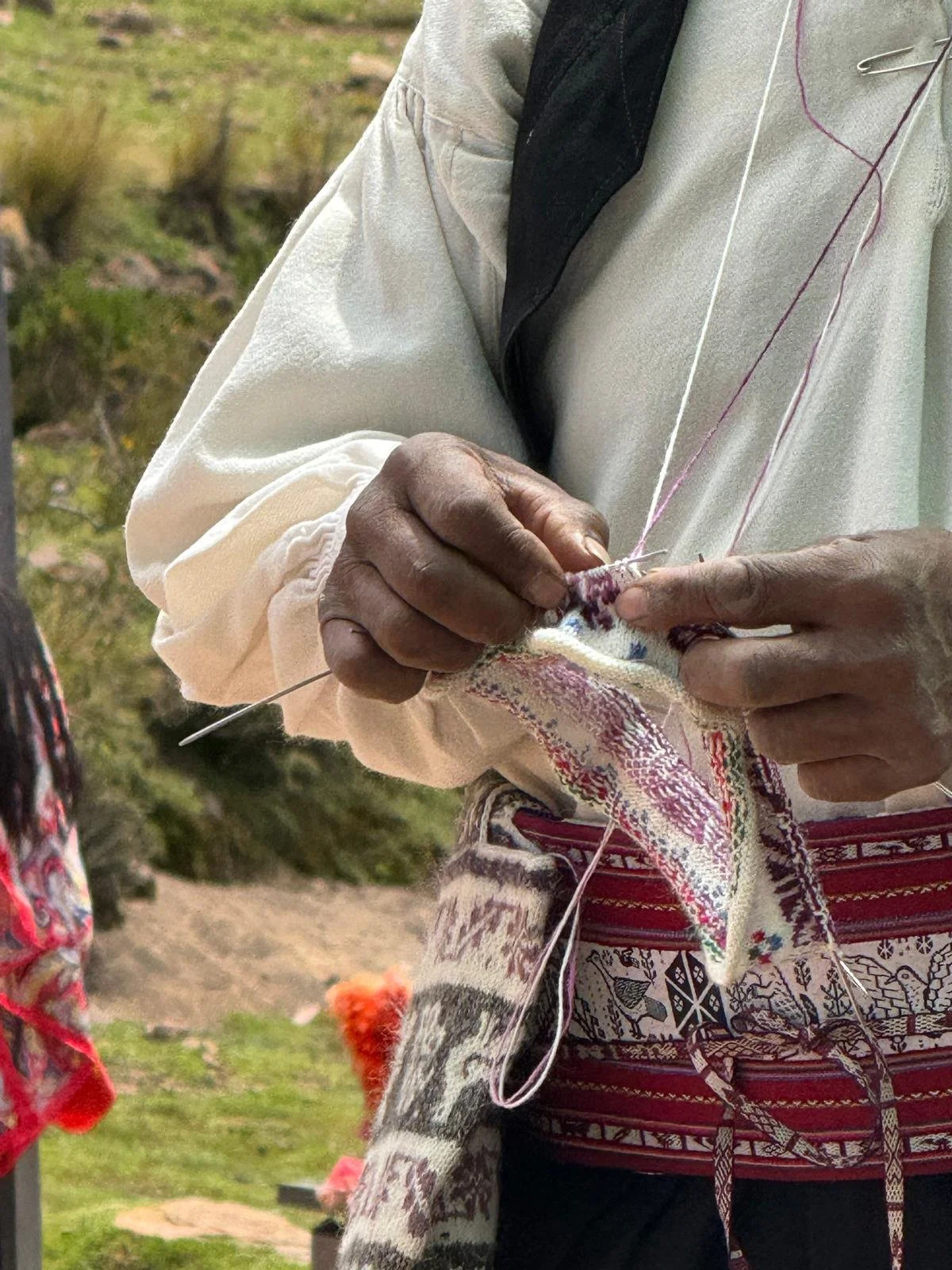
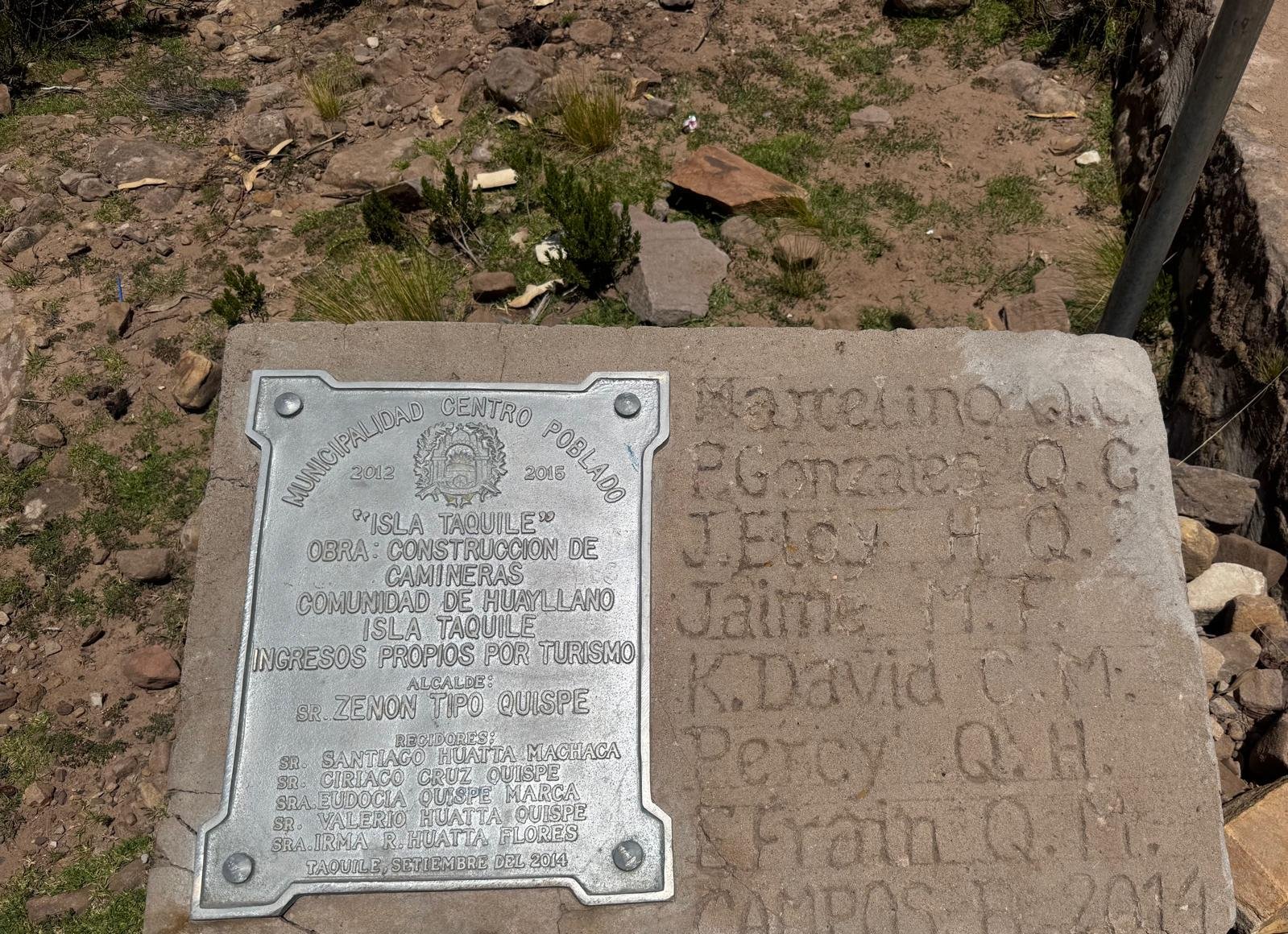
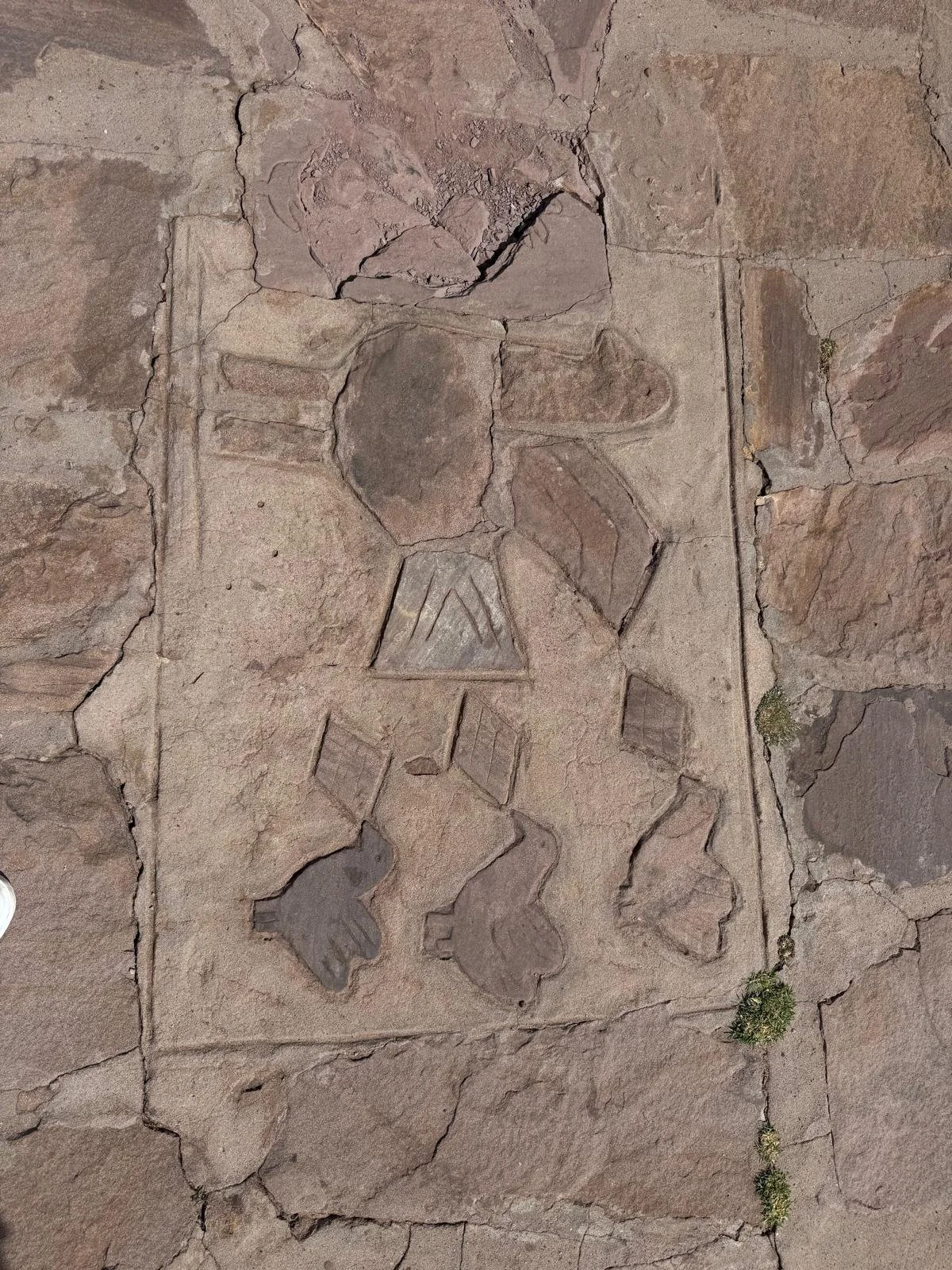
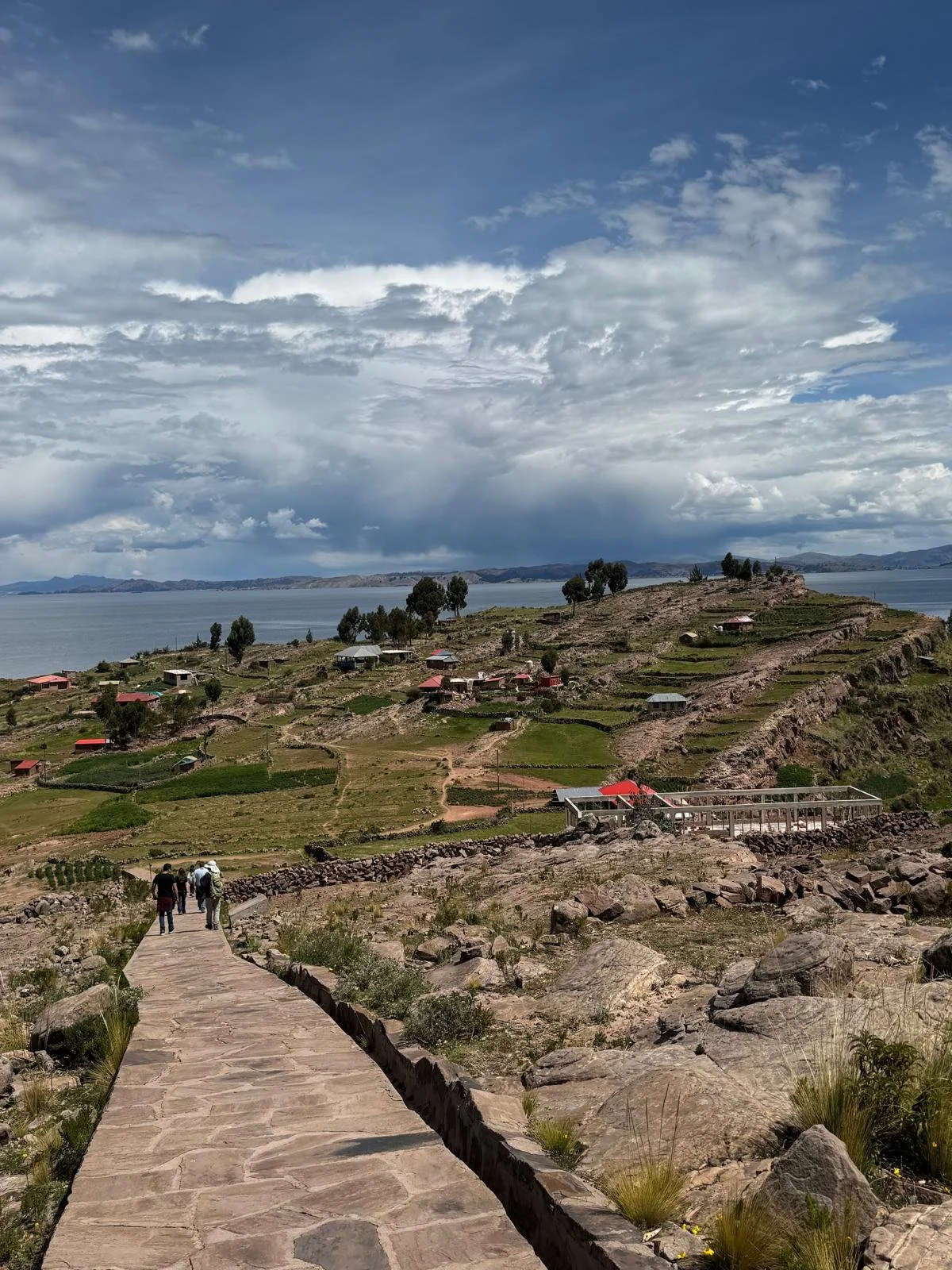
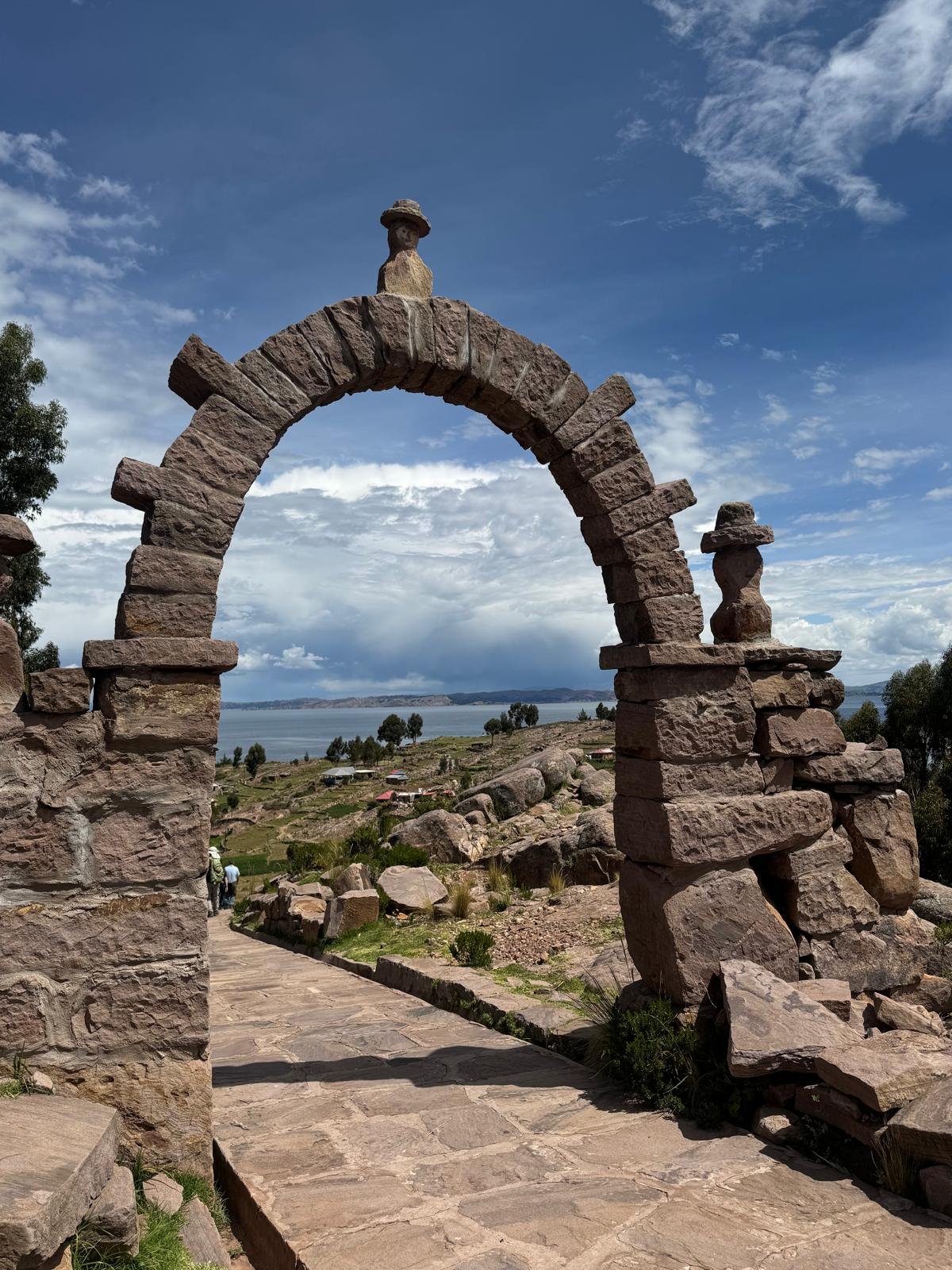
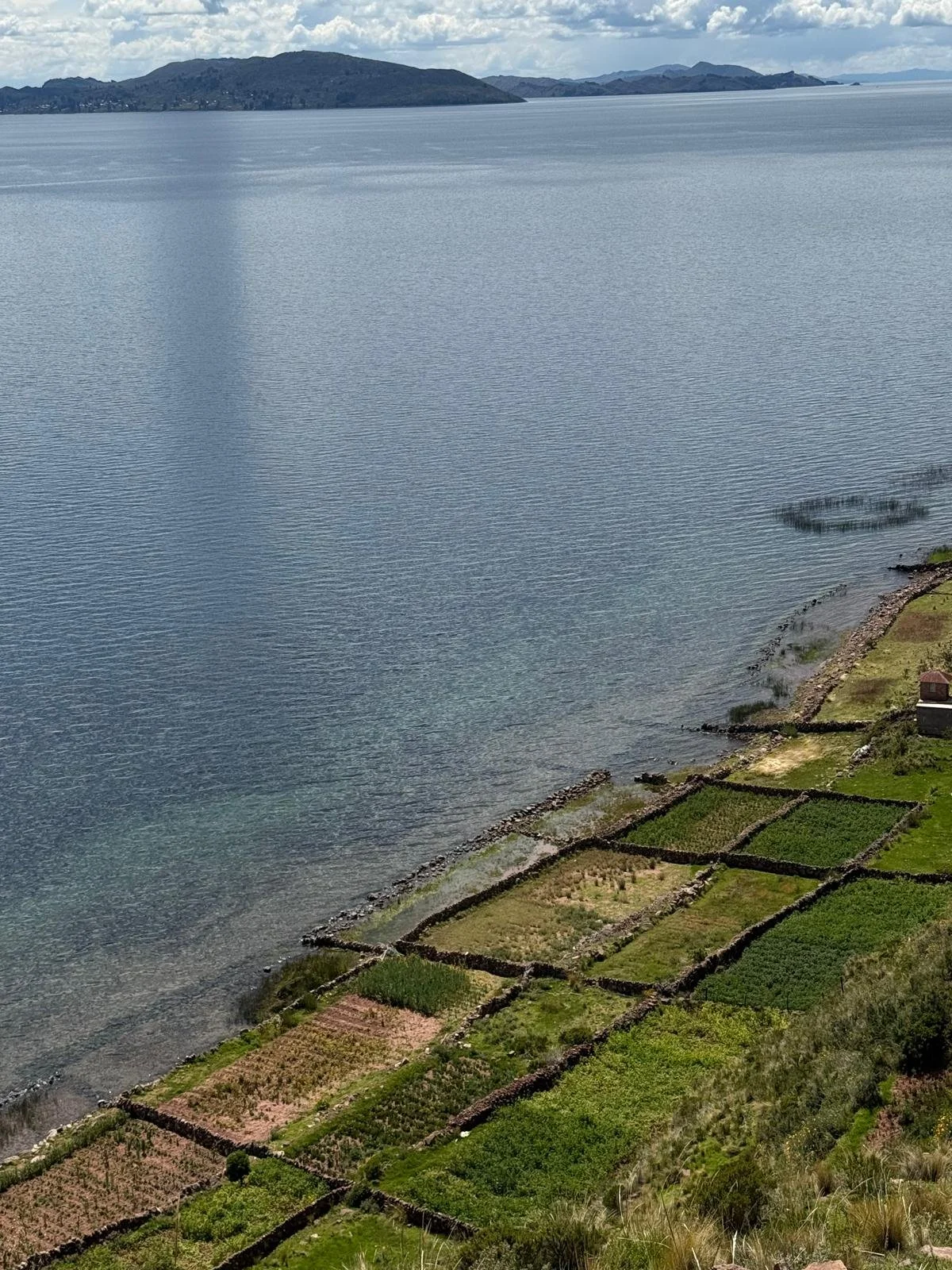
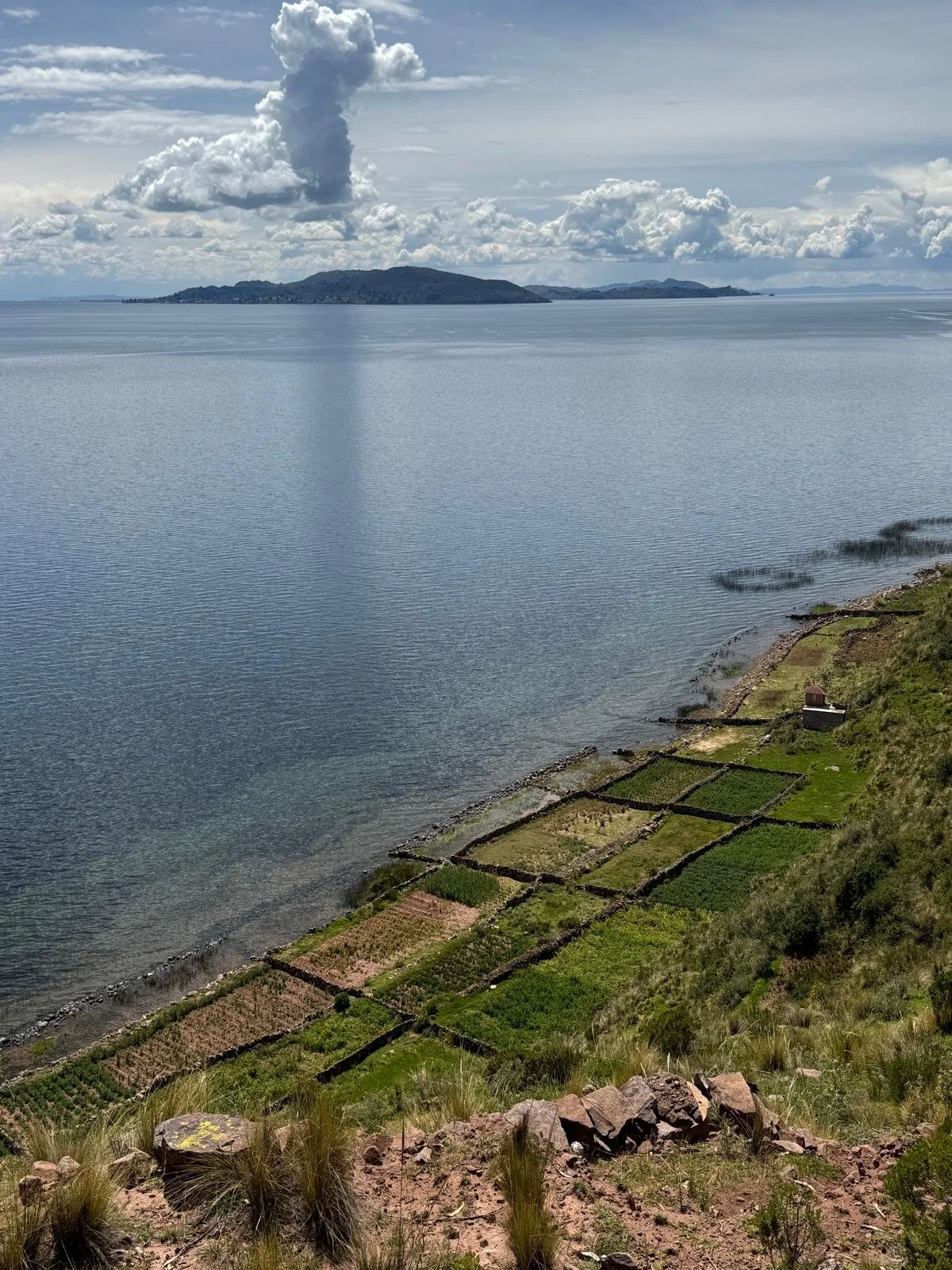
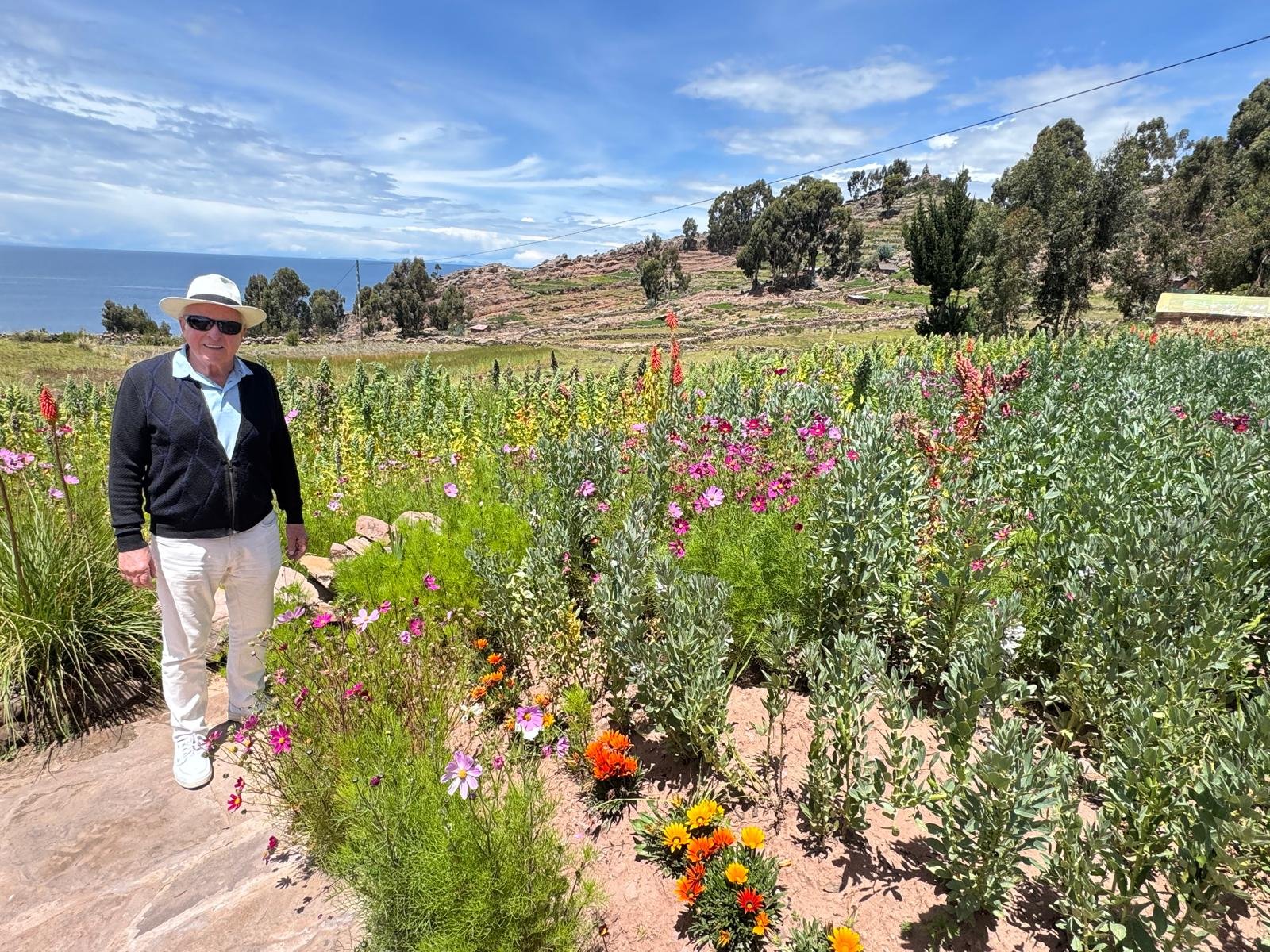
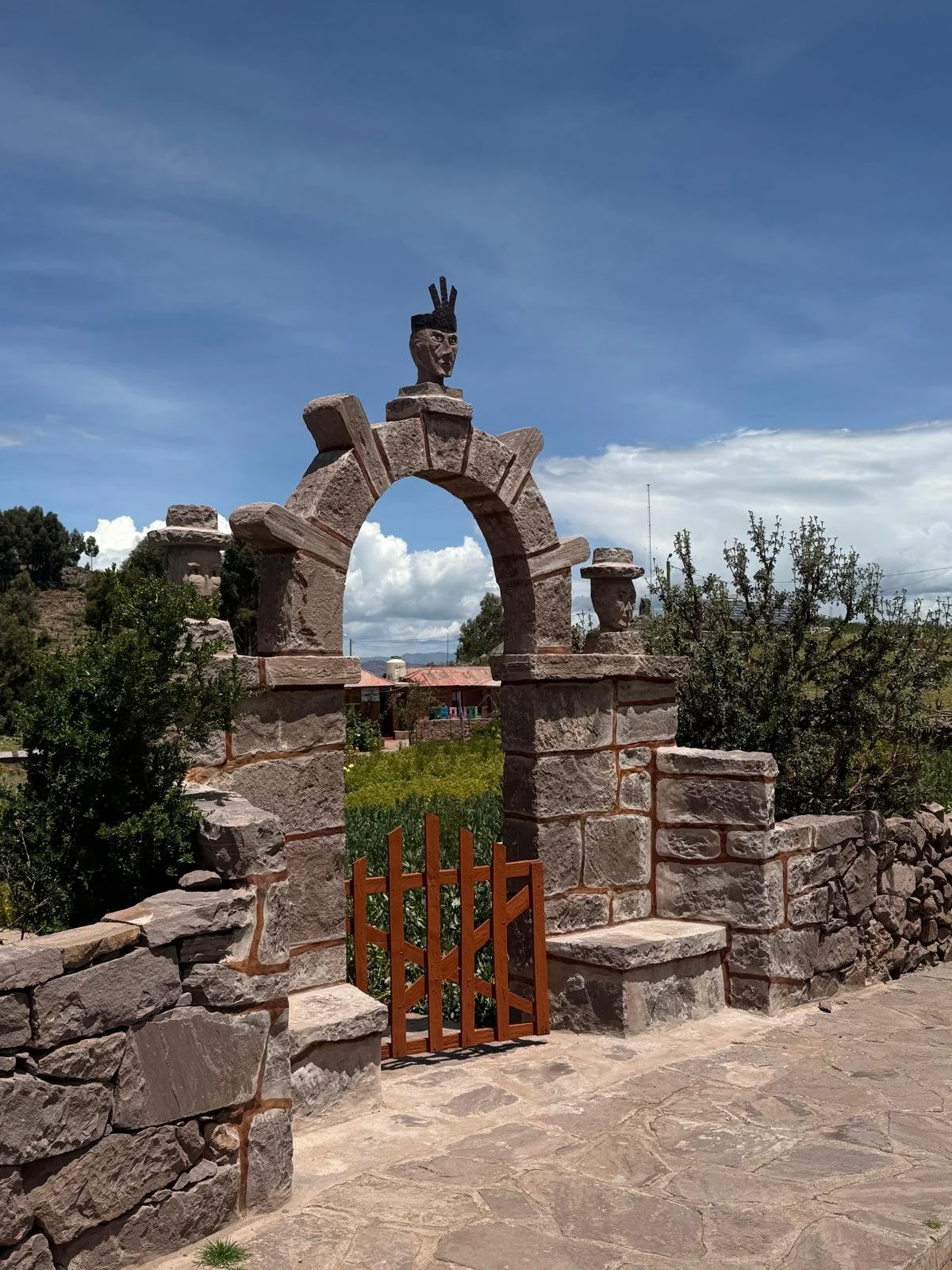
Next visit was to Isla Taquile, 4,500 metres above sea level and about 5.72km2. The 2,500 inhabitants known as Taquileños speak Puno Quechua and are known for their fine handwoven textiles. Knitting is exclusively performed by males, beginning when they are four years old, the women spin the wool and use the vegetables and minerals to dye it. They are a close-knit community (excuse the pun) and there any many traditions here. Firstly, their clothes denote their social status, marital status and community roles. Single men wear red knitted hats (chullos) with white tops, married men wear all-red hats . The leader wears a black hat and the retired leader, a colourful hat. Vests and pants are dark with a white shirt. Married women wear dark skirts and red hats, single women wear red and white hats, girls wear more colours and sometimes thirty layered dresses. Sandals are made from recycled tyres! The married ladies cut their hair and make this into a belt, covered in sheep wool for their husbands, these are very strong and enable them to carry 60kg of potatoes. They also make them colourful woven belts with symbols which can take up to six months to weave. Leaders are elected every year on the second Sunday in November.
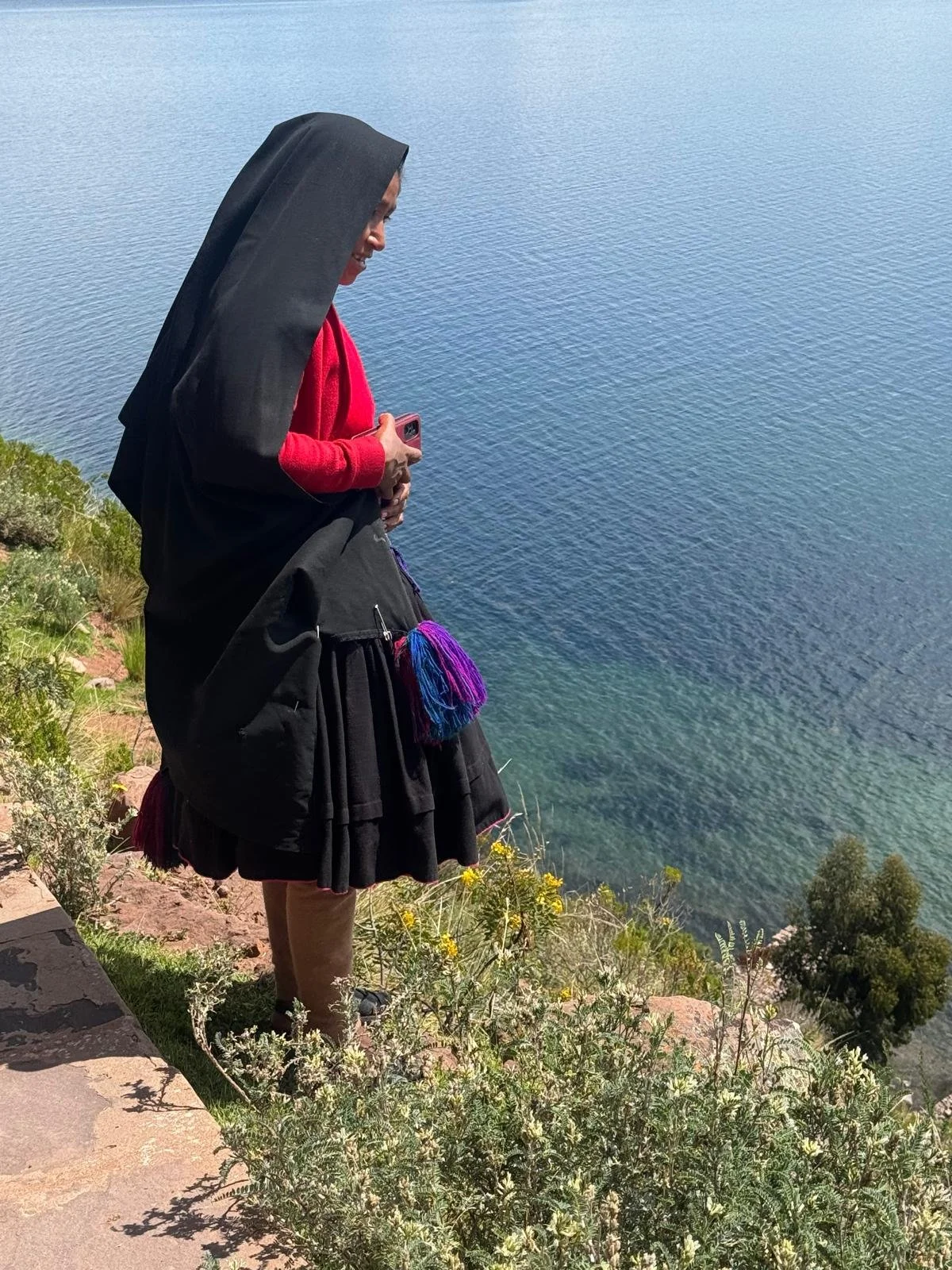
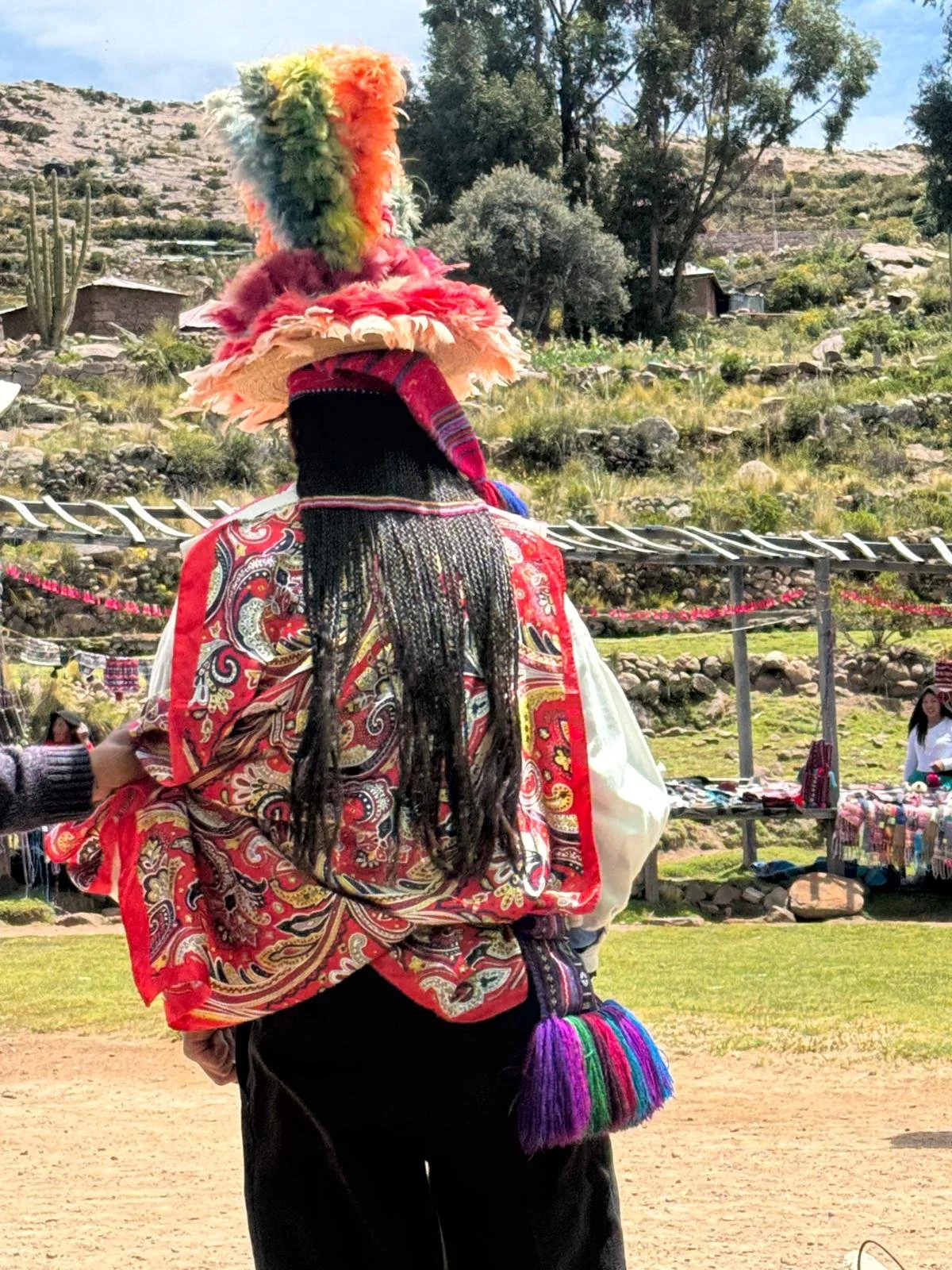
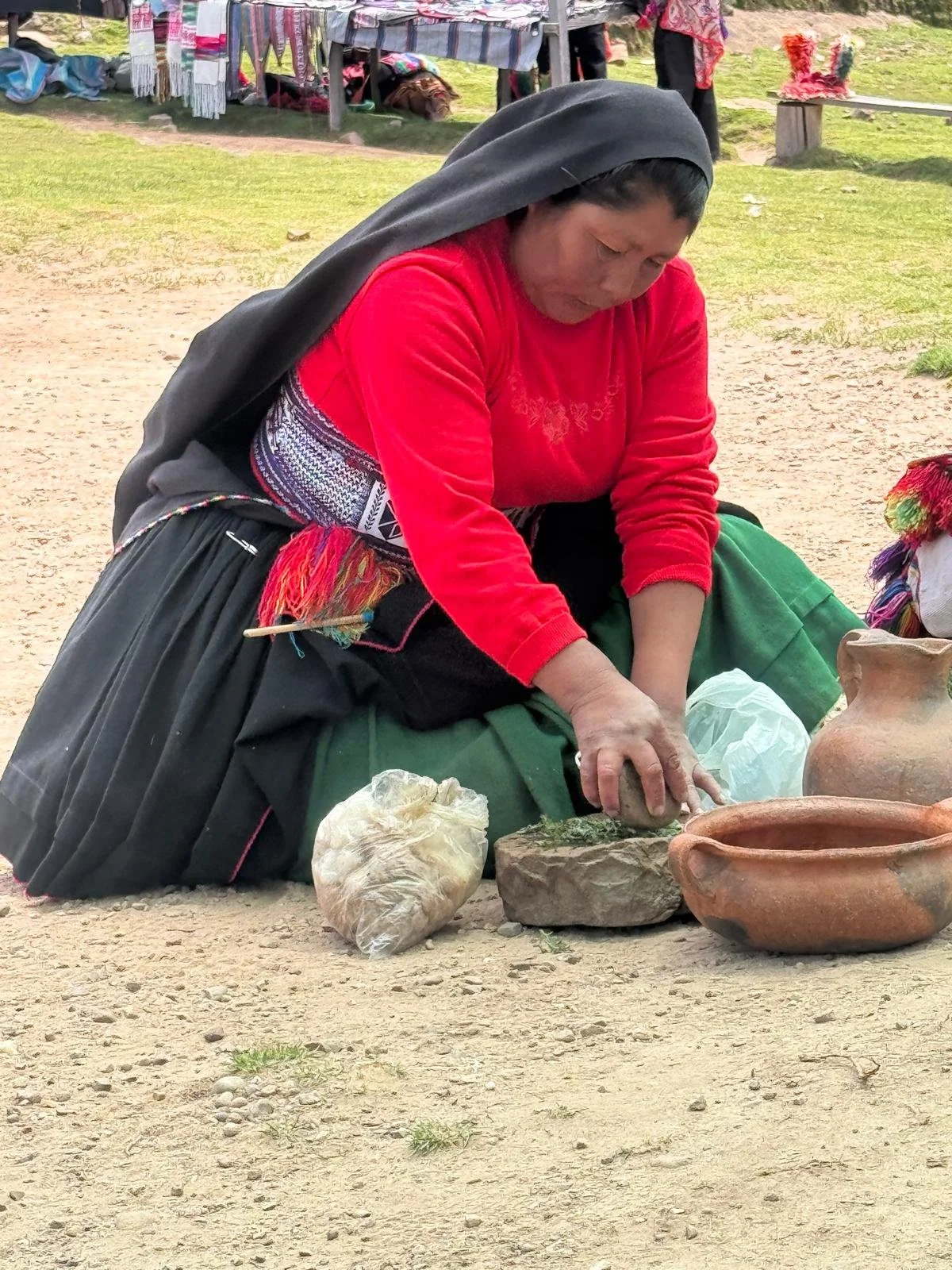
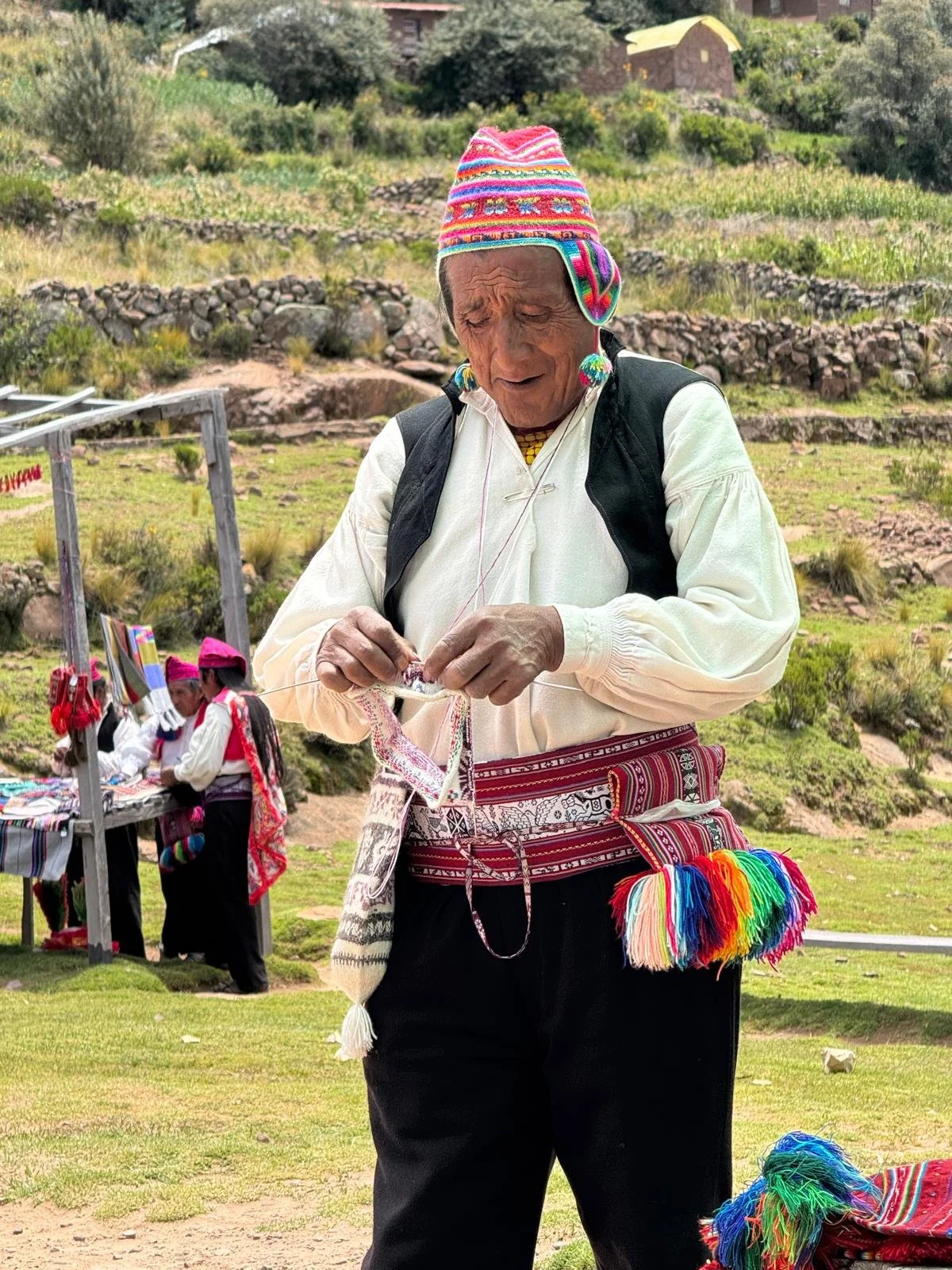
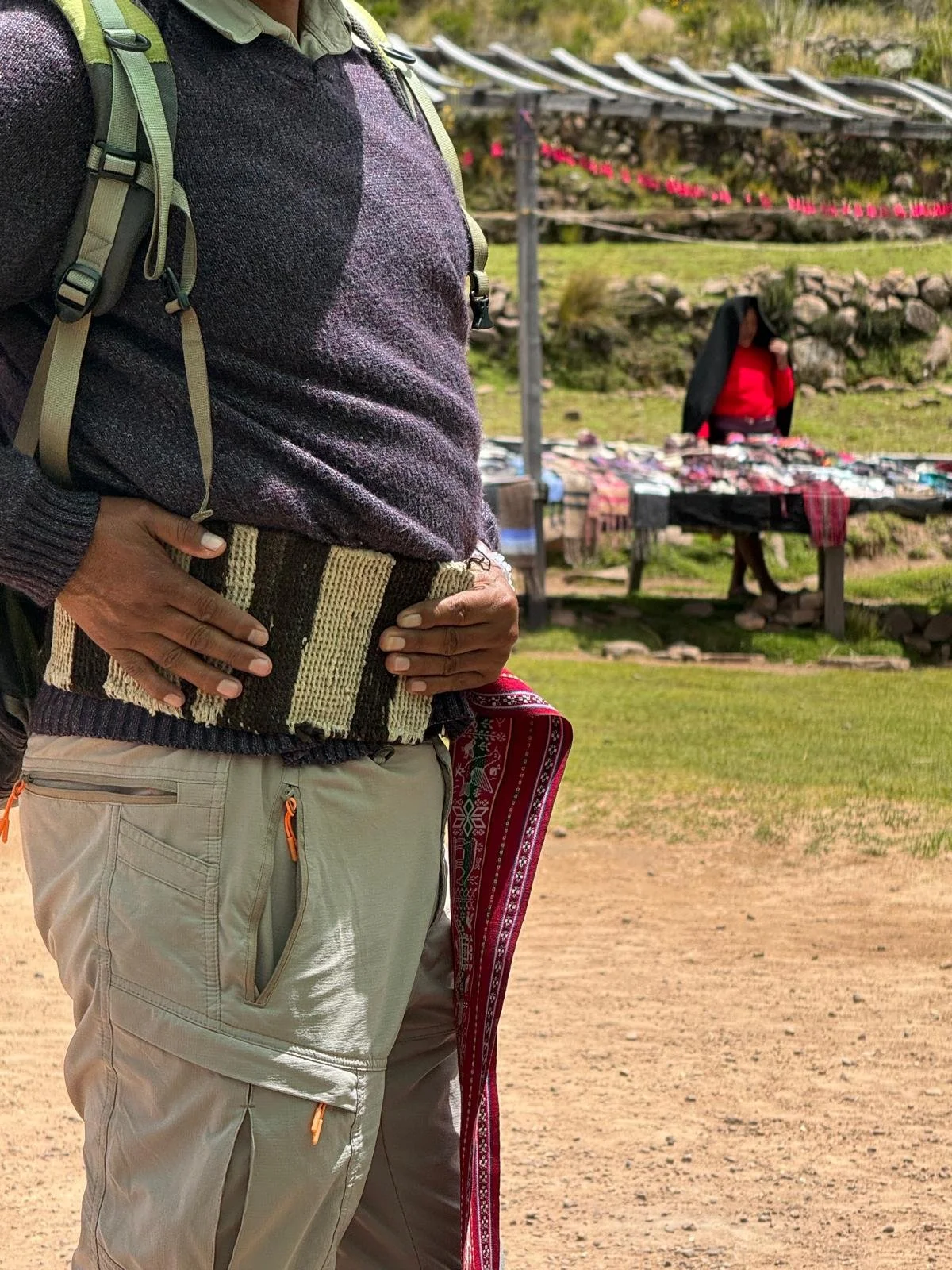
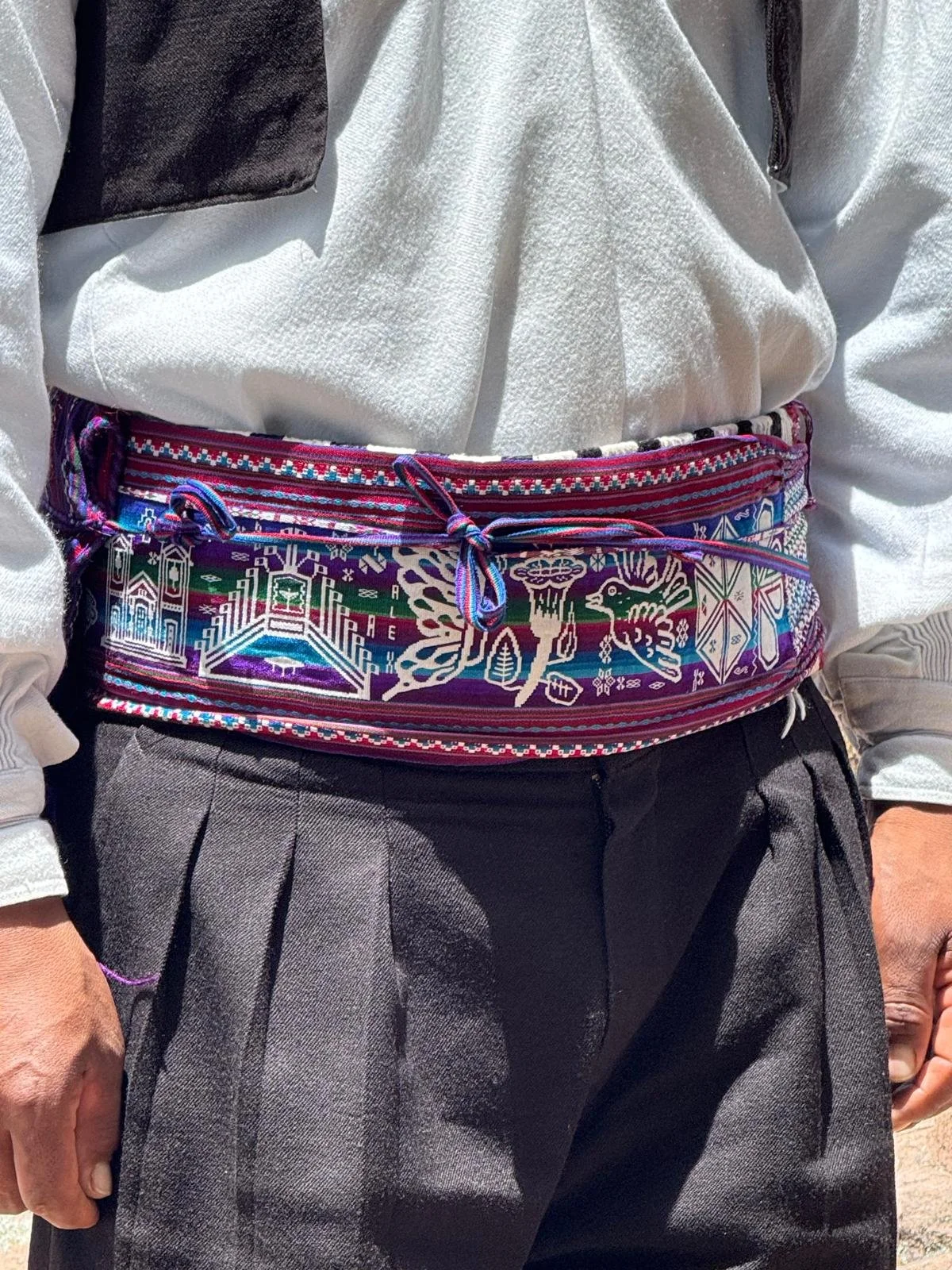
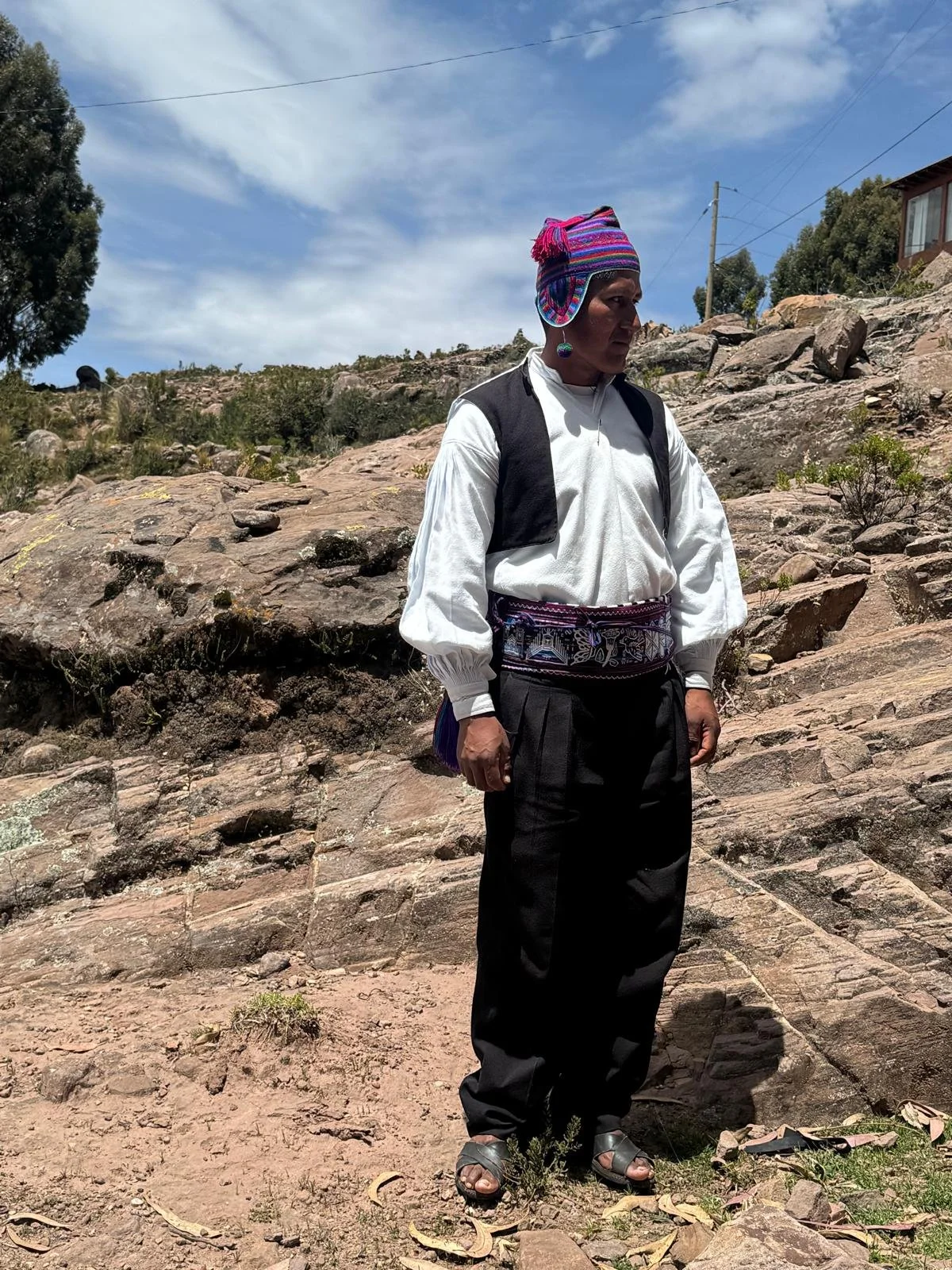
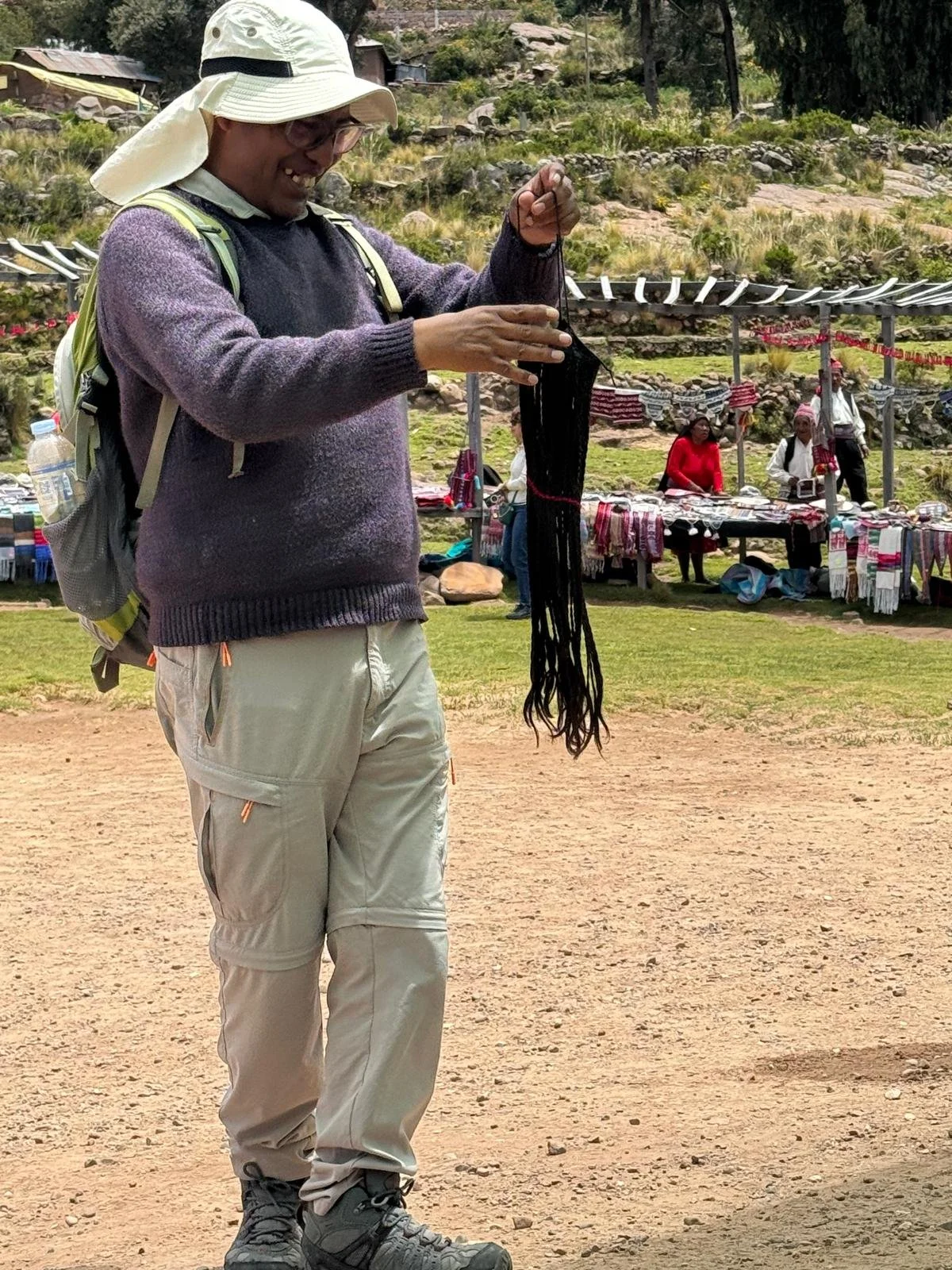
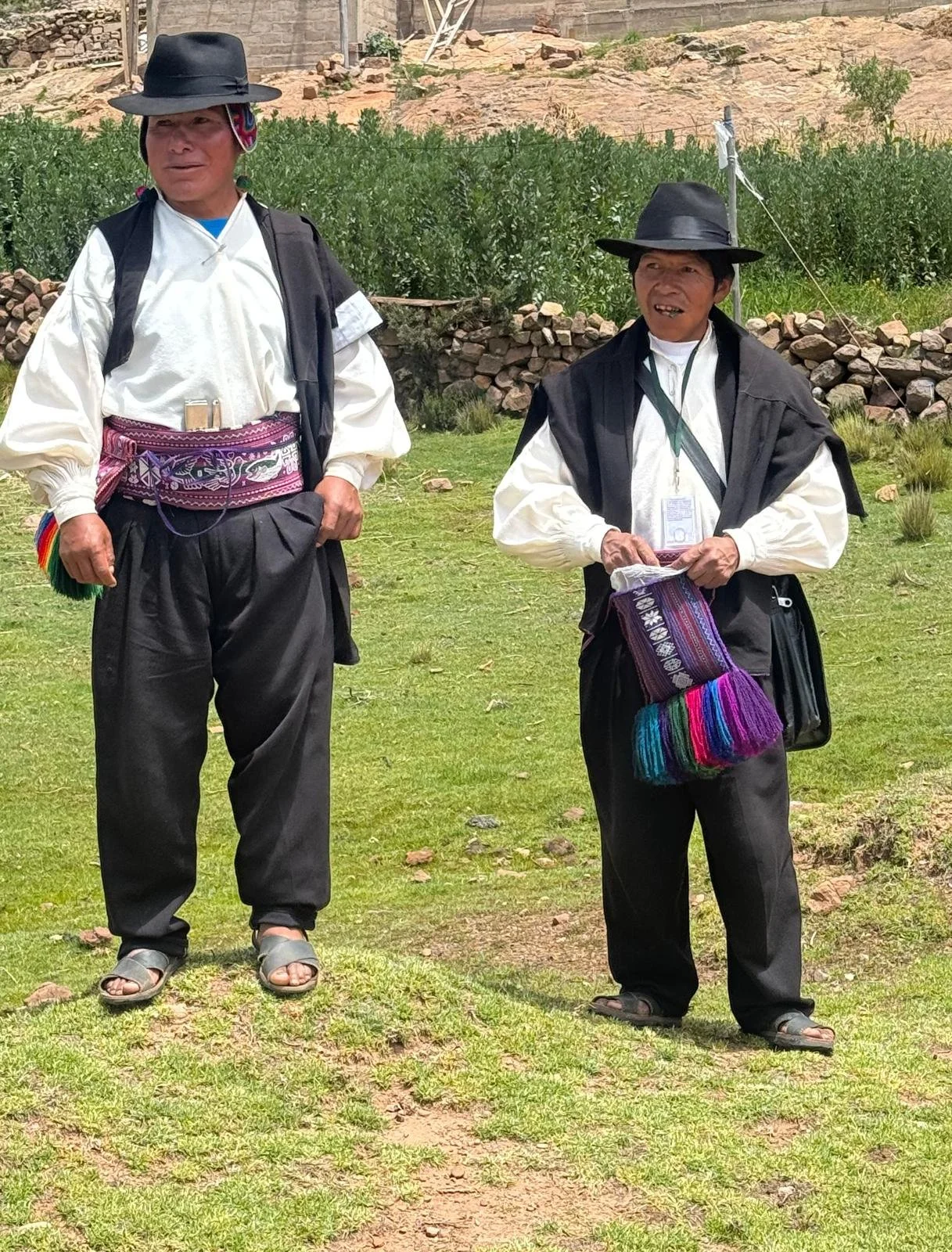
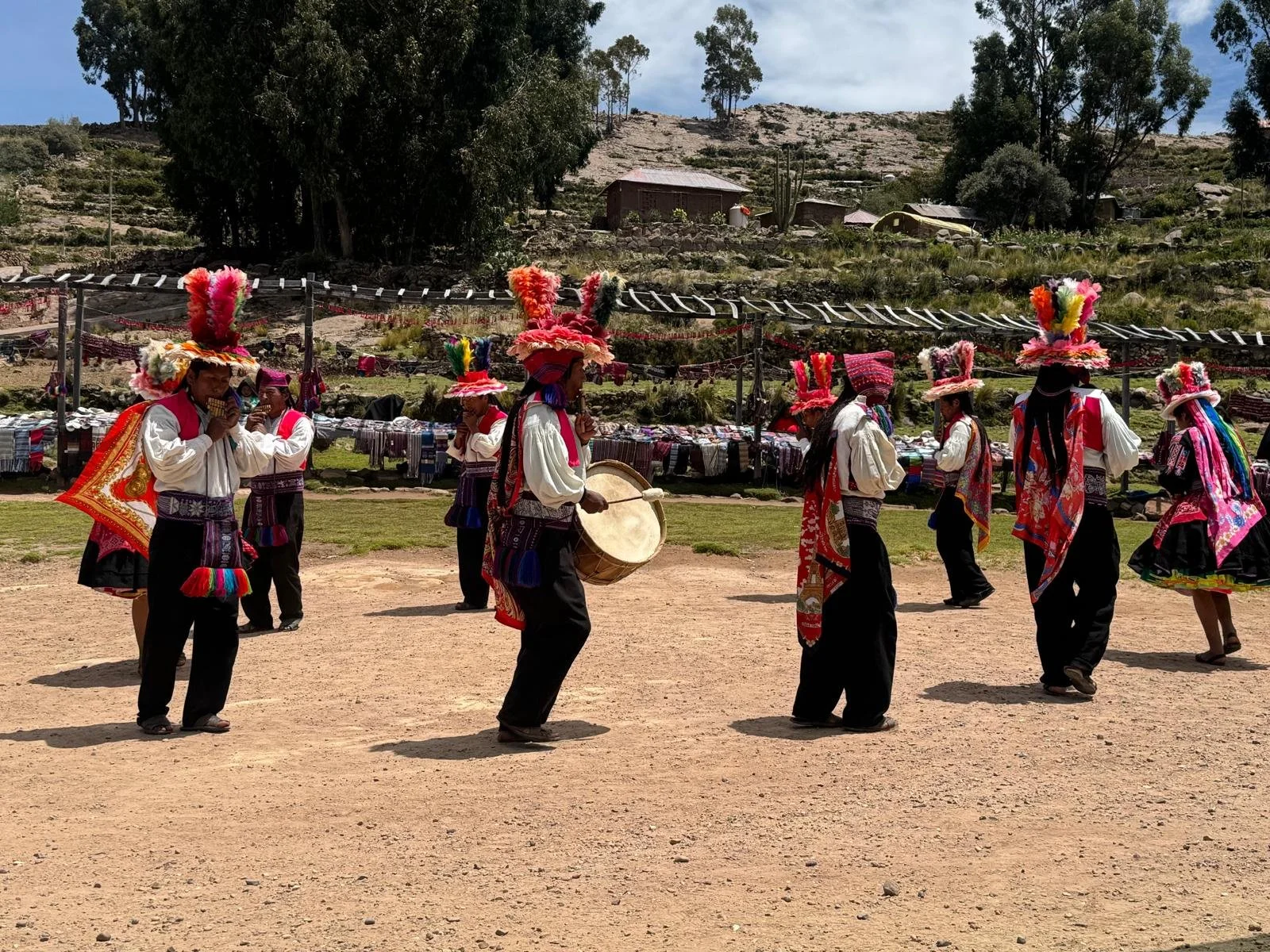
The inhabitants live by four rules: don’t be lazy, don’t steal, don’t lie and no divorce! Four-year-olds are taught how to wash their own clothes, the divorce rule works out quite well as the couples live together for years before they marry and their contraception is by form of a herbal drink (maybe some form of abortion?). If the rules are broken there are public lashings – good to know there was only one in the last year, three lashes each for two young boys fighting! We were treated to a dance by the locals and yes – Geoff and I got hauled up and had a go – and then it was off to walk around the island for our local lunch of quinoa soup, trout for Geoff and an omelette for me.
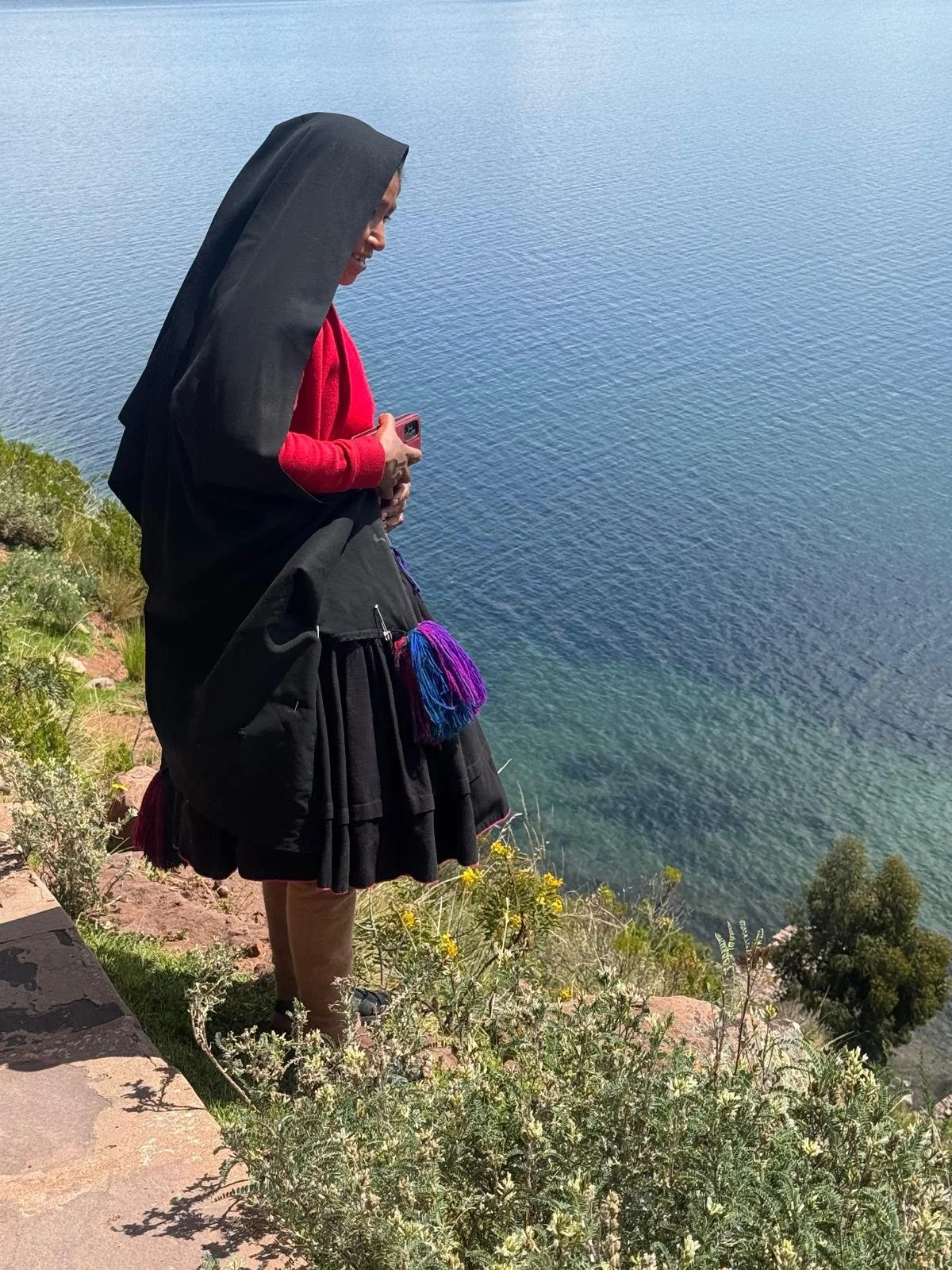
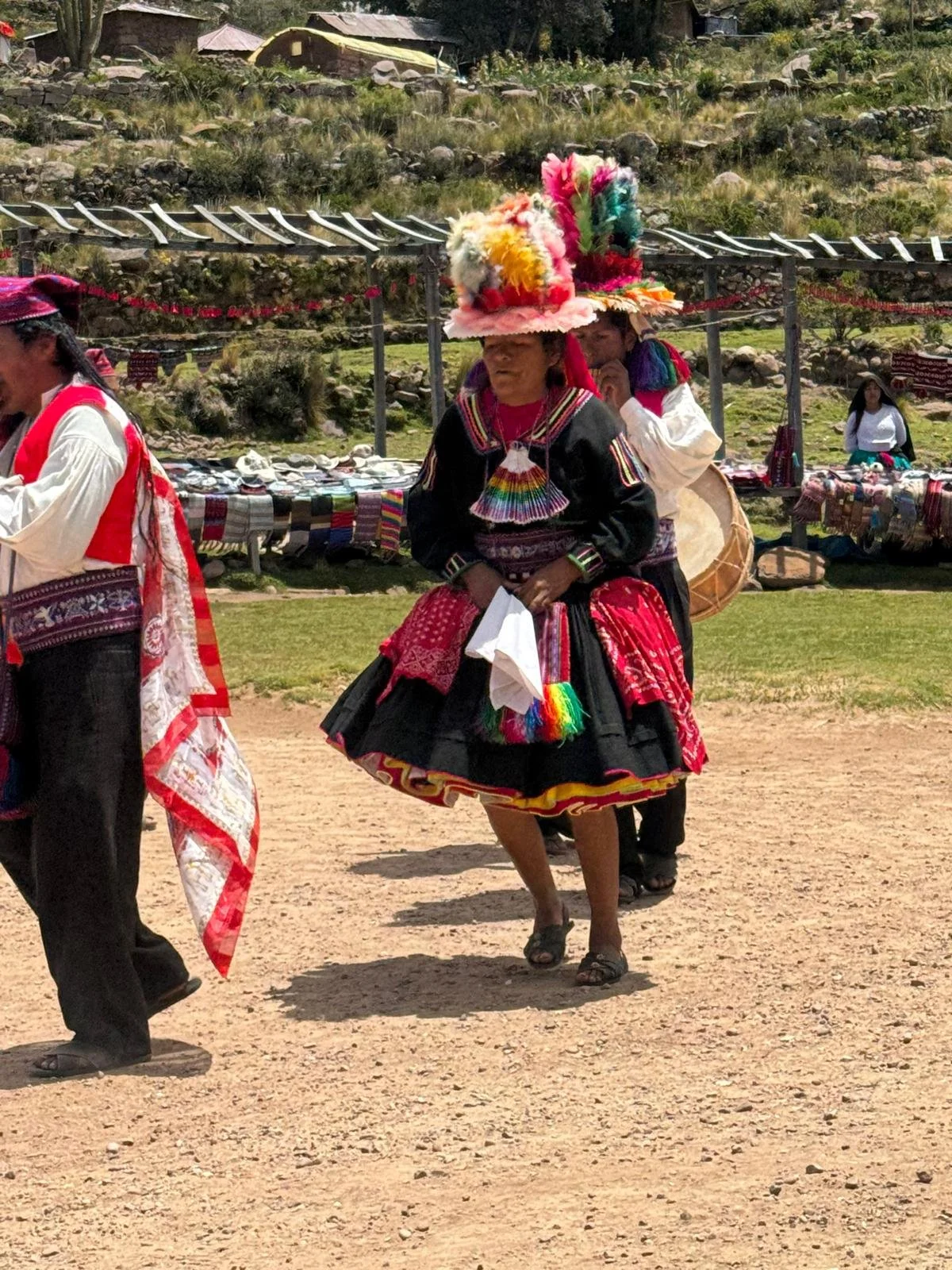
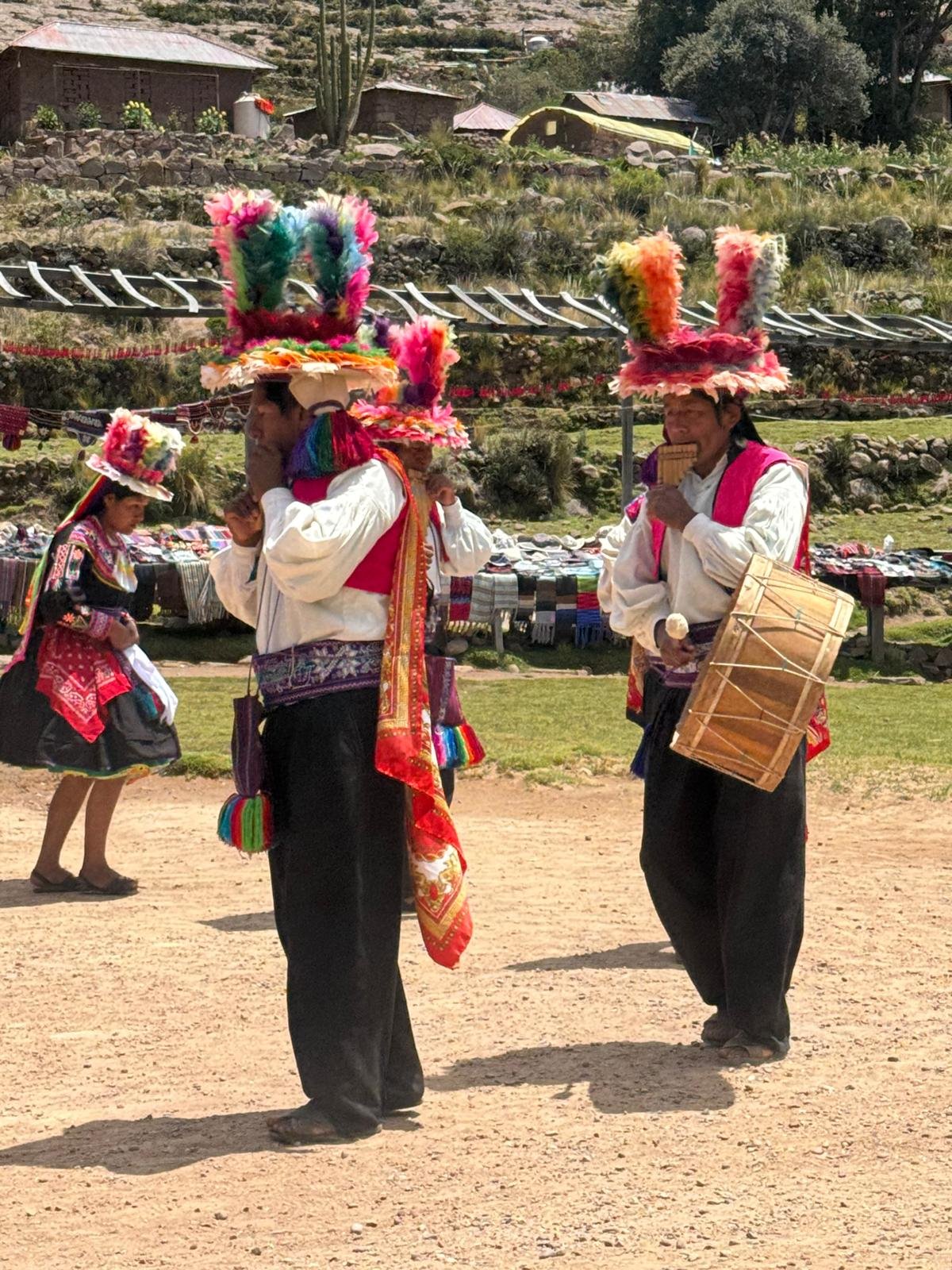

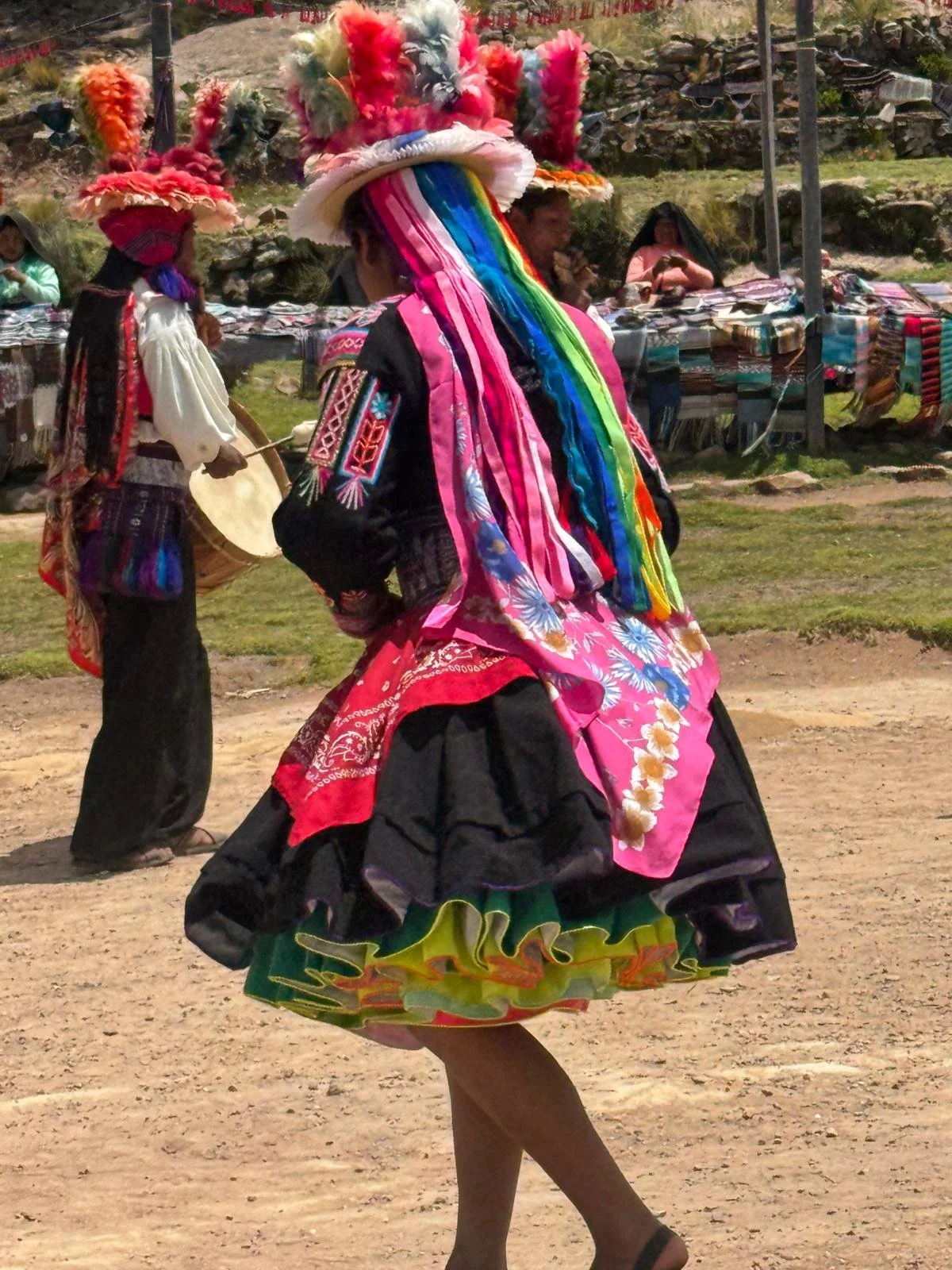
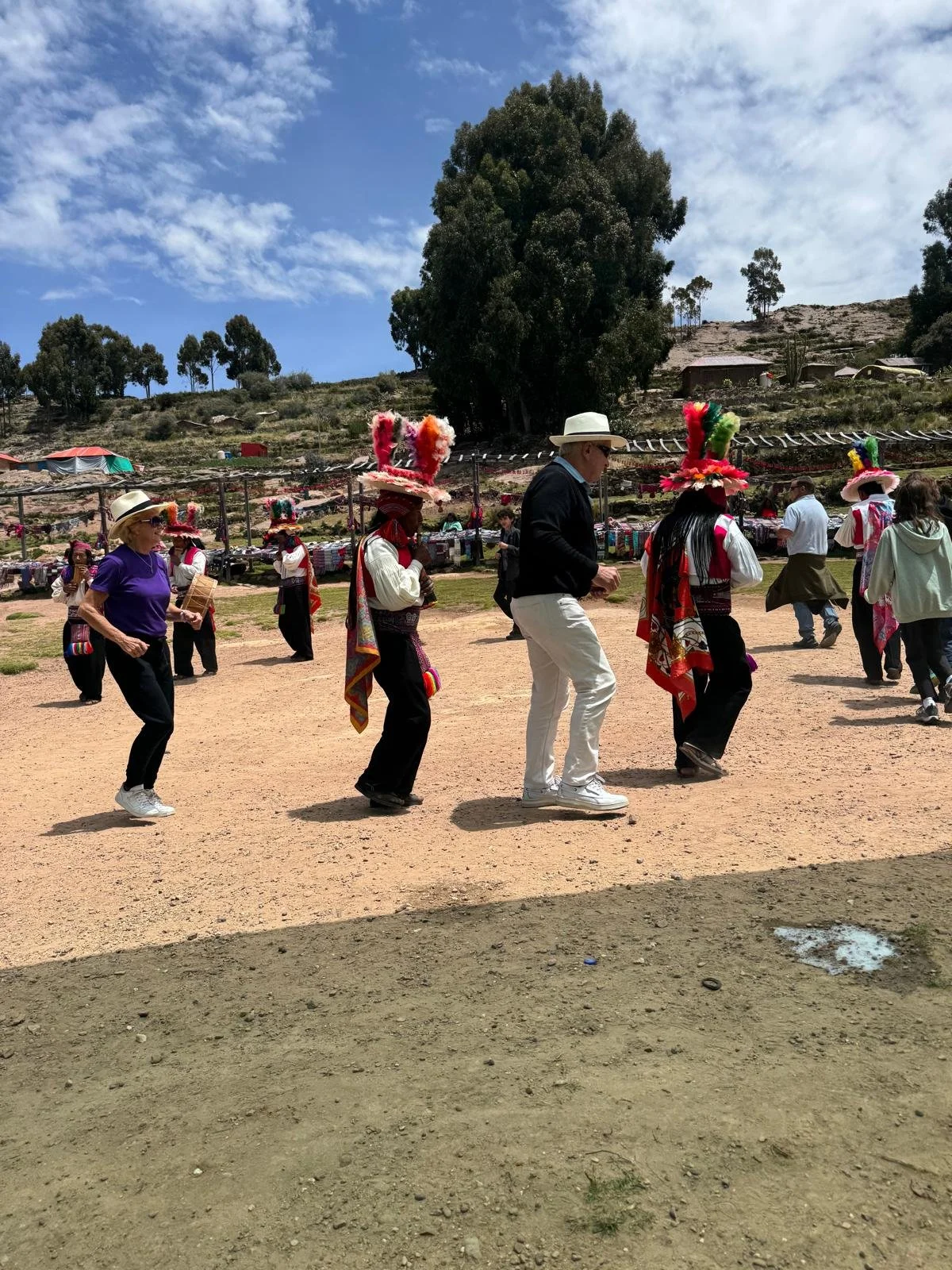
A walk around the other side of the island after lunch and I can tell you I was really struggling with the altitude, there were some hills over the paved pathways, and I kept having to stop. I don’t know how I would have managed without taking those altitude tablets! And then it was back on the boat for our ninety-minute cruise back to Puno.
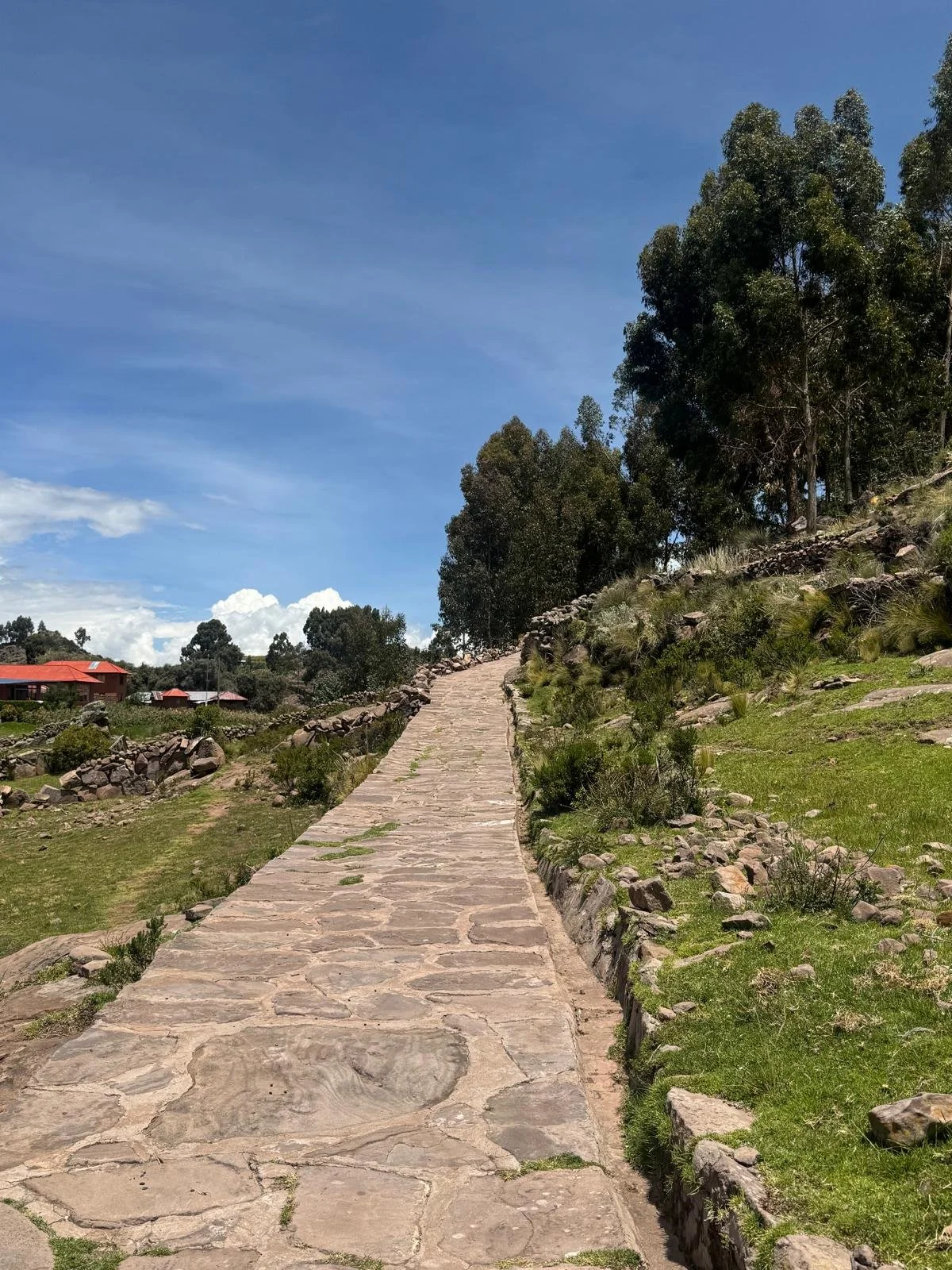
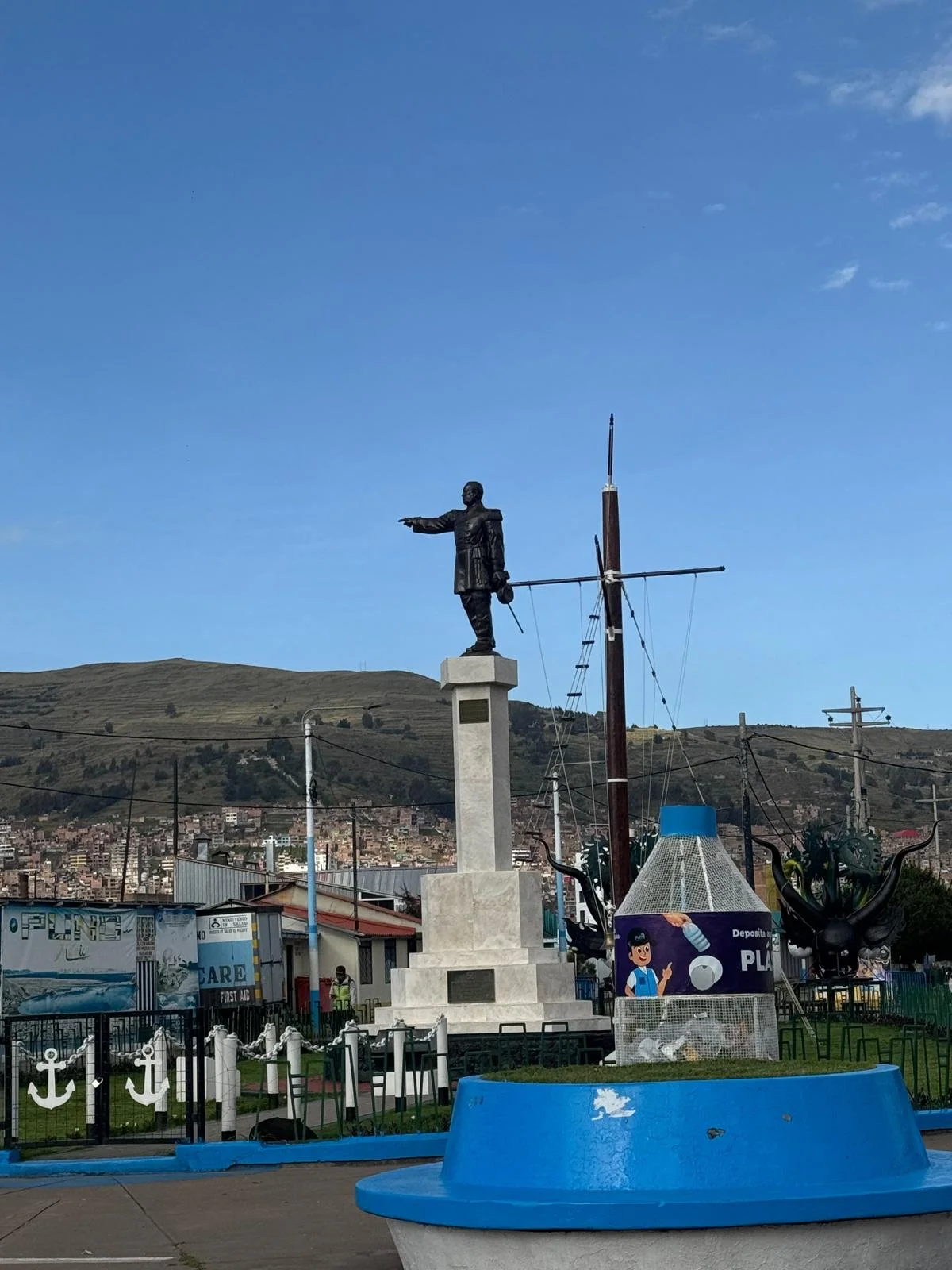
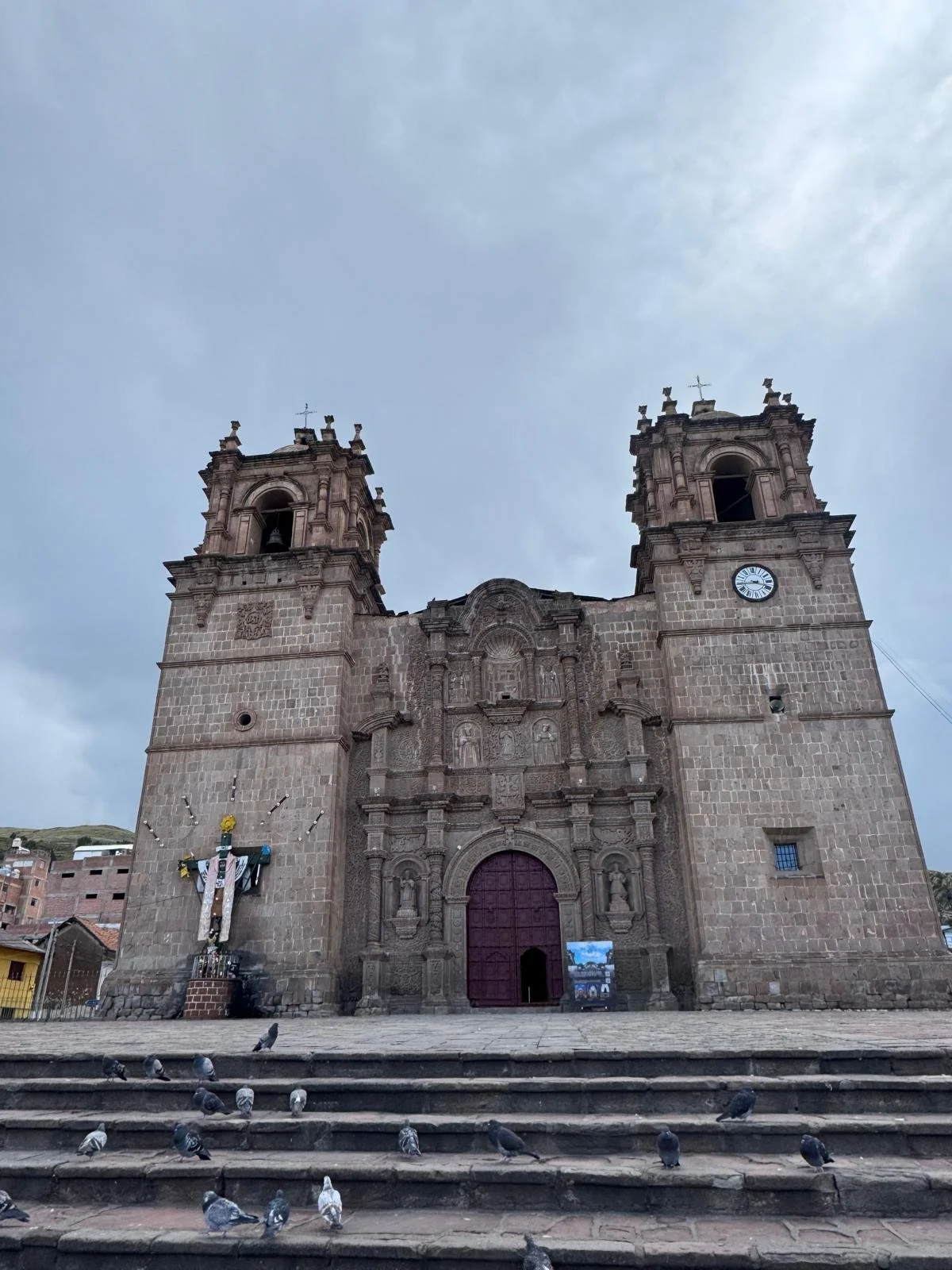
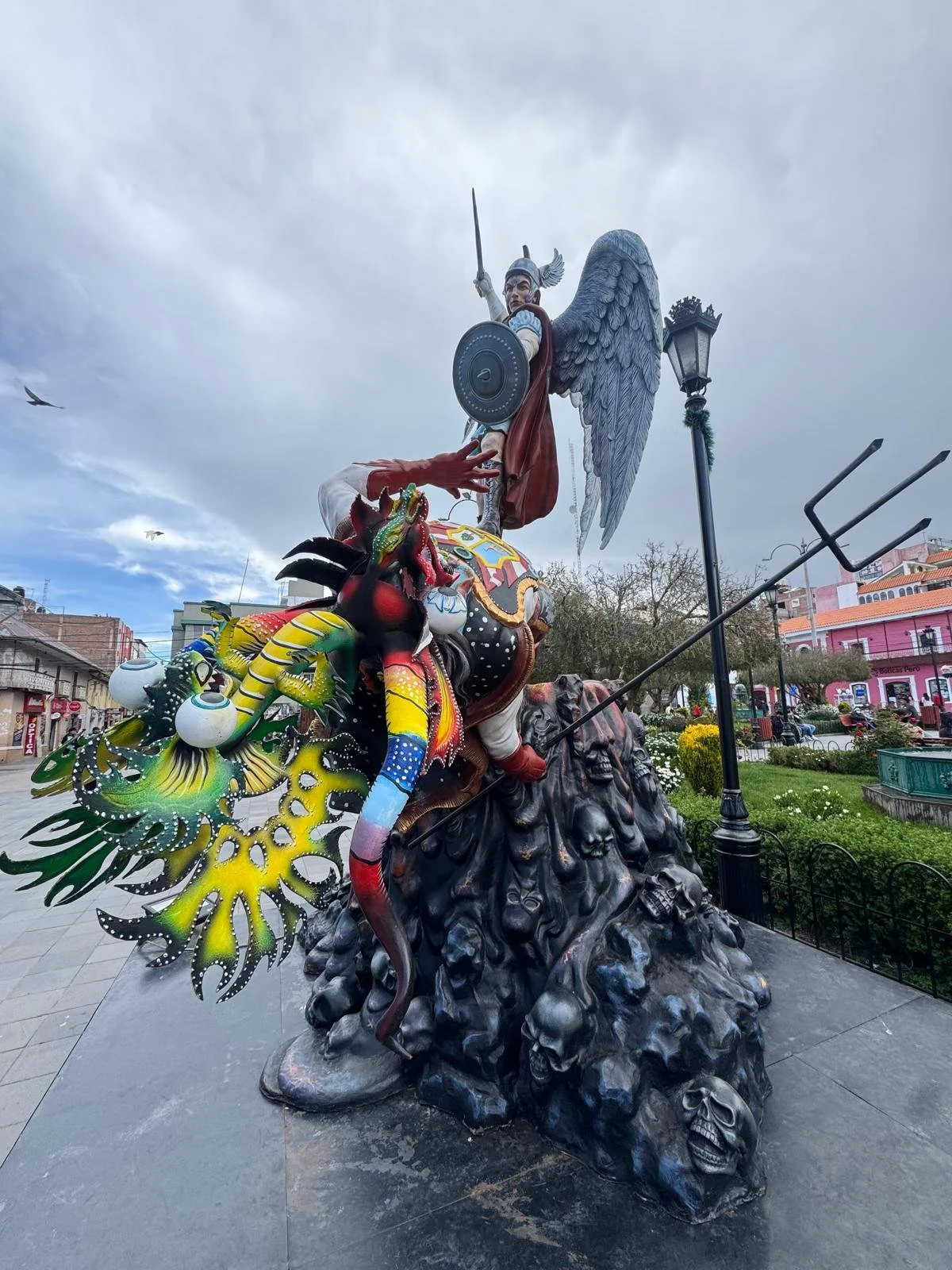
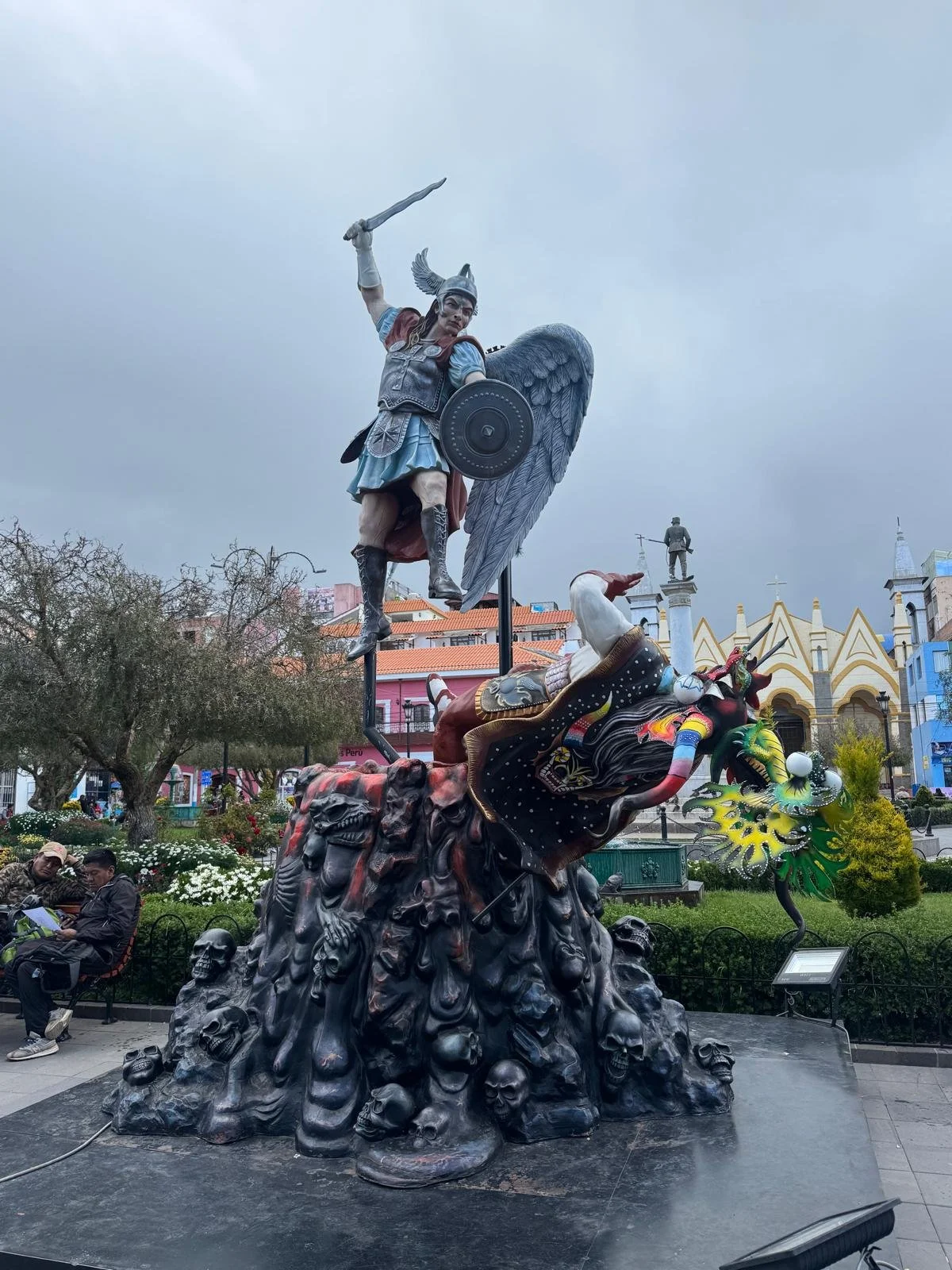
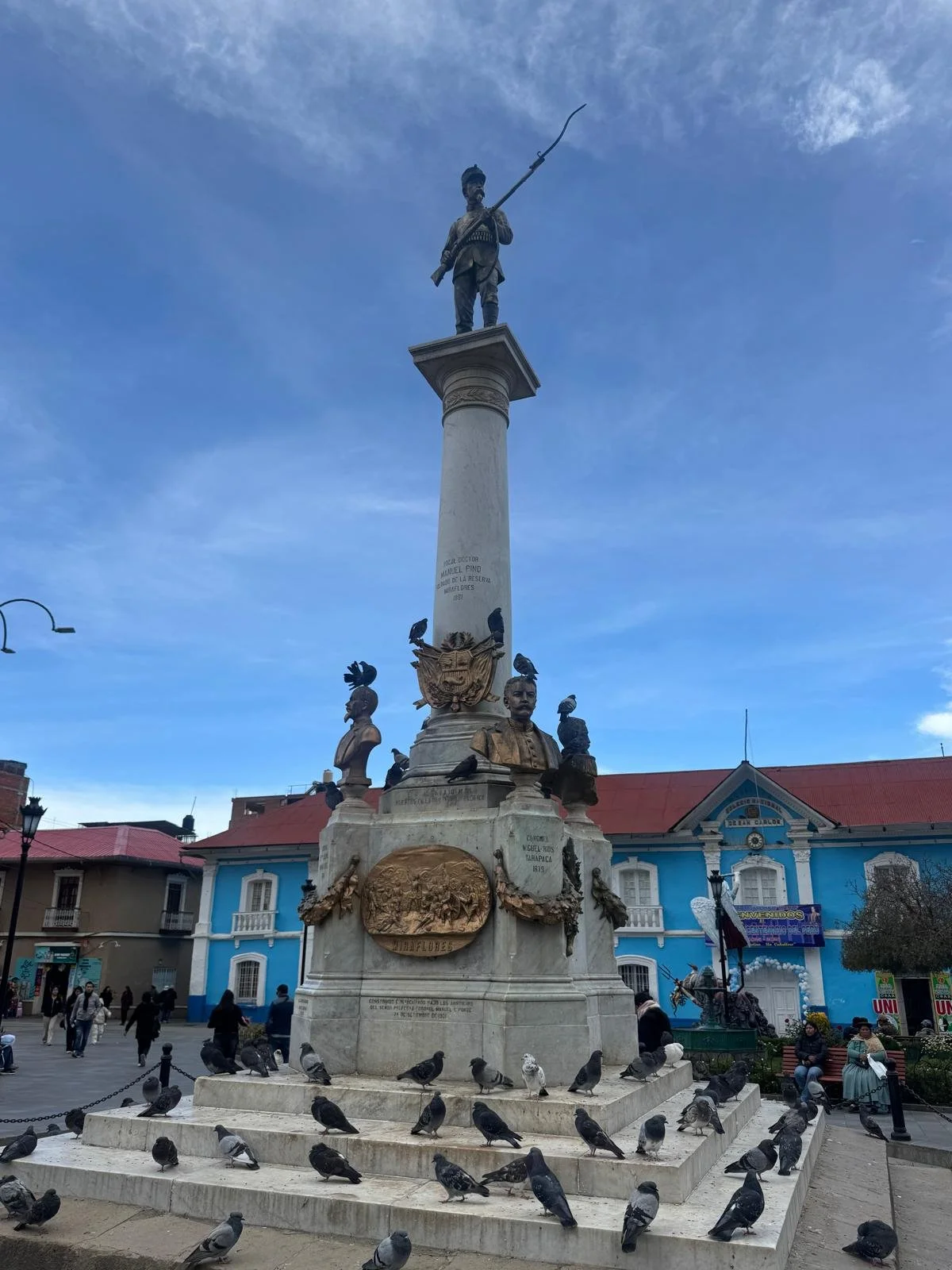
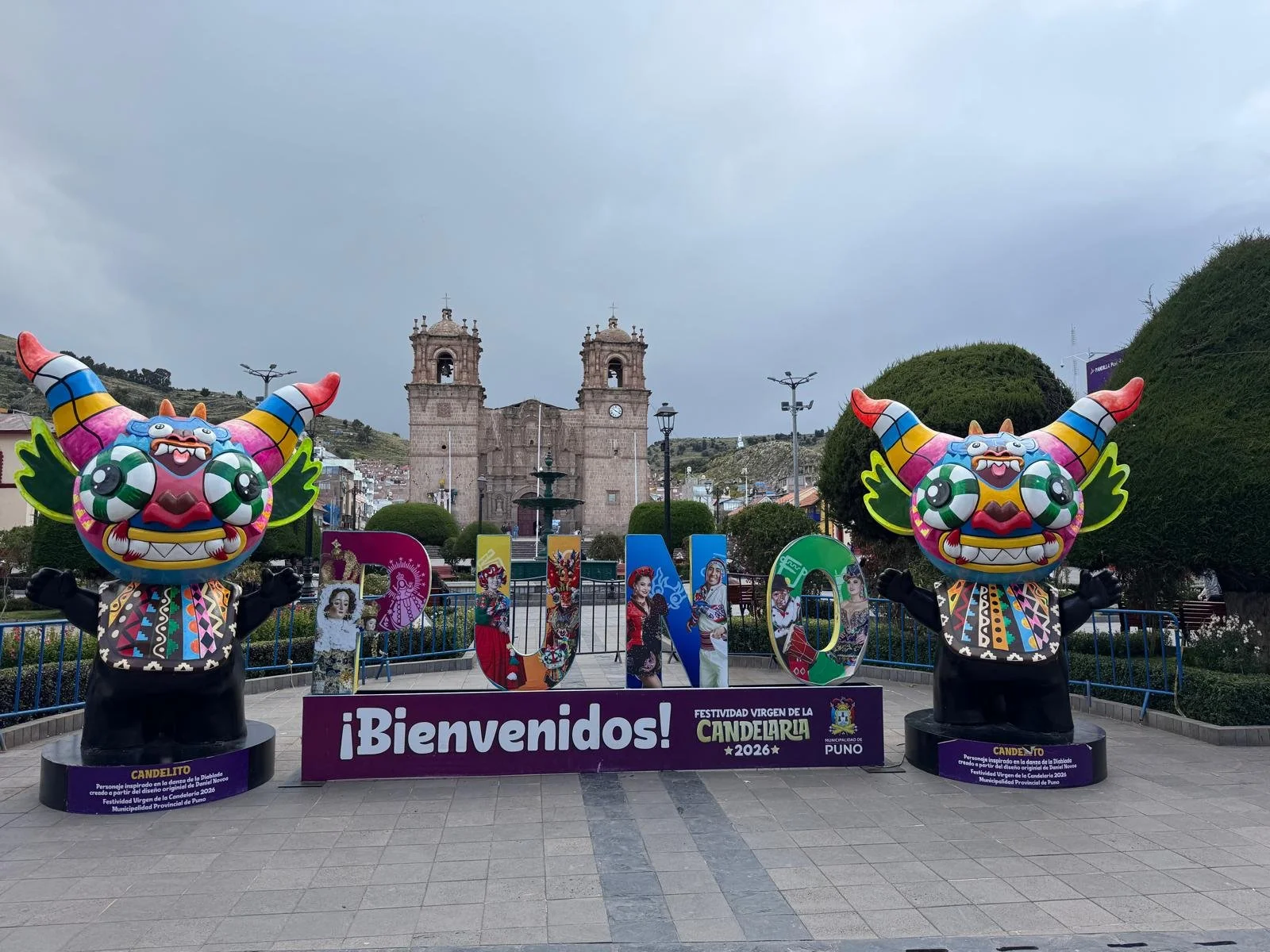
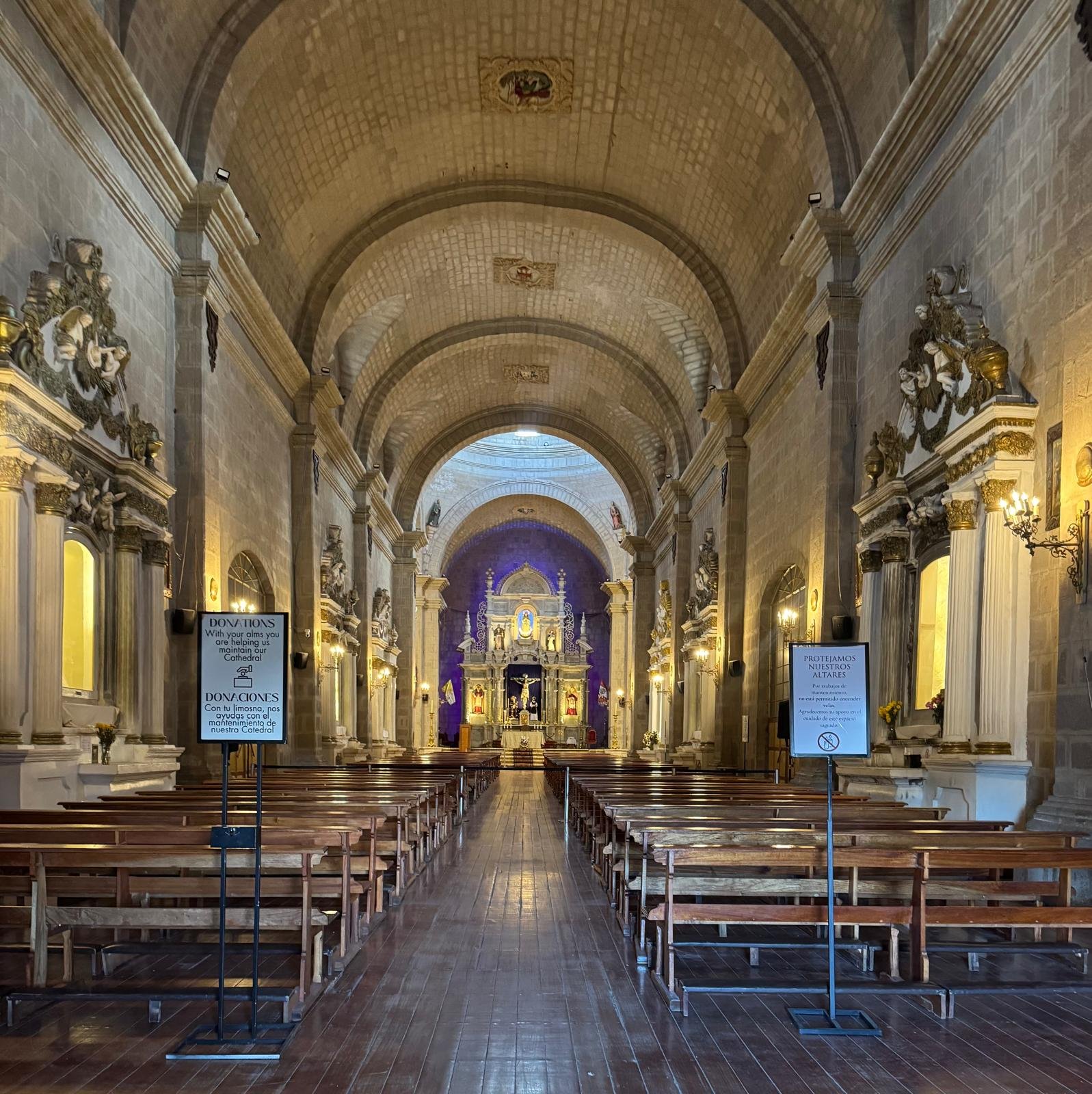
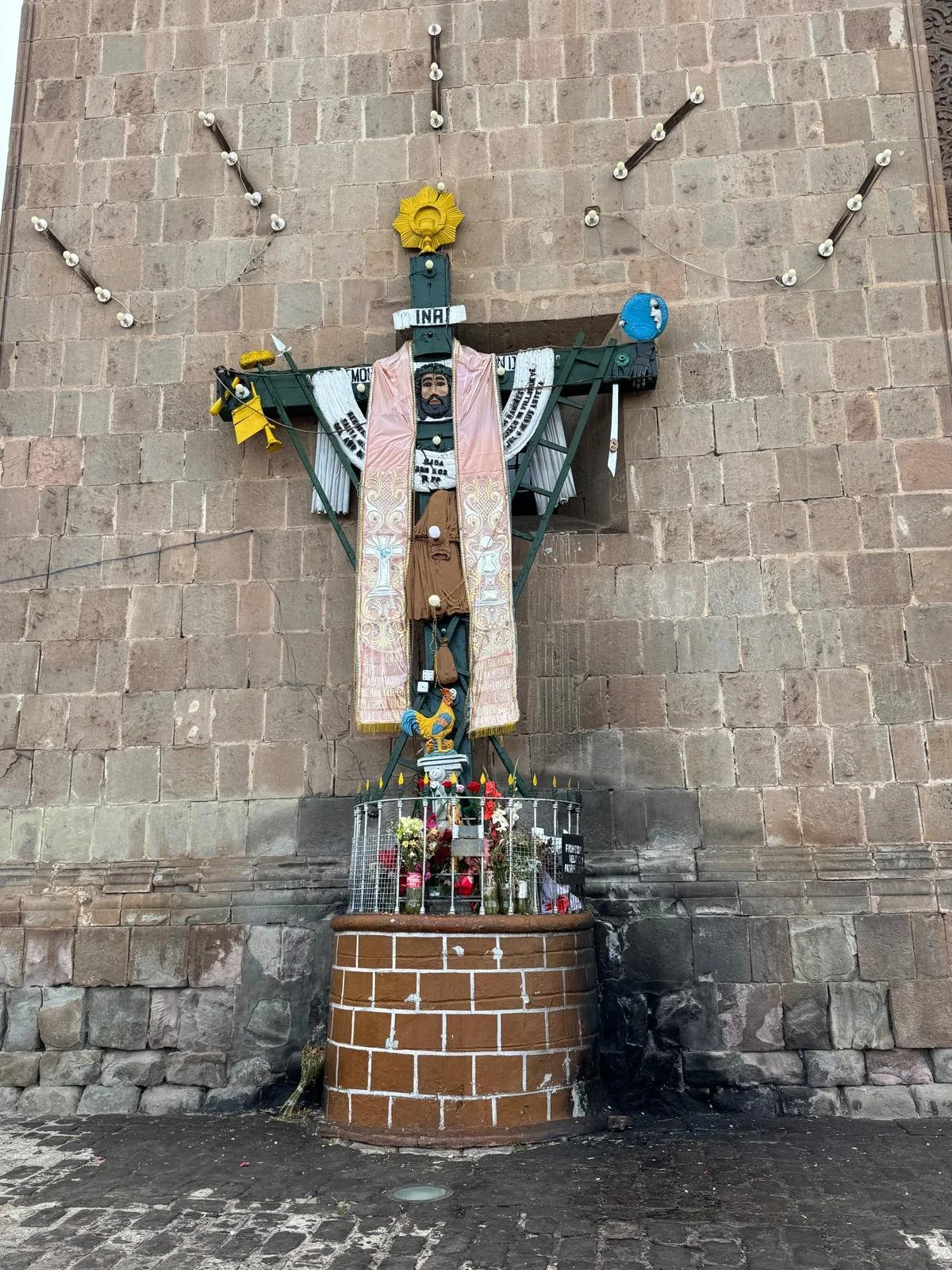
We asked the guide to drop us off near the main square – also called the Plaza de Armas, like in Cusco, so we could have a look around the town. As I mentioned, Puno is known as the Folkloric Capital of Peru and a place that bridges culture and tradition and the Virgen de La Candelaria Festival is where locals honour their identity and heritage. A monument to Colonel Francisco Bolognesi, a hero of the war with Chile, stands firmly in the centre with the backdrop of the Cathedral Basilica of St Charles Borromeo, which combines Catholic art and local indigenous influences. A very recent sculpture created for the Candelaria Festival celebrations depicts an archangel battling a demon – as you can imagine, this has created a lot of attention by the locals!
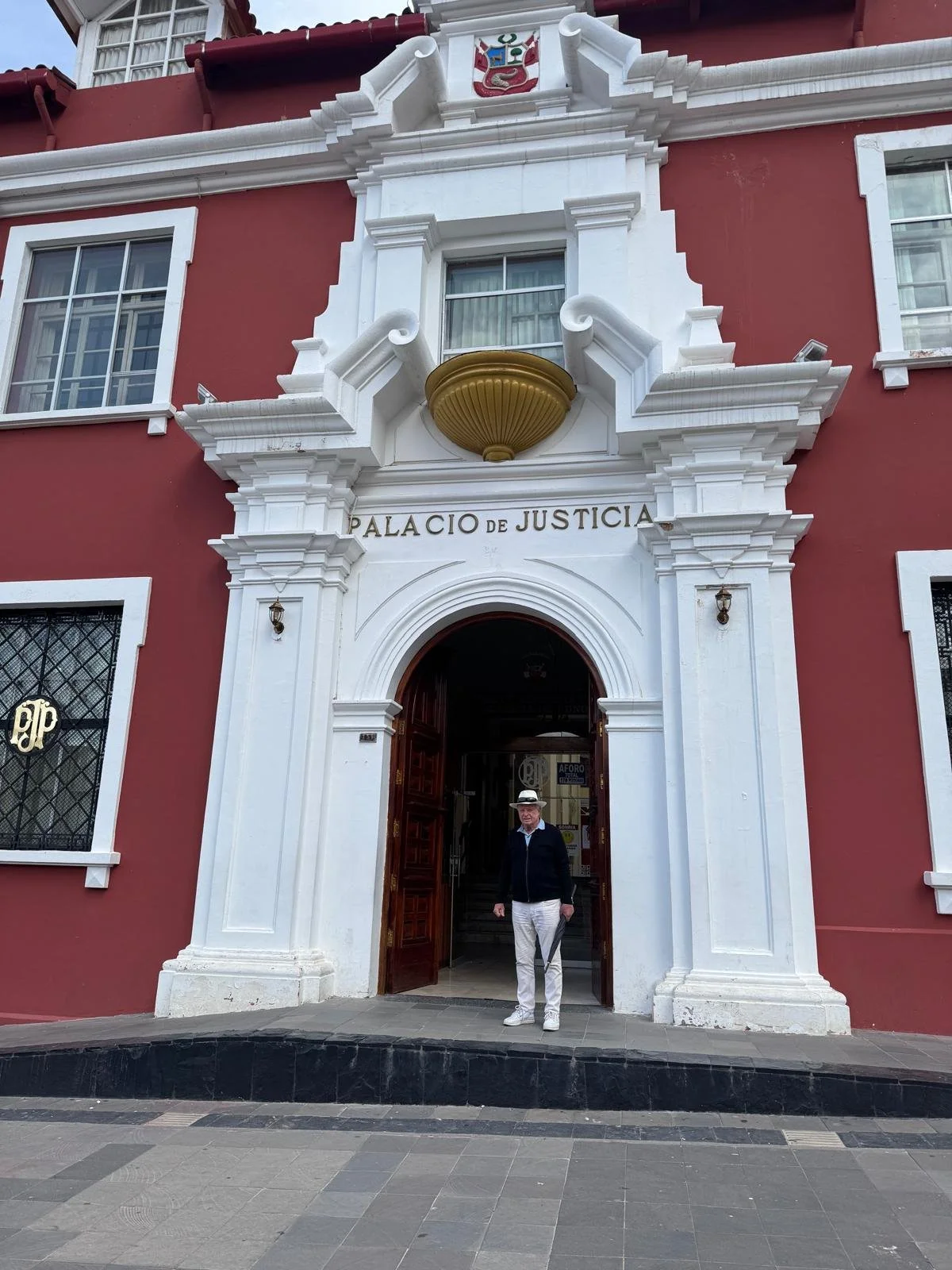
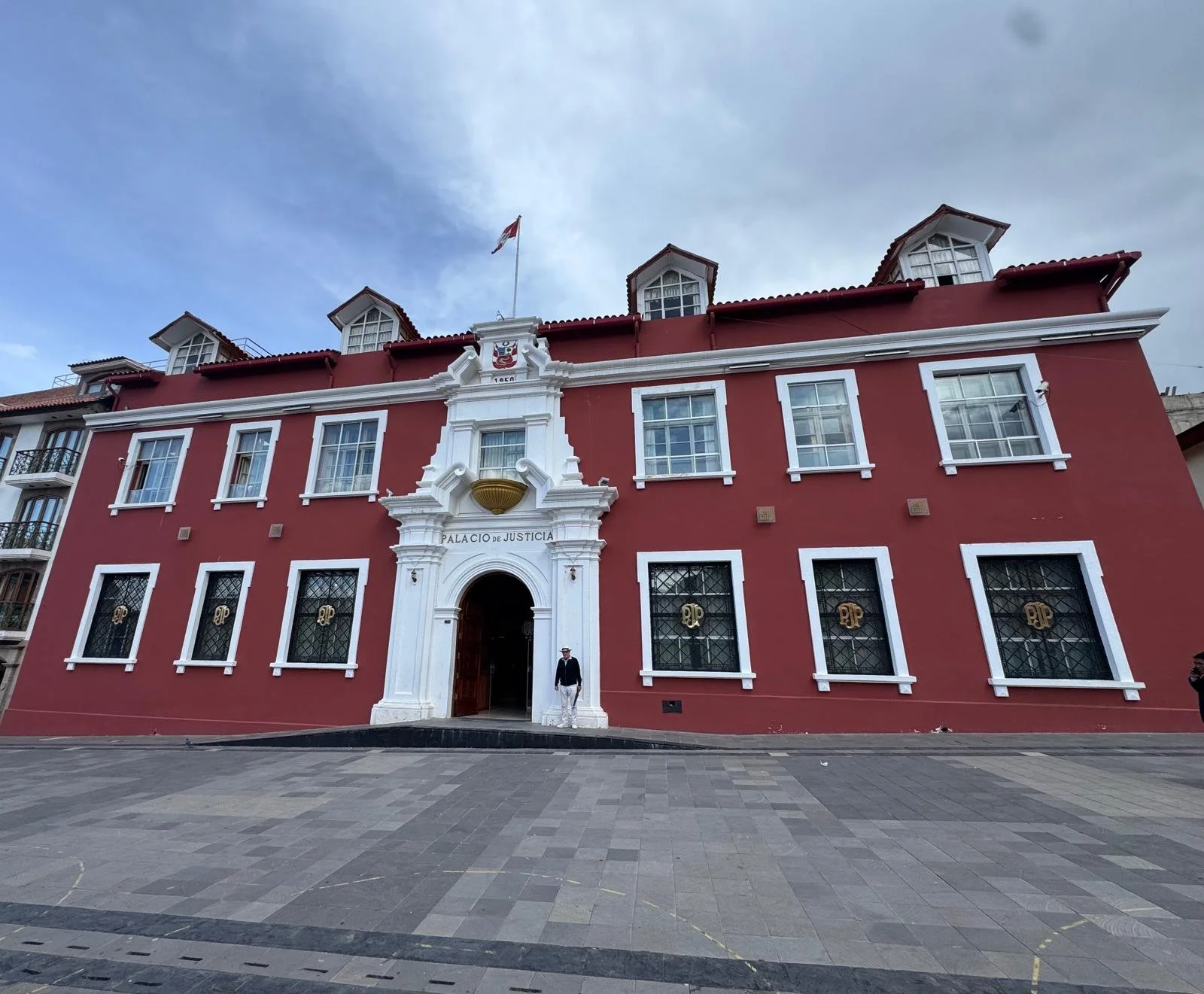
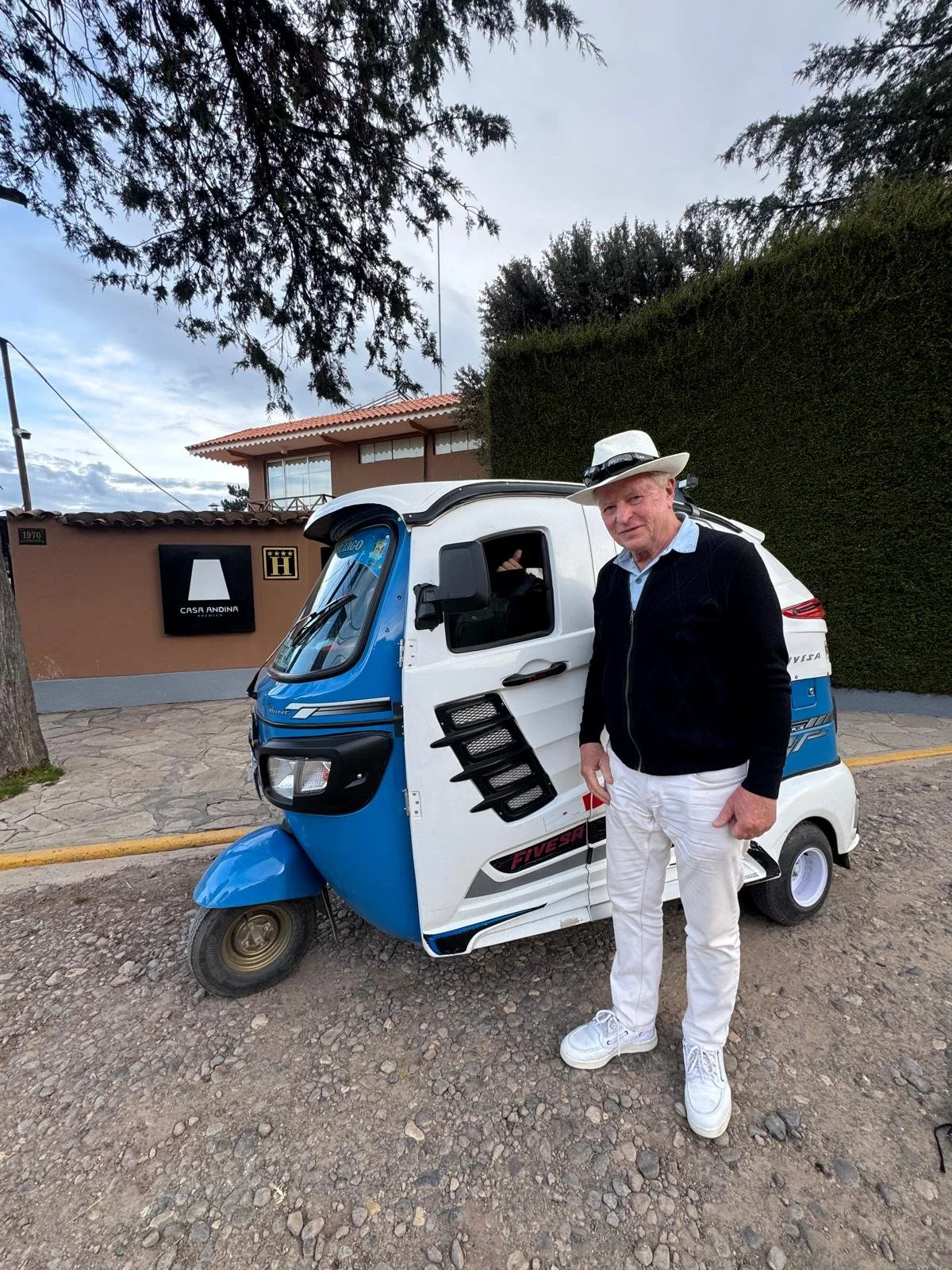
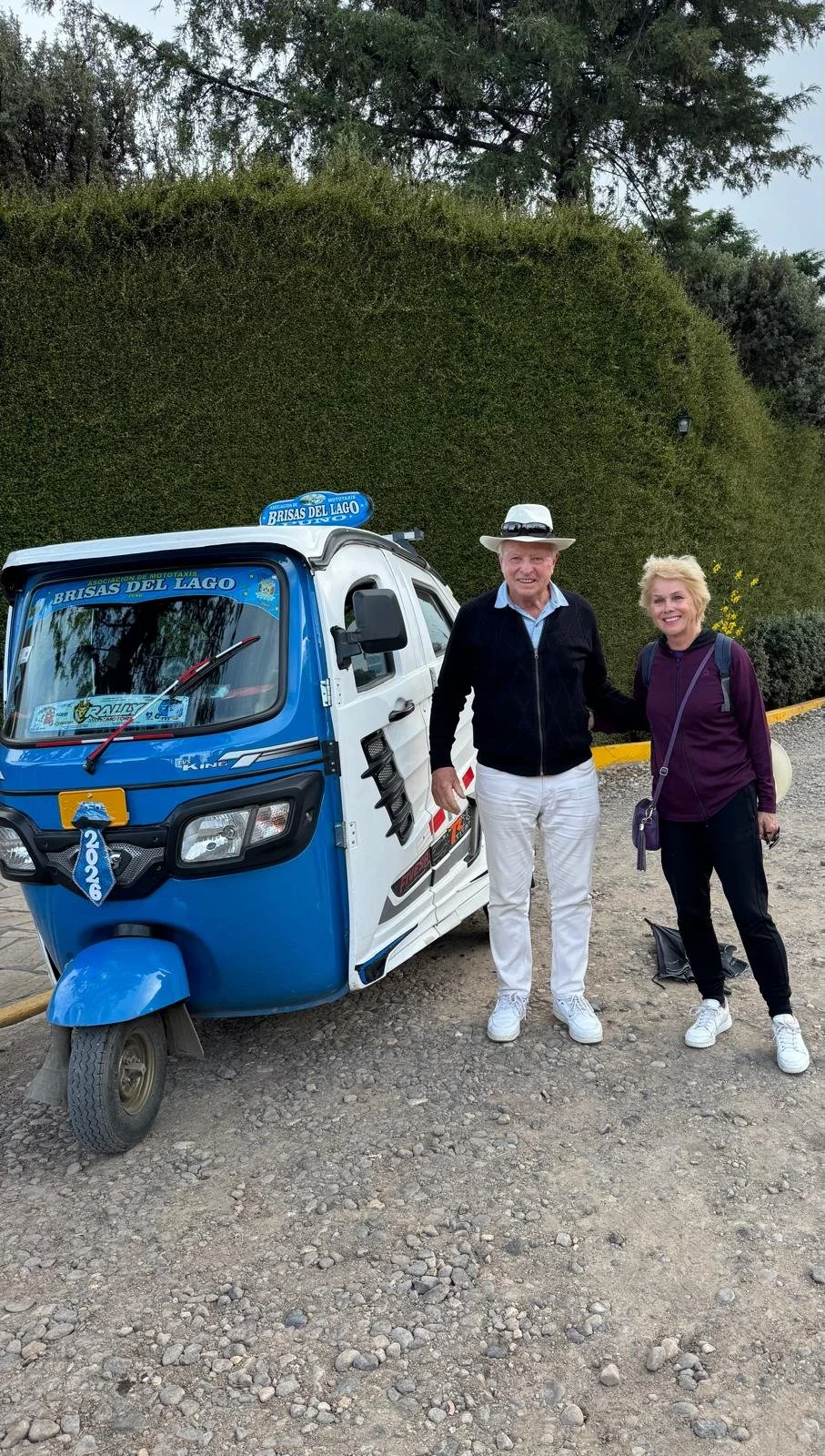
And then it was time to head home to our hotel and what better way to do this than in a local taxi – a bit like a Thai tuk tuk. Not that comfortable on the very basic roads, but a heck of a lot of fun! Another day full of culture, learning and surprises!